
Bronze walls bring depth, warmth, and a refined metallic character to rooms that feel plain or unfinished. The color can shift from earthy brown to glowing copper depending on the finish, lighting, and nearby materials. A matte bronze paint creates a grounded, modern backdrop, while burnished metal panels deliver a brighter architectural statement. Bronze also works beautifully with cream, sage green, charcoal, navy, natural oak, and stone. The key is treating the wall as part of a complete room rather than an isolated color choice. Furniture scale, flooring, textiles, lighting, and decorative accents should all support it. Whether you prefer subtle paint or dramatic metal, these practical bronze wall ideas offer complete, balanced looks for living rooms, bedrooms, kitchens, bathrooms, and more.

1. Bronze Living Room Accent Wall
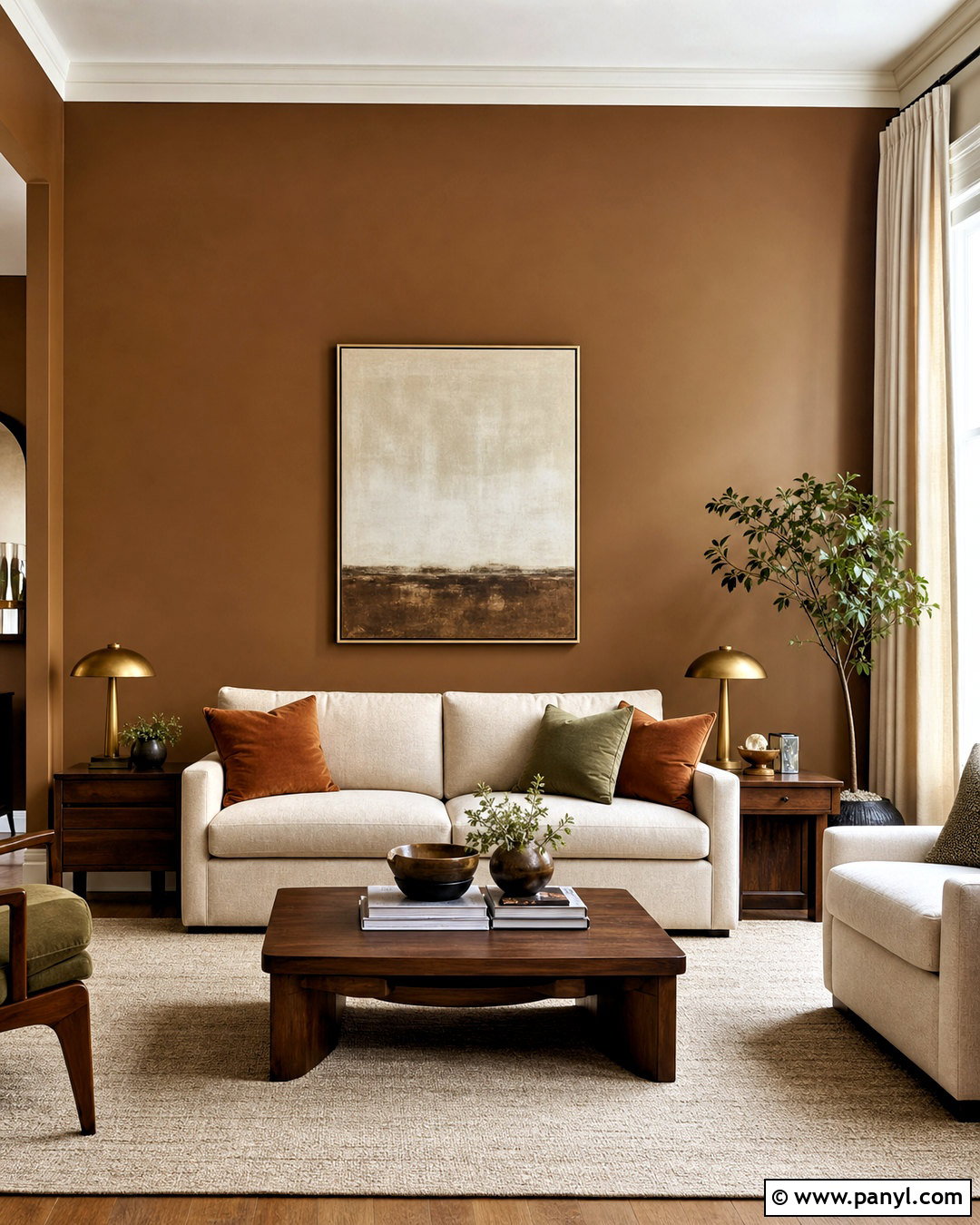
A matte bronze accent wall can make a basic living room feel warmer and more grounded. Place it behind the main sofa so the color anchors the largest piece of furniture. Choose a cream or oatmeal sofa, then add walnut side tables and a textured ivory rug to keep the arrangement light. Rust, olive green, and caramel pillows can repeat the wall’s earthy undertones without making everything match. Use aged brass lamps sparingly because too many metallic finishes may compete with the bronze backdrop. Warm white paint on the remaining walls provides clean contrast. Finish the room with simple abstract artwork, linen curtains, and one leafy plant. This balanced combination suits modern, transitional, and relaxed contemporary homes.
2. Metallic Bronze Dining Room Wall
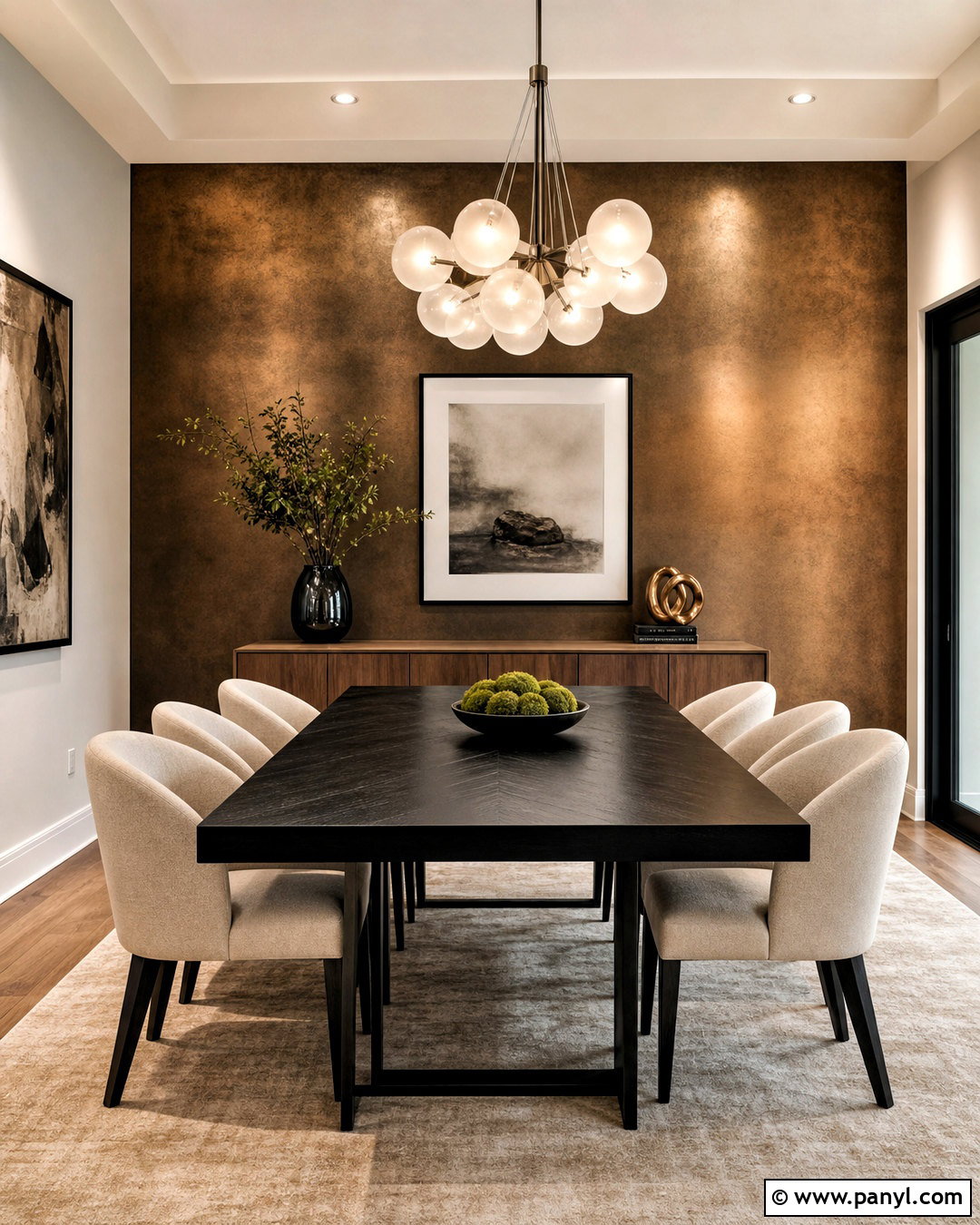
Would your dining room benefit from a stronger focal point? A softly reflective bronze wall behind the dining table creates drama while still feeling welcoming. Select a hand-applied metallic paint or fine-textured wallpaper rather than an extremely glossy finish. Pair it with a black oak dining table, cream upholstered chairs, and a neutral wool rug. A sculptural chandelier with frosted glass shades spreads light across the bronze surface without producing harsh glare. Keep nearby walls warm white or pale greige. Black-framed artwork and a low walnut sideboard give the room structure. For a finished appearance, repeat bronze once in a bowl or slender lamp. The result feels sophisticated but remains practical enough for everyday meals.
3. Bronze Bedroom Headboard Wall
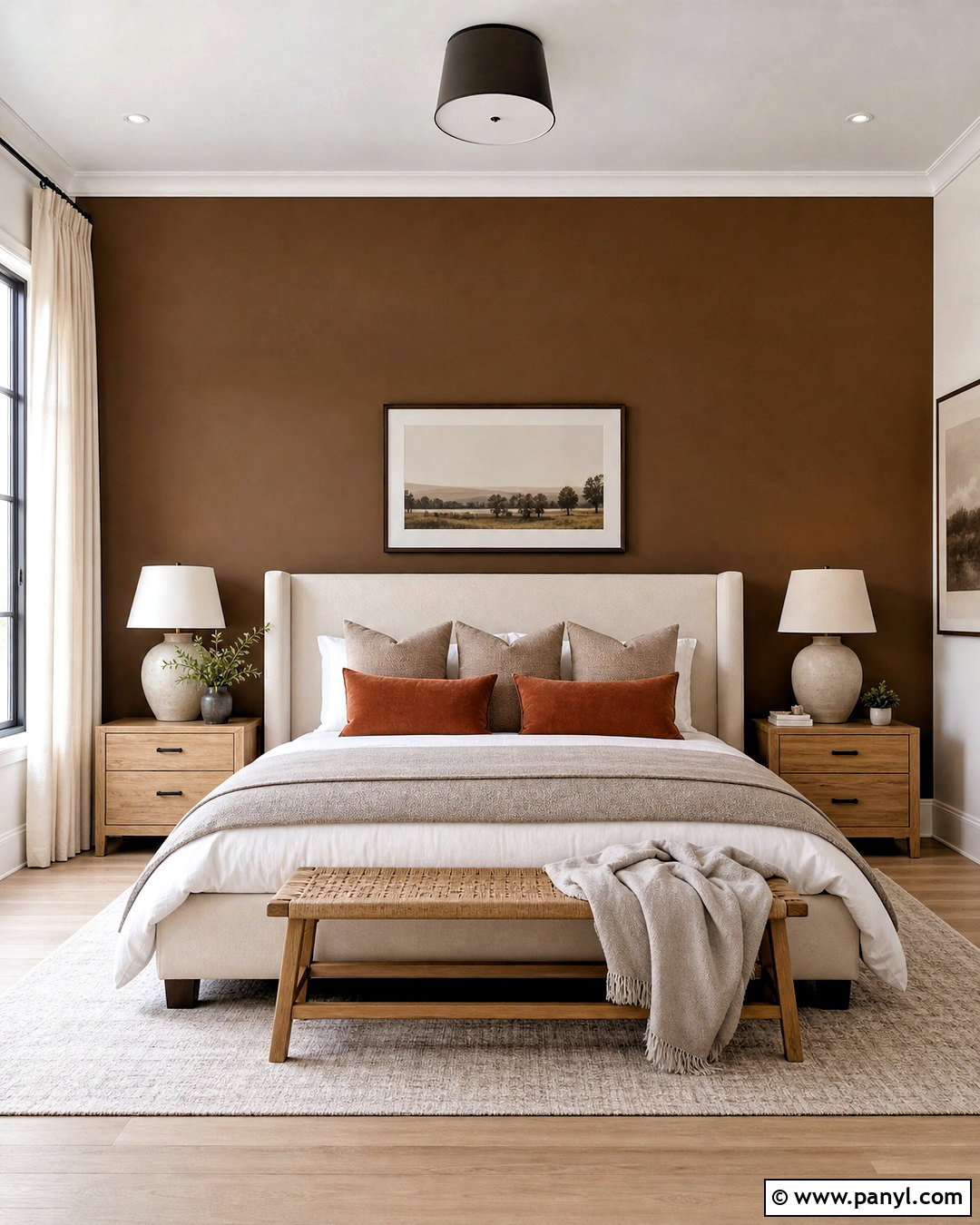
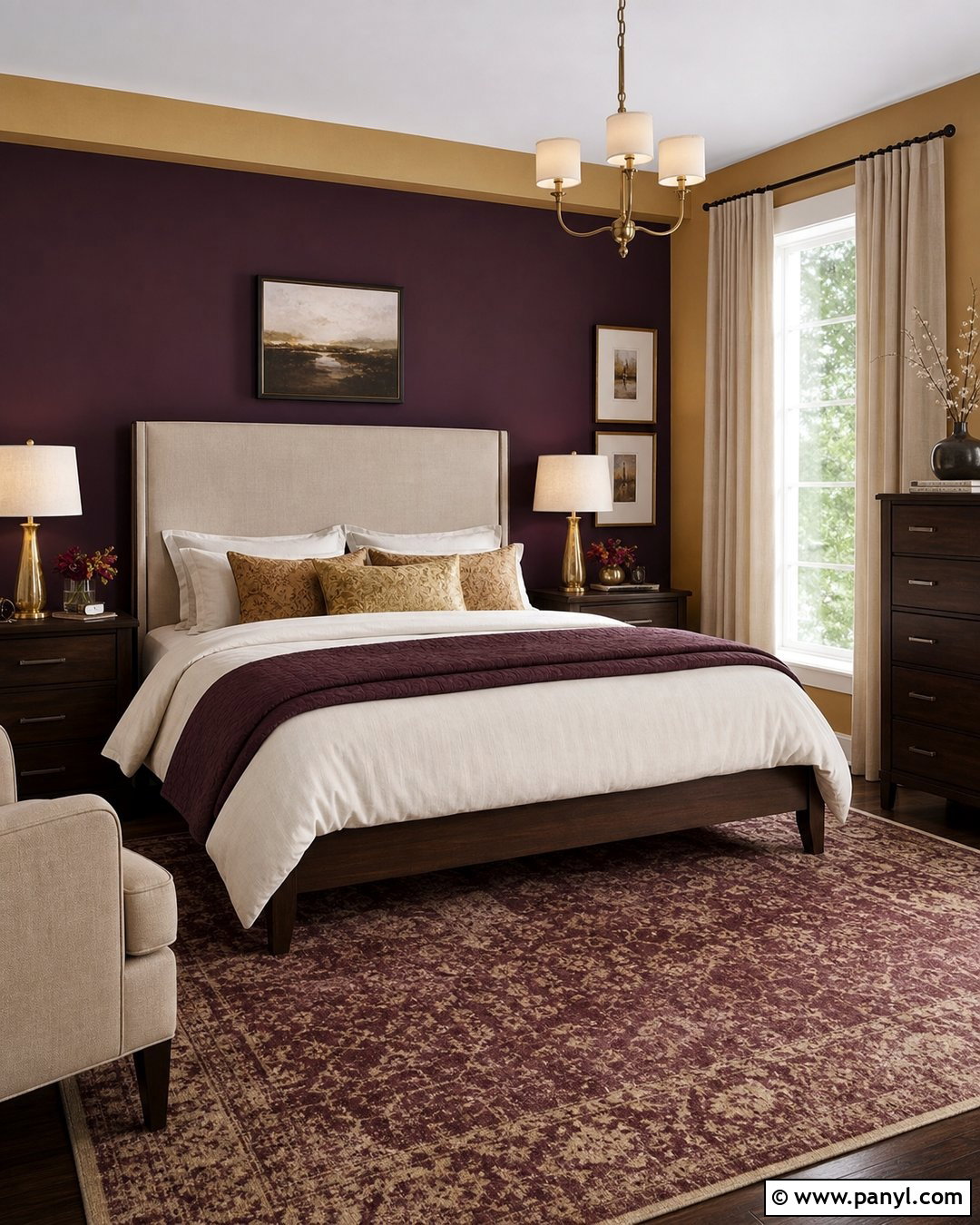
Soft bedding looks especially inviting against a deep brown-bronze bedroom wall. Paint the wall behind the bed in a low-sheen finish, then use a tall ivory upholstered headboard to create a clear contrast. Layer the bed with white sheets, a taupe quilt, and muted terracotta pillows. Medium-tone oak nightstands prevent the palette from becoming too dark, while ceramic lamps with linen shades provide gentle symmetry. Leave the other walls creamy white and choose pale natural flooring or a light area rug. Simple landscape prints can add detail without hiding too much bronze. This complete bedroom scheme feels restful because its darker element stays concentrated behind the bed, while lighter textiles and furnishings maintain an open, comfortable atmosphere.
4. Bronze Fireplace Wall
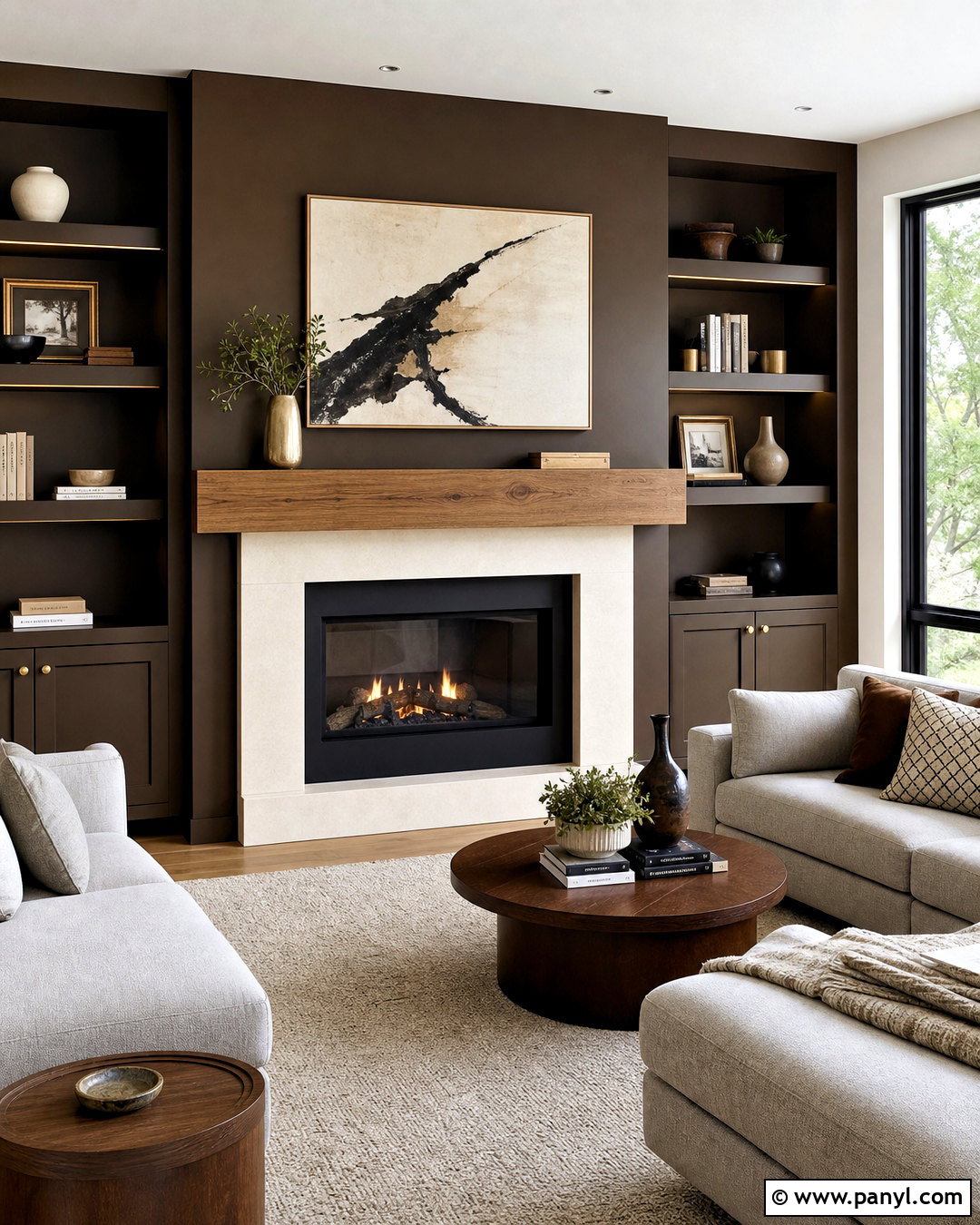
A bronze fireplace wall can turn an ordinary living room feature into an architectural centerpiece. Cover the full wall in deep bronze paint, including simple built-ins or lower cabinets if they are part of the composition. Frame the firebox with honed cream limestone or pale porcelain tile to provide heat-safe contrast. A thick natural oak mantel introduces warmth without blending into the wall. Arrange a light gray sectional opposite the fireplace and ground it with a beige patterned rug. Keep mantel decor minimal, using one rounded vase and a framed artwork rather than many small accessories. Bronze picture lights or cabinet pulls can quietly repeat the feature wall. The finished room feels cohesive, substantial, and comfortably modern rather than overly formal.
5. Fluted Bronze Wall Panels
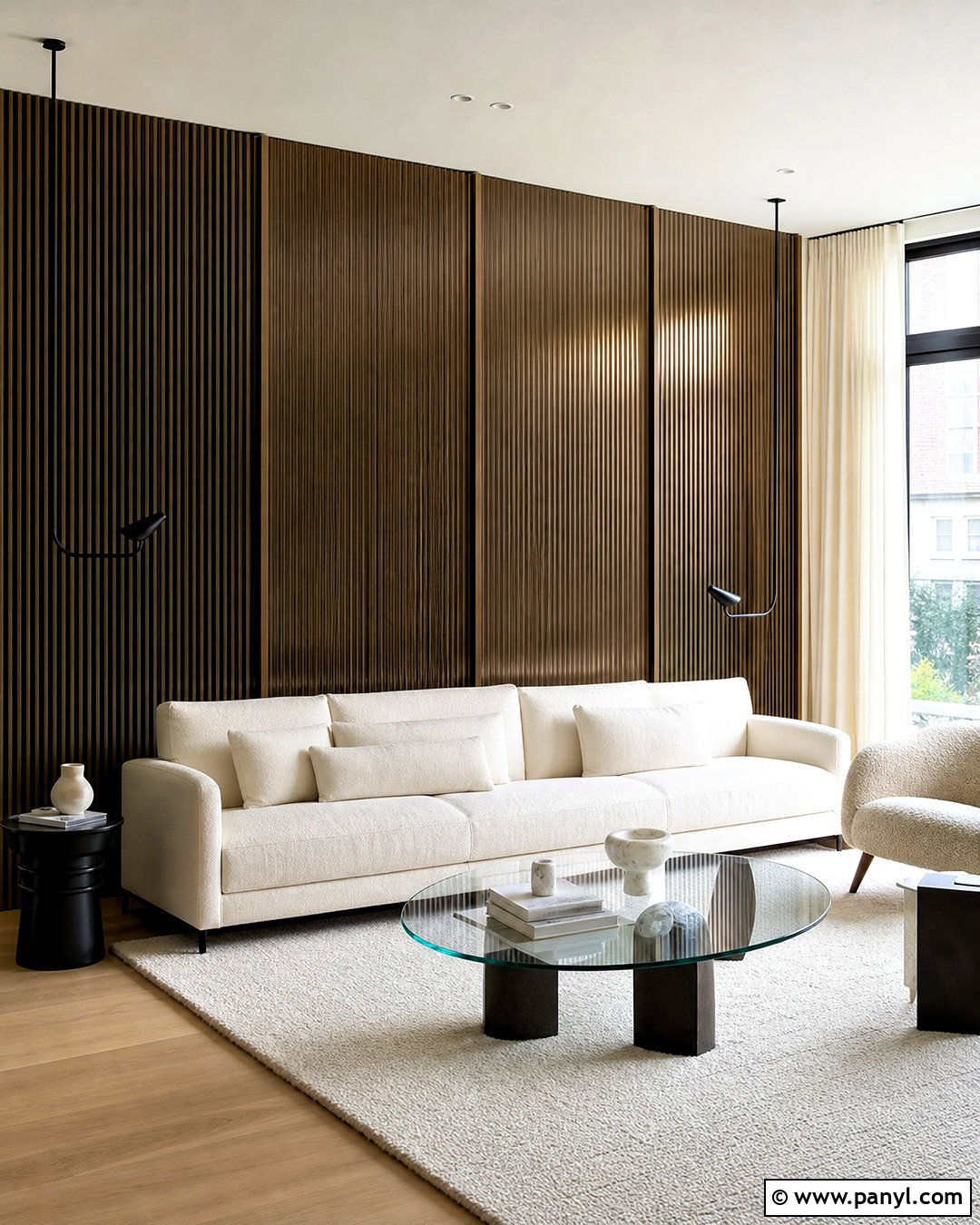
Vertical fluted panels give bronze a structured, contemporary appearance. Use them across the wall behind a sofa, console, or low-profile bed, choosing a brushed rather than mirror-polished surface. The fine vertical lines add movement and can visually emphasize ceiling height. Balance the metal with soft materials, such as a boucle chair, wool rug, linen curtains, and upholstered furniture in warm white. Pale oak flooring prevents the room from feeling heavy. Matte black lighting adds definition, while one glass or stone table keeps the furniture mix varied. Allow the bronze panels to remain the main decorative feature instead of covering them with multiple pictures. This full-space approach produces a sleek statement that still feels comfortable and suitable for a realistic home.
6. Bronze Limewash Entryway Wall
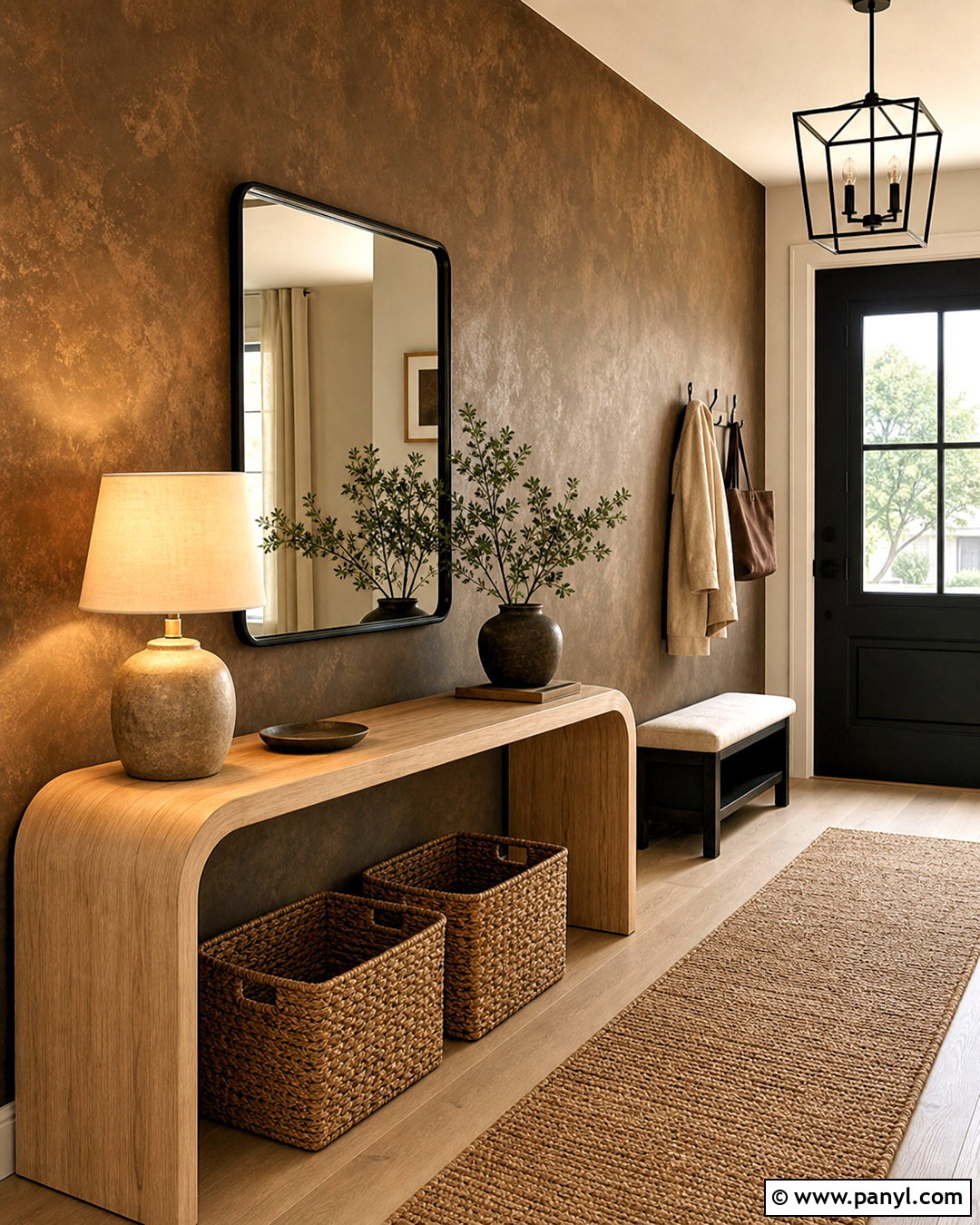
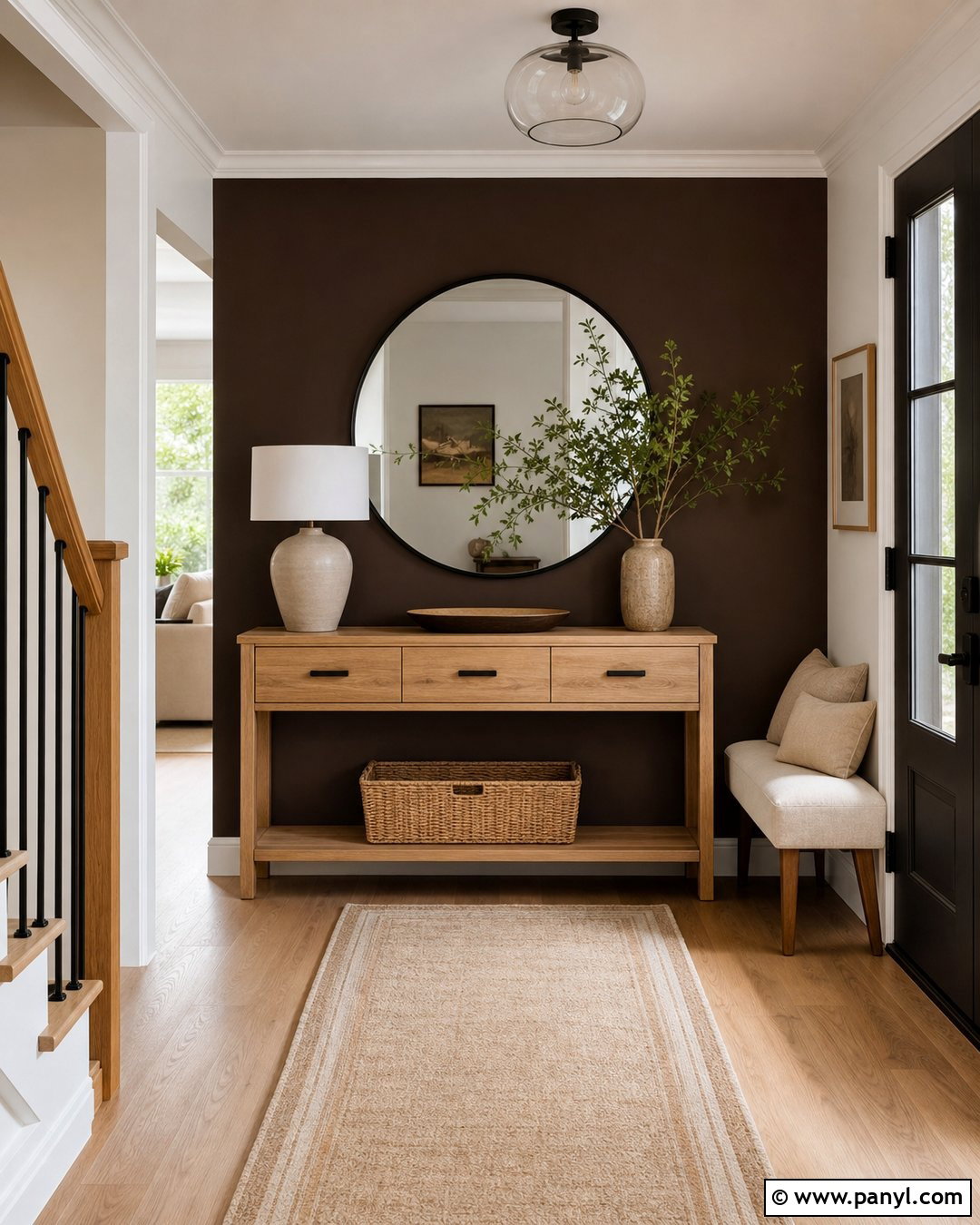
A bronze-toned limewash finish brings cloudy movement and earthy character to an entryway. Apply it across the main wall behind a slim console, allowing subtle variations in brown, umber, and muted copper to remain visible. Choose a light oak console with rounded edges and place a large black-framed mirror above it. A woven runner, ceramic table lamp, and lidded storage baskets make the space functional as well as attractive. Paint connecting walls a soft putty color for a gentle transition. Black hooks or a simple wall rail can organize coats without disrupting the palette. Add a small bench if space allows. The layered finish disguises the flatness of a plain hallway and creates an inviting introduction to the rest of the home.
7. Bronze Powder Room Wallpaper
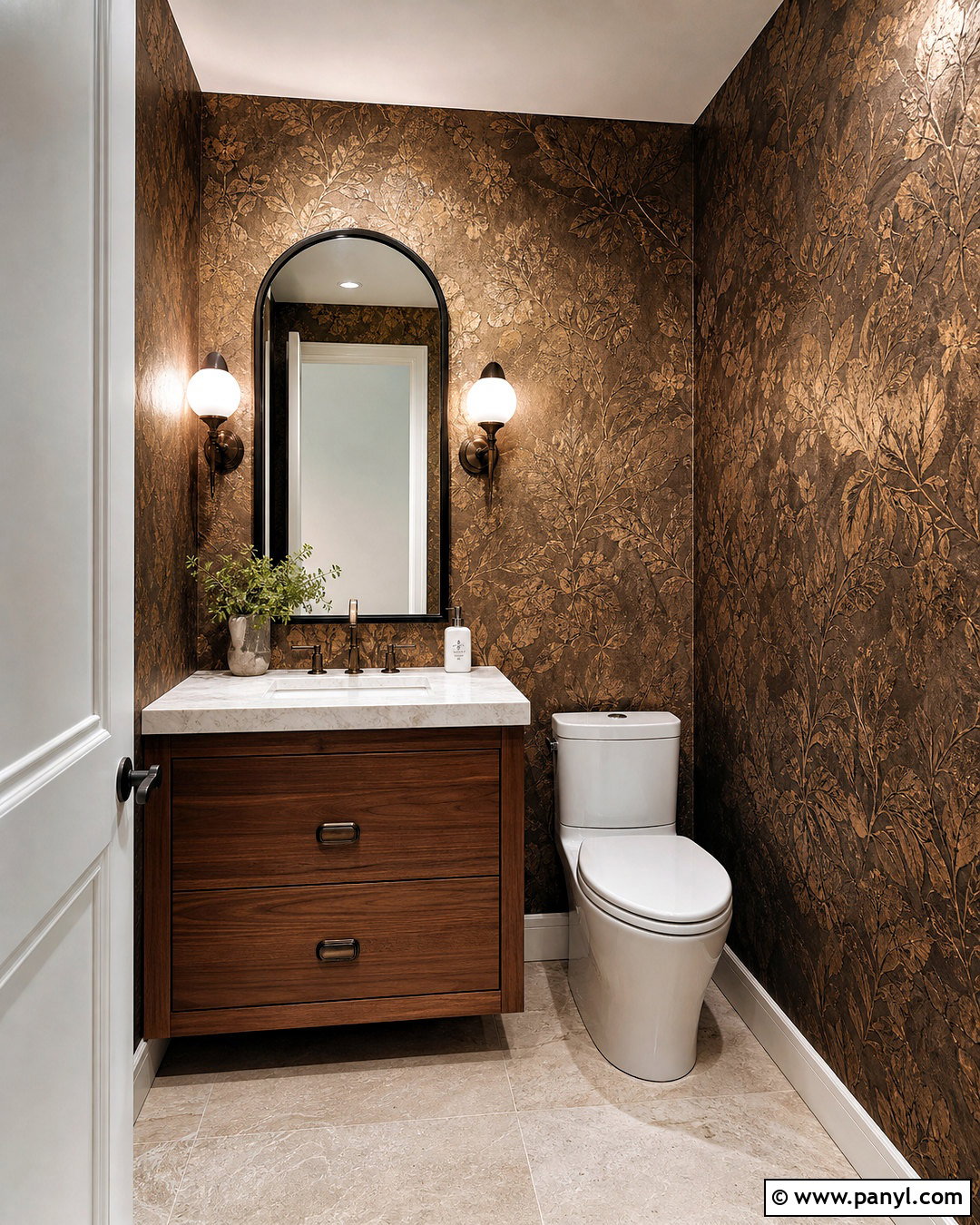
A small powder room is an ideal place for a rich bronze wall treatment. Choose bronze wallpaper with a restrained geometric, grasscloth, or botanical texture and cover every wall for an immersive appearance. Pair it with a compact walnut vanity and a white quartz or marble countertop. An arched mirror with a thin black frame creates a clear focal point, while two opal-glass sconces brighten the reflective wallpaper evenly. Use a white toilet and pale stone flooring to keep the limited space balanced. Aged bronze hardware can blend with the walls, but avoid combining too many ornate finishes. Finish with one neutral hand towel and a simple ceramic vessel. The completed room feels intentional, polished, and more memorable than a standard painted powder room.
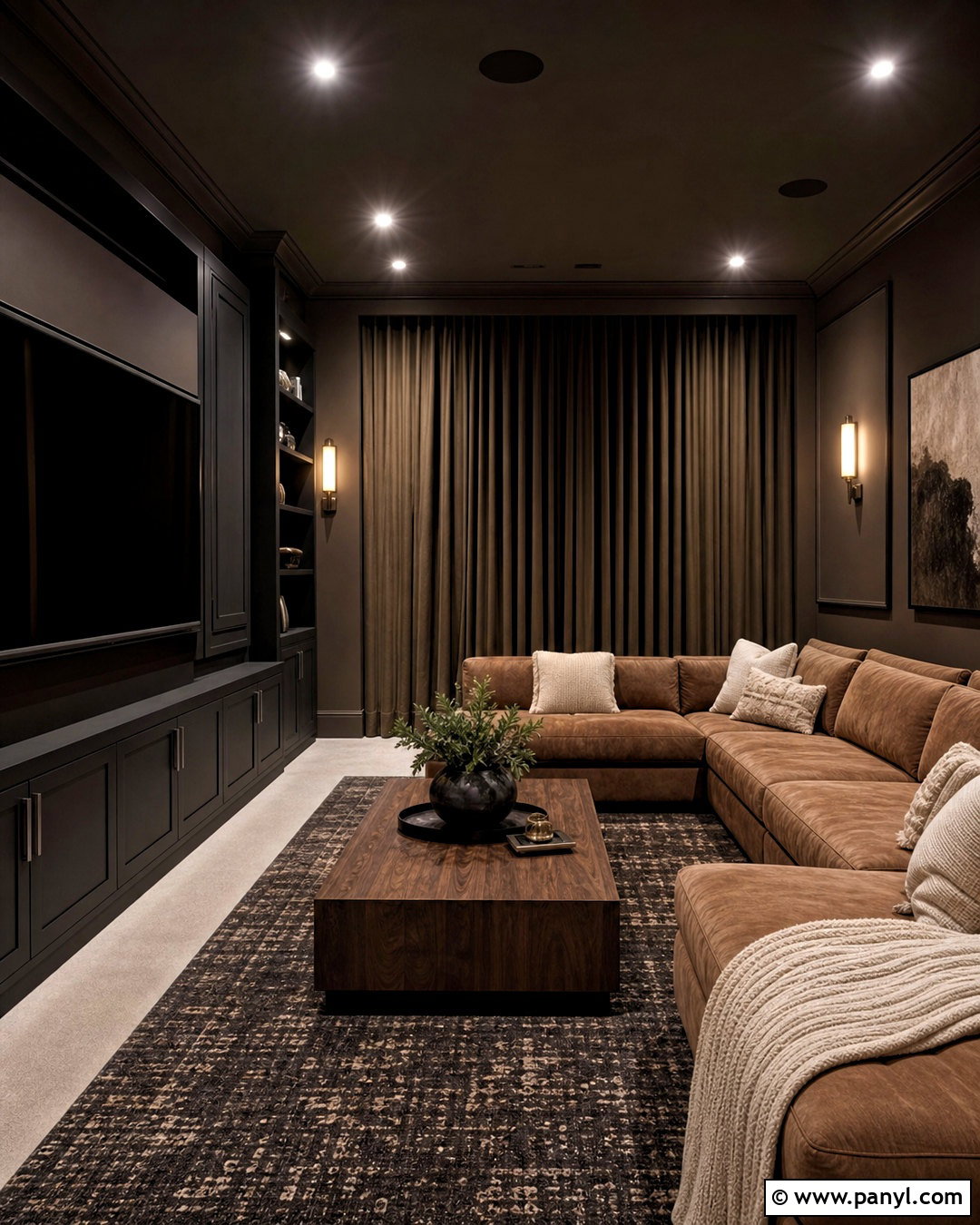
8. Bronze Kitchen Backsplash Wall
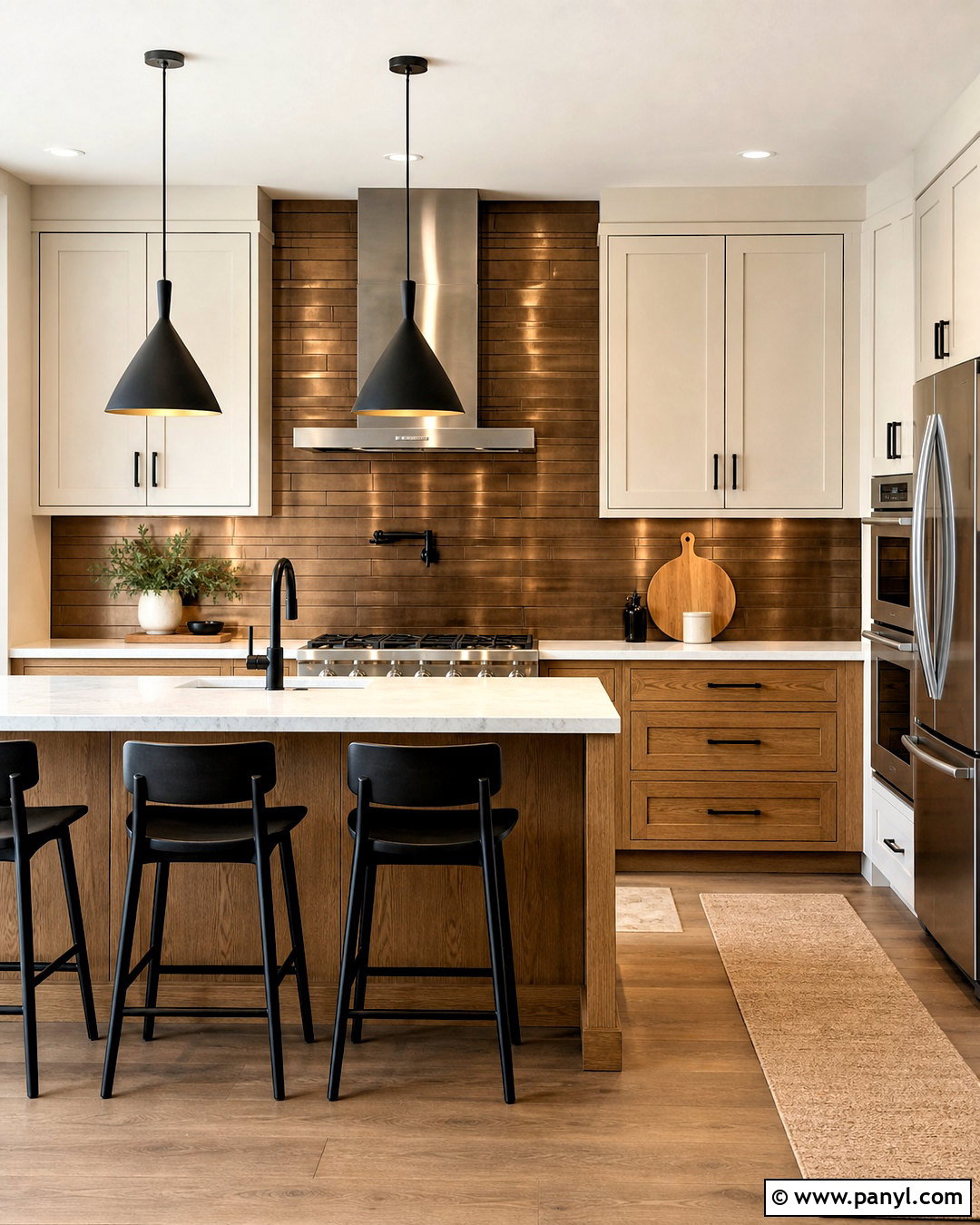
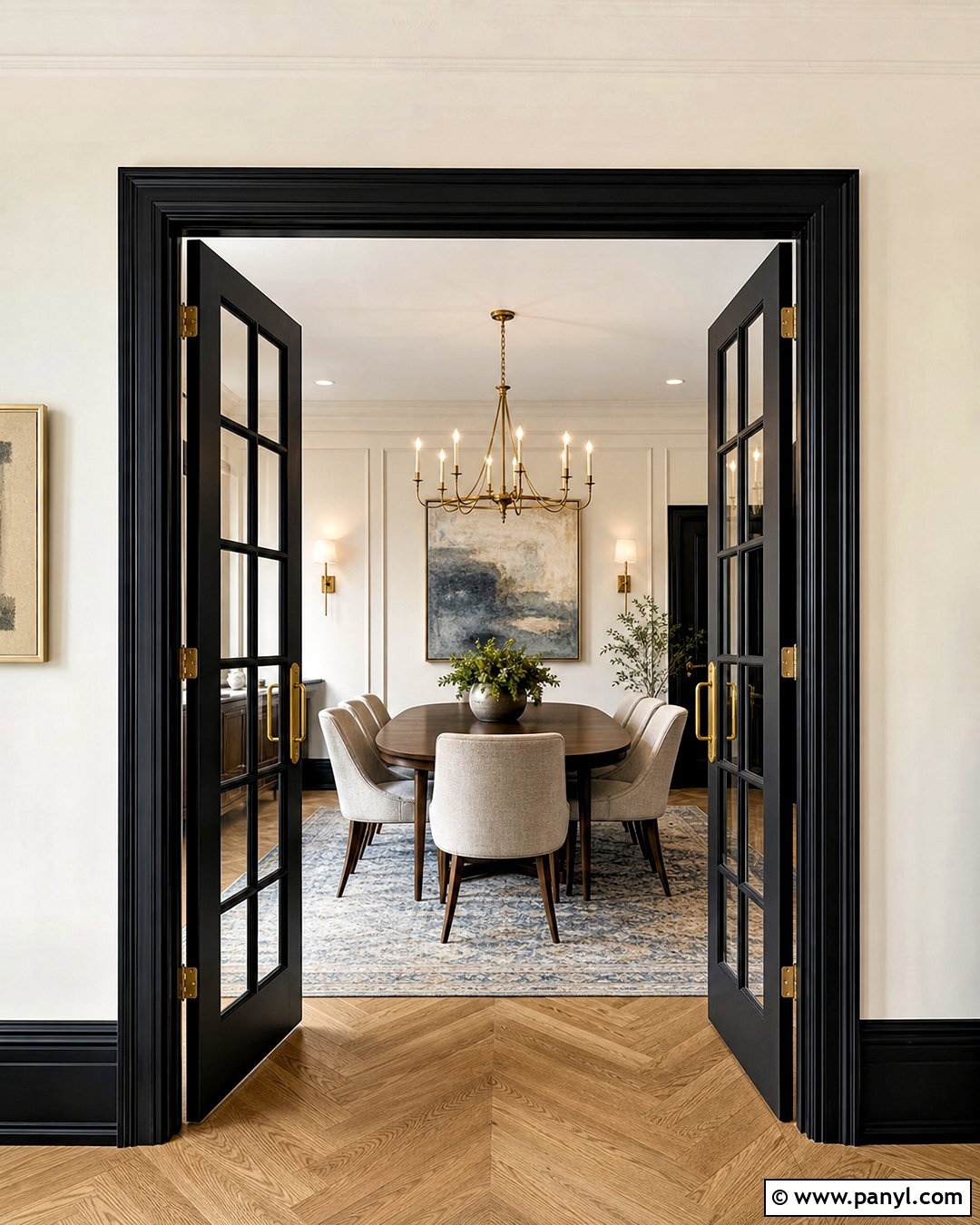
Bring bronze into the kitchen through a full-height backsplash rather than painting every wall dark. Brushed bronze-look tile can run from the countertop to the upper cabinets or ceiling, creating a strong but easy-to-clean visual feature. Combine it with flat-panel cabinets in warm white, medium oak lower cabinetry, and pale quartz counters. Matte black stools and pendant lights add crisp definition. Keep appliances in stainless steel or panel-ready finishes so the space does not contain too many competing metals. Natural oak flooring and a beige runner soften the hard surfaces. Under-cabinet lighting should spread evenly across the bronze wall, highlighting its texture. The complete kitchen looks warm and modern while maintaining the brightness needed for cooking and daily routines.
9. Bronze Home Office Wall
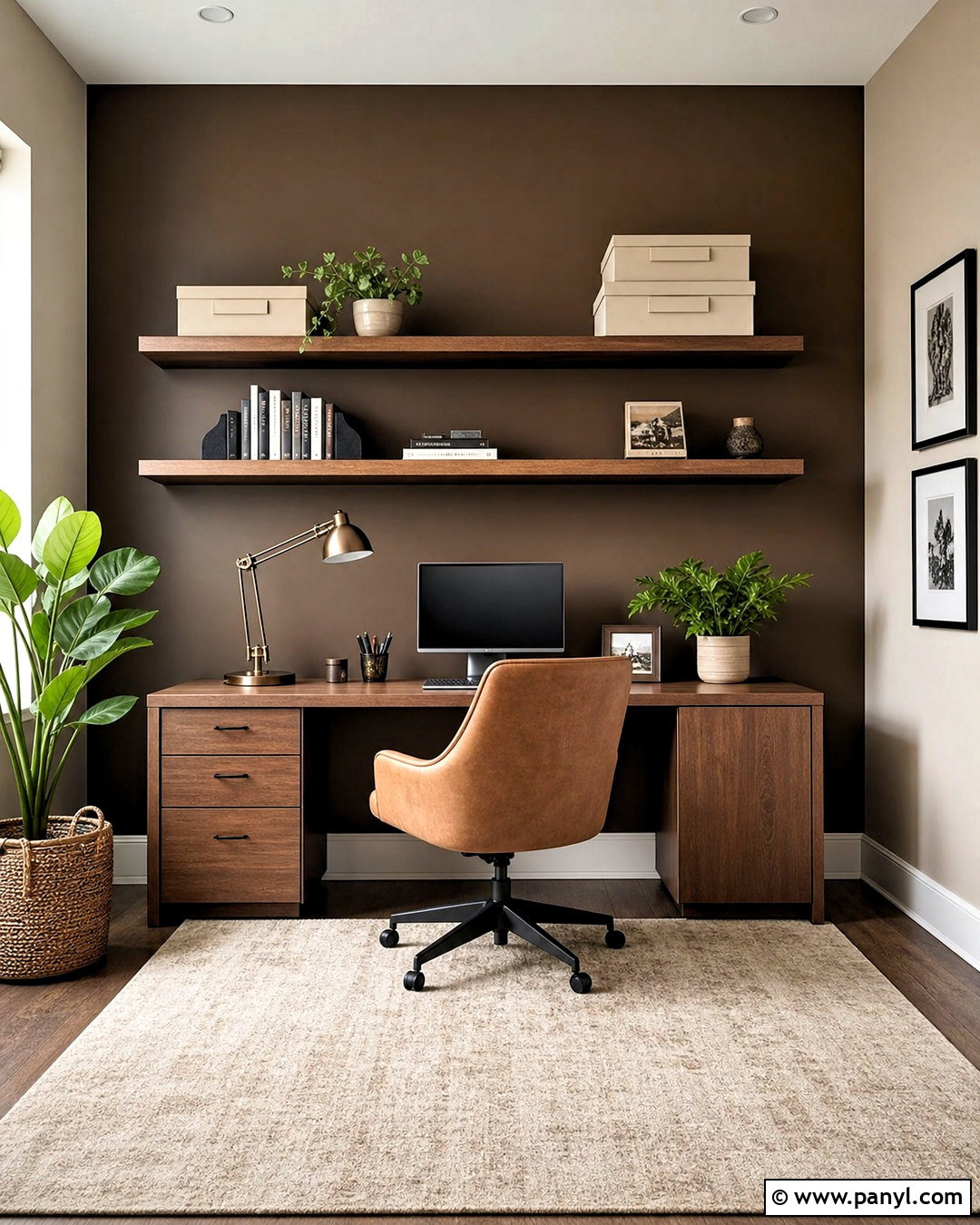
A dark bronze wall can help a home office feel focused, organized, and distinct from surrounding living areas. Position a walnut desk against the painted wall and install matching floating shelves above it. Use cream storage boxes, black bookends, and a small amount of greenery to keep the shelves visually calm. An ergonomic chair in tan leather or textured beige fabric adds comfort without introducing a clashing color. Paint the other walls pale greige and select a light, low-pile rug to balance the deep backdrop. A black adjustable desk lamp provides task lighting, while a ceiling fixture brightens the entire room. Concealed cable management is important because visible cords can make the bold wall look cluttered. The result is practical, polished, and professional.
10. Bronze Gallery Wall
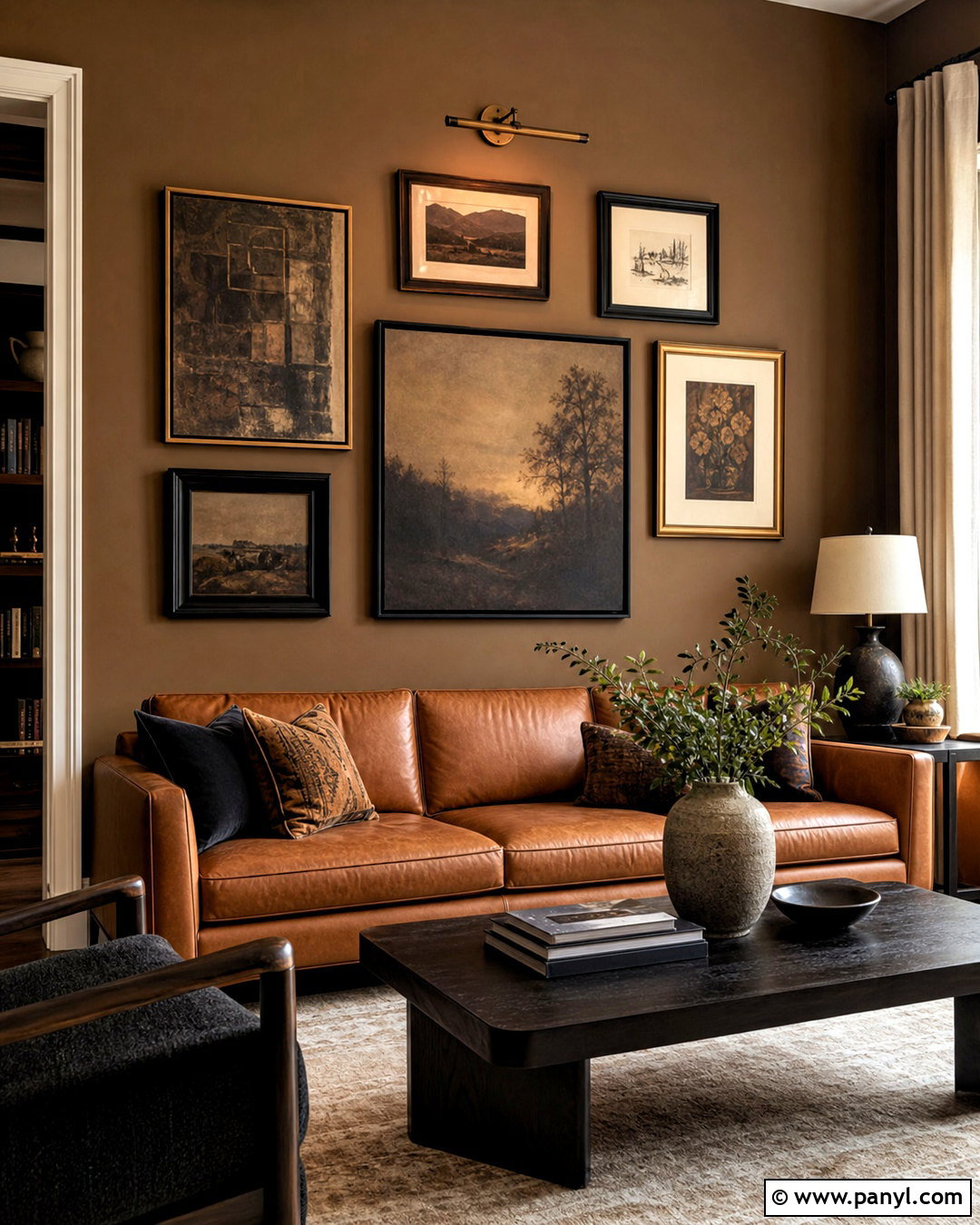
Turn a bronze-painted wall into a collected gallery without covering its entire surface. Begin with a warm matte finish and arrange seven to nine framed pieces in a balanced rectangle above a neutral sofa or console. Mix black, walnut, and narrow antique-bronze frames, but keep the artwork connected through cream backgrounds and earthy colors. A camel leather sofa, ivory rug, and dark wood coffee table complement the wall without competing with it. Install a slim picture light above the arrangement to create even illumination. Keep accessories low and simple so the frames remain the main detail. Leaving visible bronze around the outer edges helps the composition breathe. This complete look adds personality while preserving the richness and depth of the underlying wall color.
11. Bronze Wall Molding
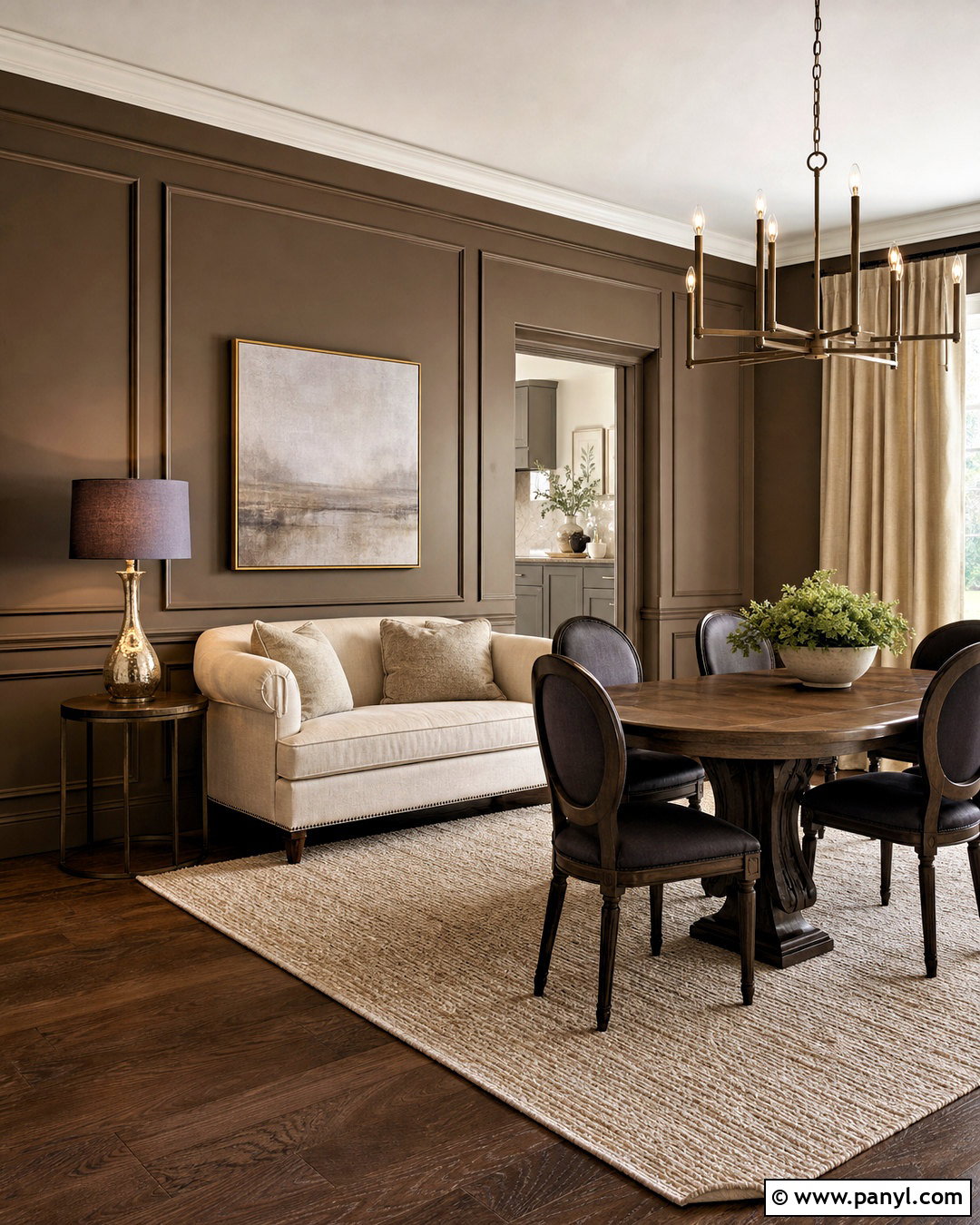
Traditional wall molding becomes more modern when painted in a single deep bronze color. Add rectangular trim panels across a dining room, bedroom, or formal living room wall, then coat the molding and background in the same satin or eggshell paint. This tone-on-tone treatment emphasizes shadow and dimension rather than strong color contrast. Pair it with a cream settee, dark wood table, and pale woven rug. Linen drapes in warm beige soften the wall’s structured lines. A contemporary chandelier or oversized pendant prevents the room from looking overly historical. Use minimal artwork because the molding already acts as decoration. Repeating bronze through one small accessory or lamp base connects the scheme. The finished space feels tailored, calm, and architectural without requiring expensive wall materials.
12. Textured Bronze Concrete Wall
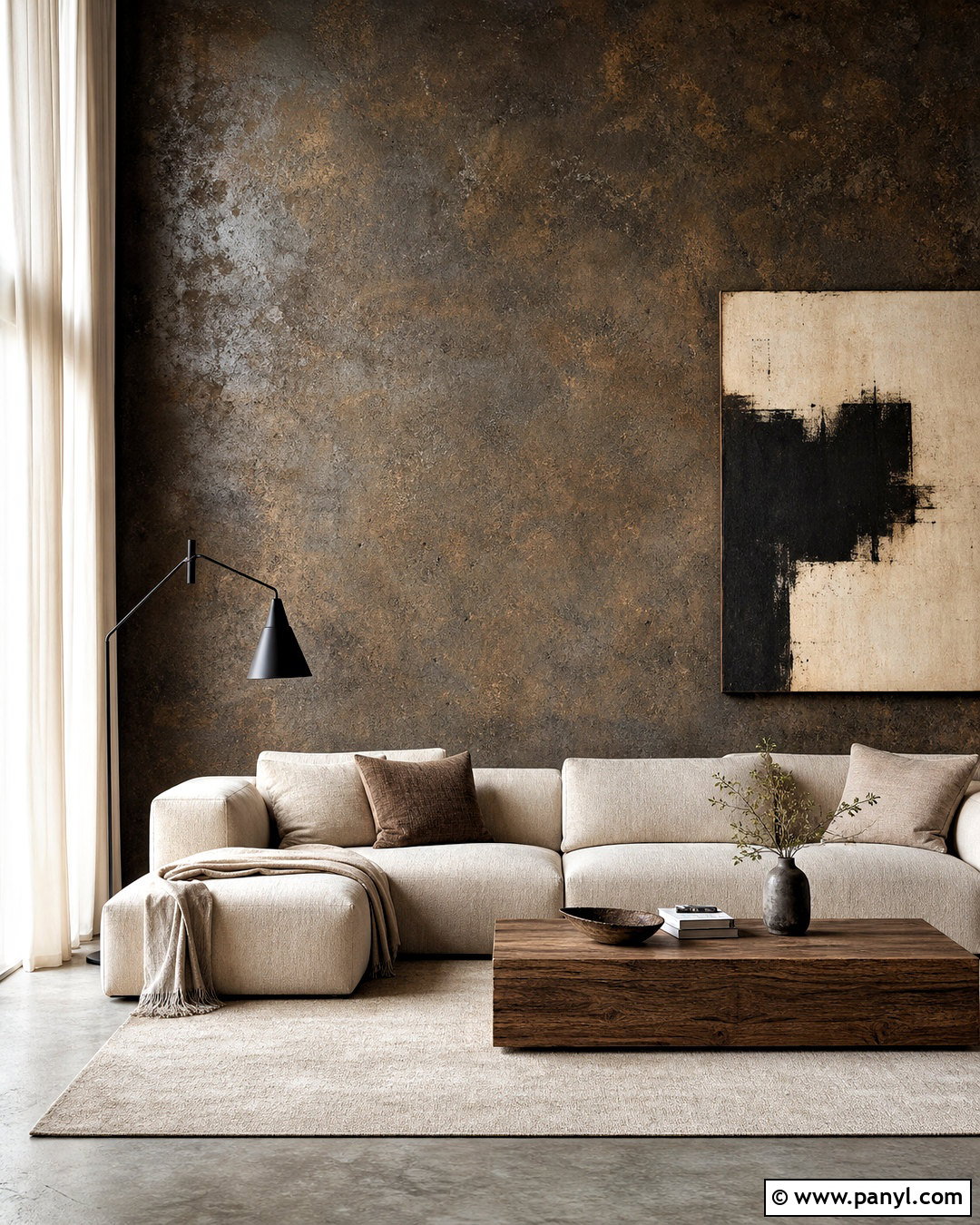
For an urban, minimalist room, combine a concrete-like wall finish with muted bronze pigment. The surface should appear softly mottled rather than shiny, with layers of brown, charcoal, and weathered metallic color. Place a low oatmeal sofa against the wall and add a solid oak coffee table with simple lines. A large cream rug, black floor lamp, and textured cushions soften the raw backdrop. Keep window treatments light and full length to bring movement into the space. One large abstract canvas is enough decoration, especially if it includes chalk white, rust, or charcoal. Pale flooring can counterbalance the darker surface. This complete design captures an industrial influence while remaining warm, livable, and appropriate for an average contemporary living room.
13. Bronze And Sage Green Wall
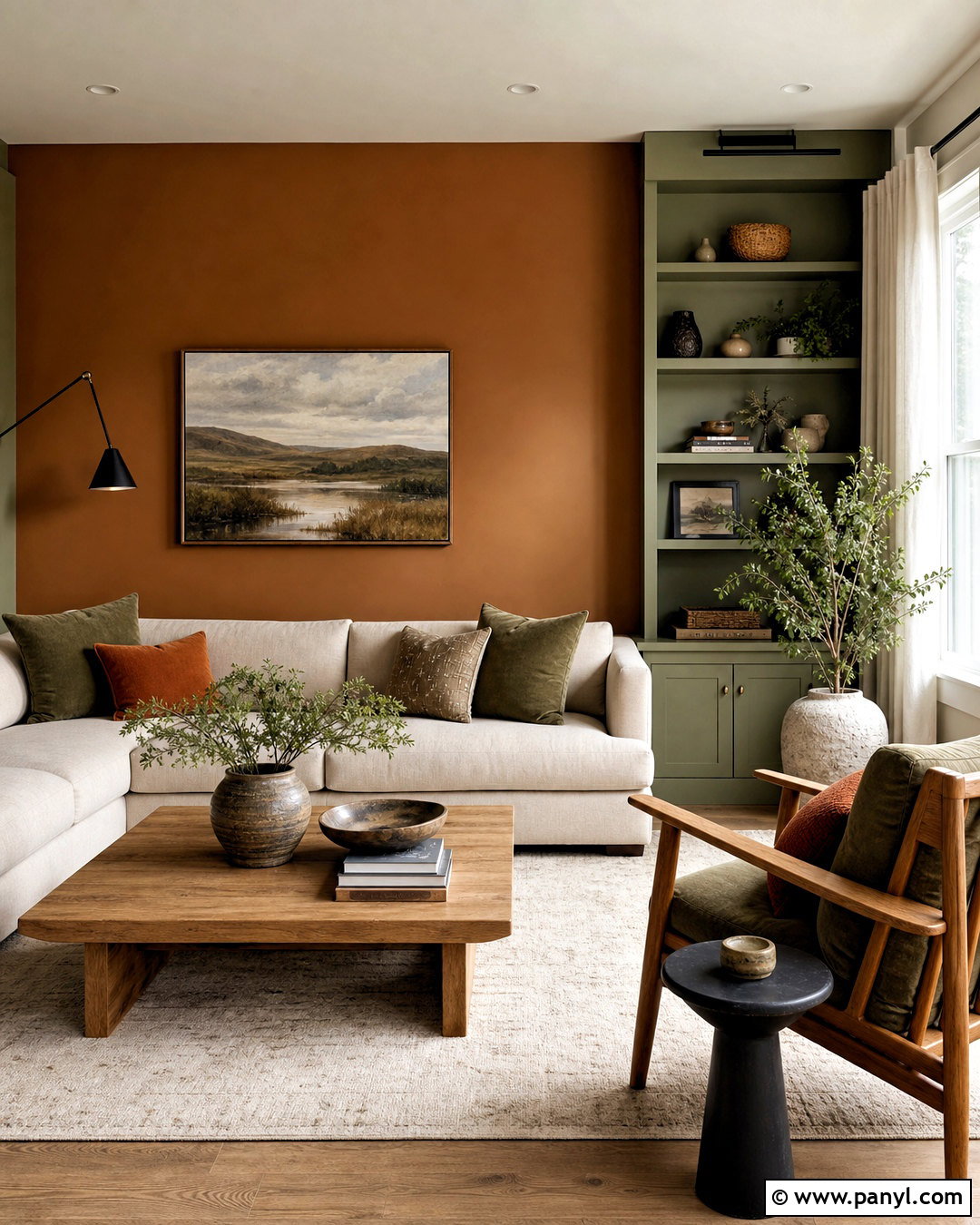
Bronze and sage green create a calm, nature-inspired living room when the colors are distributed carefully. Use bronze on the main wall behind a pale beige sofa, then introduce sage through an adjacent painted wall, built-in cabinetry, or full-length curtains. Choose warm oak furniture and an ivory rug to connect the two deeper colors. Cushions in cream, olive, and muted rust provide a gradual transition across the palette. Black metal lighting adds a clean outline without pulling attention away from the wall. Add a few plants in simple stone pots, but avoid filling every corner with greenery. Artwork featuring soft landscapes or abstract organic forms completes the scheme. The room feels earthy and layered while maintaining enough lightness for comfortable everyday living.
14. Bronze And Navy Dining Room Wall
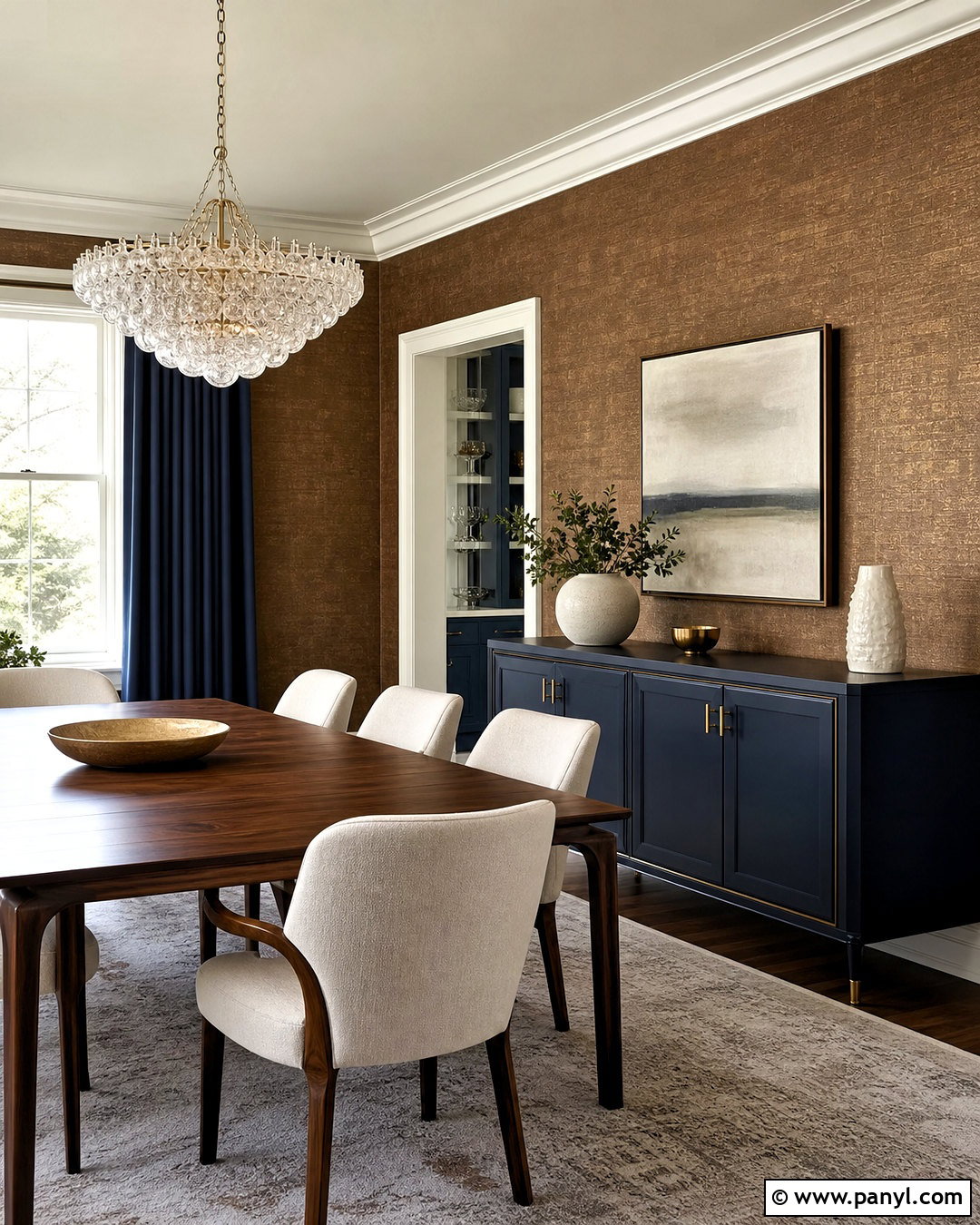
Bronze gains a formal, tailored quality when paired with deep navy blue. Use a textured bronze wall behind a navy-painted sideboard or set of built-in cabinets. Center a medium-tone walnut dining table in the room and surround it with upholstered chairs in cream or soft gray. A light rug under the table breaks up the darker palette and defines the dining zone. Choose a chandelier with clear glass shades and restrained bronze detailing. White or pale greige ceilings prevent the upper part of the room from feeling enclosed. Add navy linen curtains and simple ceramic table decor to repeat the cabinetry color. This fully coordinated dining room combines depth, contrast, and warmth without relying on excessive metallic accessories or highly decorative furniture.
15. Bronze And Cream Bedroom Wall
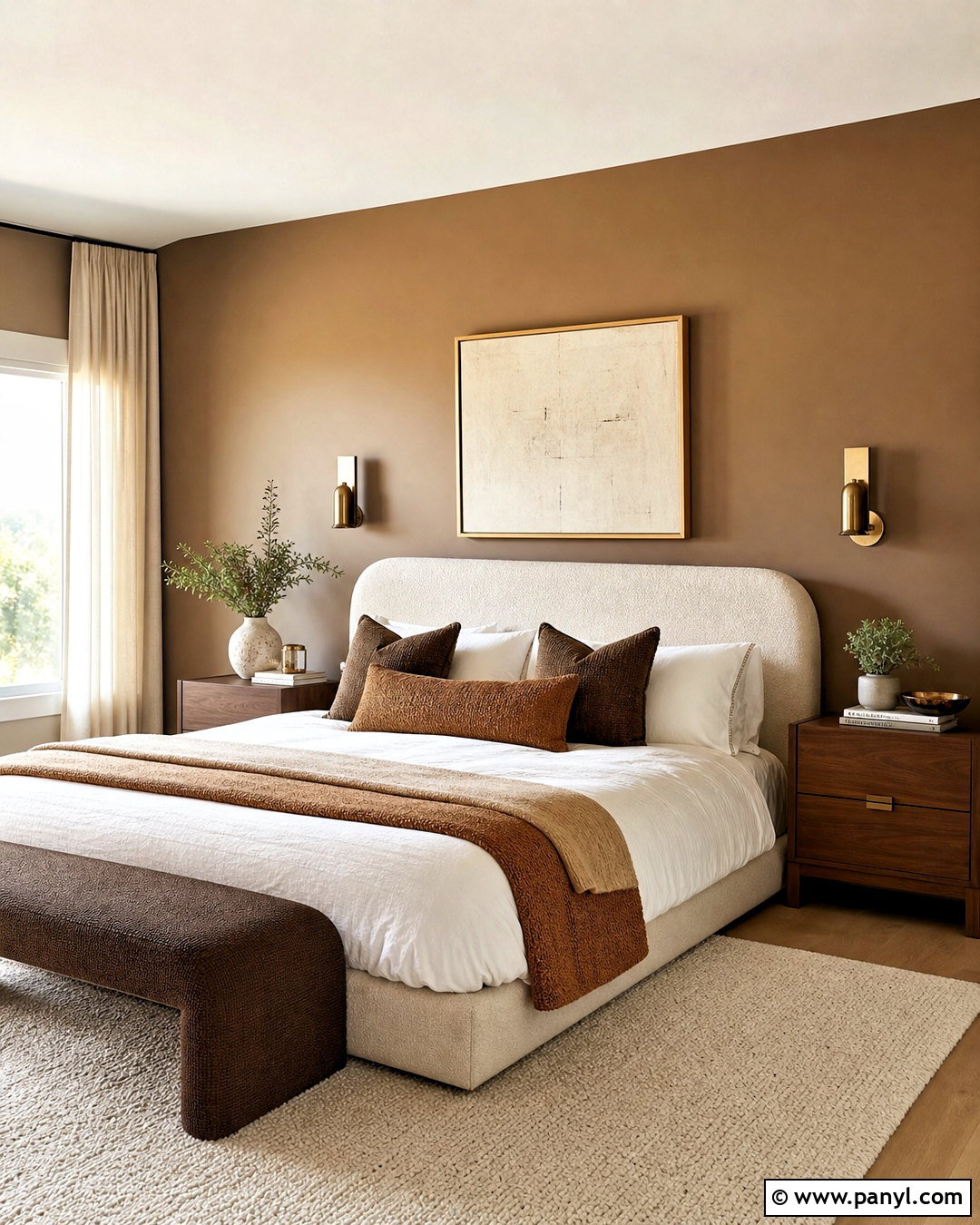
A cream and bronze bedroom feels warm without becoming visually heavy. Start with a soft bronze accent wall behind a low cream boucle or linen bed. Use matching cream paint on the remaining walls, then introduce depth through walnut nightstands and a medium brown bench. White bedding keeps the center of the room fresh, while taupe and cinnamon textiles create gentle layers. Place a large beige rug under the bed to soften wood flooring. Bronze wall sconces can save nightstand space and connect directly with the backdrop. Select light-filtering ivory curtains so daylight spreads across the darker paint. Keep artwork minimal, perhaps using one horizontal piece above the headboard. The complete scheme feels soothing, balanced, and easy to adapt to bedrooms of different sizes.
16. Bronze Bathroom Tile Wall
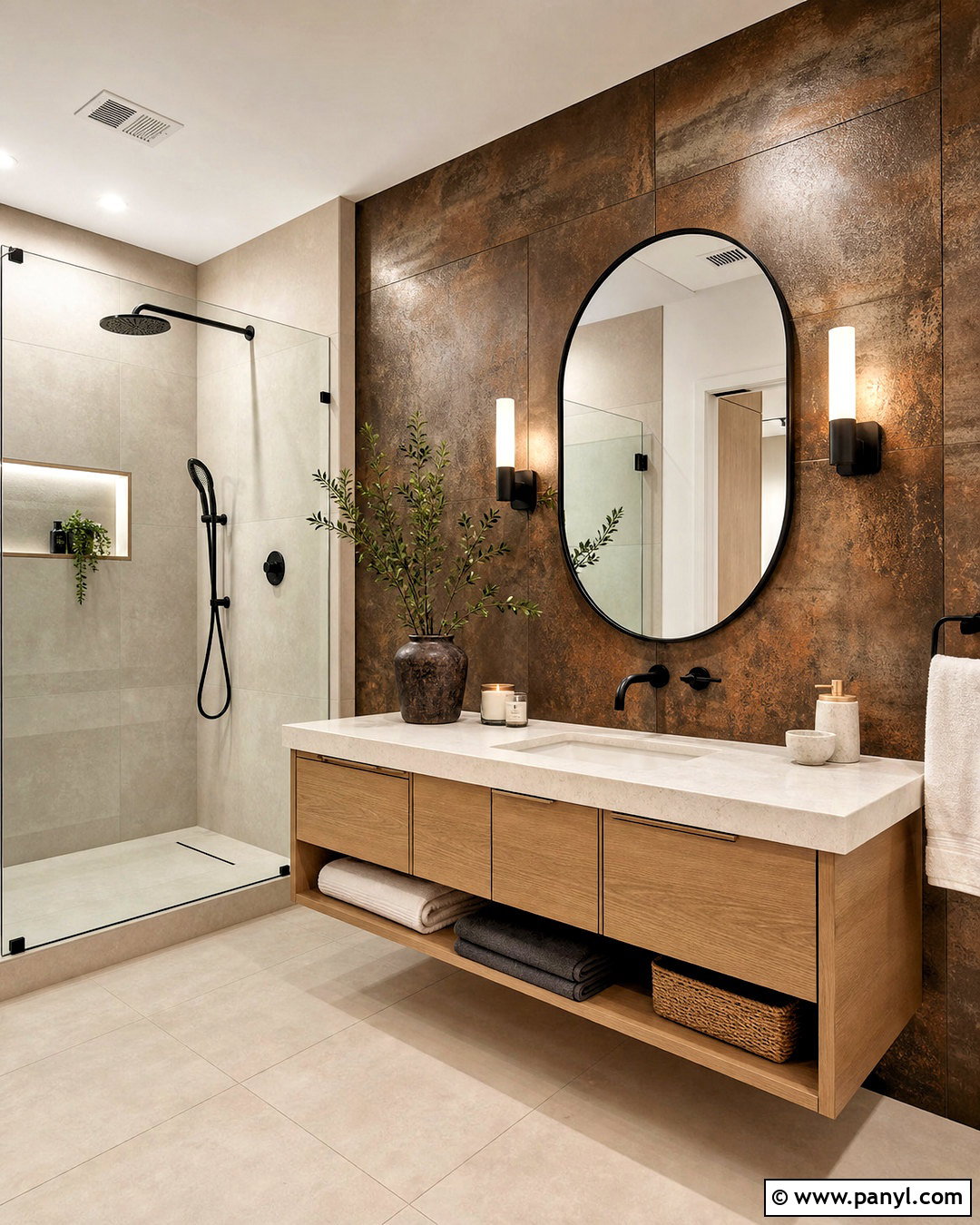
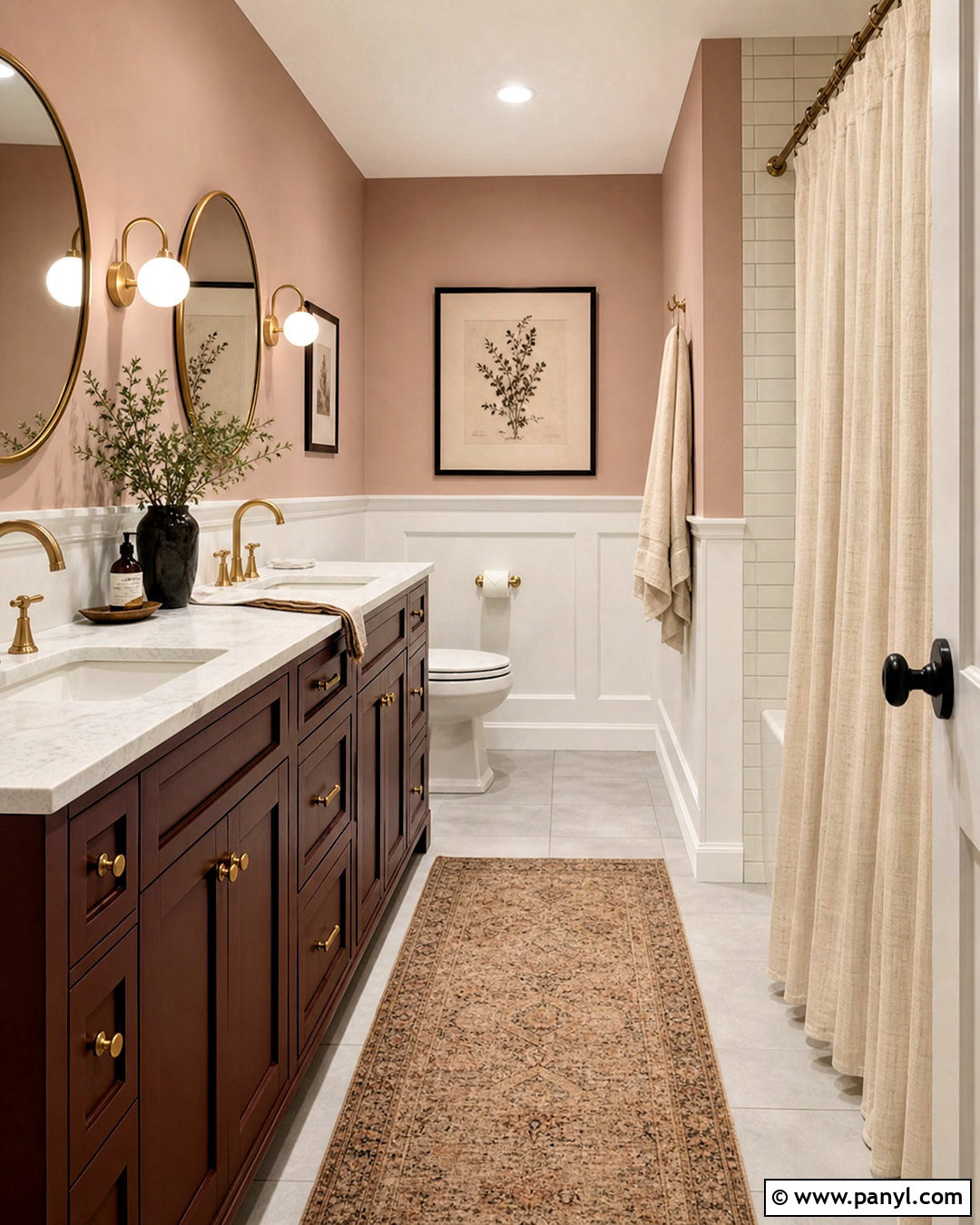
A bronze tile wall can give a bathroom depth while still supporting a clean, functional layout. Install textured bronze or bronze-look porcelain tile behind a floating vanity, extending it from the floor to the ceiling. Choose a white oak vanity, pale quartz countertop, and oval mirror with a slim black frame. Matte black faucets and shower hardware create definition without adding another warm metallic finish. Use large cream floor tiles and white walls elsewhere to reflect light. A frameless glass shower keeps the room visually open. Add folded white towels, one small plant, and a simple stone tray for a polished finish. With strong overhead lighting and balanced pale surfaces, the bronze wall appears rich and dimensional rather than dark or overly reflective.
17. Bronze Hallway Wall
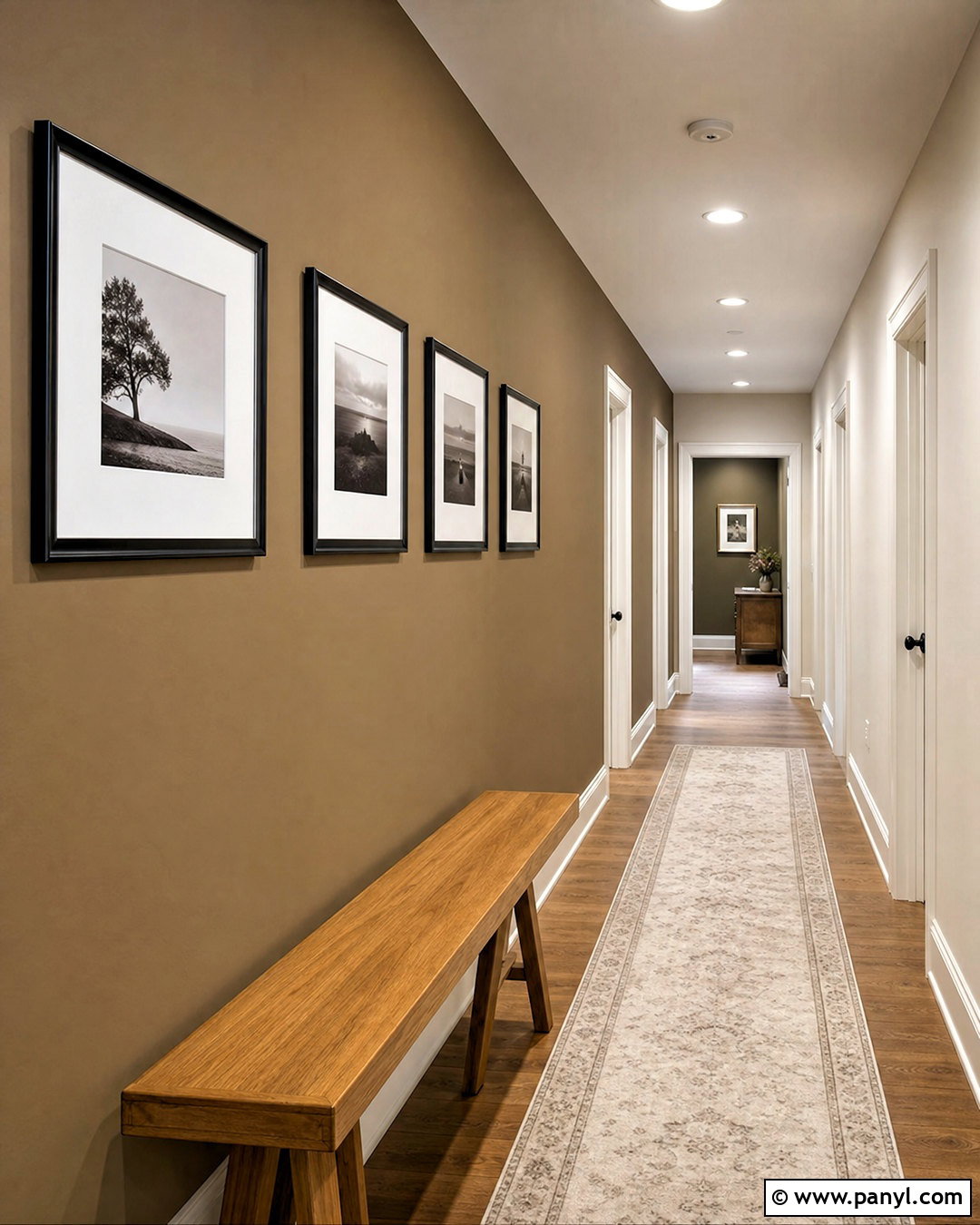
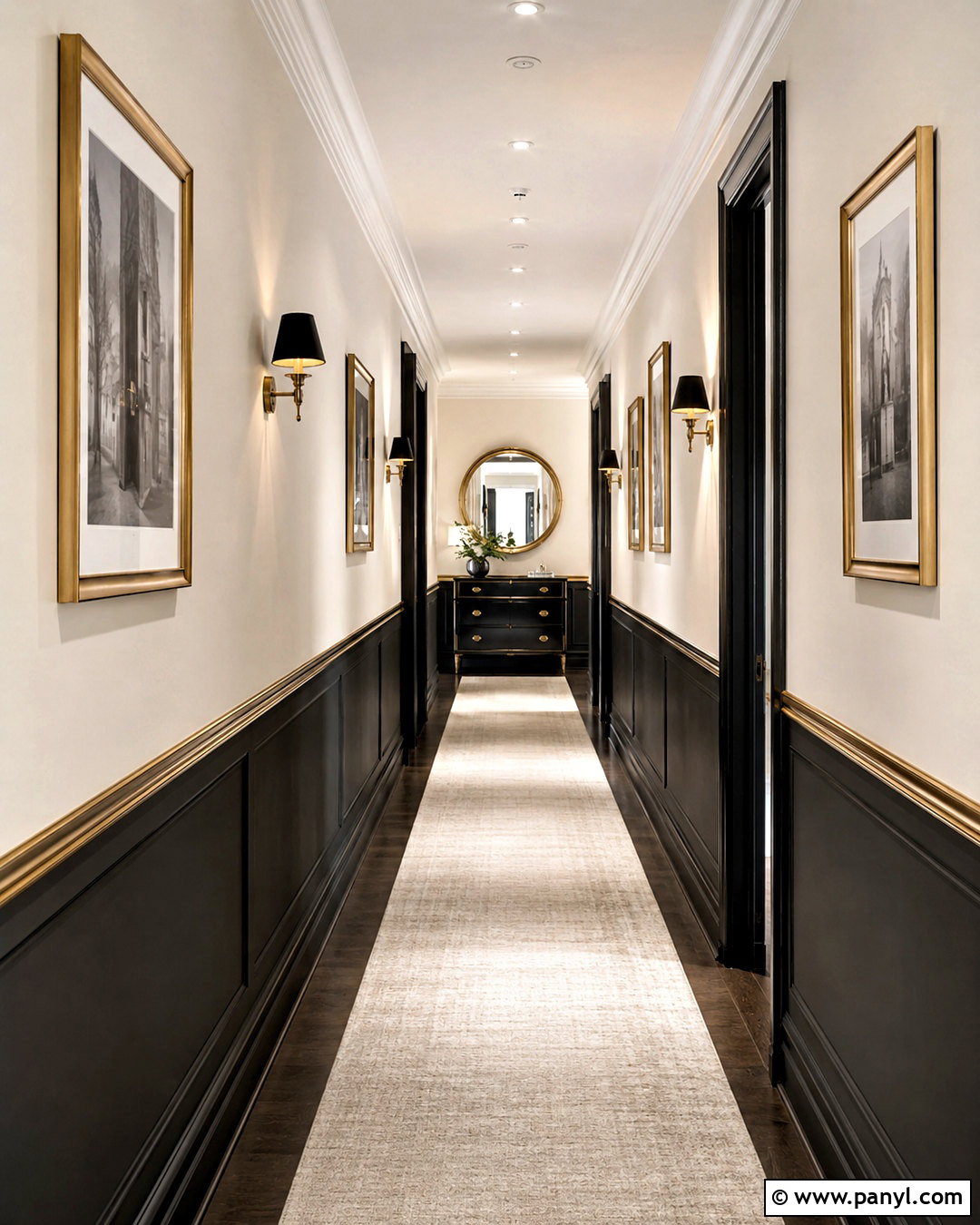
Long hallways often need visual rhythm more than additional furniture. Paint one continuous wall in a muted bronze finish and keep the opposite wall warm white. Along the bronze side, hang a measured row of medium-size black-framed photographs or prints with generous spacing between them. Install a narrow oak bench or floating ledge near the entrance without restricting the walkway. A cream runner with a subtle brown pattern brightens the floor and guides the eye forward. Simple ceiling lights should illuminate the corridor evenly, preventing deep shadows along the darker surface. If the hallway includes doors, paint them warm white for contrast. The complete arrangement transforms a pass-through area into a connected gallery while remaining uncluttered, practical, and comfortable to navigate.
18. Bronze Media Wall
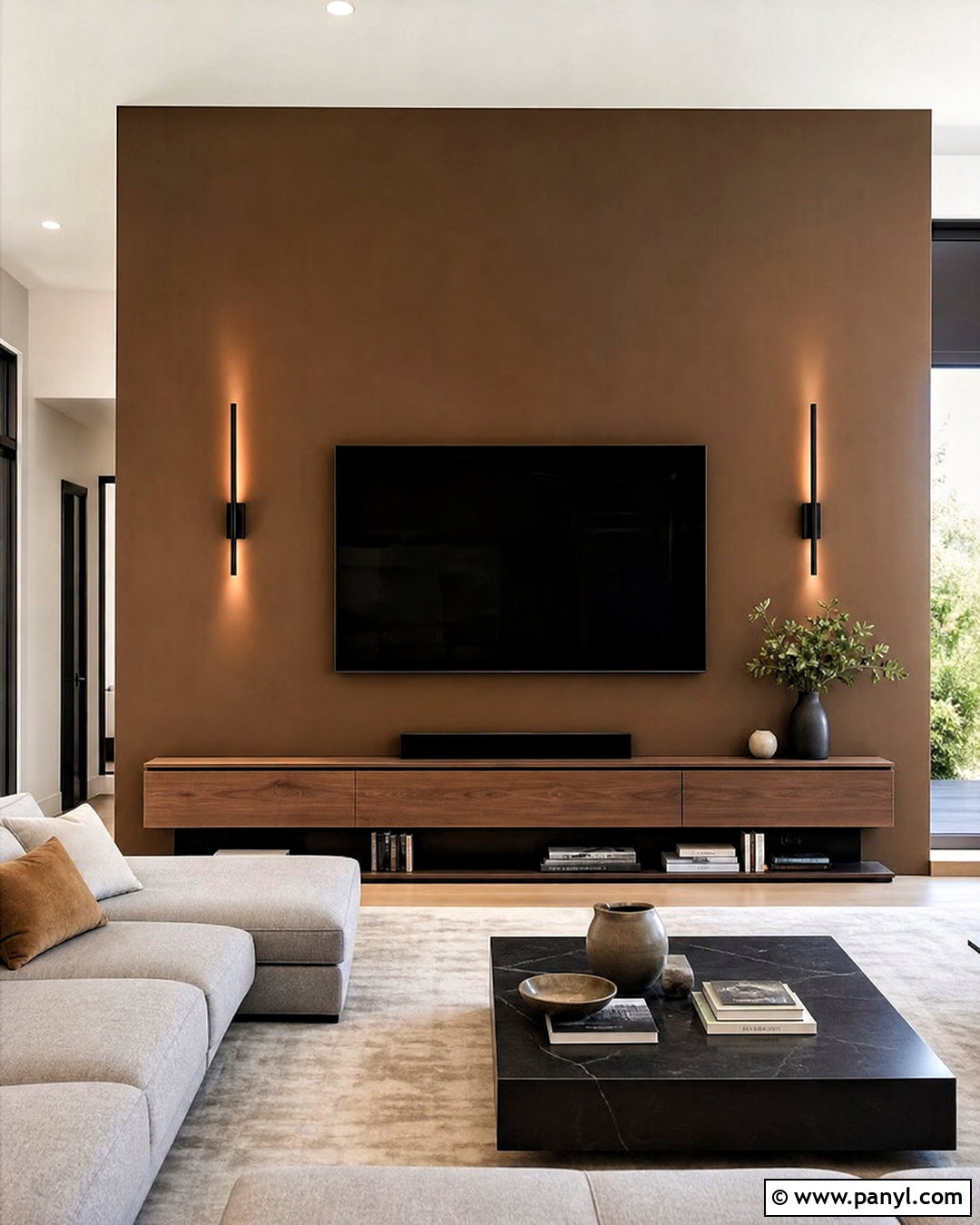
A bronze media wall can help a large television blend into the living room instead of dominating it. Paint the entire wall in a deep matte bronze, then add a floating walnut console beneath the screen. Keep cables, outlets, and devices concealed inside the cabinet. Slim wall-mounted sconces can frame the television, while low built-in shelves provide space for a few books and ceramics. Arrange a light gray sectional opposite the wall and use an ivory rug to brighten the seating area. Black accents in the coffee table and lighting connect visually with the screen. Avoid reflective metallic paint because glare may become distracting. The finished media room feels streamlined and welcoming, with every practical feature integrated into a balanced decorative composition.
19. Bronze Wall Niche
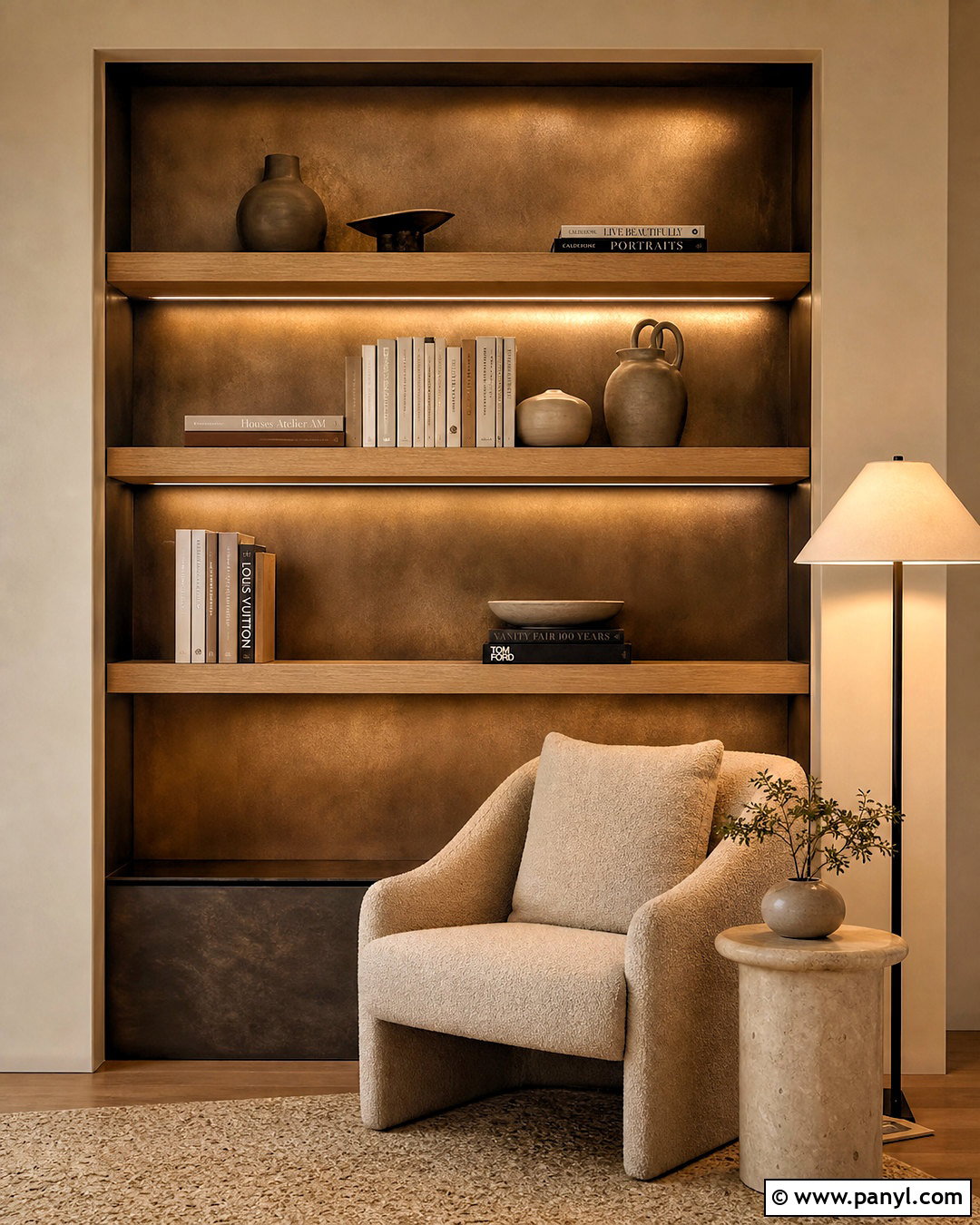
A recessed wall niche becomes a clear architectural feature when finished in bronze. Paint or panel the back and inner sides of the niche, leaving the surrounding wall creamy white or pale beige. Install floating oak shelves and arrange them with a restrained mix of books, ceramic vessels, and small sculptural objects. Concealed linear lighting at the top can illuminate the bronze evenly and make the recess appear deeper. Place a comfortable reading chair nearby with a small stone side table and neutral floor lamp. A textured rug defines the corner as a purposeful seating area. Repeating bronze in one picture frame or chair detail ties the niche to the furniture. This complete setup turns an awkward recess into useful storage and an attractive focal point.
20. Bronze Stairway Wall
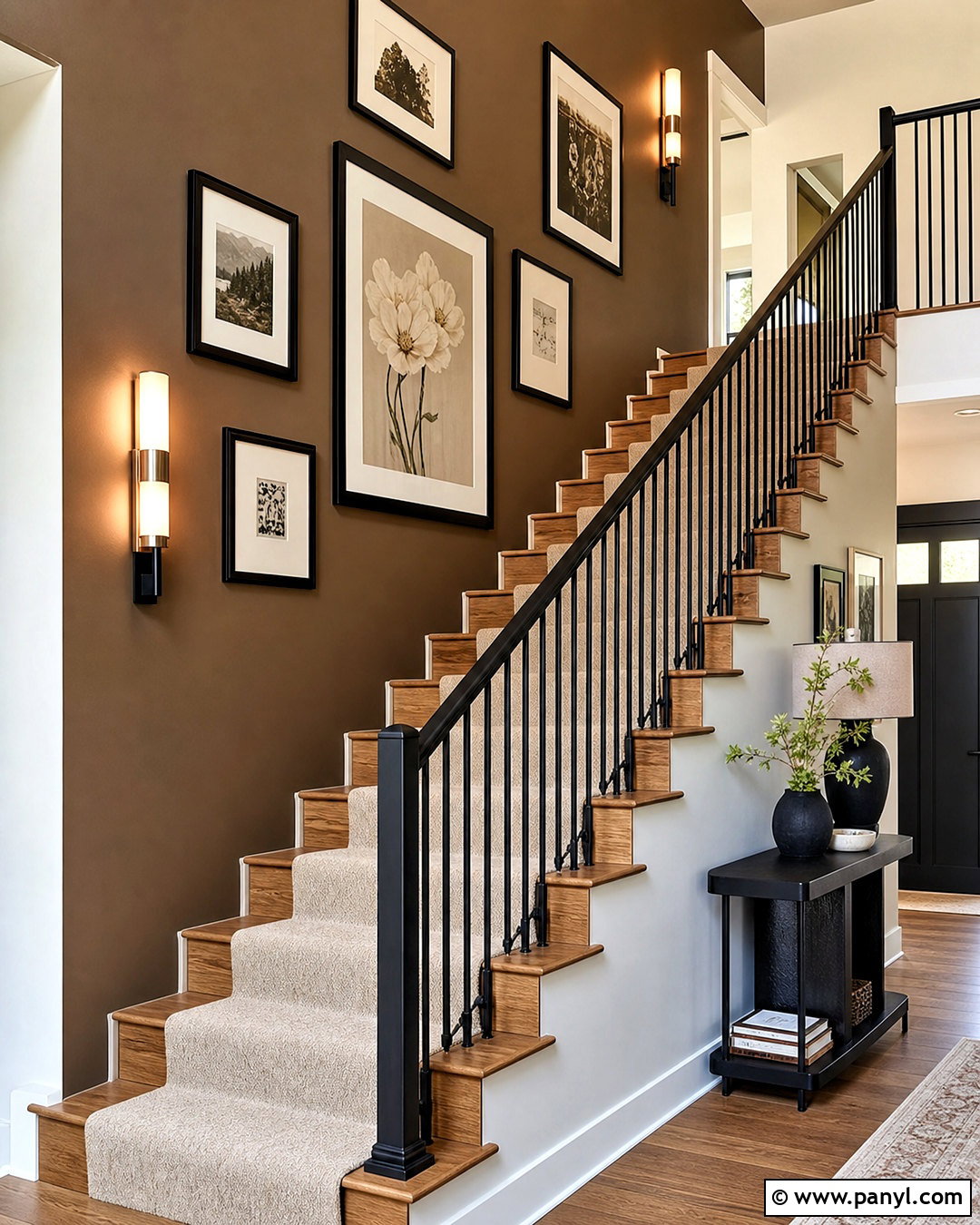
A bronze stairway wall creates continuity through an area that is often difficult to decorate. Apply a durable matte or low-sheen bronze paint along the full rising wall, then install a simple gallery of cream-matted artwork that follows the angle of the stairs. Use black or dark bronze frames for a clean outline. Natural oak stair treads and a black metal railing balance the warm wall color. If the staircase lacks windows, add evenly spaced wall sconces to eliminate dark corners. Keep the opposite surfaces soft white and choose a beige runner for comfort and contrast. Limit accessories at the landing to one console or large plant. The completed staircase feels connected to the surrounding home while gaining its own strong, organized visual identity.
Conclusion:
The best bronze wall ideas balance rich color with lighter surfaces, tactile materials, and practical room layouts. Bronze can appear earthy, industrial, traditional, or glamorous depending on whether you choose matte paint, textured wallpaper, tile, molding, or metal panels. Before committing, view a large sample in morning and evening light because bronze finishes can change noticeably throughout the day. Keep the complete room in mind as you select flooring, furniture, artwork, and lighting. Cream, oak, walnut, sage, navy, stone, and matte black are especially useful companions. With thoughtful contrast and restrained metallic repetition, a bronze wall can become a warm focal point that looks intentional rather than overpowering.

Related Ideas and Inspiration:
Leave a Reply