
Lavender walls can make a room feel calm, colorful, and surprisingly sophisticated. The key is choosing the right undertone and building a complete palette around it. Pale gray-lavender works beautifully in quiet modern spaces, while warmer lilac shades complement cream, oak, brass, and vintage furniture. Deeper lavender creates a richer backdrop for charcoal, navy, walnut, or plum accents. Lighting also matters because natural and artificial light can shift lavender toward blue, pink, or gray. Before painting, test a large sample on several walls and view it throughout the day. The complete room looks below cover bedrooms, living areas, kitchens, bathrooms, workspaces, and compact rooms, making it easier to find a practical approach to **Lavender Walls**.

1. Lavender Walls With White Trim
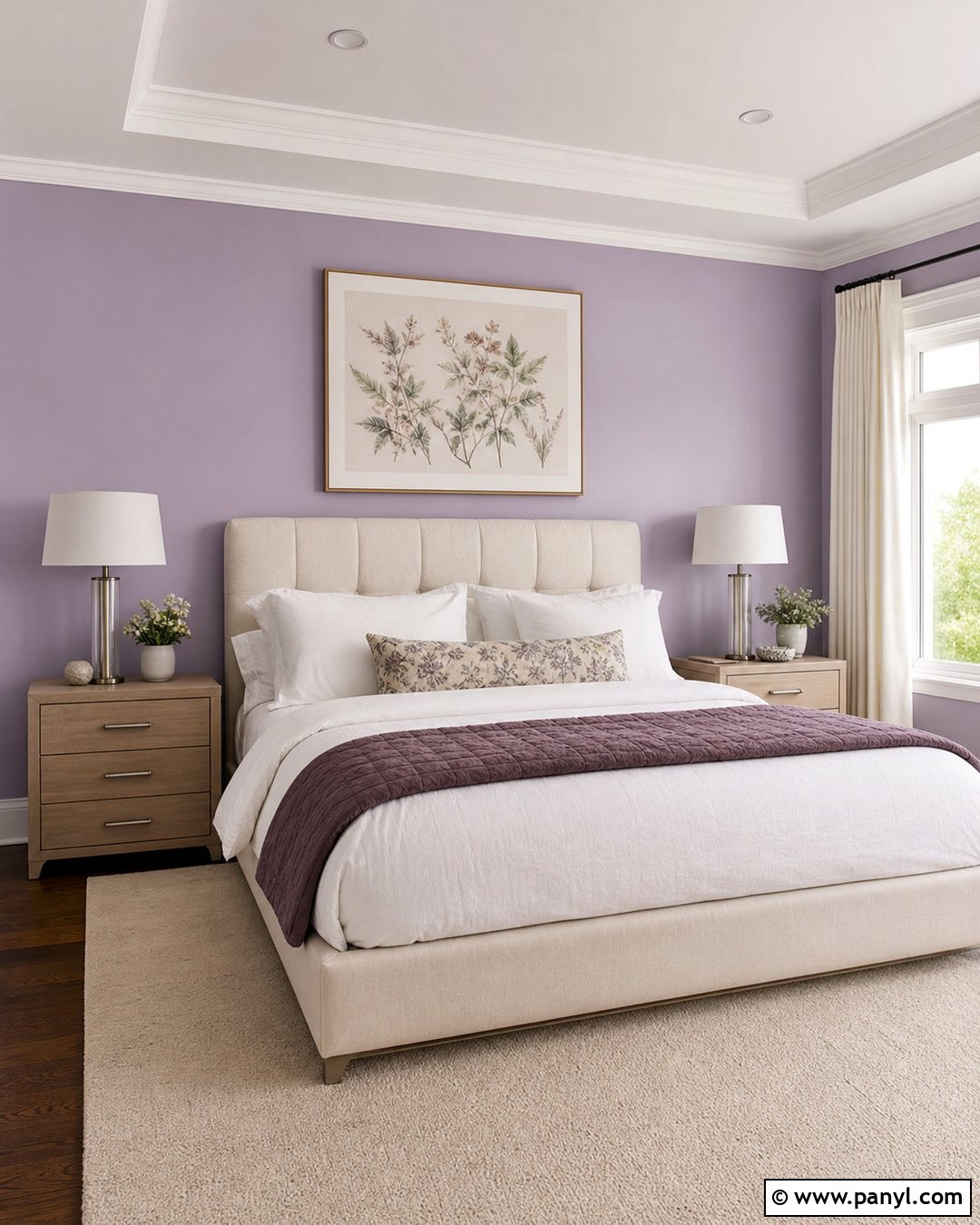
Crisp white trim gives lavender walls a clean, approachable finish that works especially well in a primary bedroom. Choose a soft lavender with slightly gray undertones, then paint the ceiling, baseboards, doors, and window casings a fresh neutral white. Center a cream upholstered bed against the longest wall and add pale oak nightstands for natural warmth. White linen bedding keeps the palette airy, while a quilt in muted plum adds gentle depth. Use brushed nickel lamps, simple framed botanical prints, and a light beige wool rug. Full-length ivory curtains soften the windows without competing with the wall color. The finished bedroom feels polished and restful rather than overly sweet, making this combination easy to live with for years.
2. Lavender Walls With Sage Green
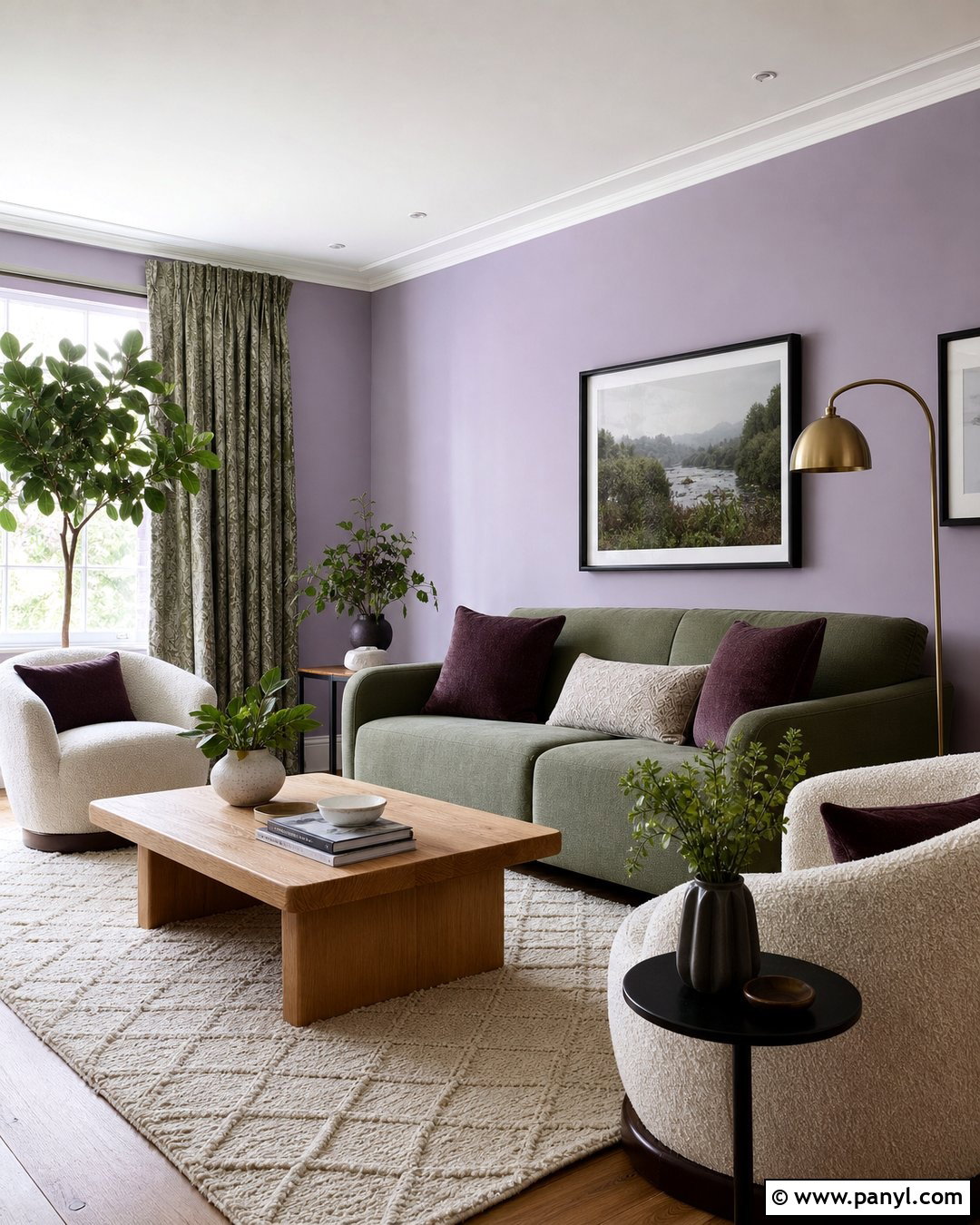
Lavender and sage green create a balanced living room inspired by natural garden colors. Cover the walls in a dusty lavender rather than a bright purple, and ground the seating area with a muted sage sofa. Add two cream boucle chairs, a medium oak coffee table, and a textured ivory rug to keep the room light. Sage-patterned curtains can repeat the sofa color without creating a perfect match. Bring in darker contrast through an aged bronze floor lamp, black picture frames, and one deep plum pillow. Potted greenery helps connect the palette, while warm white lamps prevent the lavender from appearing cold after sunset. Arrange furniture around a simple fireplace or low media cabinet for a comfortable, complete gathering space.
3. Lavender Walls With Warm Beige
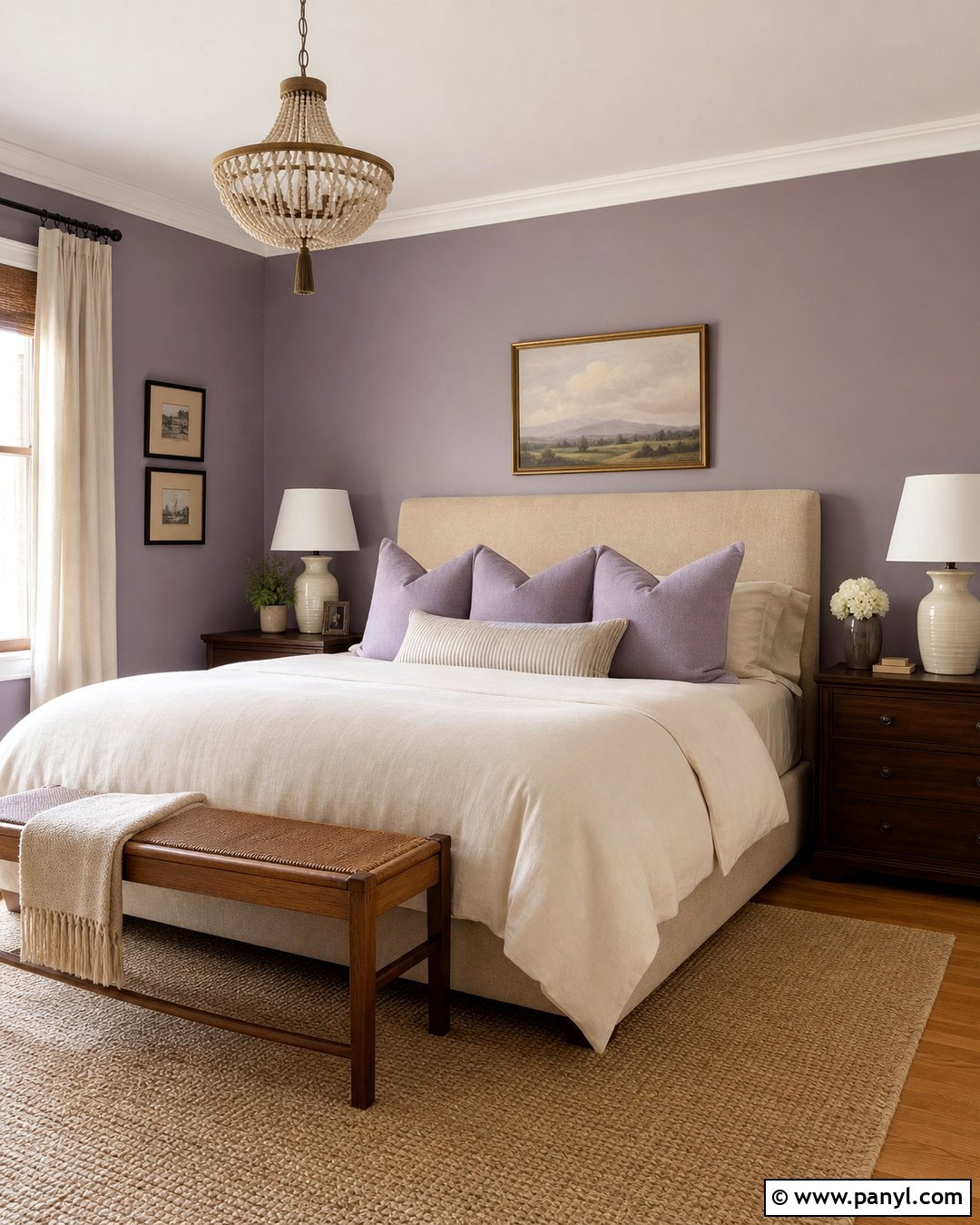
Warm beige prevents lavender walls from feeling cool or overly delicate. This combination is ideal for a comfortable guest bedroom with a relaxed, neutral foundation. Paint all four walls a muted lavender-gray and choose a sand-colored upholstered headboard with simple vertical channels. Layer the bed with oatmeal sheets, an ivory duvet, and two lavender lumbar pillows. Light walnut nightstands add richer warmth, while ceramic lamps in soft cream create an understated finish. Place a natural jute and wool rug beneath the bed and hang flax-colored curtains high above the window. A wooden bench, woven basket, and small landscape prints complete the look. The restrained palette gives guests a calm room that still feels distinctive and thoughtfully decorated.
4. Lavender Walls With Navy Blue
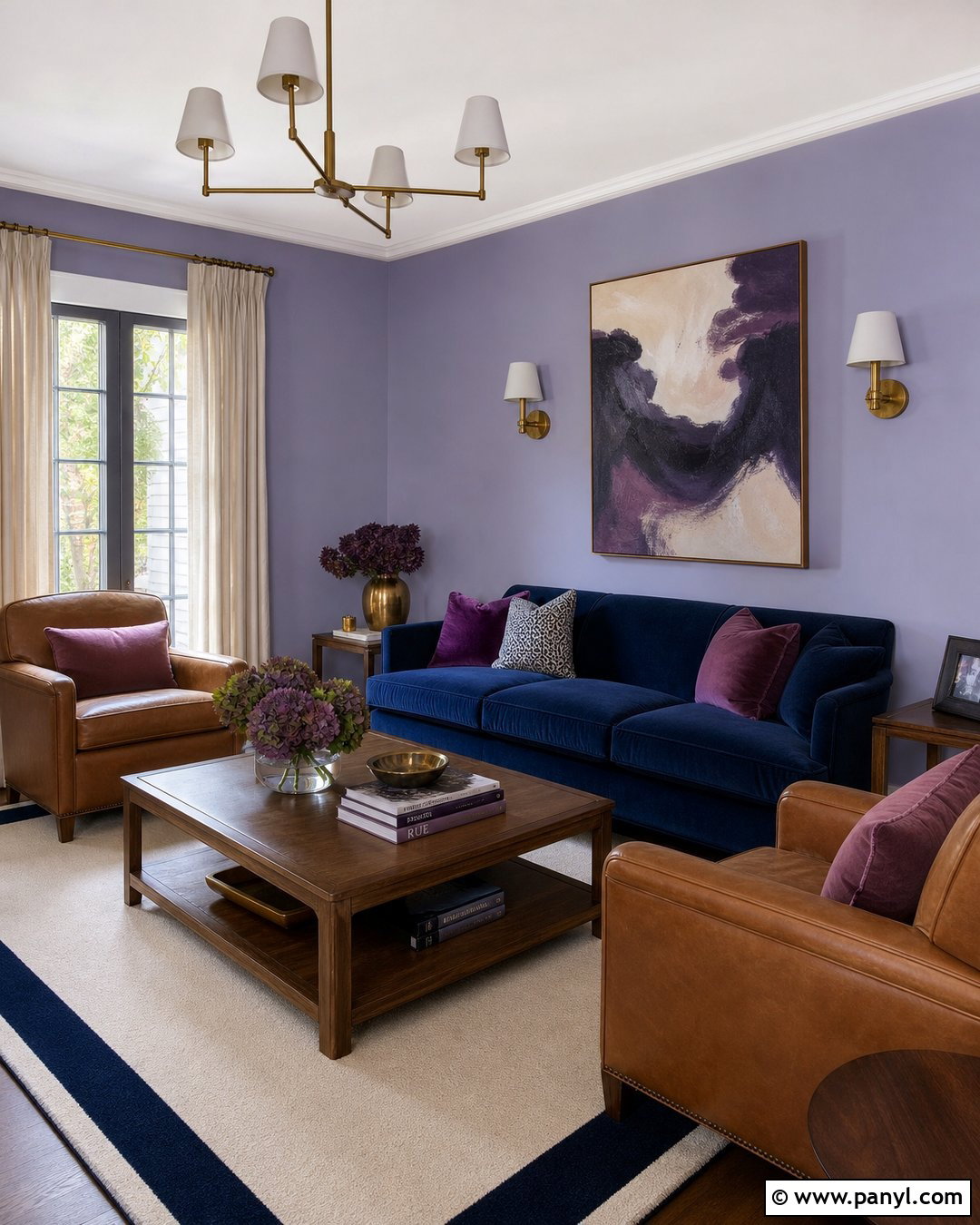
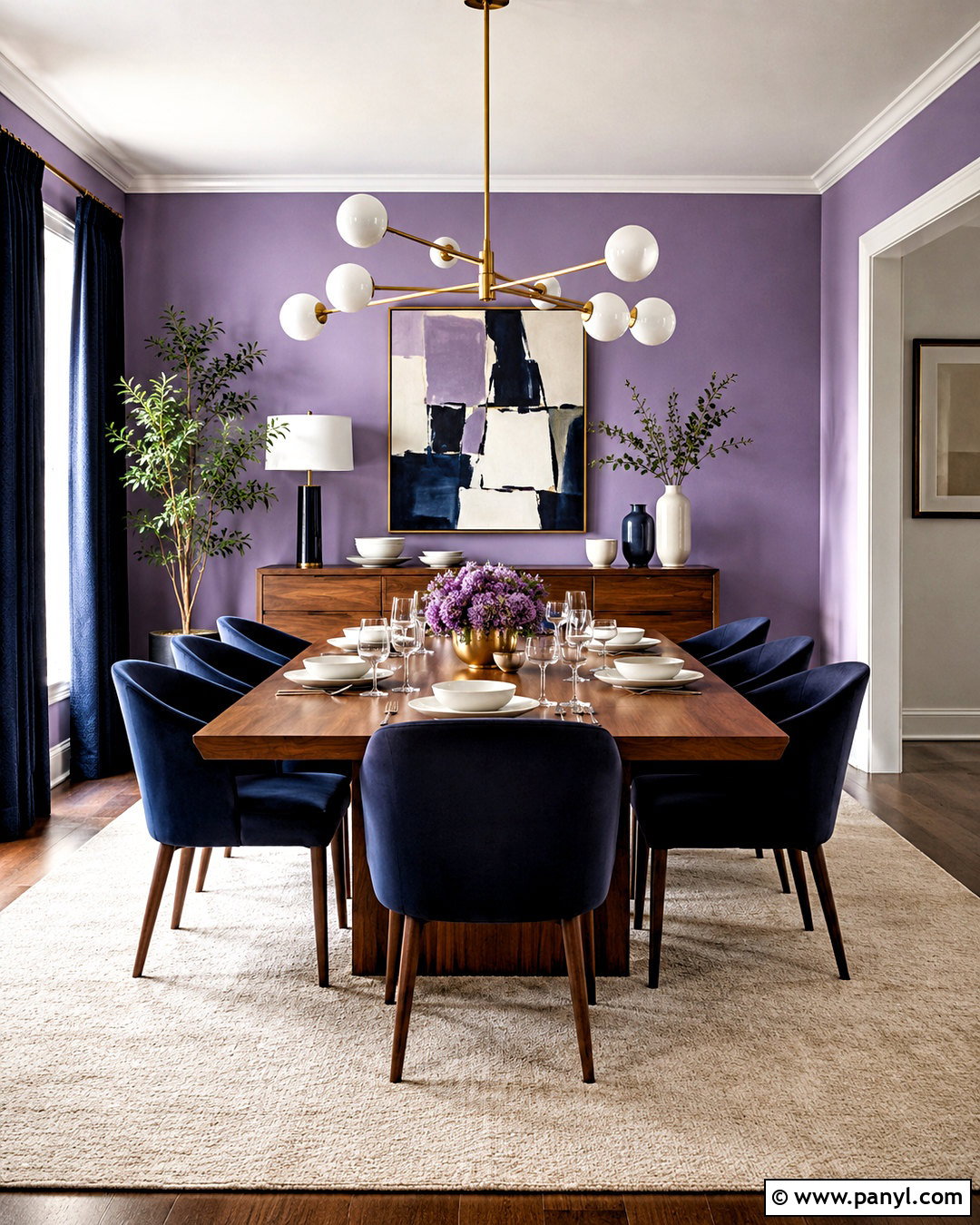
Deep navy gives lavender walls a tailored appearance that suits an adult living room or den. Start with a medium lavender paint that has cool blue undertones. Place a streamlined navy sofa against one wall and balance it with warm tan leather chairs across the coffee table. A cream rug with a subtle navy border defines the conversation area without darkening the room. Use walnut tables, aged brass lighting, and ivory curtains to add warmth. Artwork featuring lavender, navy, rust, and soft white can connect every color in the room. Finish with solid pillows instead of busy patterns and keep decorative objects limited. This controlled combination feels colorful and confident, yet the lavender remains soft enough to support everyday relaxation.
5. Lavender Walls With Blush Pink
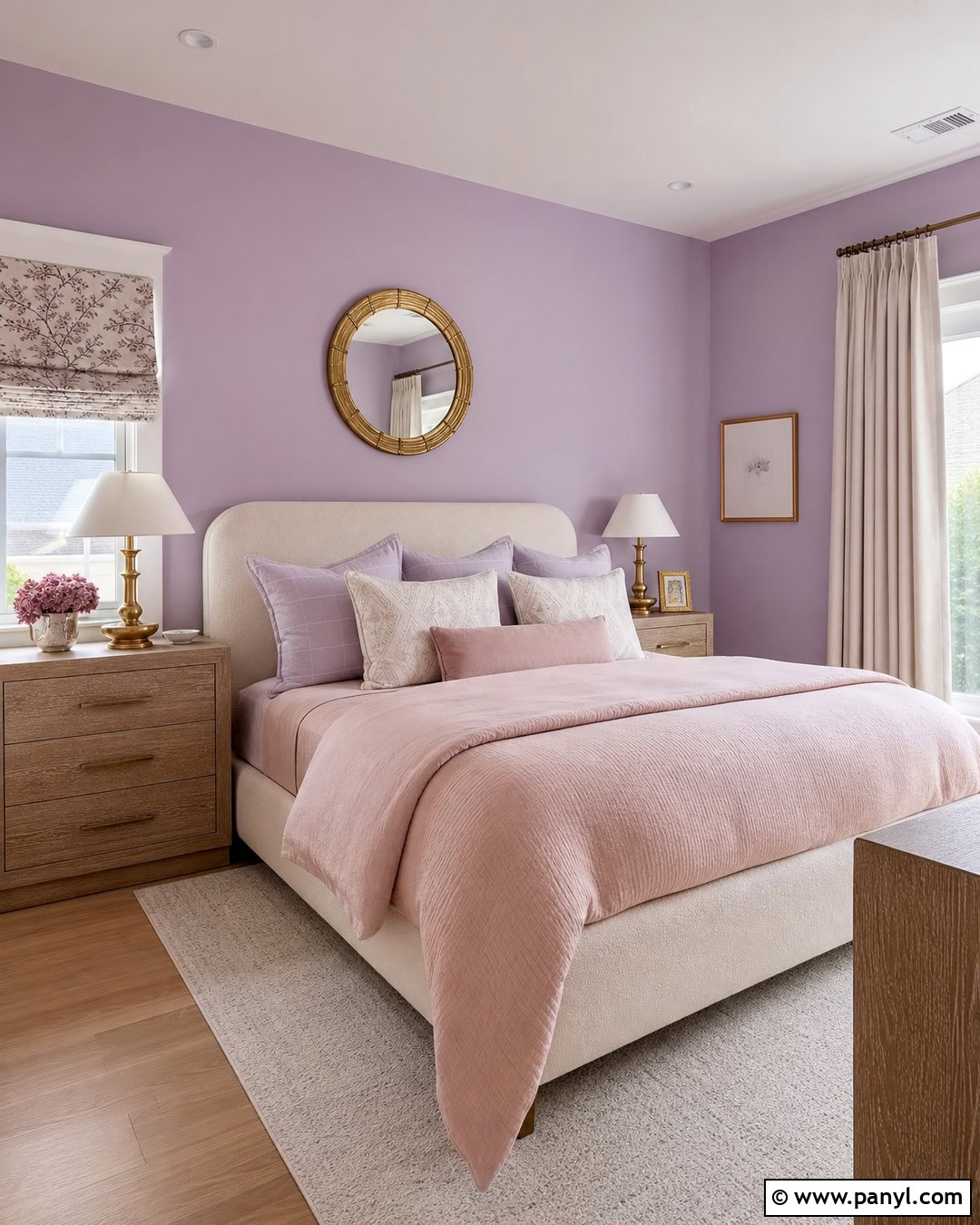
A blush and lavender guest room can feel elegant when the colors are softened with cream and natural wood. Select pale lavender walls with warm pink undertones, then use a dusty blush coverlet as the room’s main secondary color. A cream upholstered bed, bleached oak nightstands, and an ivory rug keep the palette from becoming too sugary. Choose one patterned pillow or Roman shade containing lavender, blush, beige, and muted green. Add antique brass lamps and a simple gold-framed mirror for warmth. White bedding creates visual breathing room between the pastel shades. Complete the design with linen curtains, a narrow wooden bench, and a few ceramic accessories. The result is gentle, grown-up, and welcoming without looking like a themed room.
6. Lavender Walls With Charcoal Gray
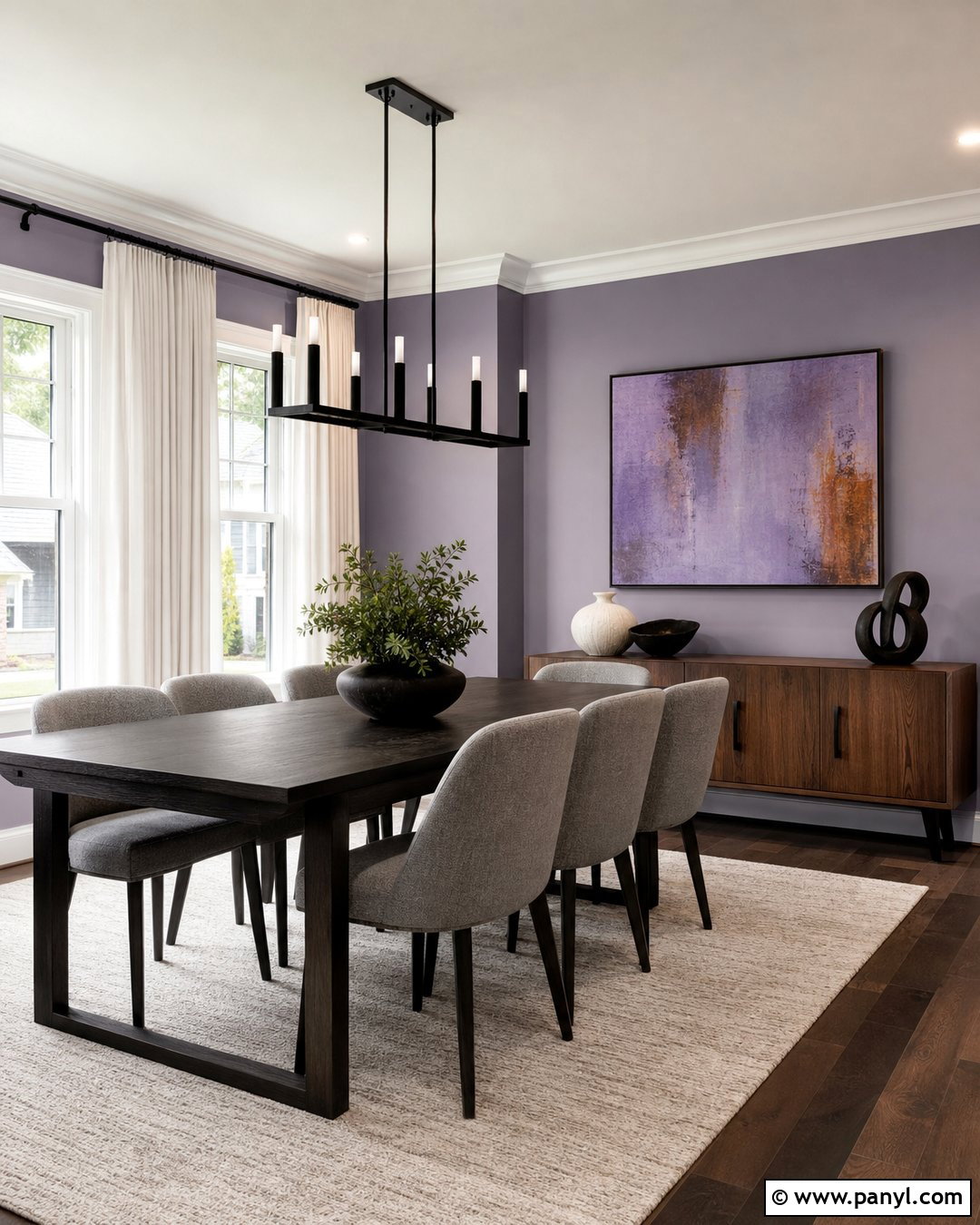
Charcoal furniture creates strong definition against pale lavender walls, making this palette useful in a contemporary dining room. Paint the walls a subdued lavender-gray and leave the ceiling bright white. Place a charcoal-stained dining table in the center with matching chairs upholstered in light gray fabric. Above it, install a matte black linear chandelier that provides structure without looking heavy. A large cream rug softens the dark furniture, while white curtains brighten the windows. Add a walnut sideboard to introduce warmth and display sculptural white ceramics, clear glass, and one leafy branch. Abstract artwork with lavender, charcoal, and rust can unify the scheme. The room feels modern and substantial while preserving lavender’s quiet, relaxing character.
7. Lavender Walls With Natural Oak
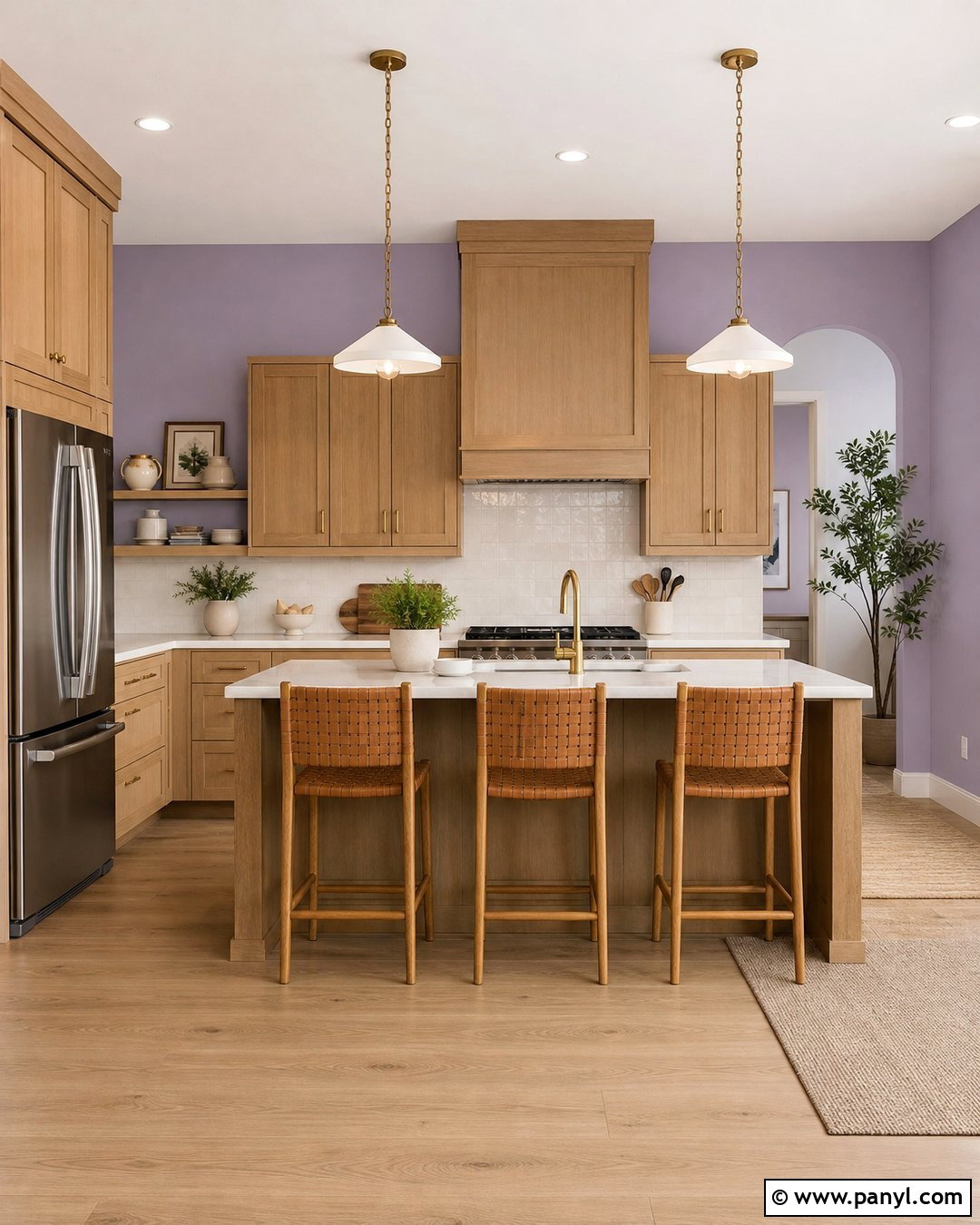
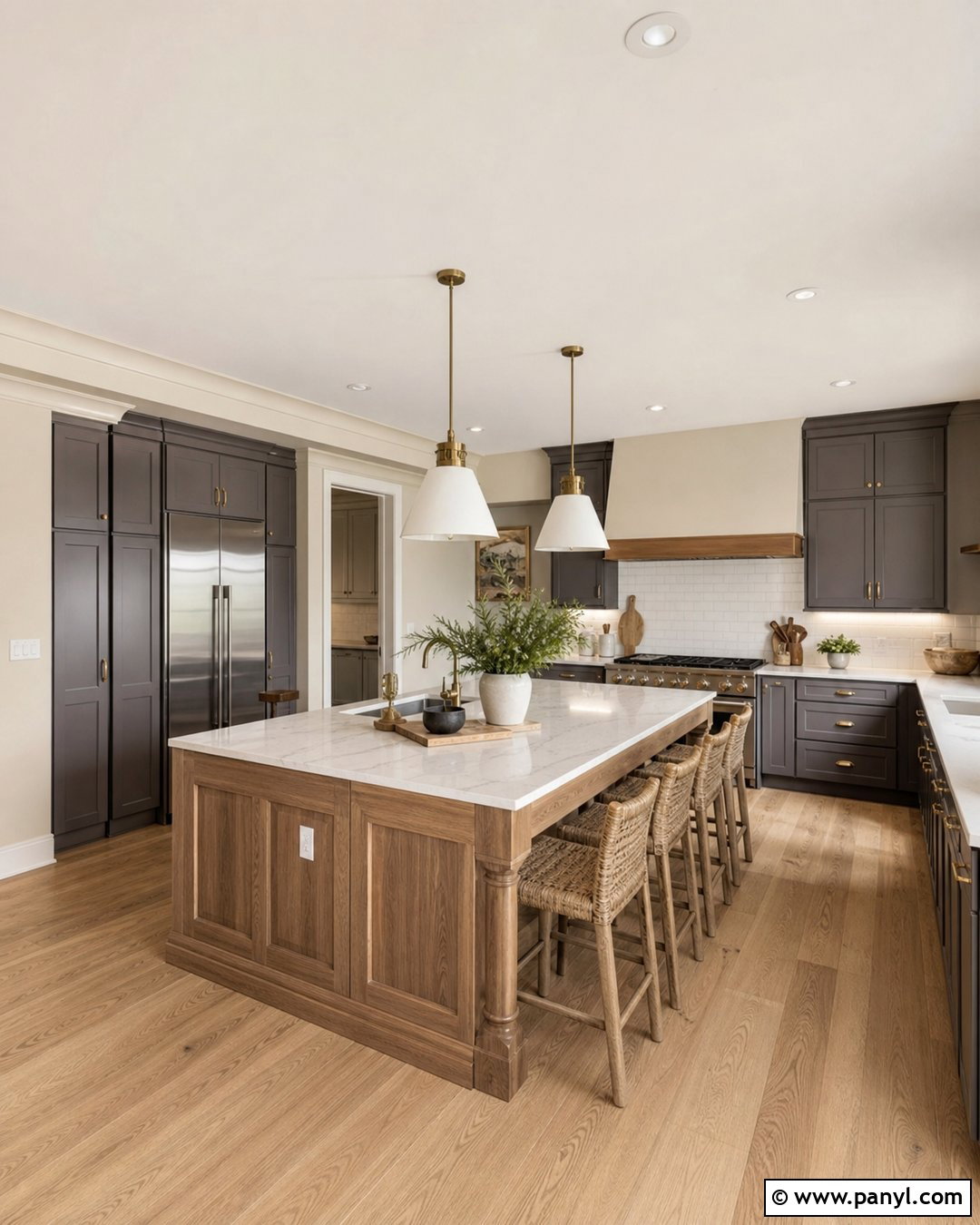
Natural oak brings warmth and everyday practicality to lavender kitchen walls. Use a muted, gray-based lavender on the open wall areas and pair it with flat-panel oak cabinets in a clear matte finish. Choose creamy white quartz counters and a simple off-white backsplash so the wood grain remains prominent. Brushed brass cabinet pulls introduce a warm metallic note without overwhelming the soft palette. A light oak island with woven counter stools can anchor the room, while warm white pendant lights provide balanced illumination. Keep small appliances neutral and display only a few stoneware pieces in cream and lavender. Pale wood flooring connects the cabinetry and island. The completed kitchen feels fresh, inviting, and colorful while remaining easy to coordinate with adjoining spaces.
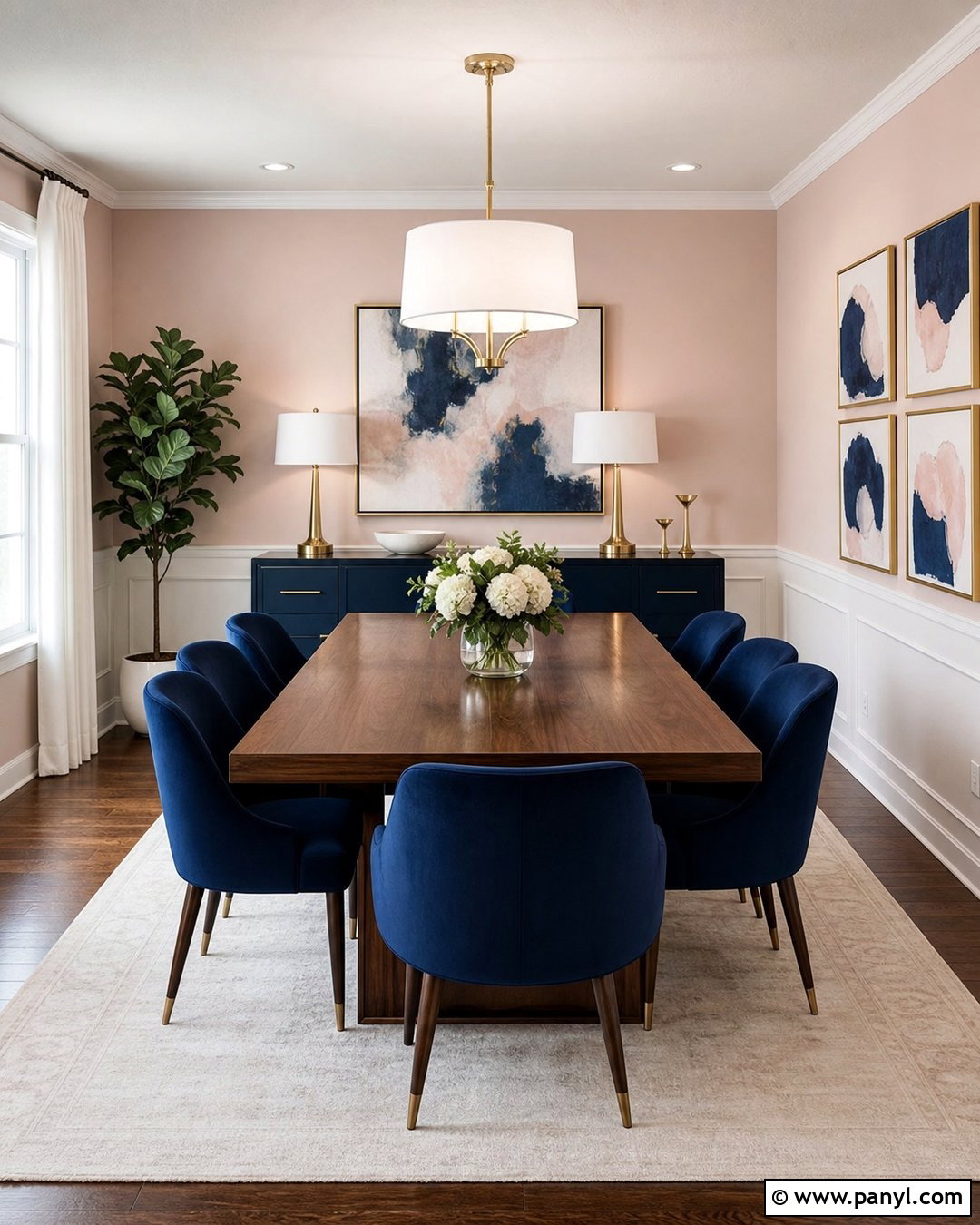
8. Lavender Walls With White Marble
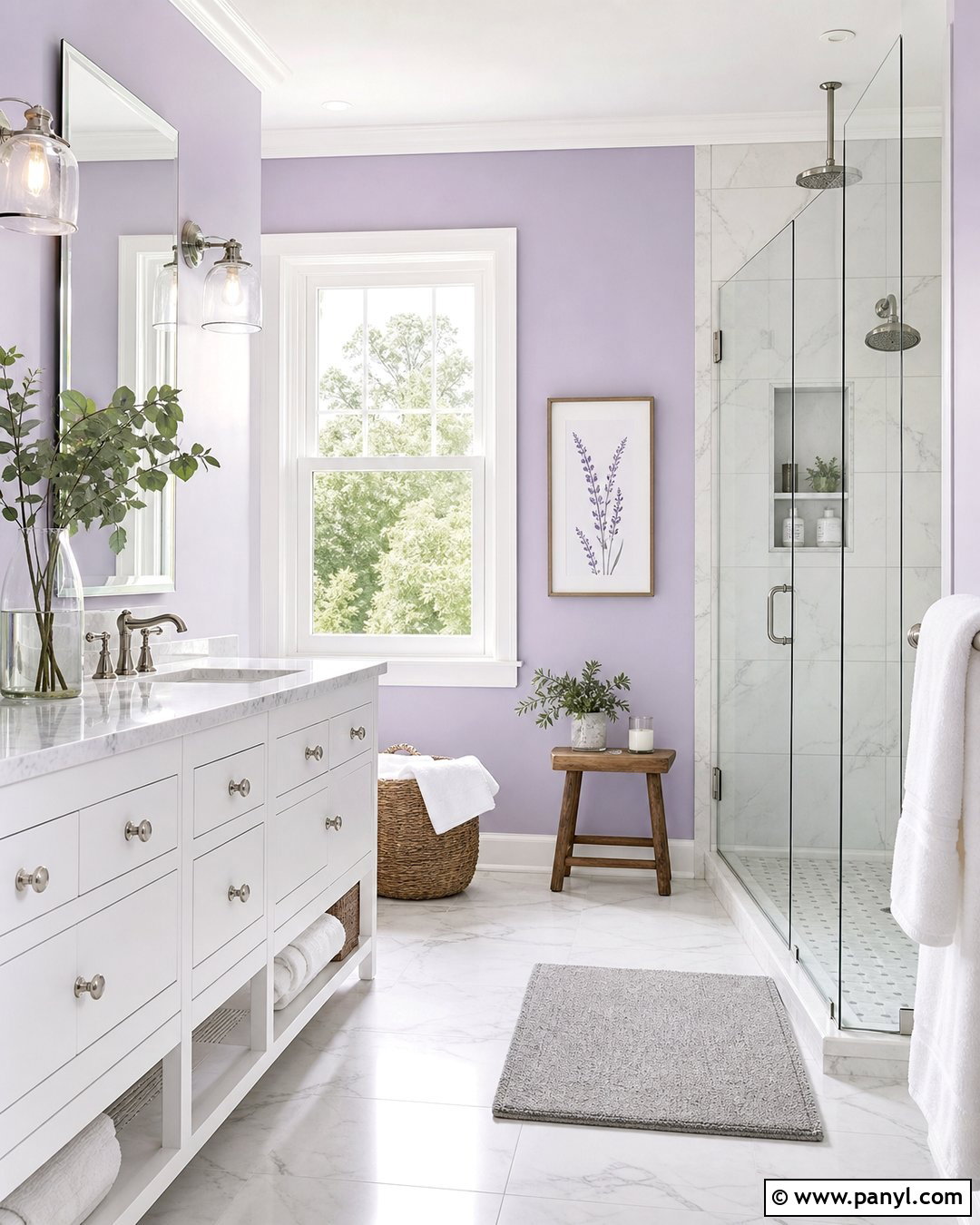
Imagine a bright bathroom where pale lavender walls soften the crisp surfaces of white marble. Use lavender paint above marble-look wall tile or traditional white wainscoting, depending on the room’s architecture. A white vanity with a marble counter provides practical storage, while polished nickel faucets echo the stone’s cool veining. Add a frameless glass shower, white towels, and a light gray bath mat for a spa-inspired base. A natural oak stool and woven basket prevent the room from feeling clinical. Install a large mirror and clear glass sconces to reflect light around the space. Keep decorative accents restrained, using small ceramic containers and one vase of greenery. The overall bathroom looks peaceful, clean, and carefully layered.
9. Lavender Walls With Matte Black Accents
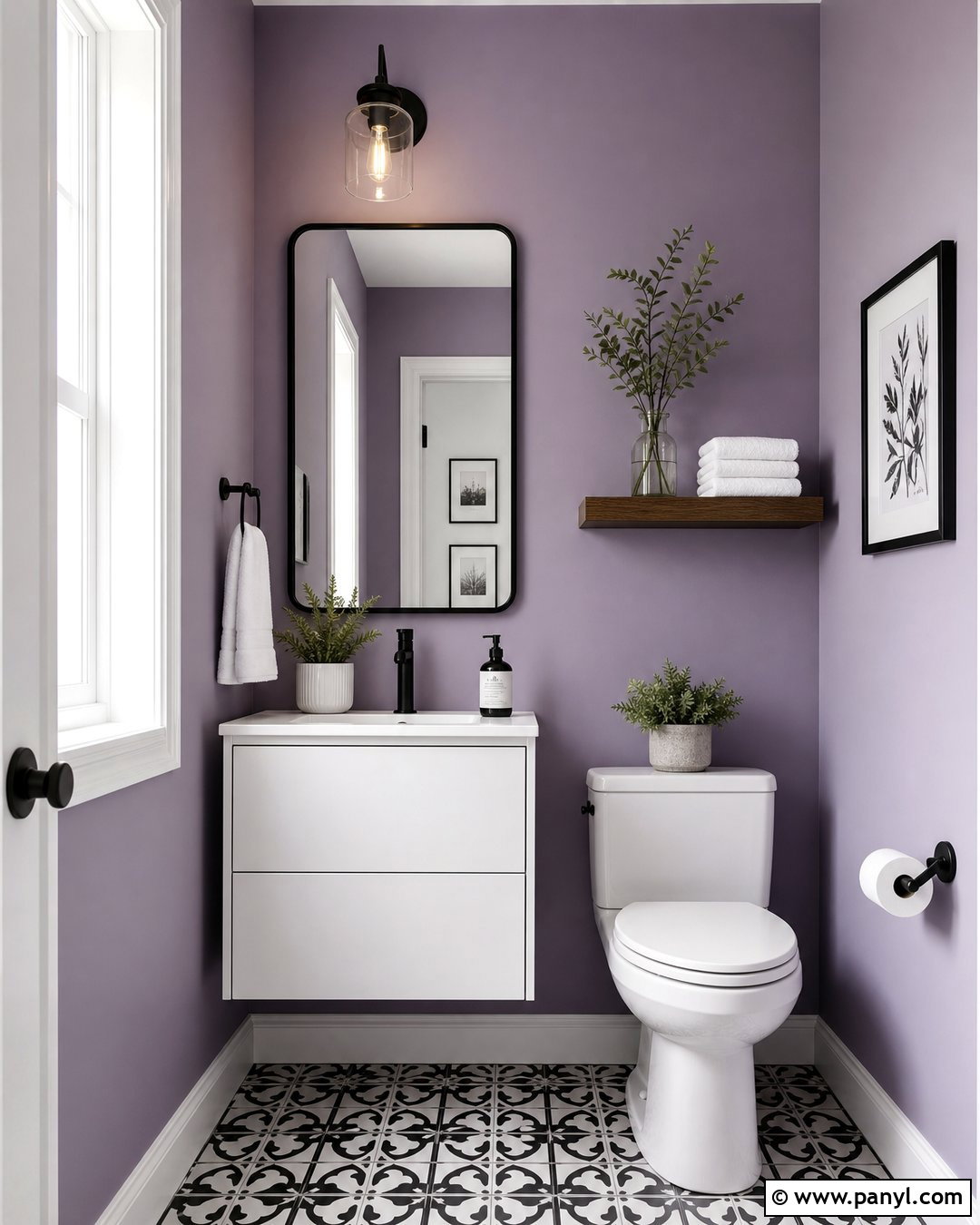
Matte black details make lavender walls look sharper and more contemporary in a small powder room. Choose a clear, mid-tone lavender that remains visible under artificial light. Install a compact white pedestal sink or floating vanity, then add a matte black faucet, framed mirror, towel ring, and wall sconce. Black-and-white patterned floor tile provides energy while keeping the limited palette cohesive. A white ceiling and baseboards create a crisp boundary around the colored walls. Include one narrow wood shelf for warmth and use simple white hand towels. Because the room is small, avoid filling every wall with decor. One framed print or sculptural mirror is enough. The contrast produces a memorable powder room that feels bold, tidy, and intentional.
10. Lavender Walls With Brass Accents
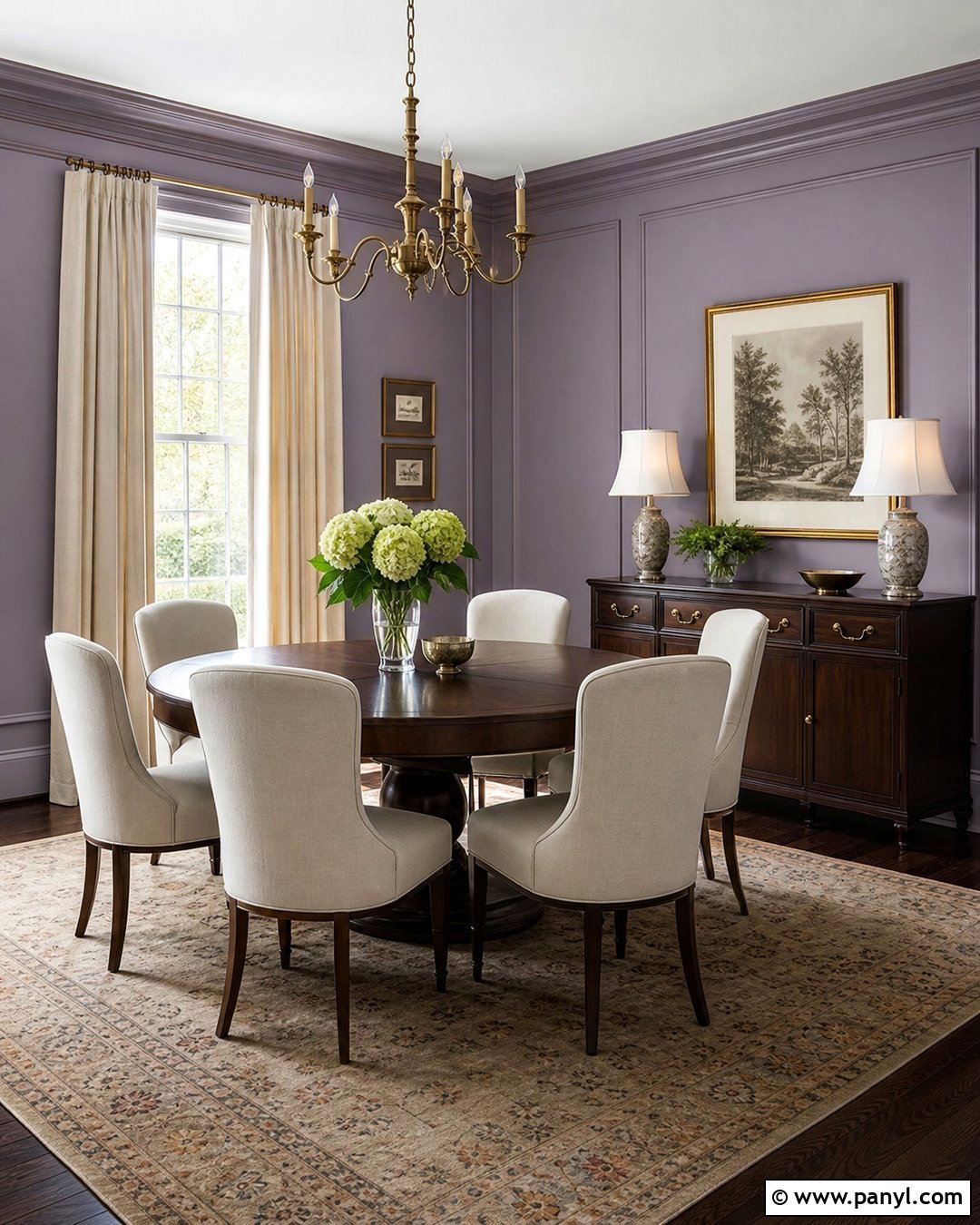
Warm brass highlights the refined side of lavender walls in a formal dining room. Paint the room a soft, slightly smoky lavender and add simple wall molding in the same color for subtle dimension. Center a round walnut table beneath a brass chandelier with frosted glass shades. Upholstered dining chairs in warm ivory make the setting comfortable and keep the palette light. A traditional rug containing lavender, beige, faded blue, and muted rust anchors the furniture. Hang linen curtains in creamy white and choose a dark wood sideboard for additional contrast. Brass-framed artwork and two shaded lamps can repeat the chandelier’s finish. The completed space feels collected and gracious, with enough warmth to balance lavender’s naturally cool appearance.
11. Lavender Walls With Cream Furniture
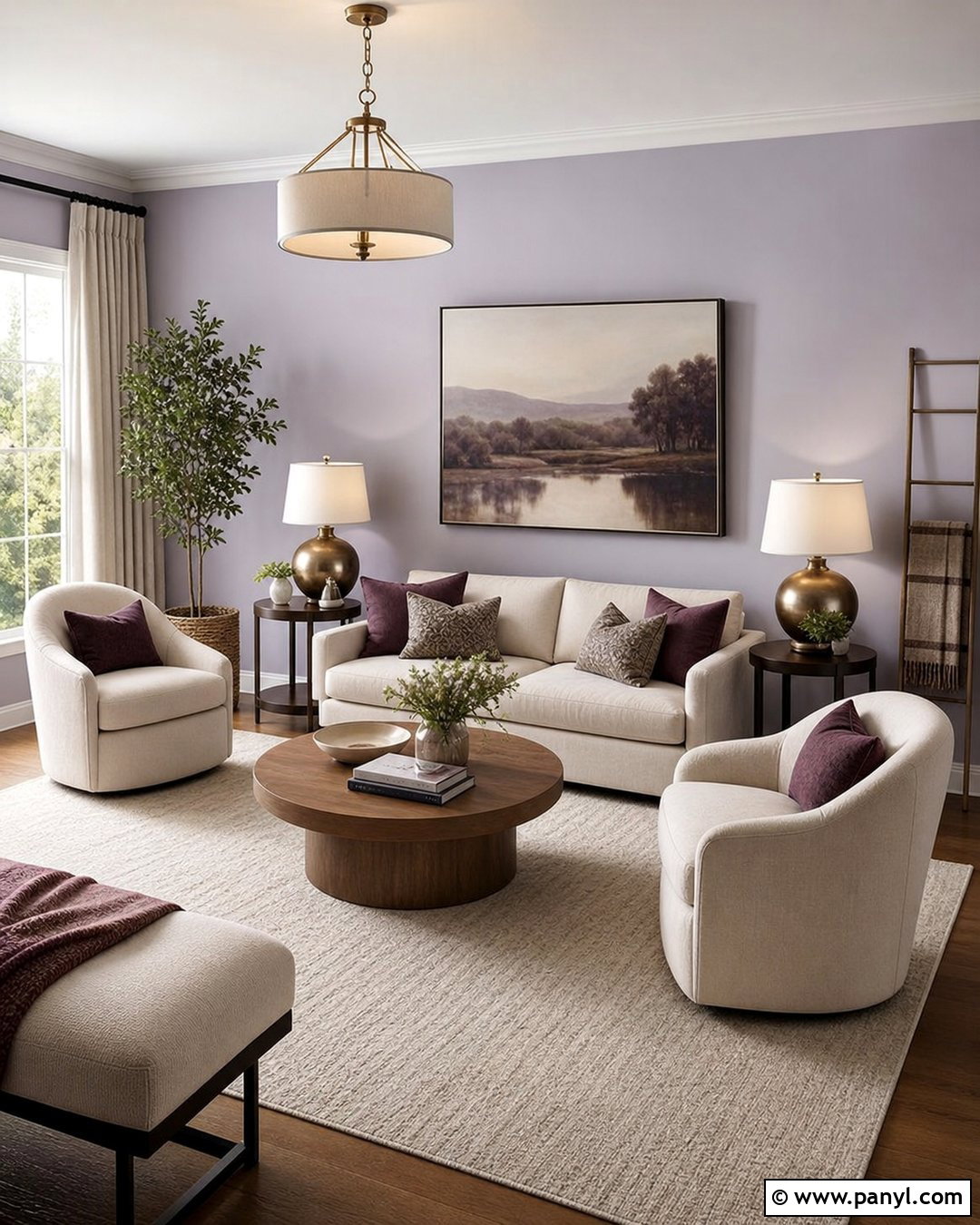
Cream furniture creates a soft, seamless living room around lavender walls. Choose a pale lavender paint with enough gray to remain calm in bright daylight. Arrange a cream sofa and two matching swivel chairs around a rounded oak coffee table. A large ivory rug expands the seating area visually, while pillows in plum, taupe, and faded green add controlled color. Use warm wood end tables and bronze lamps so the room does not appear washed out. Linen curtains in natural cream should nearly match the upholstery for a smooth, restful background. Add a large landscape painting with muted purple and earthy tones above the sofa. The final room feels airy and comfortable, yet layered materials keep the light palette from becoming flat.
12. Lavender Walls With Walnut Furniture
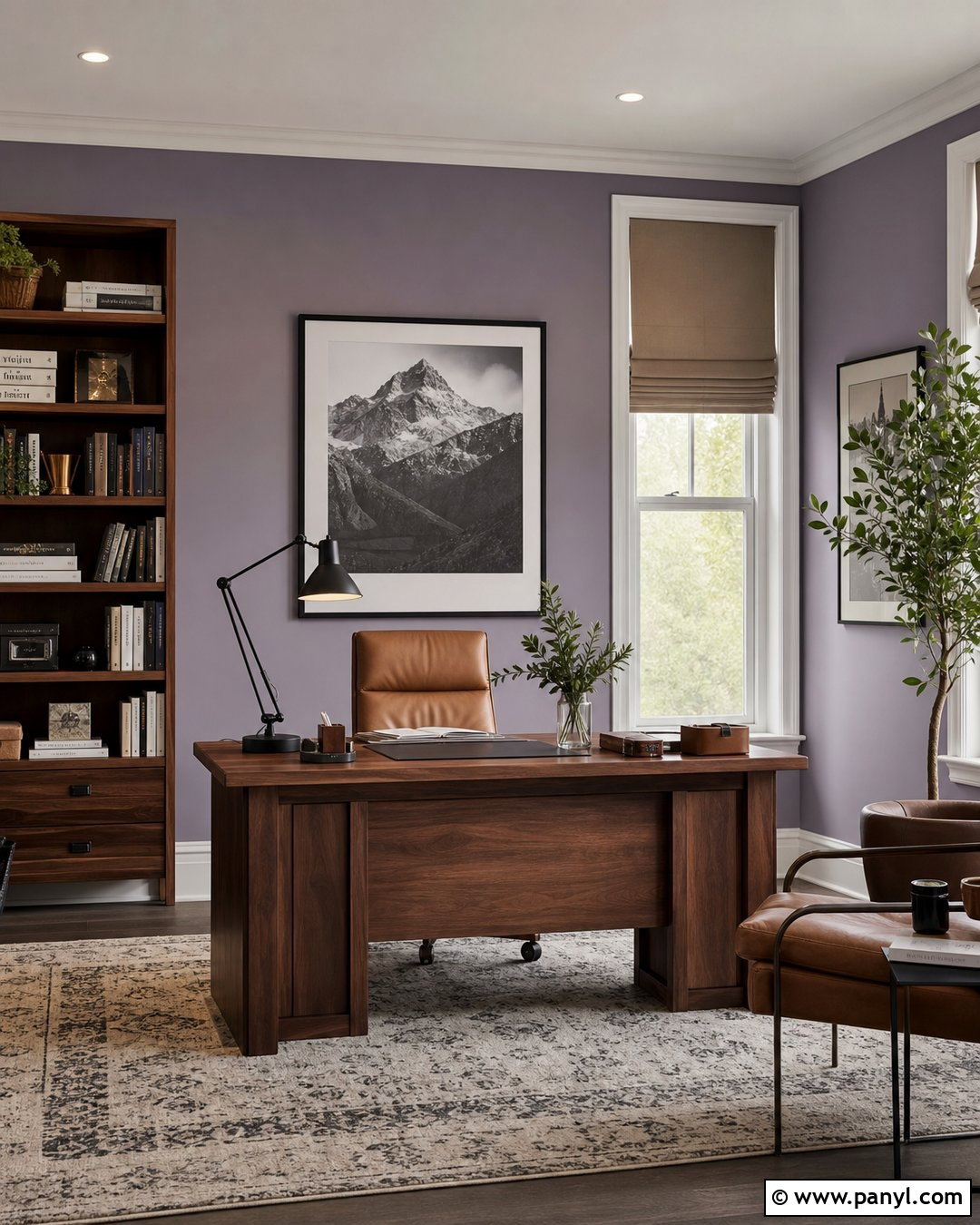
Rich walnut furniture provides a sophisticated counterpoint to lavender walls in a home office. Apply a dusty lavender paint to every wall and use bright white only on the ceiling. Position a substantial walnut desk where it receives natural light, then add a camel leather desk chair for warmth. A matching walnut bookcase or credenza creates storage and strengthens the room’s tailored character. Choose a low-pile rug in cream and charcoal, plus linen Roman shades in warm beige. Black task lighting and framed monochrome artwork provide crisp contrast. Keep office supplies organized in dark wood and leather containers. With its balance of soft color and strong furniture, the workspace feels focused, mature, and comfortable enough for long working sessions.
13. Lavender Walls With Rattan Furniture
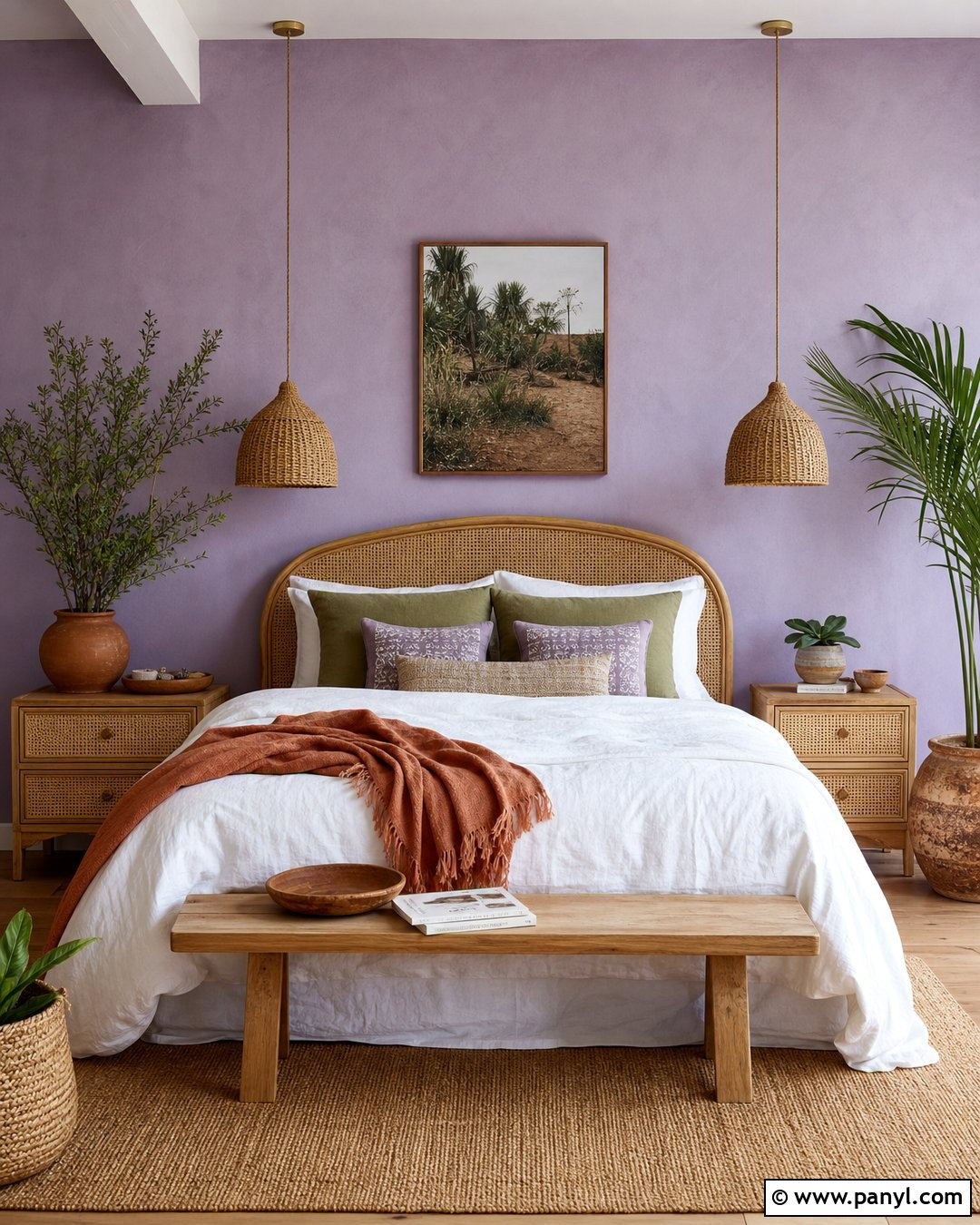
Sun-washed textures turn lavender walls into a relaxed boho bedroom rather than a formal pastel space. Use a warm lavender shade and pair it with a woven rattan headboard, cane-front nightstands, and a light oak bench. Dress the bed in white linen with a terracotta throw and patterned pillows featuring muted lavender, clay, and olive green. A large natural fiber rug adds softness and reinforces the earthy direction. Hang off-white cotton curtains and use woven pendant lights instead of matching table lamps. Plants in simple clay pots introduce fresh green accents. Keep wall decor casual with a few framed prints and one round rattan mirror. The finished bedroom feels breezy, layered, and personal without becoming visually cluttered.
14. Lavender Walls With Floral Decor
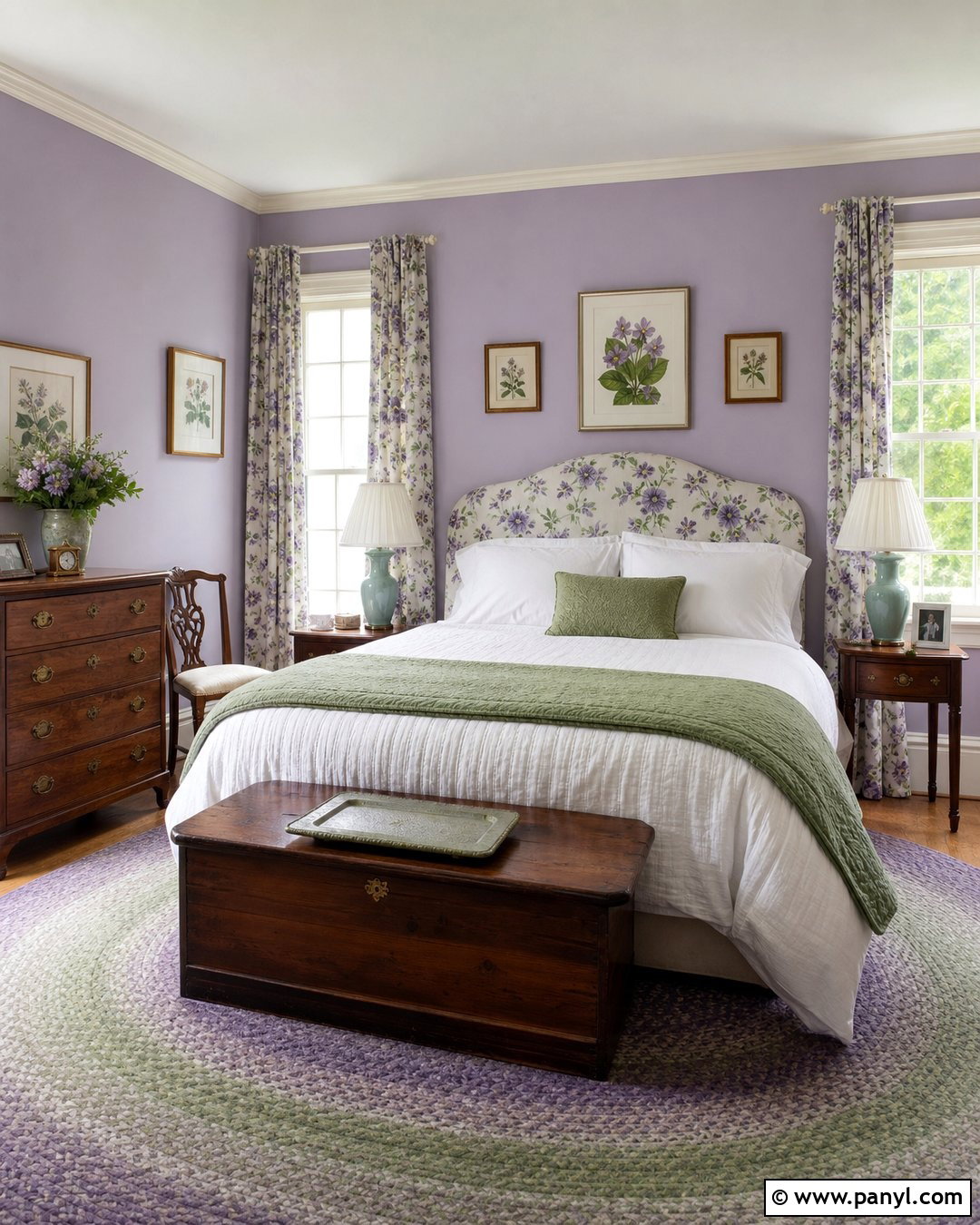
Floral decor naturally complements lavender walls, but the complete room should include solids and simple textures for balance. In a cottage bedroom, use a pale lavender wall color with creamy white trim and painted furniture. Choose one floral fabric containing lavender, soft green, blue, and ivory for the curtains or upholstered headboard. Keep the bedding mostly white, adding a sage quilt and two floral pillows. An antique-style wood dresser introduces age and warmth, while a braided wool rug makes the floor feel comfortable. Use ceramic bedside lamps with plain linen shades rather than more floral patterns. Small botanical prints can finish the walls. This selective approach creates a charming cottage look without covering every surface in competing flowers.
15. Lavender Walls With Coastal Blue
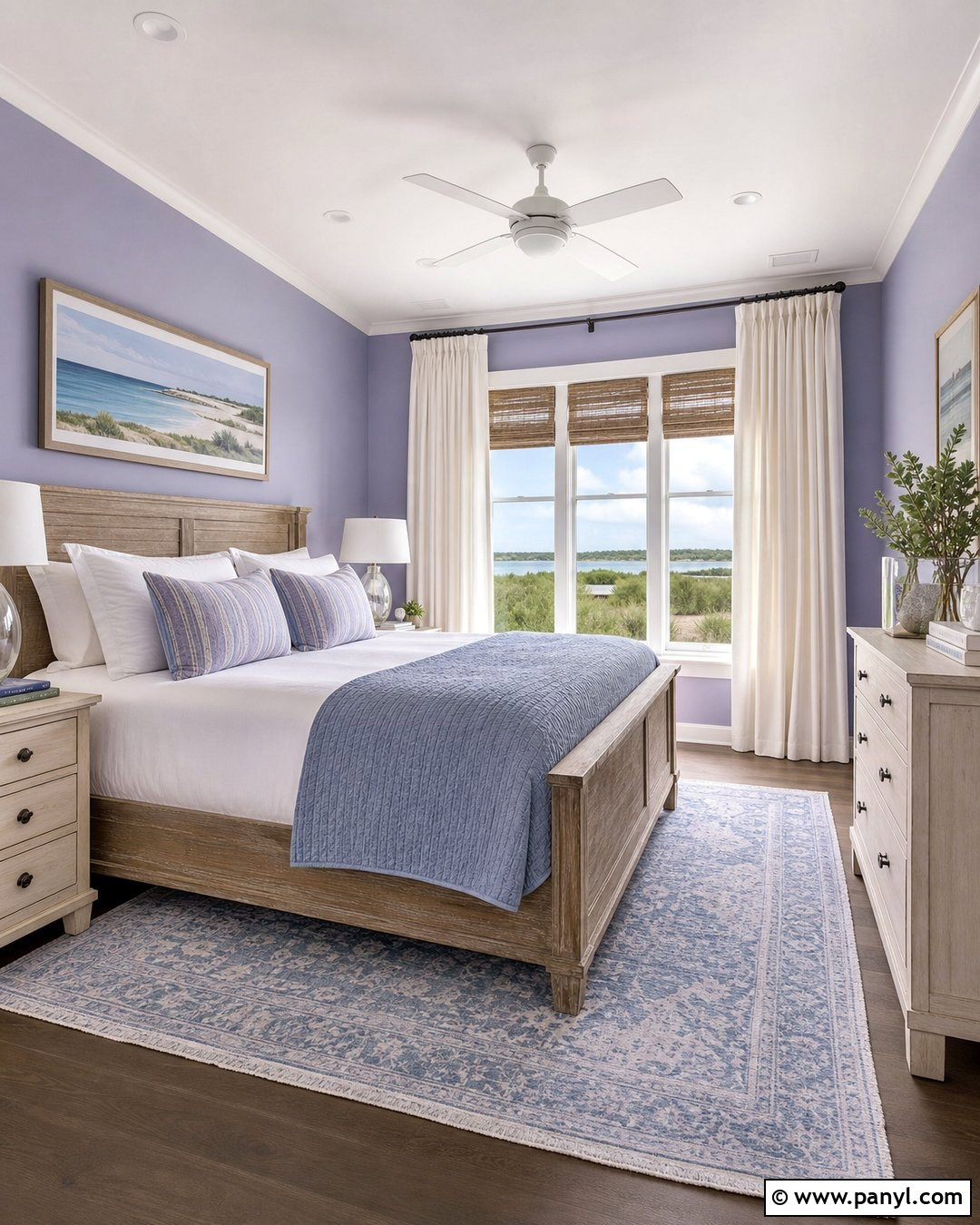
Cool coastal blue gives lavender walls a fresh, breezy direction in a light-filled bedroom. Select lavender paint with noticeable blue-gray undertones and combine it with a weathered oak bed. Layer white bedding with a soft blue quilt and striped lavender-blue pillows. Pale woven shades filter sunlight, while full ivory curtains frame the windows. A faded blue rug grounds the bed and introduces gentle pattern. Use clear glass lamps, brushed nickel hardware, and a whitewashed dresser to keep the finishes light. Decorative pieces might include simple coastal landscapes, woven baskets, and blue ceramic vessels, without relying on obvious nautical symbols. The complete palette feels calm and open, offering coastal character through color and texture rather than a literal theme.
16. Lavender Walls In A Modern Living Room
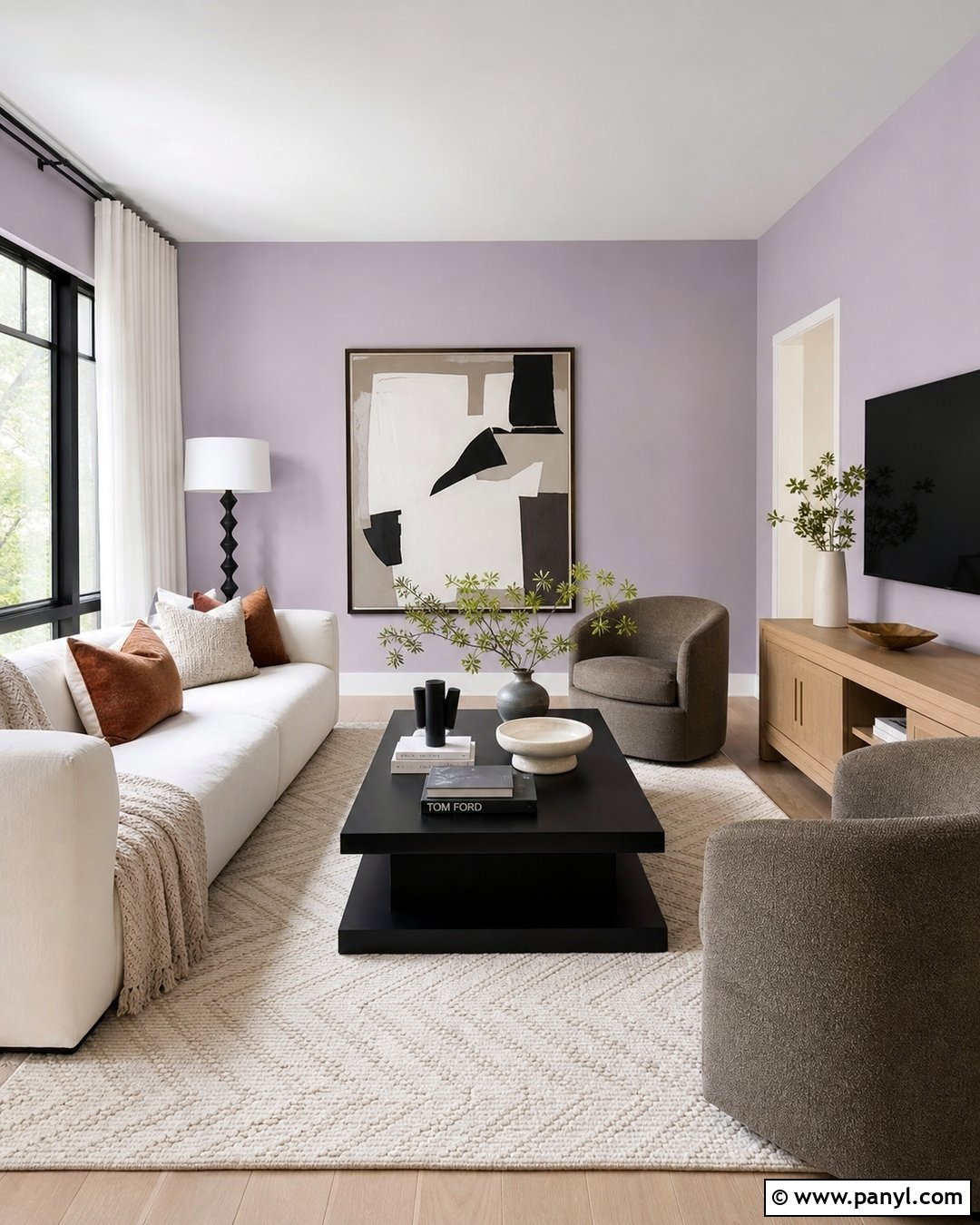
Clean shapes help lavender walls fit naturally into a modern living room. Choose a pale, desaturated lavender and pair it with a low-profile ivory sofa, two rounded taupe chairs, and a simple black coffee table. Keep the floor visible around a large cream geometric rug so the layout feels spacious. Use one oversized abstract artwork instead of a crowded gallery wall. A sculptural black floor lamp and slim black curtain rod provide definition, while full-length white drapes soften the edges. Add a few pillows in rust, charcoal, and lavender to connect the furnishings with the walls. A long oak media console introduces warmth and concealed storage. The final design feels current and uncluttered without sacrificing comfort or personality.
17. Lavender Walls With Traditional Molding
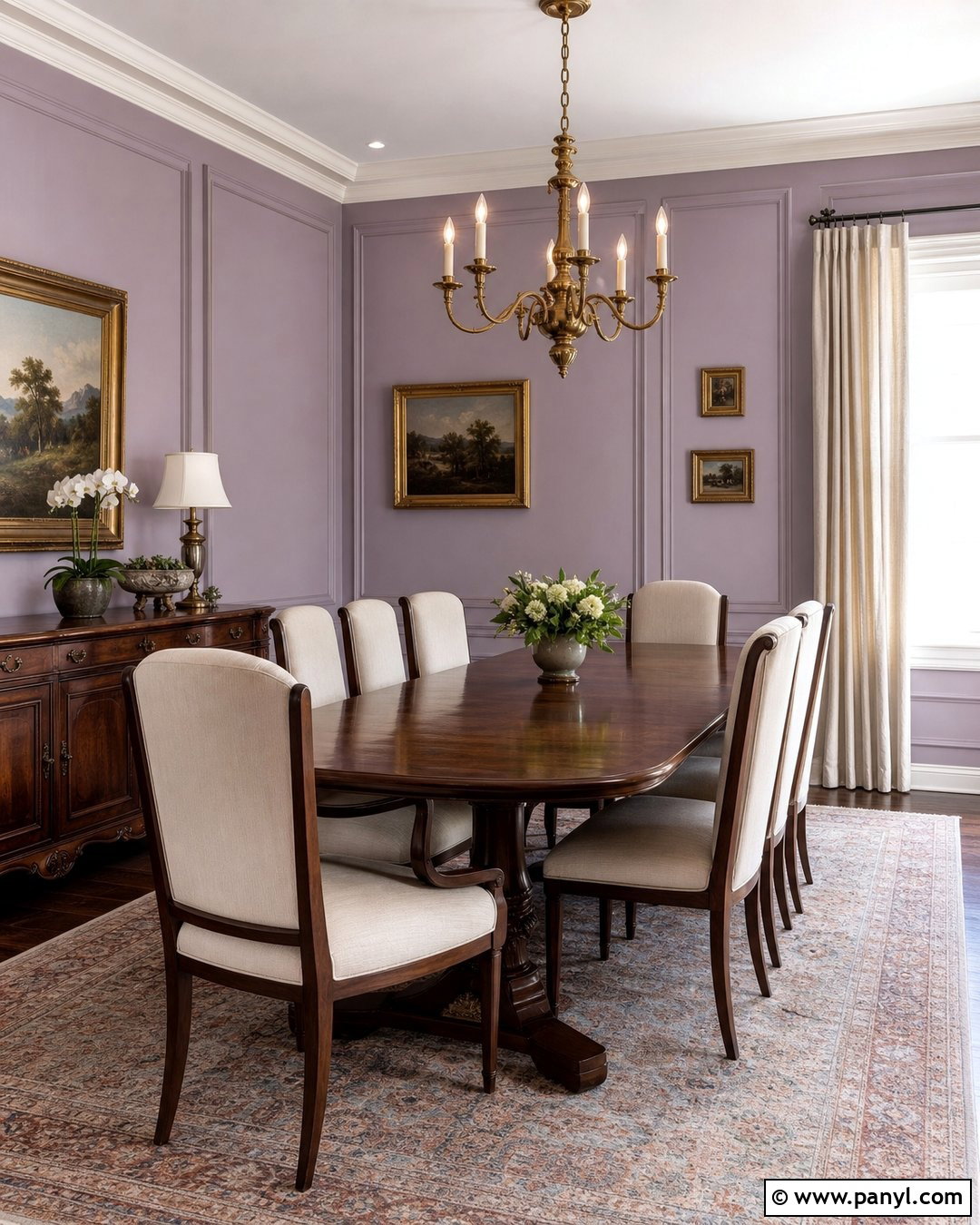
Traditional molding gives lavender walls depth and architectural character in a dining room or parlor. Add rectangular picture-frame molding, substantial baseboards, and a modest crown, then paint the walls and molding the same muted lavender. Keep the ceiling warm white for contrast. Furnish the room with a dark wood dining table, upholstered cream chairs, and an antique-style sideboard. A patterned rug in faded lavender, blue, tan, and rust makes the setting feel established rather than newly decorated. Choose a classic brass chandelier, linen curtains, and framed landscapes with dark wood frames. Decorative objects should be symmetrical but not overly formal. The completed room blends soft color with traditional structure, creating a graceful space suited to everyday meals and special gatherings.
18. Lavender Walls In A Scandinavian Nursery
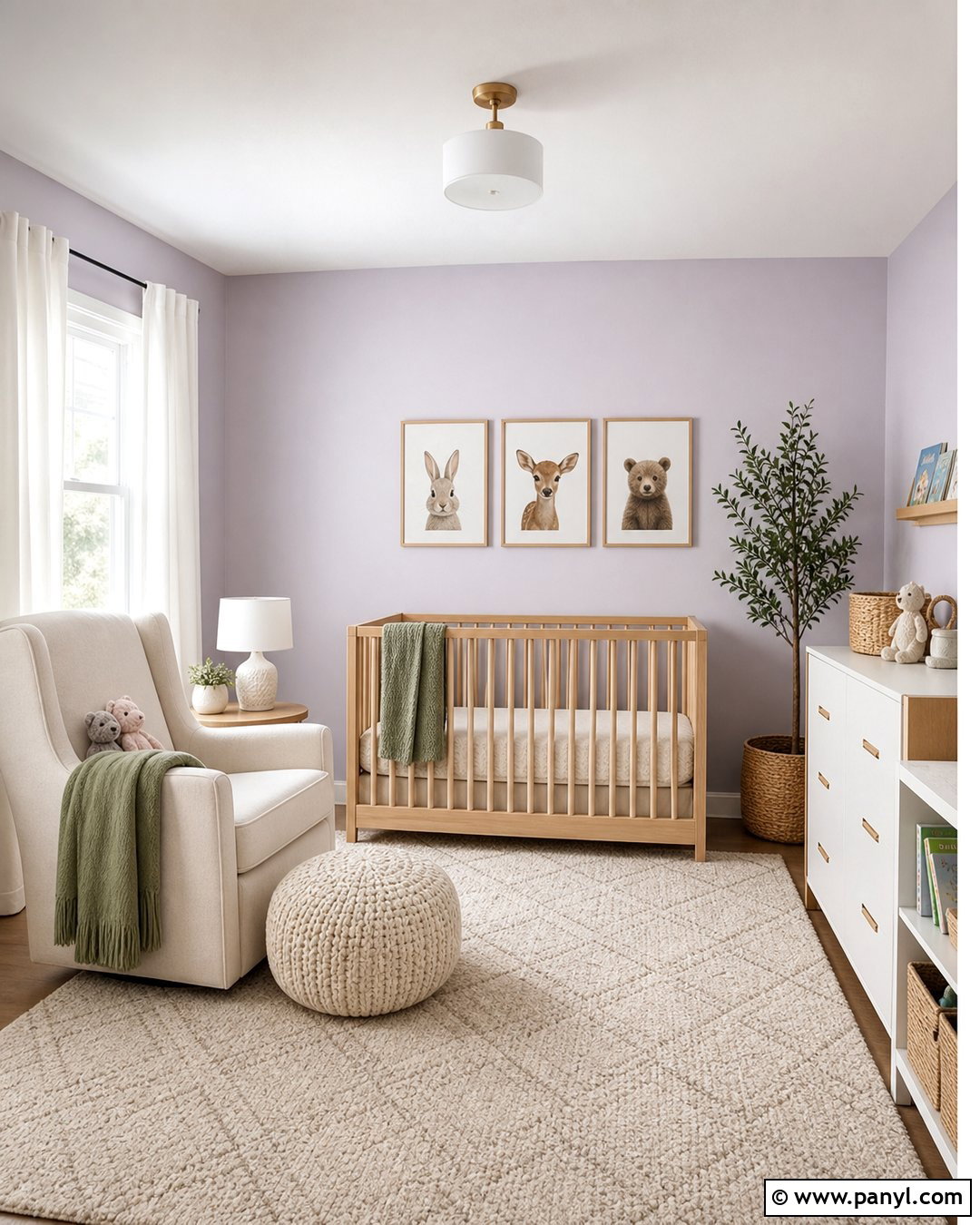
A Scandinavian nursery with lavender walls can feel calm, practical, and free from unnecessary decoration. Use a very pale lavender-gray on all four walls, paired with white oak flooring and a simple natural wood crib. Add a cream glider, a small oak side table, and a washable wool-look rug in ivory. White curtains keep the window bright, while a soft sage blanket introduces quiet contrast. Choose closed storage in white or light wood to reduce visual clutter. A few animal prints in pale lavender, gray, and green provide gentle interest above a low dresser. Use a flush ceiling light and one shaded floor lamp for even illumination. The completed nursery remains adaptable as the child grows and furniture needs change.
19. Lavender Walls In A Vintage Teen Bedroom
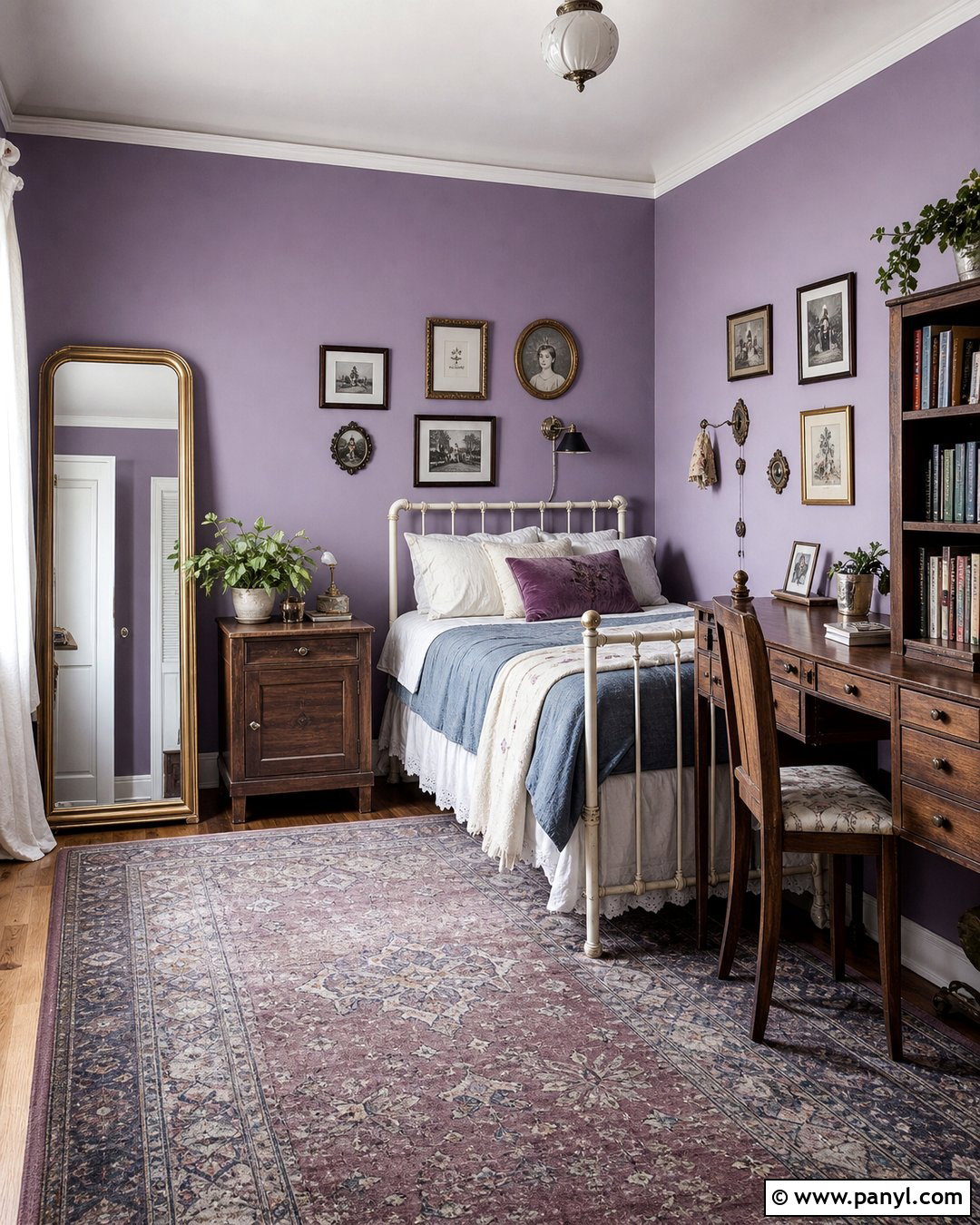
Vintage pieces can give lavender walls personality while keeping a teen bedroom functional. Choose a medium dusty lavender and pair it with a painted cream metal bed or gently curved wood headboard. Add a walnut desk, a mismatched vintage nightstand, and a tall bookcase for practical storage. Bedding in ivory, faded denim blue, and muted plum creates a layered palette that is not overly coordinated. A patterned rug with rose, blue, and lavender tones helps disguise everyday wear. Hang a small gallery of framed art above the desk and place a full-length brass mirror near the closet. Cotton curtains and a simple pendant light complete the design. The room feels expressive, comfortable, and mature enough to last beyond current trends.
20. Lavender Walls In A Neutral Nursery
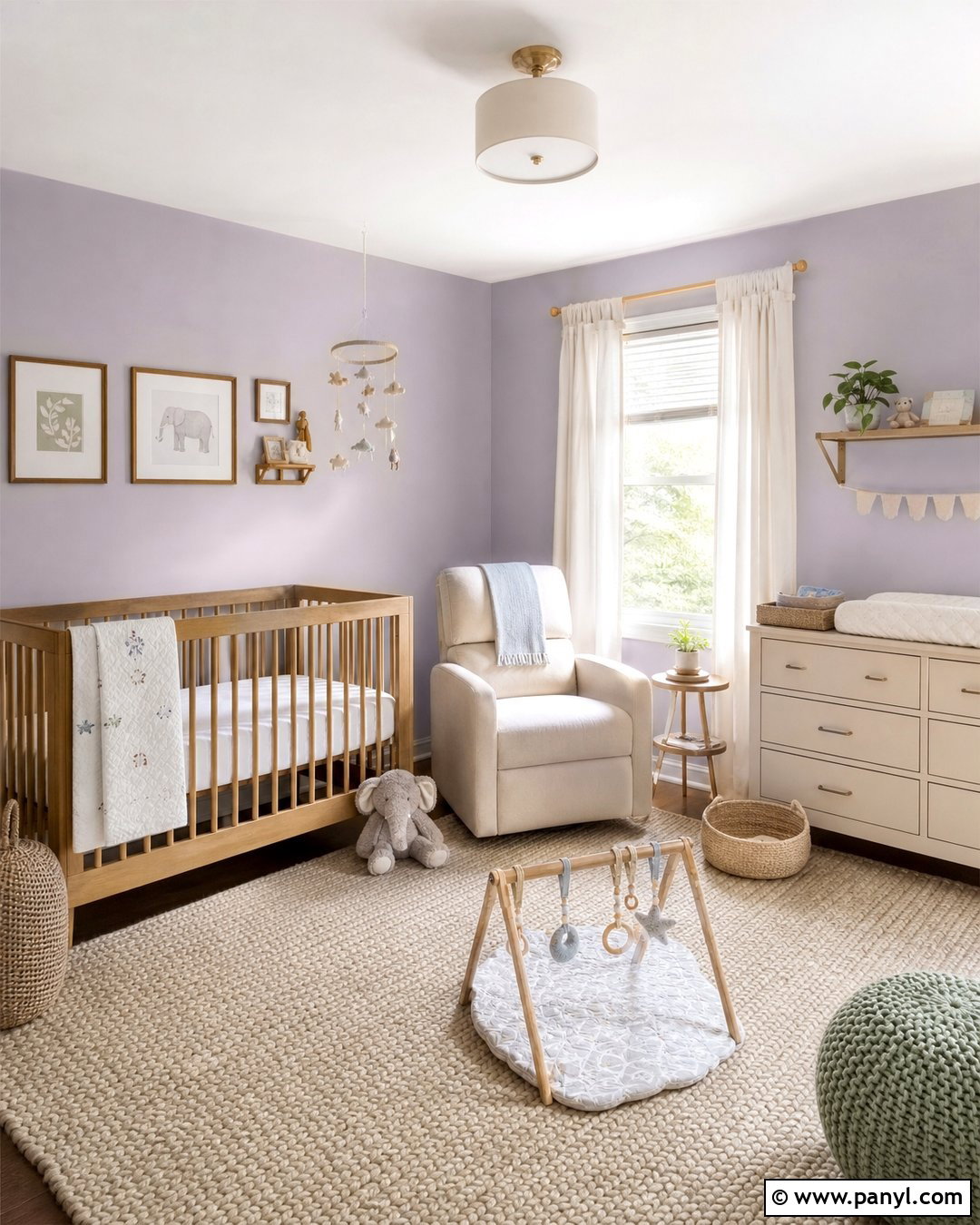
For a flexible nursery, combine lavender walls with warm neutrals instead of building the room around one strong theme. Choose a gray-lavender paint that changes subtly with the light. Place a natural oak crib against the clearest wall and add a beige upholstered glider nearby. A cream dresser can double as a changing station, while woven baskets provide accessible storage for blankets and toys. Use an oatmeal rug, ivory curtains, and white bedding to maintain a restful base. Small accents in sage, muted mustard, and dusty blue bring variety without dominating the room. Install one playful mobile and a pair of simple framed prints. This complete palette feels welcoming, practical, and easy to update with new accessories over time.
21. Lavender Walls In A Home Office
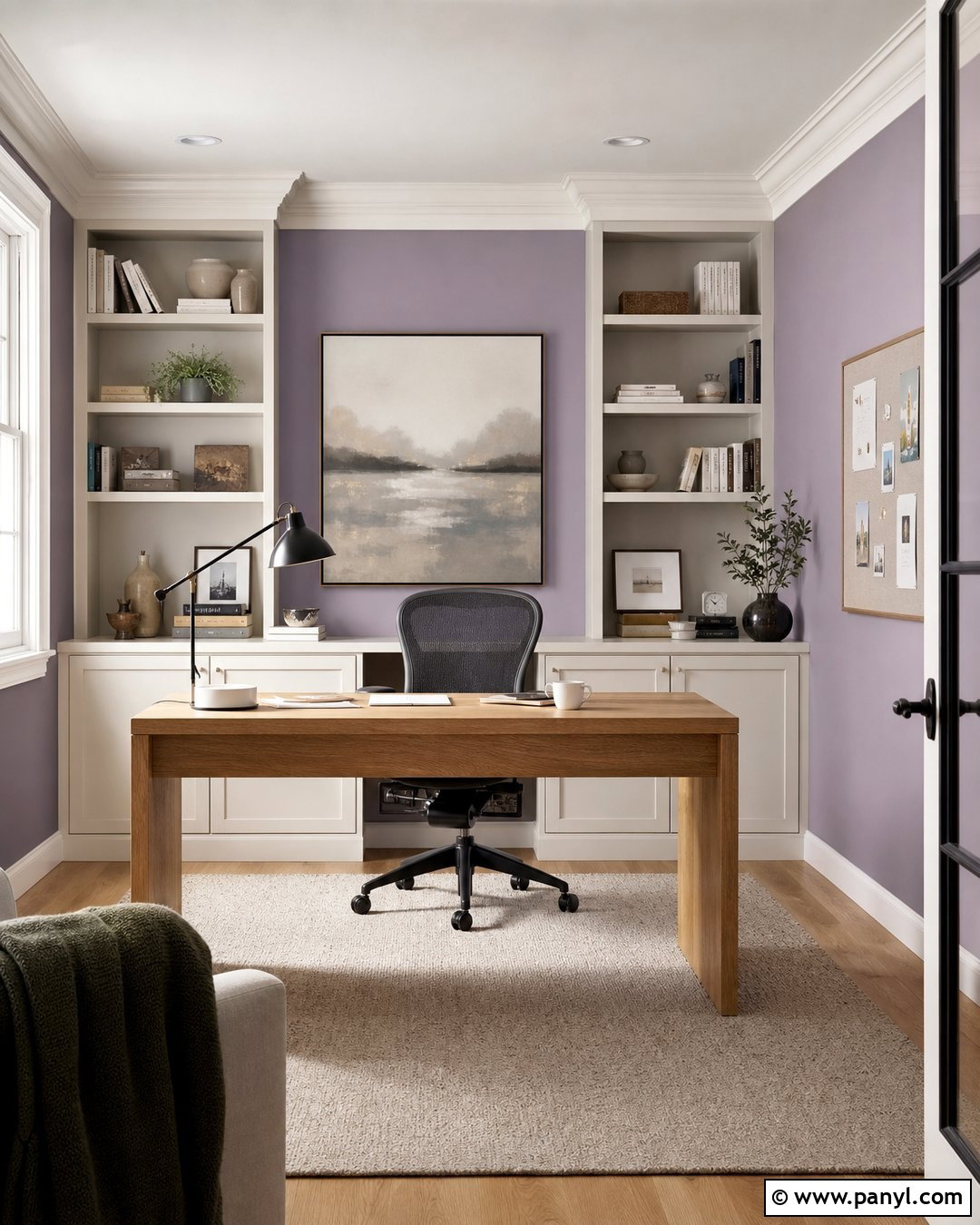
Could a lavender office feel focused rather than decorative? It can when the layout uses strong lines, useful storage, and restrained accents. Paint the walls a smoky lavender and install built-in cabinets along one side in warm white. A medium oak desk placed near the window provides a comfortable work surface, while an ergonomic chair in charcoal fabric adds contrast. Use a flat-woven beige rug to soften sound and define the work zone. Black picture frames, a dark task lamp, and a pinboard covered in neutral linen create structure. Add closed boxes for paperwork and limit open shelving to books and a few ceramics. The finished office feels calm and organized, with lavender providing color without distracting from daily tasks.
22. Lavender Walls In An Entryway
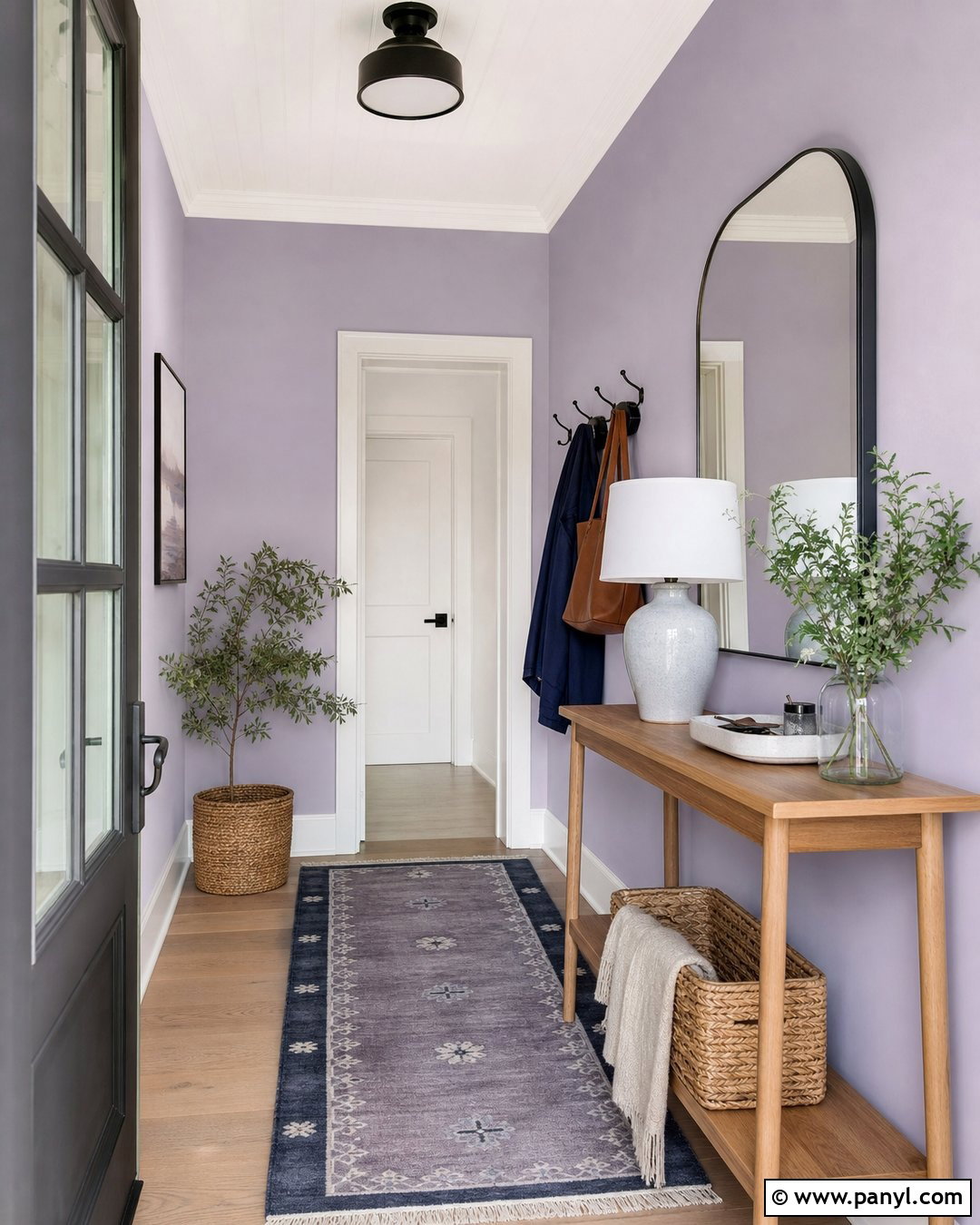
Lavender walls can make a small entryway feel distinctive from the moment the front door opens. Use a muted lavender with gray undertones and keep the trim a soft white. Place a slim oak console along the longest wall and add a large rounded mirror above it to reflect light. A washable runner containing lavender, navy, beige, and rust handles foot traffic while connecting the color scheme. Install a black semi-flush ceiling light and matching wall hooks for practical contrast. A woven basket beneath the console can hold shoes or reusable bags. Finish with one ceramic lamp, a small tray, and a leafy branch. The complete entry feels organized and welcoming without requiring a large amount of furniture or floor space.
23. Lavender Walls In A Gallery Hallway
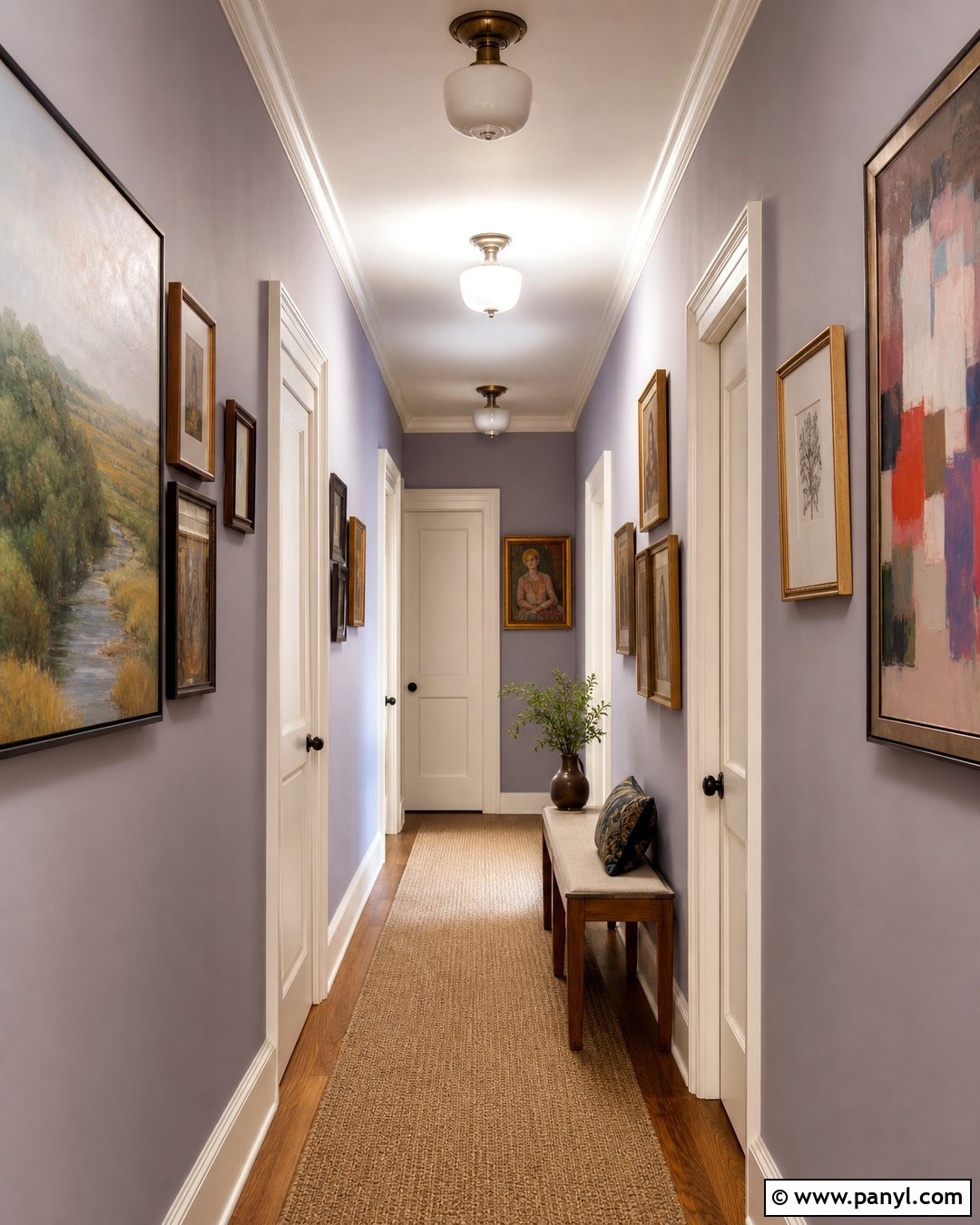
A hallway becomes more than a passage when lavender walls support a carefully arranged gallery. Choose a pale lavender-gray that stays light in a narrow area, then paint the trim and doors creamy white. Run a flat-woven beige runner through the center to add warmth and soften footsteps. Create one orderly gallery wall using black, walnut, and antique brass frames with consistent spacing. Mix landscapes, abstract prints, and family photographs, keeping the artwork palette restrained. Install simple ceiling fixtures that spread bright light evenly along the corridor. A narrow bench or floating shelf can provide function at the wider end. The finished hallway feels connected to the rest of the home while gaining its own clear identity.
24. Lavender Walls In A Laundry Room
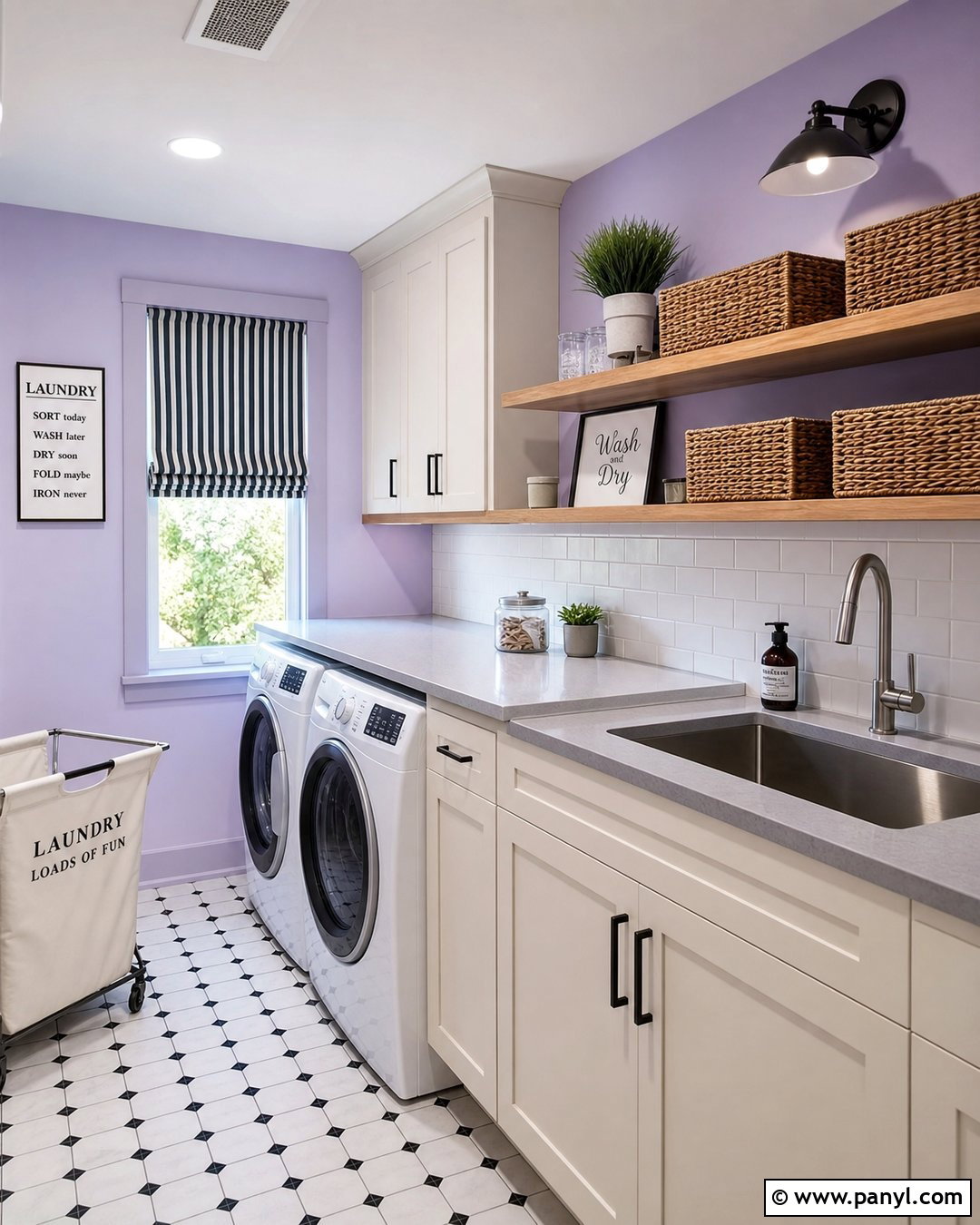
Laundry rooms often benefit from cheerful color, and lavender walls can brighten the space without reducing its practical character. Paint the walls a clean, medium-light lavender and install warm white cabinets above a white front-loading washer and dryer. Add a light gray quartz folding counter and a small stainless utility sink if space permits. Natural oak floating shelves can hold labeled baskets, glass containers, and frequently used supplies. Use durable black-and-white floor tile for contrast and easy maintenance. A striped Roman shade, matte black cabinet pulls, and a simple flush light complete the palette. Keep the counters mostly clear and include one wall-mounted drying rail. The finished room feels efficient, polished, and pleasant enough for repetitive household tasks.
25. Lavender Walls In A Mudroom
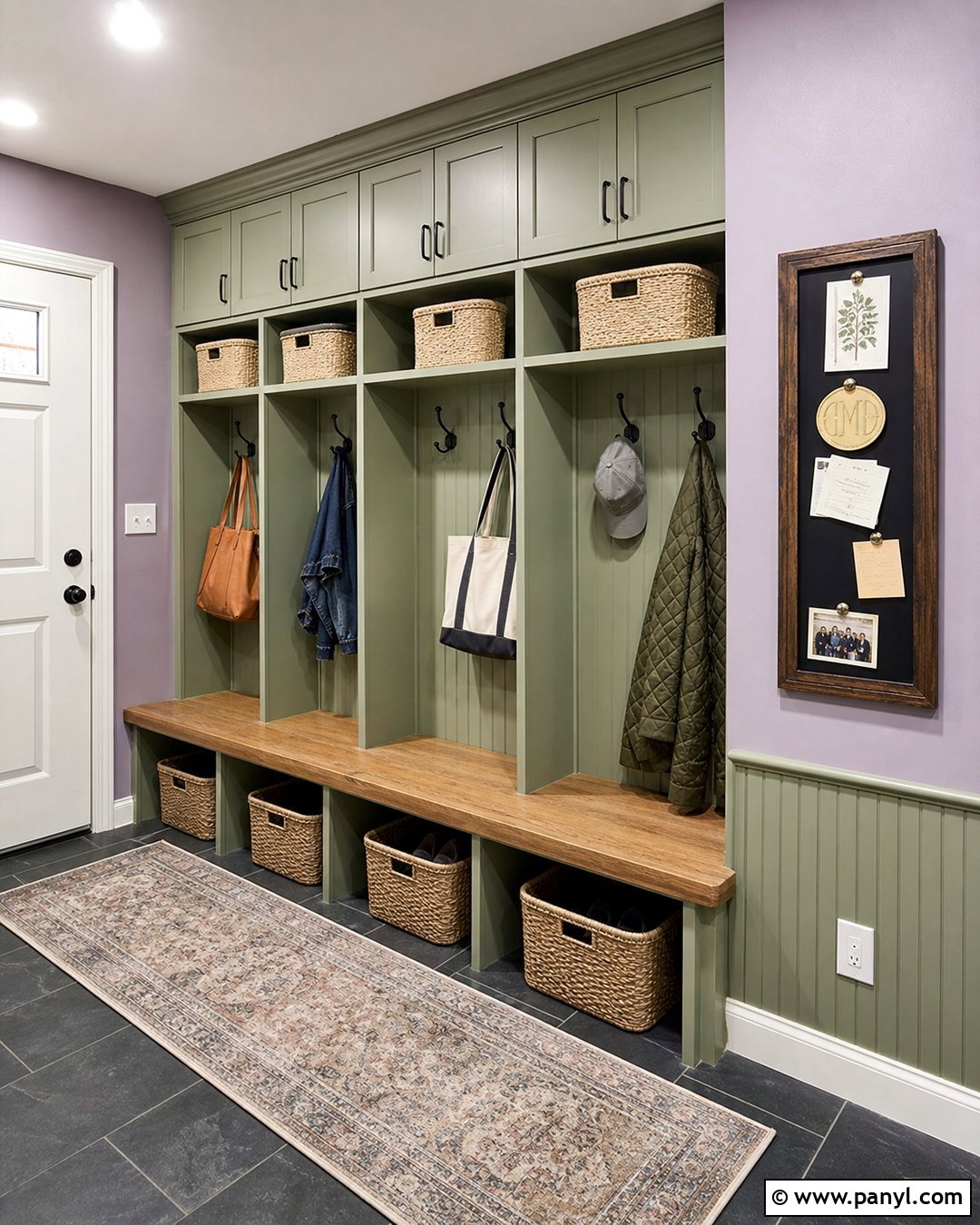
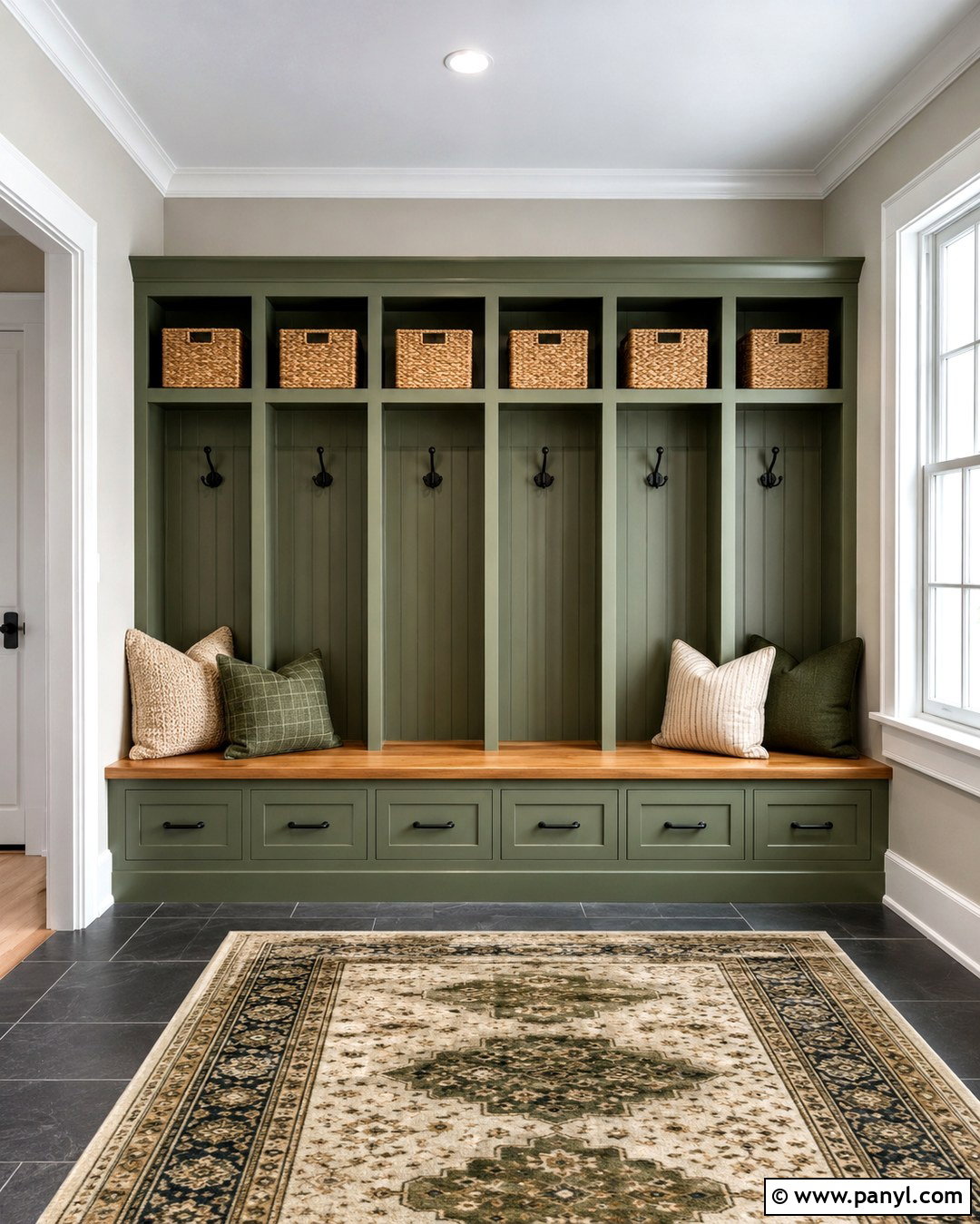
A practical mudroom can carry lavender walls when the supporting materials are durable and grounded. Choose a dusty lavender paint in a washable finish and combine it with sage green built-in lockers. Add an oak bench, black hooks, and woven baskets for shoes, bags, and seasonal accessories. The lower portion of the walls can include painted paneling for extra protection, while the lavender continues above it. Use dark slate-look floor tile to disguise tracked-in dirt and place a washable runner down the center. Warm white ceiling lights keep both colors clear and balanced. A narrow message board and closed overhead cabinets improve daily organization. Together, the lavender, sage, oak, and black create a colorful mudroom that still feels hardworking.
26. Lavender Walls In A Reading Nook
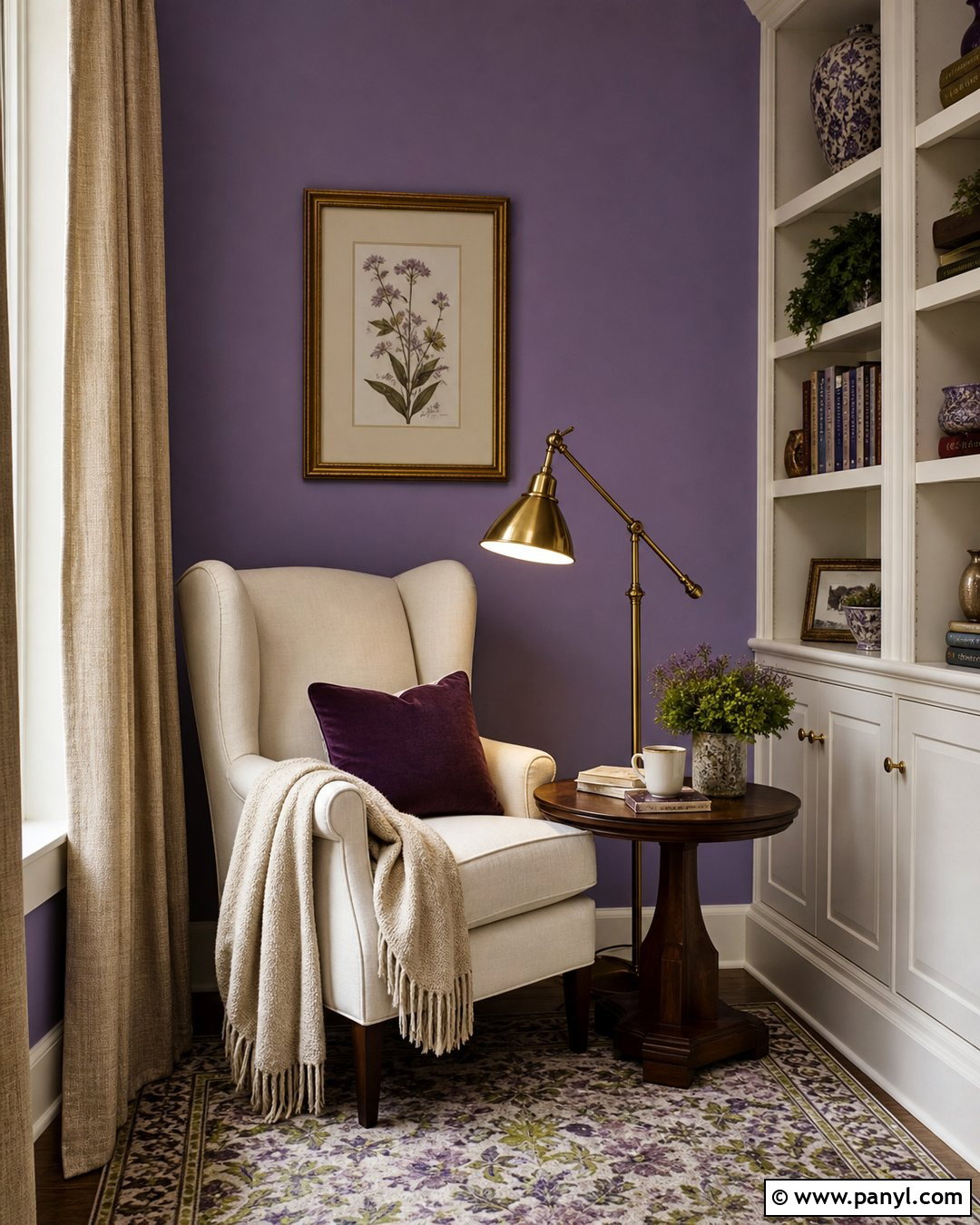
A deep lavender reading nook can feel cocooning without becoming dark when balanced with light upholstery and focused lighting. Paint the nook walls a richer lavender, including the small return walls around a window or built-in seat. Add an ivory armchair with a high back, a compact walnut side table, and a brass reading lamp. A plum lumbar pillow and oatmeal throw create layered comfort. Ground the arrangement with a small patterned rug containing lavender, cream, and muted olive. If shelving is available, paint it warm white and arrange books with a few ceramic pieces. Hang full-length natural linen curtains beside the window. The completed nook feels separate from the surrounding room and provides a comfortable destination for quiet reading.
27. Lavender Walls In A Small Apartment
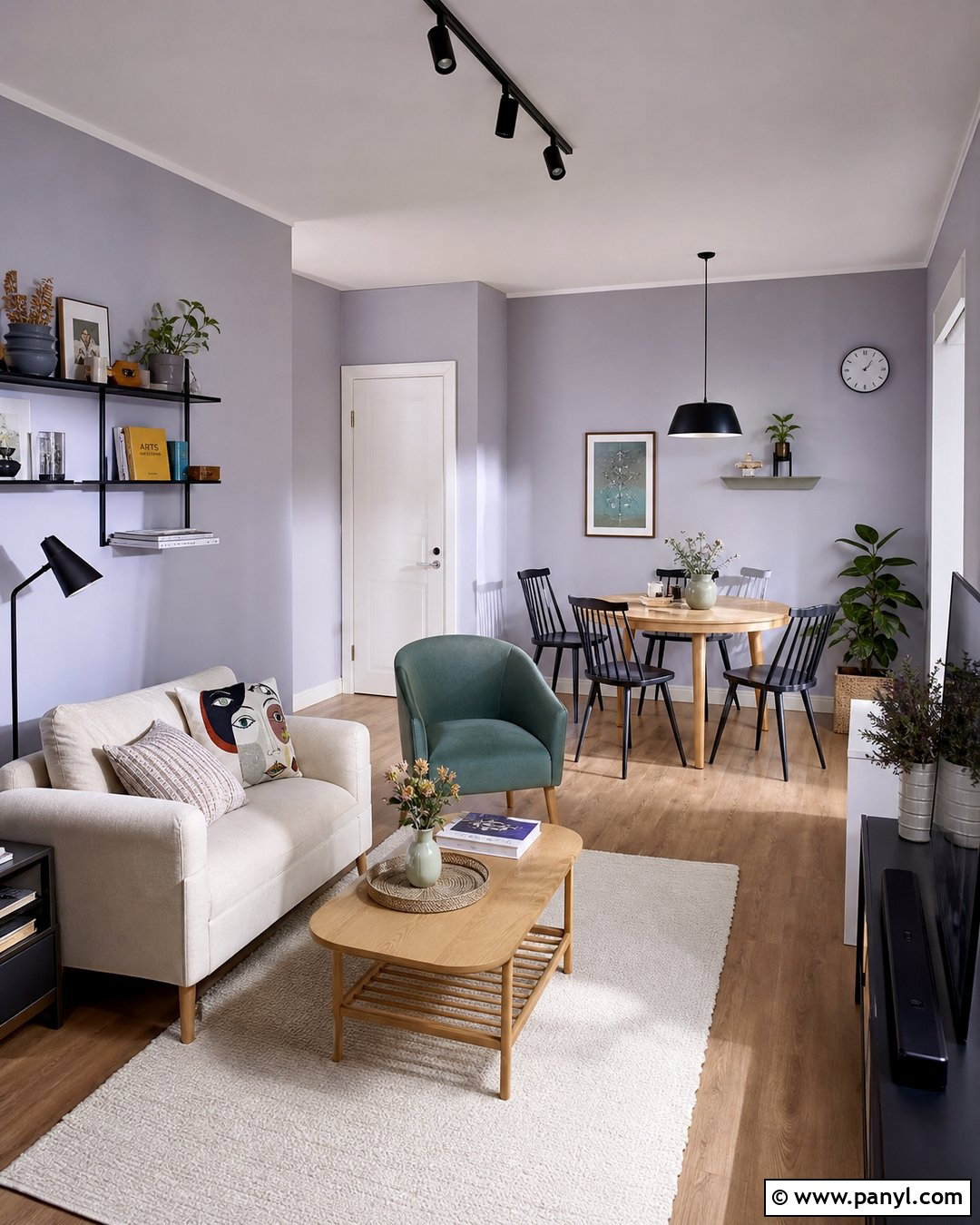
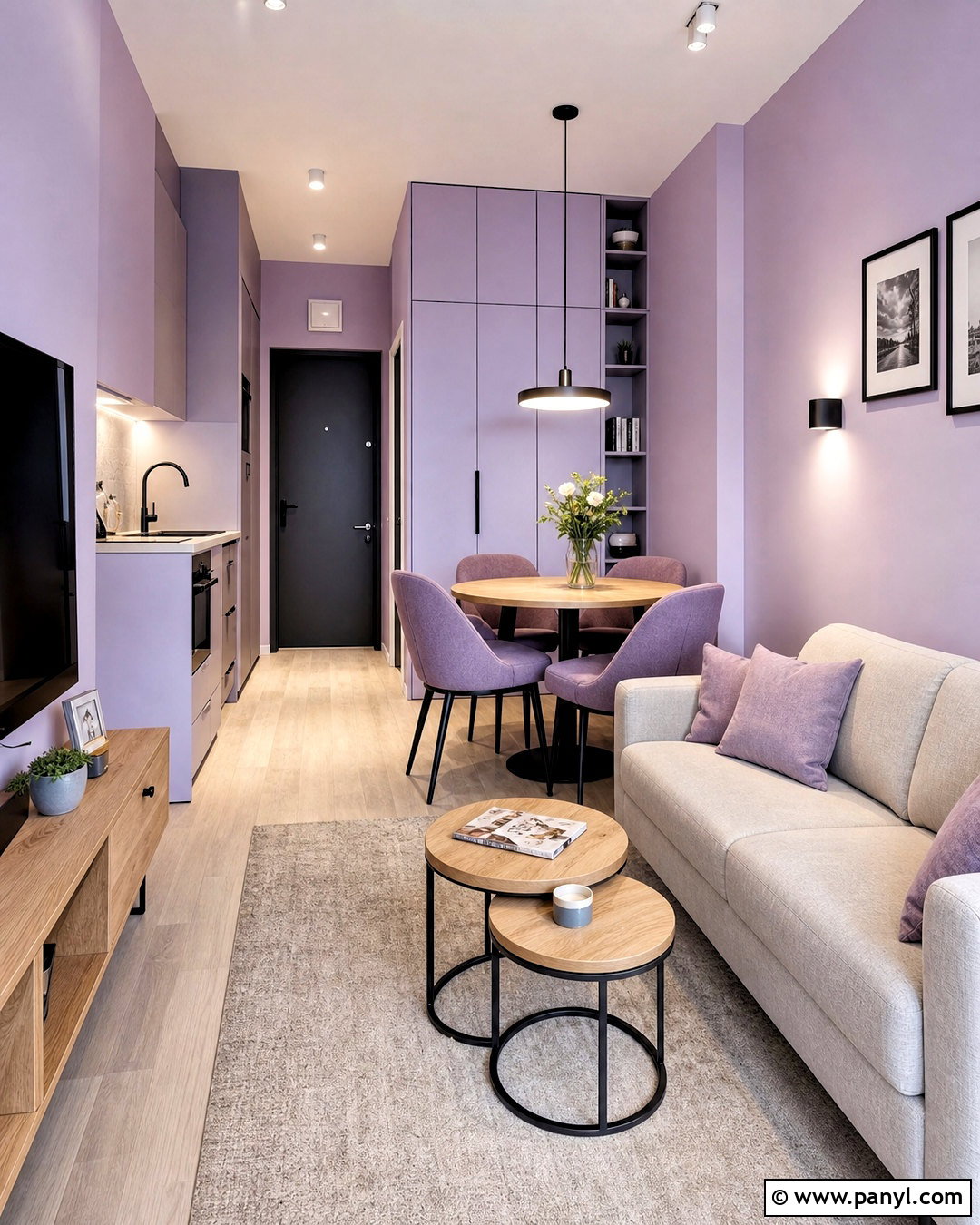
In a small apartment, pale lavender walls can visually connect the living and dining zones without making them identical. Use one light lavender-gray throughout the main area and keep the ceiling, trim, and interior doors white. Choose a compact cream sofa, a glass or light oak coffee table, and one upholstered chair in muted green. Define the living area with an ivory rug, then place a small round oak dining table nearby. Wall-mounted shelves provide storage without taking up floor space. Use matching linen curtains across all windows for continuity. Black lighting and frames add a few crisp lines. The completed apartment feels cohesive and colorful, while appropriately scaled furniture maintains clear walking paths and everyday function.
28. Lavender Walls In An Attic Bedroom
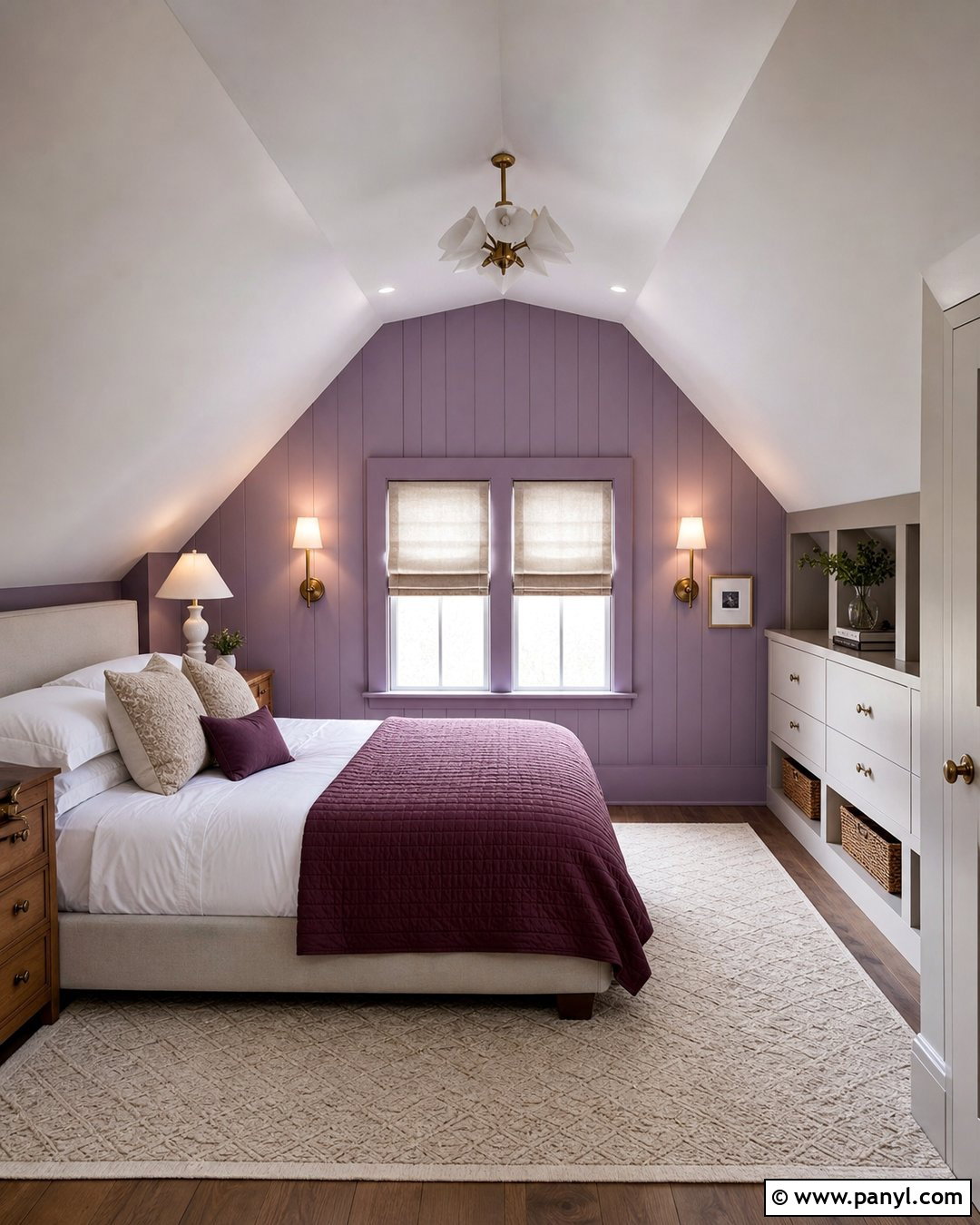
Sloped ceilings make an attic bedroom cozy, and lavender walls can emphasize that character without closing in the space. Paint the vertical walls a pale lavender while keeping the angled ceiling and beams warm white. Position a low upholstered bed beneath the tallest section and use compact oak nightstands that fit the limited wall height. Layer white bedding with a muted plum quilt and beige pillows. A soft cream rug lightens the floor, while built-in drawers under the eaves provide discreet storage. Add simple wall sconces instead of table lamps to save surface space. Linen Roman shades suit smaller windows and maintain clean lines. The finished attic room feels intentional, bright, and comfortable despite its unusual architectural angles.
29. Lavender Walls In A Basement Family Room
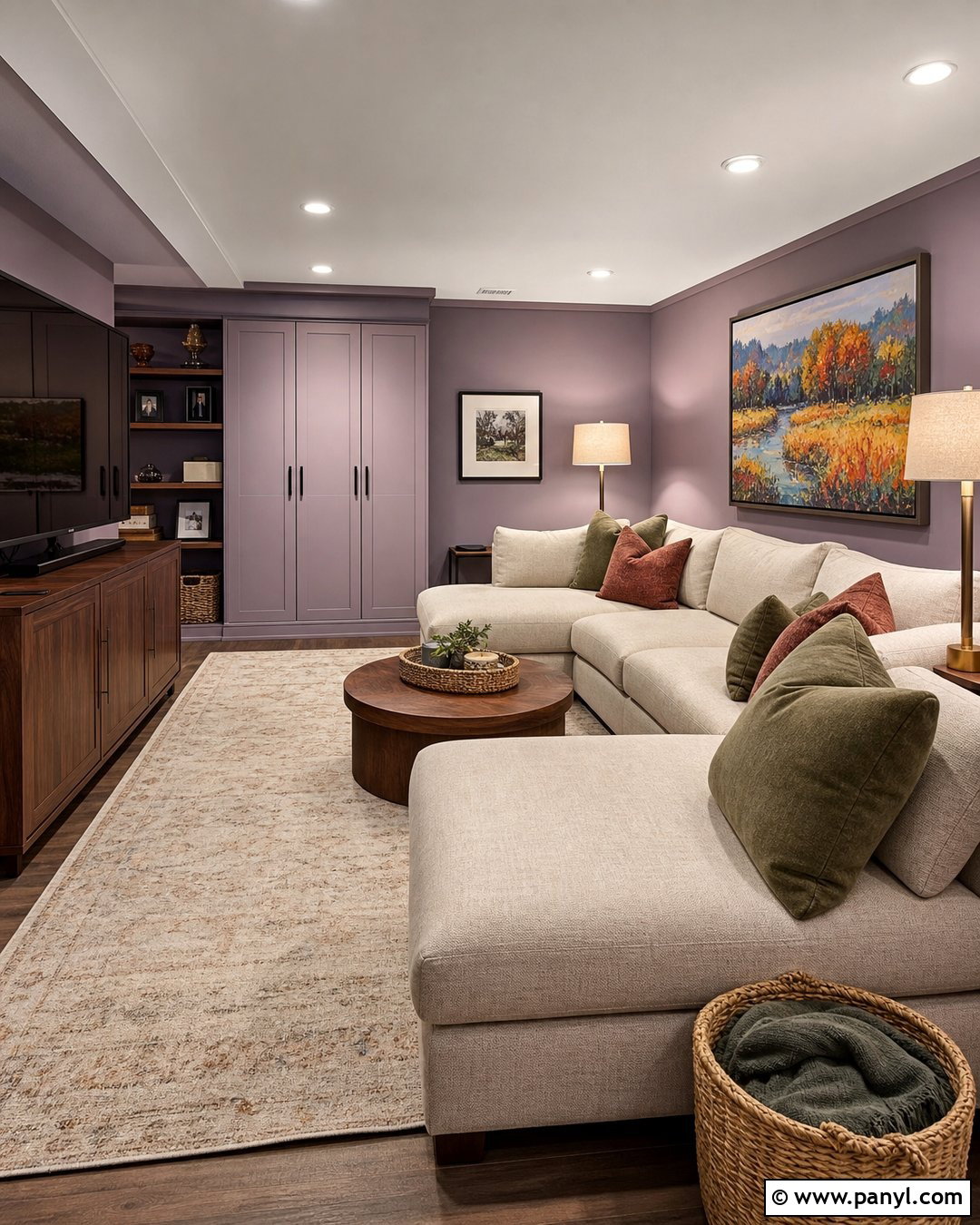
Warm finishes help lavender walls succeed in a basement family room with limited natural light. Choose a muted lavender that leans slightly warm rather than blue. Arrange a large oatmeal sectional around a walnut media console and rounded wood coffee table. Use a generous cream rug to brighten the floor and define the seating zone. Add pillows in rust, olive, plum, and beige for richer contrast. Recessed ceiling lights should provide even illumination, while shaded table and floor lamps make the room comfortable during movie nights. Hang one large piece of colorful artwork rather than many small frames. Storage baskets and closed cabinets control clutter. The complete basement feels welcoming and relaxed instead of cool or dim.
30. Color Drenched Lavender Bedroom
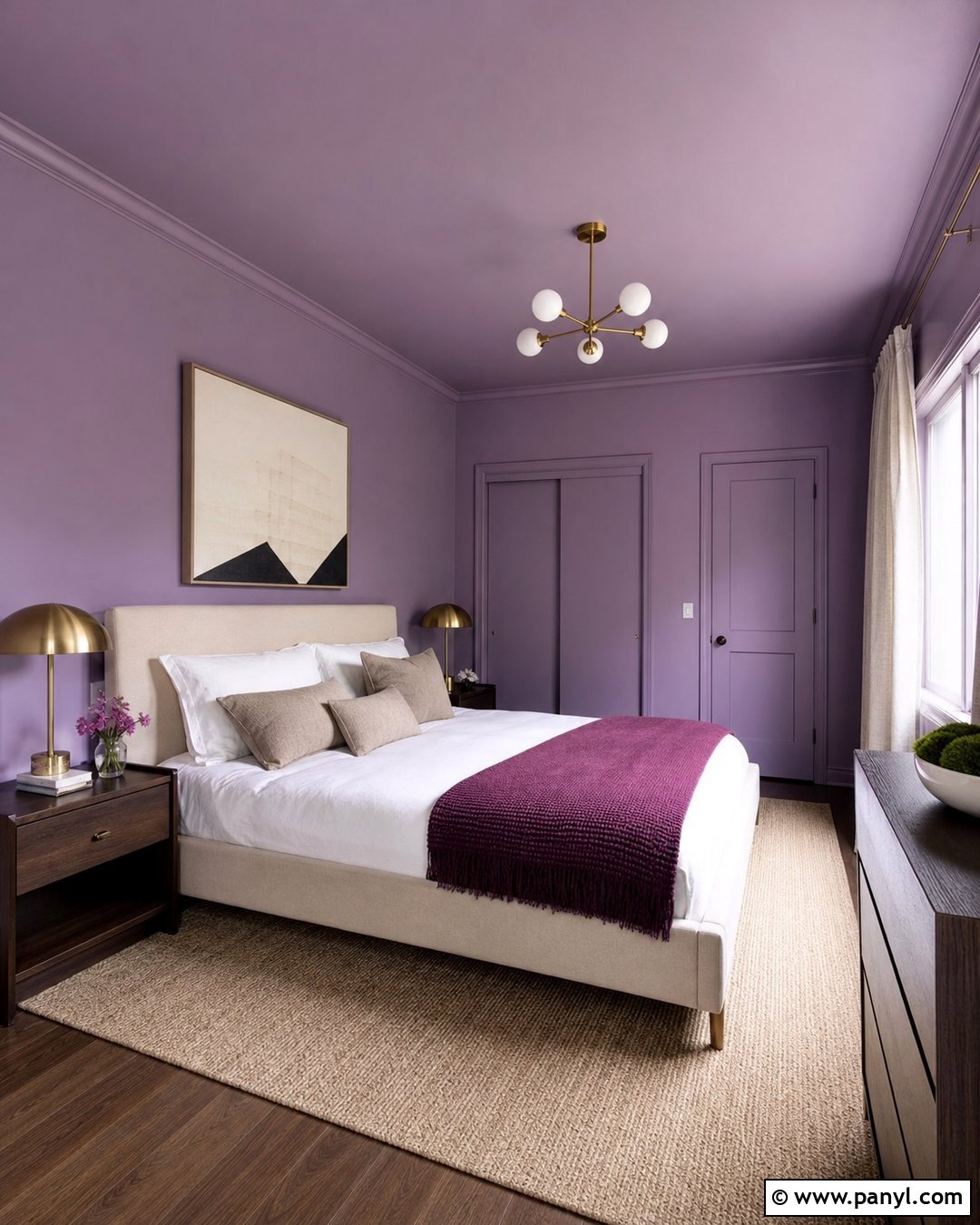
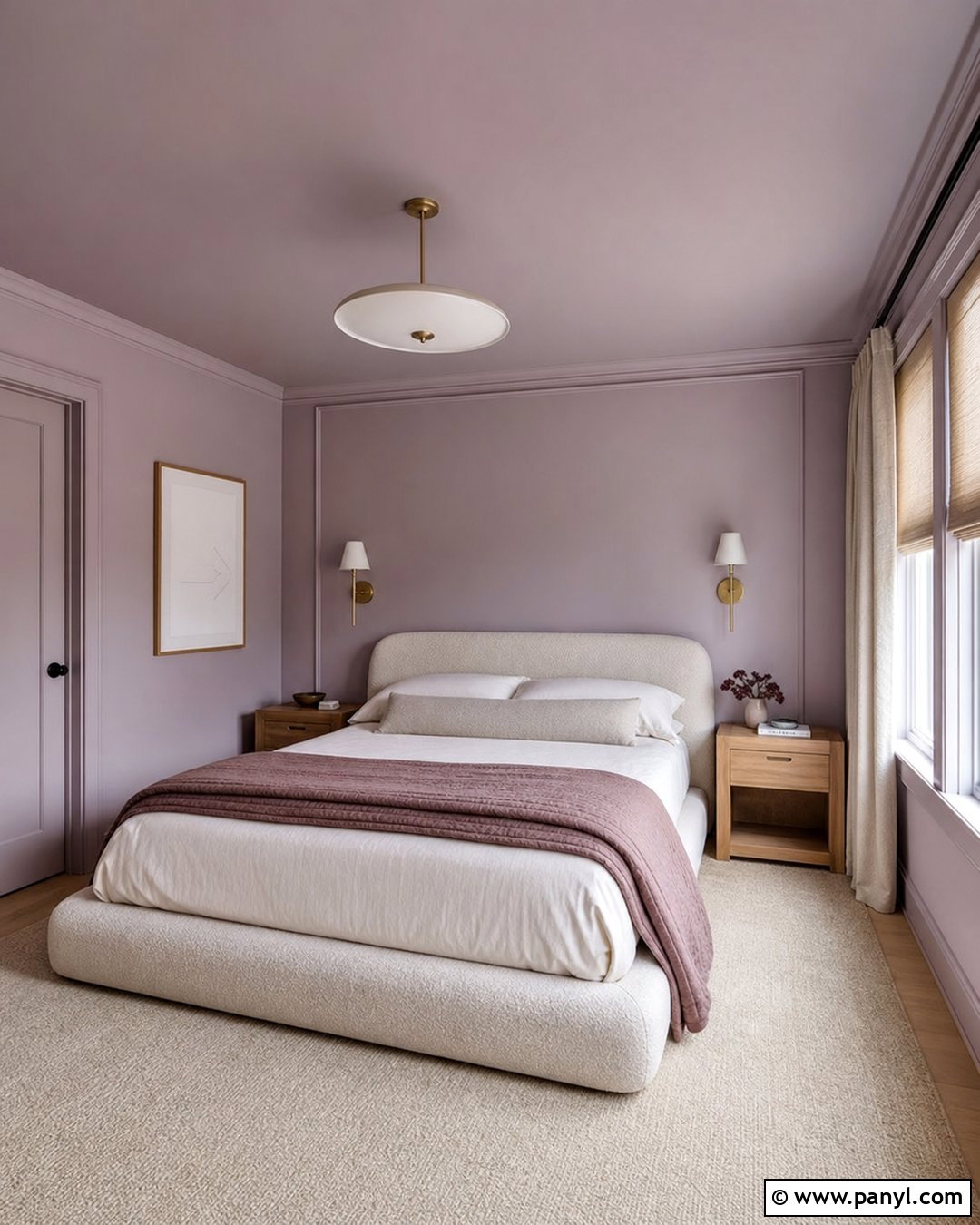
Color drenching creates a seamless bedroom by carrying lavender across the walls, trim, doors, and ceiling. Select a subdued mid-tone lavender so the effect feels enveloping rather than overpowering. Use the same color in different finishes, such as matte on broad surfaces and satin on trim. Place a cream upholstered bed at the center and add dark walnut nightstands for clear contrast. White bedding, a plum throw, and taupe pillows break up the surrounding color. Choose a large beige rug and simple brass lamps to bring warmth into the scheme. Artwork should include generous light areas so it remains visible against the walls. The finished bedroom feels immersive, modern, and carefully balanced, with every lavender surface contributing to one complete design.
31. Lavender Accent Wall In A Living Room
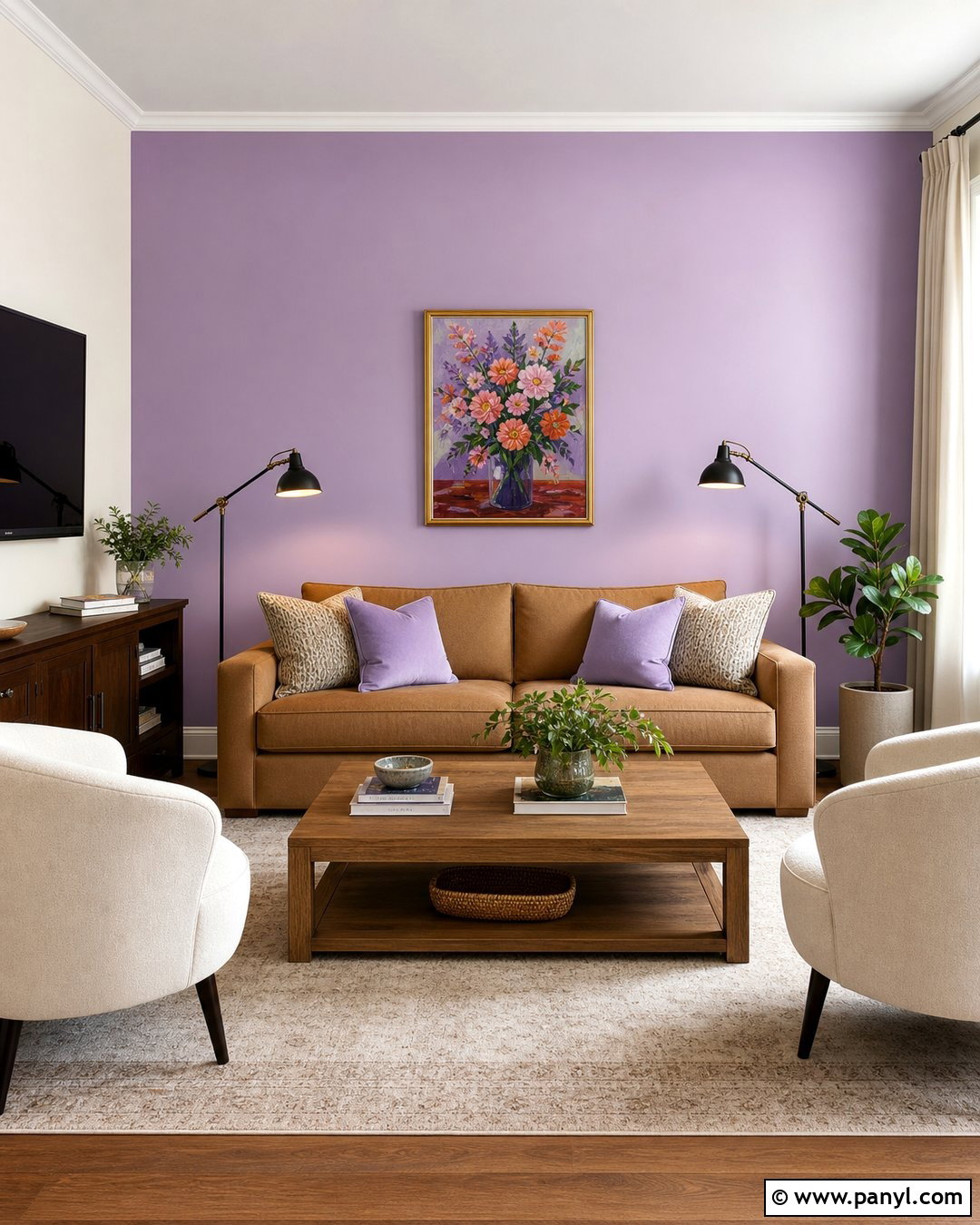
An accent wall offers a practical way to introduce lavender without covering the entire living room. Paint the wall behind the sofa a medium lavender, then use soft warm white on the remaining walls. Place a camel-colored sofa against the lavender surface and add two cream chairs facing it. An oak coffee table and a beige patterned rug create a warm foundation. Repeat lavender through only two or three smaller pieces, such as pillows and artwork, to connect the feature wall with the seating area. Use black floor lamps and a walnut media cabinet for definition. Full-length ivory curtains soften the windows. The complete layout makes the lavender wall feel intentional rather than like a disconnected patch of color.
32. Two Tone Lavender Walls
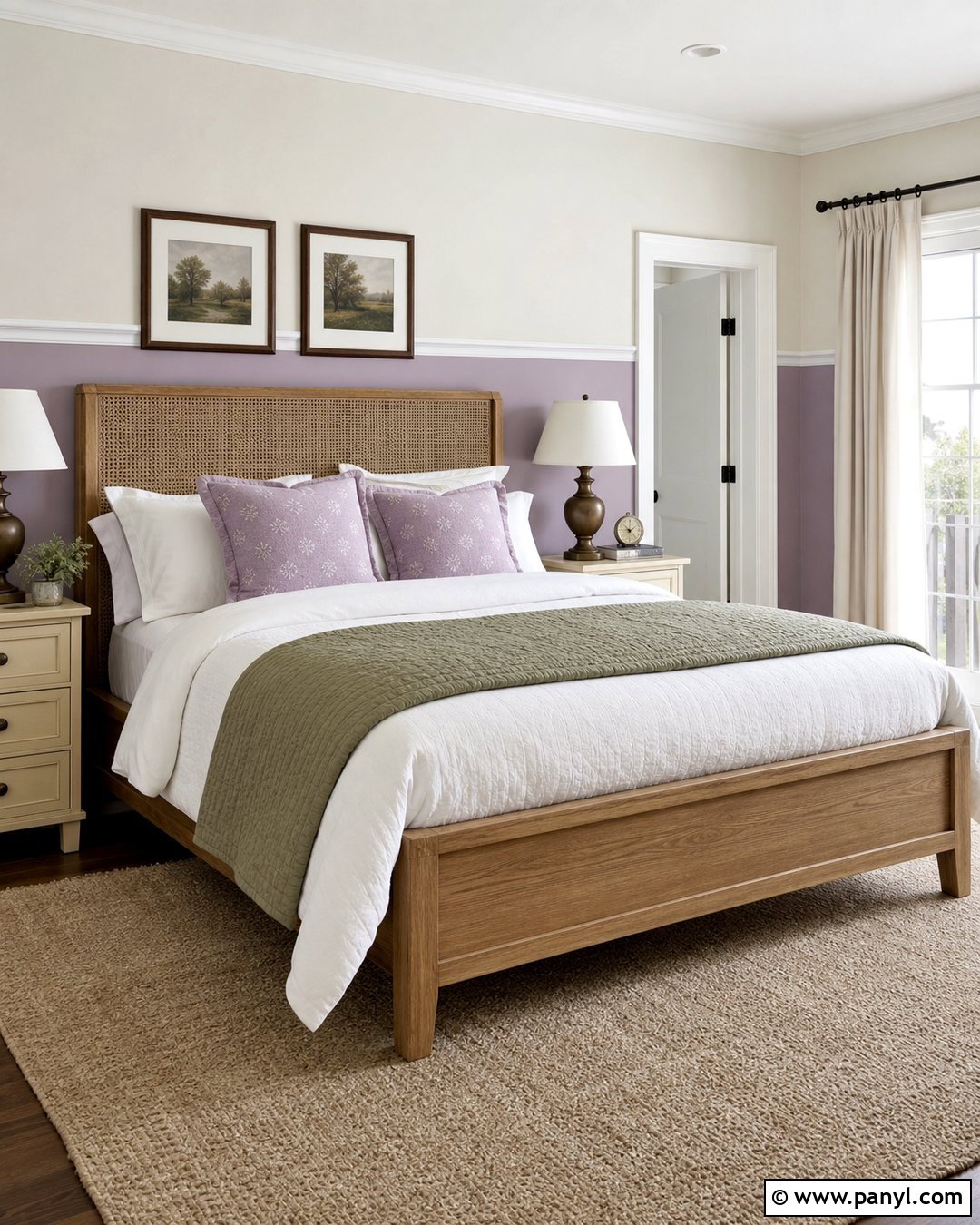
Two-tone lavender walls add architectural interest to a bedroom without requiring elaborate molding. Paint the lower half a medium dusty lavender and the upper half a warm off-white, dividing the colors with a narrow white chair rail. Use a natural oak bed with a tall woven headboard so both wall colors remain visible. White bedding, a sage quilt, and lavender-patterned pillows create a relaxed palette. Add cream nightstands, bronze lamps, and a wool rug in beige and muted plum. Hang simple artwork only on the upper wall area to keep the visual division clear. Linen curtains should match the off-white paint closely. This finished room feels structured and colorful while remaining lighter than a bedroom painted entirely lavender.
33. Lavender Wallpaper In A Dining Room
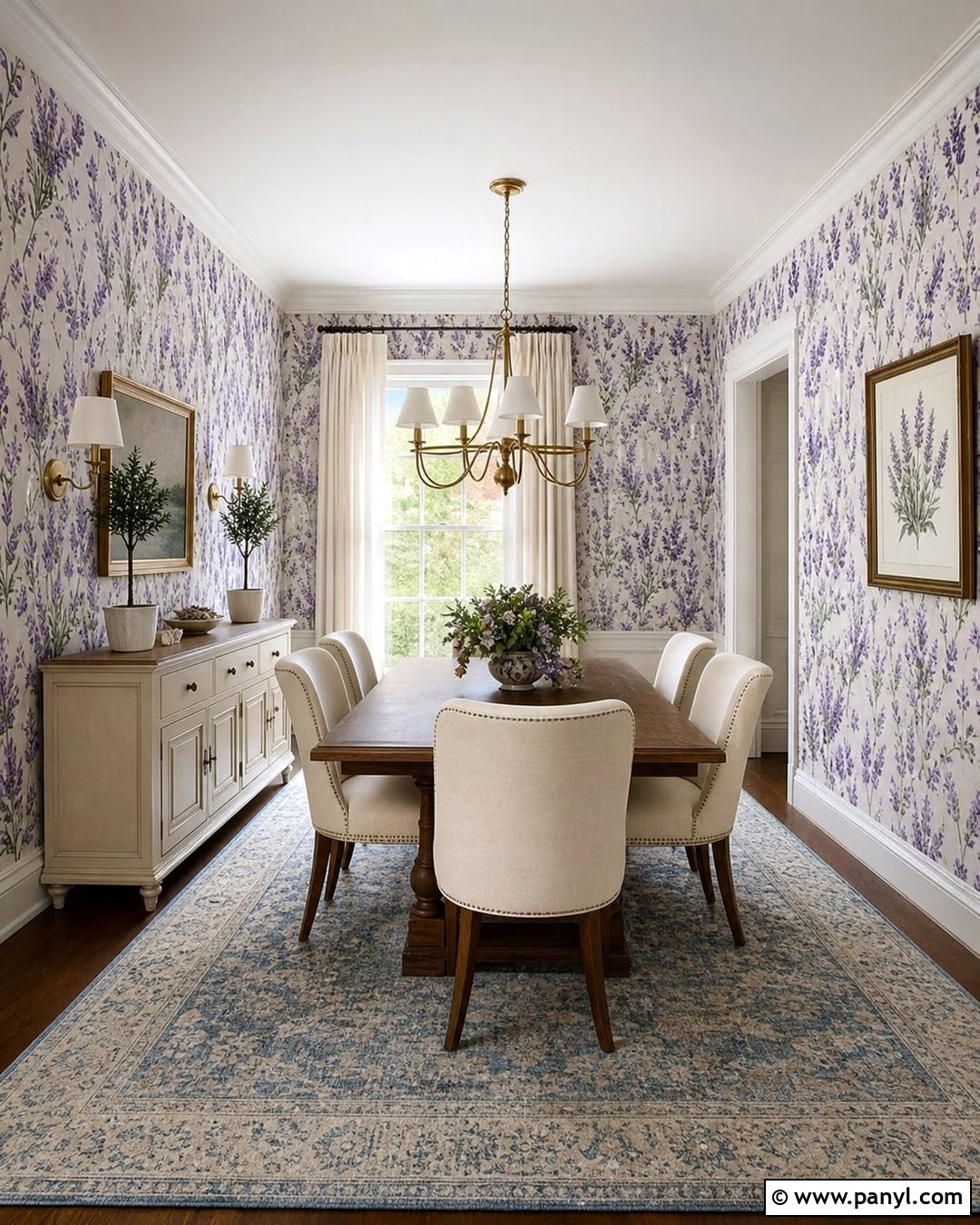
Lavender wallpaper can give a dining room pattern, color, and finished character in one step. Select a small botanical or geometric print with a lavender background and details in cream, sage, and muted blue. Cover all four walls for continuity, then keep the trim and ceiling warm white. A medium walnut dining table and cream upholstered chairs prevent the pattern from feeling overly delicate. Add a brass chandelier, a faded blue rug, and full-length ivory curtains. A painted cream sideboard offers storage and a quiet surface against the wallpaper. Keep artwork minimal because the walls already provide movement. The resulting dining room feels layered and traditional, yet the restrained colors allow it to remain comfortable for regular family meals.
34. Lavender Limewash Walls
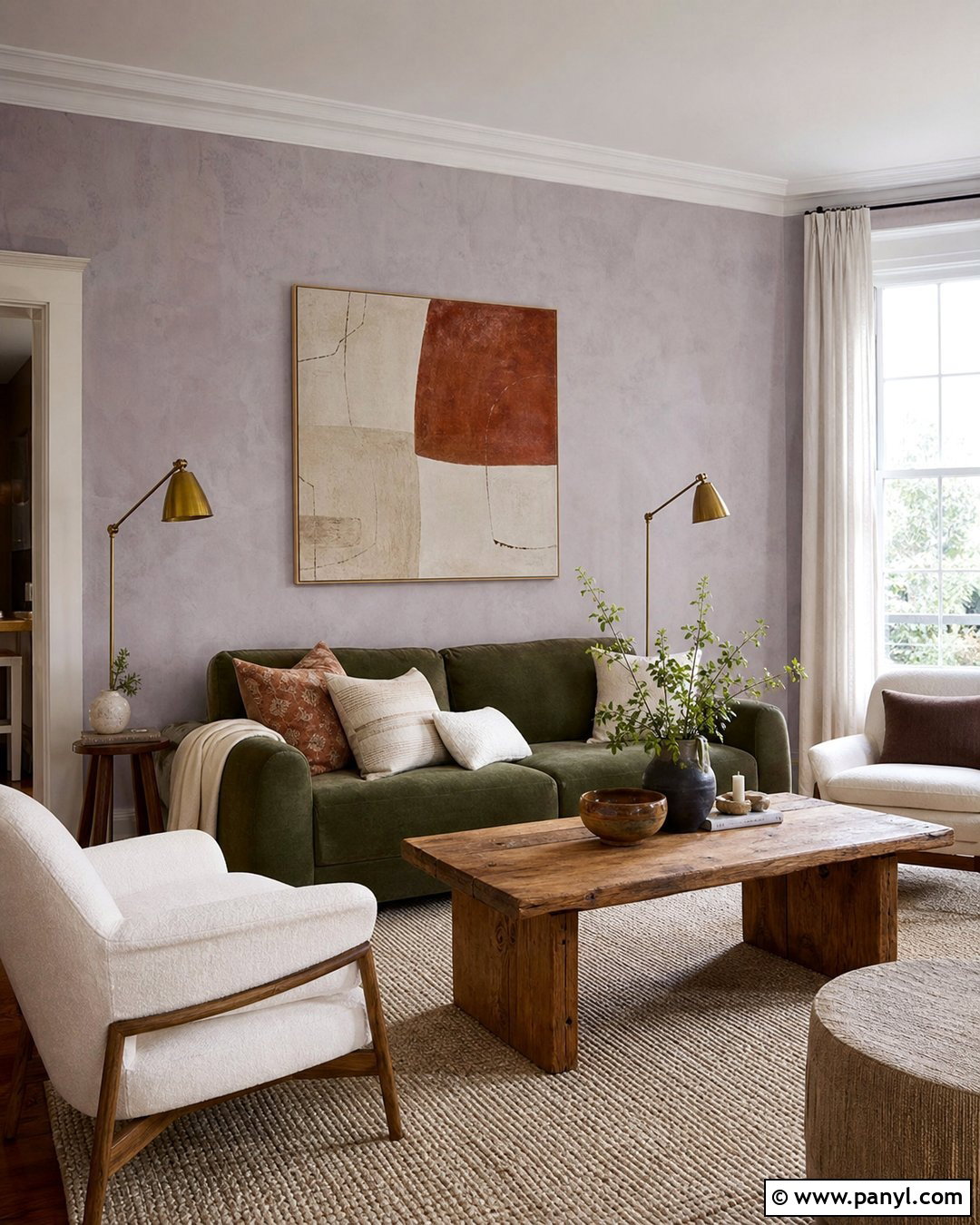
Lavender limewash walls bring soft movement and an imperfect plaster-like finish to a relaxed living room. Choose a pale gray-lavender application with visible but subtle tonal variation. Pair it with a deep olive sofa, two cream lounge chairs, and a low reclaimed oak coffee table. A textured wool rug in warm beige balances the cooler wall color. Use aged brass lamps, linen curtains, and handmade ceramic accessories to support the natural finish. One large abstract canvas in cream, rust, and plum can provide a modern focal point. Avoid glossy furniture that competes with the walls’ matte texture. The completed space feels calm and tactile, combining old-world surface character with a simple, comfortable furniture arrangement.
35. Lavender Walls And Ceiling
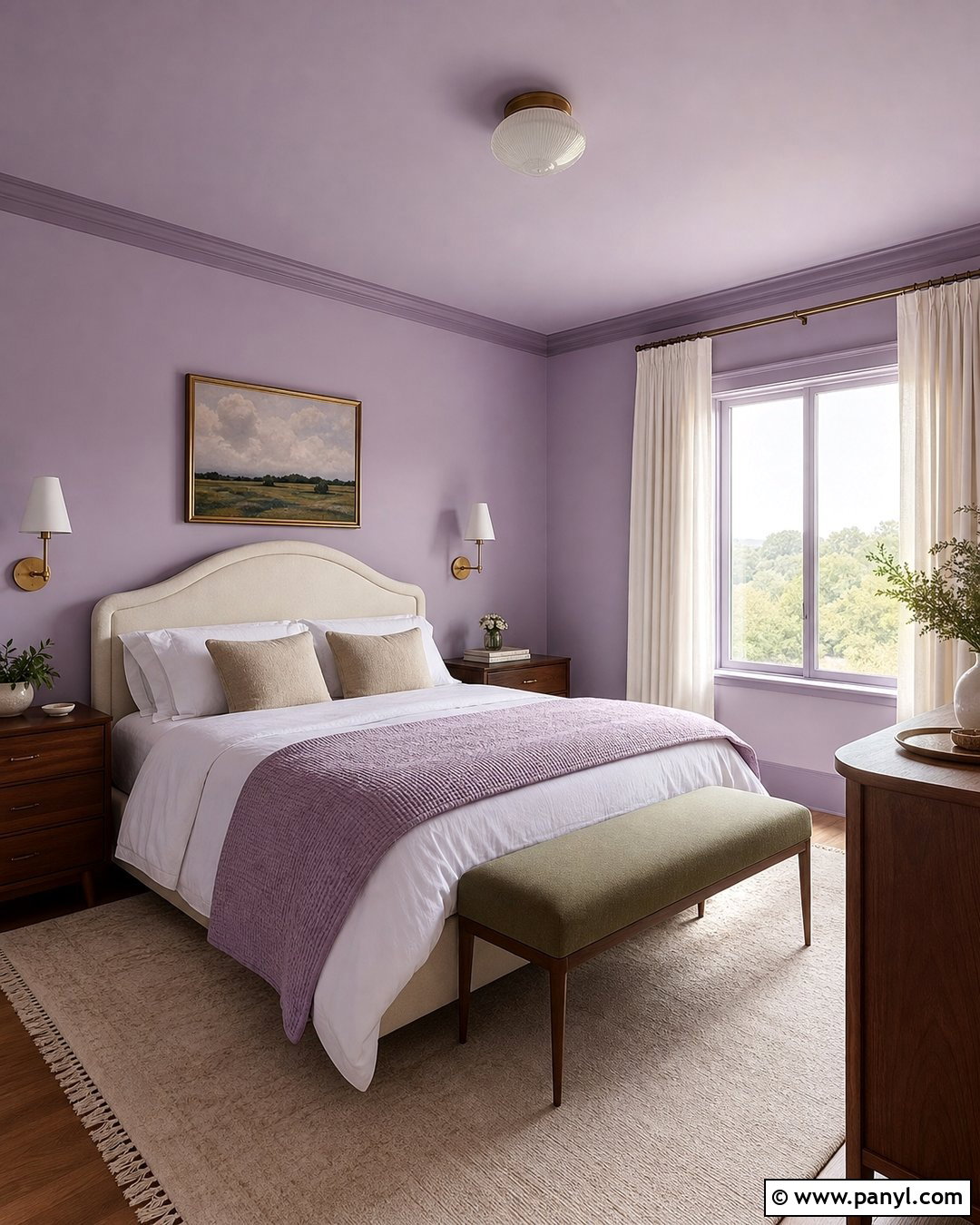
Painting both the walls and ceiling lavender creates an enveloping guest room with a clear sense of intention. Use a light, warm lavender so the ceiling does not appear heavy, and paint the trim a slightly deeper lavender for gentle definition. Choose a curved cream headboard, walnut nightstands, and a small upholstered bench in muted green. Dress the bed in white linen with a lavender coverlet and beige accent pillows. An ivory rug reflects light upward, while brass sconces add warmth without occupying the nightstands. Hang one landscape painting above the bed and use natural linen curtains at the window. This complete monochromatic room feels cozy and distinctive, yet the light furnishings maintain an open, comfortable atmosphere.
Conclusion:
Lavender walls can support far more than a pastel bedroom. Depending on the undertone and surrounding materials, they can feel modern, traditional, earthy, coastal, dramatic, or quietly neutral. Pair pale lavender with white, cream, or oak for an airy room. Use walnut, navy, charcoal, black, or plum when you want stronger contrast. Sage green, terracotta, blush, and warm brass can soften cooler lavender shades. Always test paint beside the room’s flooring, furniture, and fabrics because changing light can reveal unexpected blue, gray, or pink undertones. Whether you choose one accent surface or an immersive color-drenched scheme, these complete room plans make it easier to decorate confidently with **Lavender Walls**.

Related Ideas and Inspiration:
Leave a Reply