
Sherwin-Williams Adaptive Shade SW 7053 is a deep, stone-inspired neutral that brings warmth, depth, and a grounded feeling to a home. Its complex mix of gray, taupe, brown, and subtle green can shift noticeably with lighting and surrounding finishes. With a light reflectance value near 21, it creates more drama than a typical light greige, yet it remains softer than charcoal. Sherwin-Williams recommends Nuance, Irish Cream, and Rojo Dust as coordinating colors, but Adaptive Shade also works beautifully with warm whites, natural woods, aged metals, muted greens, and earthy textiles. () From cozy bedrooms to sophisticated exteriors, the following complete looks provide practical inspiration for decorating with **adaptive shade sherwin williams ideas**.

1. Adaptive Shade Living Room With Cream Sofa
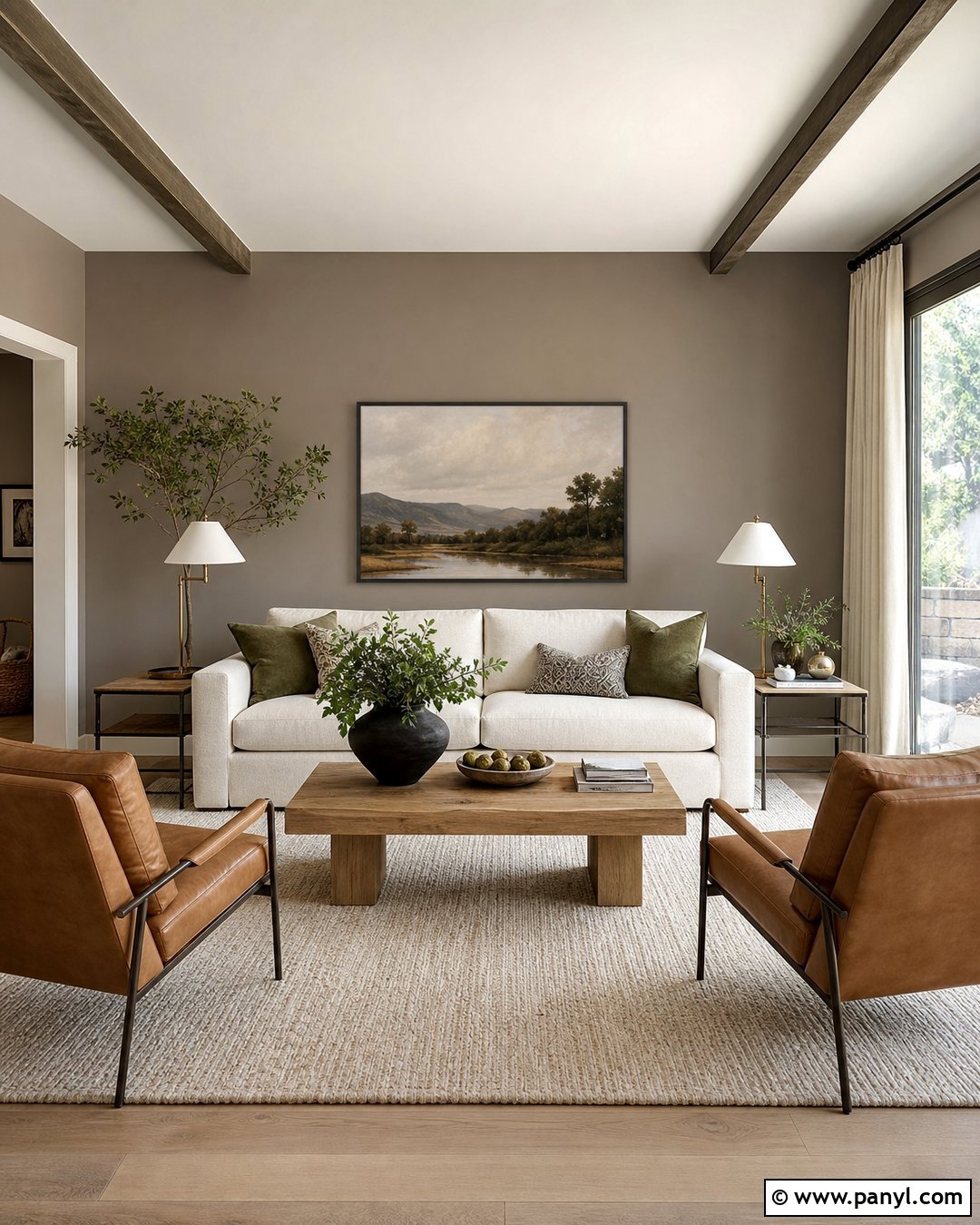
Create a grounded living room by covering every wall in Adaptive Shade and keeping the ceiling and trim a warm off-white. A large cream linen sofa immediately lightens the deep walls, while two caramel leather chairs add warmth without creating too much contrast. Choose a medium-tone oak coffee table, a textured ivory rug, and full-length natural linen curtains. Brushed brass lamps and warm white bulbs prevent the room from feeling cold. Complete the layout with rust, olive, and oatmeal pillows, plus simple landscape artwork in aged wood frames. This combination suits rooms with generous natural light because the darker wall color remains rich and dimensional throughout the day. Leave some open wall space so the finished room feels calm rather than heavily decorated.
2. Adaptive Shade Living Room With White Trim
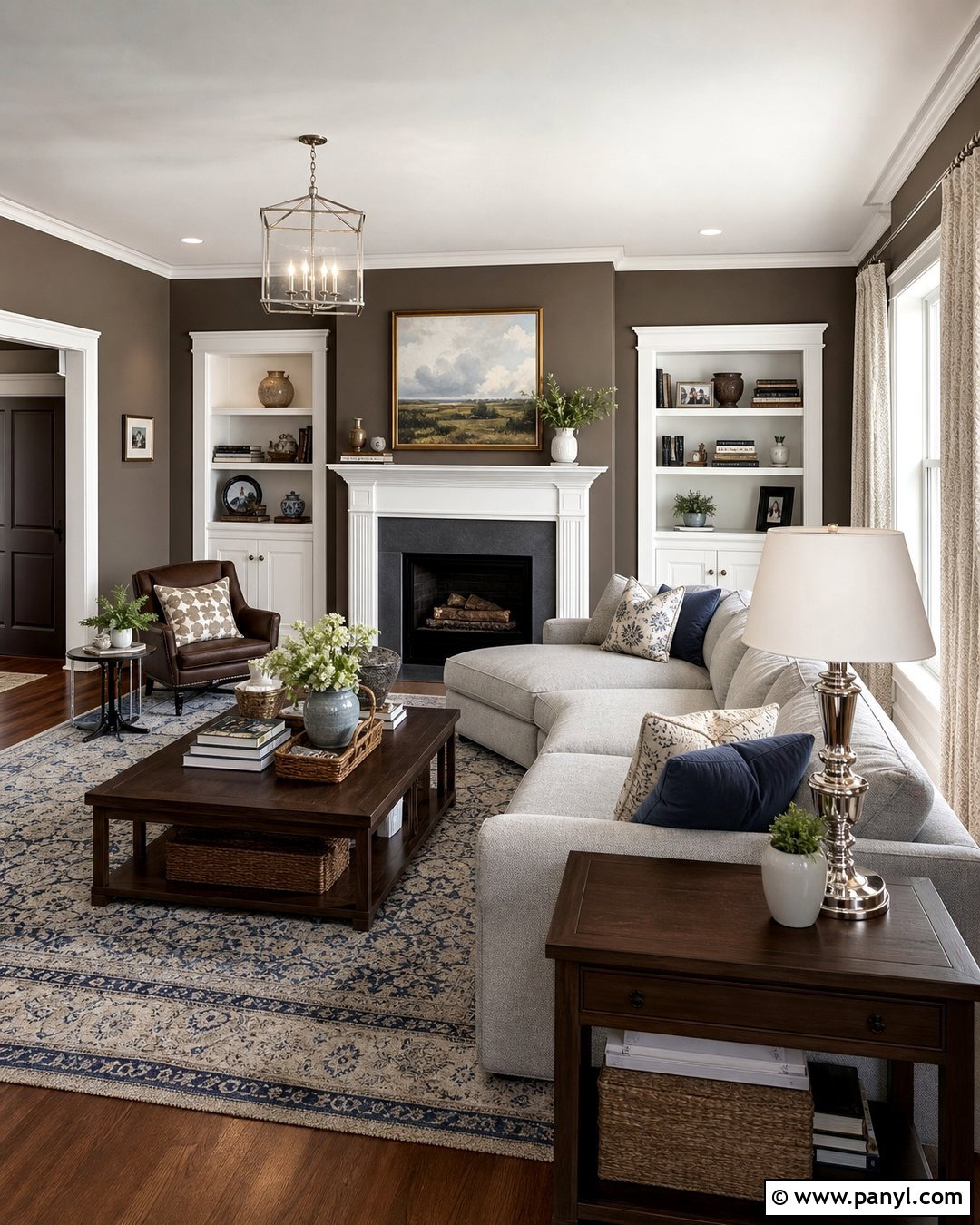
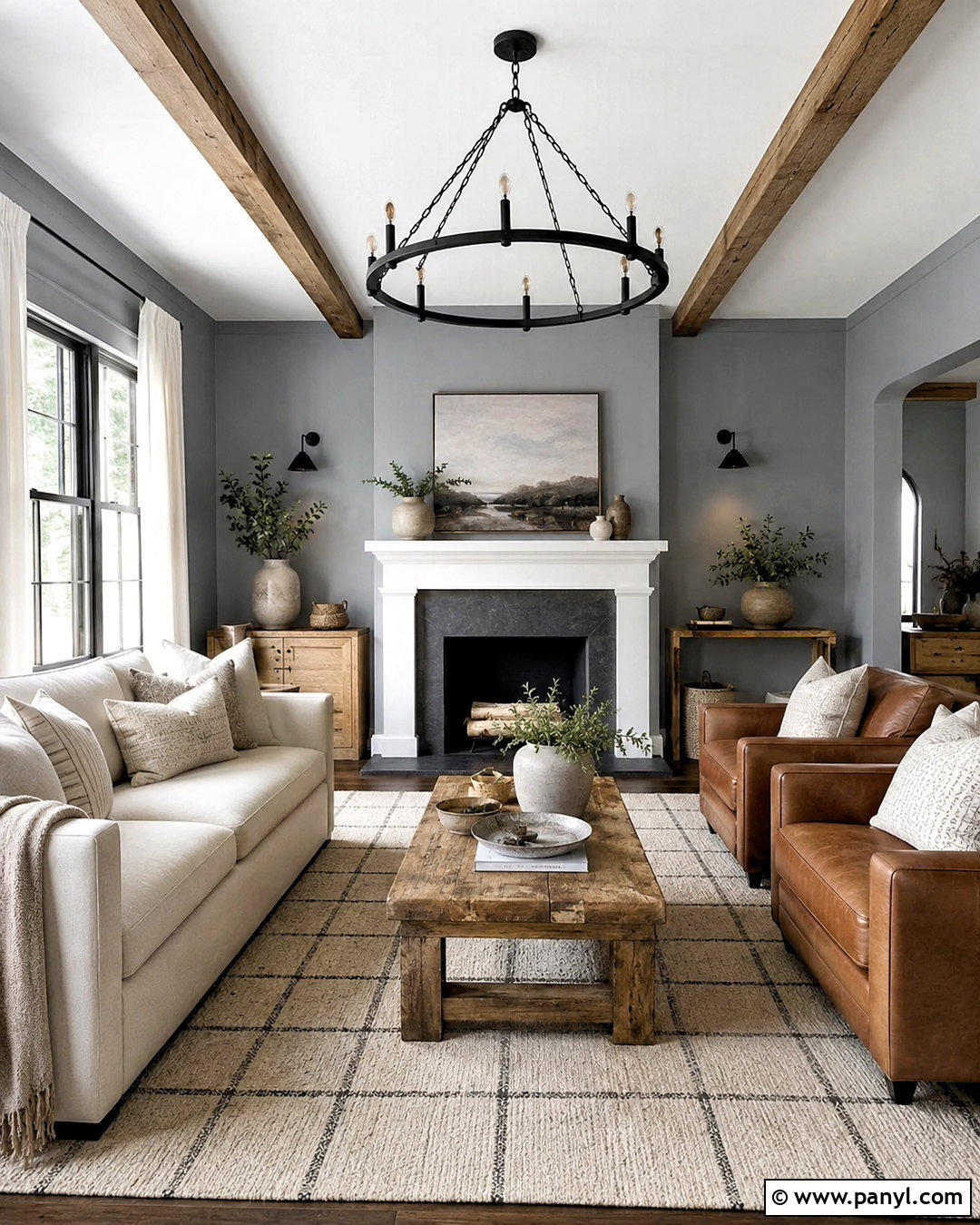
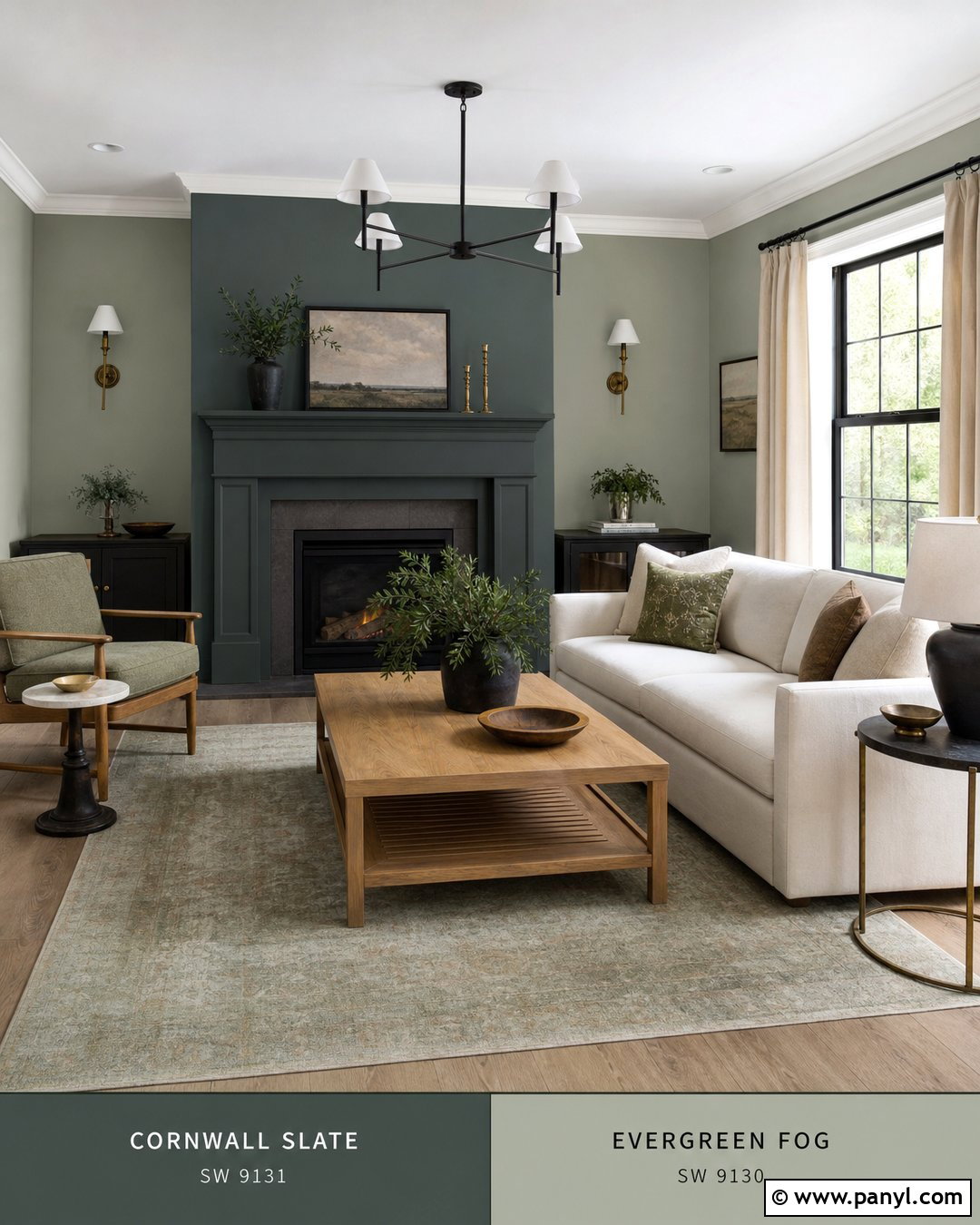
Crisp architectural contrast gives Adaptive Shade a tailored, traditional appearance. Paint the walls in this deep neutral, then use a clean soft white on crown molding, baseboards, window casings, and built-in shelving. Arrange a light gray sectional opposite a simple white fireplace with a dark soapstone surround. Add a faded blue-and-cream rug, walnut side tables, and polished nickel lamps for a balanced mix of warm and cool finishes. Blue-gray pillows can emphasize the gray side of the paint, while camel throws bring forward its earthy warmth. Use white or cream curtains that blend with the trim and visually extend the windows. The complete look feels polished and bright, especially when the ceiling stays white and reflective surfaces are distributed evenly around the room.
3. Adaptive Shade Living Room With Cognac Leather
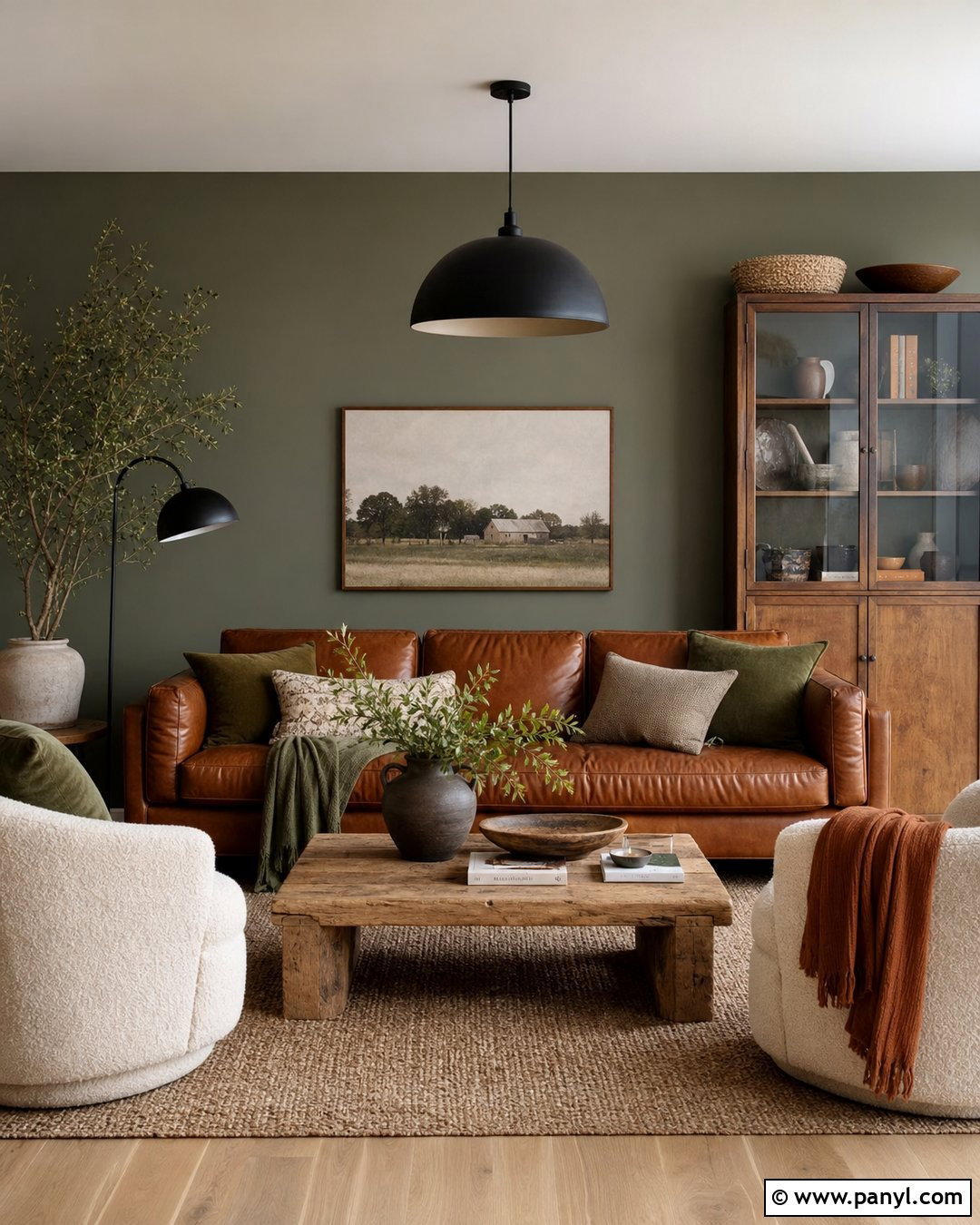
Adaptive Shade creates a strong background for a relaxed living room filled with cognac leather and rustic materials. Center a warm brown leather sofa on the main wall, then place two cream boucle chairs across from it to soften the arrangement. A chunky reclaimed-oak coffee table, woven wool rug, and matte black floor lamp introduce texture and structure. Use olive, tan, and faded terracotta pillows to connect the furnishings to the subtle brown-green character of the paint. Hang one oversized abstract canvas containing ivory and earthy red rather than several small decorations. Natural woven shades keep the windows simple, while off-white trim adds enough brightness. This full palette feels comfortable and established, making it especially effective in family rooms, dens, and casual open-plan living areas.
4. Adaptive Shade Living Room Accent Wall
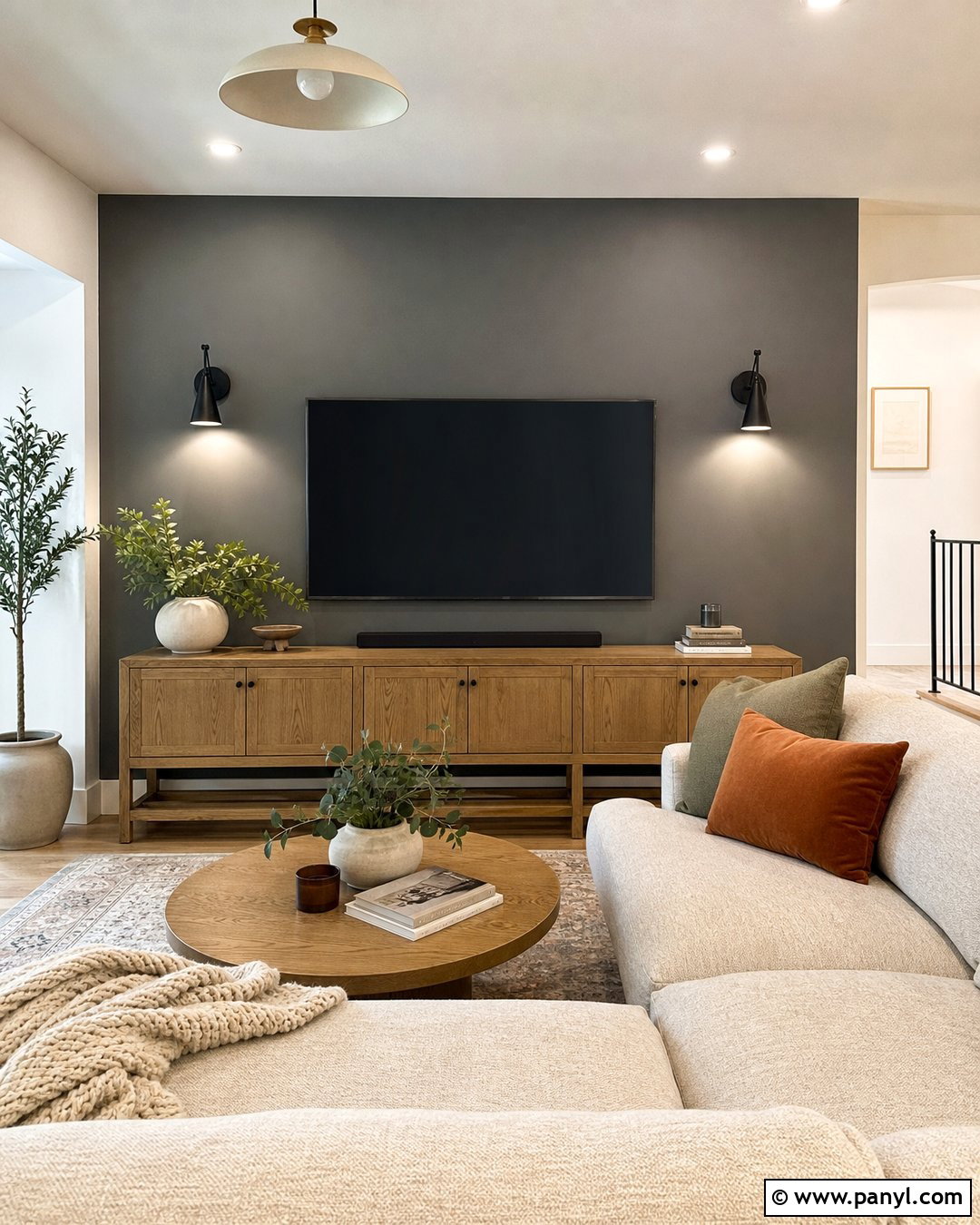
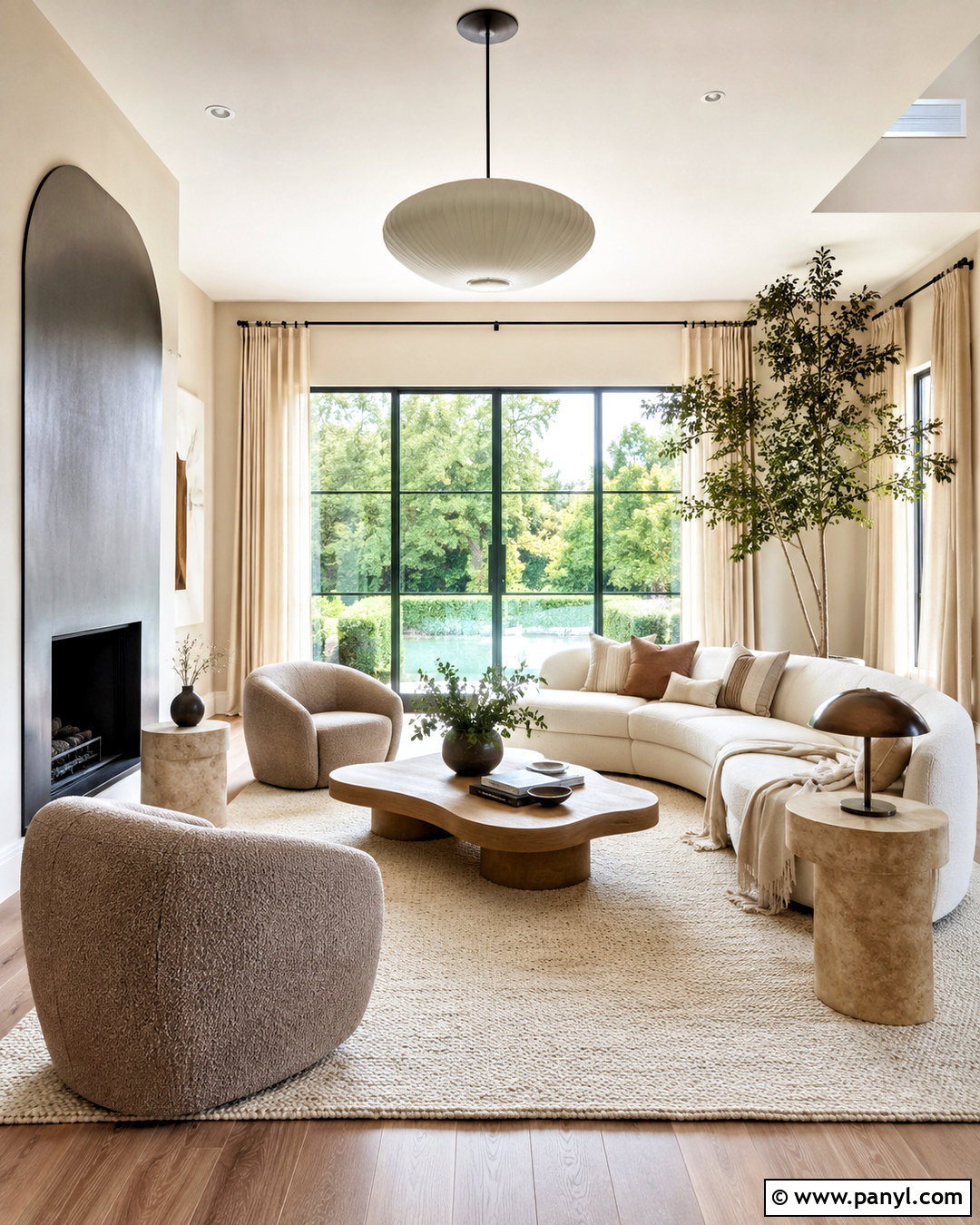
If four dark walls feel overwhelming, use Adaptive Shade on the main architectural wall and build the entire living room around it. Position a low oak media console or plaster fireplace against the painted surface, leaving the surrounding walls a warm cream such as Nuance. Select an oatmeal sectional, rounded wood coffee table, and light beige rug to maintain an open feeling. Matte black sconces provide definition against the accent color, while sage and clay-colored accessories create a natural transition between dark and light surfaces. Repeat Adaptive Shade subtly through a patterned pillow or ceramic vase so the wall does not appear disconnected. This approach works particularly well in smaller rooms because the focal wall adds depth while the pale surrounding walls preserve brightness and visual breathing room.
5. Adaptive Shade Bedroom With Linen Bedding
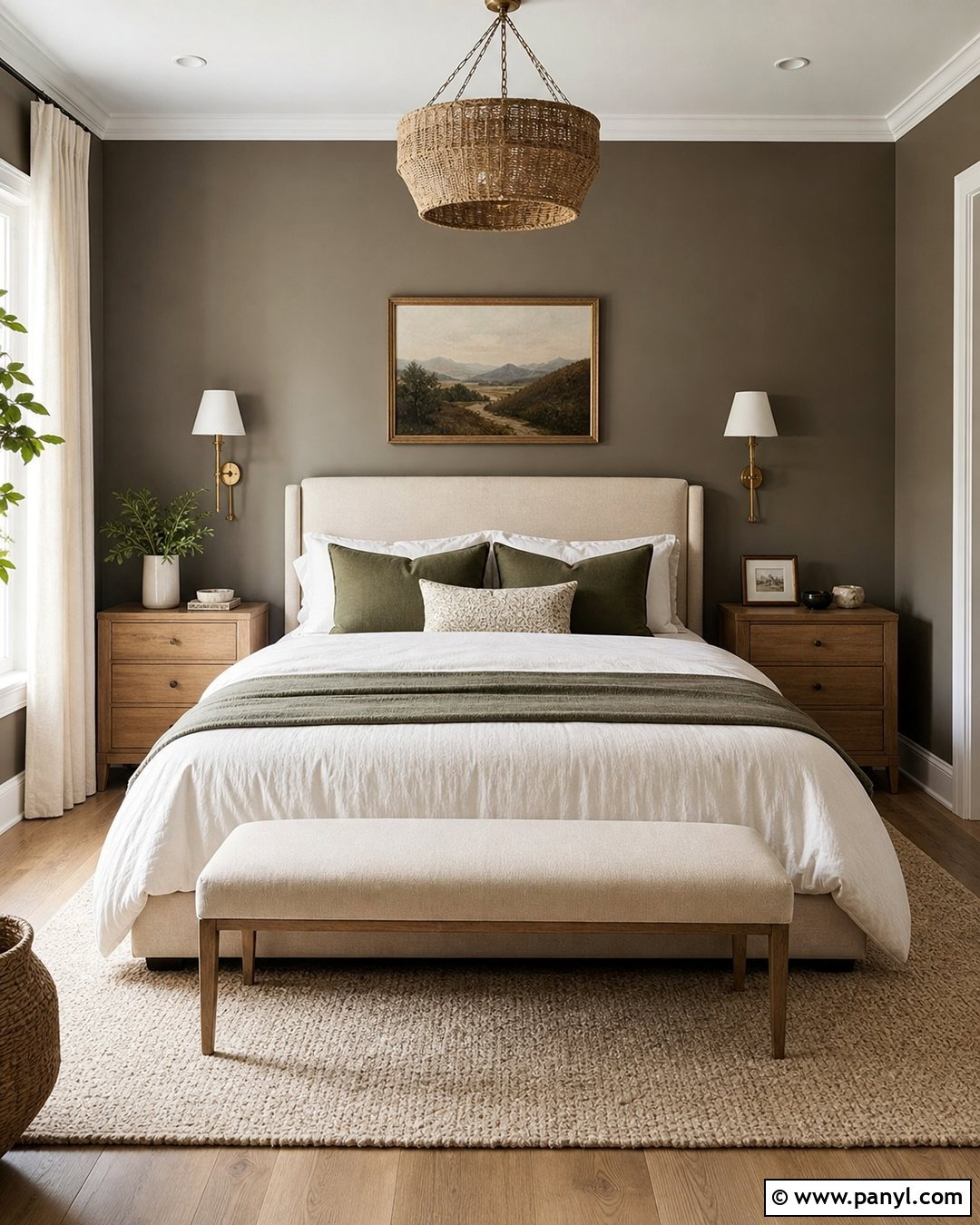
Wrap a primary bedroom in Adaptive Shade for a quiet, cocooning atmosphere that still feels refined. Paint the walls in a matte finish and use a slightly warmer off-white on the ceiling, doors, and trim. Place a tall oatmeal linen headboard against the longest wall and dress the bed with ivory sheets, taupe quilts, and olive accent pillows. Light oak nightstands keep the dark paint from becoming heavy, while aged brass sconces provide gentle contrast. Add natural woven shades under full-length cream curtains for layered privacy and softness. A large wool rug in beige and faded brown should extend beneath the bed. Keep artwork minimal and nature-inspired. The finished bedroom feels peaceful, coordinated, and comfortable without depending on trendy patterns or excessive decorative accessories.
6. Adaptive Shade Bedroom With Black Furniture
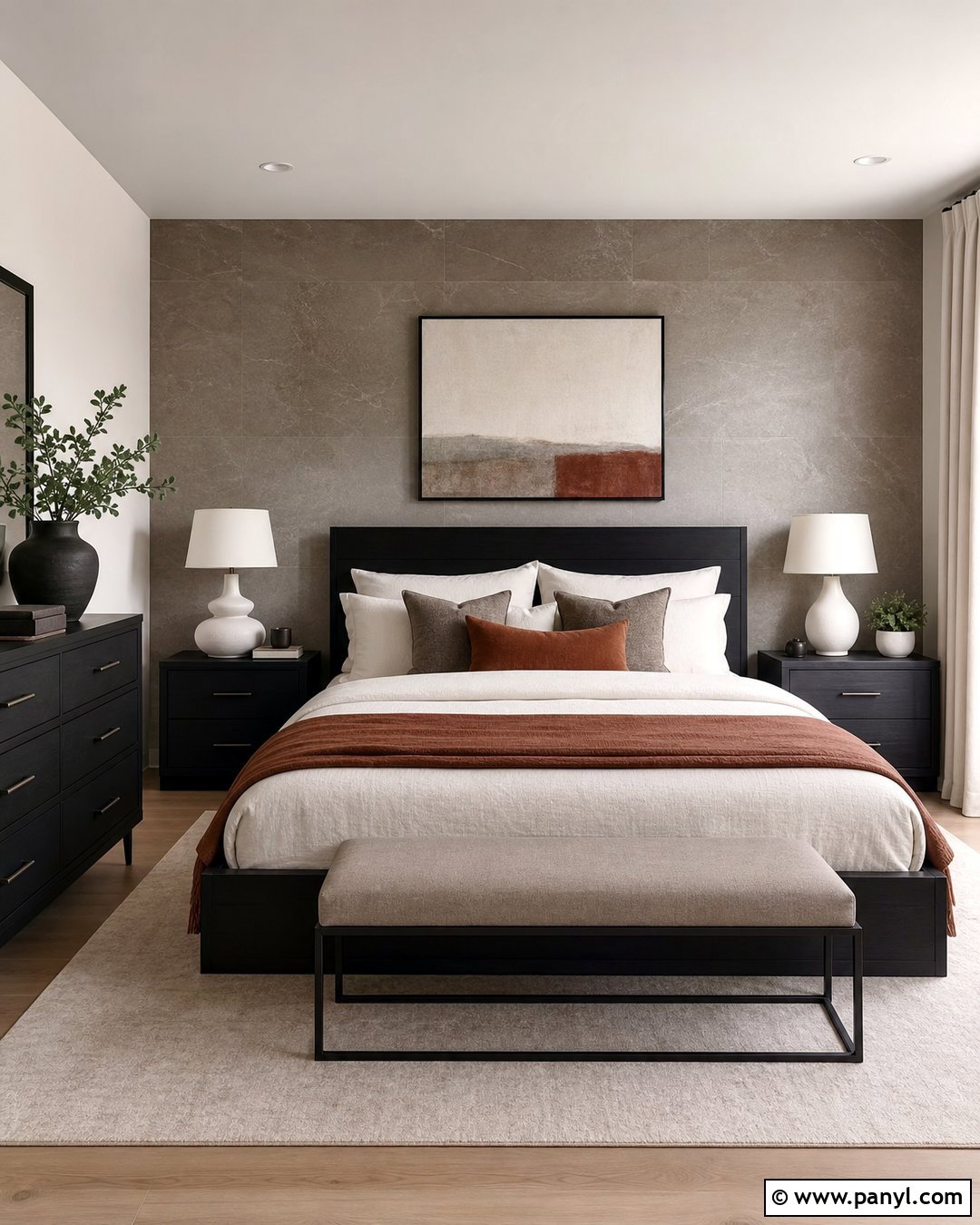
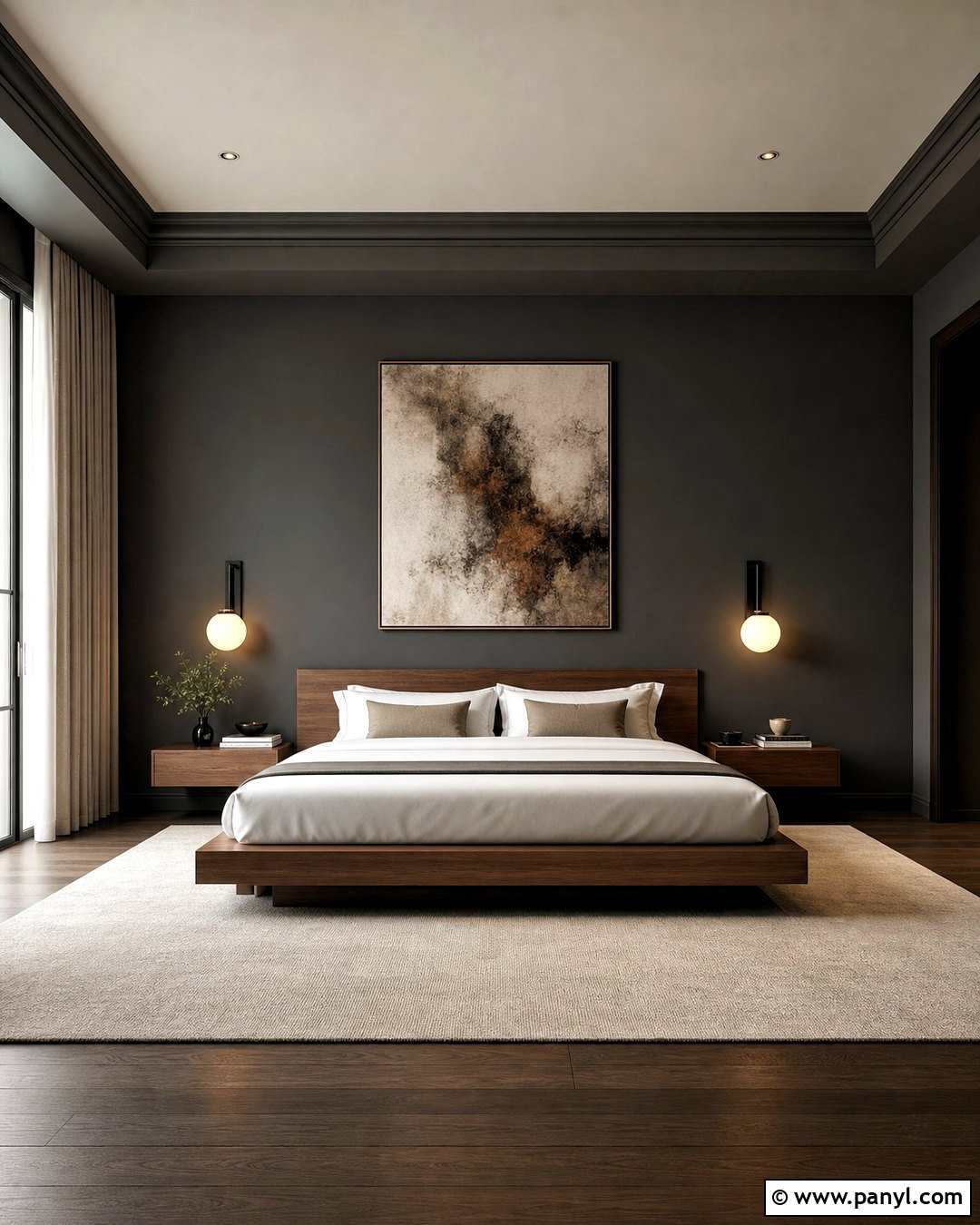
For a sharper modern bedroom, pair Adaptive Shade walls with streamlined black furniture and plenty of pale fabric. Choose a low matte black bed, matching nightstands, and a narrow black dresser with simple hardware. Balance those dark pieces with white bedding, a thick ivory rug, and full cream curtains. One muted rust throw and several taupe pillows add warmth while maintaining the restrained palette. Hang a large black-framed photograph above the bed and use sculptural off-white lamps to break up the darker surfaces. Light natural-oak flooring is ideal because it separates the black furniture from the stone-gray walls. This complete design works best with an uncluttered layout and limited accessories. The subtle contrast between the paint and black furniture produces depth without creating a stark black-and-white room.
7. Adaptive Shade Bedroom With Walnut Furniture
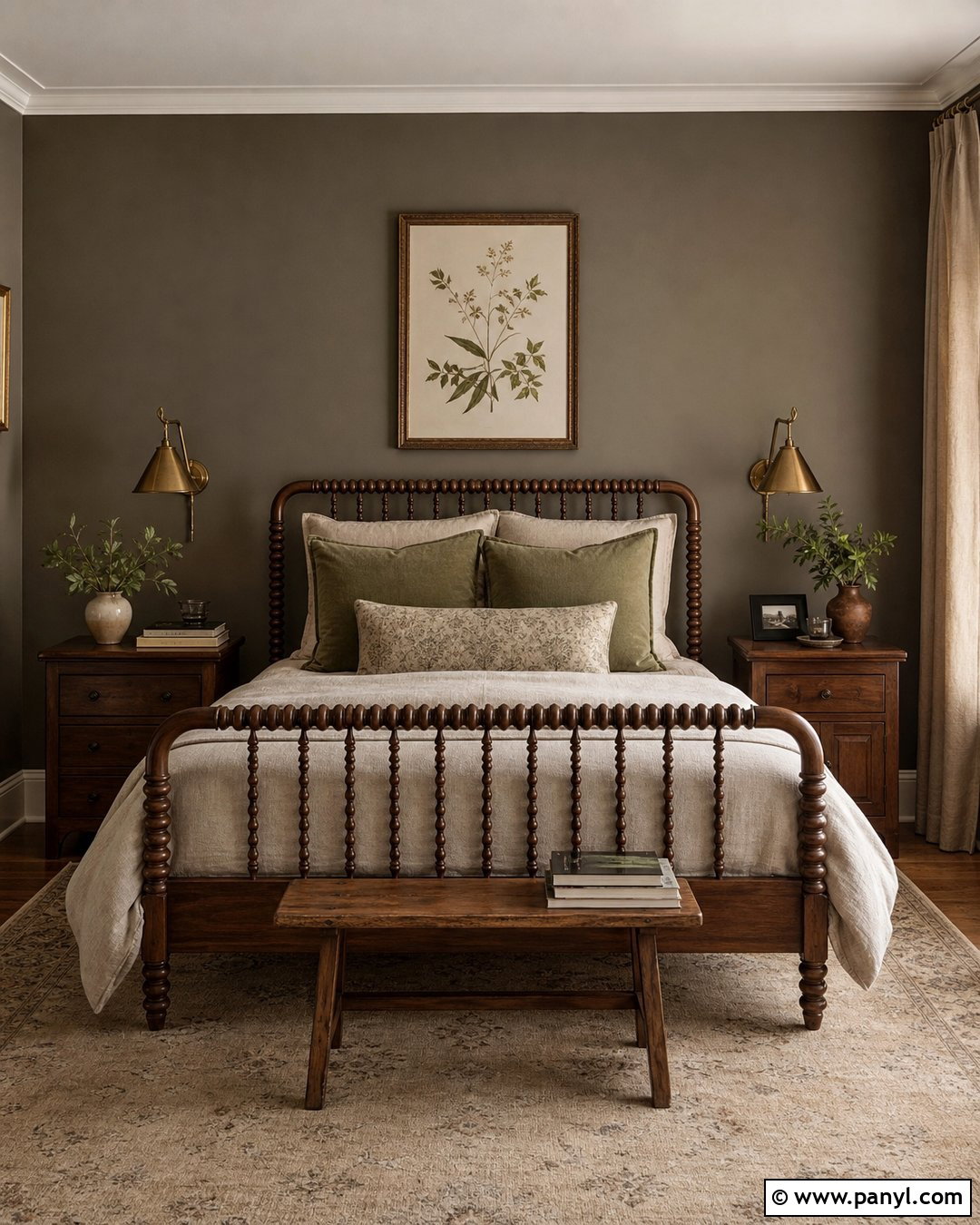
Rich walnut makes Adaptive Shade appear warmer and more traditional. Begin with painted walls, creamy trim, and a natural white ceiling. Add a walnut spindle bed or simple paneled bed with matching nightstands, then layer the bedding in flax, ivory, and muted olive. A vintage-inspired rug containing soft brown, dusty blue, and beige can connect the walls and furniture without introducing loud color. Use antique brass picture lights, pleated fabric lampshades, and framed botanical prints for a collected finish. Linen curtains in warm ivory should hang close to the ceiling to balance the visual weight of the dark paint. A small upholstered bench at the foot of the bed completes the layout. The result is a timeless, comfortable bedroom with warmth, depth, and subtle historical character.
8. Adaptive Shade Guest Bedroom
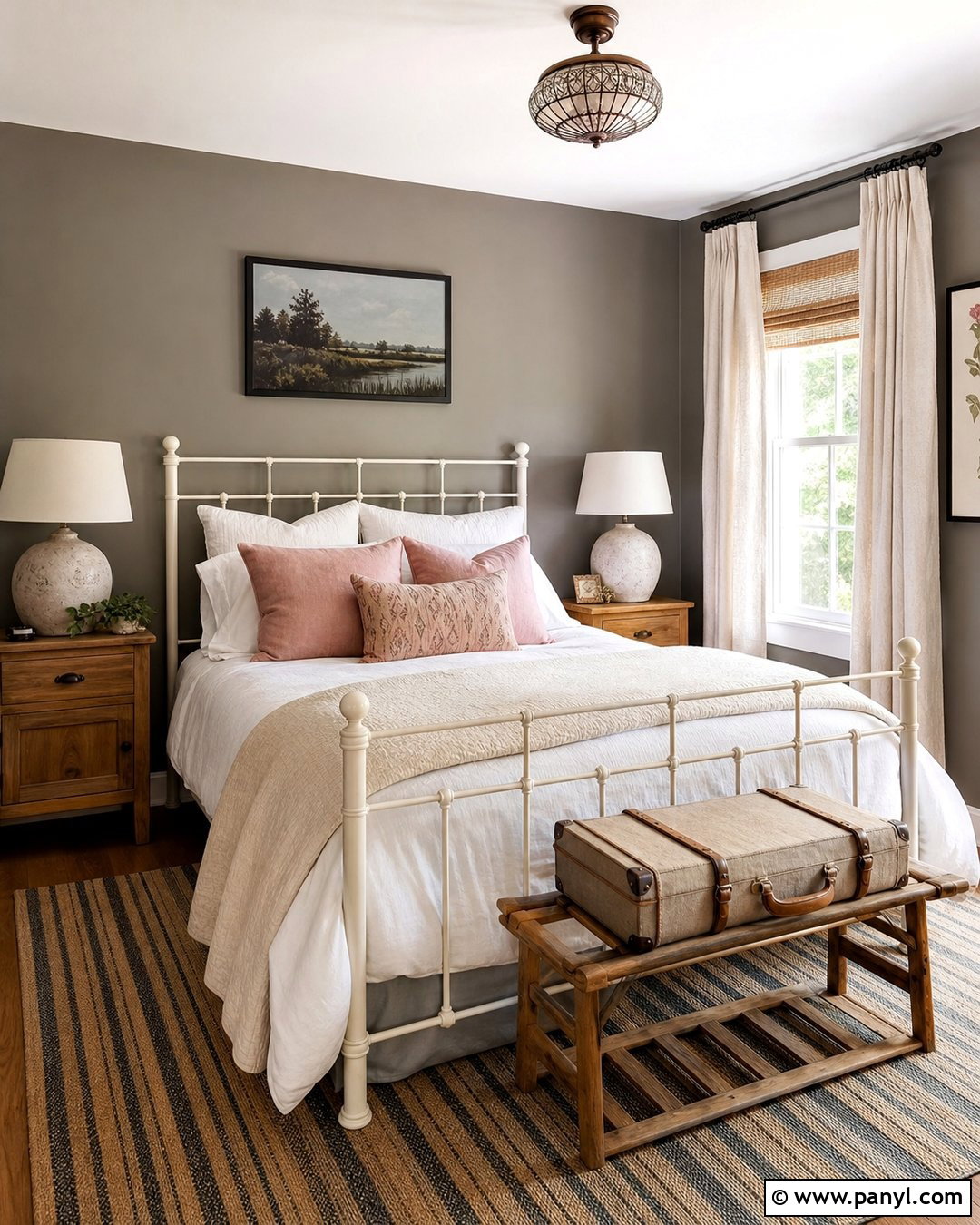
A guest bedroom painted in Adaptive Shade can feel welcoming when the furniture and textiles remain light. Use the color on all four walls, then introduce a cream-painted iron bed or pale upholstered headboard. Dress the bed with white cotton sheets, a quilted beige coverlet, and pillows in dusty rose, olive, and soft brown. Place small oak nightstands on each side with compact ceramic lamps for symmetry. A striped neutral rug adds gentle pattern, while light-filtering linen curtains keep the room airy during the day. Include a simple luggage bench, a wall mirror, and one small dresser so visitors have practical storage. Warm white trim and uncomplicated botanical artwork complete this restful design. The space feels thoughtfully prepared without becoming overly formal, dark, or crowded.
9. Adaptive Shade Dining Room With Oak Table
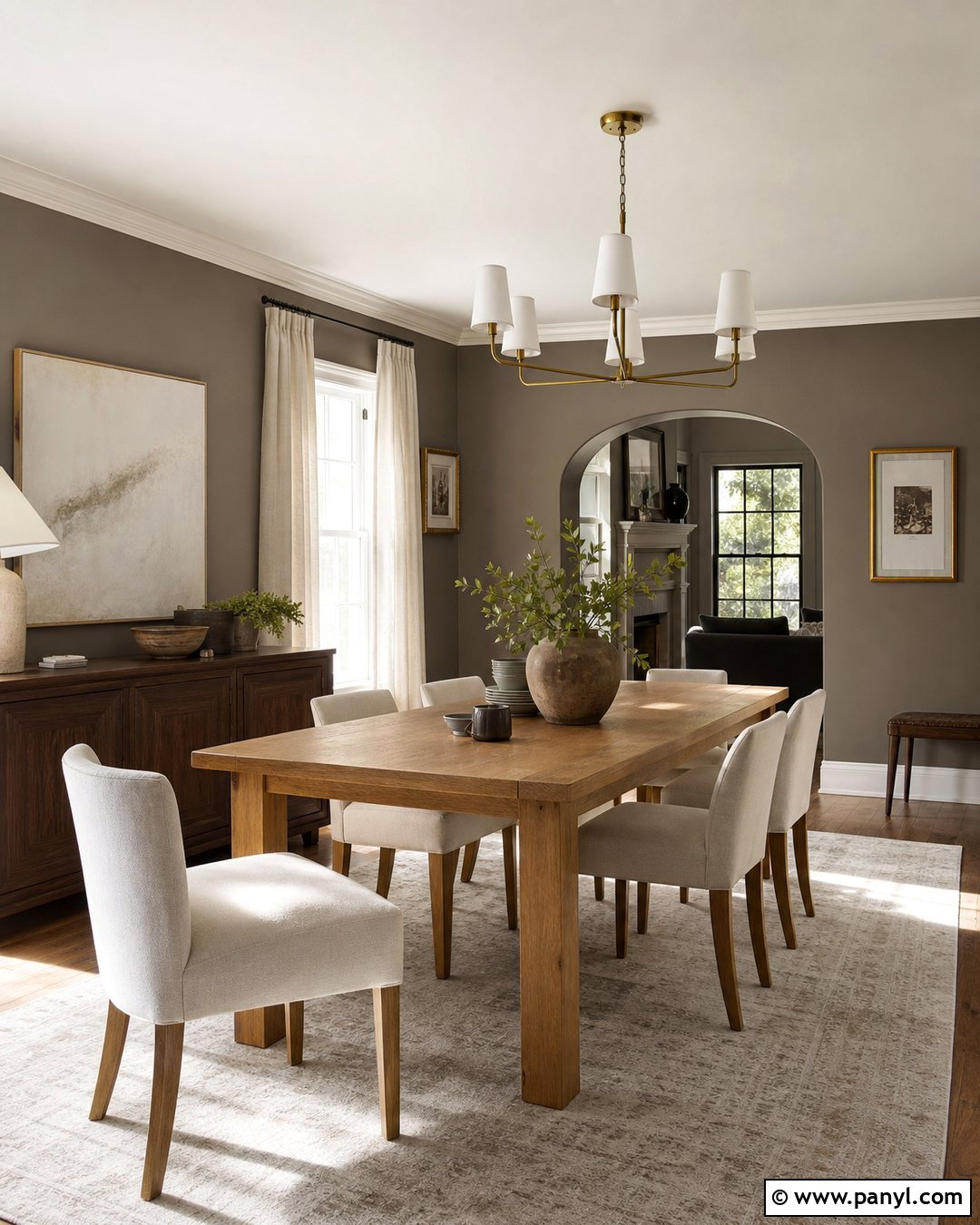
Adaptive Shade can turn a basic dining room into an intimate gathering space. Cover the walls in the deep neutral, retain warm white trim, and center a substantial natural-oak table beneath a linen or plaster pendant. Surround the table with cream upholstered chairs or woven-seat wood chairs to introduce lighter surfaces. An ivory flat-weave rug defines the dining zone and prevents the room from appearing too brown. Add a low walnut sideboard, an oversized landscape painting, and two aged brass lamps for layered light. Simple off-white curtains frame the windows without competing with the walls. Olive branches, stoneware dishes, and a clay centerpiece reinforce the organic palette. This complete arrangement feels sophisticated but approachable, and it can move easily between casual weekday meals and more polished gatherings.
10. Adaptive Shade Dining Room With Wainscoting
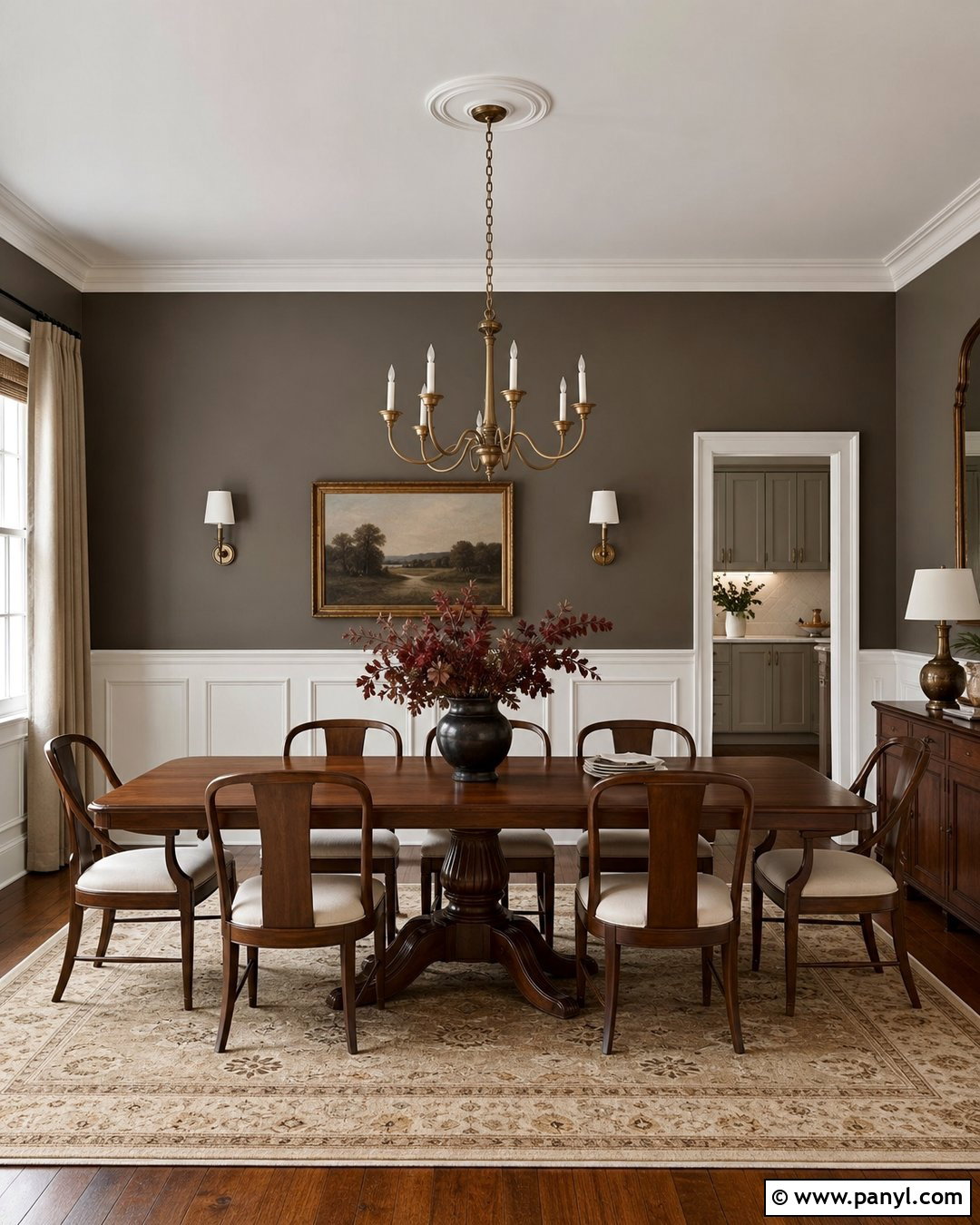
Traditional wall molding gives Adaptive Shade extra dimension and architectural presence. Paint the upper walls in Adaptive Shade, then finish the lower wainscoting, baseboards, and window trim in creamy Nuance or a comparable warm off-white. Choose a medium walnut dining table with curved wood chairs and neutral upholstered seats. A soft beige rug, antique brass chandelier, and warm linen curtains reinforce the classic character. Display a large muted landscape above a narrow sideboard, using fewer pieces at a generous scale. Dusty red or Rojo Dust accents can appear through napkins, artwork, or a ceramic centerpiece. Keeping the ceiling light ensures the room remains balanced. The resulting dining room combines traditional detailing with an earthy contemporary palette that feels layered rather than stiff or overly decorative.
11. Adaptive Shade Kitchen Cabinets With White Walls
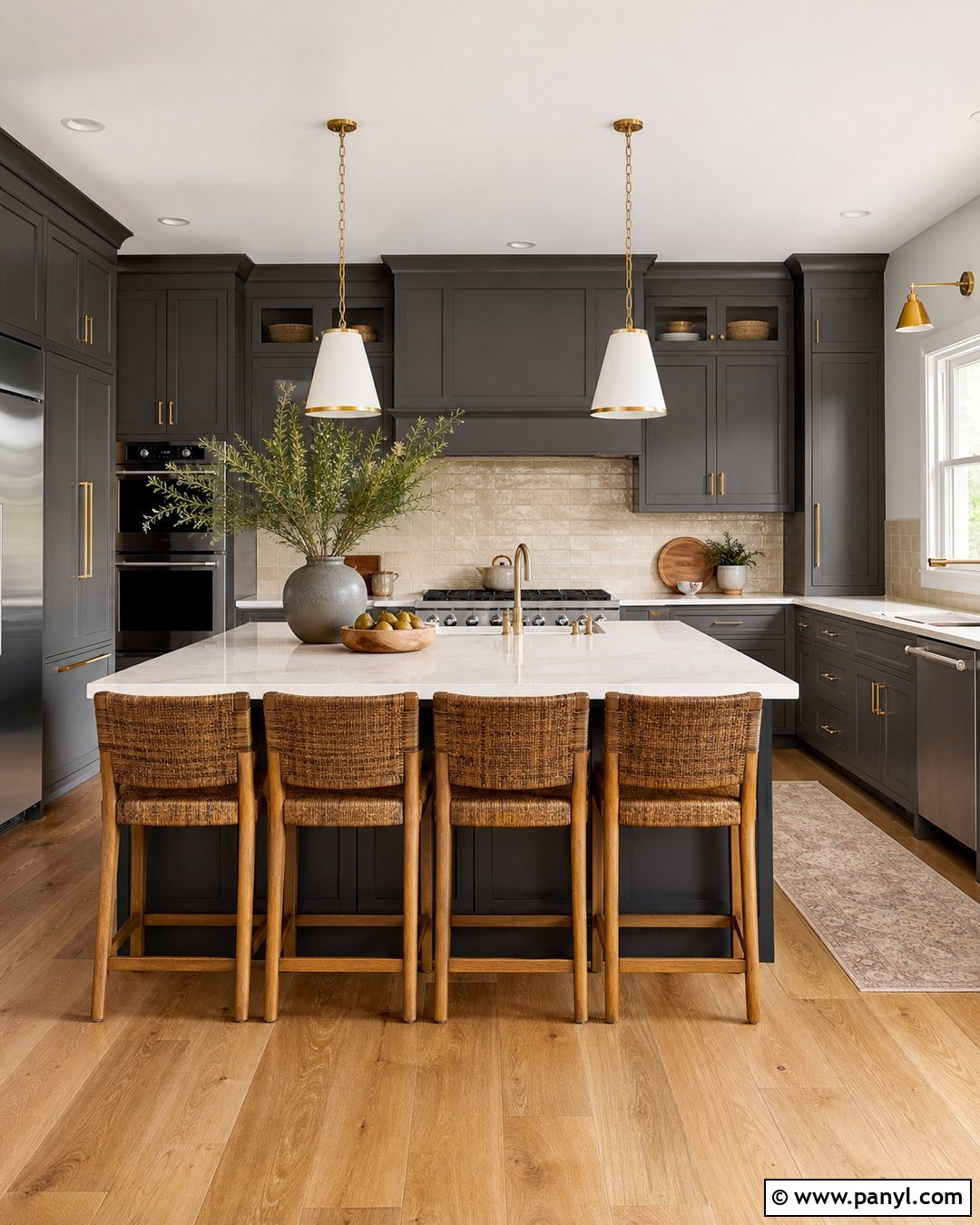
Paint lower and upper kitchen cabinets in Adaptive Shade to create depth while keeping the walls and ceiling warm white. Use simple Shaker doors, satin brass pulls, and creamy quartz countertops with quiet veining. A handmade ivory backsplash adds texture without distracting from the cabinet color. White oak flooring and three oak counter stools bring natural warmth into the darker scheme. Choose a plaster or brushed brass pendant above the island, then repeat the metal through the faucet and cabinet hardware. Keep appliances integrated or stainless steel for a clean finish. Small accents in clay, olive, and natural wood can decorate open surfaces. This complete kitchen feels grounded and sophisticated, while the pale countertops, backsplash, and surrounding walls prevent Adaptive Shade cabinetry from making the working area feel enclosed.
12. Adaptive Shade Kitchen Island
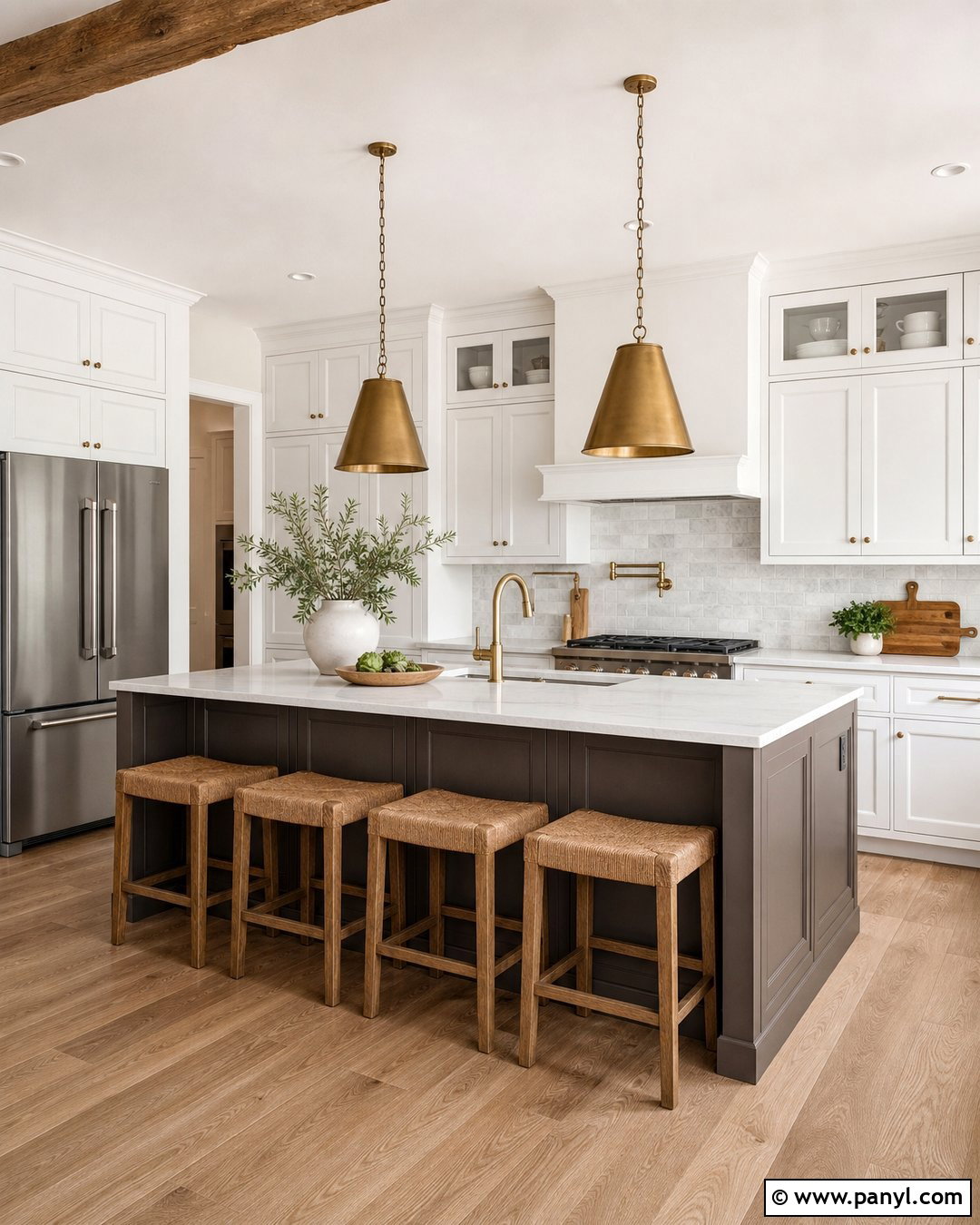
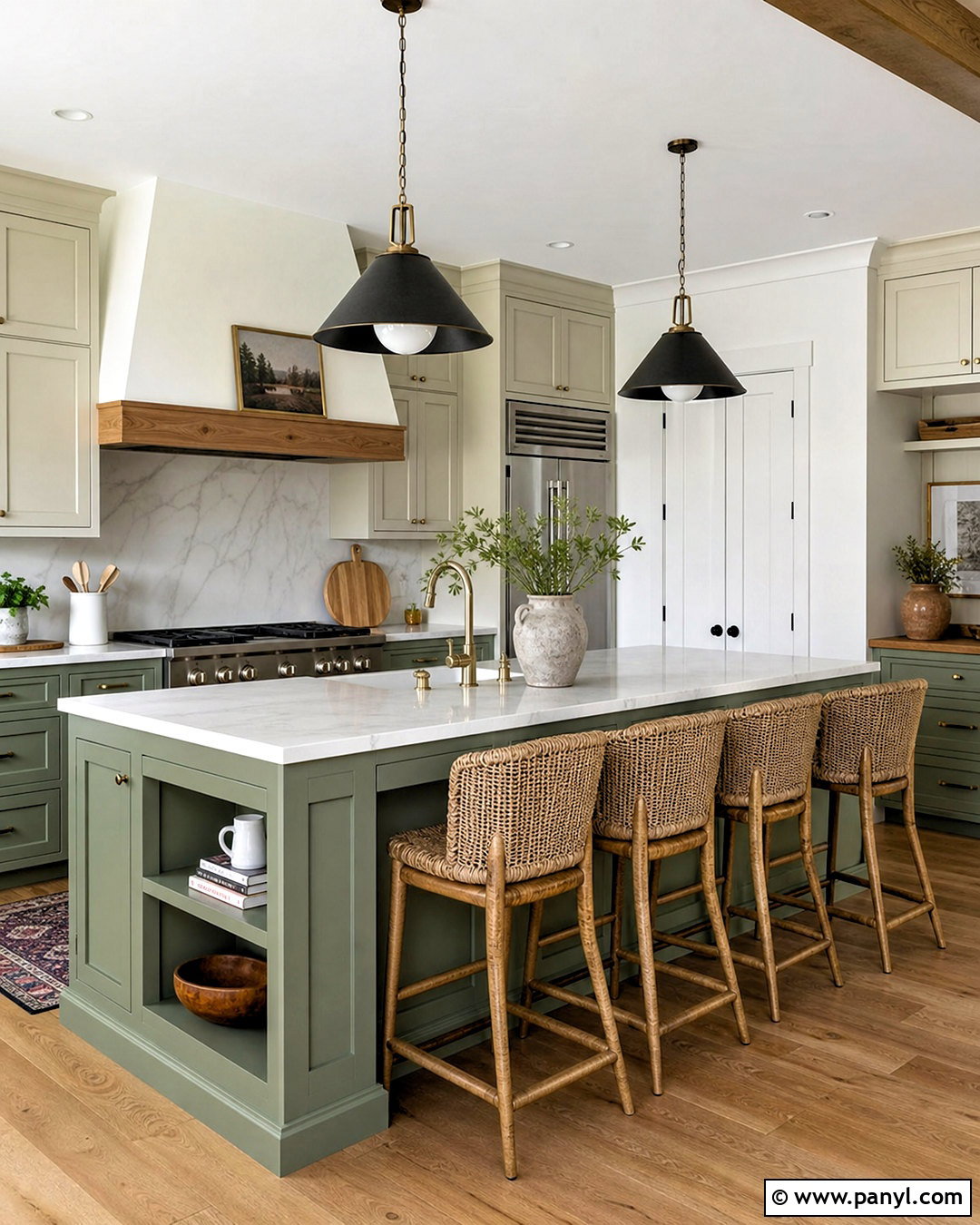
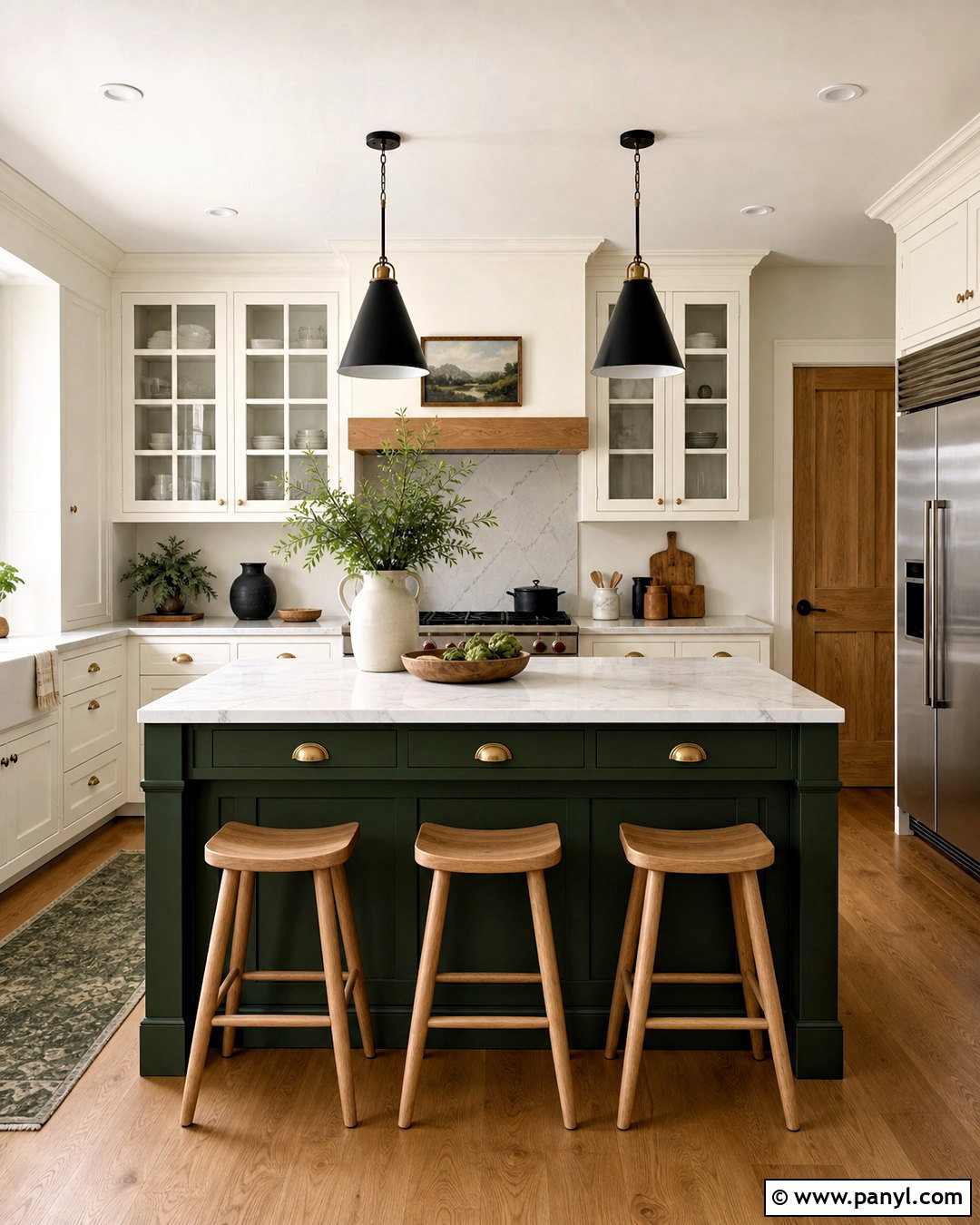
A large island painted in Adaptive Shade can anchor a bright kitchen without committing every cabinet to a darker color. Use warm white perimeter cabinets, creamy quartz counters, and a backsplash made from softly irregular off-white tile. Finish the island with Adaptive Shade on paneled cabinetry and top it with pale stone or lightly veined quartz. Natural-oak stools and aged brass pendants create a comfortable transition between the deep island and bright surroundings. Repeat the paint on a nearby pantry door or small built-in detail for visual continuity. Medium oak flooring adds another warm layer. Keep accessories practical and minimal, such as wood cutting boards, white pottery, and a small herb planter. The result is a balanced kitchen with a strong focal point and plenty of reflected light.
13. Adaptive Shade Kitchen With Brass Hardware
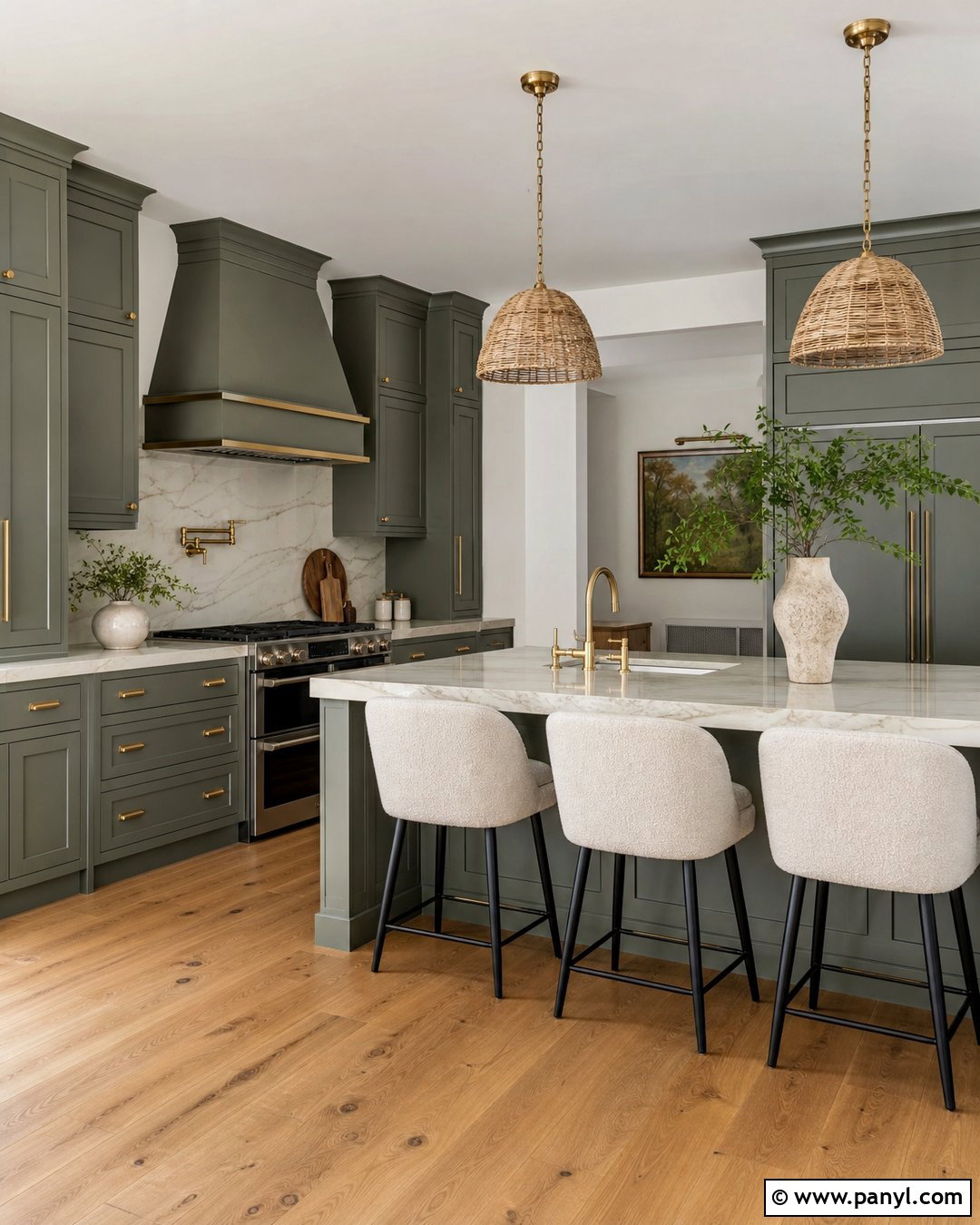
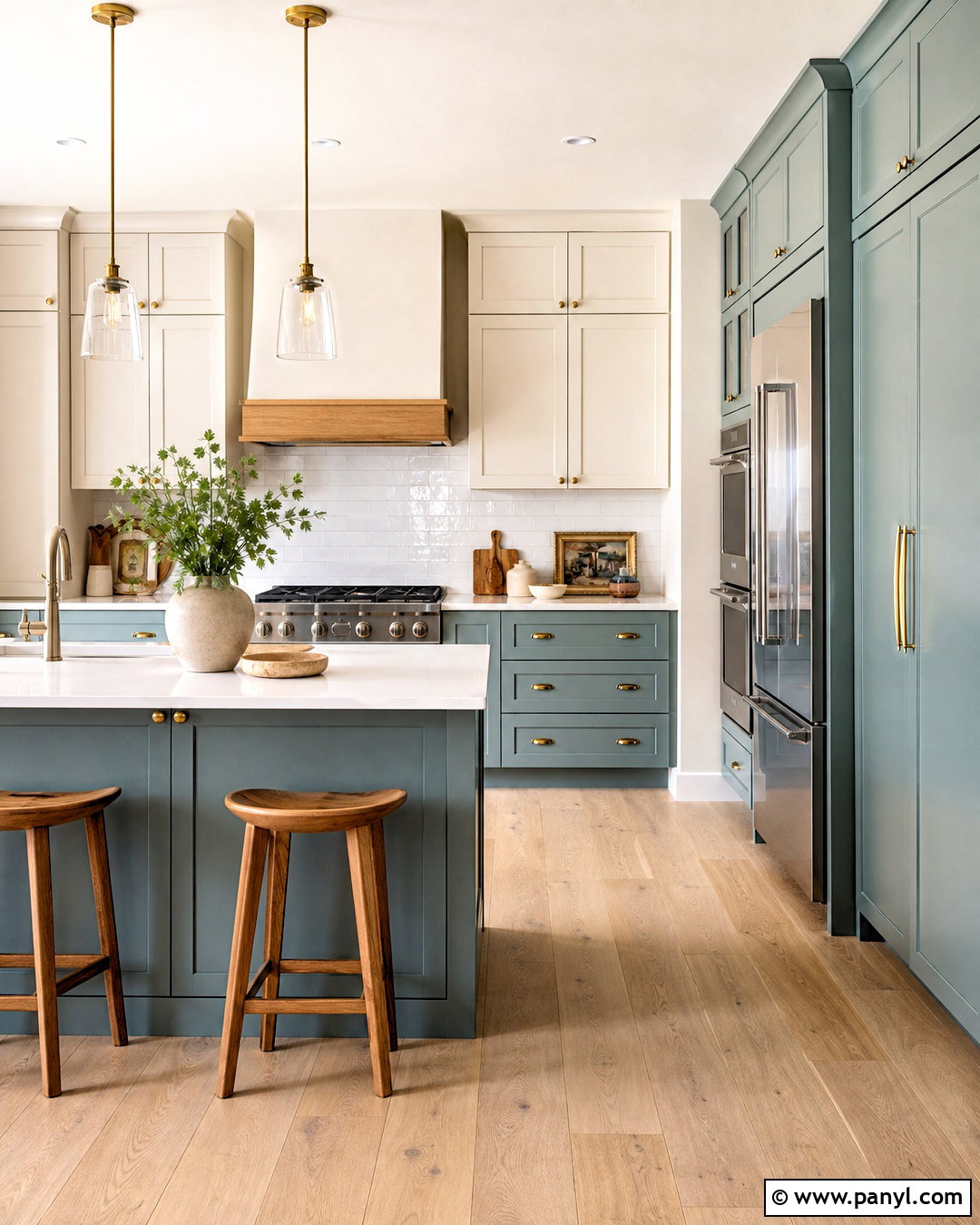
Warm brass highlights the earthy side of Adaptive Shade and gives painted cabinetry a polished finish. Use the color on full-height Shaker cabinets, including the range hood and refrigerator panels, for a seamless appearance. Add unlacquered brass knobs, cup pulls, and a bridge faucet that will develop a natural patina. Creamy marble-look quartz counters and a soft ivory backsplash provide necessary brightness. Choose warm oak flooring rather than cool gray tile, and introduce two woven pendants above the island. Light boucle counter stools can soften the dark cabinetry and add texture. Keep the walls and ceiling warm white so the kitchen does not become visually heavy. The complete design has an elegant, established quality, yet the uncomplicated cabinet profile keeps it suitable for a comfortable modern home.
14. Adaptive Shade Kitchen With Butcher Block
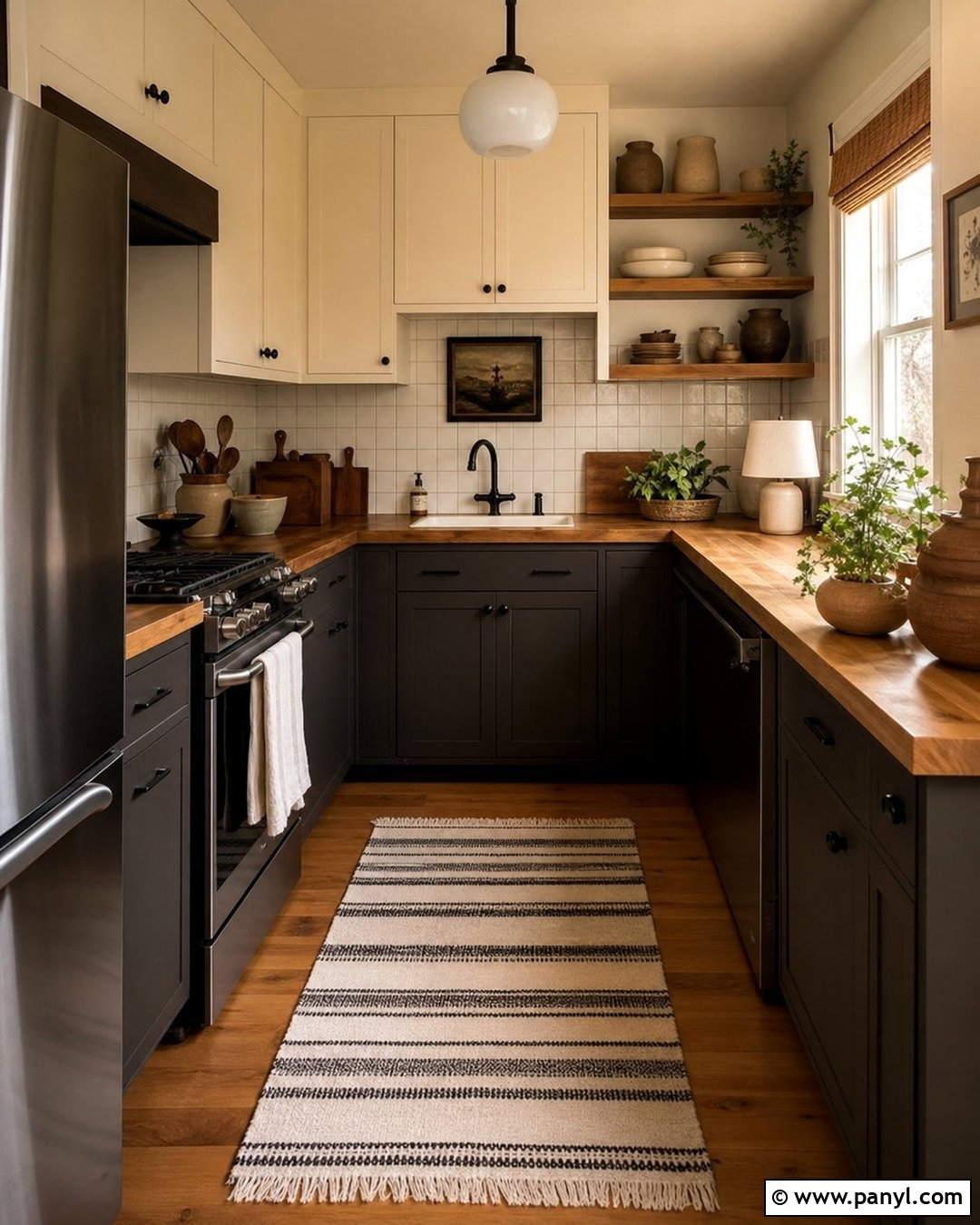
A smaller kitchen gains cozy character from Adaptive Shade cabinets paired with warm butcher-block counters. Paint the lower cabinetry and a compact pantry wall in the deep neutral, while keeping upper cabinets and open shelving creamy white. Use solid oak or maple countertops with a matte protective finish, then install a simple off-white square-tile backsplash. Black iron hardware and a black faucet create clean definition without adding another dominant color. Display neutral dishes, wood boards, and stoneware on the shelves, leaving enough empty space to avoid clutter. Warm white walls and light oak flooring help the room feel open. Add a striped washable runner in beige, olive, and charcoal. This practical design suits cottages, apartments, and modest kitchens where warmth and efficient storage matter equally.
15. Adaptive Shade Bathroom Vanity
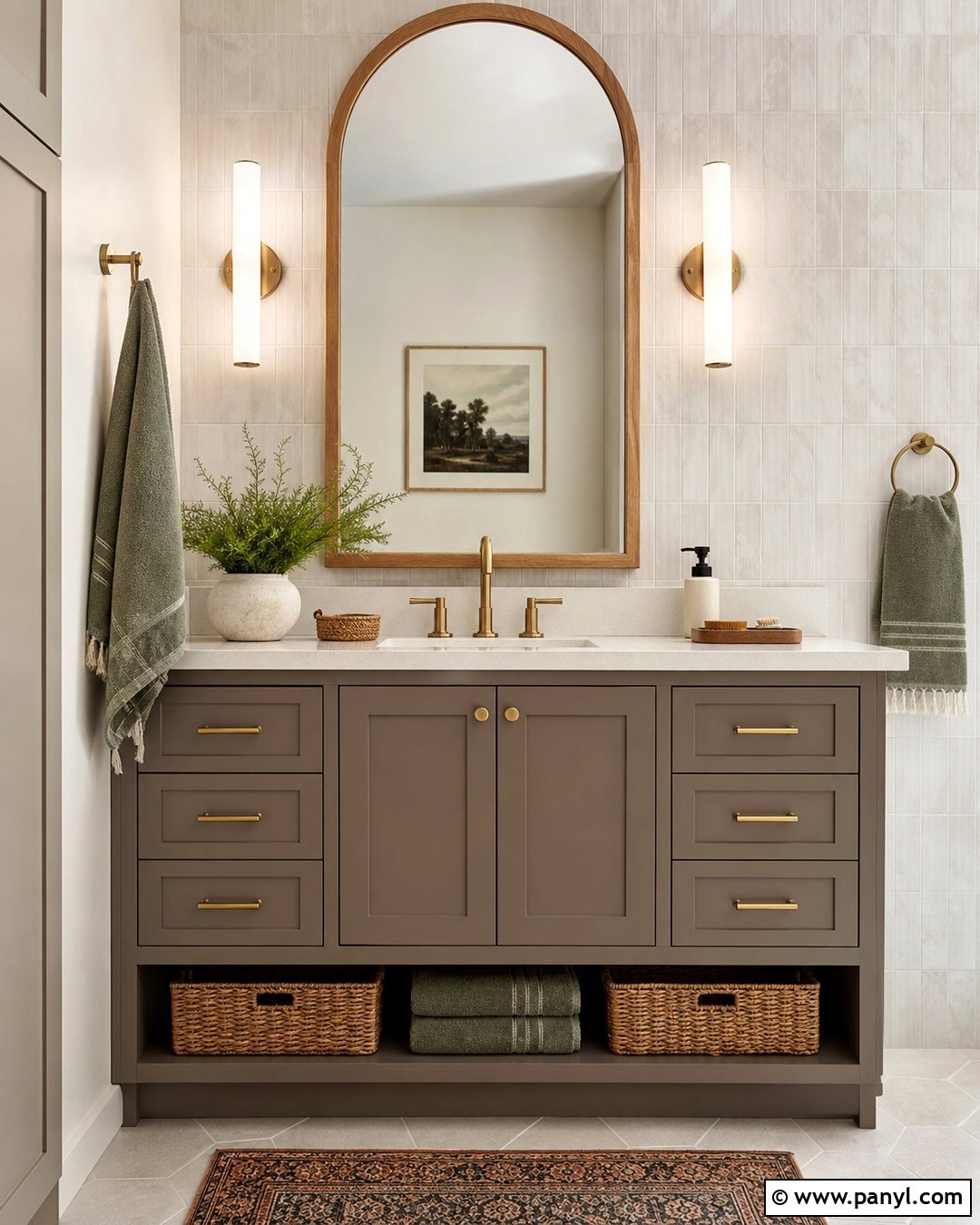
Adaptive Shade gives a bathroom vanity a substantial furniture-like appearance. Paint a wide Shaker vanity in a durable satin finish, then pair it with a pale quartz counter and an undermount white sink. Use brushed brass hardware, a matching faucet, and two clear glass sconces to add brightness. An arched oak-framed mirror introduces warmth and softens the cabinet’s straight lines. Keep the walls warm white and use creamy porcelain floor tile with subtle stone variation. A natural linen shower curtain, woven baskets, and muted green towels complete the organic palette. If storage allows, add a narrow open shelf for folded towels and pottery. This complete bathroom feels refined but relaxed, with Adaptive Shade acting as the grounding element rather than covering every surface in a relatively compact room.
16. Adaptive Shade Bathroom Walls
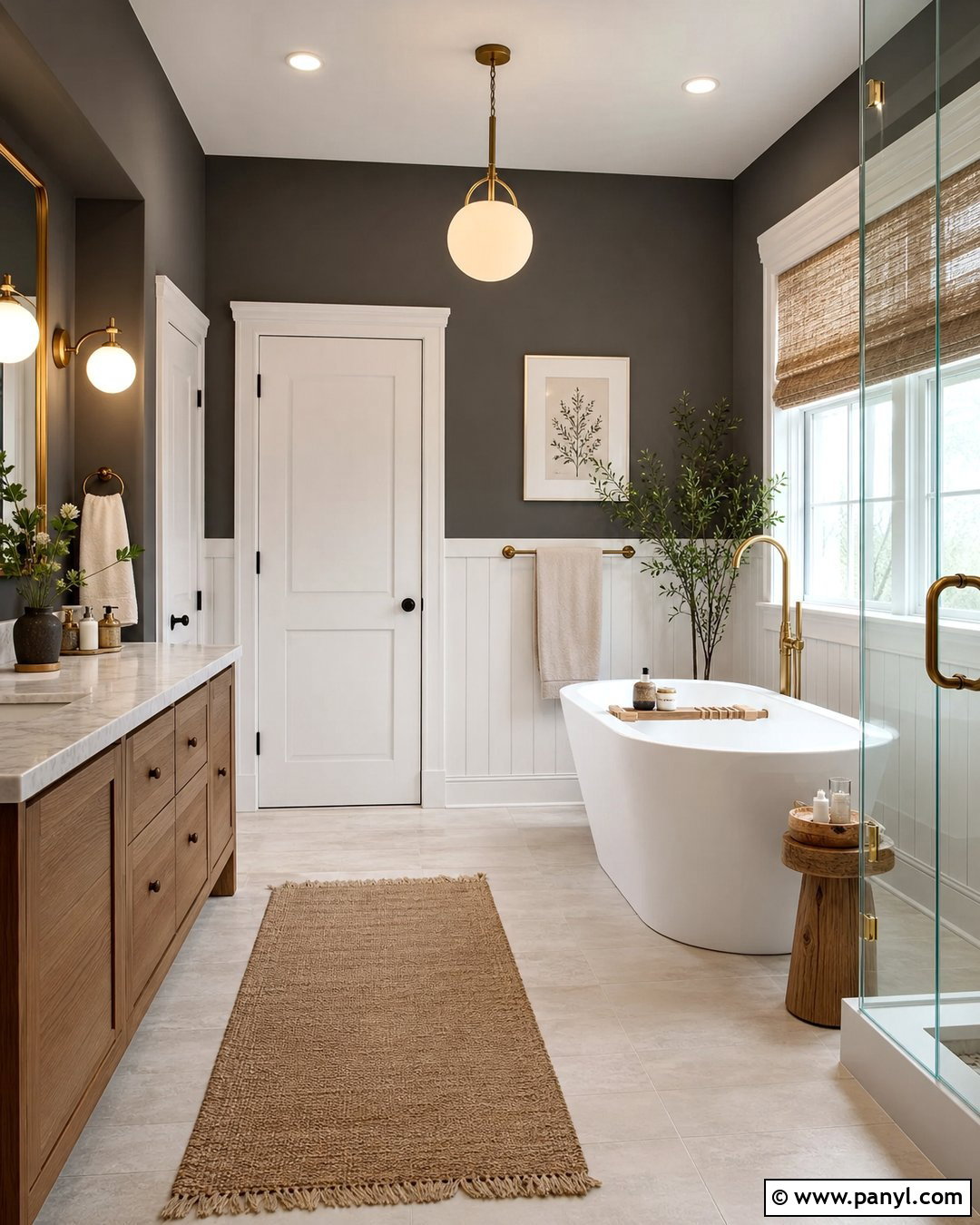
Painting the bathroom walls in Adaptive Shade creates a dramatic retreat when the permanent finishes are light and simple. Use the color above white vertical paneling or around a white freestanding tub, then retain warm white trim and ceiling paint. Select pale limestone-look floor tile, an oak vanity, and a creamy quartz counter to balance the deep walls. Brass faucets and globe sconces introduce warmth, while a large frameless mirror reflects more light around the room. Choose white towels with olive or rust hand towels for restrained color. Natural woven shades can provide privacy without looking heavy. Good overhead and vanity lighting is essential because Adaptive Shade has considerable depth. The finished bathroom feels calm, architectural, and spa-like rather than dark, especially when reflective surfaces remain clean and uncluttered.
17. Adaptive Shade Powder Room
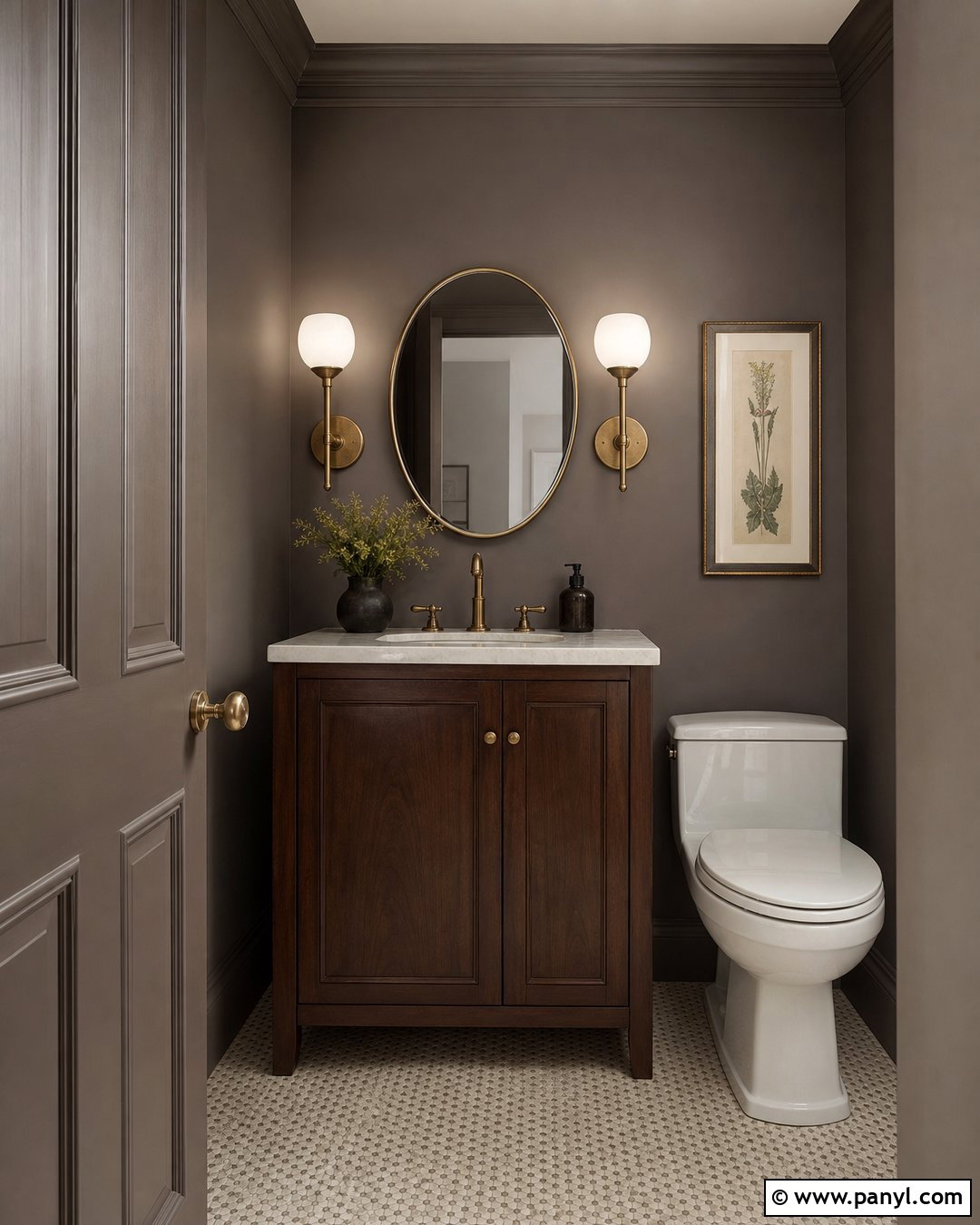
A powder room is an ideal place to use Adaptive Shade from baseboard to ceiling. Color-drench the walls, trim, and door in slightly varied sheens for a seamless, enveloping result. Install a compact walnut vanity with a light stone top and an aged brass faucet. An oval brass mirror and two opal glass sconces add a gentle glow against the darker paint. Use small cream-and-taupe mosaic tile on the floor to introduce subtle pattern. A white sink and pale hand towel provide fresh contrast, while one framed vintage botanical print adds personality. Because the room is small, keep accessories limited and ensure the mirror is generously sized. This complete powder room feels memorable and sophisticated without requiring expensive remodeling or a large amount of paint.
18. Adaptive Shade Home Office
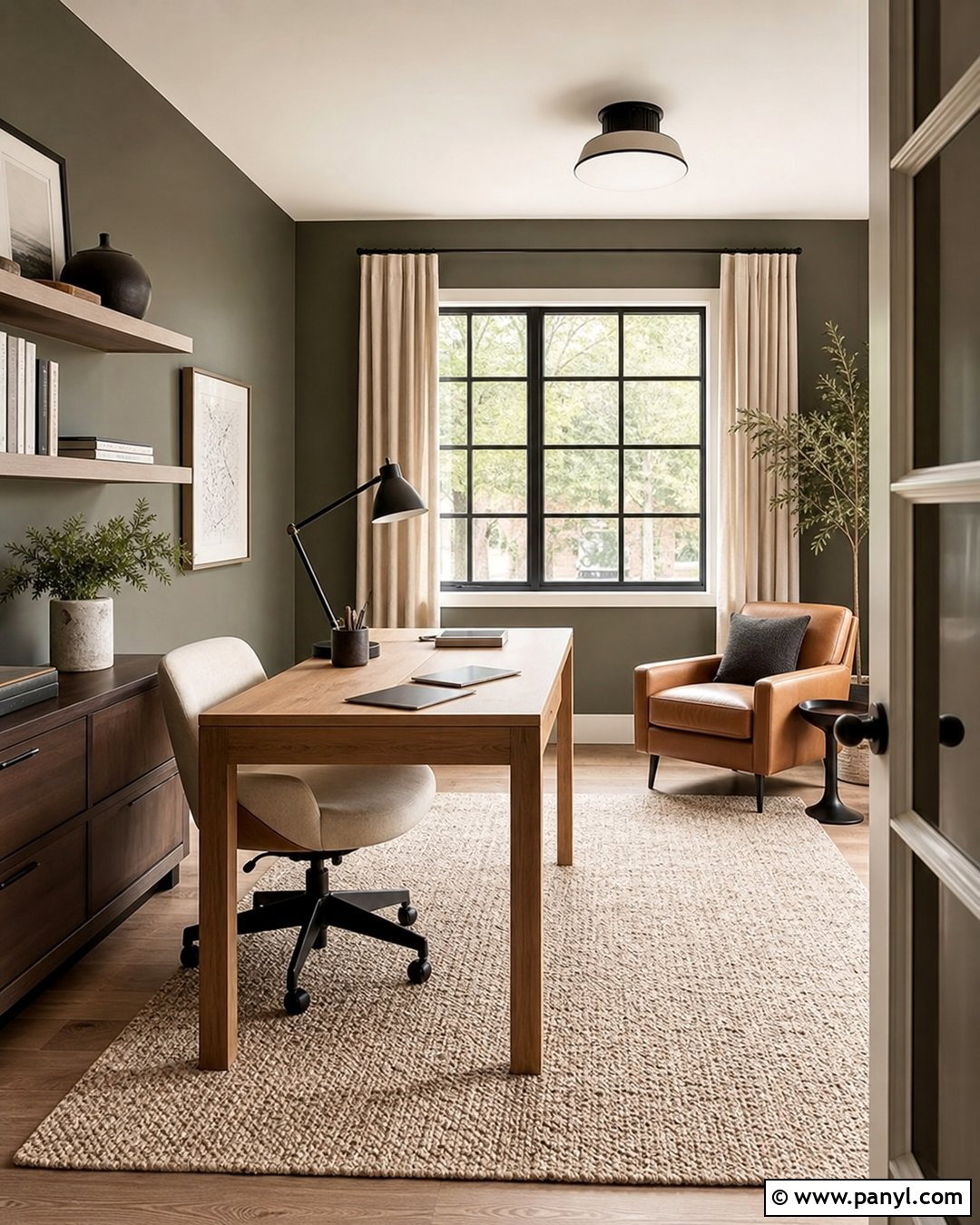
Adaptive Shade supports a focused home office by creating a calm background with minimal glare. Paint the walls in a matte or eggshell finish and place a substantial light-oak desk near the window. Add a cream upholstered desk chair, black task lamp, and walnut storage cabinet for a balanced combination of tones. A large beige wool rug softens the room and improves comfort. Use warm white curtains or woven shades to control daylight without making the windows disappear. Floating oak shelves can display books, pottery, and framed art, but leave open space between objects. One camel leather reading chair with a small brass floor lamp creates a useful secondary zone. The complete office feels professional and comfortable, with enough contrast to stay visually interesting during long work sessions.
19. Adaptive Shade Office Built-Ins
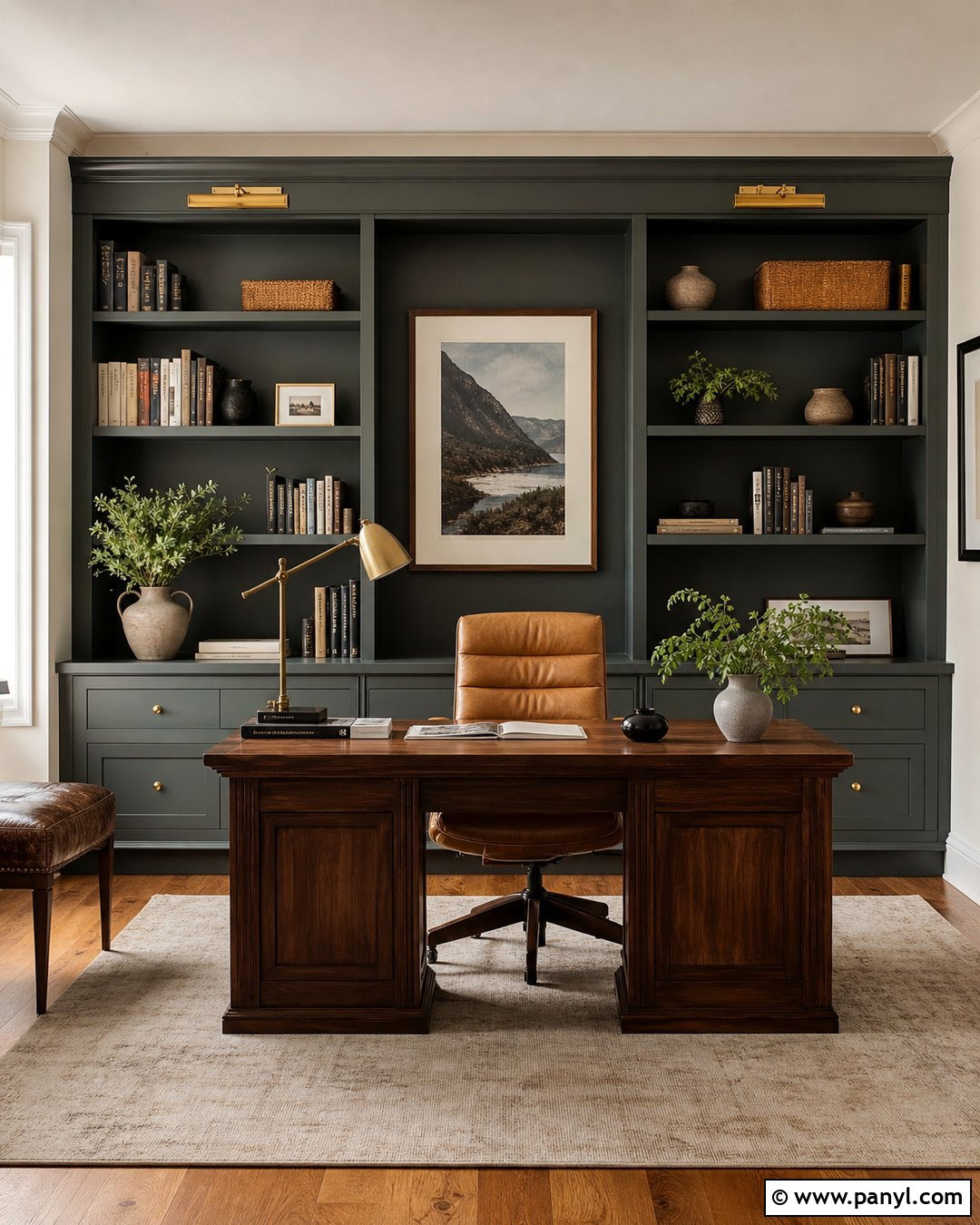
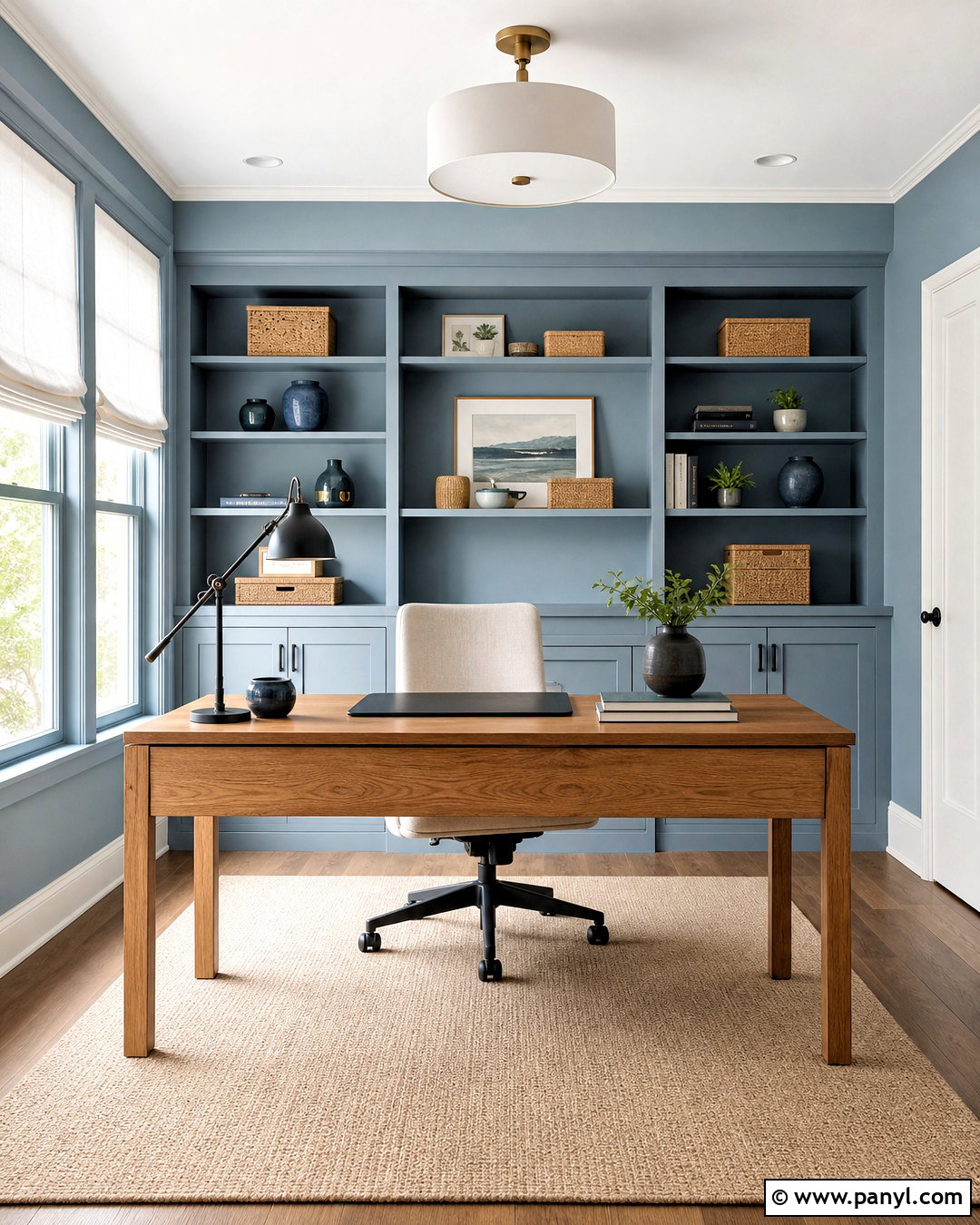
Built-in shelves painted in Adaptive Shade can make a home office look custom and cohesive. Apply the color to the shelving, lower cabinets, and wall behind the shelves, then keep the remaining walls a warm off-white. Use a walnut desk positioned in the center of the room with a tan leather chair and a neutral patterned rug underneath. Brass picture lights mounted over the bookcases create a tailored finish and bring out the paint’s warmth. Style the shelves with cream books, earthy pottery, small framed artwork, and woven boxes for concealed storage. Avoid filling every shelf. Full linen curtains and a simple ceiling light balance the detailed cabinetry. This complete workspace combines practical organization with a strong architectural focal point that does not overwhelm the entire room.
20. Adaptive Shade Entryway
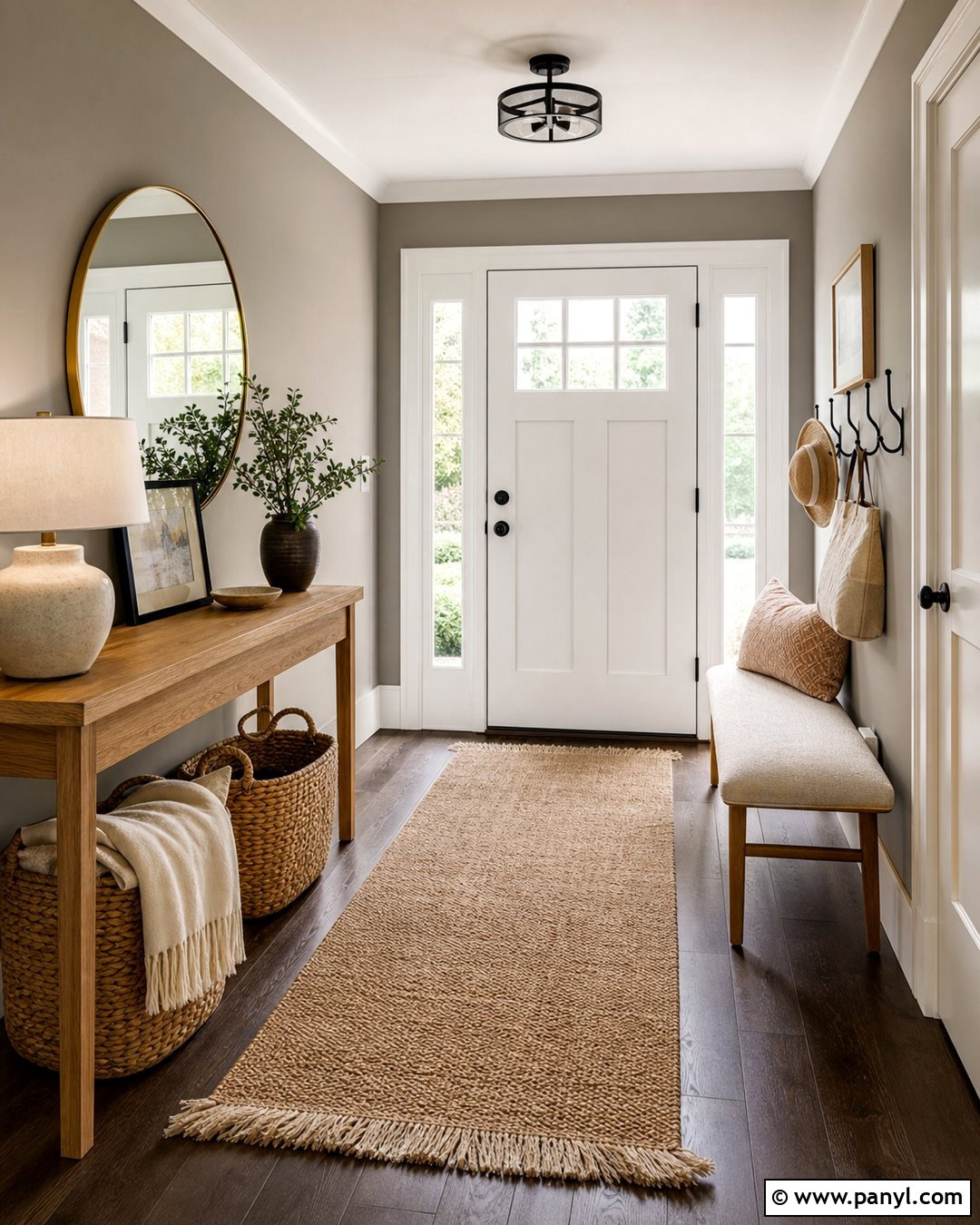
An Adaptive Shade entryway sets a grounded tone as soon as someone enters the home. Paint the main walls in the deep stone neutral while keeping the front door, ceiling, and trim warm white. Place a slim natural-oak console against one wall with a large round brass mirror above it. A woven runner in cream, tan, and muted olive guides movement through the space. Add a simple upholstered bench, black hooks, and closed baskets for shoes and daily necessities. One ceramic lamp creates a warm evening glow, while a leafy plant adds natural contrast. If the entry lacks windows, use bright overhead lighting with a soft white temperature. The final look is attractive and functional, giving coats, bags, keys, and footwear organized places without crowding the passage.
21. Adaptive Shade Hallway
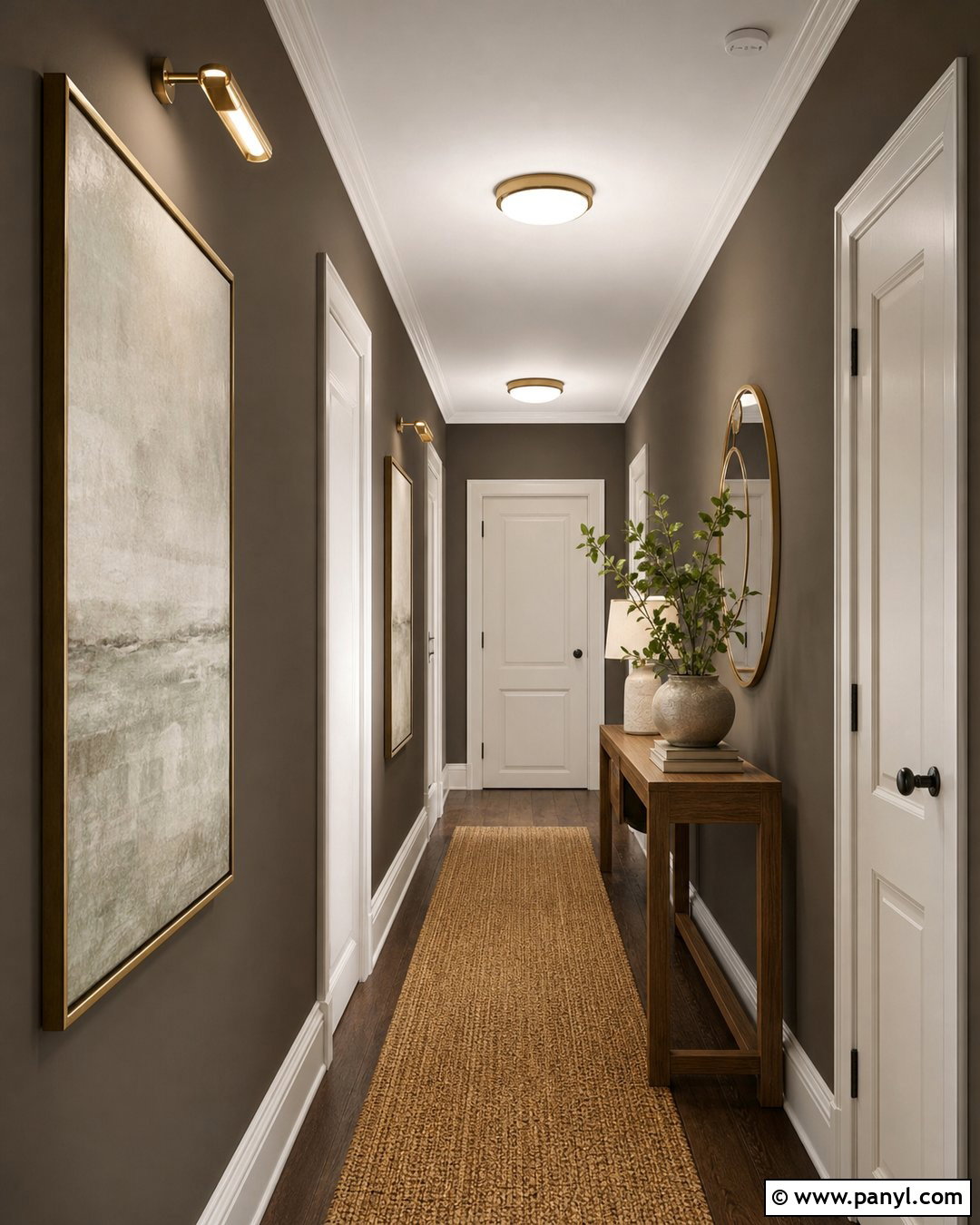
A hallway painted in Adaptive Shade can feel intentional rather than narrow when light colors and repetition guide the eye. Use the paint on the walls, then keep doors, trim, and ceiling a creamy white for crisp definition. Install a series of matching brass or black picture lights above large, evenly spaced artwork in pale mats. A long natural-fiber runner adds warmth and softens footsteps. If space permits, include one slim oak console with a round mirror at the widest point. Avoid small decorations that could make the corridor feel busy. At the far end, place a light-colored chair, plant, or framed print to create a visual destination. The complete design transforms a connecting area into a polished gallery while preserving enough brightness for comfortable everyday movement.
22. Adaptive Shade Mudroom Cabinets
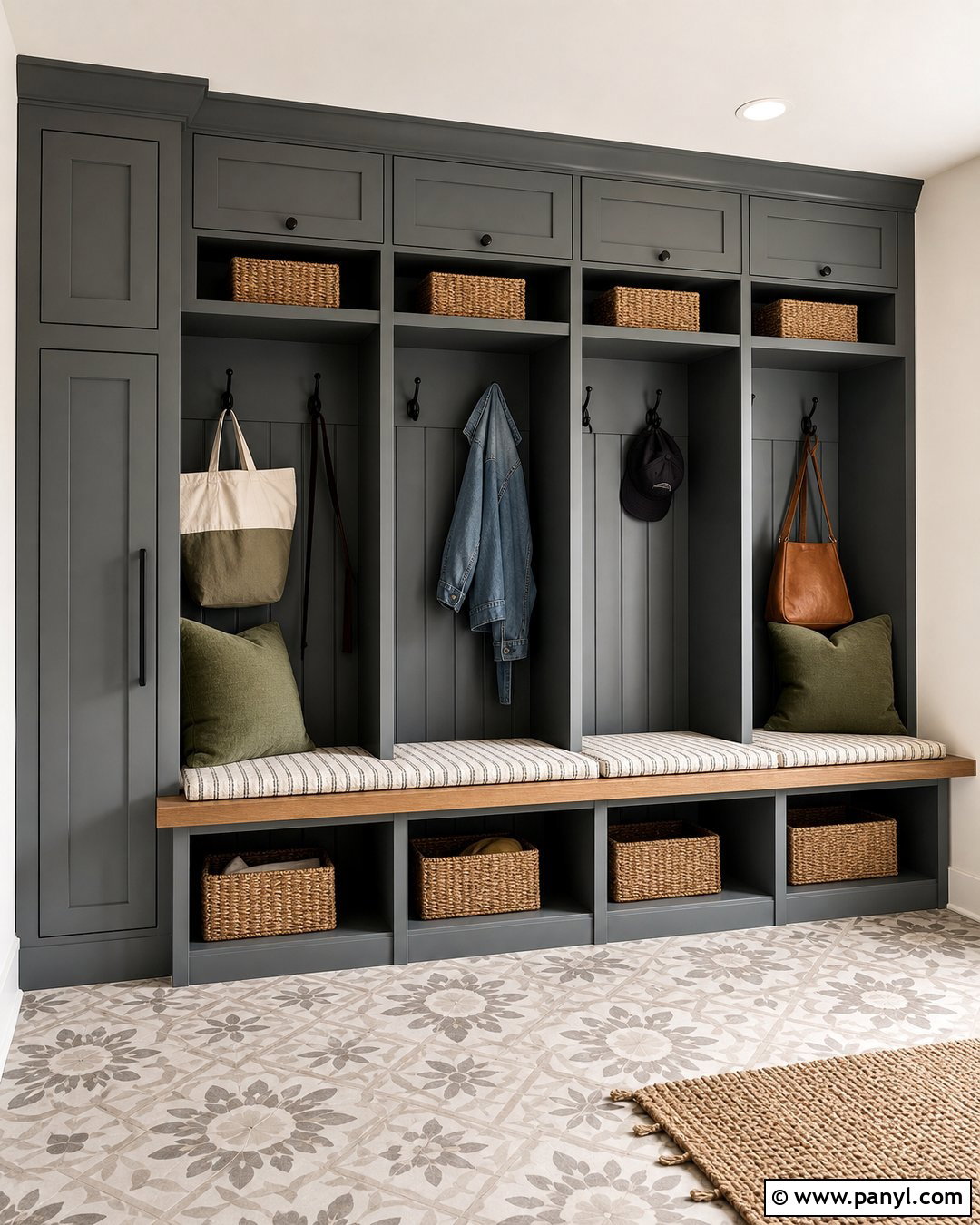
Mudroom cabinetry painted in Adaptive Shade hides everyday wear while giving a hardworking space a finished appearance. Build the layout around full-height lockers, closed lower drawers, and an oak bench for putting on shoes. Use durable satin paint on the cabinets and warm white on the walls and ceiling. Brass or matte black hooks should be installed above each seating section, with woven baskets placed on upper shelves. Choose a patterned porcelain floor tile in cream, taupe, and charcoal to disguise dirt and add interest. A washable striped cushion and olive pillows soften the bench. Include strong overhead lighting and a practical indoor-outdoor runner. This complete mudroom keeps coats, bags, footwear, and sports equipment organized while maintaining an earthy, welcoming connection to the rest of the home.
23. Adaptive Shade Laundry Room Cabinets
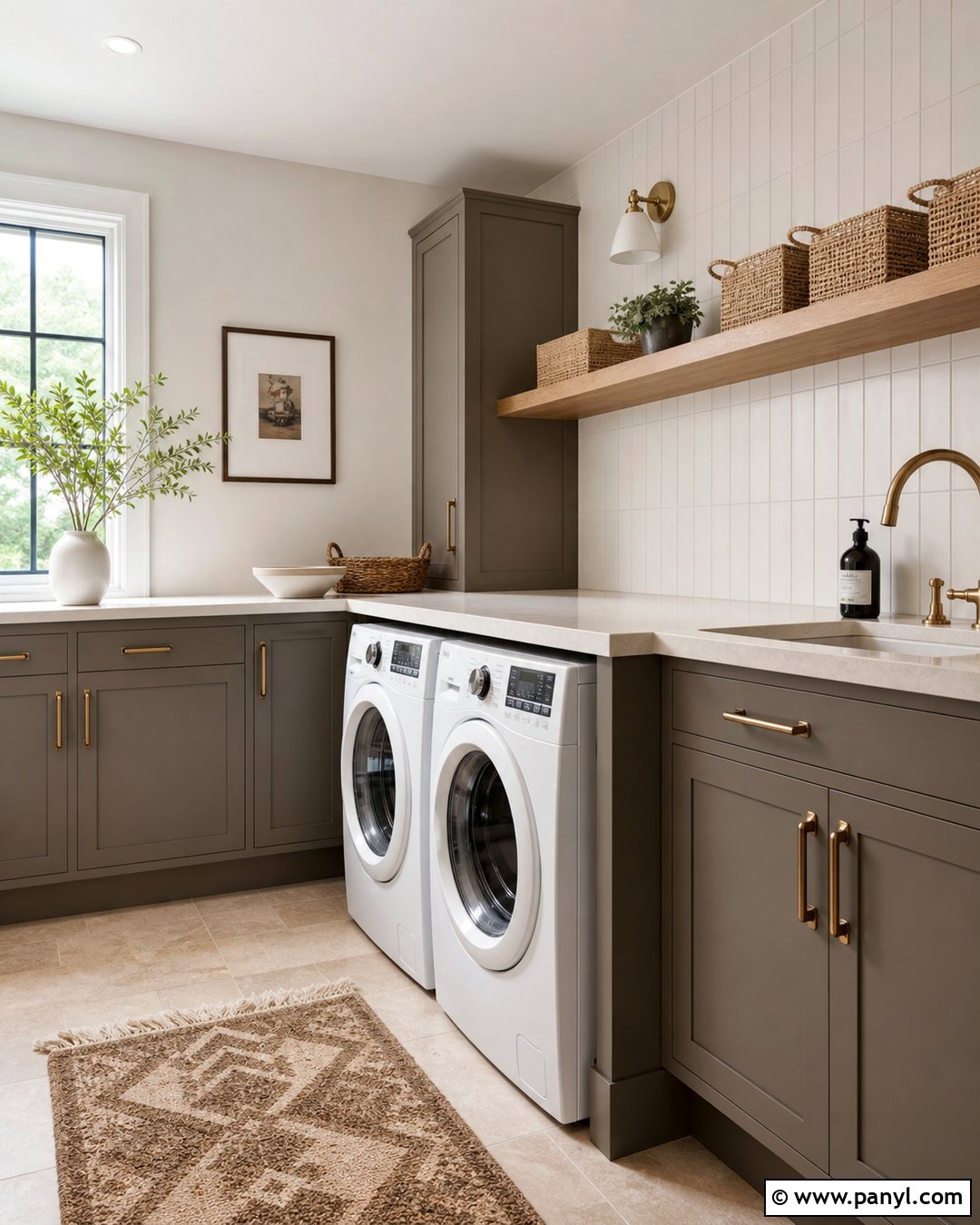
Give a practical laundry room more personality with Adaptive Shade cabinetry and light surrounding finishes. Paint the lower cabinets, upper storage, and utility sink base in the rich neutral. Add pale quartz counters, an off-white vertical tile backsplash, and satin brass pulls. A warm oak floating shelf above the counter provides space for glass containers, towels, and a small plant. Keep the walls creamy white and choose durable beige stone-look floor tile. Front-loading white machines contrast cleanly with the cabinets and can sit beneath a folding counter when the layout allows. Use woven baskets to contain supplies rather than displaying colorful packaging. The completed room feels orderly and considered, making routine chores more pleasant without sacrificing useful storage, washable materials, or a practical work surface.
24. Adaptive Shade Fireplace Wall
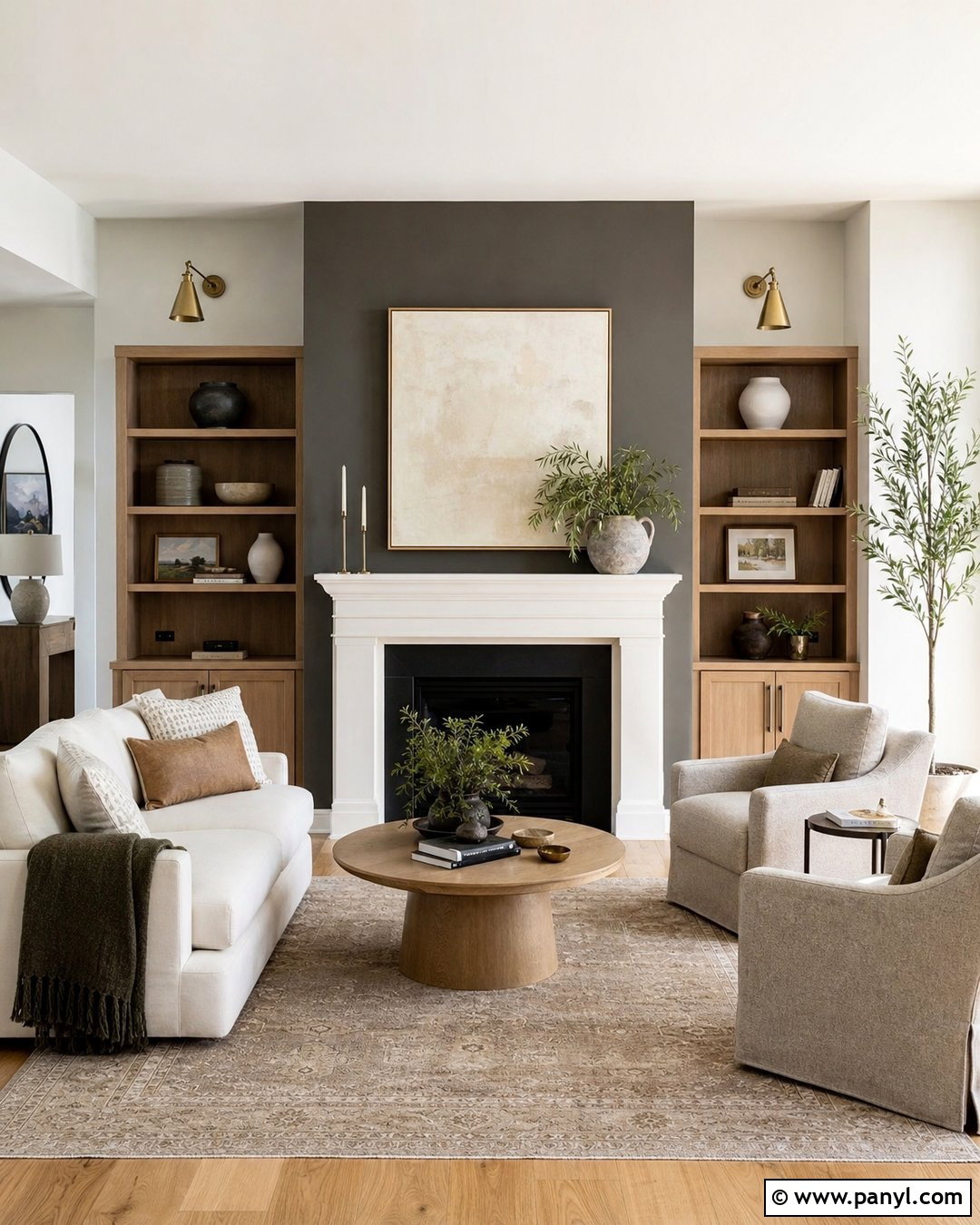
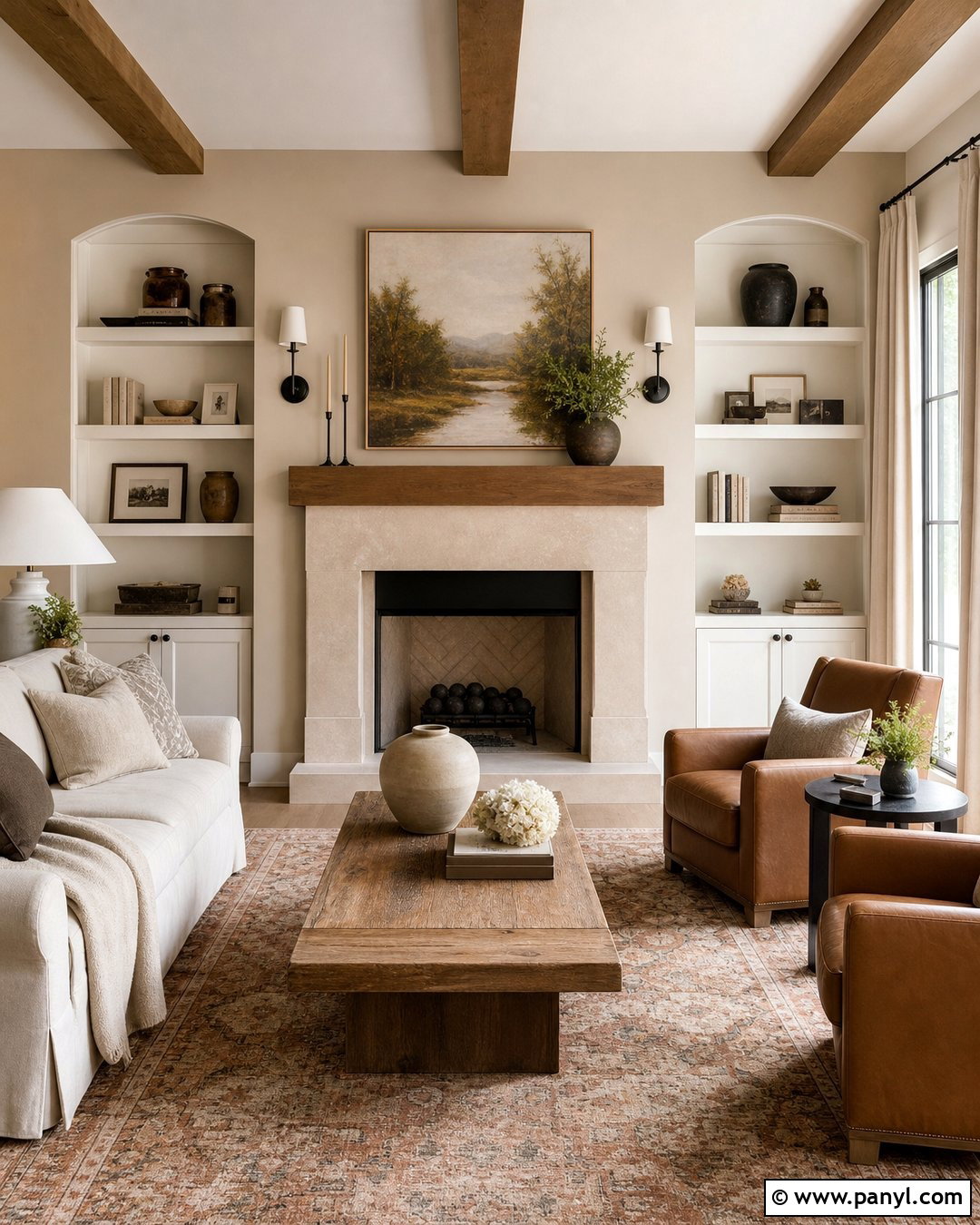
Turn a plain fireplace into a strong focal point by painting the entire chimney wall in Adaptive Shade. Use a simple plaster or warm white mantel so it remains visible against the deep background. A black firebox or soapstone surround adds definition, while light-oak built-ins on each side introduce warmth and storage. Arrange an ivory sofa and two oatmeal chairs around a textured beige rug, facing the fireplace. Hang one large neutral artwork above the mantel instead of a collection of small pieces. Aged brass sconces and wood accessories connect the dark wall to the rest of the room. Keep adjacent walls warm white for balance. This complete arrangement creates architectural depth and a natural gathering point without requiring elaborate stonework or major structural changes.
25. Adaptive Shade Built-In Bookcase
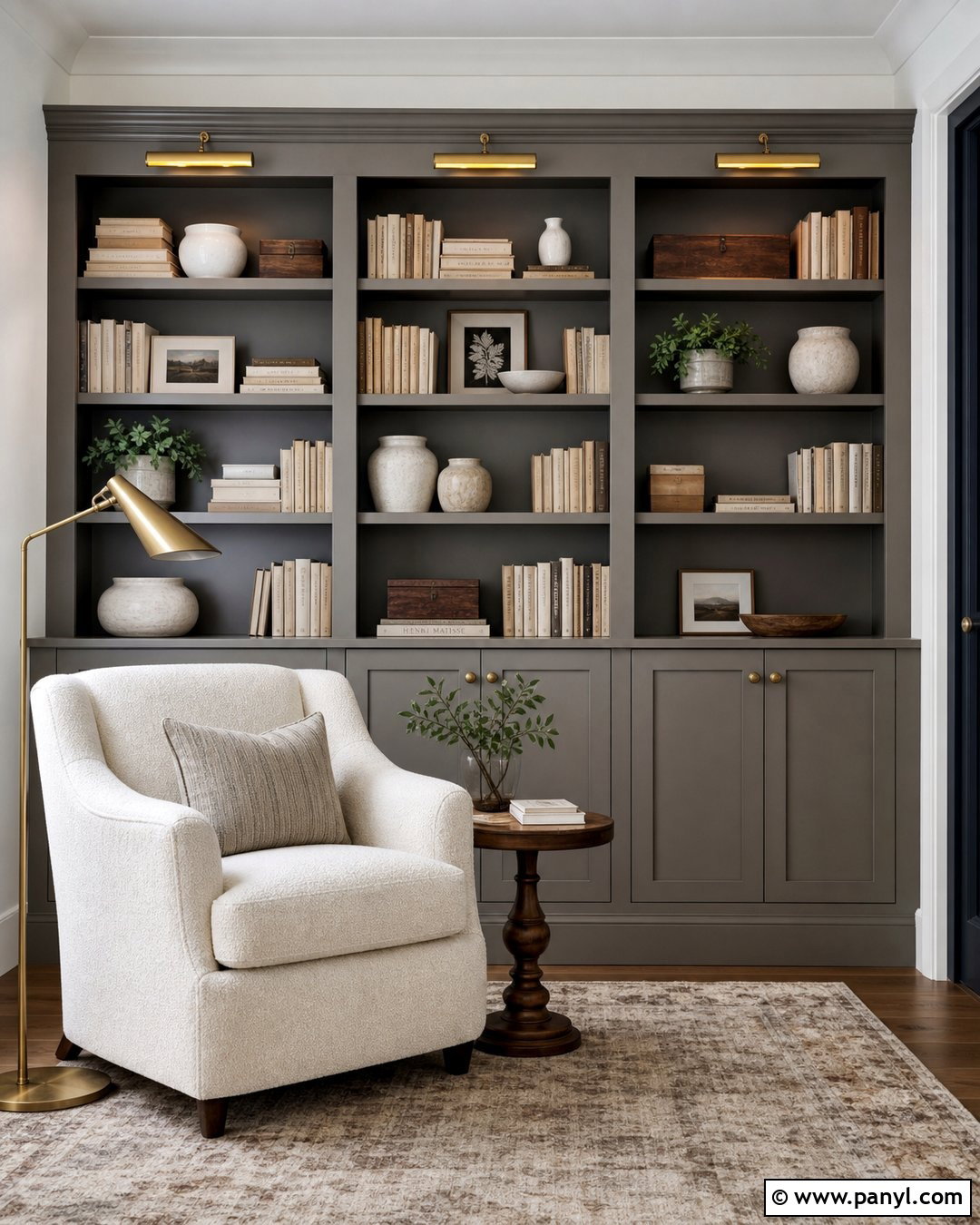
Adaptive Shade can make an ordinary bookcase feel like permanent architecture. Paint the entire built-in, including shelves, backing, cabinet doors, and trim, for a rich monochromatic finish. Keep the surrounding room walls warm white and place a cream reading chair nearby with a slim brass floor lamp. Style the shelves using books in natural colors, ivory pottery, walnut boxes, and small landscape artwork. Vary object heights and leave visible empty areas so the dark shelving does not become visually crowded. Lower cabinets should hide electronics, toys, or paperwork. Add a faded neutral rug and a small oak side table to complete the reading area. The finished design creates useful storage and a sophisticated focal point while allowing the rest of the room to remain bright and flexible.
26. Adaptive Shade Interior Doors
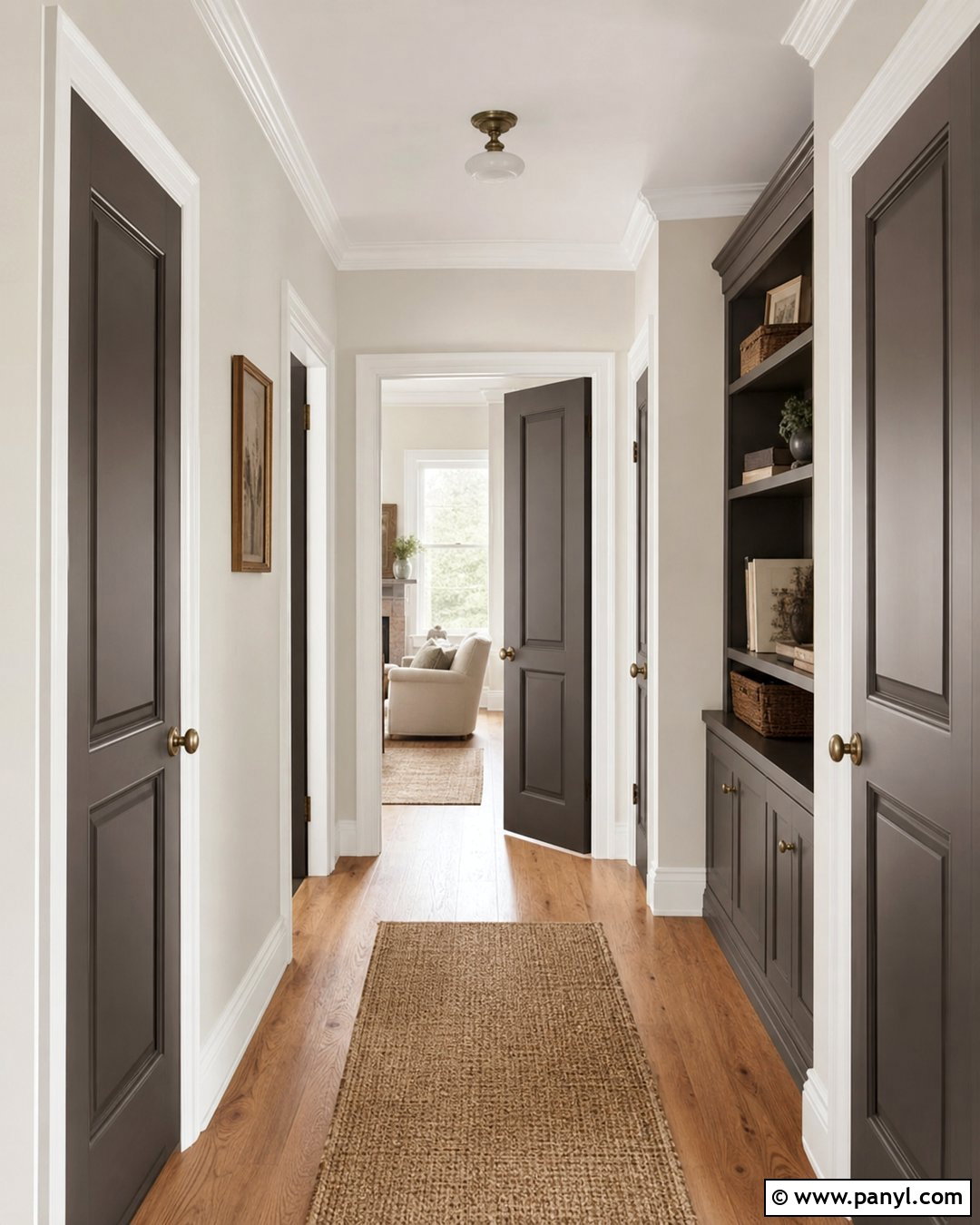
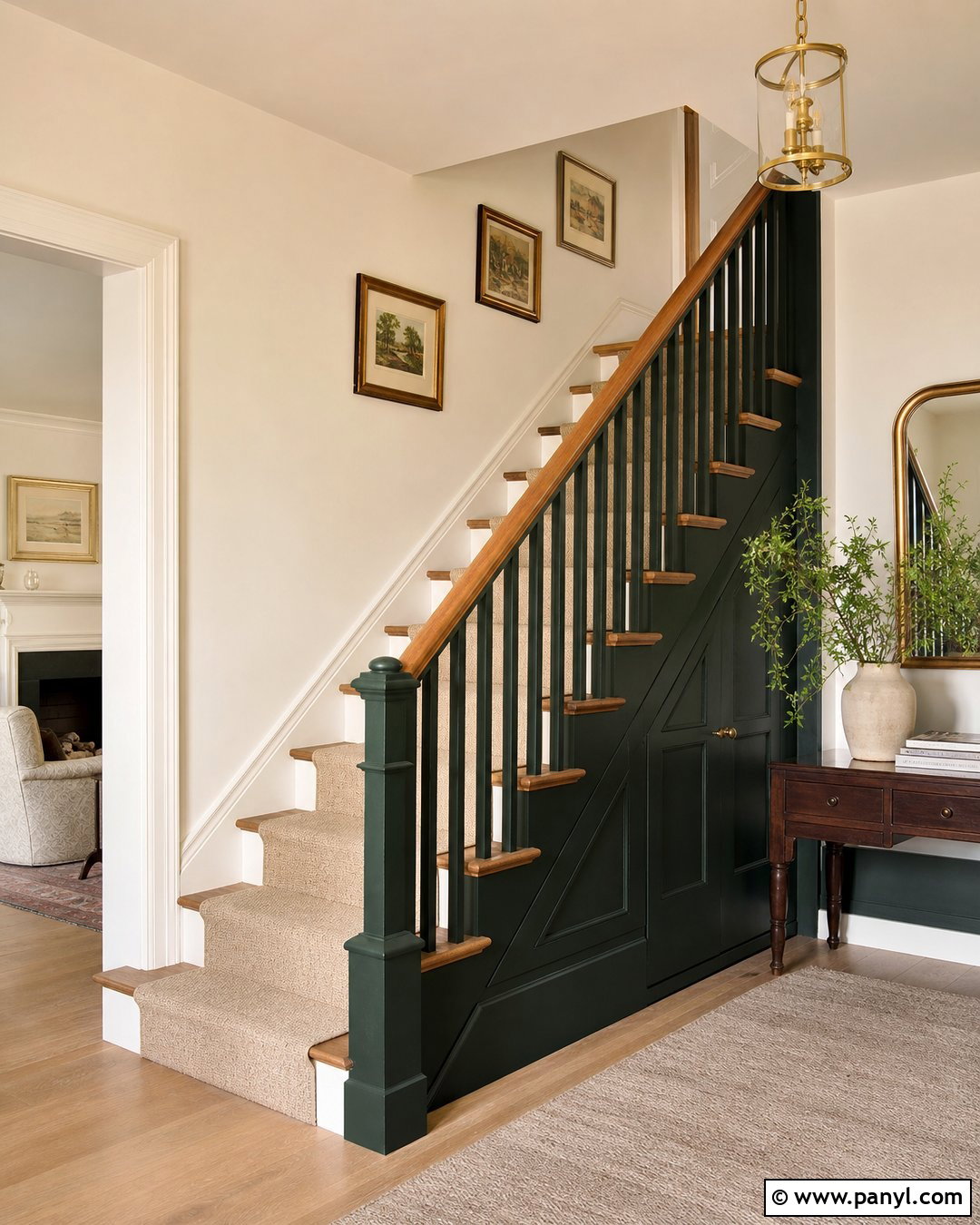
Painting interior doors in Adaptive Shade introduces color throughout a home without darkening every room. Use the shade on paneled doors, including the pantry, closet, and hallway doors, while leaving walls a soft warm white. Repeat the same finish on a few built-in cabinets or the stair railing to make the choice feel intentional. Add aged brass knobs for warmth, or matte black hardware for a more modern look. Medium oak floors and natural-fiber runners complement the color’s earthy quality. Keep baseboards white to frame each doorway clearly. In adjoining rooms, repeat Adaptive Shade through pillows, pottery, or artwork rather than additional paint. This whole-home approach creates a consistent visual rhythm and gives standard builder-grade doors a more customized, substantial appearance.
27. Adaptive Shade Color-Drenched Room
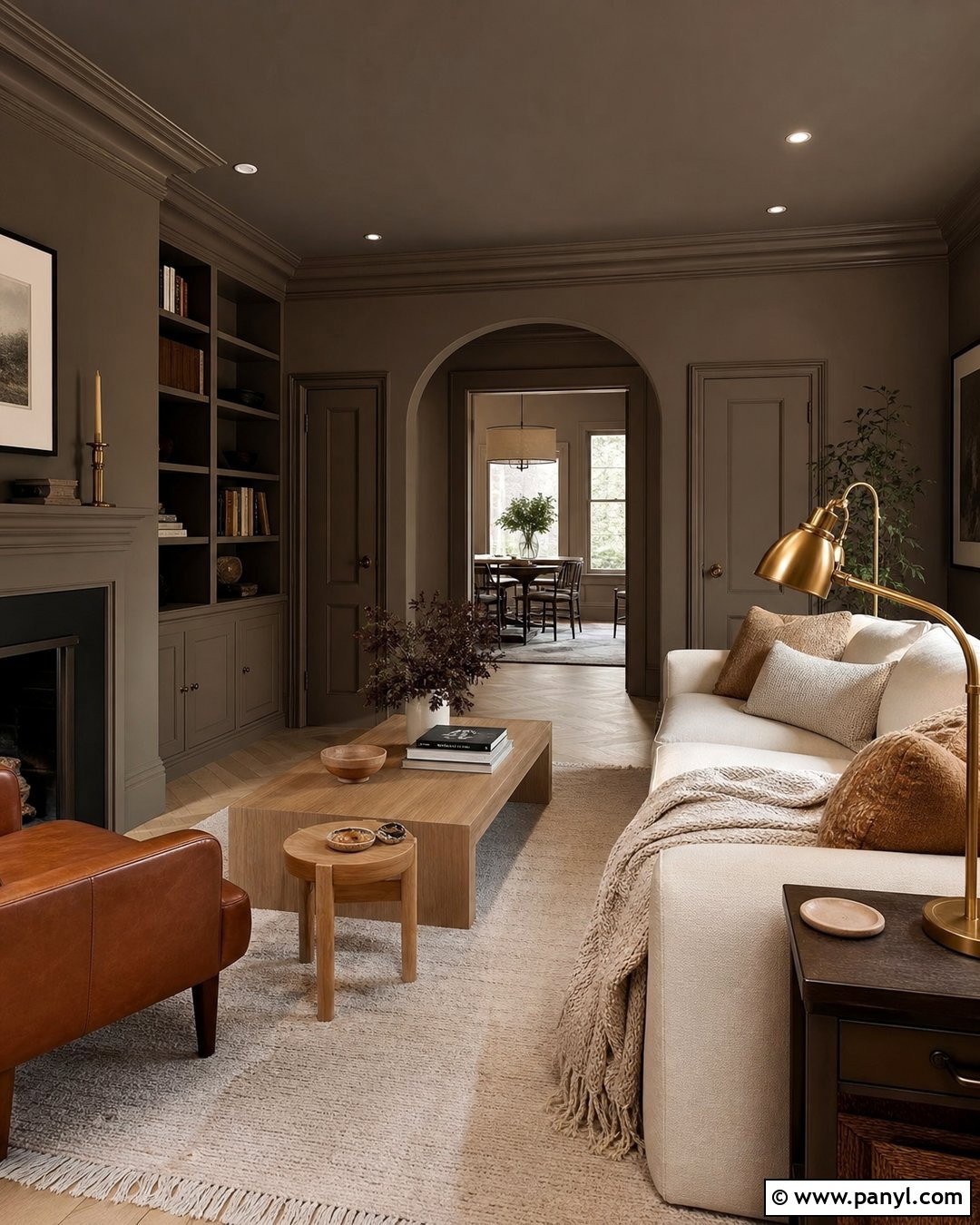
For maximum depth, apply Adaptive Shade to the walls, ceiling, trim, doors, and built-in cabinetry. Use matte paint on broad surfaces and a satin finish on woodwork so subtle differences remain visible. Furnish the room with a cream sofa, camel leather chair, and pale oak tables to prevent the monochromatic shell from feeling flat. Layer an ivory wool rug, linen curtains, and textured oatmeal pillows for softness. Brass lamps provide warm highlights, while dark framed artwork adds definition. This color-drenched treatment is especially effective in a library, den, or media room where a cozy atmosphere is welcome. Use several light sources at different heights. The completed space feels immersive and carefully designed, yet the simple natural palette keeps it comfortable and suitable for everyday living.
28. Adaptive Shade Basement Family Room
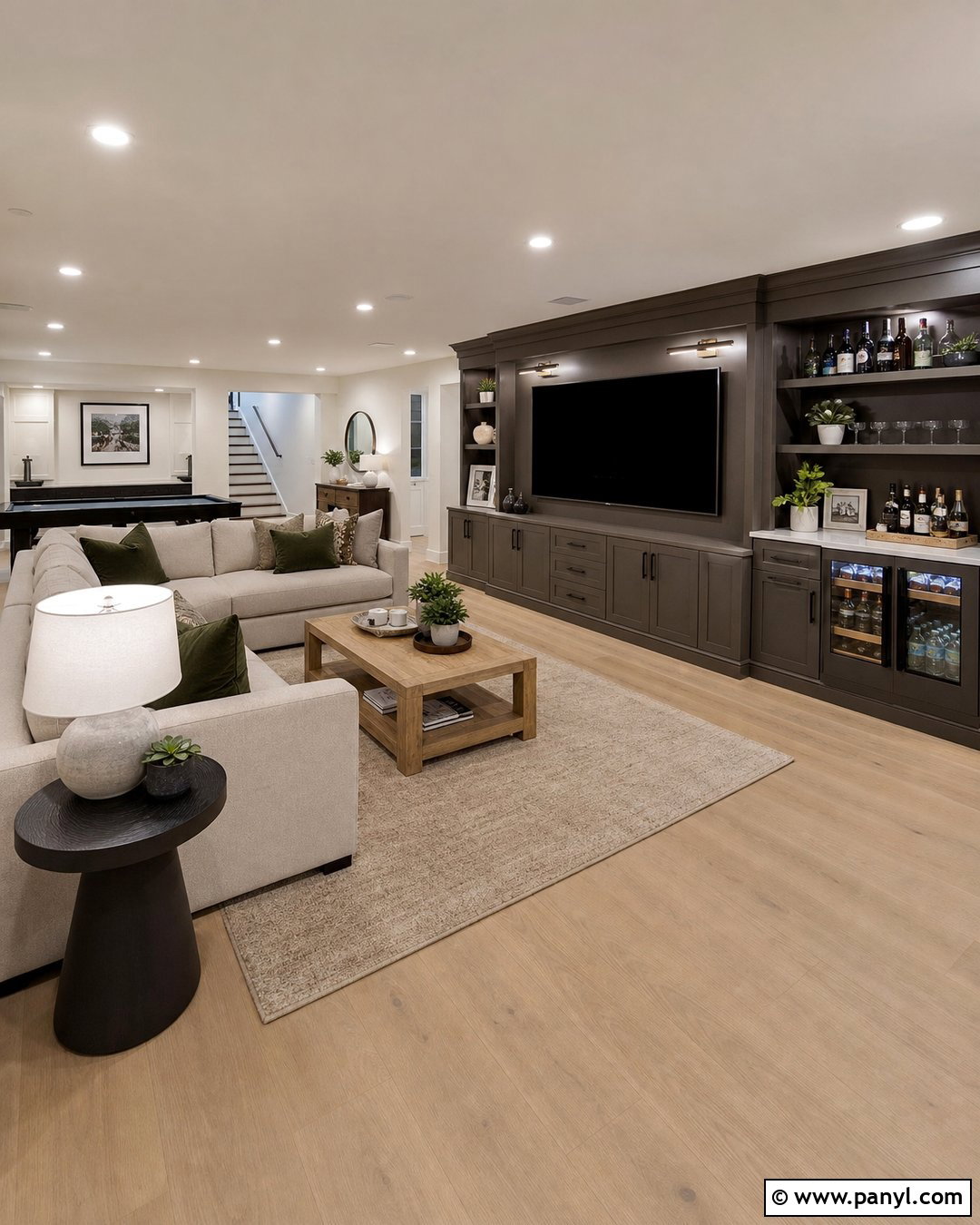
Adaptive Shade can work in a basement when it is used strategically and supported by ample lighting. Apply the color to a media wall, built-in storage, and a compact wet-bar cabinet rather than every surface. Paint the remaining walls a warm off-white to maximize available light. Choose a large cream sectional, light oak coffee table, and broad beige rug to keep the seating area open. Recessed ceiling lights, table lamps, and sconces should work together to eliminate dark corners. Add olive and rust pillows, woven baskets, and pale artwork to connect the contrasting walls. Light luxury vinyl plank flooring is practical and visually warm. This complete family room feels cozy enough for movies but remains bright enough for games, reading, and casual gatherings.
29. Adaptive Shade Farmhouse Interior
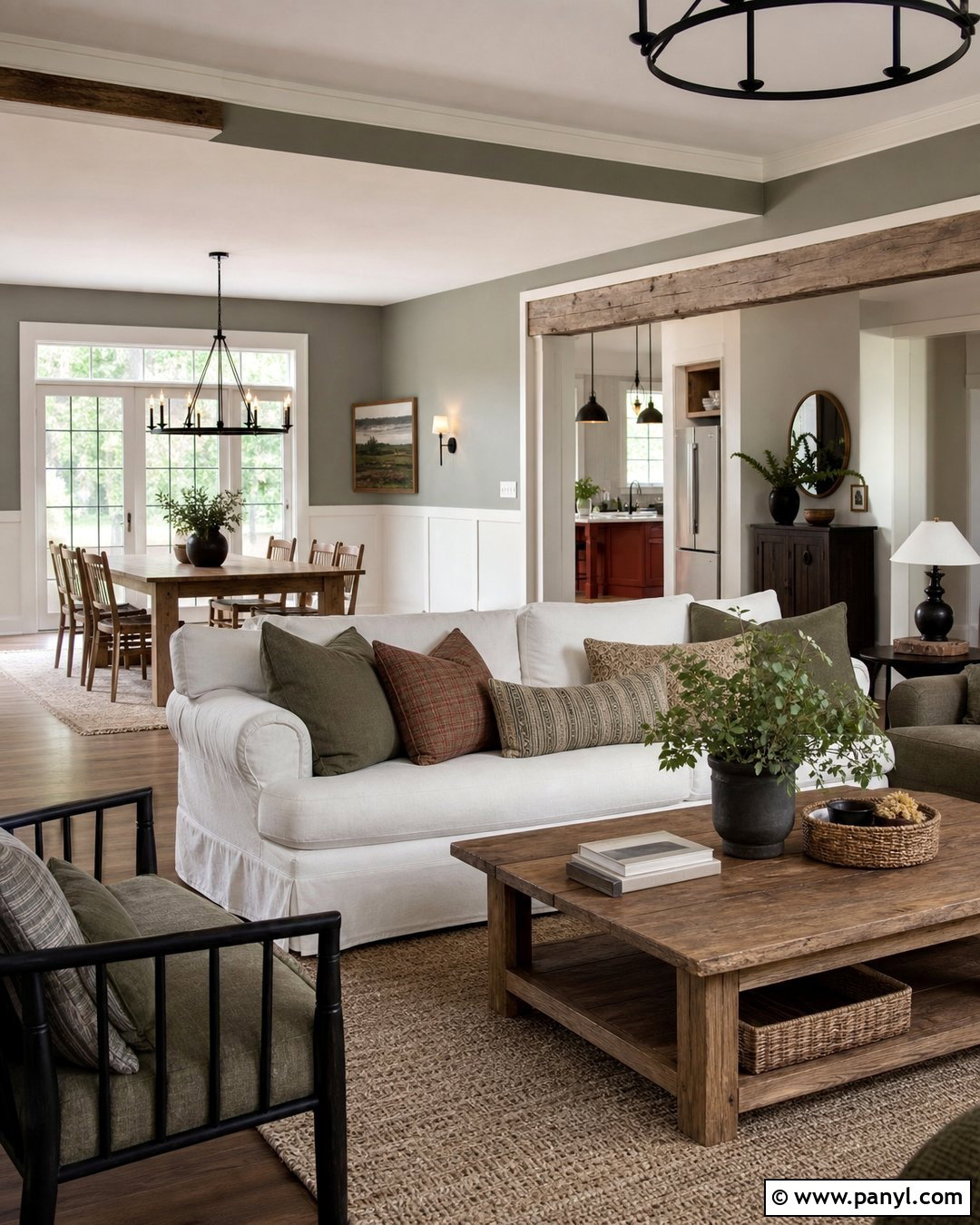
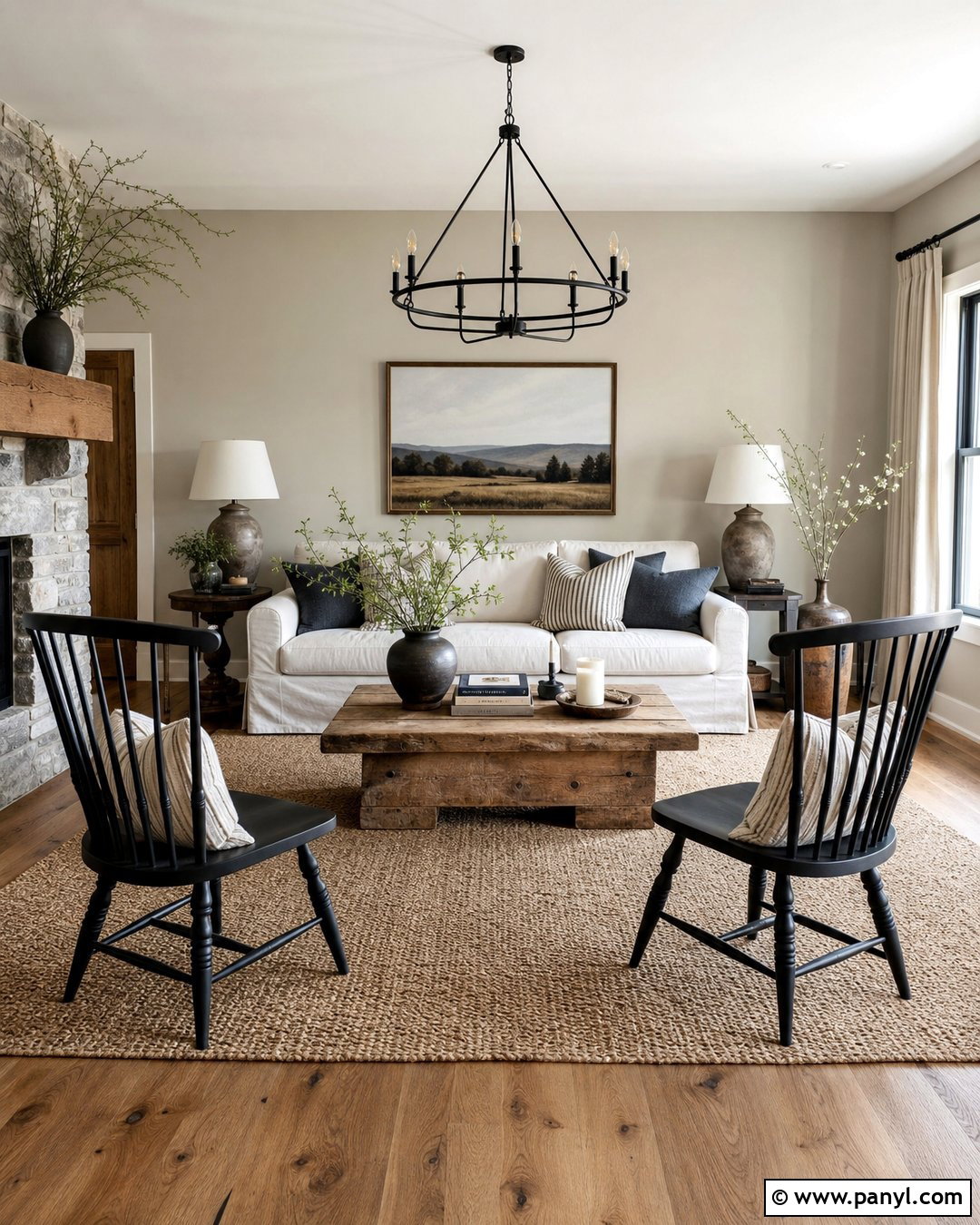
Adaptive Shade brings a mature, earthy quality to a modern farmhouse interior. Paint the walls in a spacious living and dining area, then use creamy white trim and simple vertical paneling on selected architectural features. Furnish the space with a slipcovered ivory sofa, turned-leg oak dining table, woven dining chairs, and a reclaimed-wood coffee table. Black iron lighting adds definition, while aged brass accessories keep the palette from feeling harsh. Layer striped linen, natural wool, and faded botanical textiles in olive, tan, and muted brick. Avoid excessive signs or distressed decorations. Instead, choose stoneware, baskets, and understated landscape art. The completed space feels comfortable and rural-inspired, but its clean arrangement and restrained materials keep it current rather than themed.
30. Adaptive Shade Modern Interior
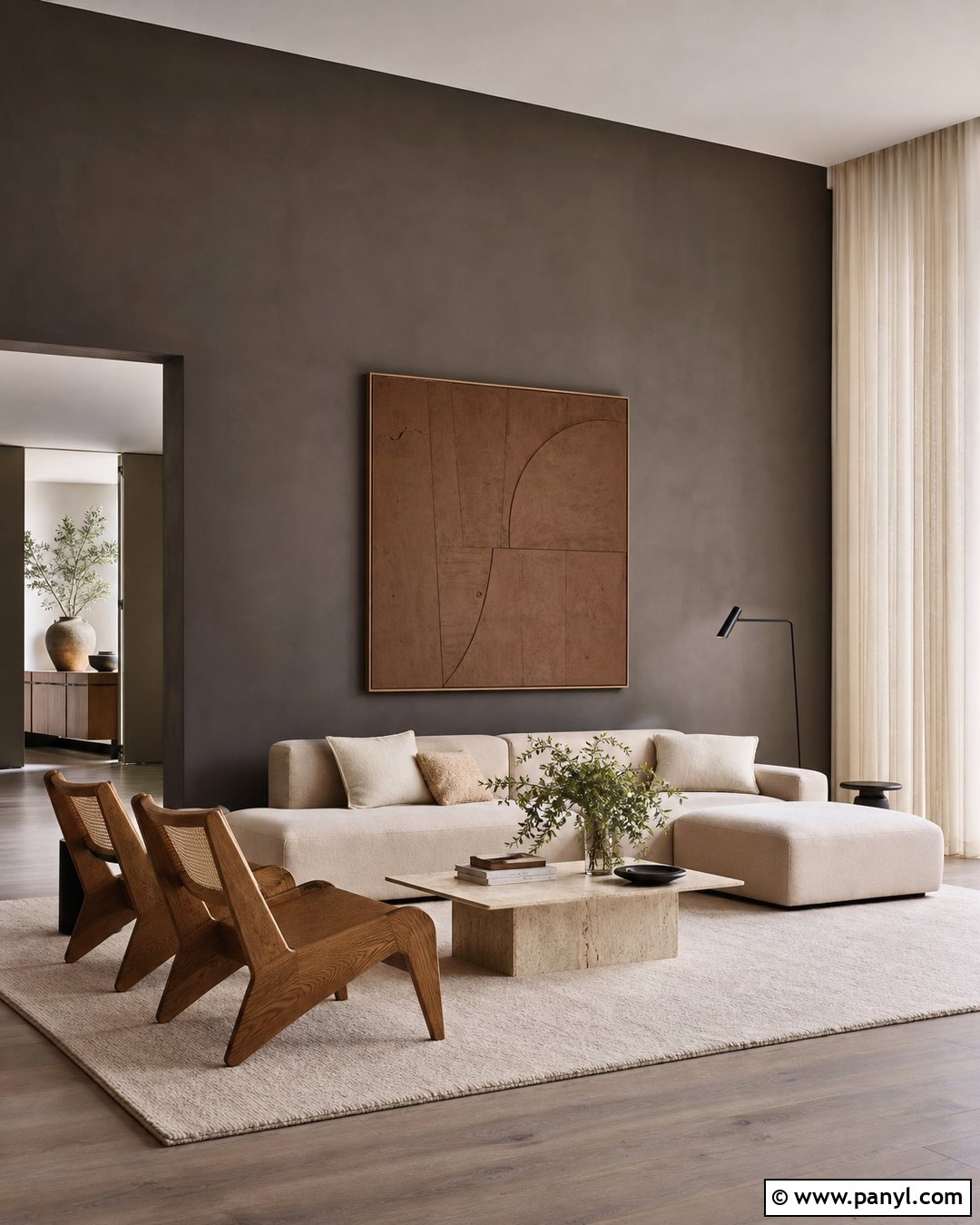
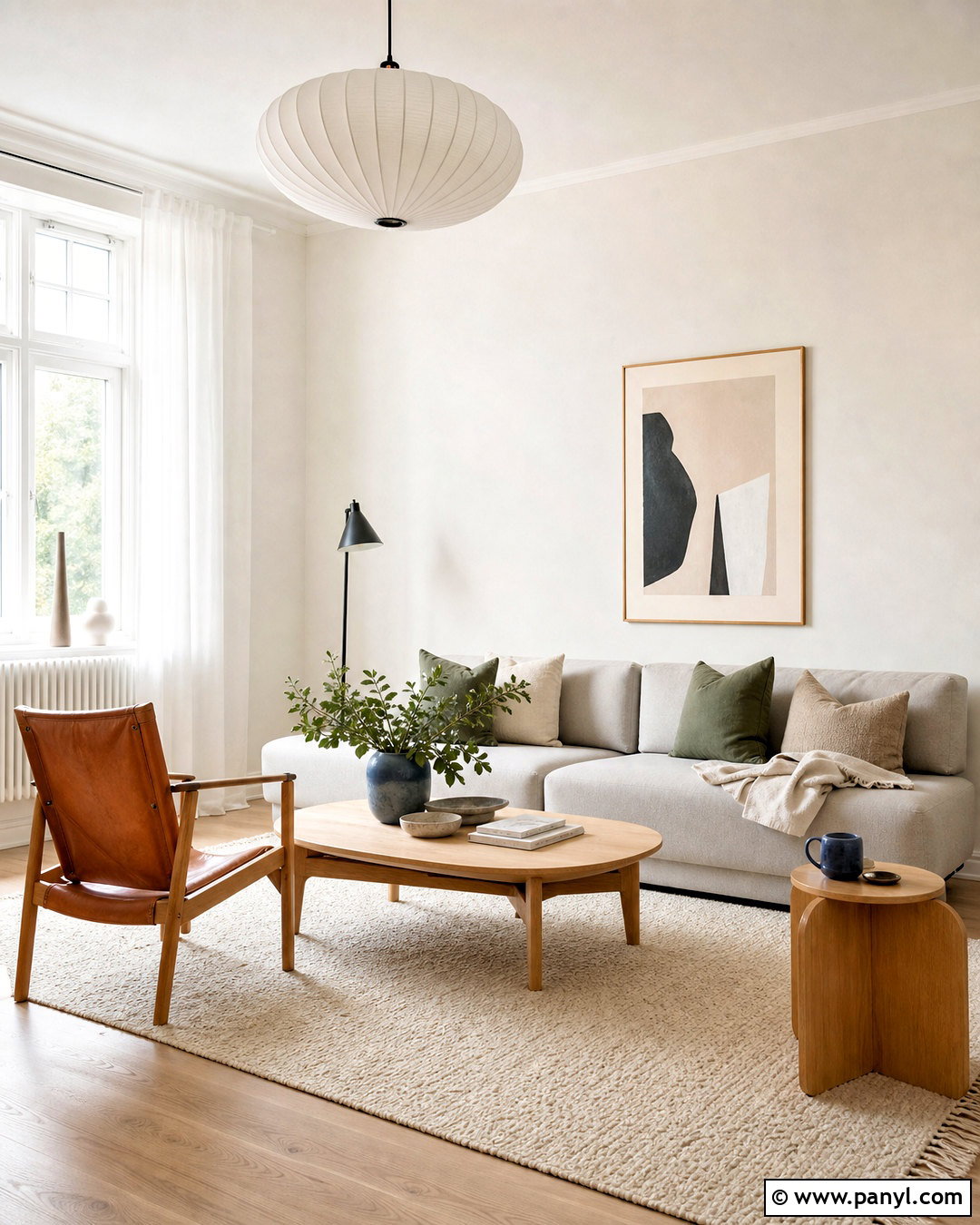
A modern Adaptive Shade interior relies on clean shapes, limited colors, and strong material contrast. Paint the walls and one flush interior door in the deep neutral, then add a low cream modular sofa and two sculptural oak chairs. Use a large ivory rug, a rectangular travertine coffee table, and a slim black floor lamp. Keep window treatments simple with ceiling-mounted off-white curtains. One oversized abstract artwork containing beige, black, and muted clay provides controlled color. Built-in storage should have flat fronts and minimal hardware to preserve the streamlined effect. Add a few rounded ceramics and one large plant rather than many small accessories. The finished room feels warm and modern because natural stone, wood, and soft upholstery offset the paint’s depth and prevent the design from appearing severe.
31. Adaptive Shade Cottage Interior
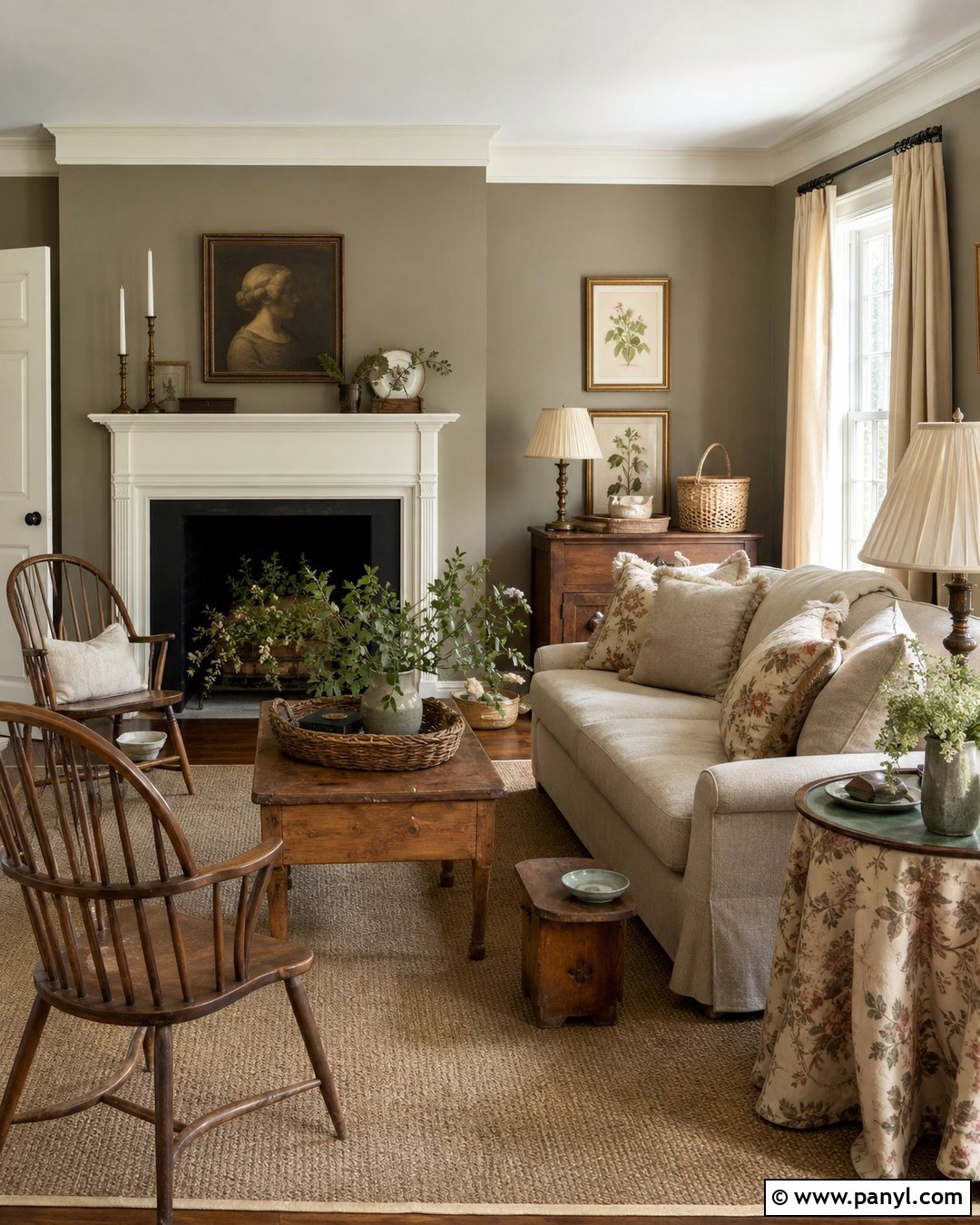
In a cottage setting, Adaptive Shade looks inviting beside painted woodwork and softly patterned fabric. Use the color on the living room walls, then retain creamy trim, exposed ceiling beams, and a white-painted fireplace. Arrange a small oatmeal sofa with two vintage-inspired wood chairs upholstered in subtle floral or striped linen. A worn-look wool rug in beige, moss, and muted red adds color without overpowering the walls. Include an antique pine side table, pleated lampshades, woven baskets, and framed botanical artwork. Simple cafe curtains or relaxed linen panels keep the windows informal. Leave original wood flooring visible around the rug. This complete look feels collected over time, balancing the darker paint with familiar textures, gentle patterns, and practical furniture suited to a modest, comfortable home.
32. Adaptive Shade House Exterior With White Trim
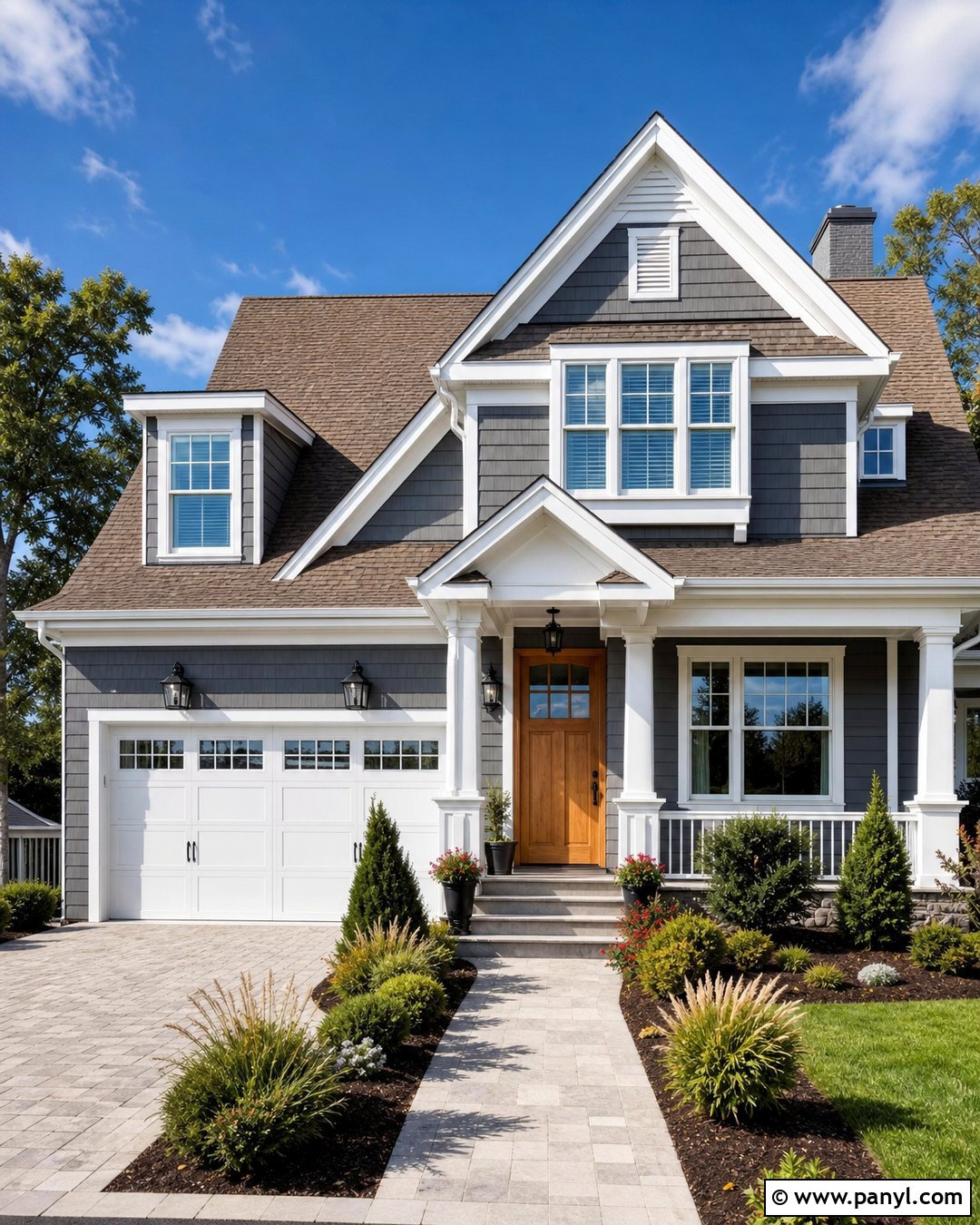
Adaptive Shade creates a substantial exterior color scheme for a traditional house. Use it on horizontal siding or stucco, then add warm white trim around the windows, roofline, columns, and garage door. Choose a medium brown or weathered gray roof that relates to the paint’s earthy undertones. A natural-stained oak front door introduces warmth, while black lanterns and house numbers create crisp definition. Complete the curb view with a pale concrete walkway, neatly clipped evergreen shrubs, and ornamental grasses. White porch furniture or planters can repeat the trim color. Always test the paint on multiple exterior walls because sunlight can reveal different undertones throughout the day. The finished home looks grounded, welcoming, and distinctive without relying on an overly bold exterior color.
33. Adaptive Shade Exterior With Black Trim
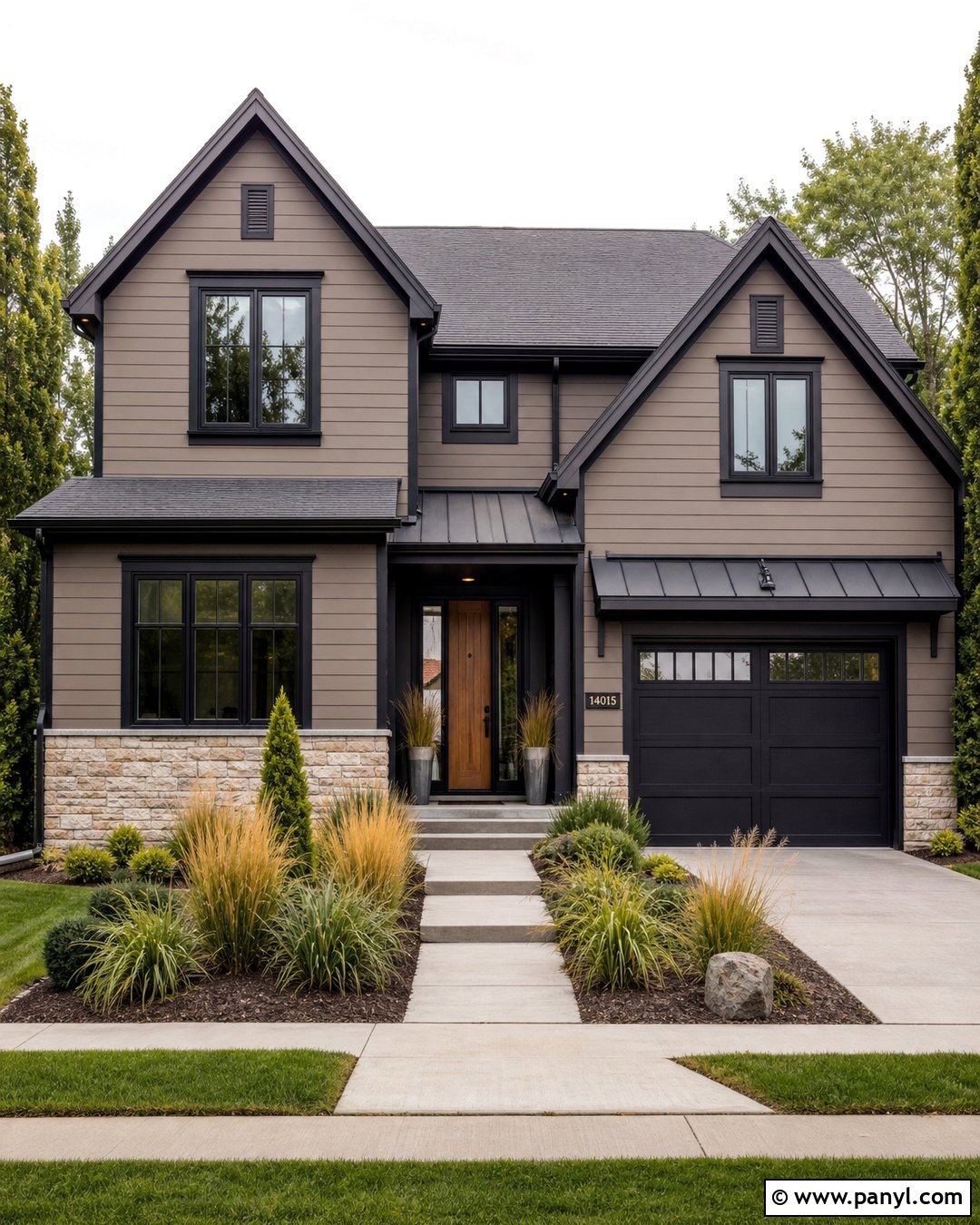
For a stronger contemporary exterior, pair Adaptive Shade siding with matte black trim and warm wood accents. Apply the main color to simple lap siding, then use black on window frames, gutters, exterior lights, and the garage door. A cedar or white-oak front door keeps the scheme from feeling overly dark. Choose a charcoal architectural-shingle roof that connects naturally to the trim. Light stone around the foundation or entry adds contrast and prevents the facade from appearing flat. Finish the landscaping with pale gravel, structured grasses, low evergreens, and a clean concrete path. This complete palette works best on homes with uncomplicated lines and generous daylight. The combination is modern and grounded, while the wood entry provides a clear, welcoming focal point from the street.
34. Adaptive Shade Front Door
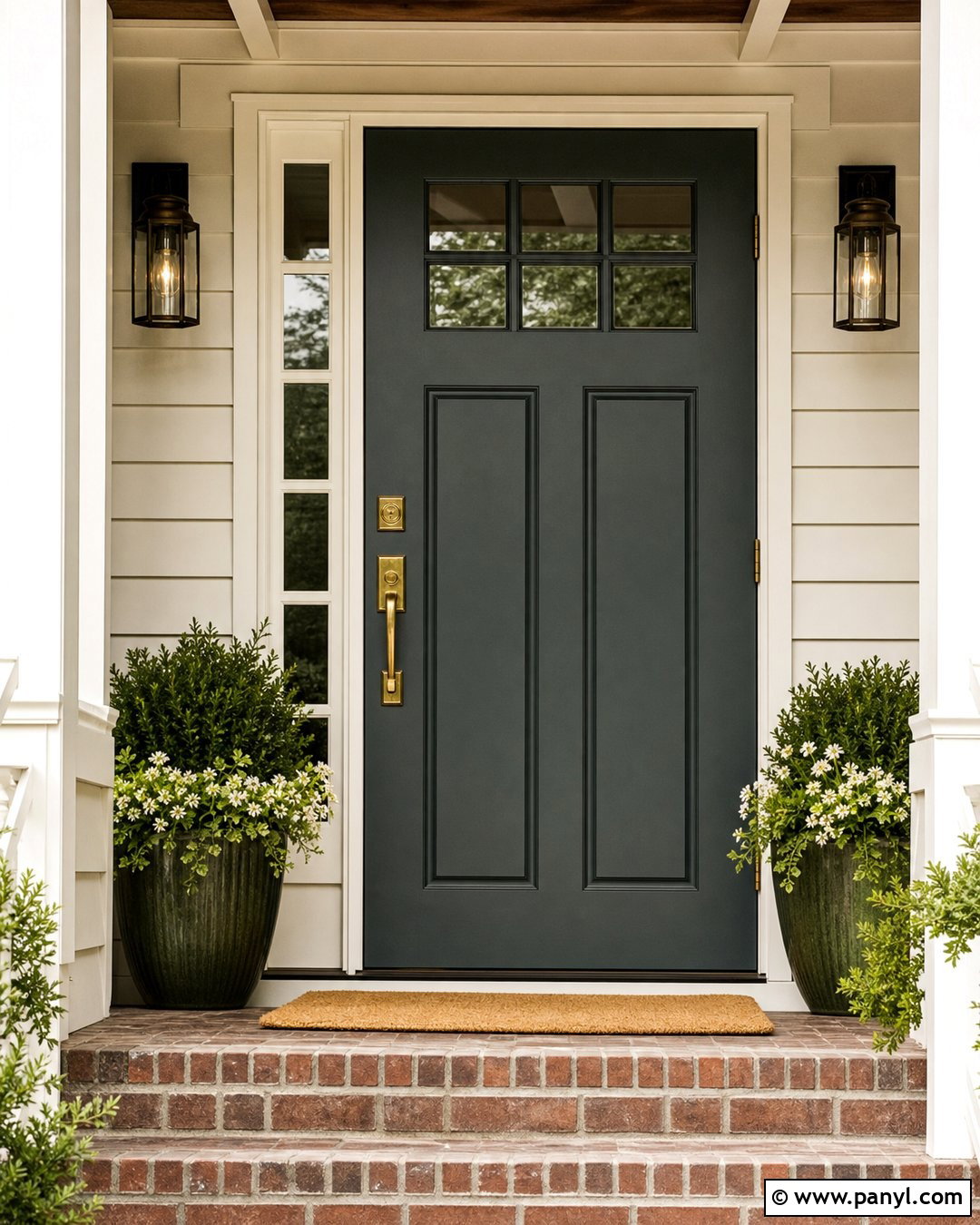
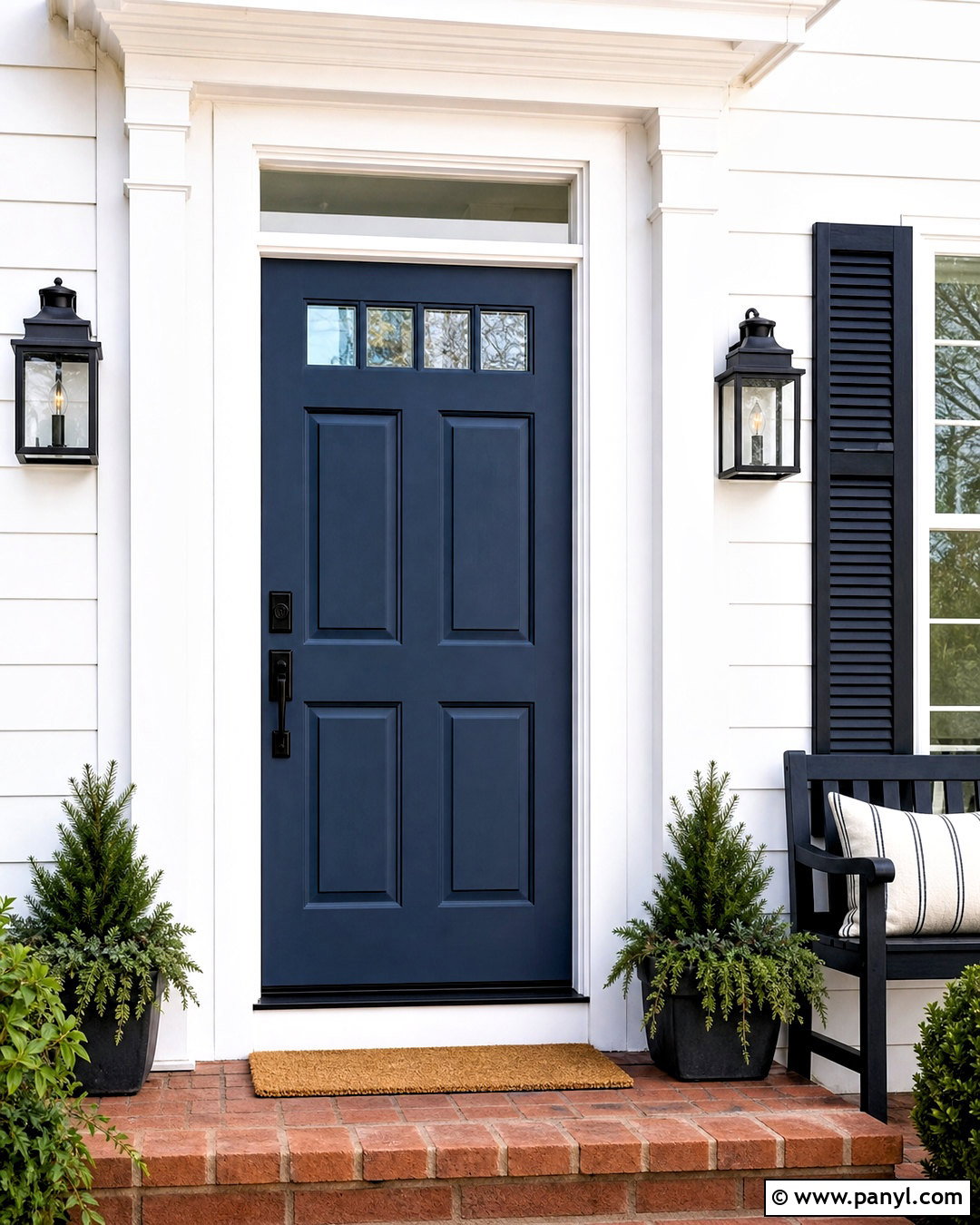
An Adaptive Shade front door offers an understated alternative to black, navy, or bright accent colors. Paint a paneled or simple Craftsman door in a durable satin exterior finish, then surround it with warm white siding and trim. Add aged brass or matte black hardware, depending on the home’s existing metal finishes. Natural brick steps, a coir mat, and two symmetrical planters filled with soft green foliage create a welcoming entrance. Use a clear glass lantern above or beside the door to keep the area bright. If shutters are present, paint them in the same color for visual balance. The complete entry feels calm and intentional, and the subtle green-brown character of Adaptive Shade connects especially well with stone, brick, wood, and established landscaping.
35. Adaptive Shade Garage Door
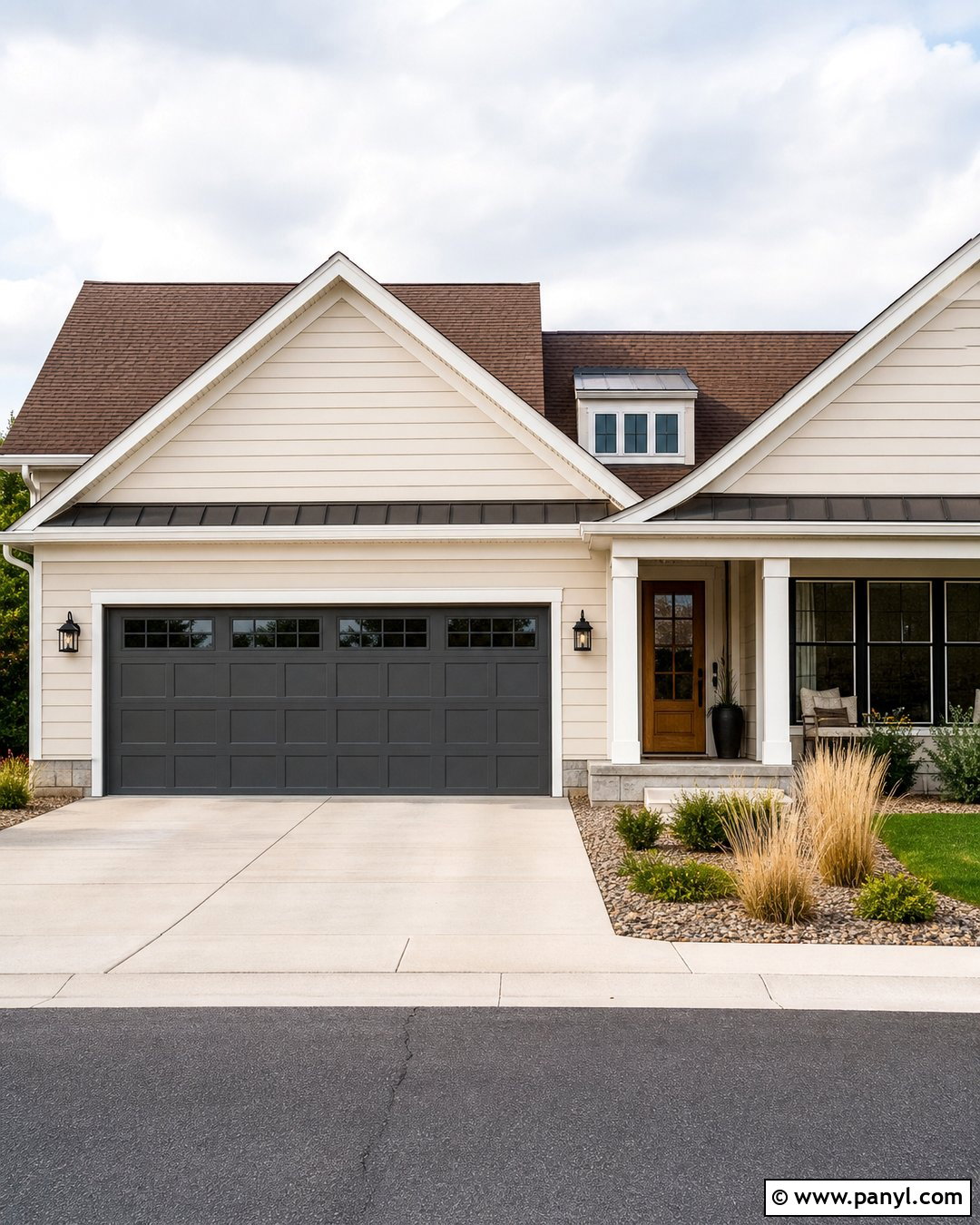
A garage door painted in Adaptive Shade can blend a large functional feature into an earthy exterior palette. Pair it with warm cream siding, white or cream trim, and a medium brown roof. Use the same Adaptive Shade finish on a side entry door or shutters so the garage does not appear isolated. Black lanterns and simple hardware provide definition, while a natural-wood front door creates a warmer focal point elsewhere on the facade. Surround the driveway with ornamental grasses, low shrubs, and light gravel beds to soften the broad paved area. Choose a durable exterior paint with the appropriate finish for the door material. The resulting curb appeal is balanced and cohesive, allowing the garage to support the architecture instead of visually dominating the front of the home.
Conclusion:
These **adaptive shade sherwin williams ideas** show how one complex neutral can support traditional, farmhouse, cottage, modern, and transitional homes. Adaptive Shade works best when it is treated as part of a complete palette rather than an isolated paint choice. Warm whites provide brightness, natural woods emphasize its earthy character, and cream textiles soften its depth. Brass, black, stone, and muted botanical colors can further shape the final mood. Since the color may appear greener, browner, or grayer under different conditions, test a large sample on each important wall and observe it throughout the day. With thoughtful lighting and balanced materials, Adaptive Shade can create a calm, substantial, and beautifully connected home.

Related Ideas and Inspiration:
Leave a Reply