
These 20 loggia sherwin williams ideas show how this warm, grounded neutral can create comfortable rooms and welcoming exteriors without feeling flat or dated. Sherwin-Williams Loggia SW 7506 works for interior and exterior applications, making it a flexible choice for walls, cabinetry, siding, and architectural details. () Its balanced taupe character complements creamy whites, deep charcoals, muted greens, natural wood, stone, and aged metals. The key is building a complete palette around the paint rather than treating it as an isolated color. Lighting also matters, so test a large sample beside permanent finishes before committing. From relaxed living rooms to polished curb appeal, the following complete looks offer practical inspiration through 20 loggia sherwin williams ideas.

1. Loggia Living Room With White Trim
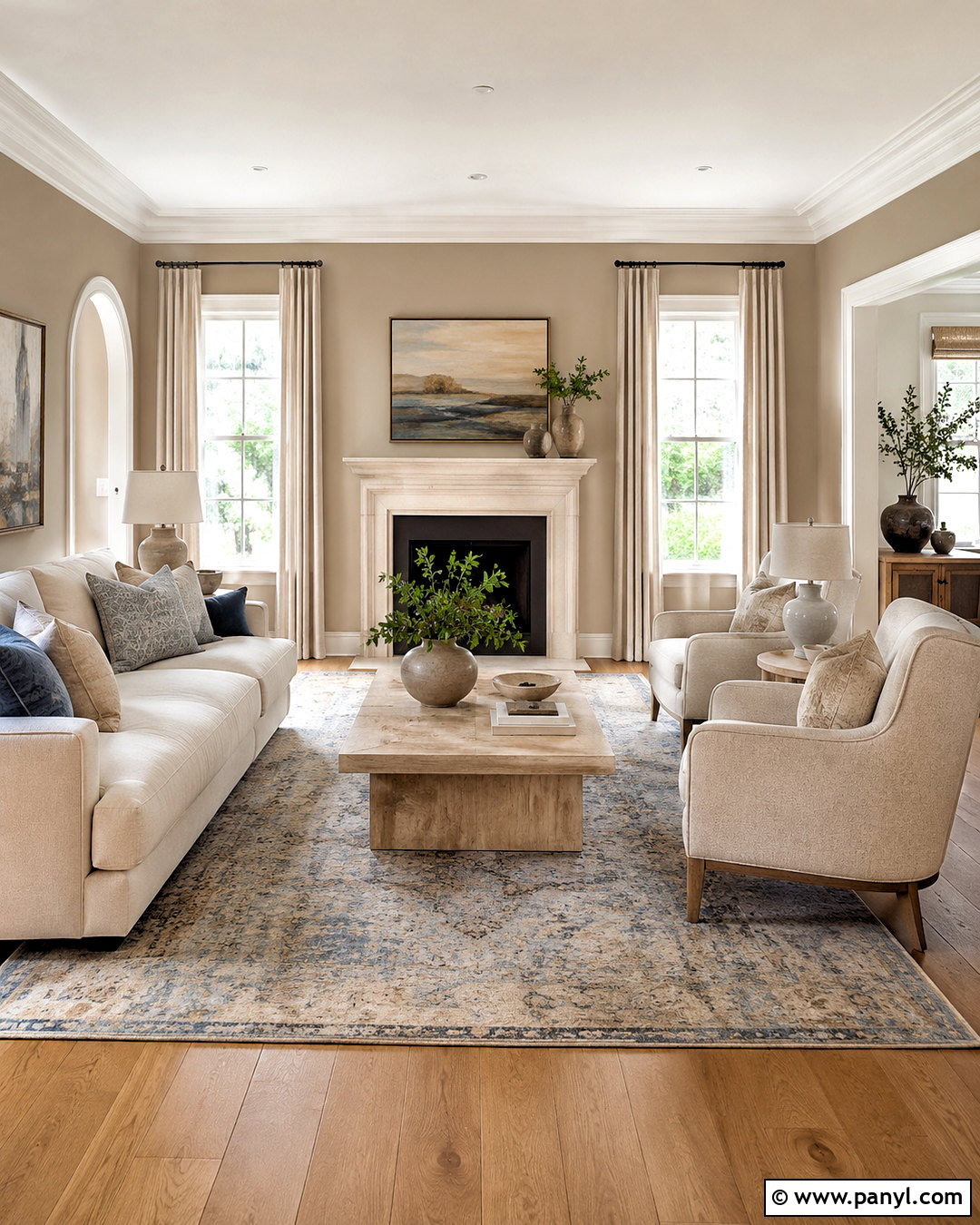
A bright living room gives Loggia SW 7506 plenty of space to show its warm taupe character. Paint the walls Loggia and use Sherwin-Williams Snowbound on the ceiling, trim, and built-in shelves for clean contrast. Choose a cream performance-fabric sofa, two oatmeal armchairs, and a pale oak coffee table to continue the soft neutral palette. A faded beige and blue area rug can add subtle movement without overwhelming the room. Finish the layout with linen curtains, ceramic lamps, and a few black metal accents. Medium-toned oak flooring keeps the space grounded. Position the seating around a simple plaster fireplace or large central window so the room feels balanced, conversational, and naturally welcoming.
2. Loggia Living Room With Dark Accents
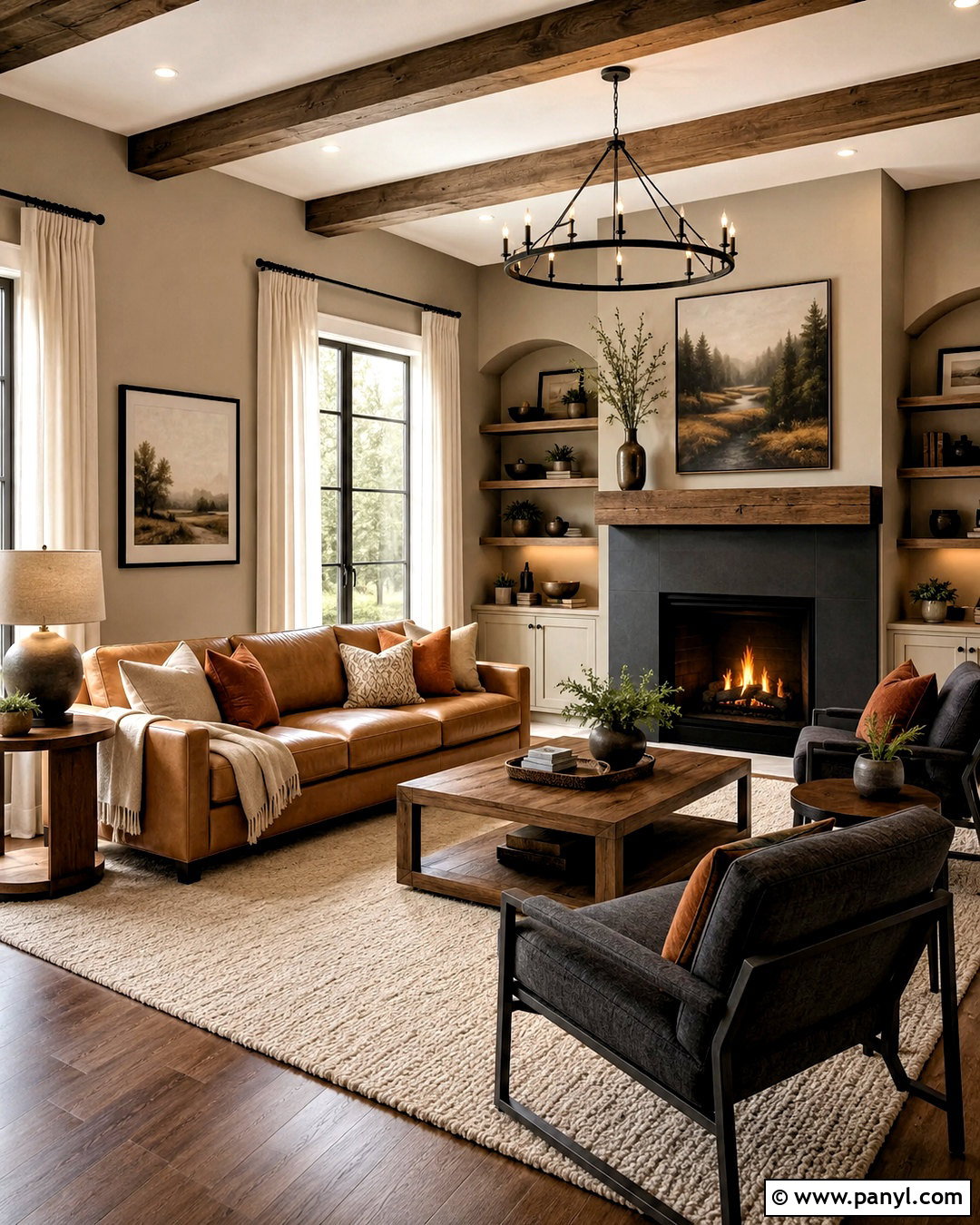
For a richer look, surround Loggia walls with charcoal, walnut, and weathered leather. Start with a cognac leather sofa facing a matte black media console or fireplace. Add two charcoal upholstered chairs and connect everything with a textured ivory rug. Walnut side tables, bronze floor lamps, and large black-framed artwork give the neutral wall color sharper definition. Keep the ceiling and baseboards warm white instead of brilliant white, which may look too cold beside Loggia. Use oatmeal curtains and rust-colored pillows to soften the dark finishes. This complete palette works especially well in a family room with generous natural light, where Loggia can provide warmth while the deeper furnishings make the arrangement feel substantial and comfortable.
3. Loggia Kitchen With White Cabinets
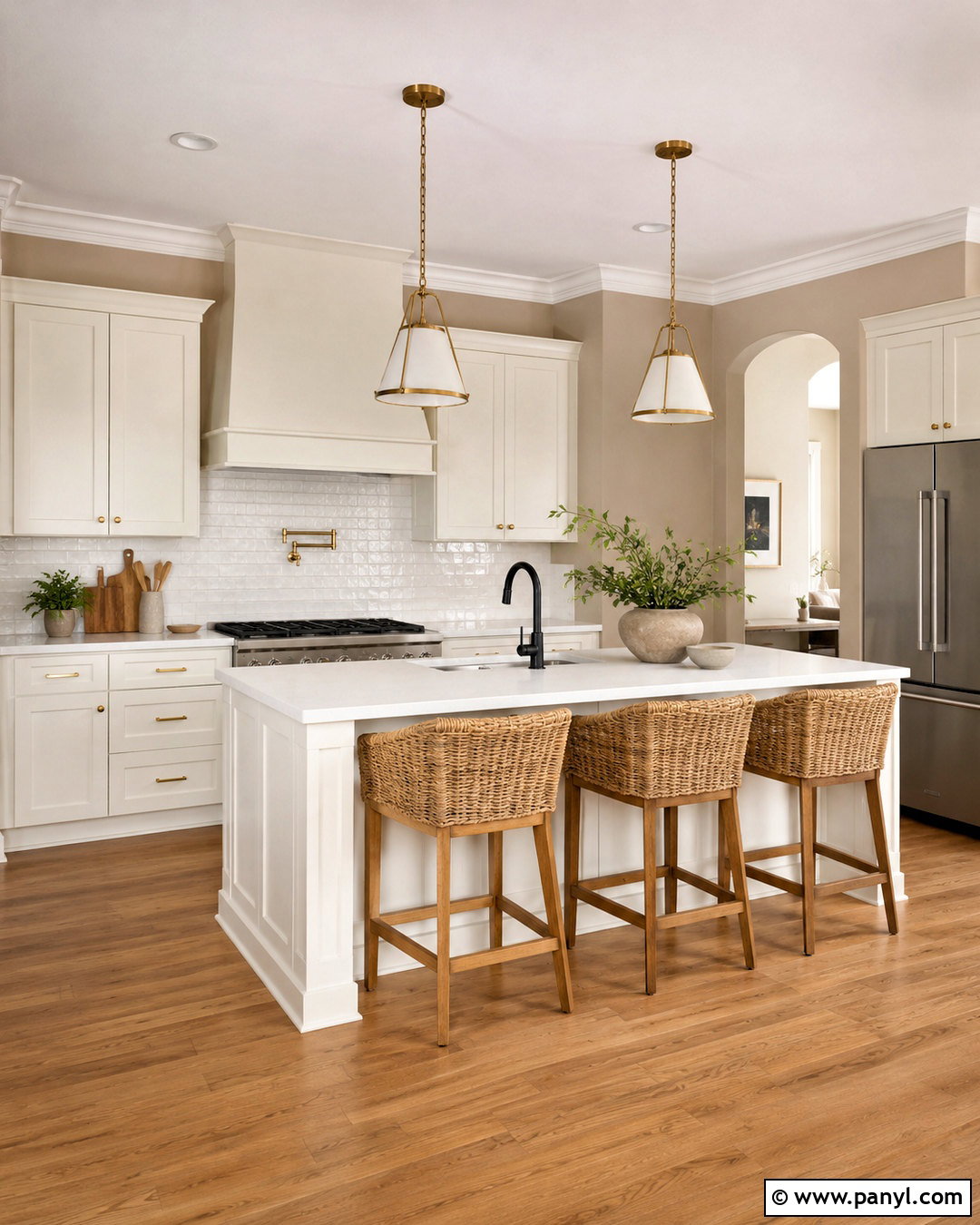
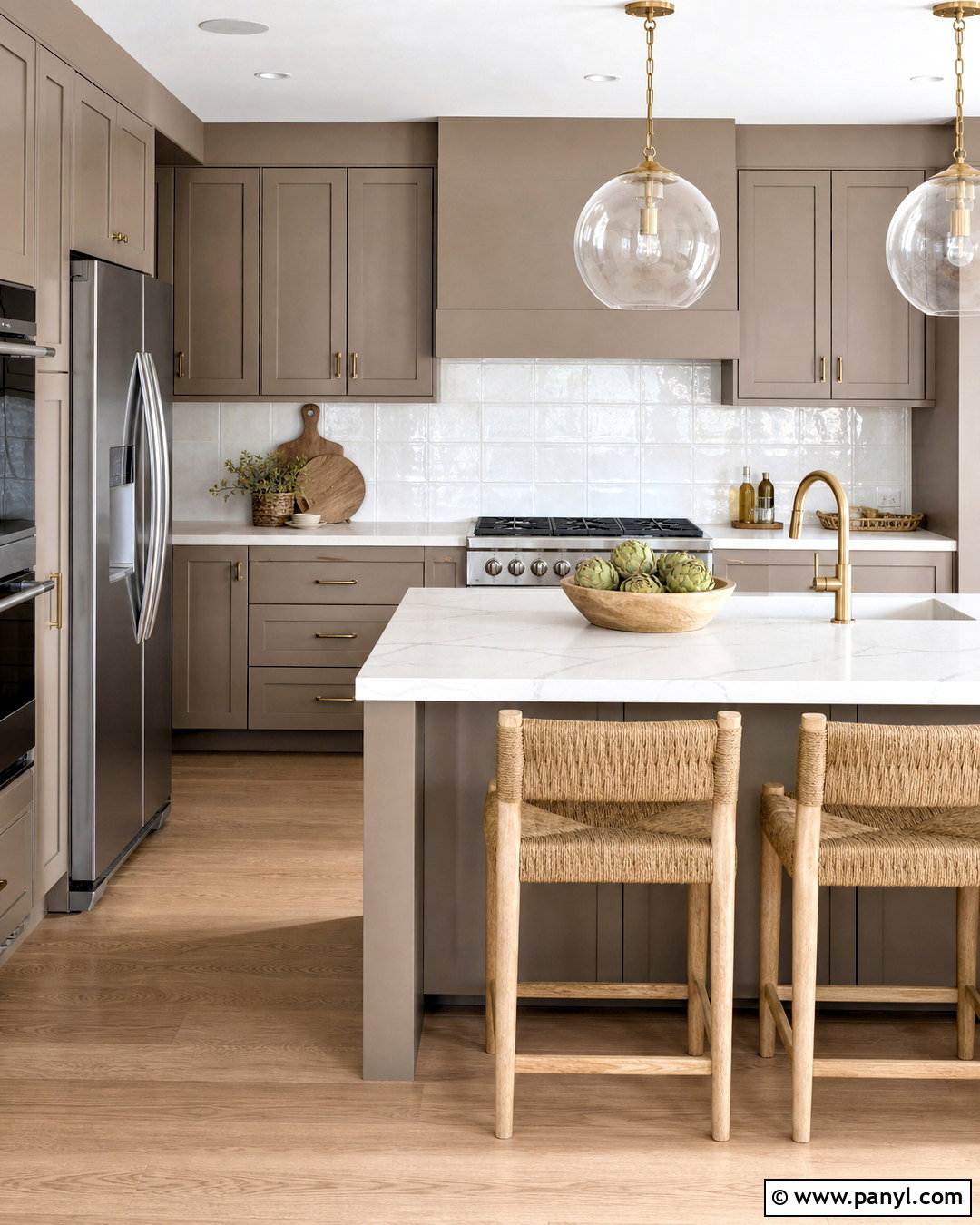
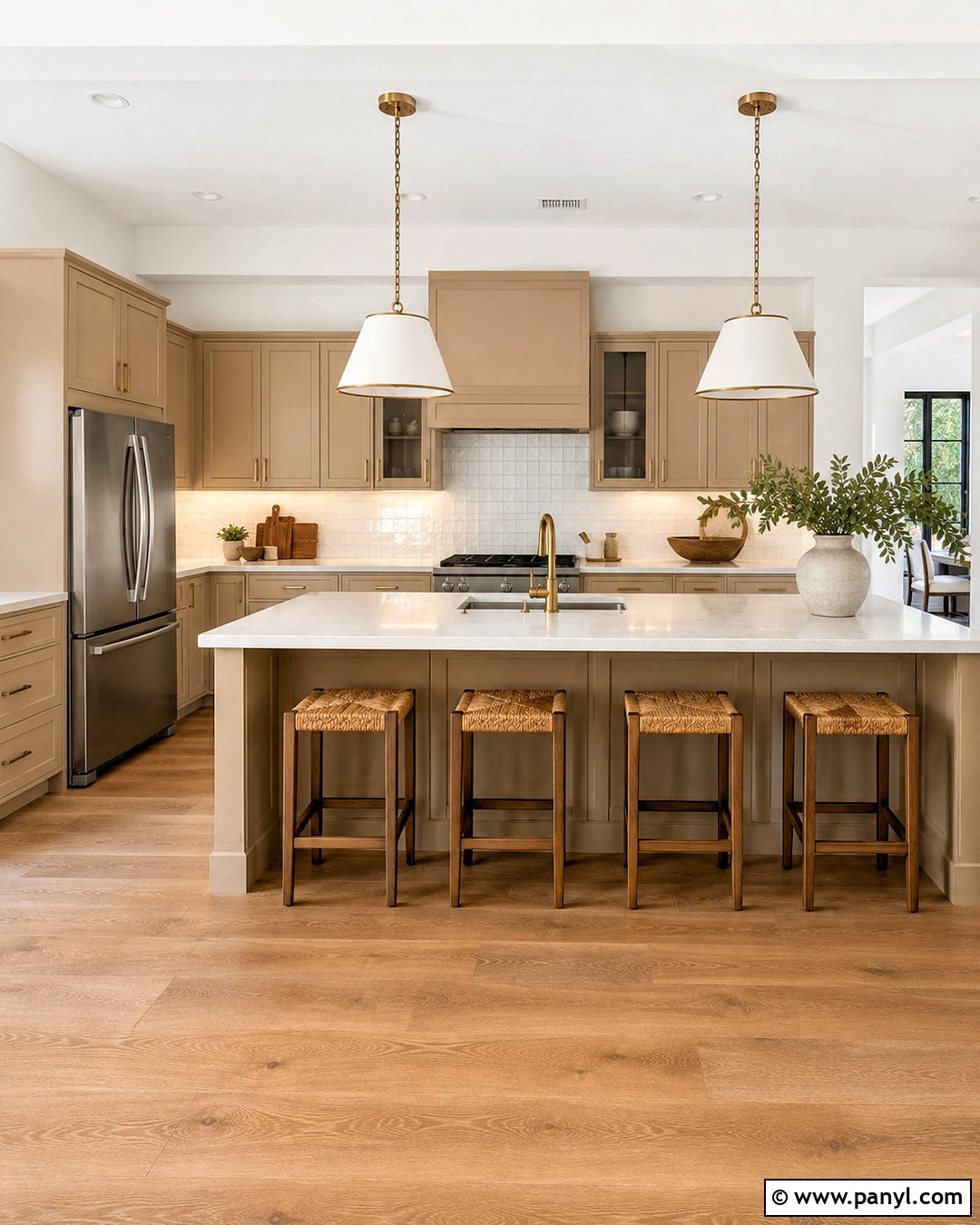
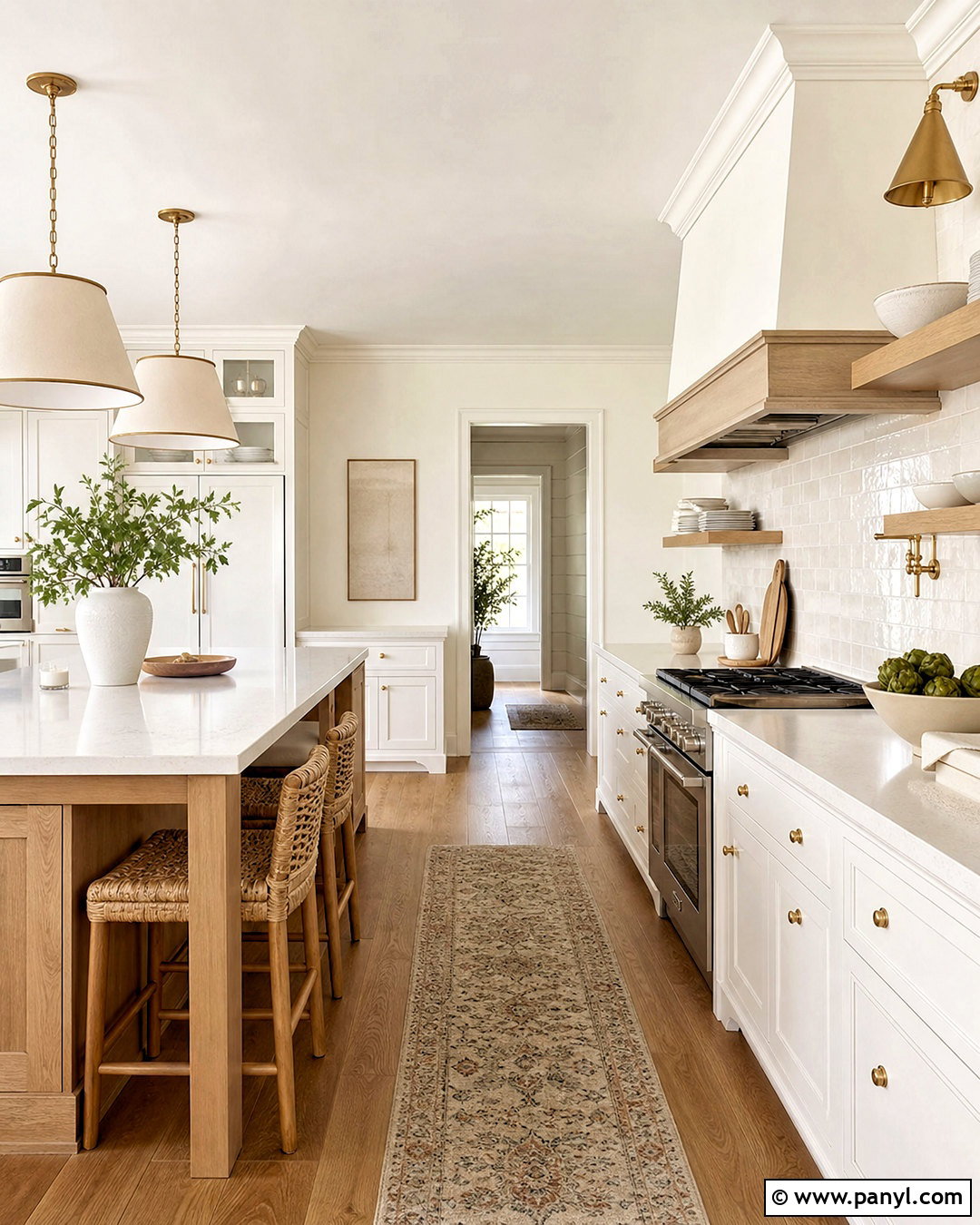
Loggia walls can make a white kitchen feel warmer and more connected to surrounding living spaces. Pair the paint with creamy white Shaker cabinets, brushed brass hardware, and softly veined quartz countertops. A handmade white backsplash adds texture while maintaining a bright appearance. Bring warmth into the room through medium oak flooring, woven counter stools, and simple wood cutting boards displayed near the range. Choose antique brass pendants with white shades above the island. Black window frames or a black faucet can provide a small amount of contrast. Keep the island white for an airy layout, or use stained oak if the room needs more depth. The resulting kitchen feels polished, practical, and inviting rather than stark.
4. Loggia Kitchen With Oak Cabinets
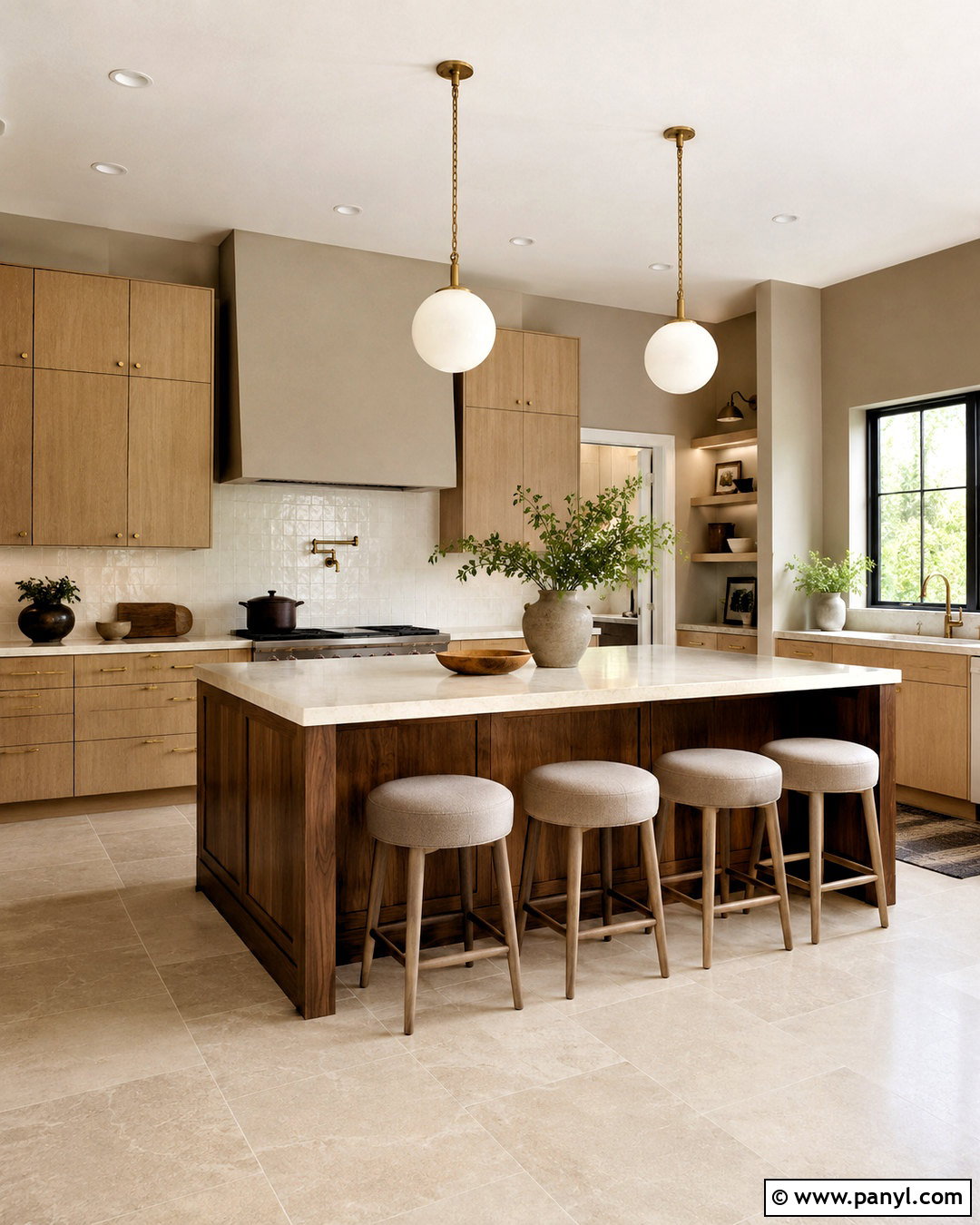
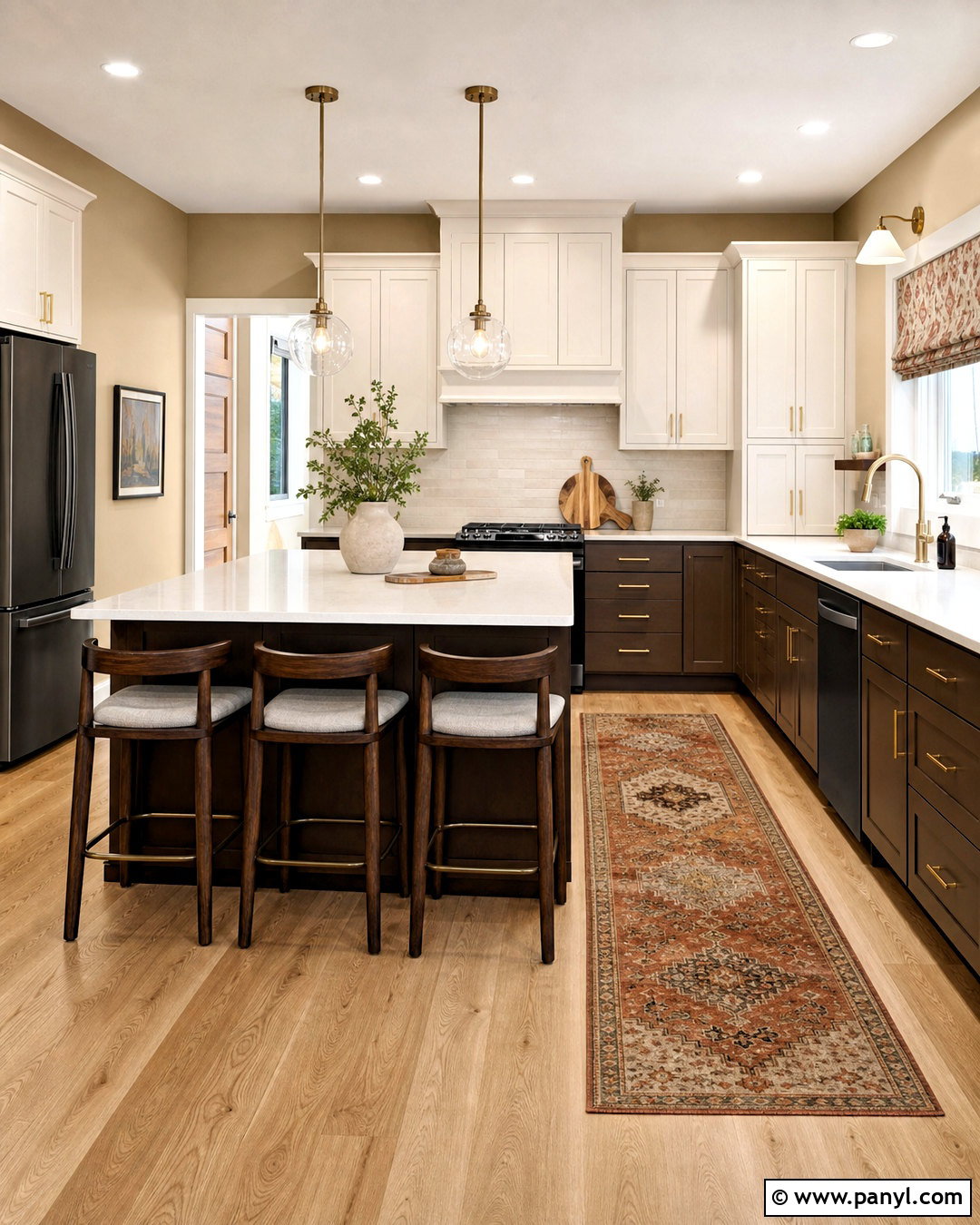
Warm wood and Loggia create an earthy kitchen that feels current yet easy to live with. Use flat-panel white oak cabinetry with a natural matte finish, then paint the walls and range hood Loggia SW 7506. Select creamy quartz counters and an ivory zellige tile backsplash to reflect light around the room. A large island in deeper walnut can anchor the layout while creating contrast between the wood tones. Add aged brass hardware, simple globe pendants, and oatmeal upholstered counter stools. Keep appliances and plumbing fixtures in stainless steel or brushed nickel for a quiet finish. Pale stone-look flooring works well in this scheme. The varied materials prevent the taupe walls and oak cabinets from blending into one continuous beige surface.
5. Loggia Dining Room With Sage Green
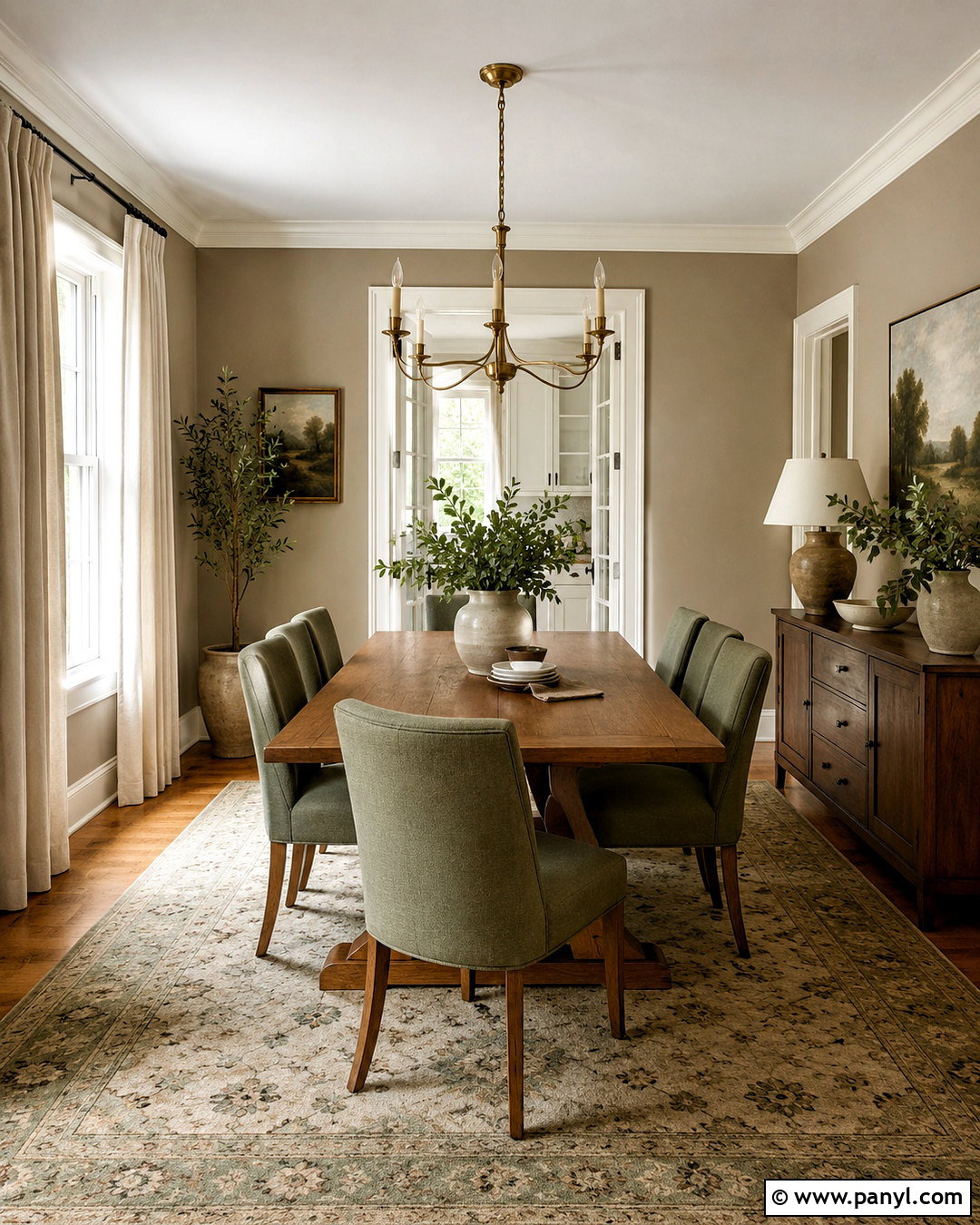
Soft sage accents bring out the natural side of Loggia without turning the dining room into an overly colorful space. Cover the walls in Loggia, add creamy white trim, and place a medium oak table in the center of the room. Surround it with sage green upholstered chairs or combine two upholstered end chairs with simple wood side chairs. A muted botanical rug can tie the wall, seating, and wood tones together. Install a large aged brass chandelier above the table and hang linen curtains at the windows. Complete the room with a walnut buffet, ceramic table lamps, and understated landscape artwork. Greenery in a stone planter adds a fresh finishing layer while repeating the sage color in a more organic form.
6. Loggia Bedroom With Cream Textiles
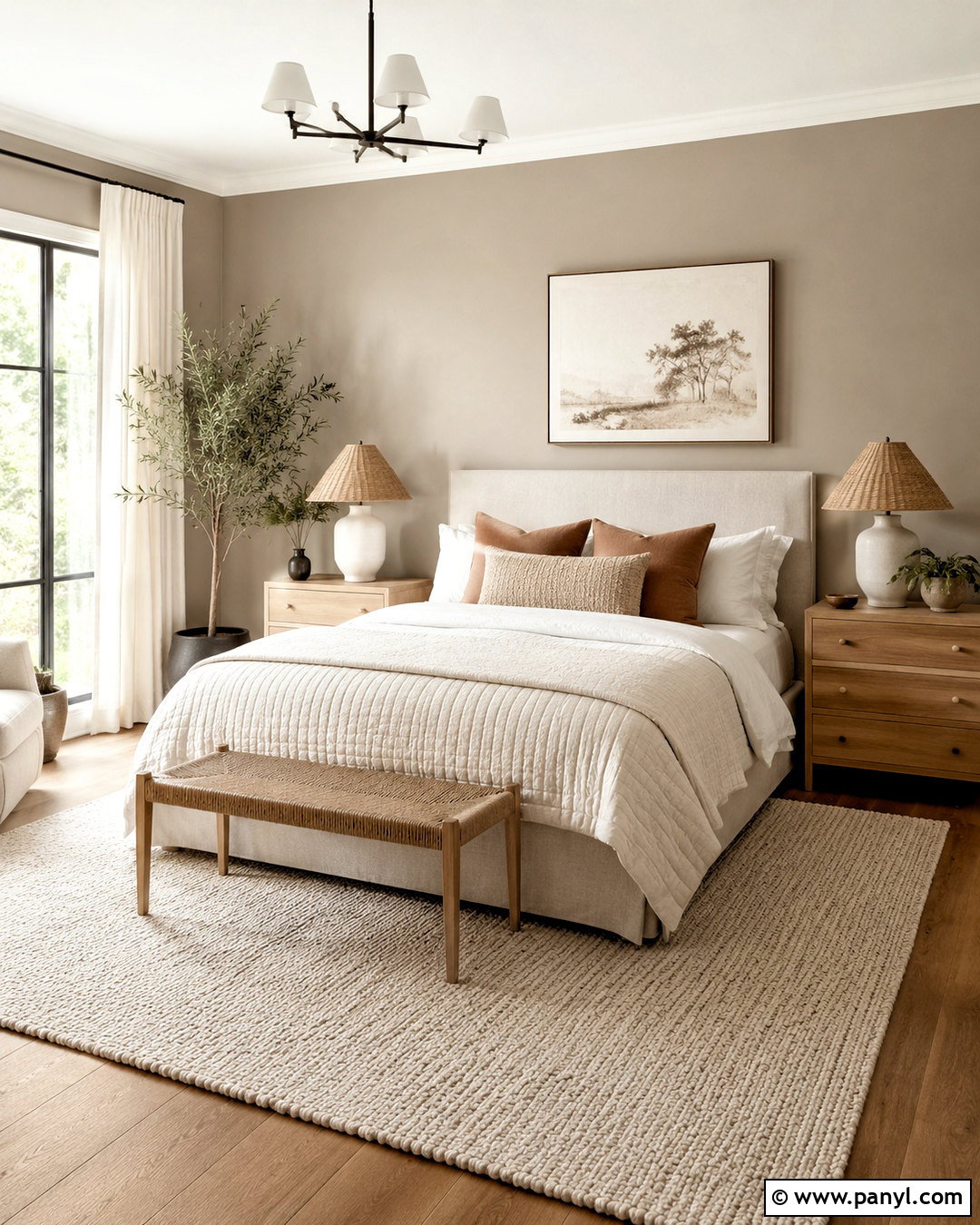
Imagine waking in a bedroom filled with soft taupe walls, natural fibers, and gentle layers of cream. Loggia provides the warm background, while a tall oatmeal linen headboard establishes a comfortable focal point. Dress the bed with ivory sheets, a quilted cream coverlet, and tan or muted clay accent pillows. Place light oak nightstands on both sides and add ceramic lamps with woven shades. A large wool rug should extend beyond the bed to soften the flooring and visually frame the sleeping area. Use full-length off-white curtains to filter daylight. Minimal black picture frames can add definition, but keep their scale delicate. This restrained palette makes the bedroom feel calm without relying on cool gray or plain white walls.
7. Loggia Bedroom With Navy Accents
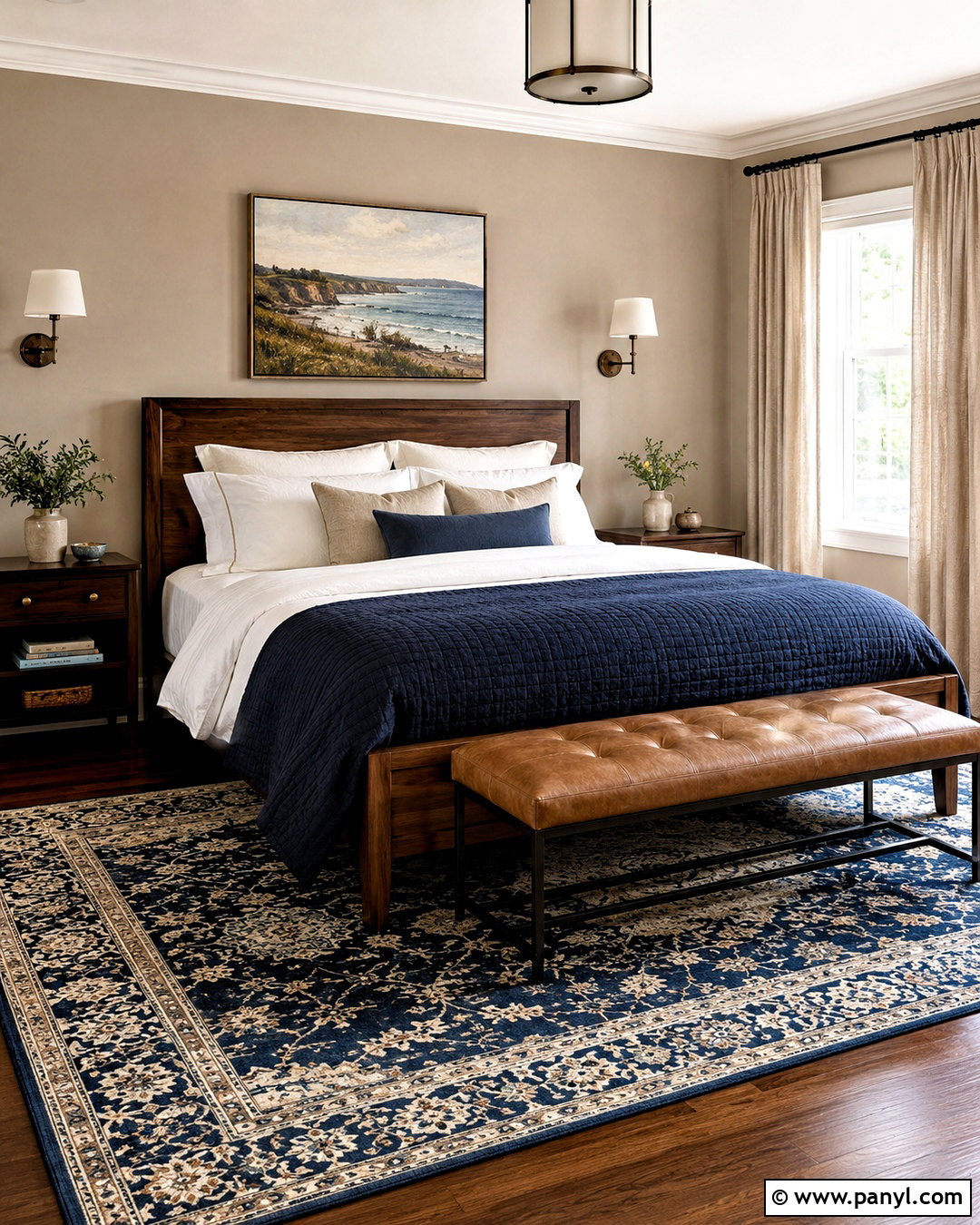
Need a neutral bedroom with stronger contrast? Pair Loggia walls with deep navy blue textiles and dark wood furniture. Choose a walnut bed with a simple upholstered headboard, then layer crisp white bedding with a navy quilt and patterned taupe pillows. A navy and ivory area rug can define the bed while introducing a tailored pattern. Use warm white on the ceiling and trim to keep the architecture bright. Place blackened bronze sconces above narrow walnut nightstands to save surface space. Linen curtains in a natural oatmeal color soften the windows. Finish with coastal landscapes, ceramic accessories, and one leather bench at the foot of the bed. The navy details make Loggia appear warmer and more refined.
8. Loggia Bathroom With Marble Tile
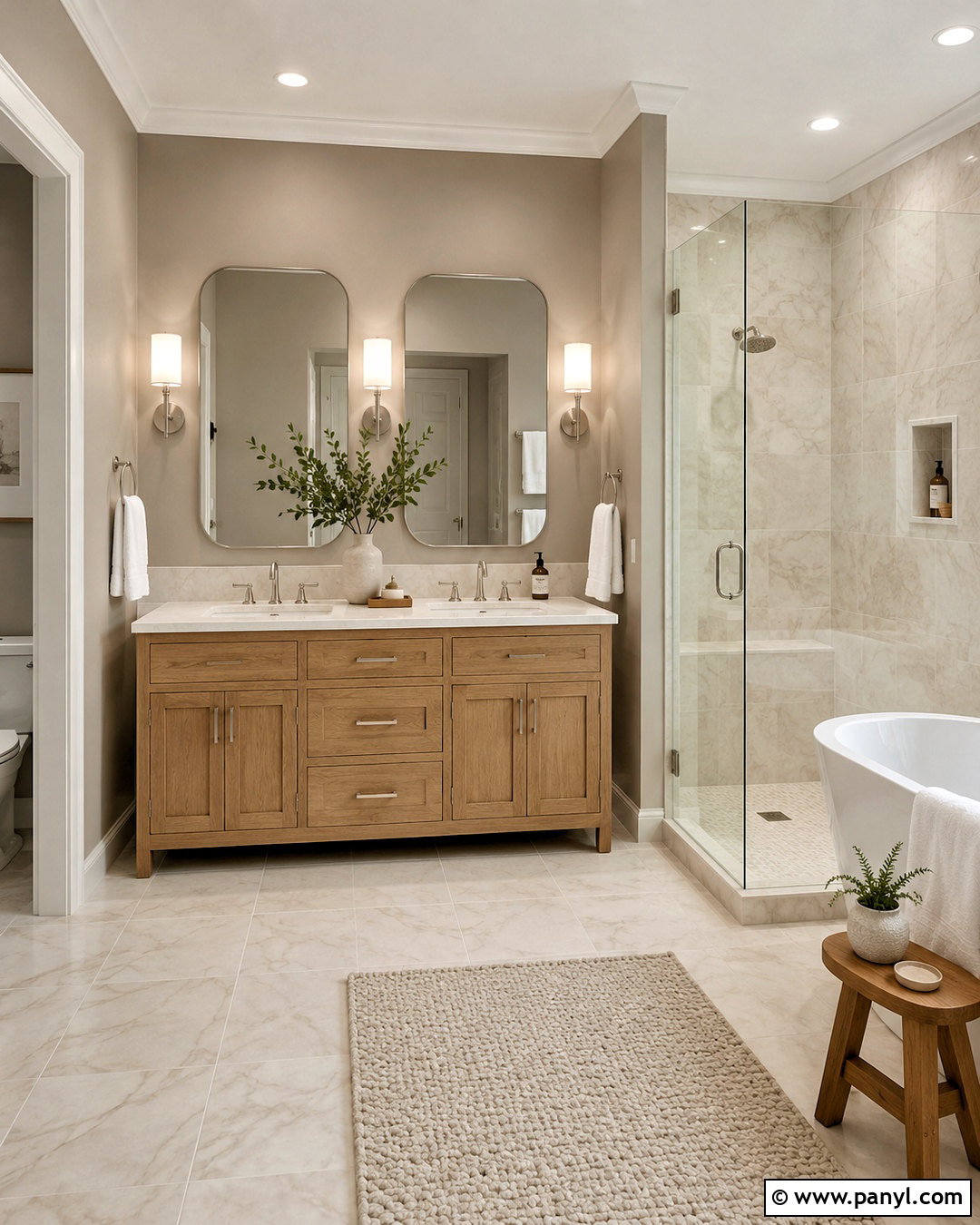
A bathroom painted Loggia can feel warm and spa-like when balanced with luminous stone finishes. Use Loggia on the upper walls and a creamy marble-look porcelain tile across the floor and shower. Install a white oak vanity with a pale quartz countertop, undermount sinks, and brushed nickel faucets. A frameless glass shower maintains an open view across the room. Add polished nickel sconces beside rounded mirrors for clear, even lighting. White towels, a textured bath mat, and small stone accessories keep the palette simple. If the room lacks natural light, use Loggia only above white wall paneling to preserve brightness. The combined taupe, oak, and marble surfaces create depth while remaining calm, clean, and easy to maintain.
9. Loggia Powder Room With Dark Vanity
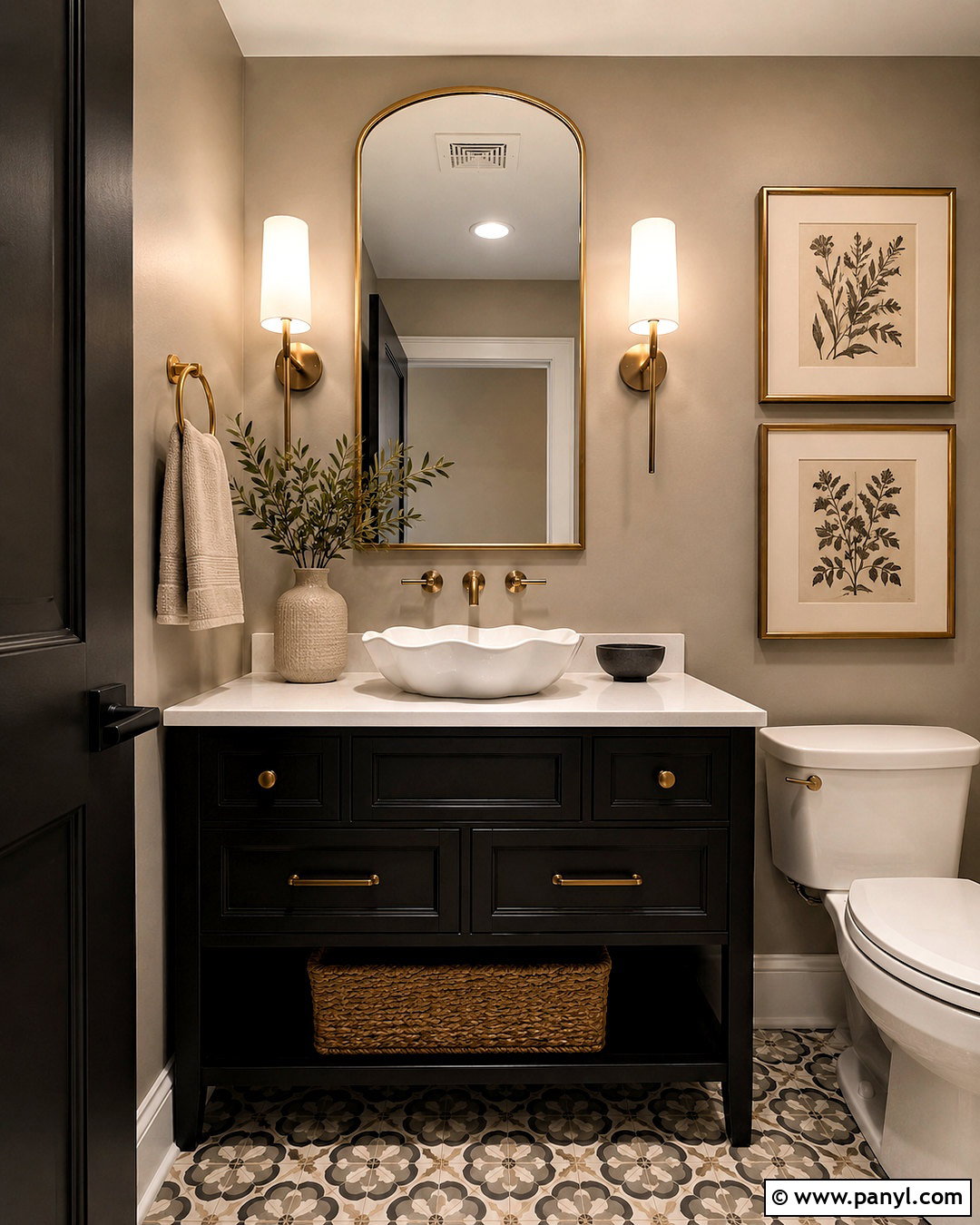
A small powder room can handle deeper contrast because guests experience it for short periods. Paint every wall Loggia and use a dark walnut or matte black vanity as the main focal point. Top it with warm white quartz and a sculptural white vessel sink. An aged brass faucet, framed mirror, and compact wall sconces introduce a soft metallic glow. Add patterned floor tile in cream, taupe, and charcoal to give the limited space visual interest. Keep the ceiling warm white so the room does not feel enclosed. One framed botanical print and a small ceramic vase are enough decoration. This complete design makes Loggia look sophisticated while the bold vanity and floor create the memorable character expected in a powder room.
10. Loggia Home Office With Walnut Furniture
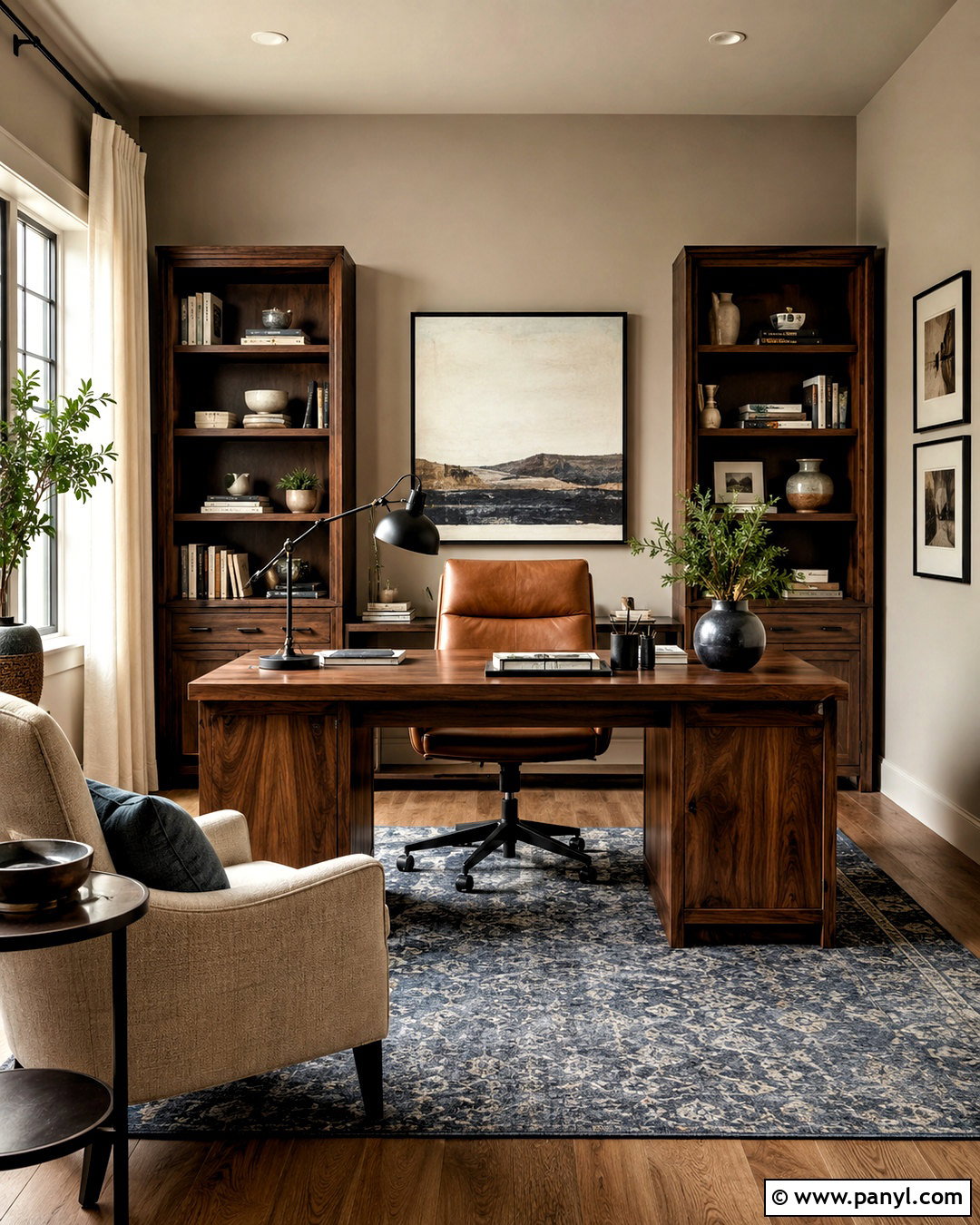
Loggia offers a focused background for a home office because it feels warmer than standard gray but quieter than a saturated color. Paint the walls Loggia and build the layout around a substantial walnut desk facing the room. Place a low walnut bookcase or matching cabinets behind it for organized storage. A camel leather desk chair introduces another warm tone, while a faded navy rug adds controlled contrast. Choose black metal shelving brackets, an adjustable task lamp, and simple black frames for definition. Full-length cream curtains soften daylight and reduce glare. Add one comfortable oatmeal reading chair beside a floor lamp if space allows. The resulting office feels professional, composed, and welcoming enough for long working sessions.
11. Loggia Entryway With Black Accents
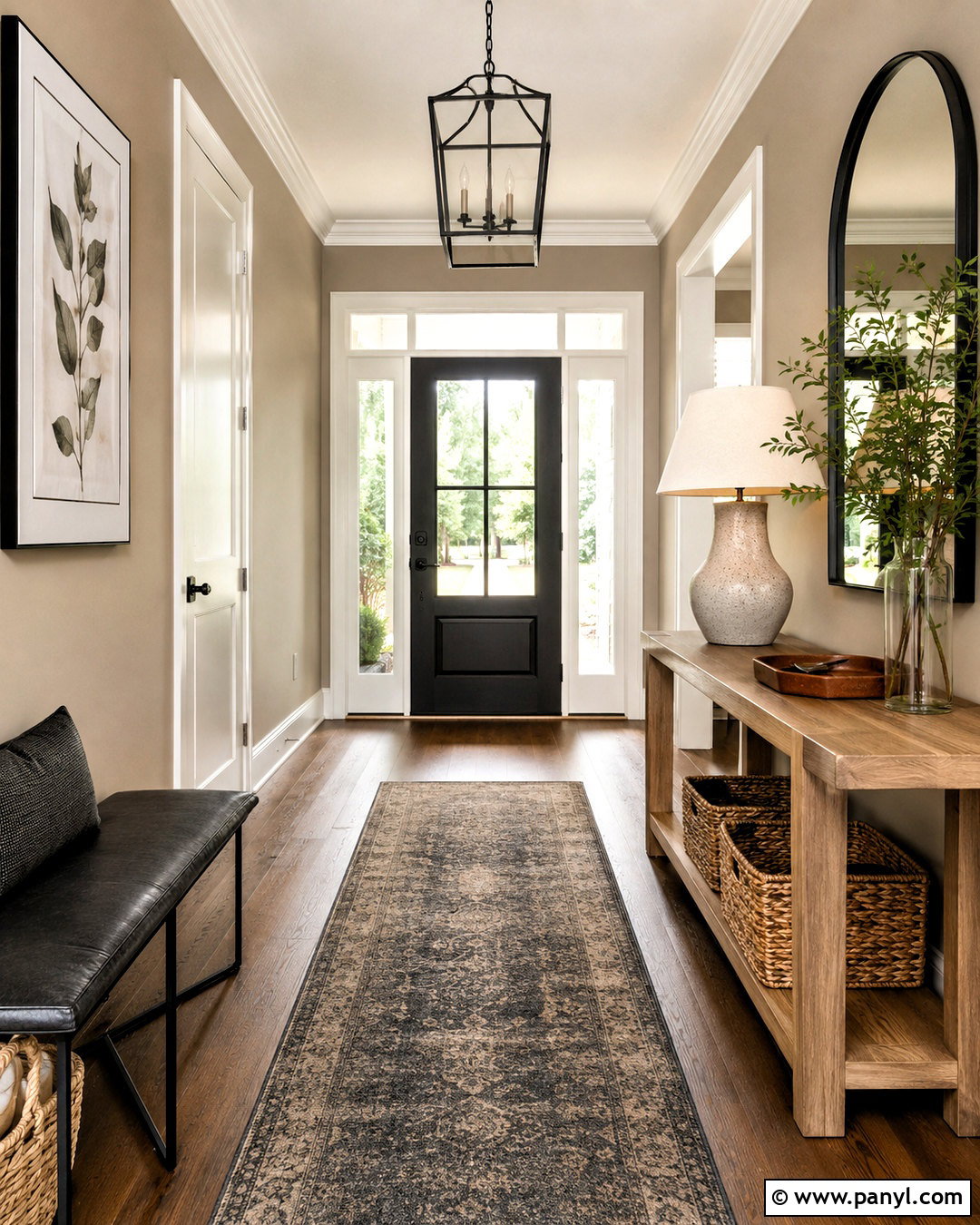
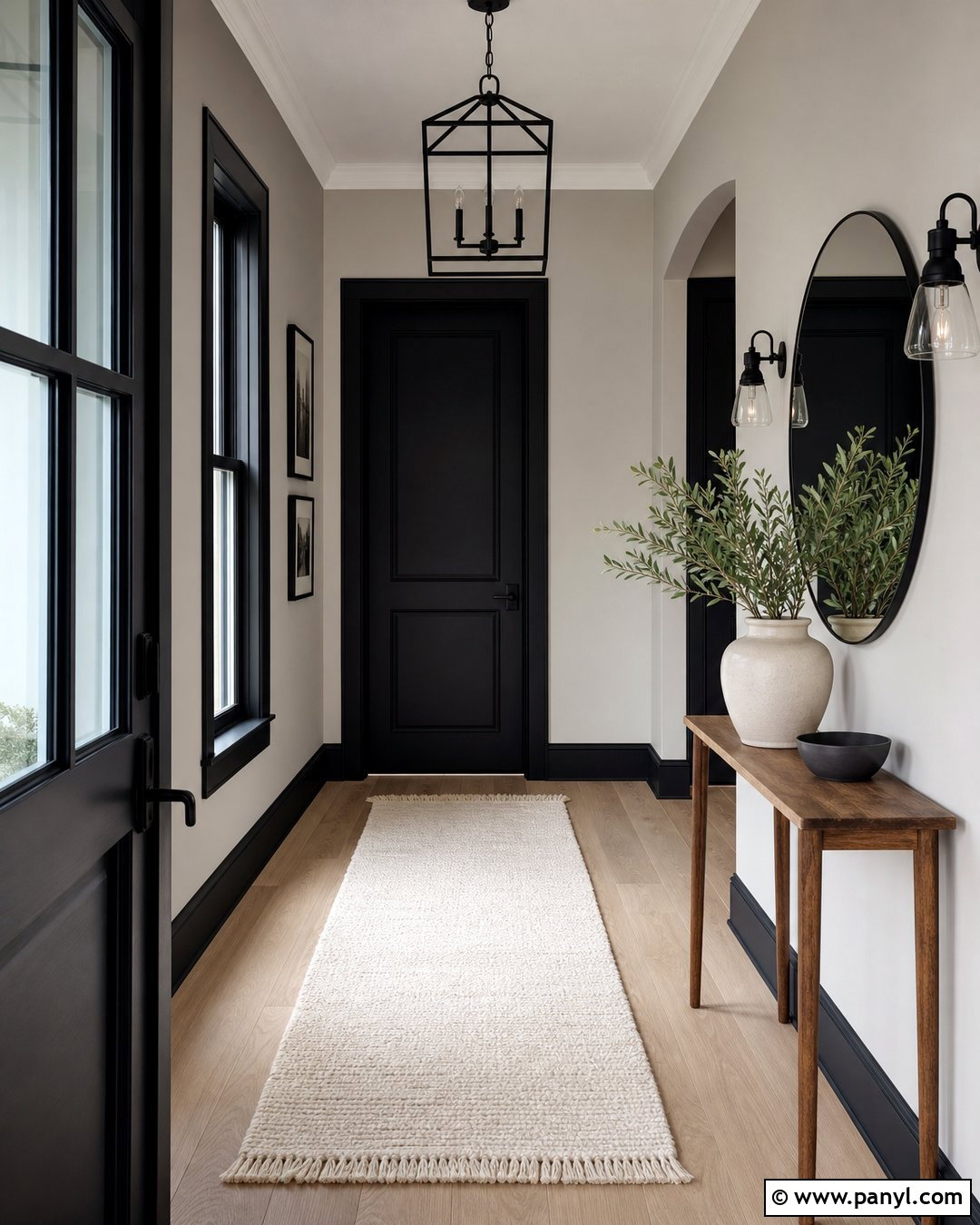
First impressions feel polished when Loggia is paired with strong black details and warm natural wood. Paint the entry walls Loggia, then use warm white on the trim and interior doors. Place a narrow oak console beneath a large black-framed mirror to establish a practical landing zone. A black iron pendant can echo the frame without crowding the space. Add a woven runner in taupe, ivory, and charcoal to guide the eye through the hallway. A leather tray, ceramic lamp, and leafy branch provide useful decoration on the console. If storage is needed, position a simple black bench with woven baskets near the door. This coordinated design gives an average-size foyer depth while keeping its circulation path open and functional.
12. Loggia Hallway With Tonal Trim
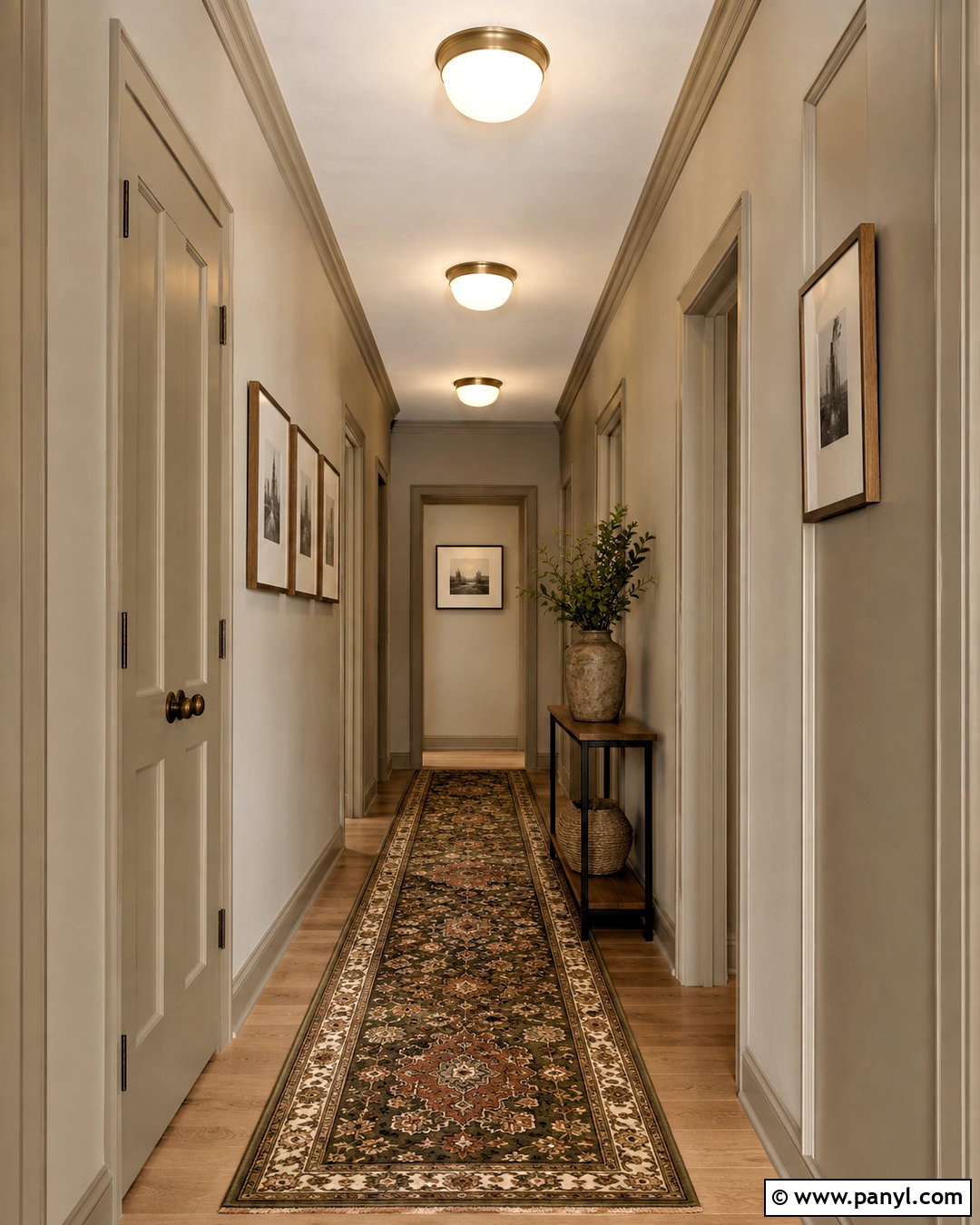
Painting hallway walls and trim in related tones creates a softer transition between rooms. Apply Loggia to the walls, doors, and baseboards, but change the sheen rather than the color. An eggshell wall finish and satin trim will provide subtle architectural contrast. Keep the ceiling a creamy off-white to reflect overhead light. Run a vintage-inspired runner down the center, using muted olive, rust, and ivory patterns that complement the taupe paint. Add aged brass flush-mount lights and a carefully spaced series of walnut-framed photographs. At the hallway’s end, place a slim wood table or substantial potted plant to create a destination. This tonal approach reduces visual chopping, making a narrow passage appear calmer, longer, and intentionally connected.
13. Loggia Laundry Room With Blue Cabinets
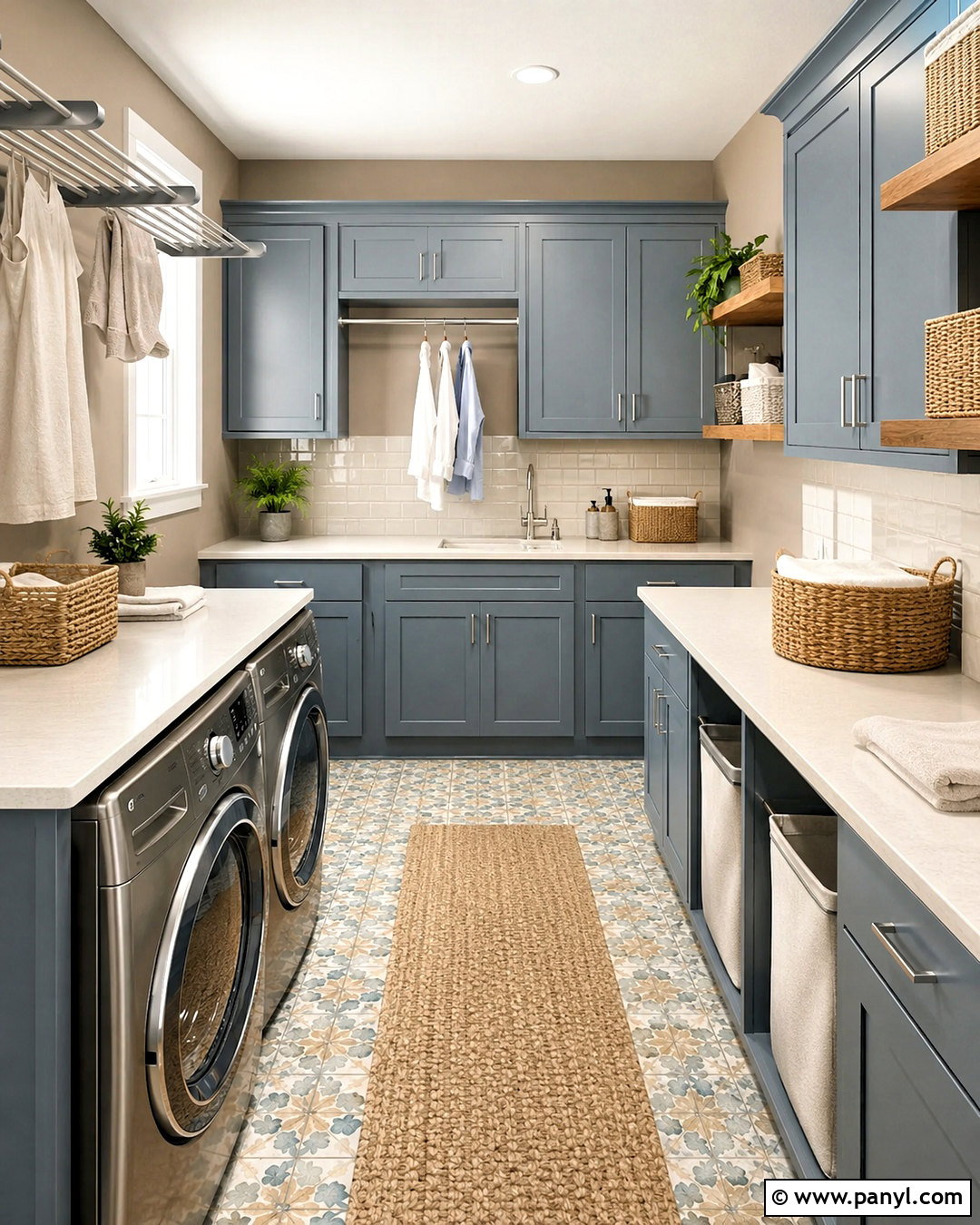
A hardworking laundry room can still feel thoughtful and coordinated. Use Loggia on the walls, then install dusty blue-gray cabinets above and beside the appliances. White quartz counters provide a durable folding surface, while a creamy subway tile backsplash reflects light. Choose brushed nickel pulls, a stainless utility sink, and practical wall-mounted drying rails. Patterned porcelain floor tile in beige, blue, and white hides everyday marks while connecting the color palette. Include open oak shelves for labeled baskets, folded towels, and frequently used supplies. A woven shade softens any window without taking up valuable space. The blue cabinetry adds freshness, while Loggia prevents the room from feeling chilly or overly utilitarian. Every feature supports efficient washing, drying, folding, and storage.
14. Loggia Mudroom With Olive Built-Ins
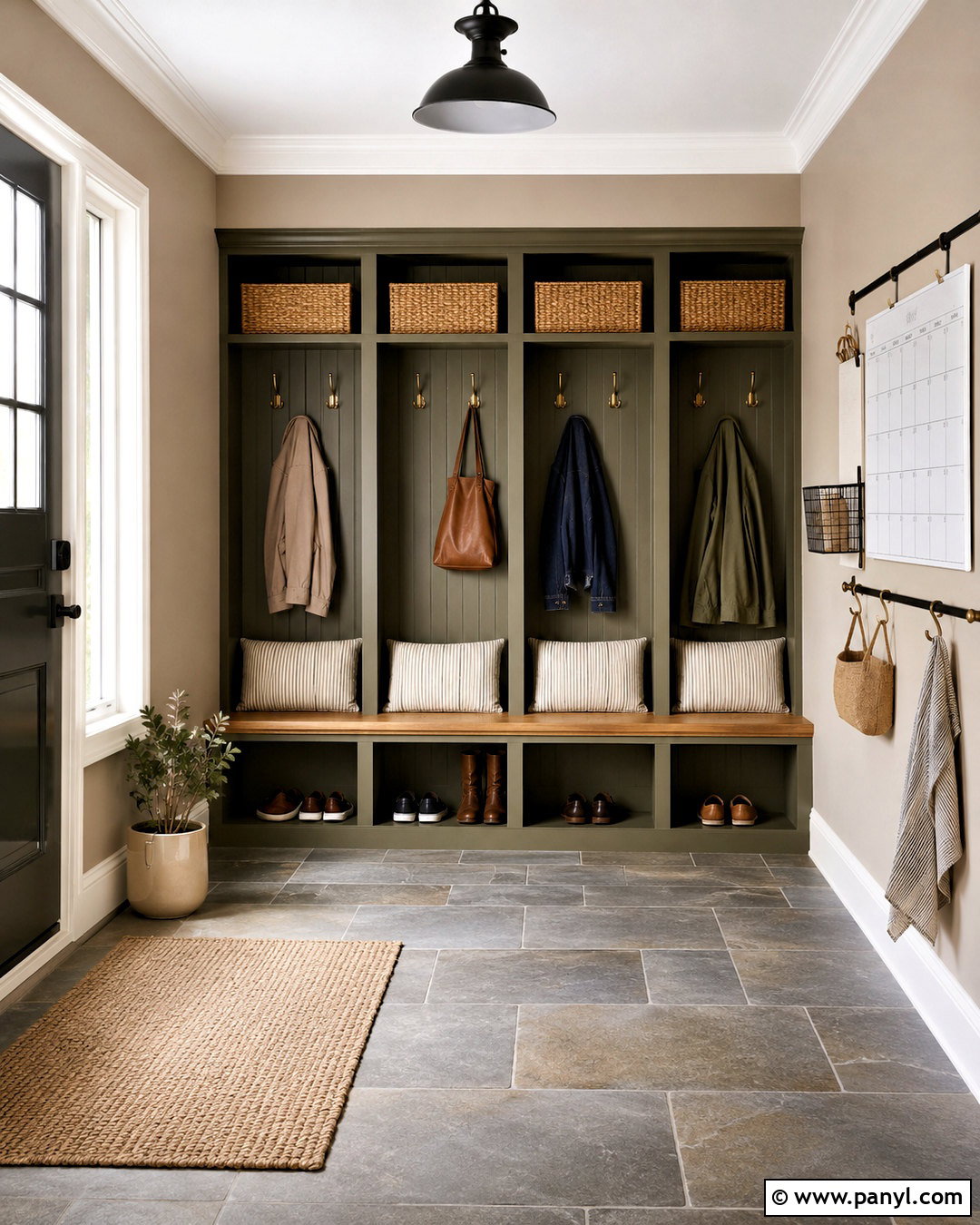
Mudrooms need durable storage, but they can also create a welcoming transition into the home. Paint the surrounding walls Loggia and install muted olive green built-ins along one side. Include closed upper cabinets, sturdy hooks, individual cubbies, and a long oak bench. A brick-look porcelain or warm gray slate floor will withstand wet shoes while reinforcing the earthy palette. Add woven baskets above the cubbies and striped beige seat cushions for comfort. Use aged brass hooks and a black metal ceiling fixture for contrast. The opposite wall can hold a simple calendar rail and shallow shoe cabinet. This practical combination of taupe, olive, oak, and dark metal gives everyday clutter a defined place while maintaining a cohesive, finished appearance.
15. Loggia Nursery With Soft Blush
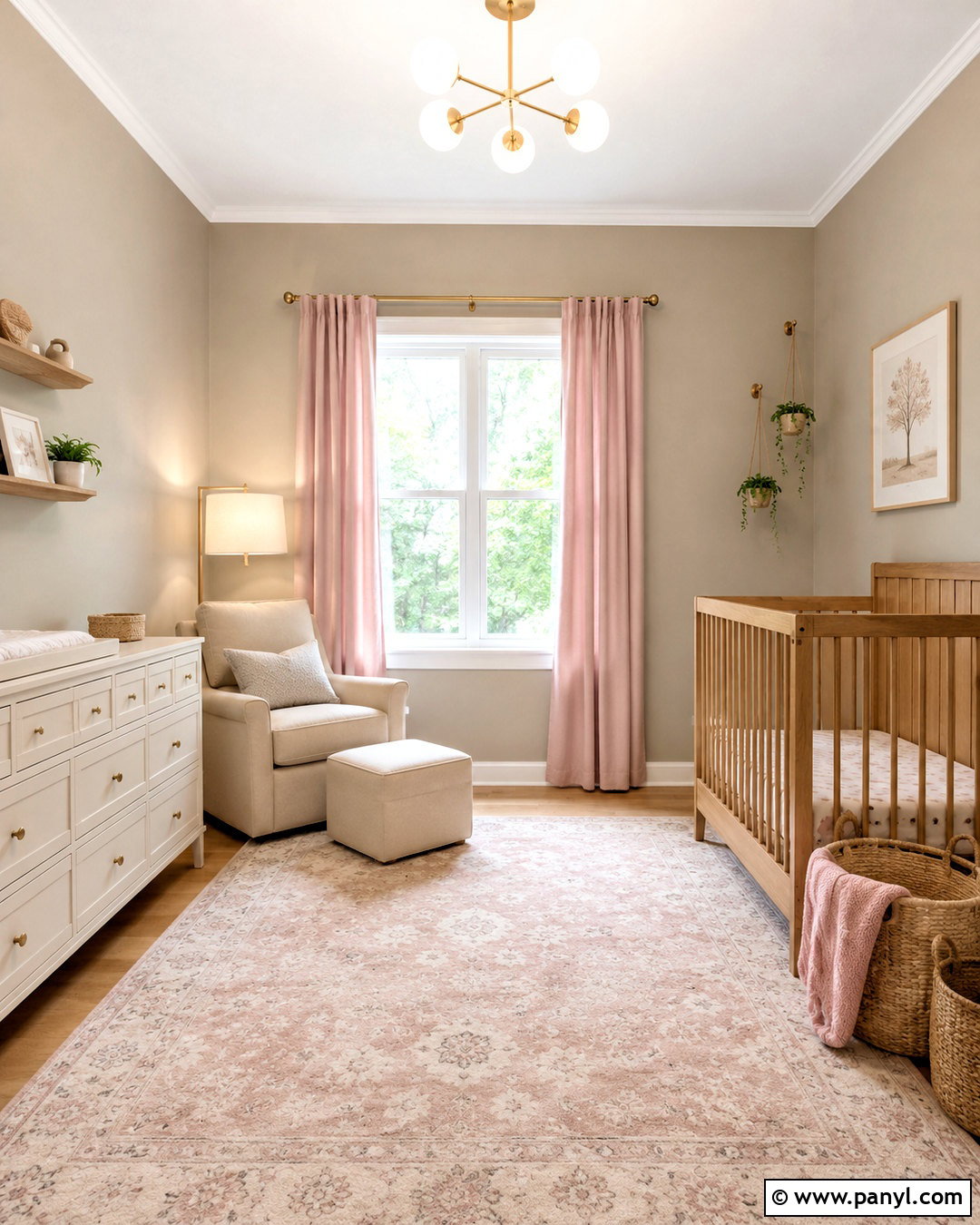
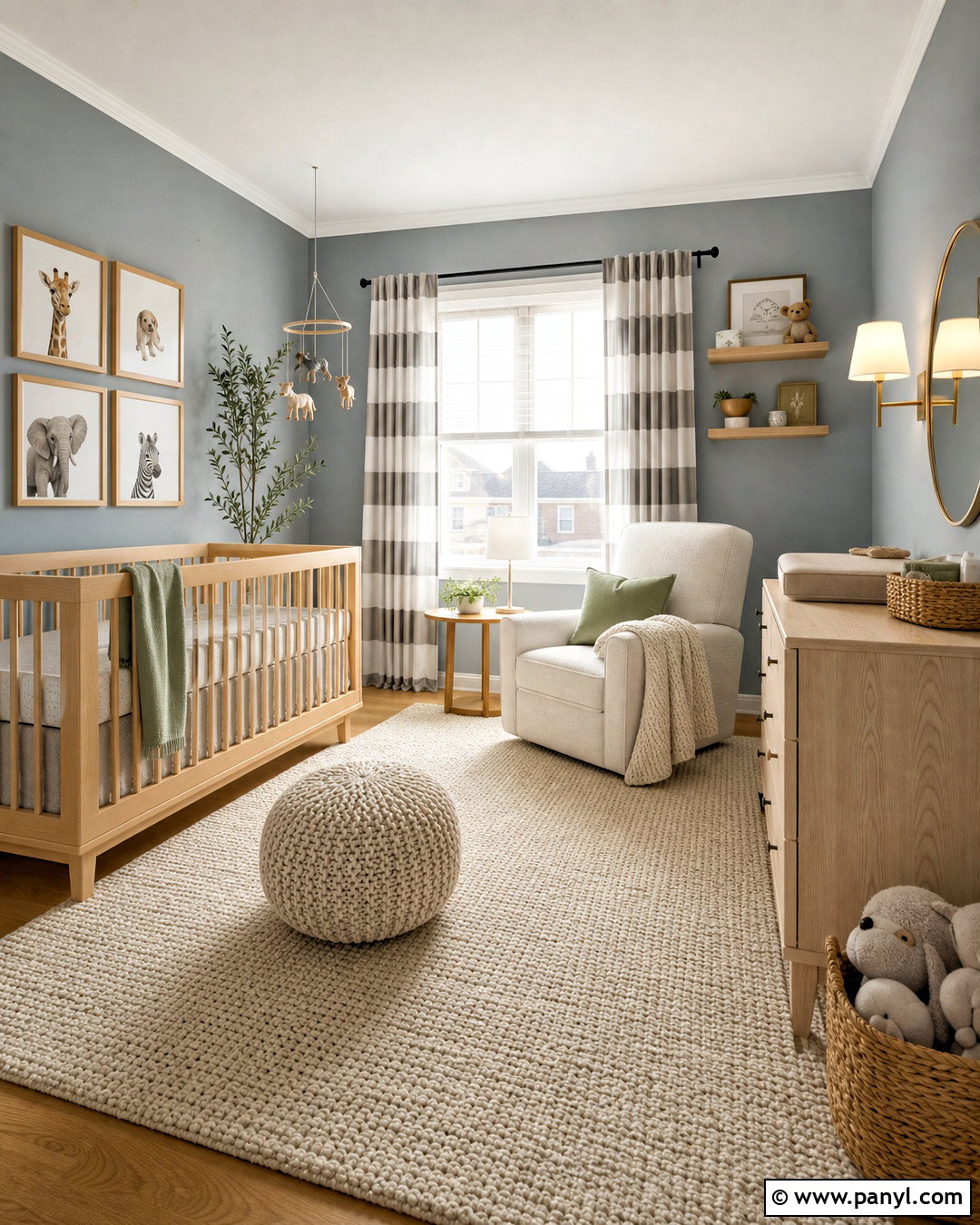
Loggia provides a flexible nursery backdrop that can grow with the child. Paint the walls in this warm neutral and pair them with a natural oak crib, ivory dresser, and comfortable cream glider. Introduce muted blush through curtains, a washable area rug, and a lightweight quilt rather than permanent architectural features. Warm white trim keeps the room bright, while woven storage baskets add useful texture. Choose a soft brass ceiling fixture and a small wooden floor lamp for layered illumination. Simple nature artwork in oak frames can decorate the crib wall without making the arrangement busy. Keep furniture securely anchored and the crib area free of loose objects. The complete room feels peaceful, warm, and adaptable for later updates.
16. Loggia Basement Family Room
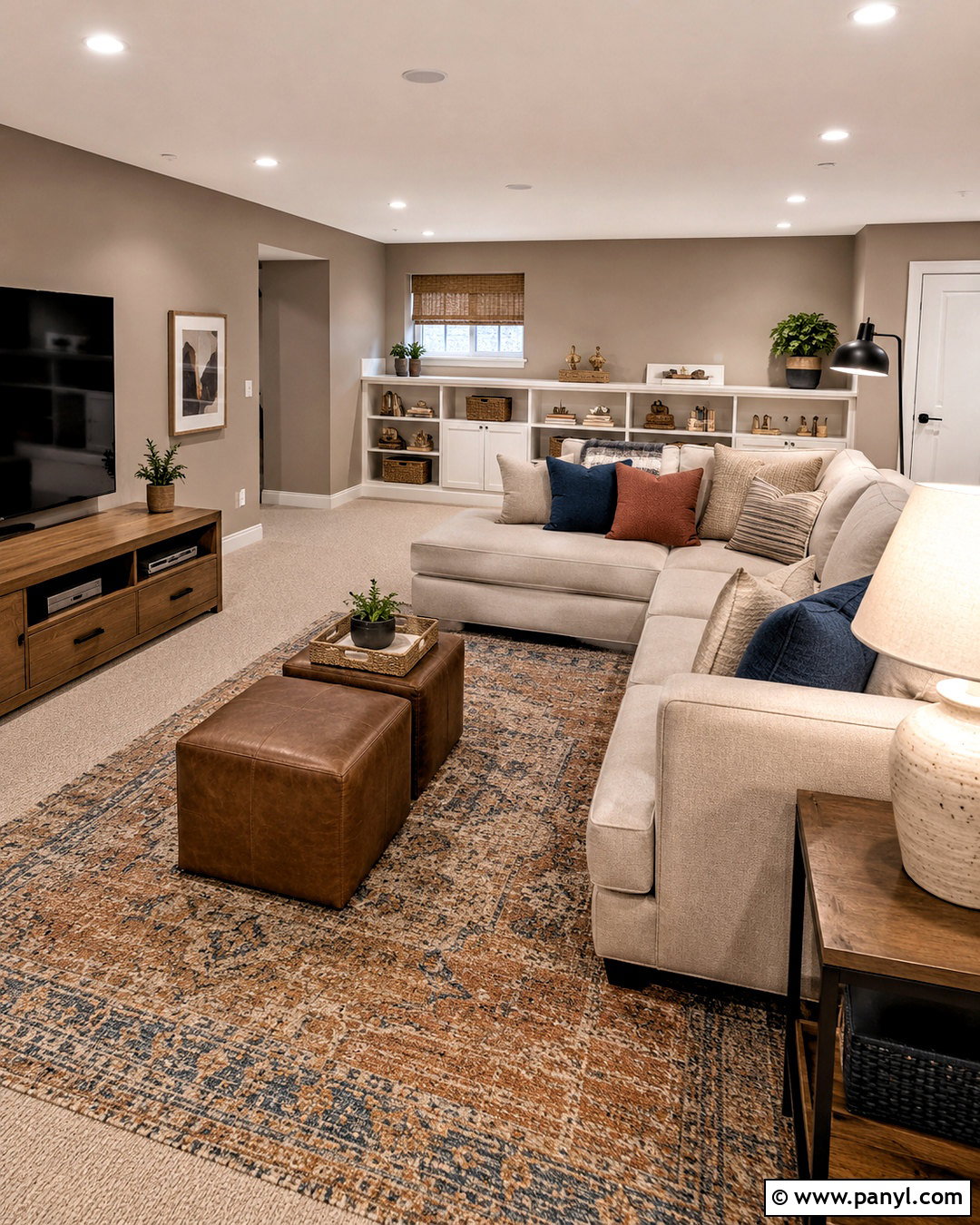
Basements often need warmth, and Loggia can counteract the cool cast created by limited daylight. Use it on the walls with creamy white ceilings and trim to keep the room open. Arrange a large oatmeal sectional around a low oak media console and wall-mounted television. Add a generously sized rug with taupe, terracotta, and muted blue patterning to define the seating zone. Leather ottomans provide flexible tables and extra seating without sharp corners. Use several light sources, including recessed ceiling lights, ceramic table lamps, and a black floor lamp. Woven blinds and light curtains soften small windows. Built-in storage painted warm white can contain games and electronics, giving the finished family room a comfortable, organized, aboveground character.
17. Loggia Fireplace With Natural Stone
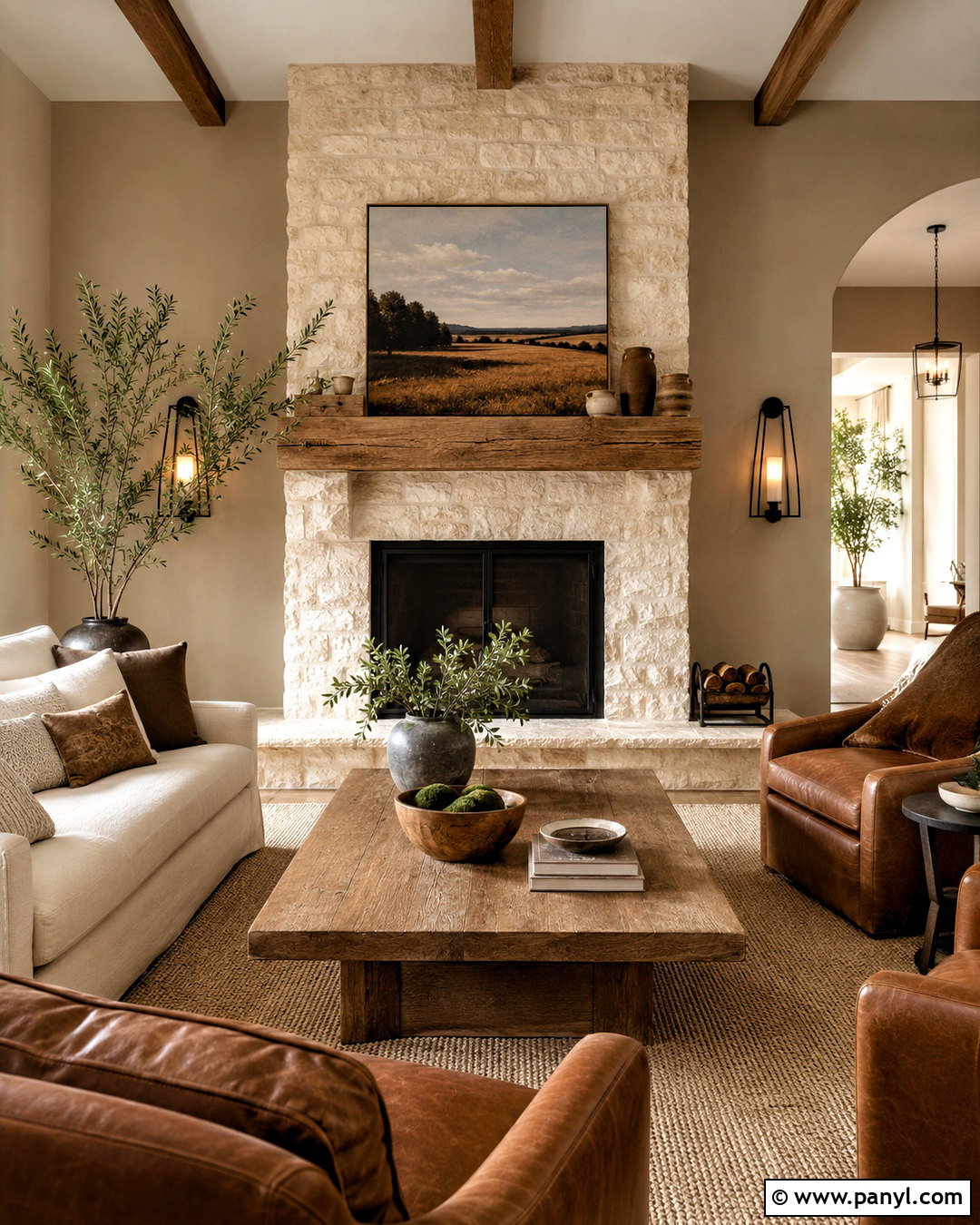
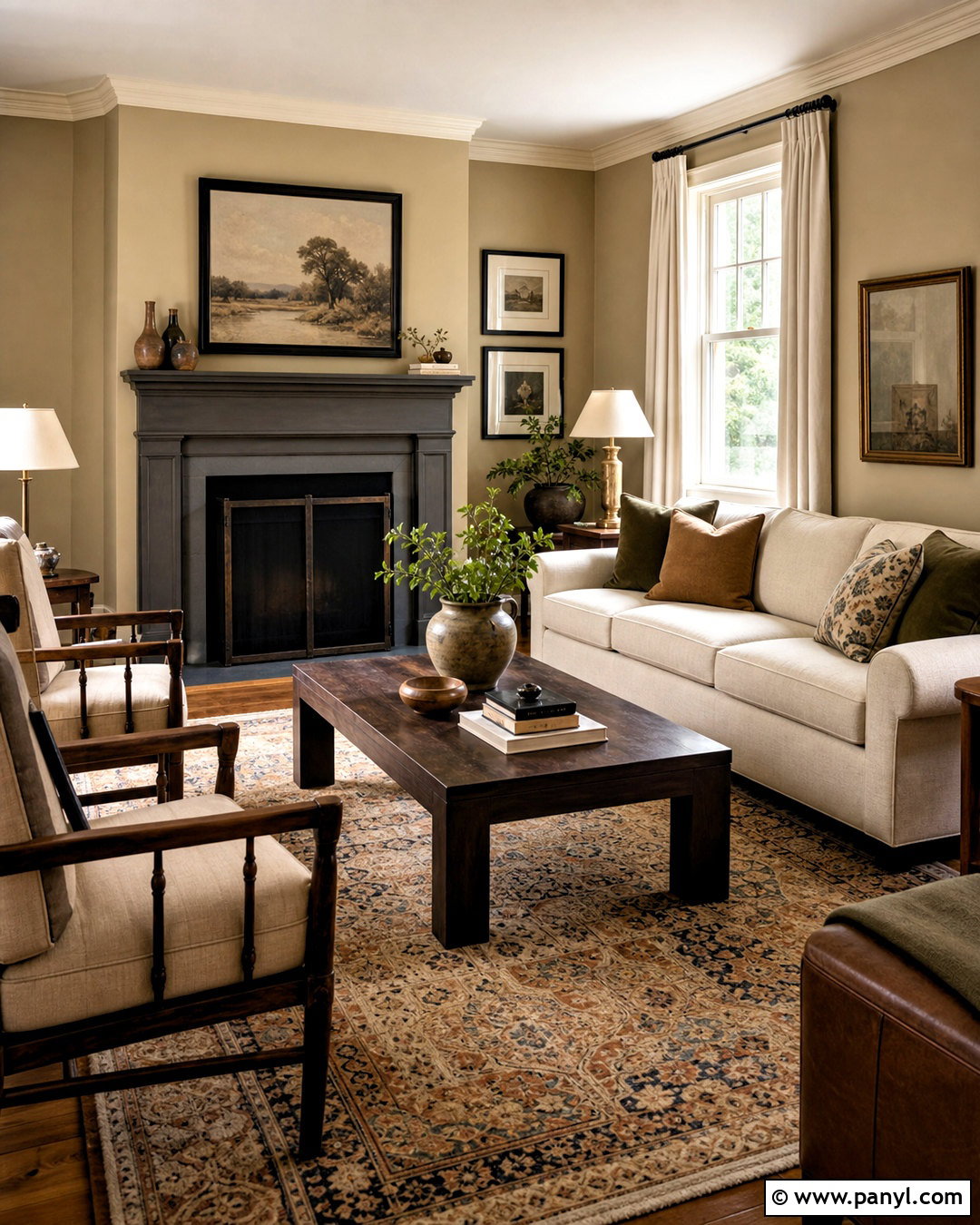
A stone fireplace becomes warmer and more integrated when the surrounding room uses Loggia. Paint the walls Loggia and build the fireplace with softly textured limestone or warm gray stacked stone. Use a thick reclaimed oak mantel to connect the stone with wood flooring and nearby furniture. Position a cream sofa and two caramel leather chairs around a substantial wood coffee table. A neutral wool rug should anchor the conversation area without competing with the masonry. Add black fireplace doors, black curtain rods, and iron table lamps for crisp definition. Keep styling on the mantel restrained with one large landscape and two ceramic vessels. This entire room treats the fireplace as a natural centerpiece rather than an unrelated architectural feature.
18. Loggia Exterior With White Trim
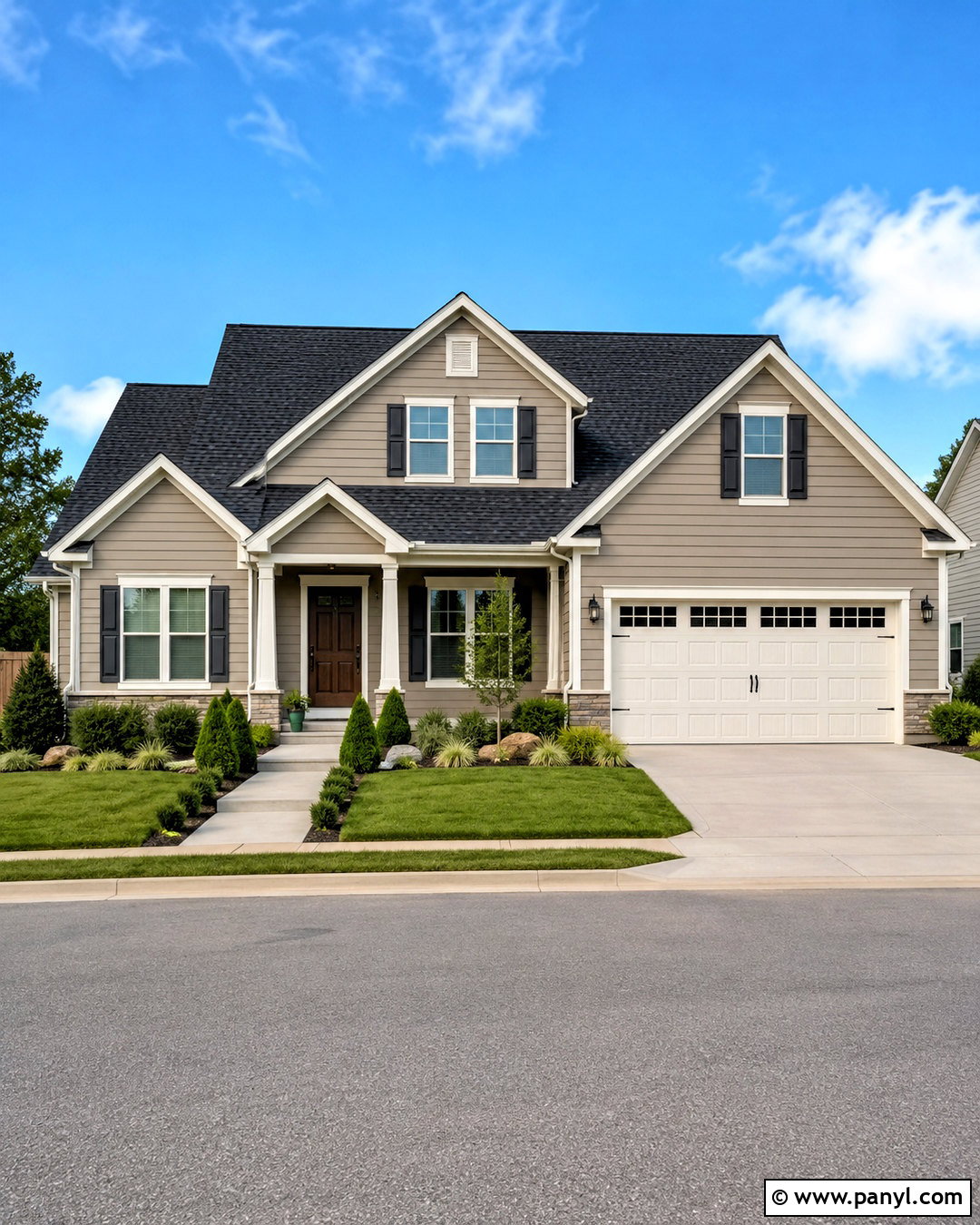
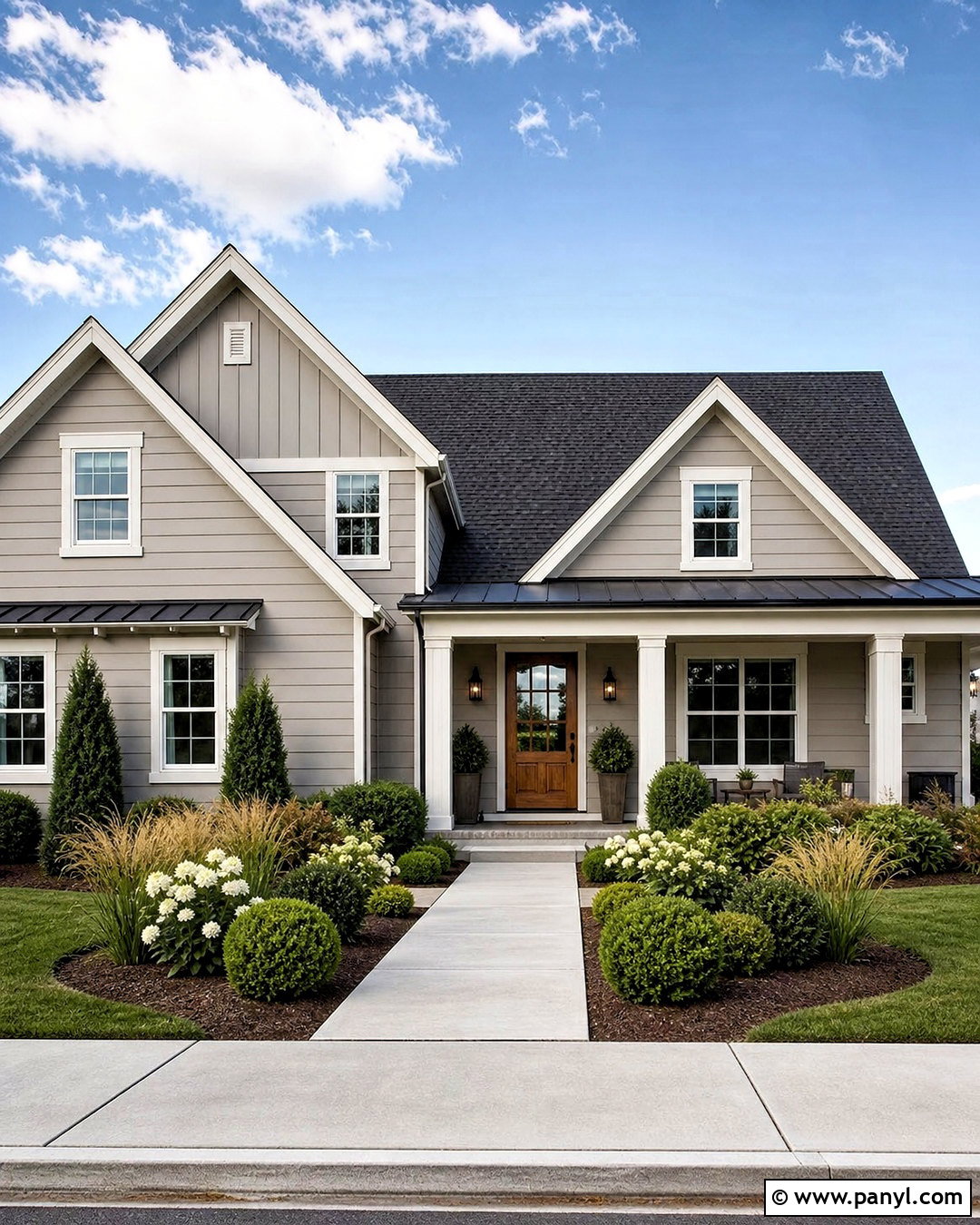
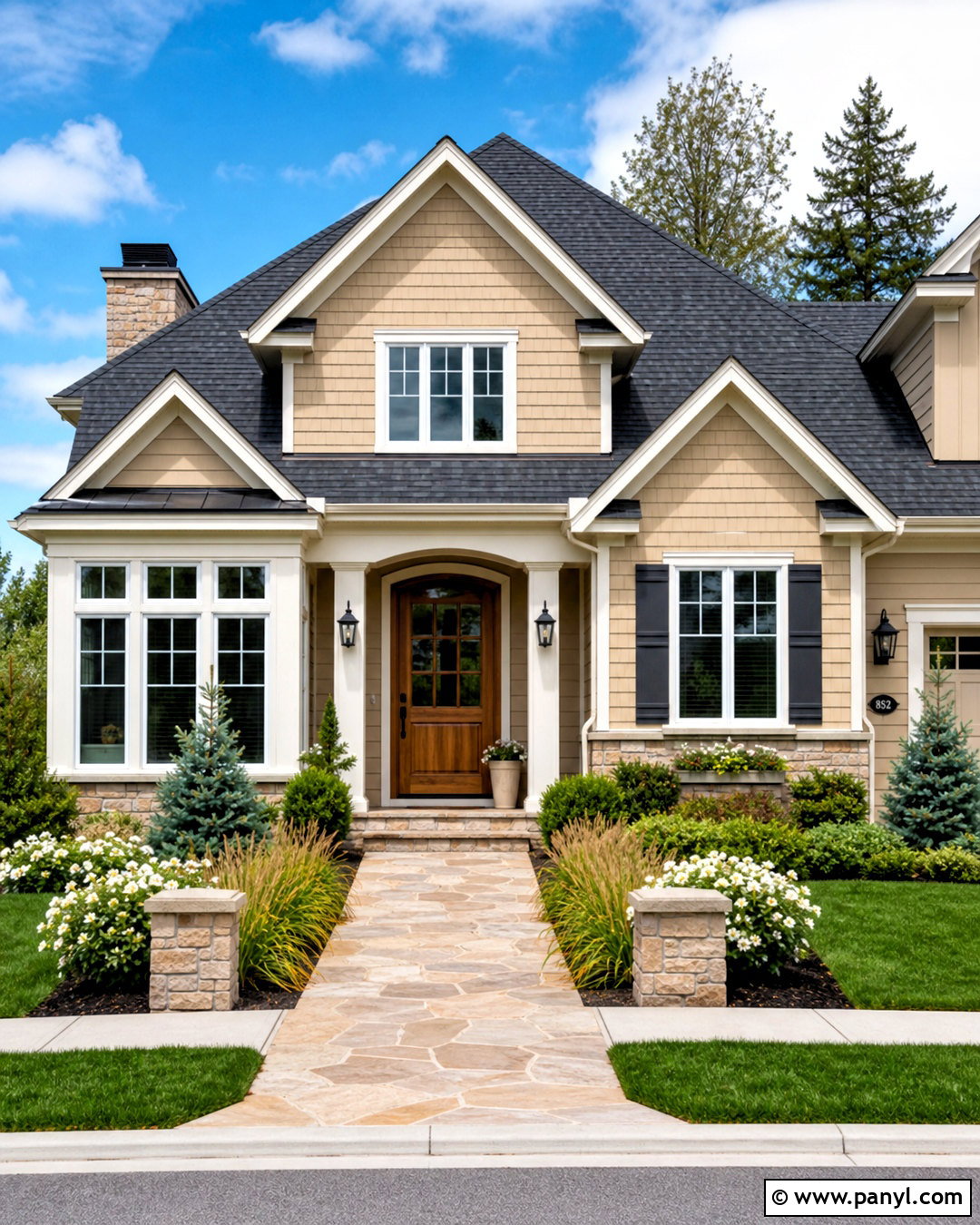
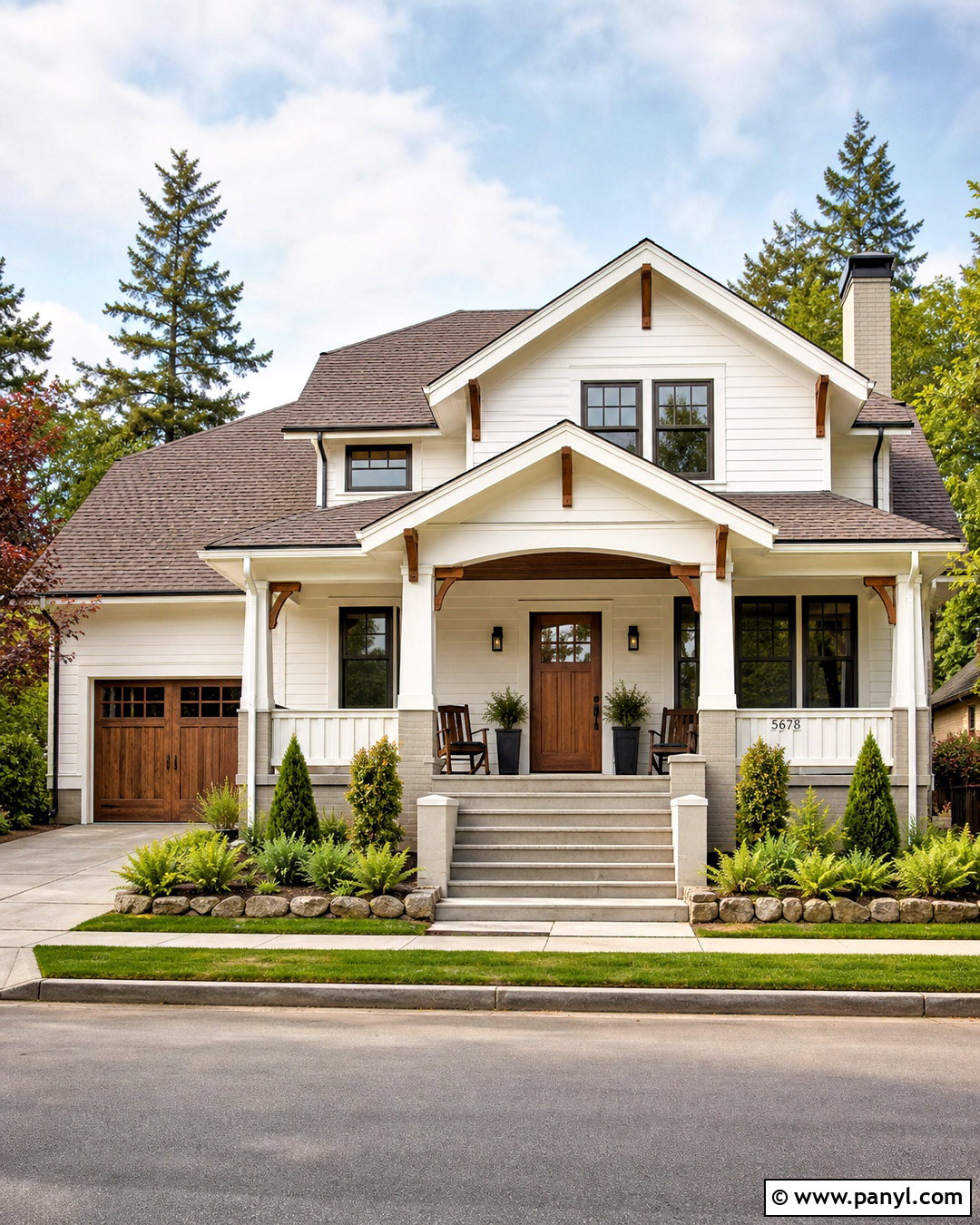
Loggia siding creates a welcoming exterior that works especially well with warm white trim and dark architectural accents. Use Loggia SW 7506 across the main lap siding, Snowbound on window trim and corner boards, and a deeper taupe on fascia or exposed beams. Add Urbane Bronze shutters for contrast and choose a stained walnut front door to introduce natural warmth. A charcoal architectural-shingle roof helps ground the palette. Paint the garage door a warm off-white so it blends with the trim rather than dominating the facade. Complete the curb view with layered evergreen shrubs, ornamental grasses, and a pale concrete walkway. The full scheme feels classic, substantial, and appropriate for many traditional suburban homes.
19. Loggia Stucco Exterior With Wood Door
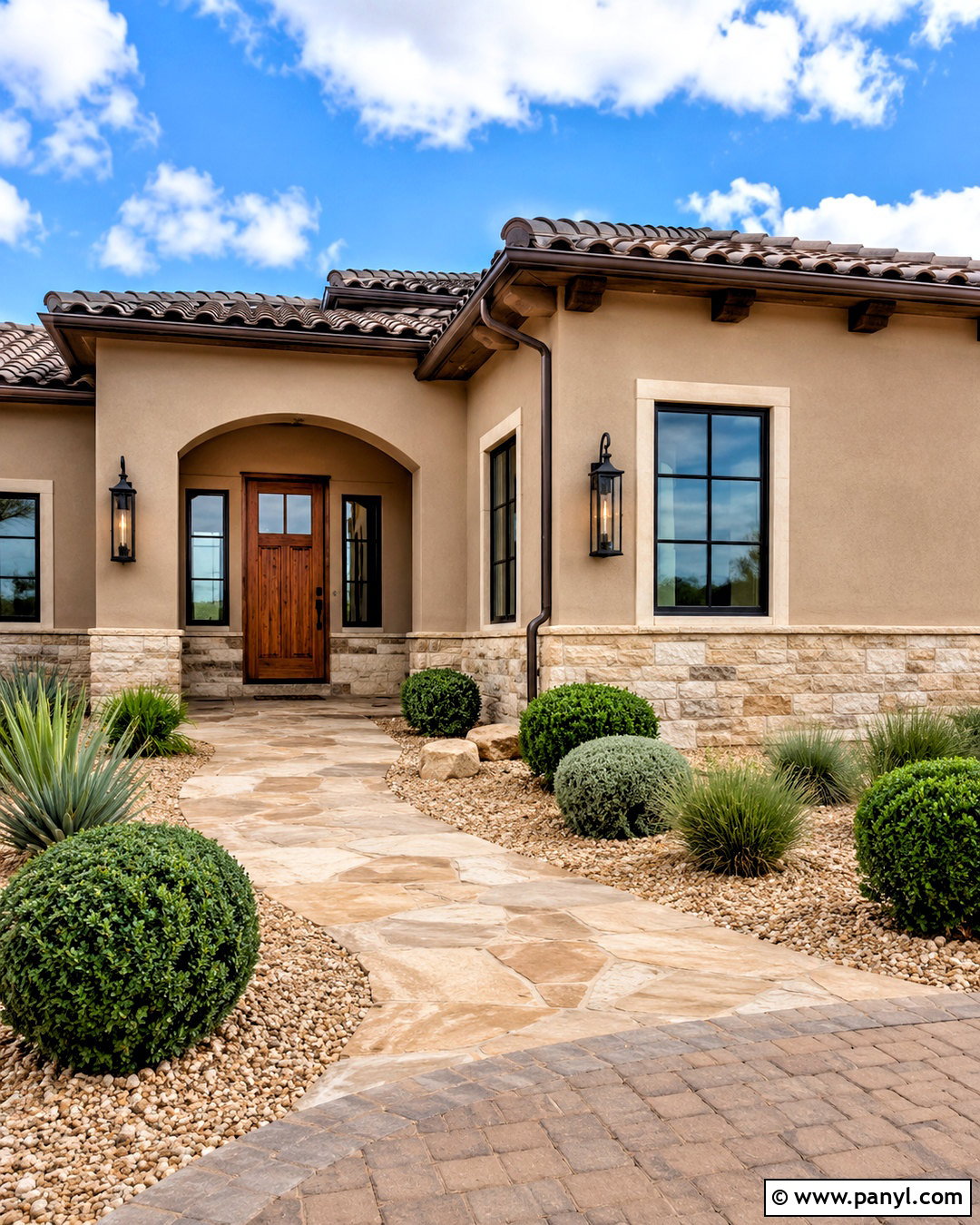
Sunlight can make exterior colors appear lighter, so Loggia offers useful depth on a stucco facade. Cover the main stucco walls in Loggia and use creamy white around the windows, roofline, and covered entry. Select a medium cedar front door with simple black hardware as the central accent. A brown-gray tile roof or weathered bronze metal roof supports the warmth of the paint. Add black lanterns, dark bronze gutters, and matching house numbers for consistency. Natural stone around the base can introduce sandy beige and soft gray variation. Finish the landscaping with drought-tolerant grasses, rounded shrubs, gravel mulch, and a wide stone path. The complete exterior feels warm and earthy without becoming too orange or heavily beige.
20. Loggia Front Porch With Cedar Accents
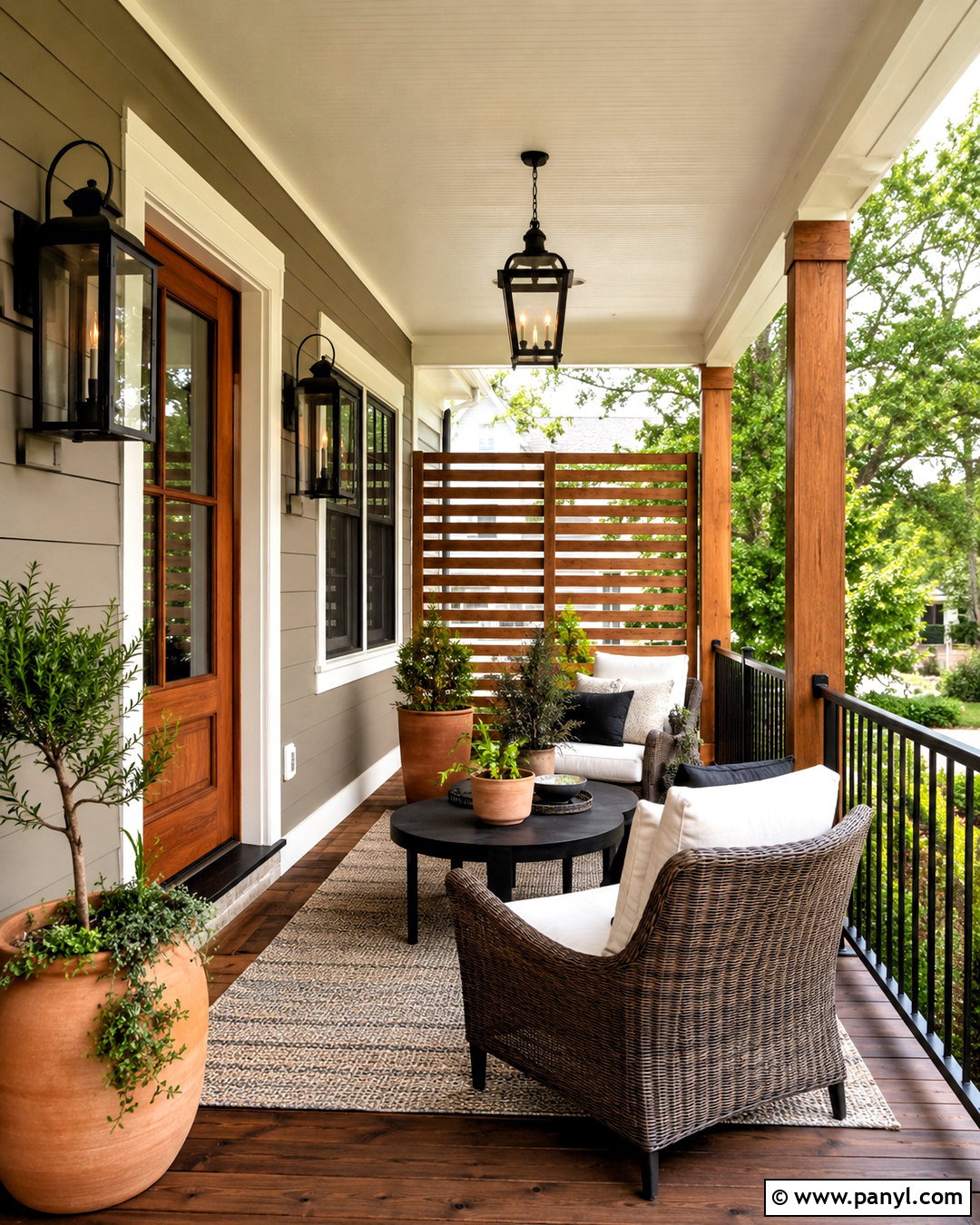
A covered porch can use Loggia as a connecting color between the house, furniture, and landscape. Paint the siding Loggia and brighten the ceiling and trim with a warm creamy white. Introduce cedar through the front door, porch posts, and one slatted privacy screen. Matte black railings and large black lanterns add a clean outline against the neutral surfaces. Furnish the porch with two woven lounge chairs, ivory cushions, and a small black metal table. A weather-resistant rug in tan and charcoal defines the seating area. Use simple terracotta planters filled with green foliage along the steps. This complete porch design offers useful seating, clear curb appeal, and a balanced mix of painted, natural, and metal finishes.
Conclusion:
Sherwin-Williams Loggia SW 7506 can support far more than a basic beige room. Its warm taupe appearance works with cream, charcoal, navy, olive, blush, natural stone, and multiple wood tones. Successful rooms use those colors across furniture, flooring, lighting, textiles, and architectural details instead of relying on paint alone. Outside, Loggia can give siding or stucco comfortable depth when balanced with warm white trim, dark accents, and stained wood. Always test a large painted sample in morning, afternoon, and artificial light because exposure and surrounding finishes can affect its appearance. Use these 20 loggia sherwin williams ideas to create a coordinated palette that feels warm, practical, and personal.

Related Ideas and Inspiration:
Leave a Reply