
If you are searching for 20 Light Blue For Kitchen Walls, the best approach is to consider the entire kitchen rather than paint alone. Cabinet color, countertops, flooring, backsplash tile, hardware, and lighting all affect how blue appears. Pale blue can feel crisp beside bright white, relaxed with natural wood, tailored with navy, or warm with cream and brass. Current kitchen inspiration often pairs this versatile wall color with marble, subway tile, woven textures, and wood finishes for a balanced result. () Before painting, test large samples throughout the day because natural and artificial light can reveal different undertones. The complete looks below offer practical ways to coordinate 20 Light Blue For Kitchen Walls.
1. Light Blue Kitchen Walls With White Cabinets
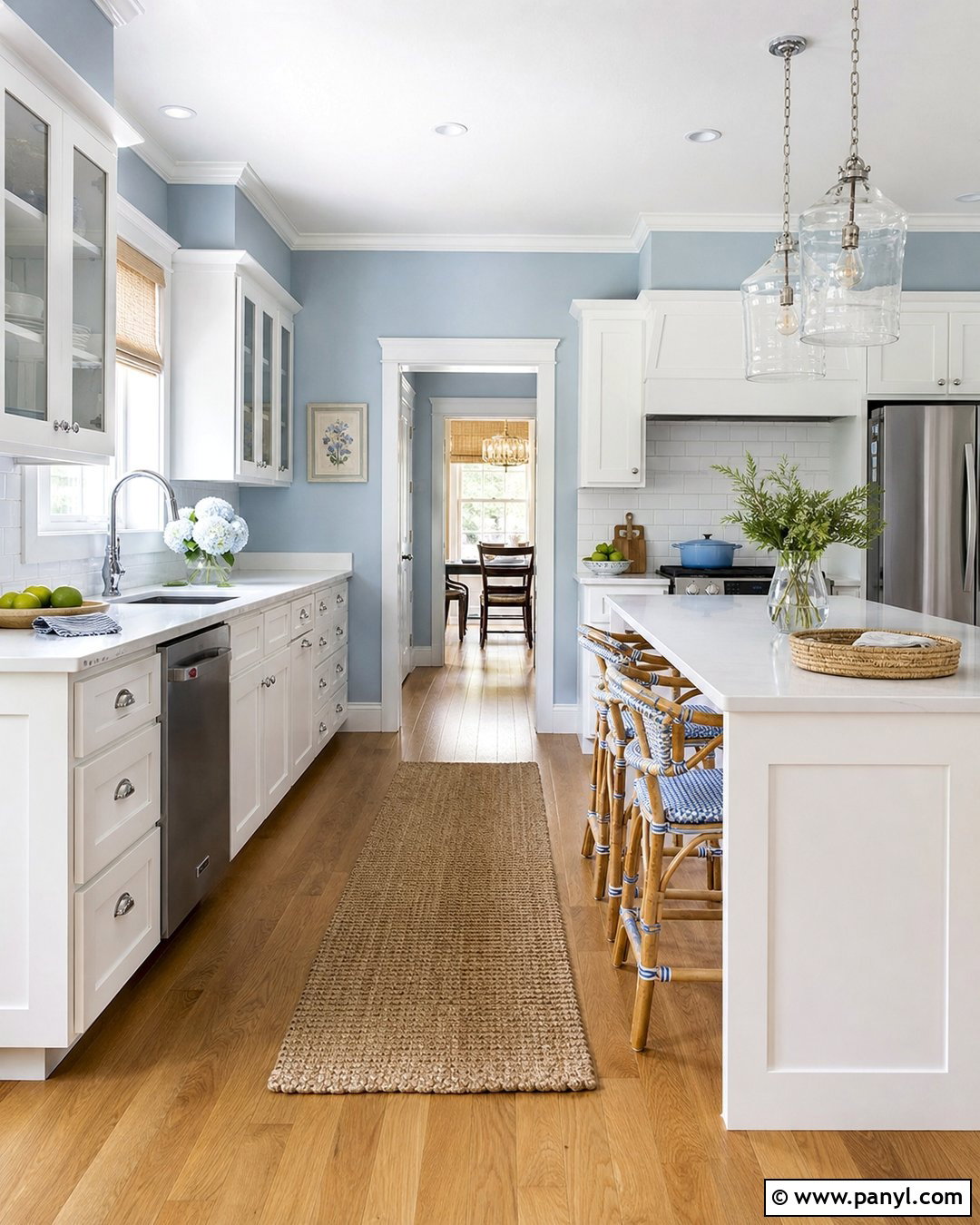
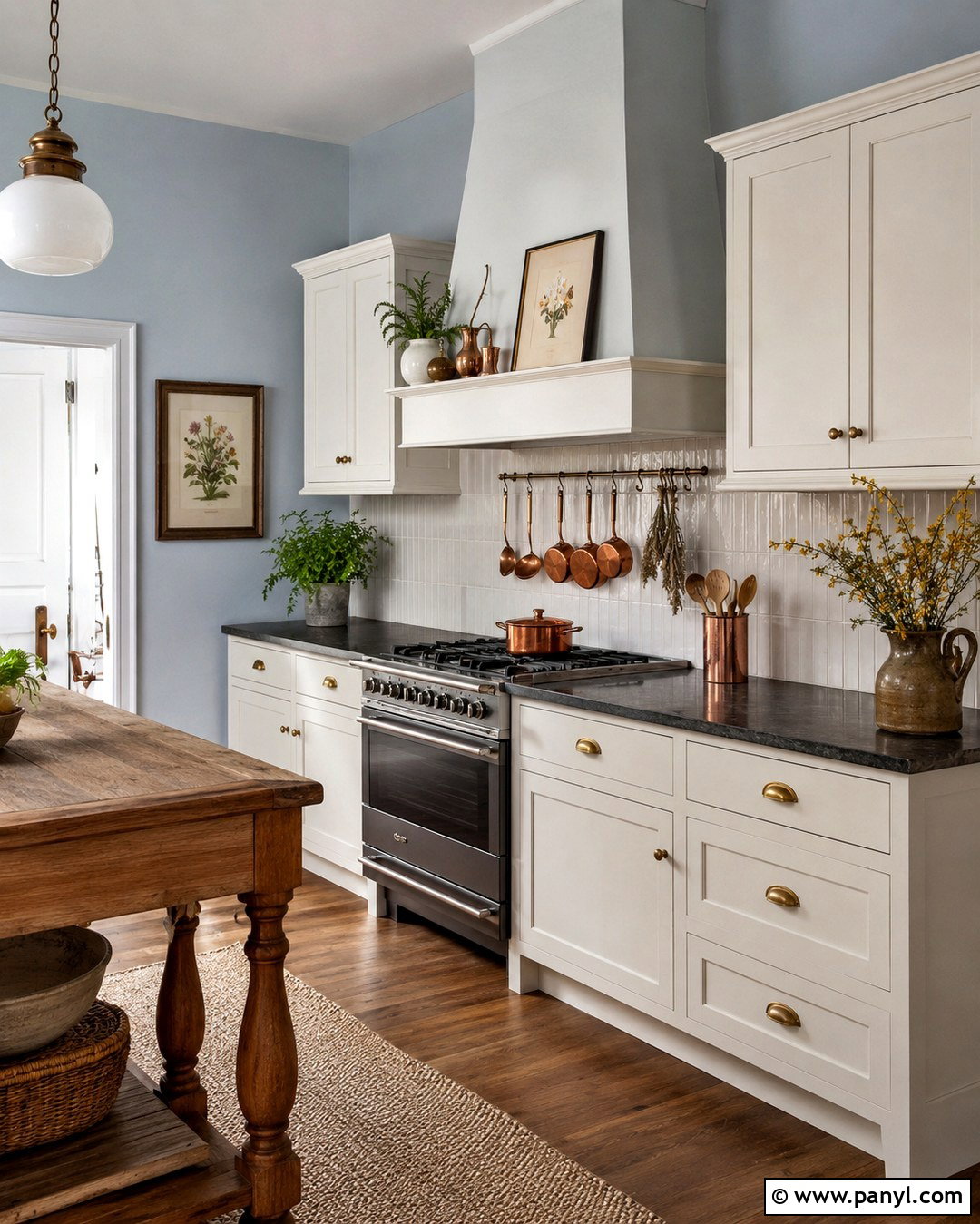
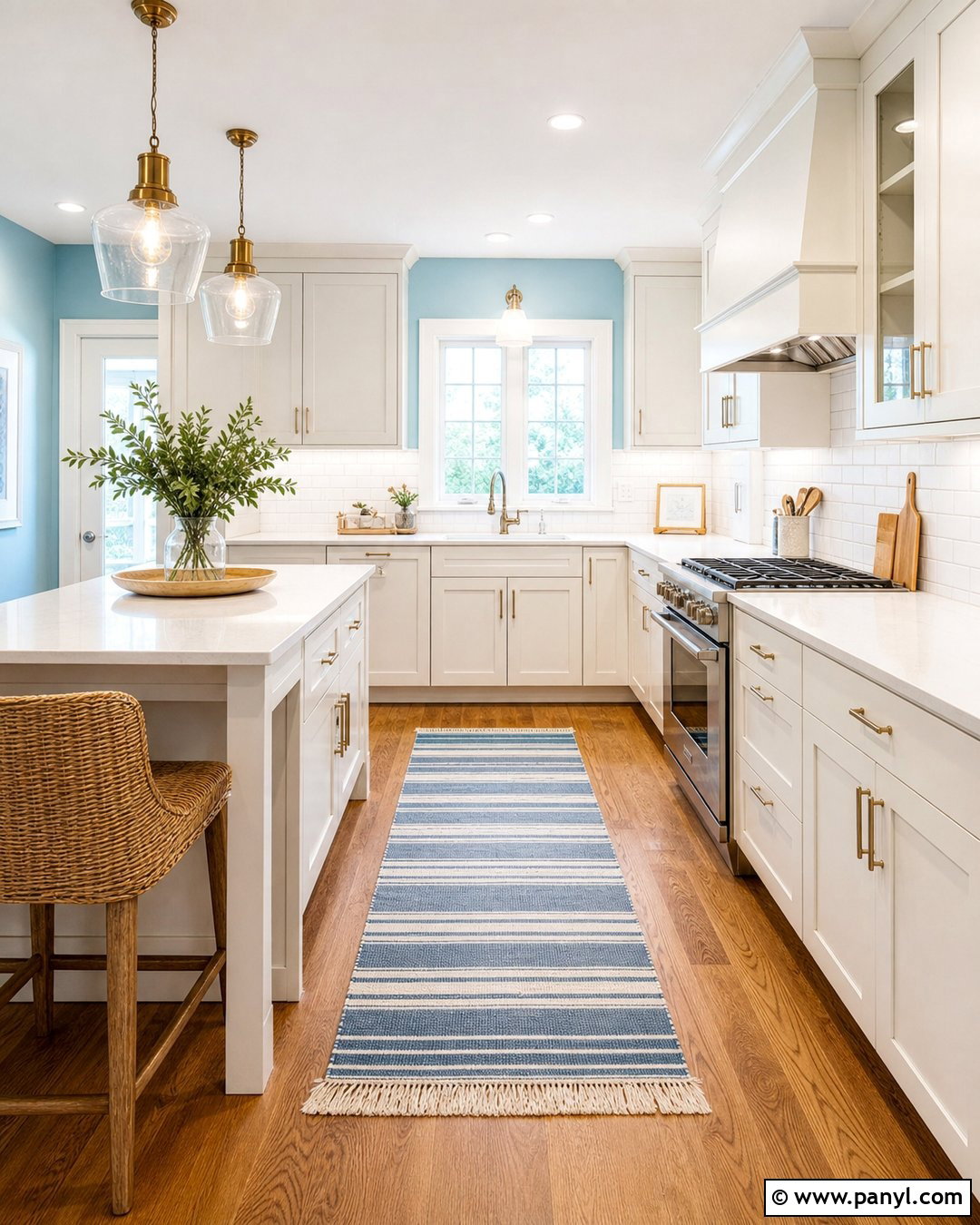
Crisp white cabinets give light blue kitchen walls a clean, timeless appearance. Choose a powder blue with a slightly gray undertone so the room feels soft rather than overly bright. Simple Shaker cabinets, white quartz counters, and a glossy white subway tile backsplash create an easy foundation. Add polished nickel pulls and a stainless steel faucet for a cool, cohesive finish. Medium-tone oak flooring prevents the blue-and-white palette from feeling cold. A natural jute runner and a few wooden cutting boards introduce additional warmth. Finish the room with clear glass pendants and white linen window shades. This complete scheme works particularly well in an everyday family kitchen because it feels fresh, practical, and easy to update with seasonal accessories.
2. Light Blue Kitchen Walls With Oak Cabinets
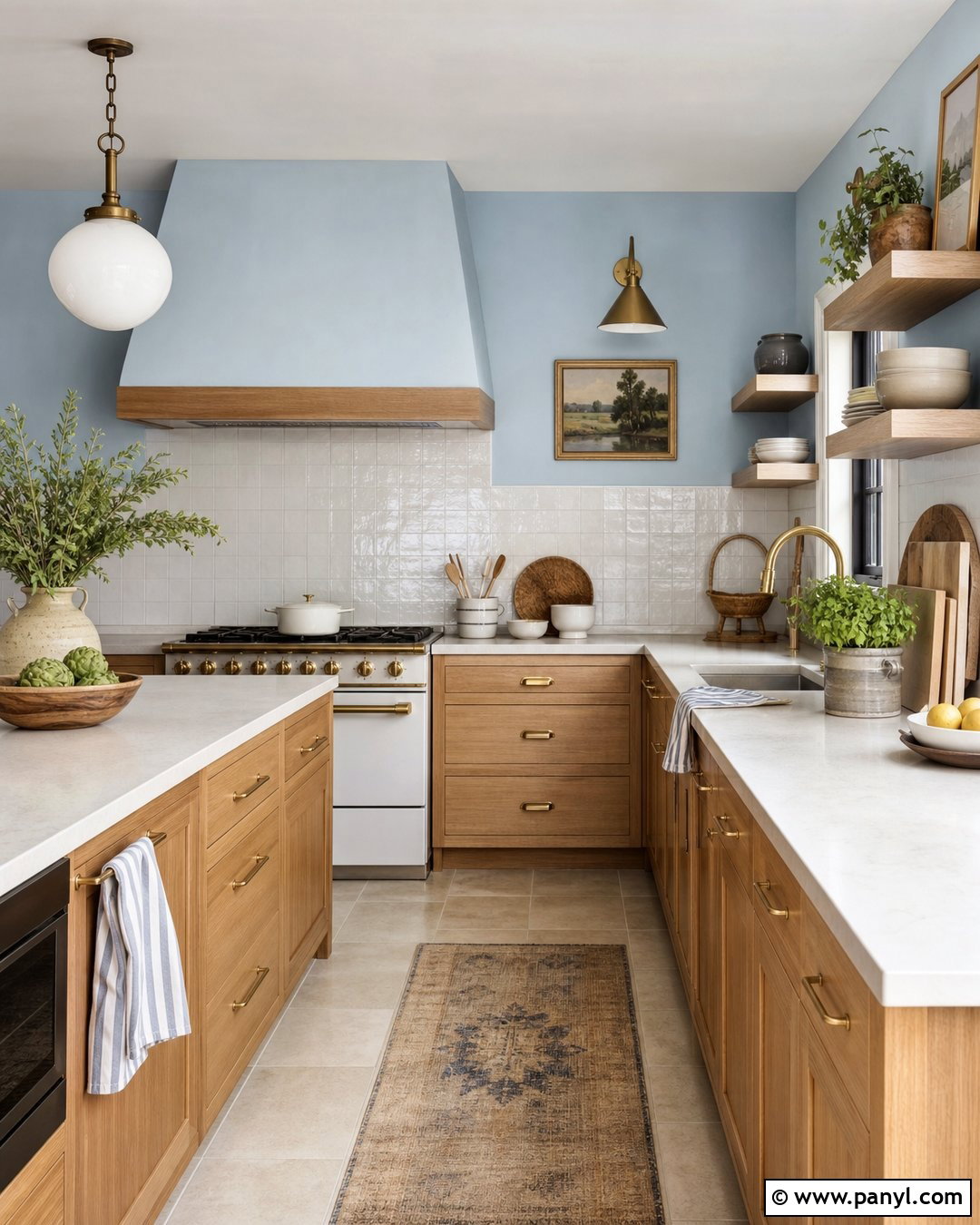
Warm oak cabinets can look surprisingly fresh against pale blue walls. Select a muted sky blue that has enough gray to balance the golden or honey tones in the wood. Keep the countertops light with creamy quartz or gently veined stone. An off-white square tile backsplash connects the blue paint to the warmer cabinet finish without creating a harsh contrast. Use aged brass hardware, a matching bridge faucet, and simple milk-glass pendants to reinforce the welcoming palette. Light beige porcelain flooring or natural oak boards will keep the room visually connected. For decoration, display stoneware bowls, linen towels, and small potted herbs. The finished kitchen feels relaxed and updated while preserving the character of existing wood cabinetry, making this an approachable remodeling choice.
3. Light Blue Kitchen Walls With Navy Cabinets
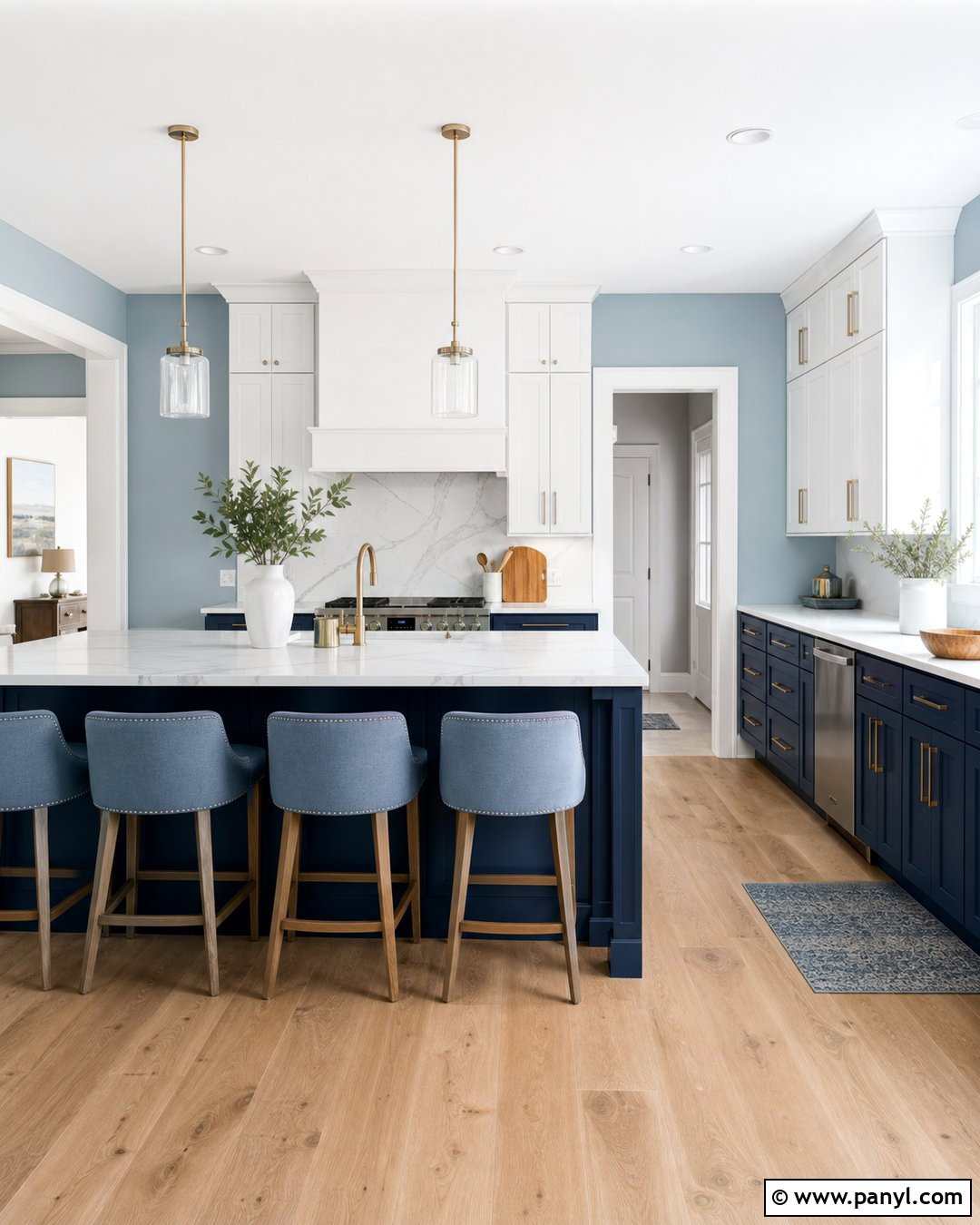
What if you want a blue kitchen with more depth? Pair misty light blue walls with navy lower cabinets and soft white upper cabinets. The darker base grounds the room, while the pale walls and uppers keep the layout open. Choose white quartz countertops with subtle gray veining and continue the same material up the backsplash for a streamlined surface. Brushed brass cabinet pulls and pendant lights add controlled warmth. Wide-plank white oak flooring softens the strong navy contrast and gives the kitchen a natural foundation. Repeat the wall color through blue-gray counter stools or simple pottery. This layered blue scheme suits a bright kitchen particularly well and offers visual interest without relying on busy patterns or excessive decorative objects. ()
4. Light Blue Kitchen Walls With Cream Cabinets
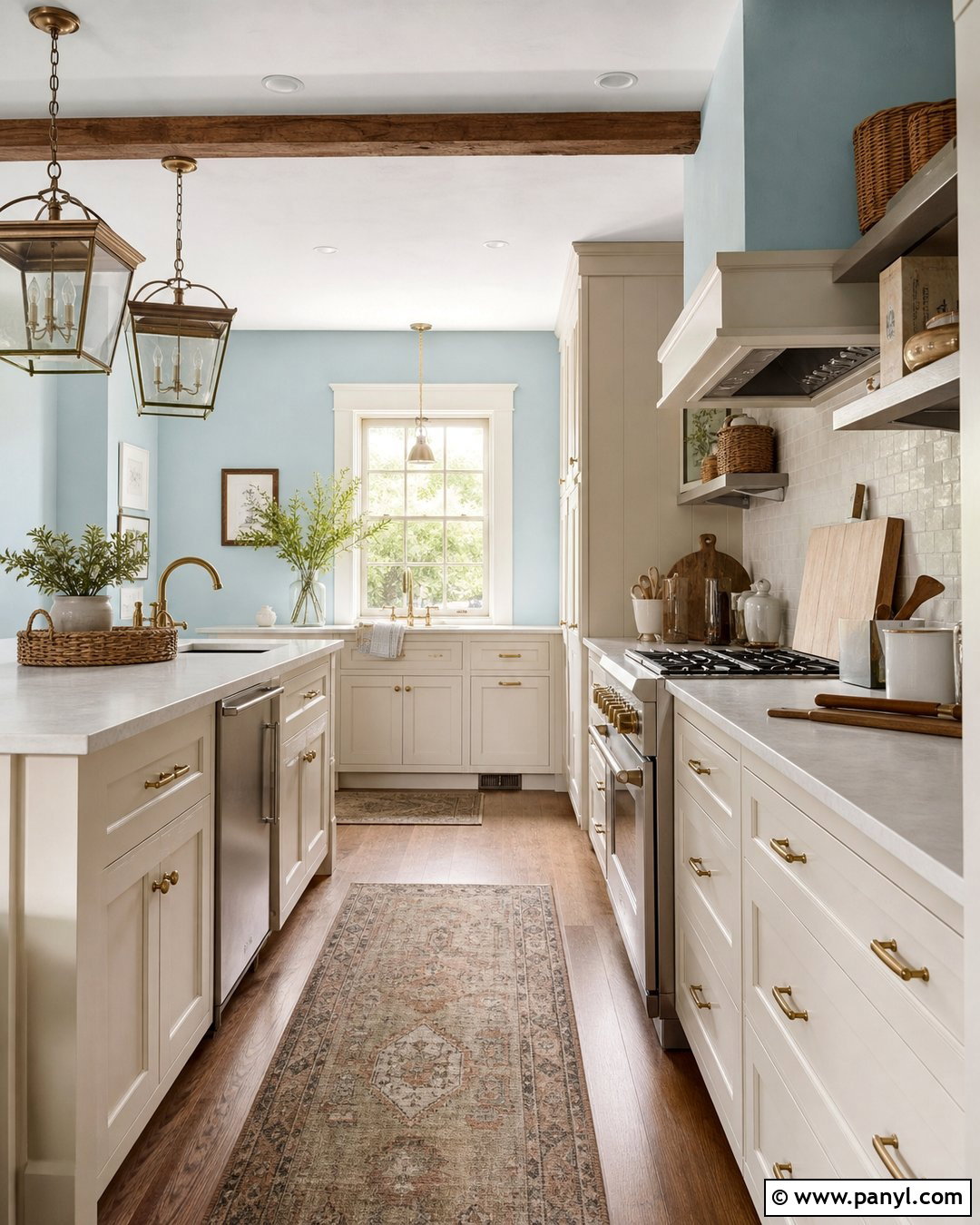
Soft cream cabinetry makes light blue walls feel warmer and more traditional. Look for a blue with a gentle green undertone, then pair it with warm ivory Shaker cabinets and creamy quartz countertops. A handmade off-white backsplash with slightly irregular edges adds character without competing with the wall color. Choose unlacquered brass knobs, a warm metal faucet, and lantern-style pendant lights to complete the classic look. Medium brown wood flooring provides contrast and gives the kitchen a grounded finish. An antique-style runner in faded blue and beige can connect the walls to the cabinetry. Add woven baskets, wood serving boards, and simple ceramic containers rather than bright accessories. The resulting kitchen feels comfortable, collected, and suitable for traditional, cottage, or transitional homes.
5. Light Blue Kitchen Walls With Black Hardware
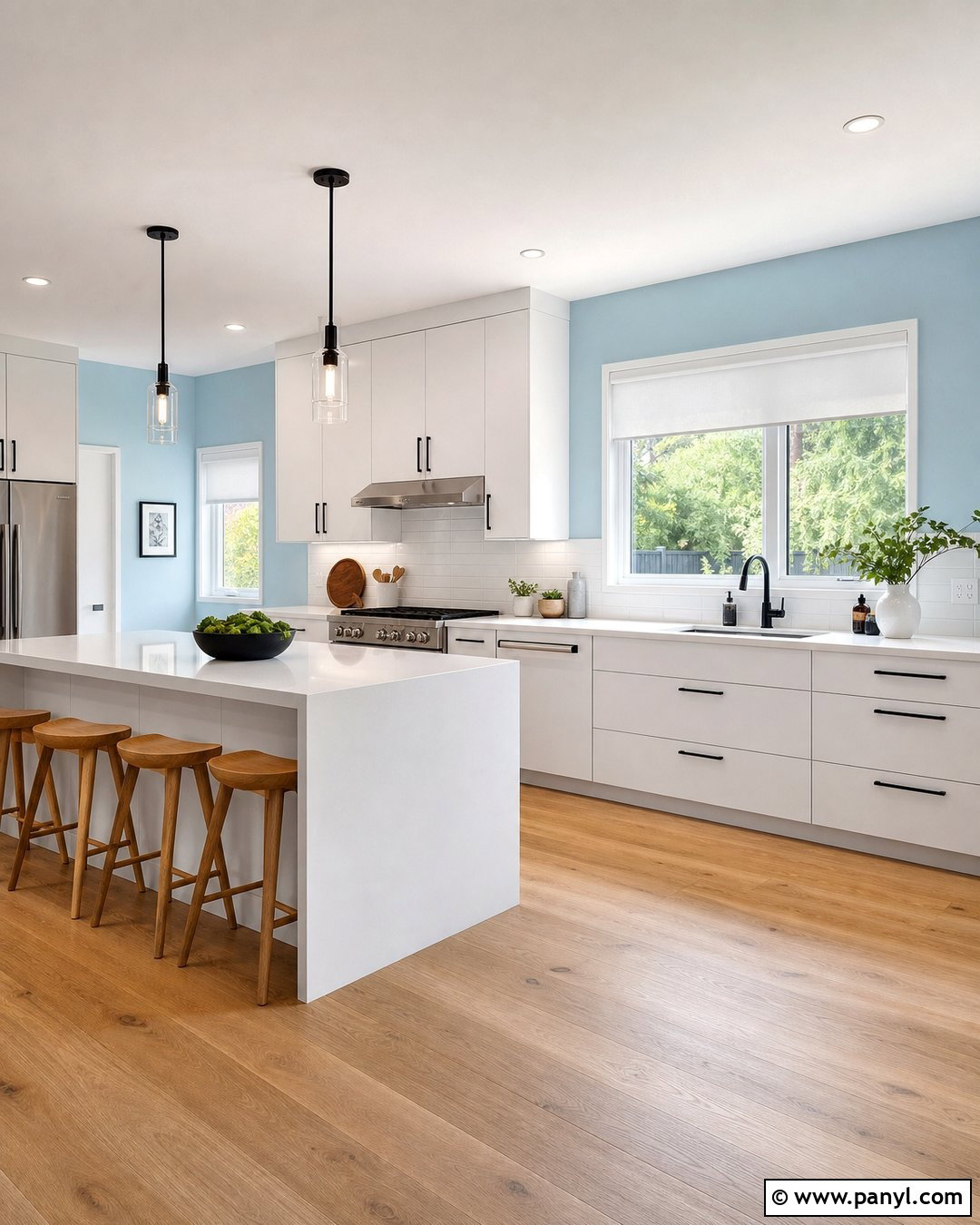
For a sharper modern look, frame light blue kitchen walls with matte black details. Choose a clear, pale blue and combine it with flat-panel white cabinets, solid white quartz counters, and a simple stacked tile backsplash. Black cabinet pulls, a high-arc black faucet, and slim black pendant lights create repeated lines throughout the room. Use the dark finish selectively so it defines the design without overpowering the soft walls. Light oak flooring and matching counter stools bring natural warmth to the cooler palette. Keep window coverings minimal, such as white roller shades or pale woven blinds. One black-framed print and a few white ceramic pieces are enough decoration. This complete arrangement looks polished, uncluttered, and practical for contemporary kitchens of almost any size.
6. Light Blue Kitchen Walls With Brass Accents
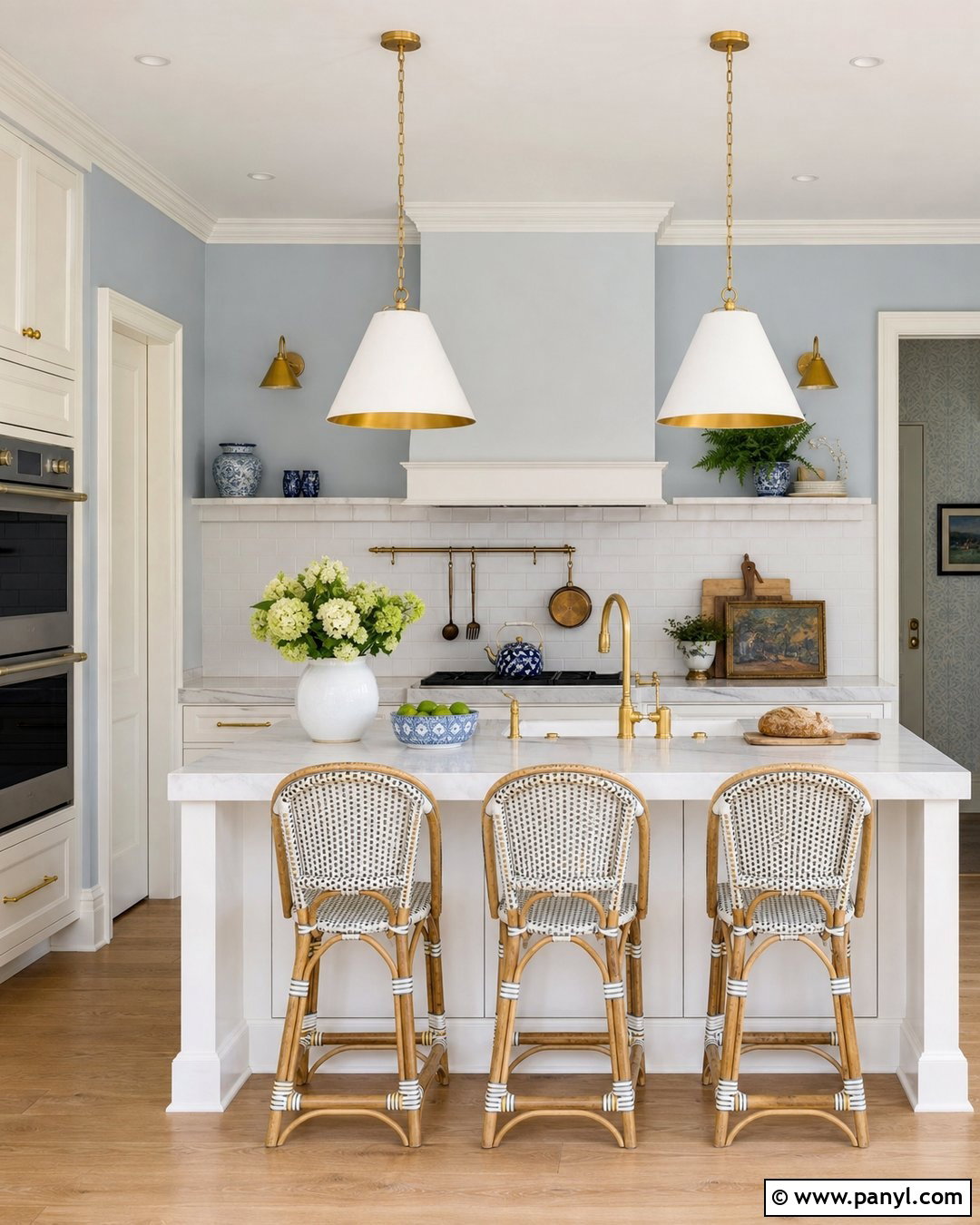
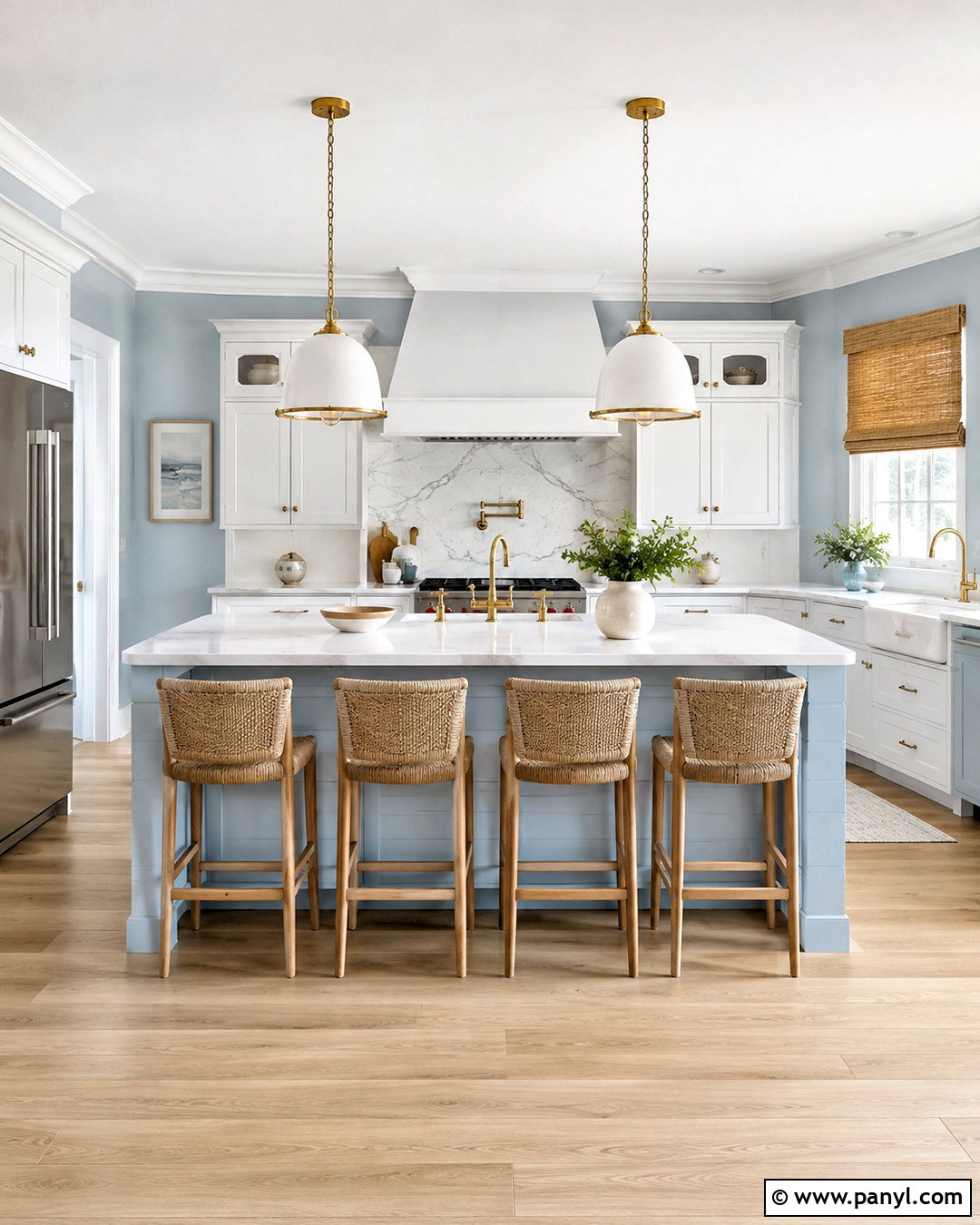
Sunlight makes pale blue walls glow, while brass accents provide a warm counterpoint. Begin with a delicate blue-gray wall color and pair it with warm white cabinets and pale marble-look quartz. Use brushed brass for the cabinet handles, faucet, pendant lights, and a narrow shelf rail. Keeping the metal finish consistent will make the room feel intentional. A white subway backsplash with warm grout adds texture while preserving brightness. Choose natural white oak flooring and woven rattan stools to deepen the welcoming effect. Display a few blue-and-white dishes on an open shelf, but leave generous empty space around them. The final kitchen feels light, refined, and inviting. Brass works best here as a repeating accent rather than a dominant surface. ()
7. Light Blue Kitchen Walls With Marble Counters
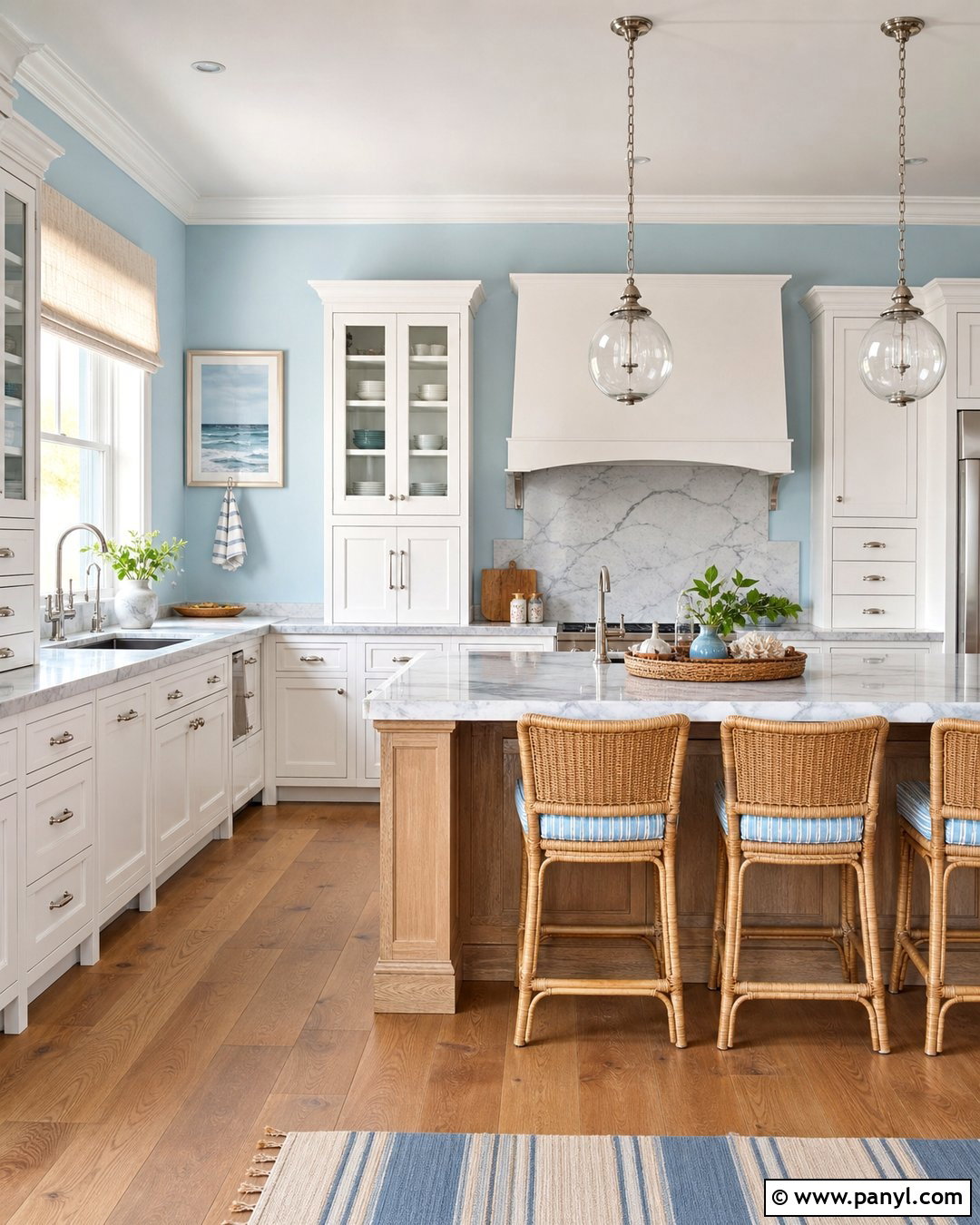
A soft coastal mood begins with airy blue walls and white marble surfaces. Choose a pale sea-glass blue for the walls, then install white cabinetry and marble counters with light gray veining. Carry the stone onto the backsplash or select glossy white tile for a more budget-conscious alternative. Polished nickel hardware keeps the palette crisp, while woven counter stools and a light oak island prevent it from feeling formal. Use wide natural wood flooring and a simple striped runner in blue and cream. Glass pendant lights maintain open sightlines above the island. Avoid obvious nautical decorations. Instead, add subtle coastal texture through rattan, linen, ceramics, and clear glass. The finished room will feel relaxed and sophisticated rather than themed. ()
8. Light Blue Kitchen Walls With Butcher Block Counters
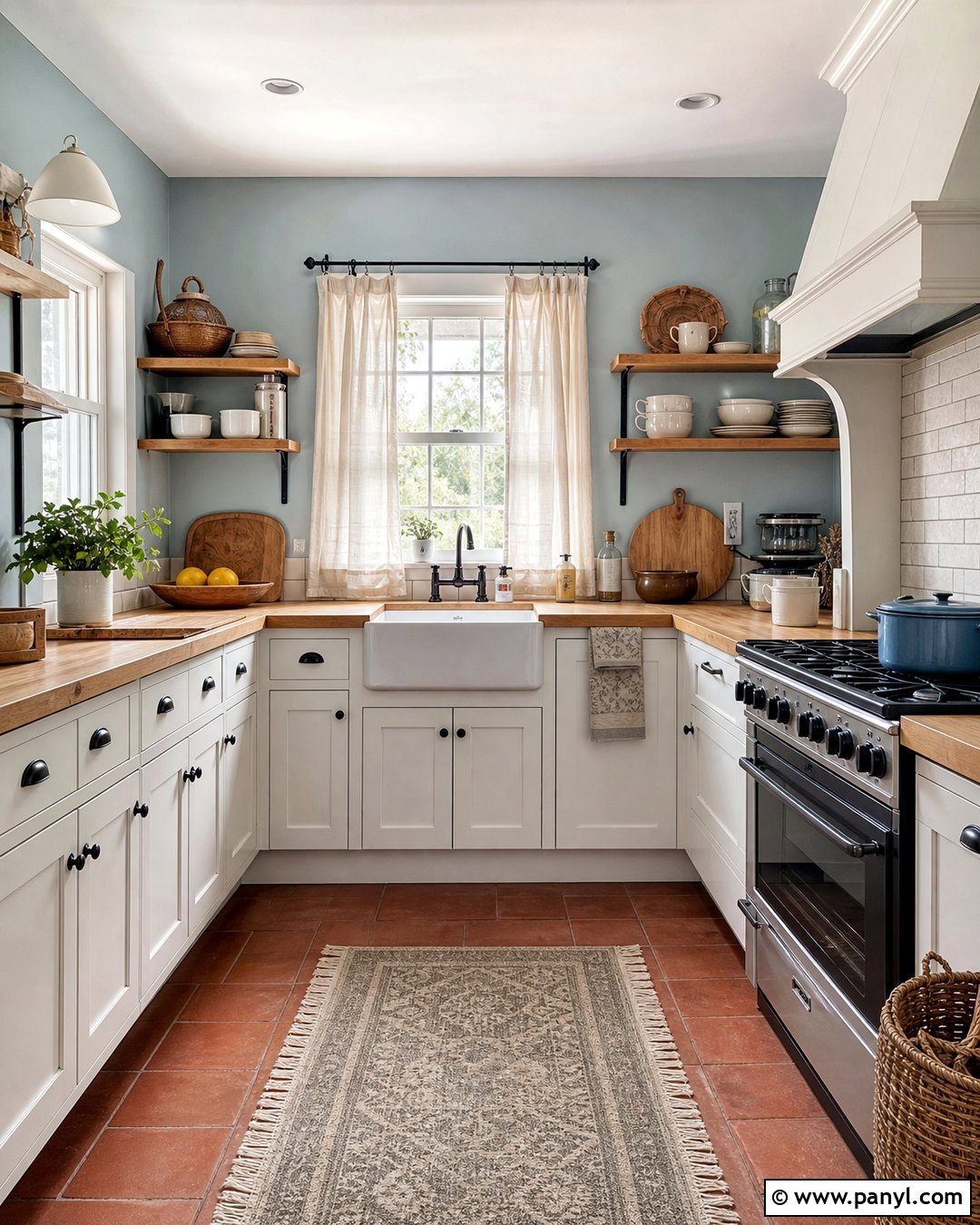
The warmth of butcher block creates an appealing contrast with cool light blue walls. Use a slightly dusty blue paint beside white Shaker cabinets and thick maple or oak countertops. Protect the busiest work areas with a durable tile backsplash in warm white. Black cup pulls and a black farmhouse-style faucet can introduce definition, while wood shelves repeat the countertop material above the sink or coffee station. Ground the room with terracotta-look porcelain tile or medium oak flooring. Add cream café curtains, woven storage baskets, and neutral stoneware to reinforce the casual character. This complete kitchen works especially well in cottages and smaller homes because every material feels approachable. Keep the wood tones similar so the countertops, shelves, and flooring create a connected design.
9. Light Blue Kitchen Walls With White Subway Tile
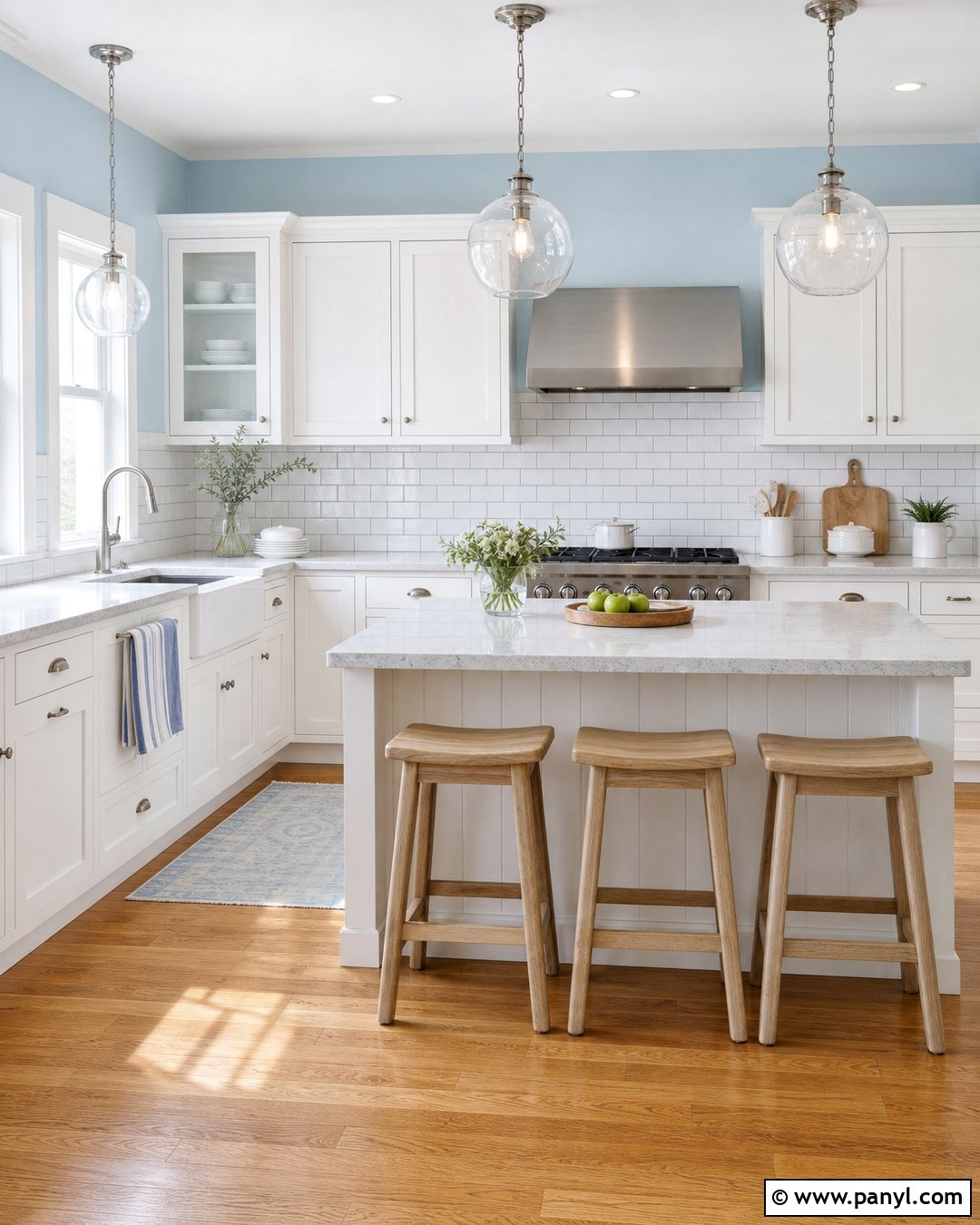
White subway tile creates a practical transition between cabinets and light blue painted walls. Choose a clean robin’s-egg blue for visible wall areas and combine it with white Shaker cabinets, pale quartz counters, and bright white trim. Install the subway tile in a traditional brick pattern for a classic result, or stack it vertically for a more modern appearance. Medium-gray grout can outline the tile without becoming too busy. Add chrome or polished nickel hardware, simple globe pendants, and light wood counter stools. Natural oak flooring brings warmth below the reflective surfaces. Finish with striped cotton towels, clear containers, and a small collection of white dishes. The design remains bright and flexible while giving the soft blue paint a crisp architectural frame.
10. Light Blue Kitchen Walls With Wood Shelves
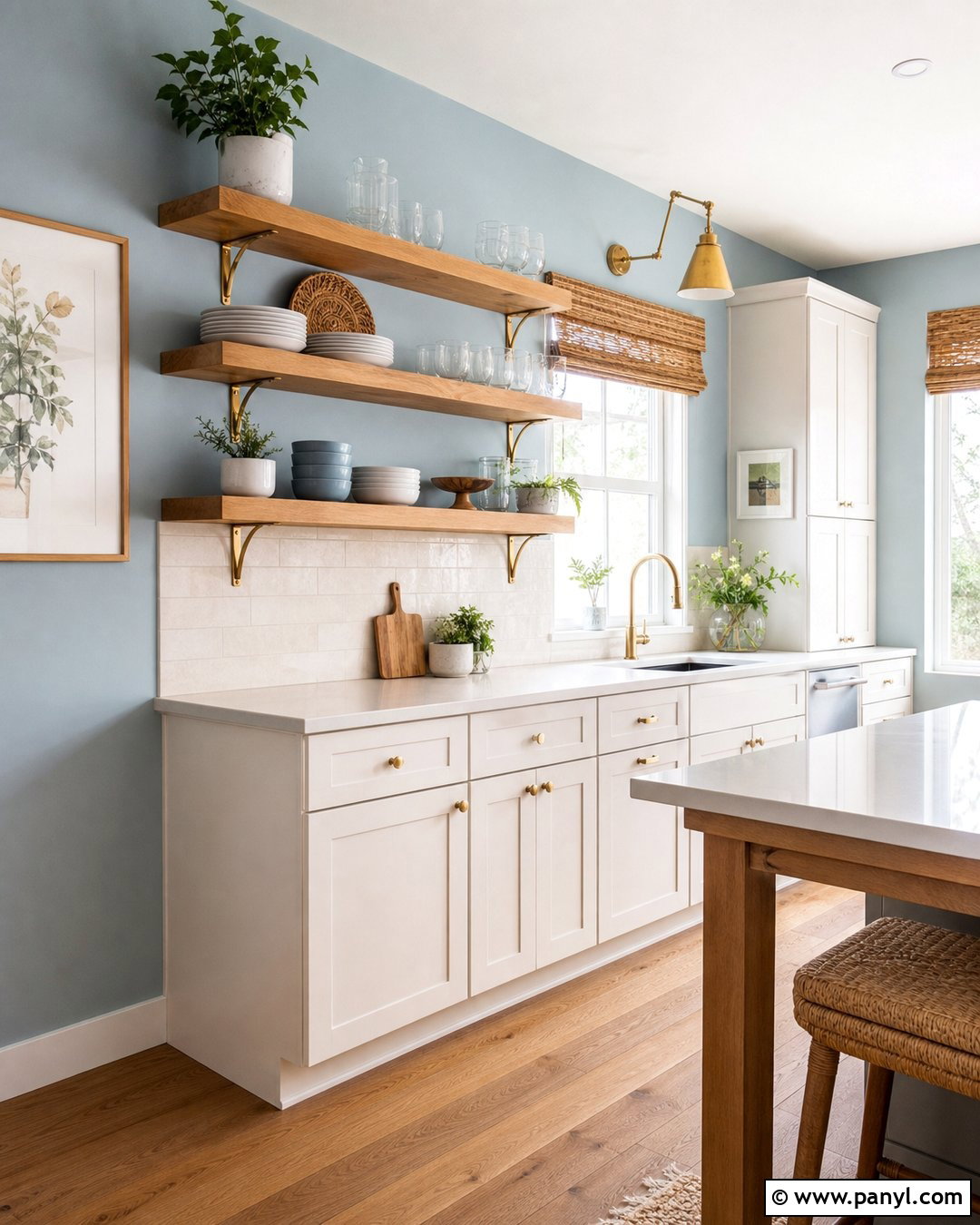
Open wood shelves stand out beautifully against light blue kitchen walls and provide useful display space. Paint the walls a muted blue-gray, then add two or three thick white oak shelves with simple brass brackets. Pair them with warm white lower cabinets, cream quartz counters, and a low-profile off-white backsplash. Arrange everyday dishes, glassware, bowls, and a few small plants with open space between each group. Match the shelf wood to the flooring or kitchen island so the material feels repeated rather than random. Brass cabinet pulls and a warm white pendant complete the palette. This look works best when storage is carefully planned, so keep less attractive supplies behind cabinet doors. The final kitchen feels airy, personal, and naturally welcoming.
11. Light Blue Kitchen Walls With Gray Cabinets
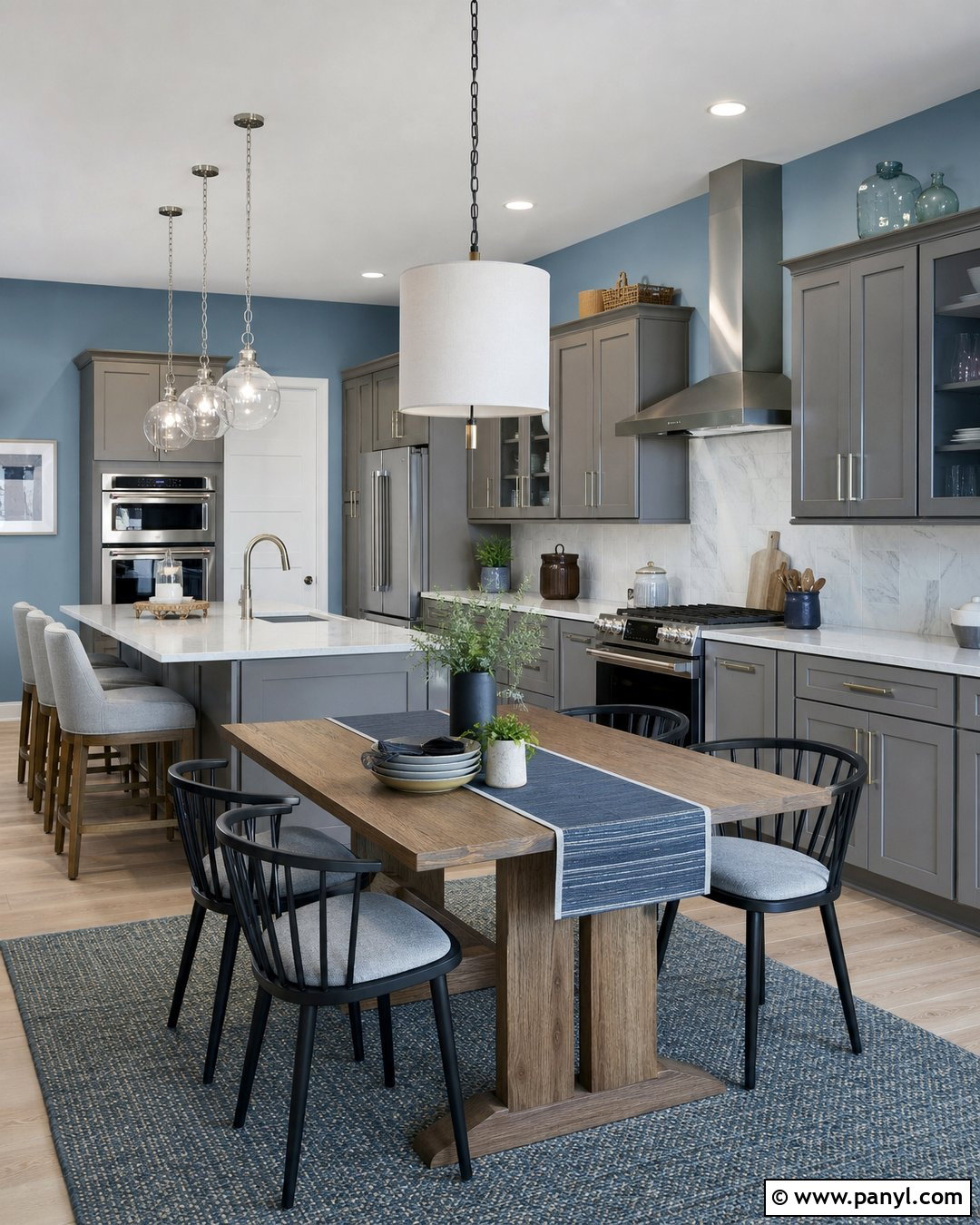
A pale blue-and-gray palette can feel calm and contemporary when the undertones are coordinated. Select light blue walls with a soft gray base, then use medium greige or warm gray cabinets rather than a cold charcoal finish. White quartz countertops and a marble-look backsplash will gently lift the muted colors. Add brushed nickel hardware and streamlined pendant lights for a quiet, cohesive appearance. Light oak flooring is important because it introduces warmth below the cooler finishes. A wood dining table or island stools can repeat that natural note. Keep decorations simple with white pottery, glass containers, and blue-gray textiles. The complete room feels refined without becoming stark. Always compare the wall and cabinet samples together before committing, since mismatched undertones can make either color appear dull.
12. Light Blue Kitchen Walls With Green Cabinets
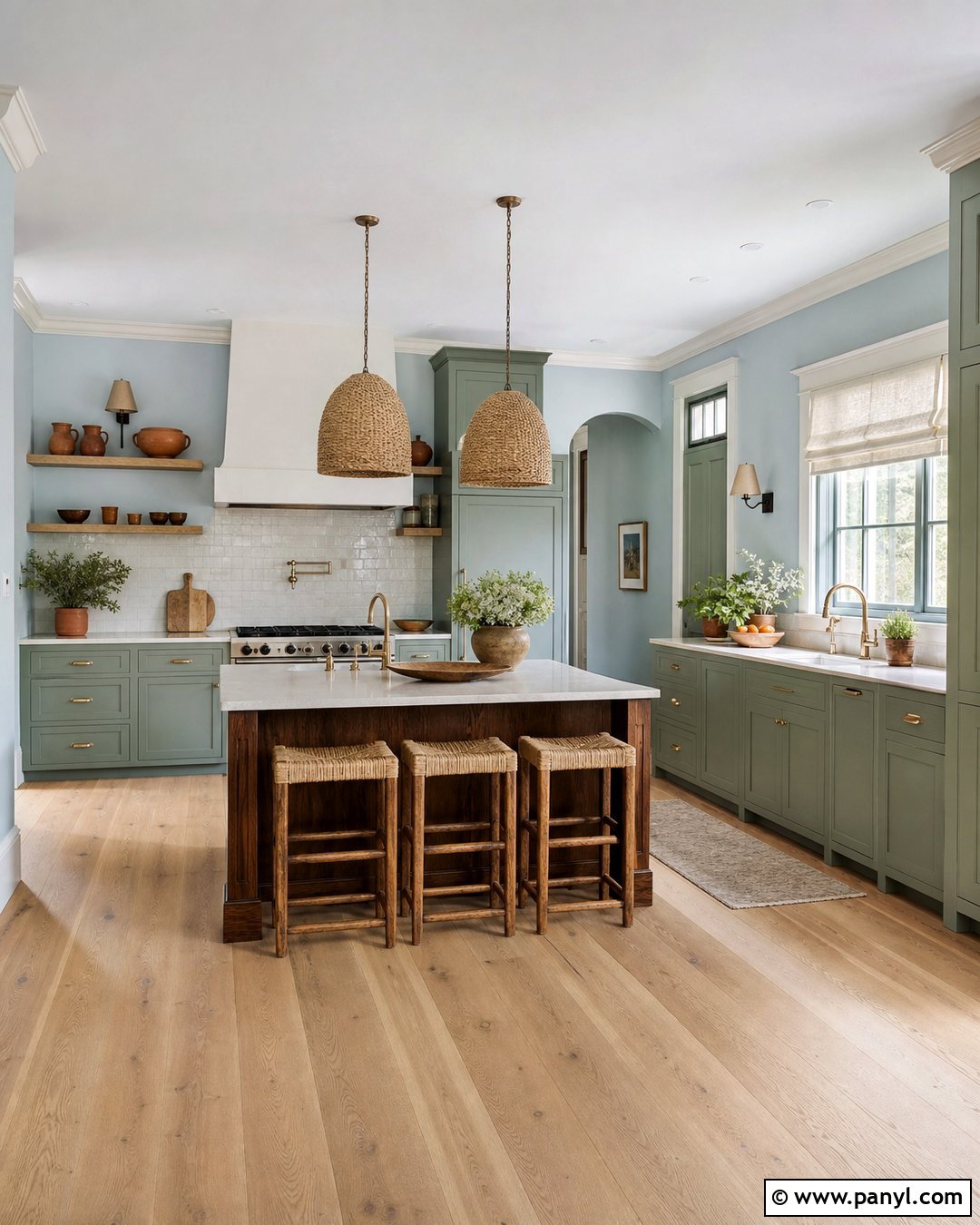
Light blue and muted green can create a gentle nature-inspired kitchen. Use a hazy blue on the walls and soft sage green on the cabinets, keeping both colors similarly subdued. Warm white quartz countertops will provide a visual pause between the two hues. Choose a creamy zellige-style backsplash for organic texture and natural white oak flooring for warmth. Aged brass knobs, a matching faucet, and woven pendant lights reinforce the earthy direction. Keep the island green as well, or use stained oak if the room needs more contrast. Add linen shades, wooden bowls, and a few terracotta pots filled with herbs. This full palette feels colorful but not loud because every finish has a softened tone and materials are repeated throughout the kitchen.
13. Light Blue Kitchen Walls With Dark Wood Floors
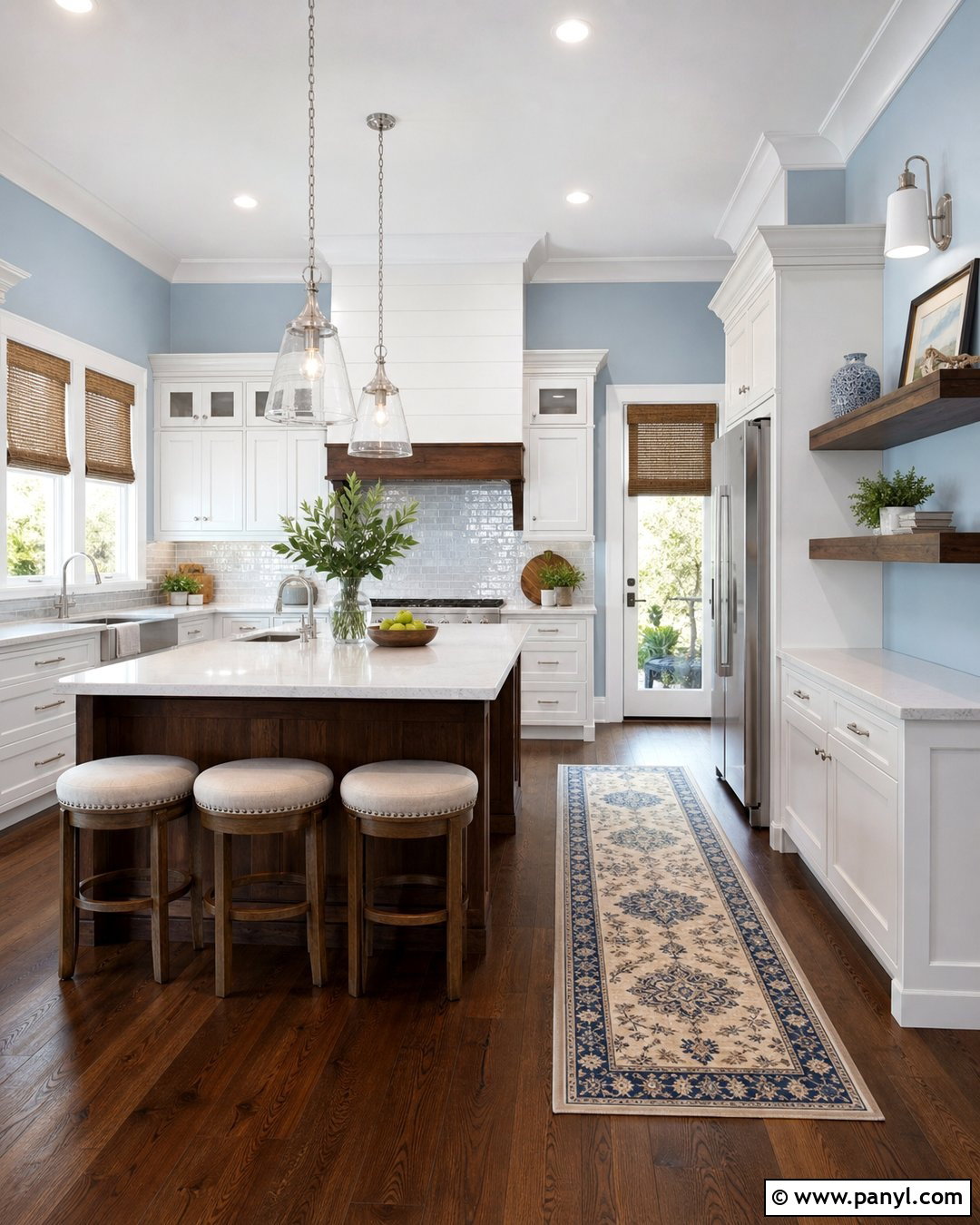
Rich wood flooring can ground the airy quality of light blue walls. Choose a pale, clean blue for the walls and balance the dark floor with white cabinets, white quartz counters, and a reflective backsplash. Walnut or espresso-stained boards work best when the remaining surfaces stay bright. Repeat the floor color sparingly through wooden stools, picture frames, or an island base. Polished nickel hardware and glass pendant lights help maintain an open appearance. A washable runner in cream and faded blue can soften the contrast while protecting the main walkway. Keep window treatments light and avoid heavy upper cabinetry wherever possible. This design gives a traditional kitchen visual depth, but the pale wall color prevents the dark flooring from making the room feel overly formal.
14. Light Blue Kitchen Walls With Light Wood Floors
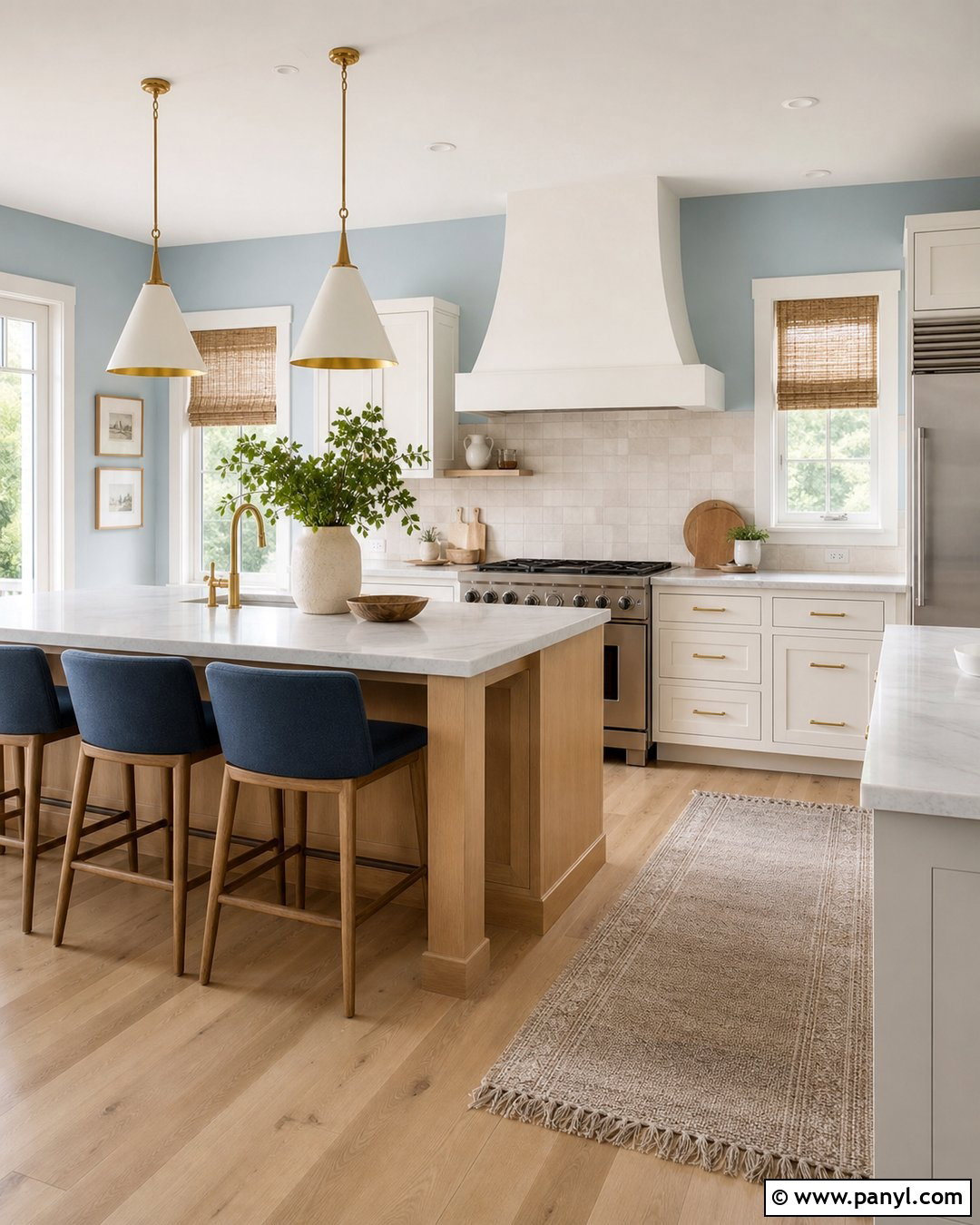
A kitchen covered in pale finishes can still feel layered and complete. Start with light blue-gray walls, warm white cabinets, and blonde oak flooring. Add white quartz counters and a backsplash of handmade cream tile to introduce gentle texture. The flooring should have visible natural grain, which will keep the understated room from appearing flat. Use brushed brass hardware and simple cone-shaped pendants for warmth. A white oak island can match the floor while blue upholstered stools repeat the wall color. Finish the windows with woven shades and place a neutral runner near the sink. This relaxed combination is ideal for compact or open-plan kitchens because the transitions between surfaces feel soft. Each detail supports a bright, calm, and visually connected interior.
15. Light Blue Kitchen Walls With Checkerboard Floors
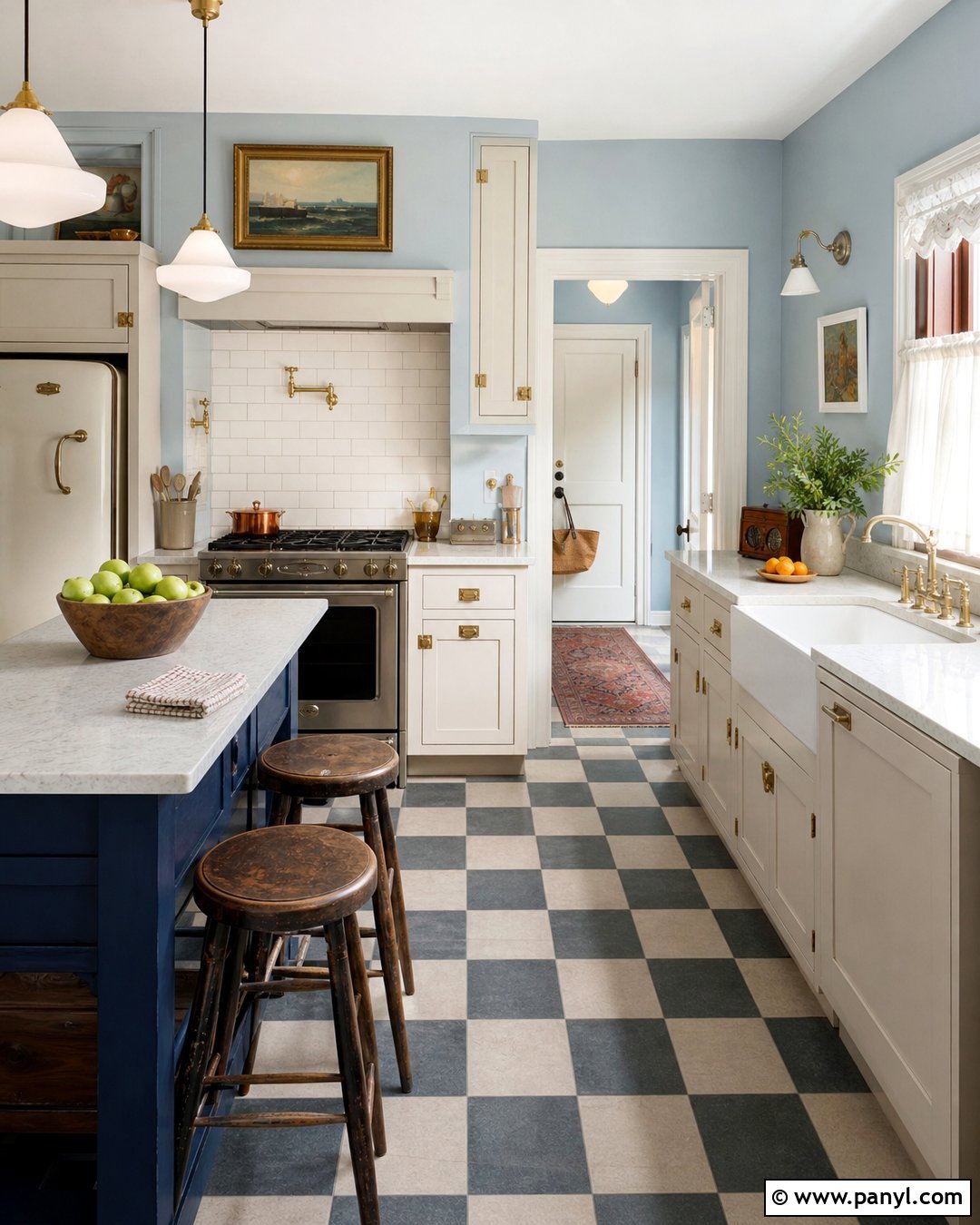
Checkerboard flooring brings energy and vintage character to light blue kitchen walls. Choose dusty blue paint, creamy white cabinets, and simple butcher block or pale quartz countertops. A warm white backsplash will keep attention on the patterned floor. Instead of harsh black and white, use soft charcoal and ivory tiles for a gentler contrast. A small island painted deep blue can connect the floor to the wall color and become a practical focal point. Finish the cabinetry with aged brass latches and cup pulls. Schoolhouse pendant lights, café curtains, and wooden stools reinforce the retro influence without making the room look staged. Keep accessories restrained because the floor already supplies strong pattern. The completed kitchen feels cheerful, functional, and thoughtfully updated.
16. Light Blue Kitchen Walls With Beadboard
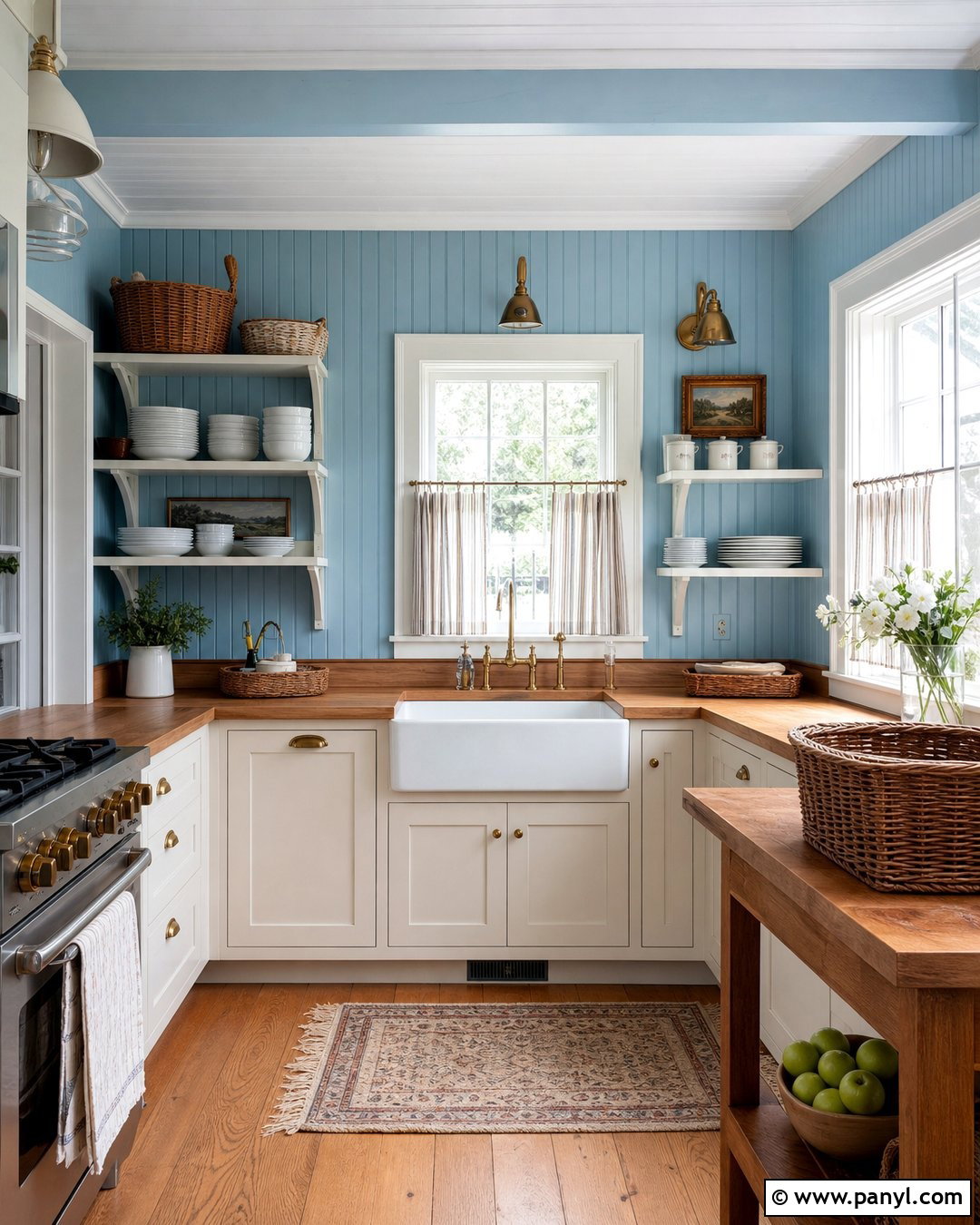
Painted beadboard gives pale blue kitchen walls more depth than a flat painted surface. Install vertical beadboard across the lower half of the walls and paint it a soft blue, then use warm white above for balance. Alternatively, continue the same blue across both surfaces for a more enveloping cottage look. Pair the treatment with cream Shaker cabinets, oak countertops, and a white ceramic farmhouse sink. Choose aged brass hardware, simple wall sconces, and medium-tone wood flooring. Open shelves can hold white dishes and small woven baskets, while gingham or striped café curtains add restrained pattern. The finished kitchen should feel practical rather than precious. Durable semi-gloss paint on the beadboard will also make splashes and fingerprints easier to wipe away.
17. Light Blue Kitchen Walls With Color Drenching
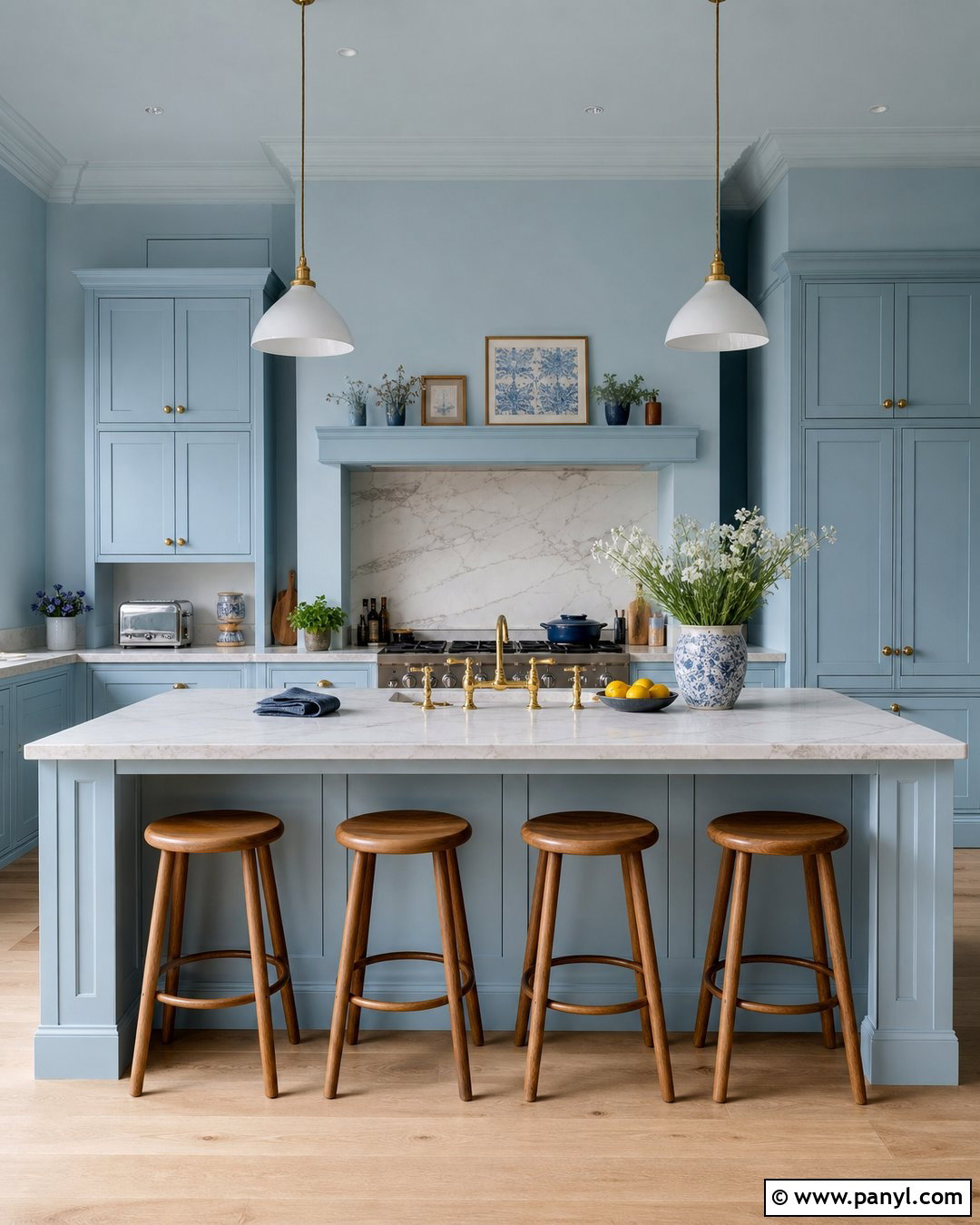
For a confident but soothing statement, carry light blue across the walls, cabinets, trim, and ceiling. Choose a muted powder blue rather than a saturated turquoise so the room remains comfortable. Vary the paint sheen to define surfaces: washable eggshell on walls, durable satin on cabinets, and flat paint overhead. White marble-look counters and a matching backsplash create a bright break within the continuous color. Add warm brass hardware, natural wood stools, and pale oak flooring to prevent the scheme from appearing cold. Simple white pendants will provide visual relief above the island. Keep decorative pieces minimal and use deeper navy only in small accents. This immersive treatment creates a unified kitchen where awkward angles and architectural transitions become much less noticeable. ()
18. Light Blue Kitchen Walls With Farmhouse Decor
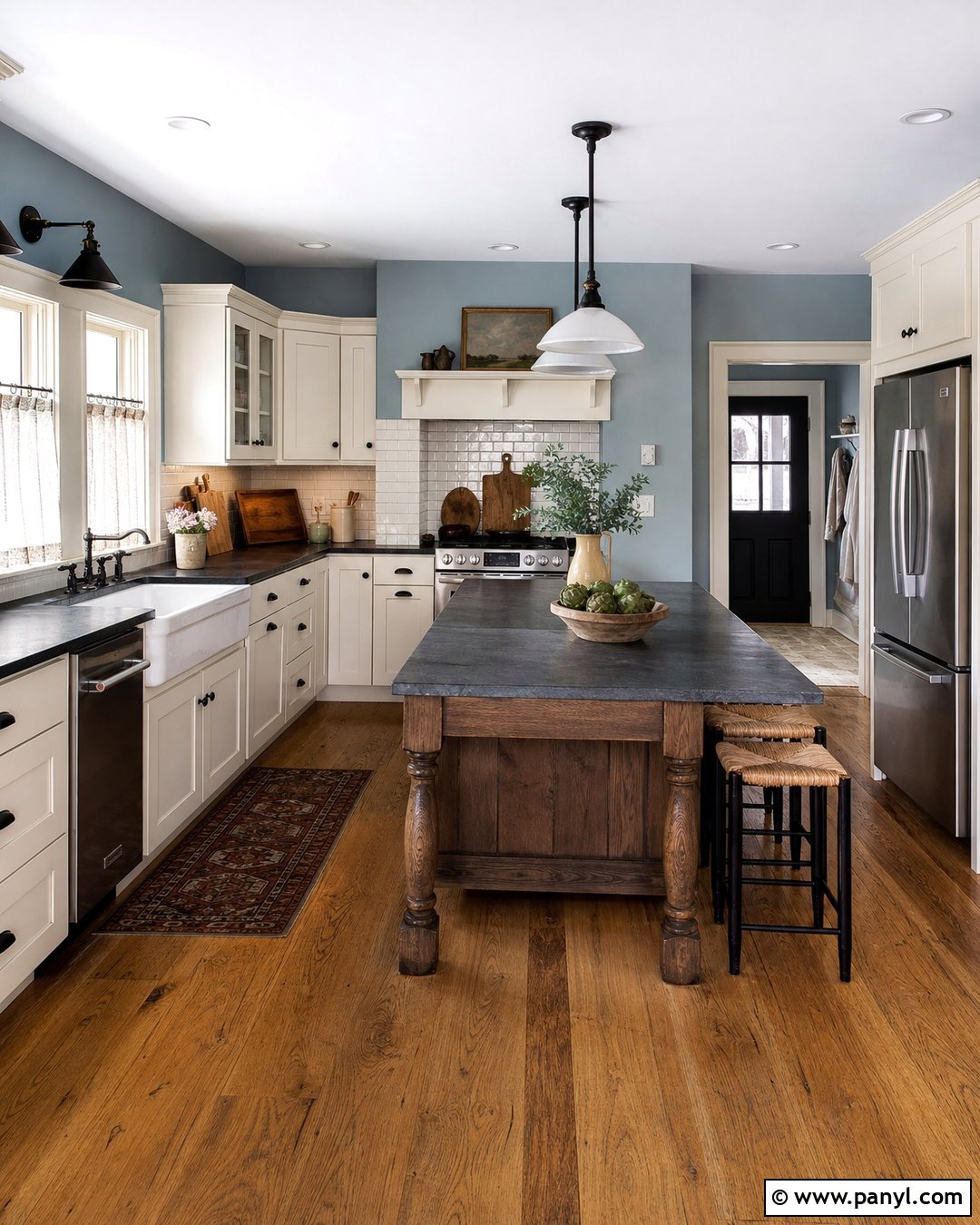
A welcoming farmhouse kitchen can use light blue walls without depending on overly rustic decorations. Begin with a faded blue-gray paint and combine it with warm white inset cabinets, soapstone-look counters, and a white apron-front sink. Add a simple subway tile backsplash with off-white grout and a stained wood island for contrast. Black iron cabinet pulls and pendant lights give the pale palette clear definition. Wide-plank oak floors, woven counter stools, and linen café curtains introduce comfortable texture. Display cutting boards, practical stoneware, and one or two vintage-style containers rather than filling every surface. A washable neutral runner completes the room. The result feels familiar and functional, with enough clean lines to keep the farmhouse influence current and uncluttered.
19. Light Blue Kitchen Walls With Coastal Decor
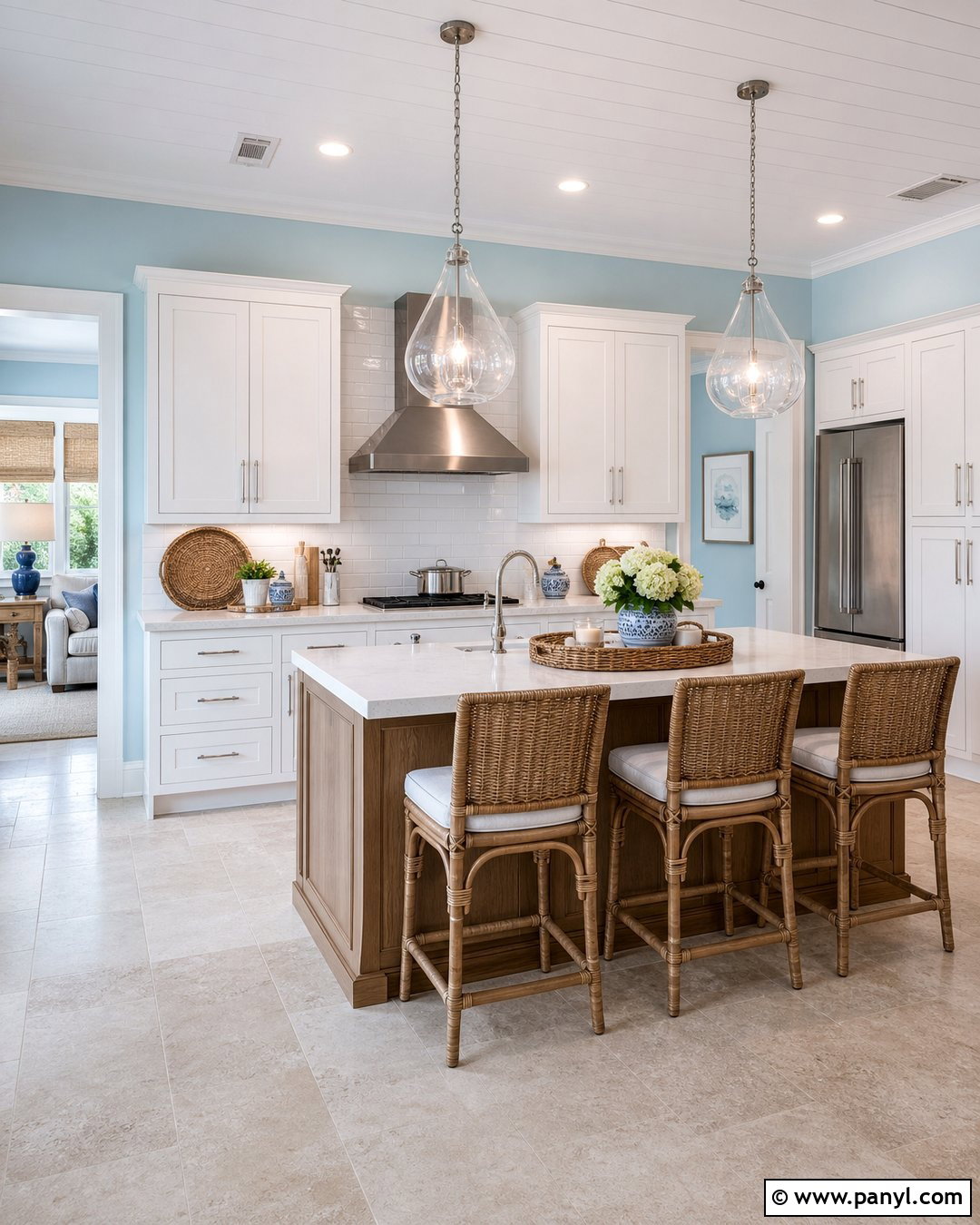
Imagine a bright kitchen that suggests the coast without displaying anchors or seashells. Use pale aqua-blue walls, white flat-panel cabinets, and lightly veined quartz counters. Add a backsplash of glossy white rectangular tile to reflect light around the room. A natural oak island and woven rattan stools provide warmth, while polished nickel hardware keeps the design crisp. Choose light wood or limestone-look flooring and hang oversized clear glass pendants above the island. Soft blue linen shades can repeat the wall color without becoming visually heavy. Complete the room with white ceramics, woven trays, and a striped runner in faded blue and sand. This full scheme captures the relaxed qualities of a coastal interior through color and texture instead of obvious themed accessories.
20. Light Blue Kitchen Walls For A Small Kitchen
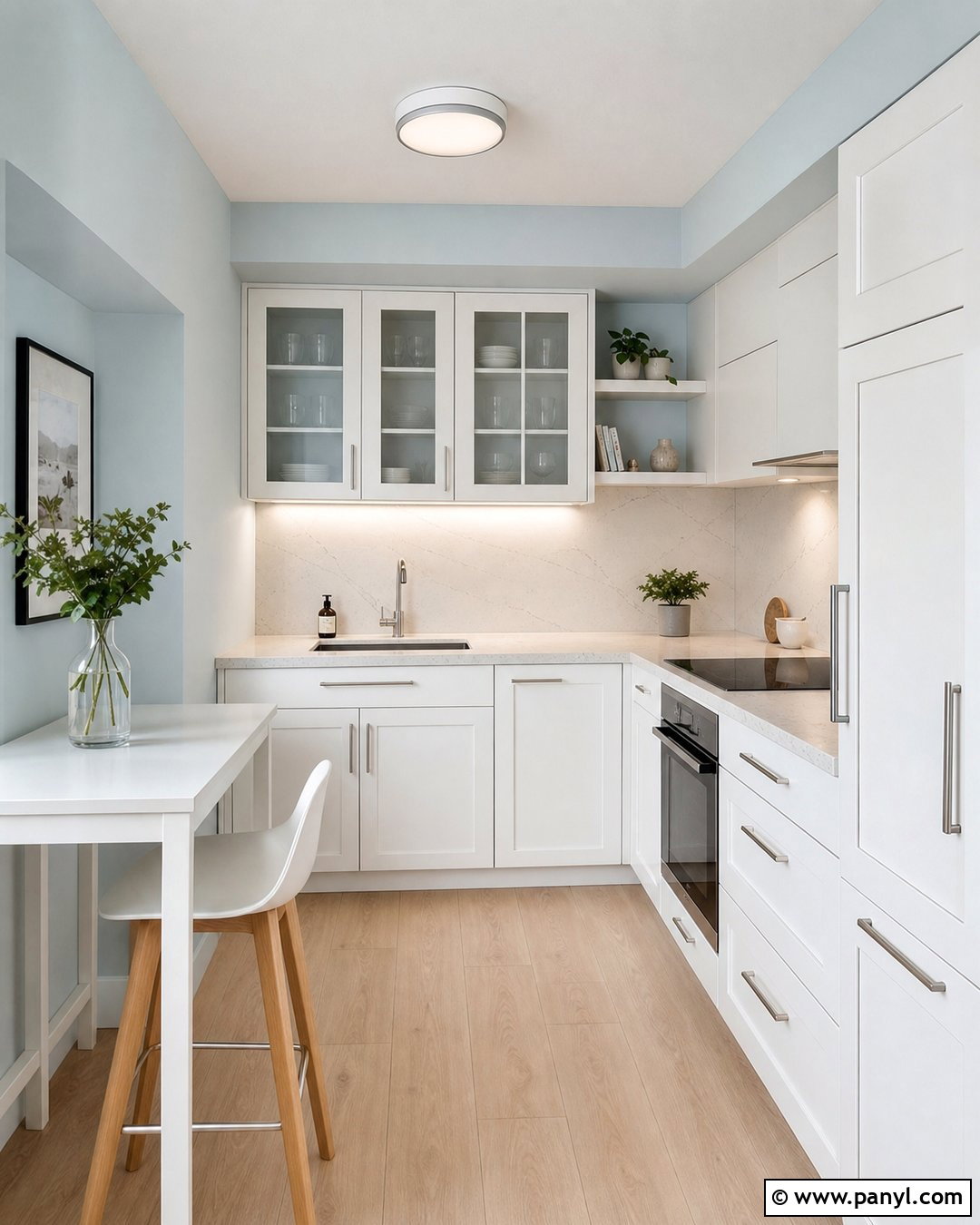
A compact kitchen benefits from a simple palette and carefully scaled details. Paint the walls a very pale blue with a subtle gray undertone, then pair them with bright white cabinets and slender cabinet hardware. Use light quartz counters and continue the material onto the backsplash to reduce visual breaks. Under-cabinet lighting will brighten work areas, while a flush-mount ceiling fixture preserves headroom. Choose pale oak or light beige flooring that flows into nearby rooms. Glass-front upper cabinets or one short open shelf can reduce the feeling of heavy cabinetry. Keep appliances integrated where possible and limit countertop accessories to everyday essentials. The completed kitchen feels organized and cohesive, with the light blue adding personality without overwhelming the limited space.
Conclusion:
These complete kitchen schemes show how versatile pale blue paint can be. It can support crisp white cabinetry, warm wood finishes, dramatic navy, muted green, traditional cream, or streamlined gray. The most successful room will repeat key colors and materials rather than treating the wall paint as an isolated decision. Collect samples of the cabinetry, counters, backsplash, and flooring, then view them beside the chosen blue in morning and evening light. Consider warm finishes if the shade feels cold or cleaner white accents if it appears dull. Whether your preferred look is coastal, farmhouse, modern, or classic, this collection of 20 Light Blue For Kitchen Walls provides a practical starting point for a coordinated kitchen.

Related Ideas and Inspiration:
Leave a Reply