
If you are searching for **20 Accent Wall To Go With Gray Walls**, start by identifying whether your existing gray feels warm, cool, light, or dark. Gray changes dramatically beside different colors, so the best accent wall should respond to its undertone, the room’s natural light, and the furniture already in place. Warm gray works beautifully with terracotta, beige, brown, and muted yellow. Cooler gray feels balanced beside navy, teal, forest green, and dusty blue. Texture also matters. Wood slats, brick, molding, and wallpaper can make a gray room feel layered without relying only on bold paint. Gray’s versatility allows it to support both gentle contrast and deeply saturated color. () Here are 20 Accent Wall To Go With Gray Walls.

1. Navy Blue Accent Wall
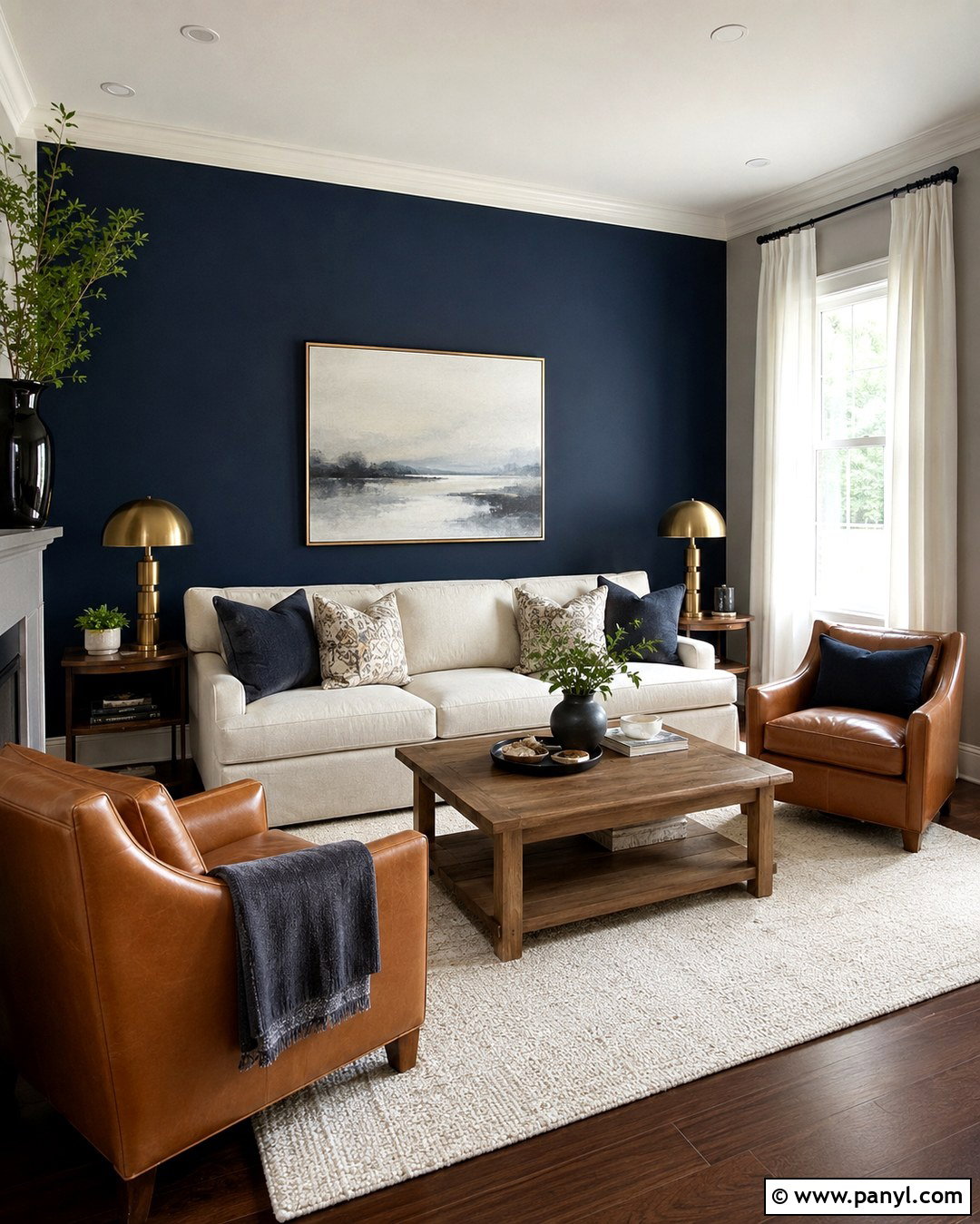
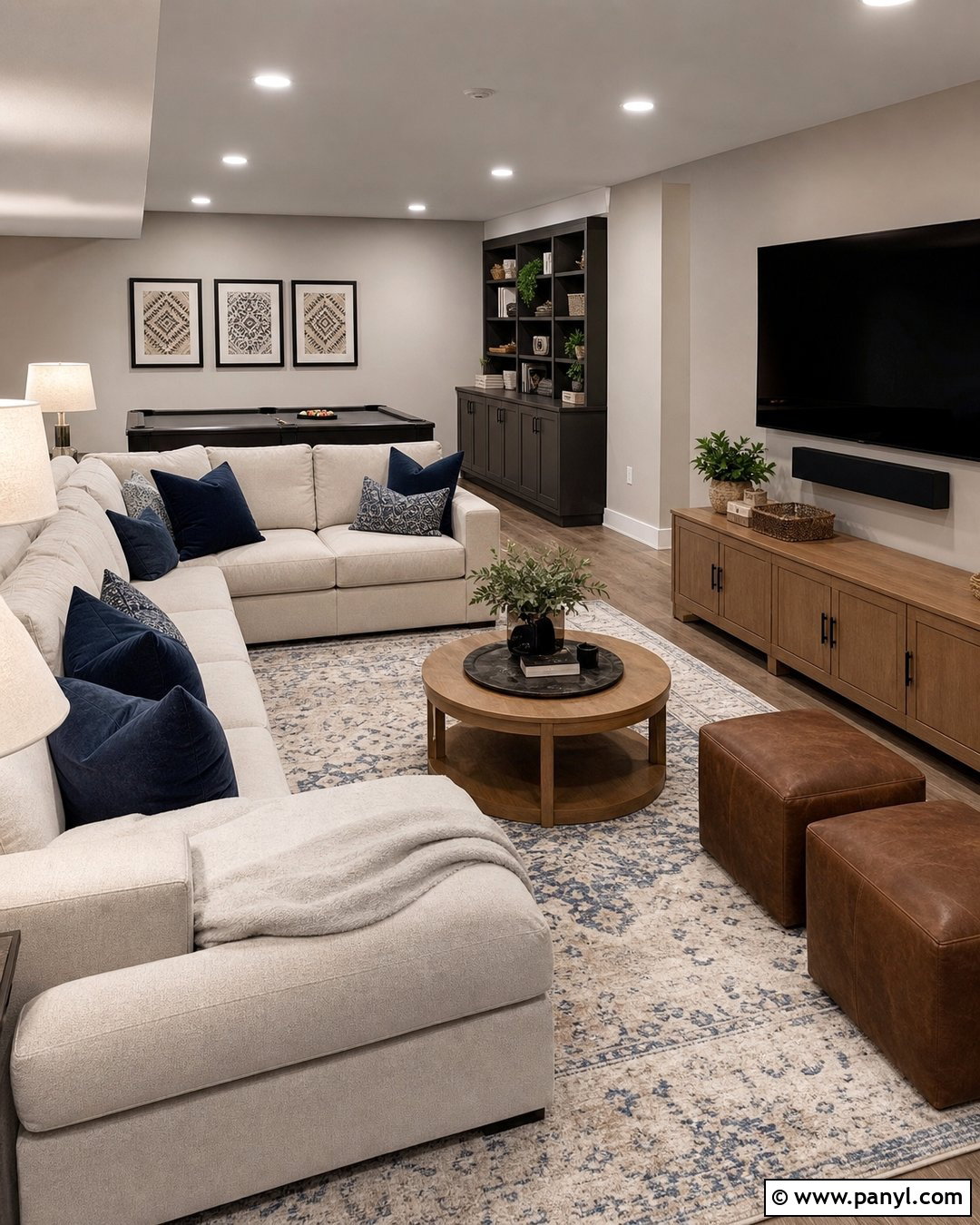
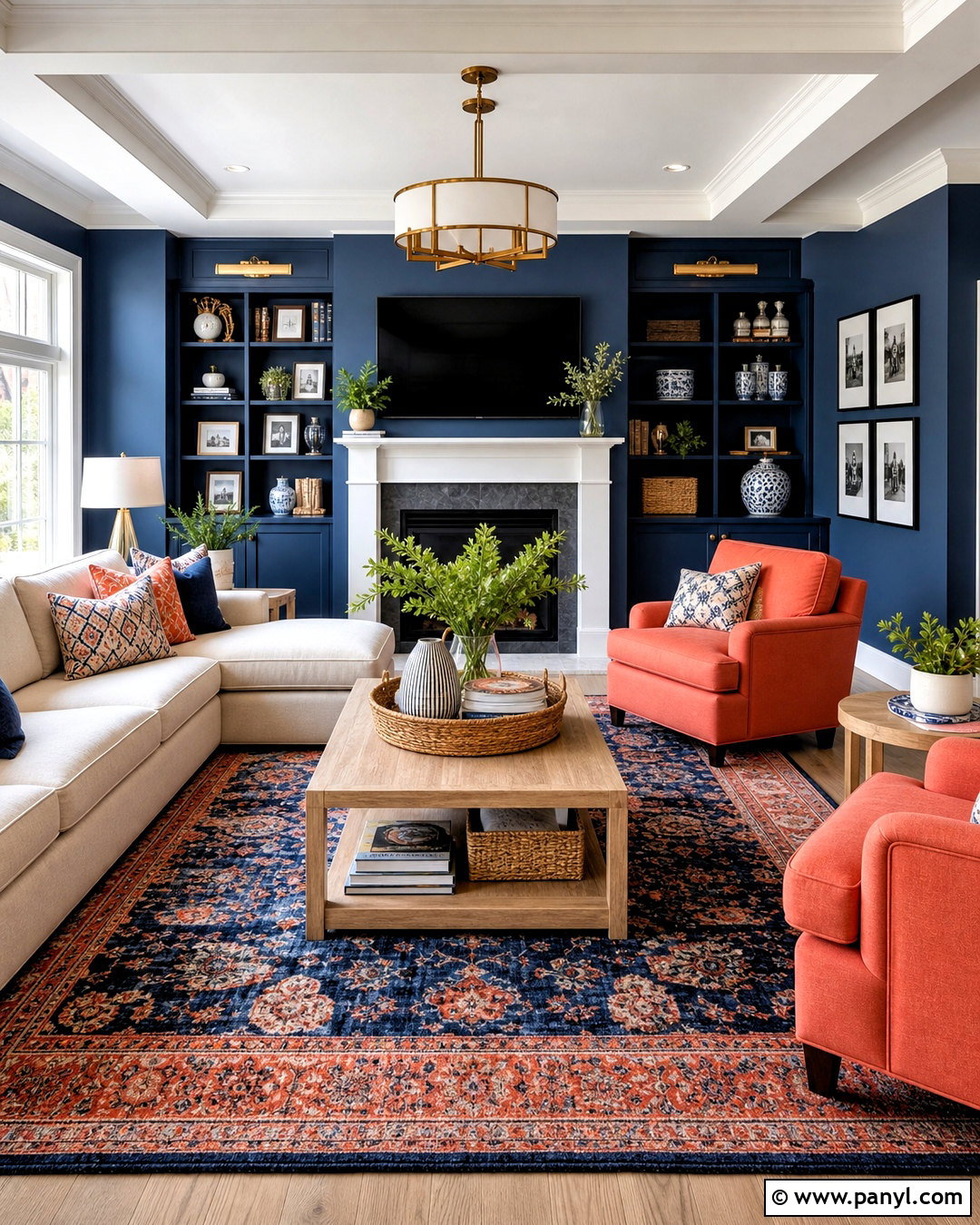
A navy blue accent wall brings depth to a living room with light or medium gray walls. Place it behind the main sofa or fireplace so it becomes a clear focal point. Choose a clean-lined cream sofa, a medium oak coffee table, and a textured ivory rug to keep the dark blue from feeling heavy. Cognac leather chairs add warmth, while brushed brass lamps introduce a softer glow. Repeat navy through one or two patterned pillows, but let gray remain the dominant neutral. White curtains and trim sharpen the contrast and reflect daylight around the room. This complete palette feels polished without looking overly formal, making it especially effective in transitional, coastal, or contemporary homes.
2. Forest Green Accent Wall
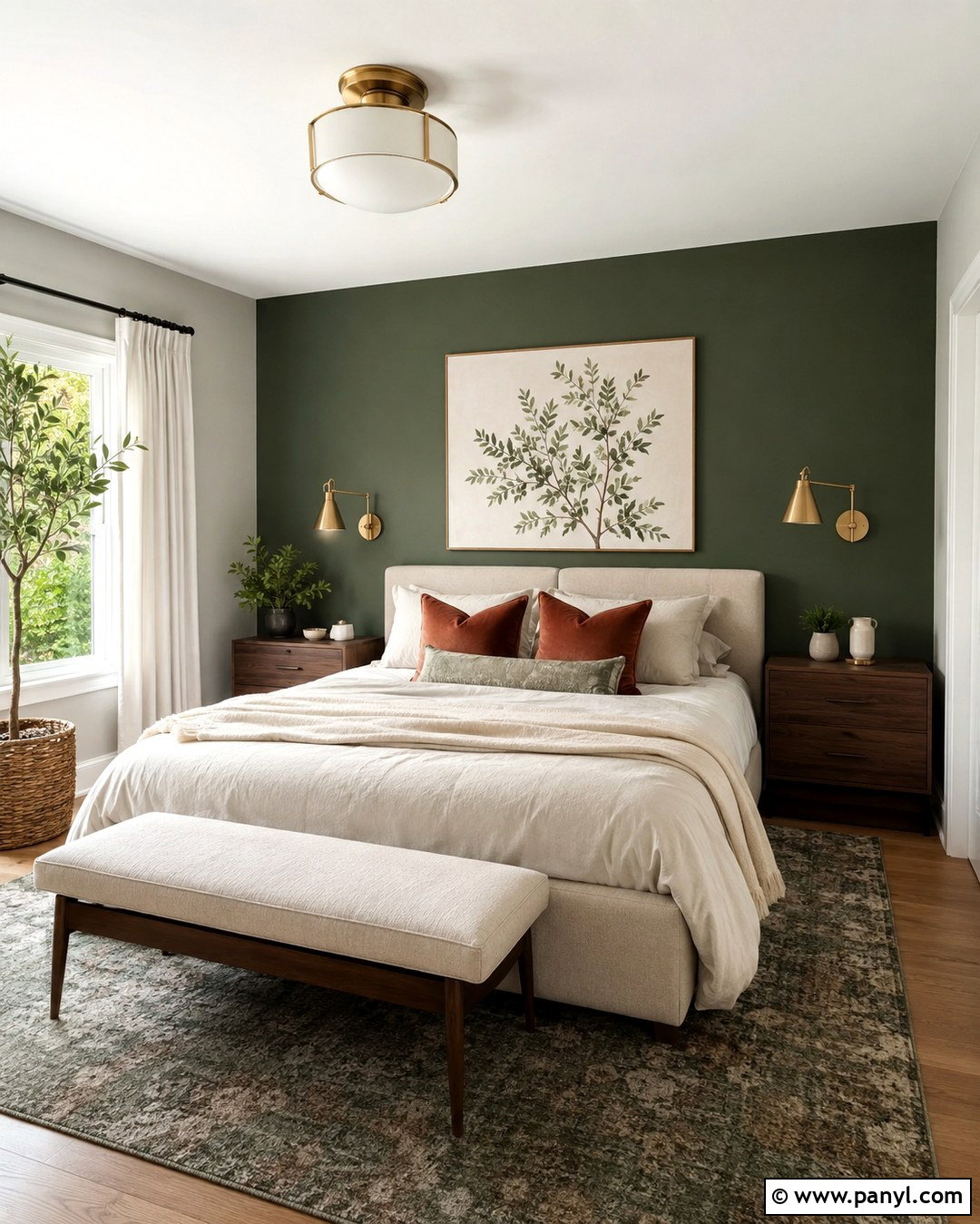
Forest green creates a rich, grounded backdrop that makes pale gray walls feel warmer and more connected to nature. In a bedroom, use the green wall behind an upholstered oatmeal headboard. Add walnut nightstands, cream bedding, and a muted gray-green area rug for a restful layered look. Brass sconces provide warm contrast against the deep green paint, while simple botanical artwork connects the accent color to the room’s natural theme. Keep the window treatments light with off-white linen curtains so the darker wall does not reduce the sense of space. A few rust or camel pillows can bridge the cool gray and earthy green tones. The result feels cozy, mature, and comfortable throughout every season.
3. Sage Green Accent Wall
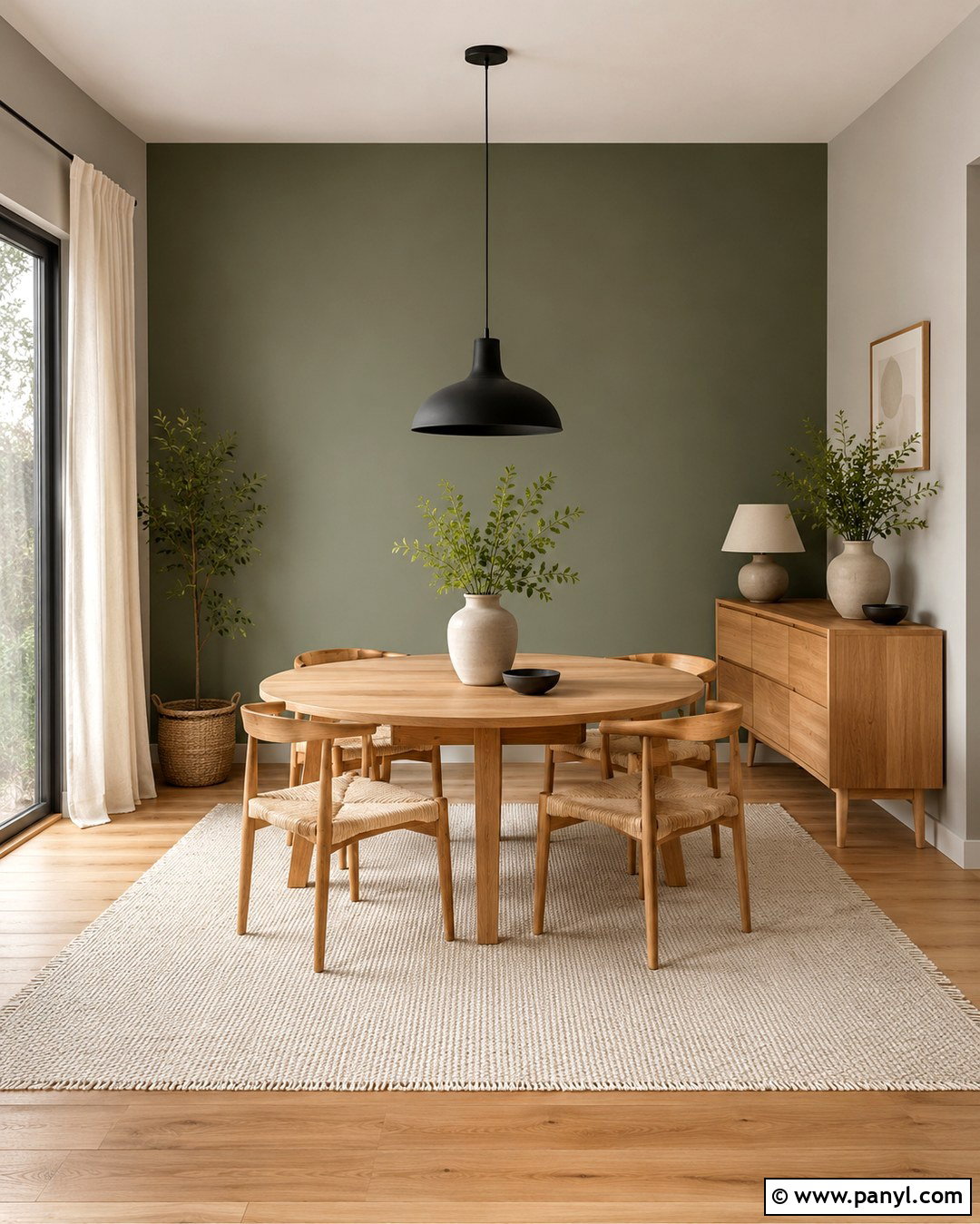
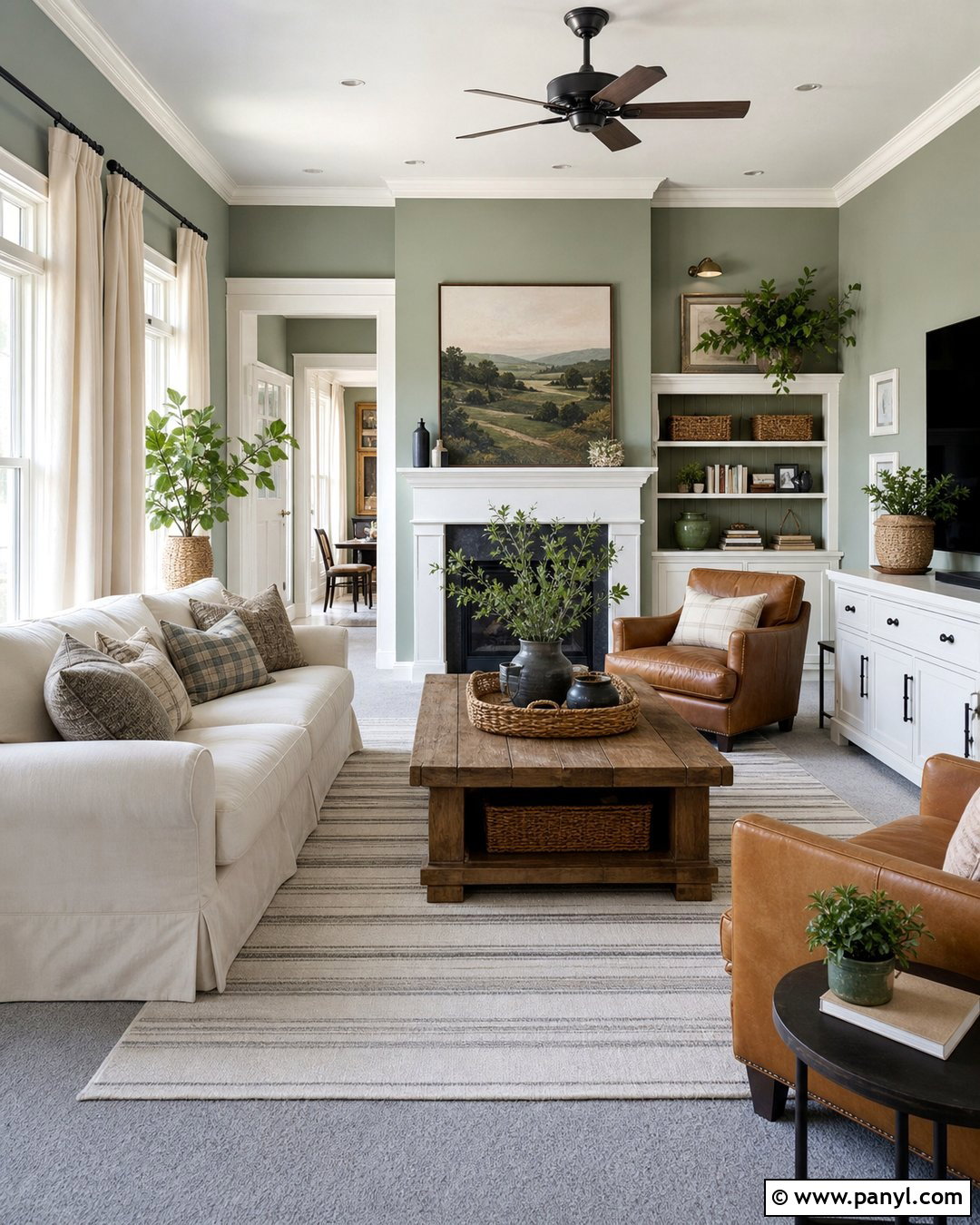
Soft sage green is an easy choice when you want contrast without making the room dramatically darker. It works especially well beside warm gray walls in a relaxed dining space. Paint the wall behind a light oak sideboard, then arrange a round wood dining table with woven-seat chairs nearby. An ivory flat-weave rug keeps the room airy, while matte black lighting adds definition. Use simple ceramic vases, leafy plants, and neutral artwork rather than filling the wall with many small decorations. Cream curtains and natural woven shades complete the gentle palette. Because sage contains muted gray undertones, the transition feels smooth and intentional. This look suits Scandinavian, farmhouse, organic modern, and casual contemporary interiors.
4. Terracotta Accent Wall
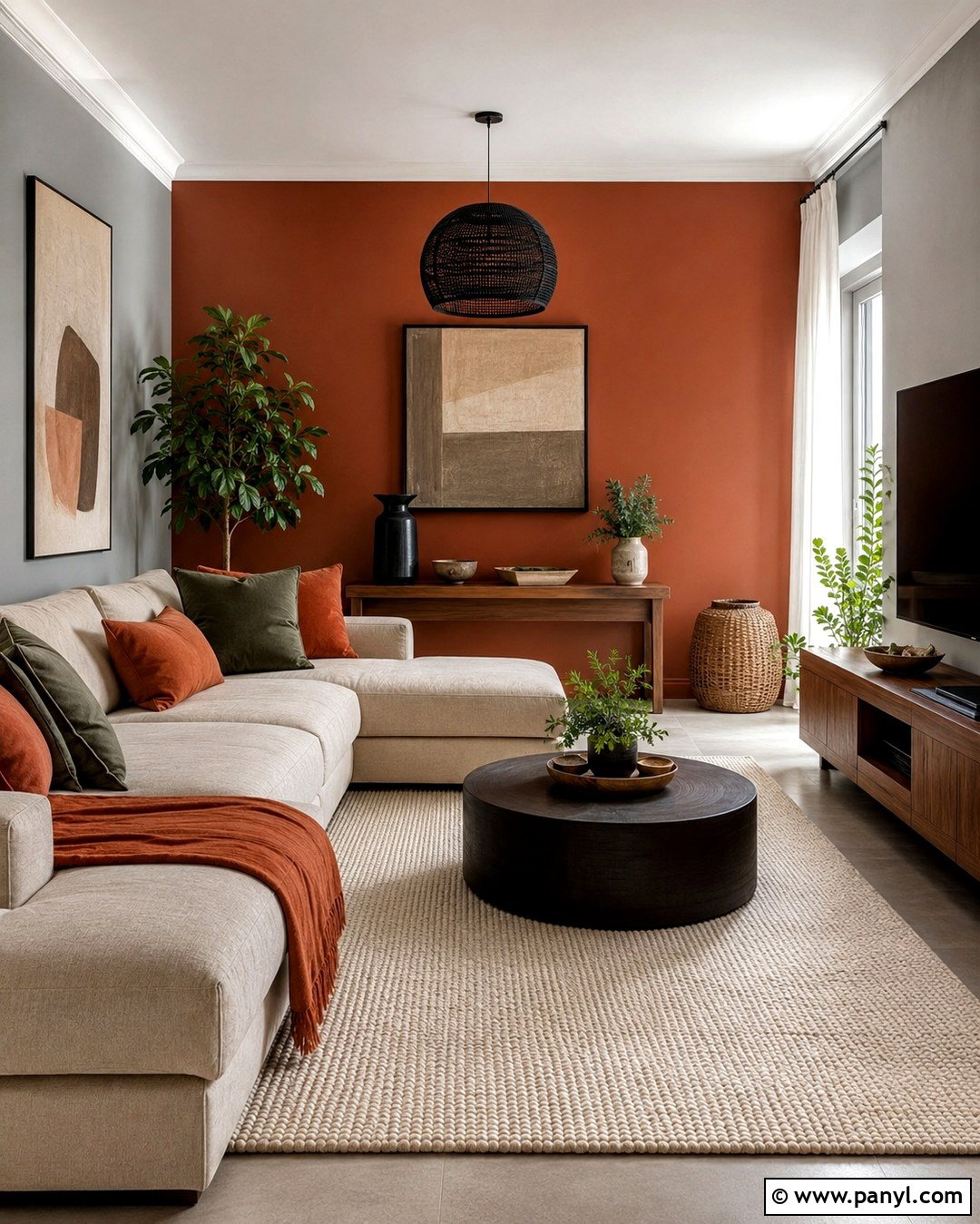
Can a cool gray room feel cozy without replacing all the existing paint? A terracotta accent wall offers an effective solution by bringing in warm clay and reddish-orange tones. Use it behind a beige sectional in a family room, then introduce a walnut media console, an ivory wool rug, and black metal lighting. Pillows in cream, rust, and muted olive help distribute the earthy palette across the seating area. Choose woven baskets and handcrafted pottery to reinforce the natural character of the wall. White ceilings and pale curtains prevent the stronger color from overwhelming the room. This combination works particularly well with gray tile or concrete-look flooring because terracotta offsets those cooler surfaces with approachable, sunbaked warmth.
5. Mustard Yellow Accent Wall
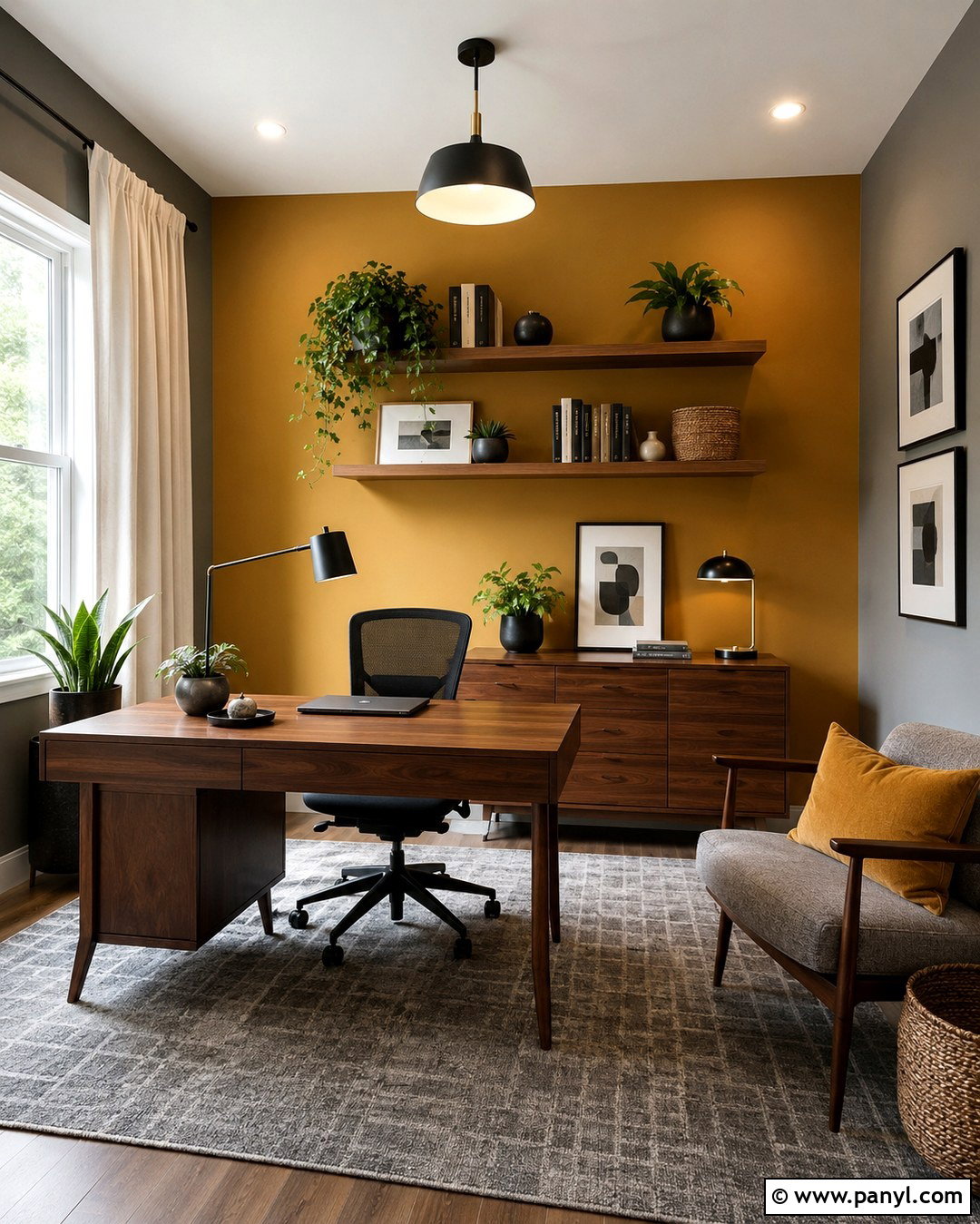
A mustard yellow accent wall can energize a gray home office while still feeling sophisticated. Select a muted golden mustard instead of a bright primary yellow, particularly when the surrounding gray has warm beige undertones. Position a walnut desk and black office chair against the accent wall, then add floating wood shelves for books, baskets, and simple framed prints. A gray patterned rug connects the feature wall to the remaining walls, while cream curtains soften the overall contrast. Repeat mustard sparingly through a desk lamp or small cushion rather than matching every accessory. Dark green plants and matte black hardware provide visual balance. This complete workspace feels cheerful, focused, and welcoming without becoming visually distracting.
6. Matte Black Accent Wall
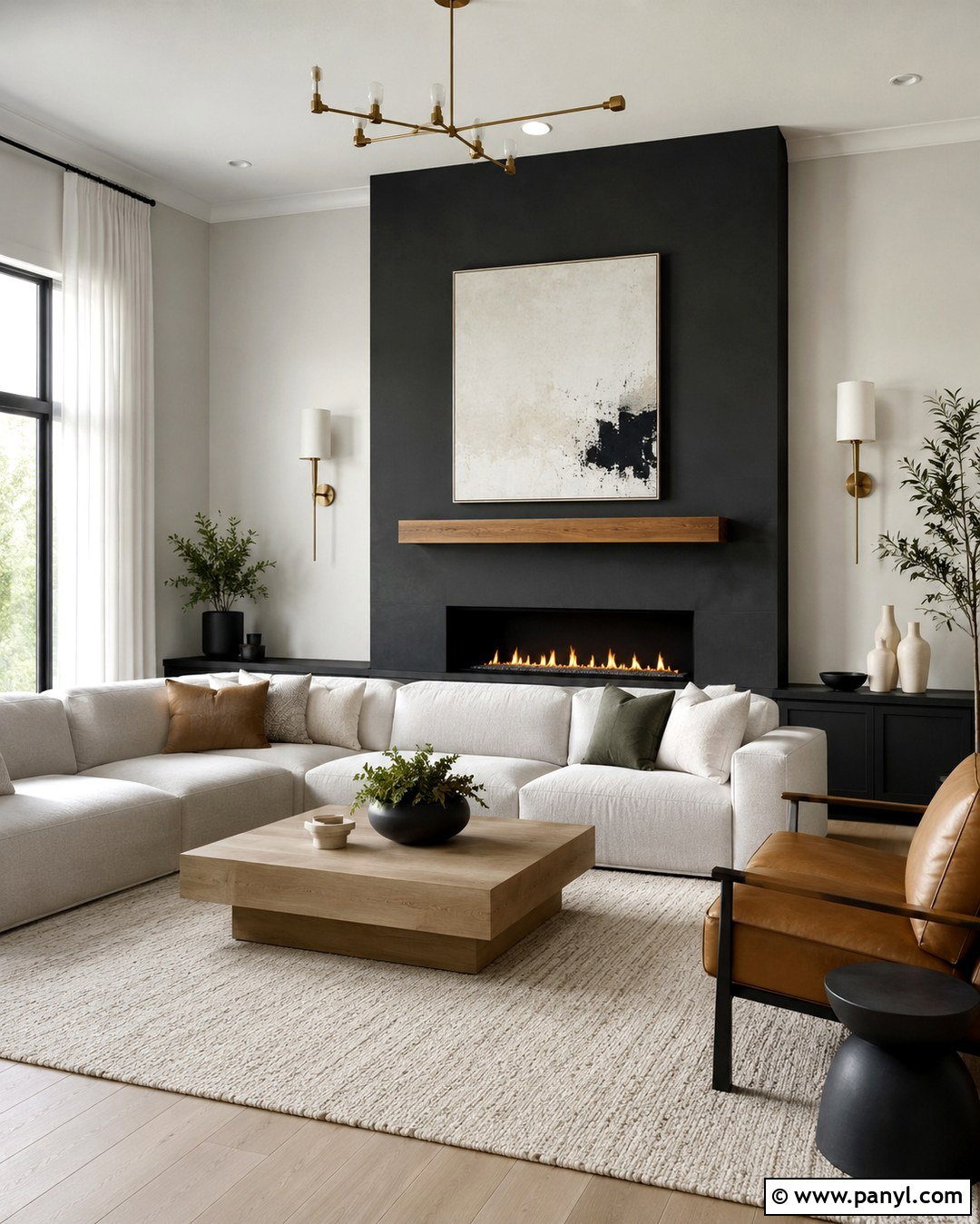
For a crisp architectural look, pair light gray walls with a matte black accent wall in a modern living room. Choose the wall containing the fireplace or television so the dark color helps those features blend into one streamlined focal point. Add a light gray sectional, a pale oak coffee table, and an oversized cream rug to balance the strong contrast. White curtains maintain brightness, while cognac leather and brushed brass accents prevent the palette from appearing cold. Keep artwork simple and large rather than creating a busy collection. If the room has limited natural light, use layered floor lamps and sconces. The finished design feels bold and intentional, yet the warm textures keep it comfortable for everyday use.
7. White Board And Batten Accent Wall
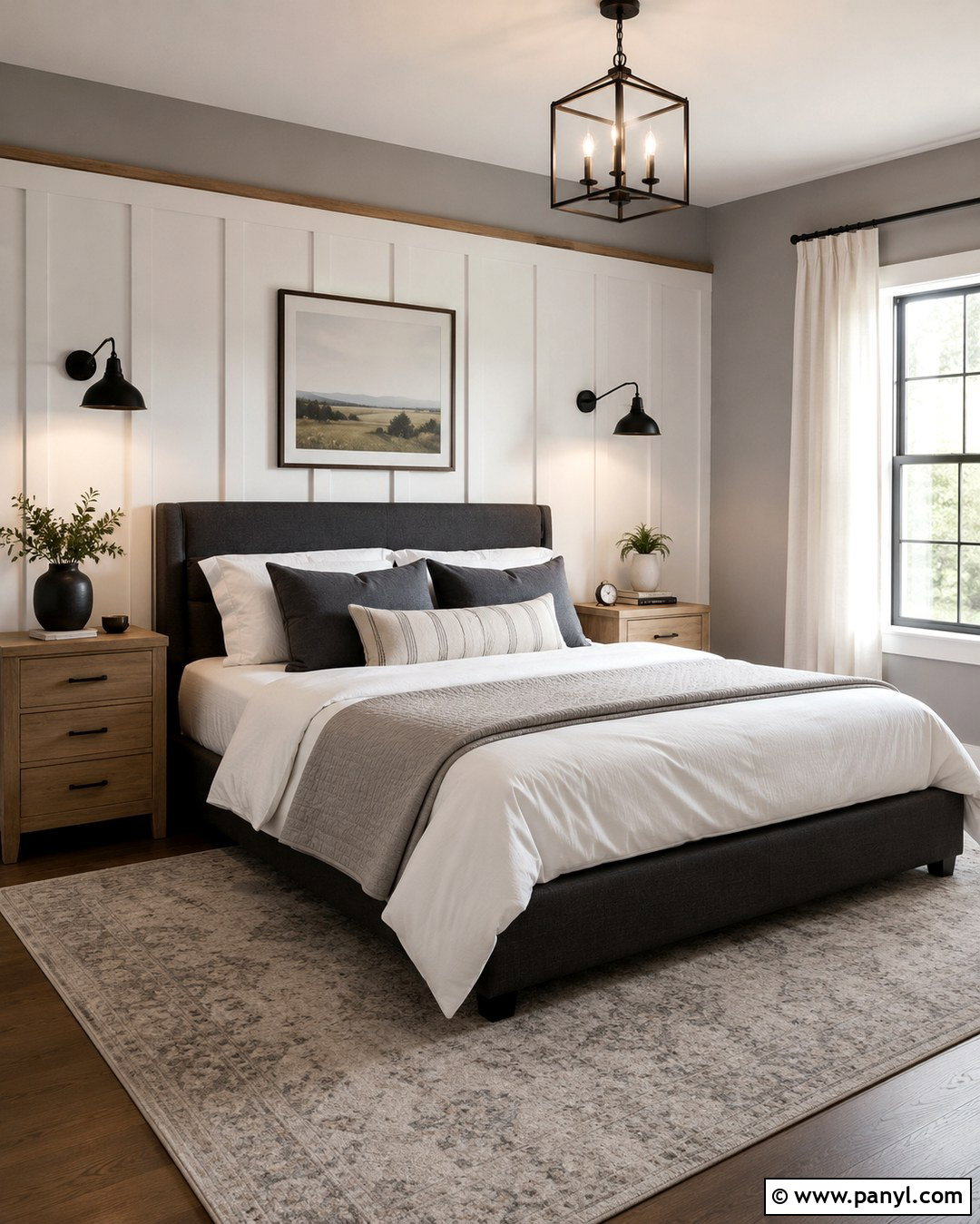
A white board and batten accent wall gives gray walls definition through texture instead of introducing another strong color. This treatment is ideal behind the bed in a small bedroom where a dark feature wall might feel too heavy. Paint the molding and wall a soft warm white, then add a charcoal upholstered bed, crisp white bedding, and a light gray throw. Pale oak nightstands bring warmth, while black sconces create clean contrast against the raised panels. Continue the white on the trim and ceiling for a connected appearance. A subtle gray-and-cream rug grounds the furniture without competing with the millwork. The completed room looks brighter, more architectural, and thoughtfully finished while keeping a calm neutral palette.
8. Charcoal Gray Accent Wall
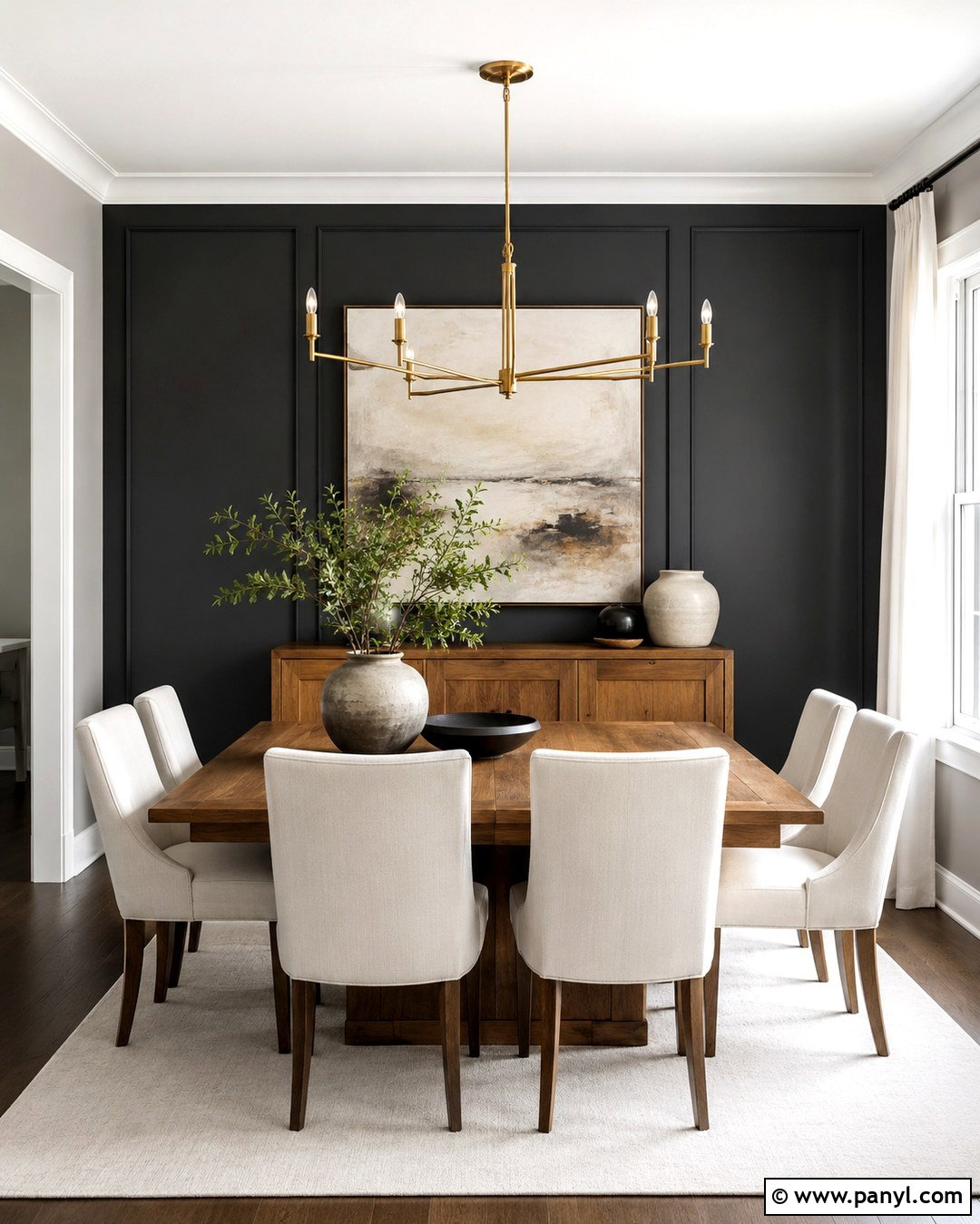
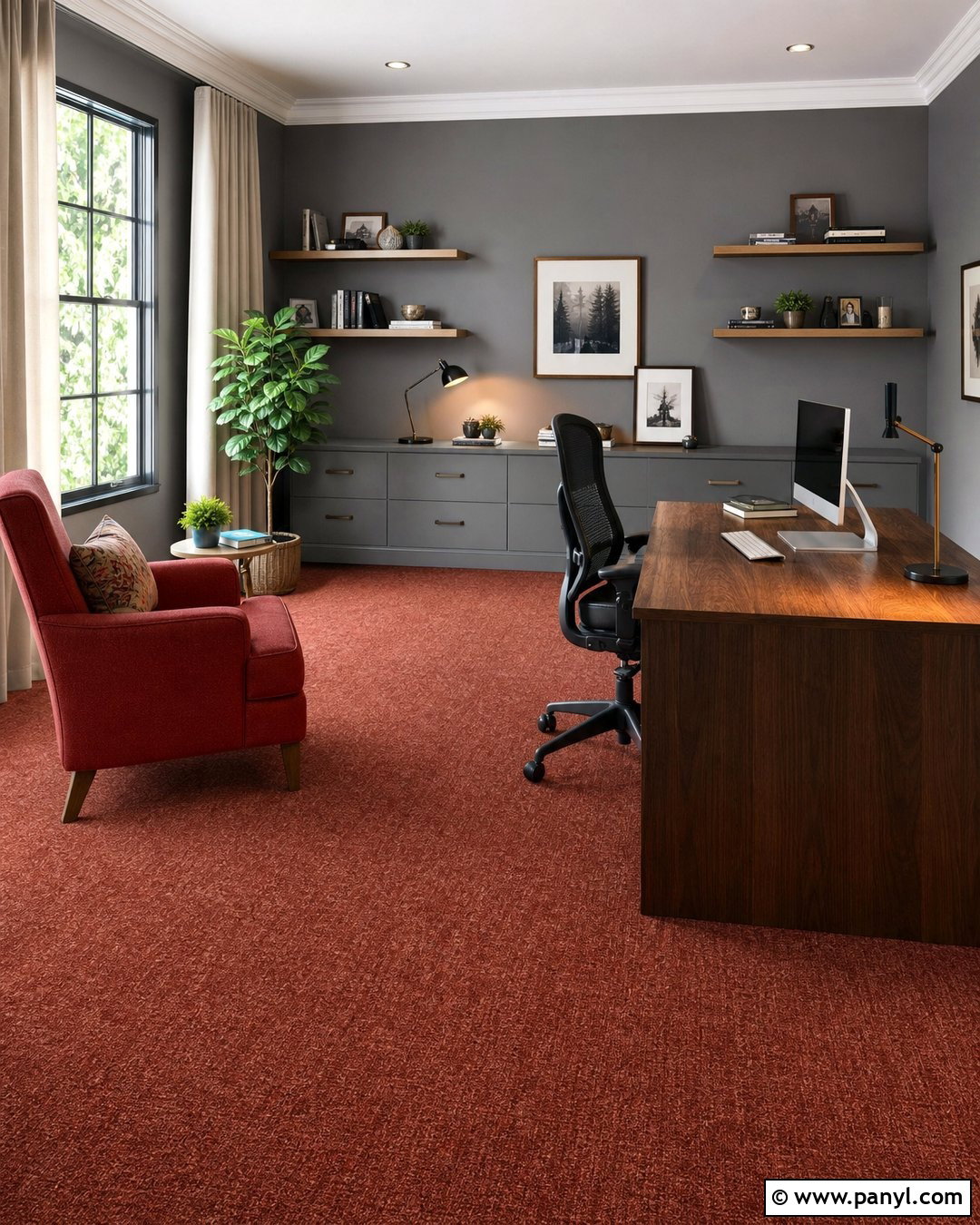
A charcoal gray accent wall creates a refined tone-on-tone scheme when the surrounding walls are pale silver gray. Use it in a dining room behind a long oak buffet to establish depth without leaving the neutral color family. Pair the wall with a warm wood dining table, cream upholstered chairs, and a large ivory rug. A sculptural brass chandelier introduces warmth and helps the room feel inviting. Decorate the buffet with ceramics, greenery, and one oversized abstract artwork containing charcoal, beige, and soft white. Keep the window treatments light and simple to protect the room’s brightness. This monochromatic approach works because the materials vary in texture and temperature, producing a layered design rather than a flat gray interior.
9. Dusty Blue Accent Wall
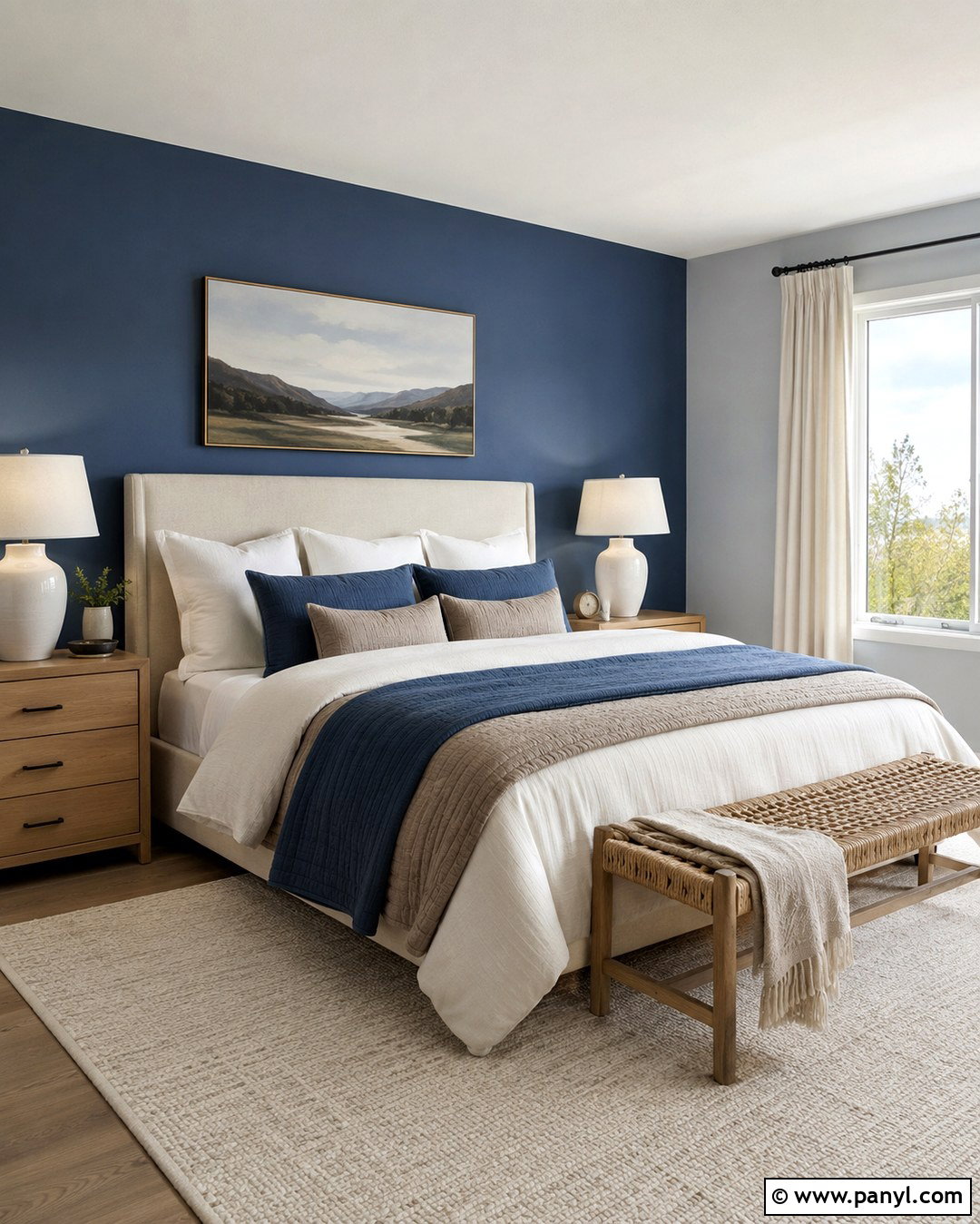
Dusty blue offers a gentle transition from cool gray walls, making it well suited to a quiet guest bedroom. Paint the wall behind the bed a muted medium blue with subtle gray undertones. Choose a natural linen headboard, white bedding, and a quilt that combines blue, cream, and soft taupe. Light oak nightstands prevent the cool palette from becoming sterile, while ceramic lamps add rounded shapes and visual softness. Hang one wide landscape print above the bed instead of several small frames. Warm white curtains filter daylight and keep the space relaxed. A woven bench and a cream rug introduce additional texture. The overall room feels soothing, airy, and coordinated without looking overly themed or predictably coastal.
10. Deep Teal Accent Wall
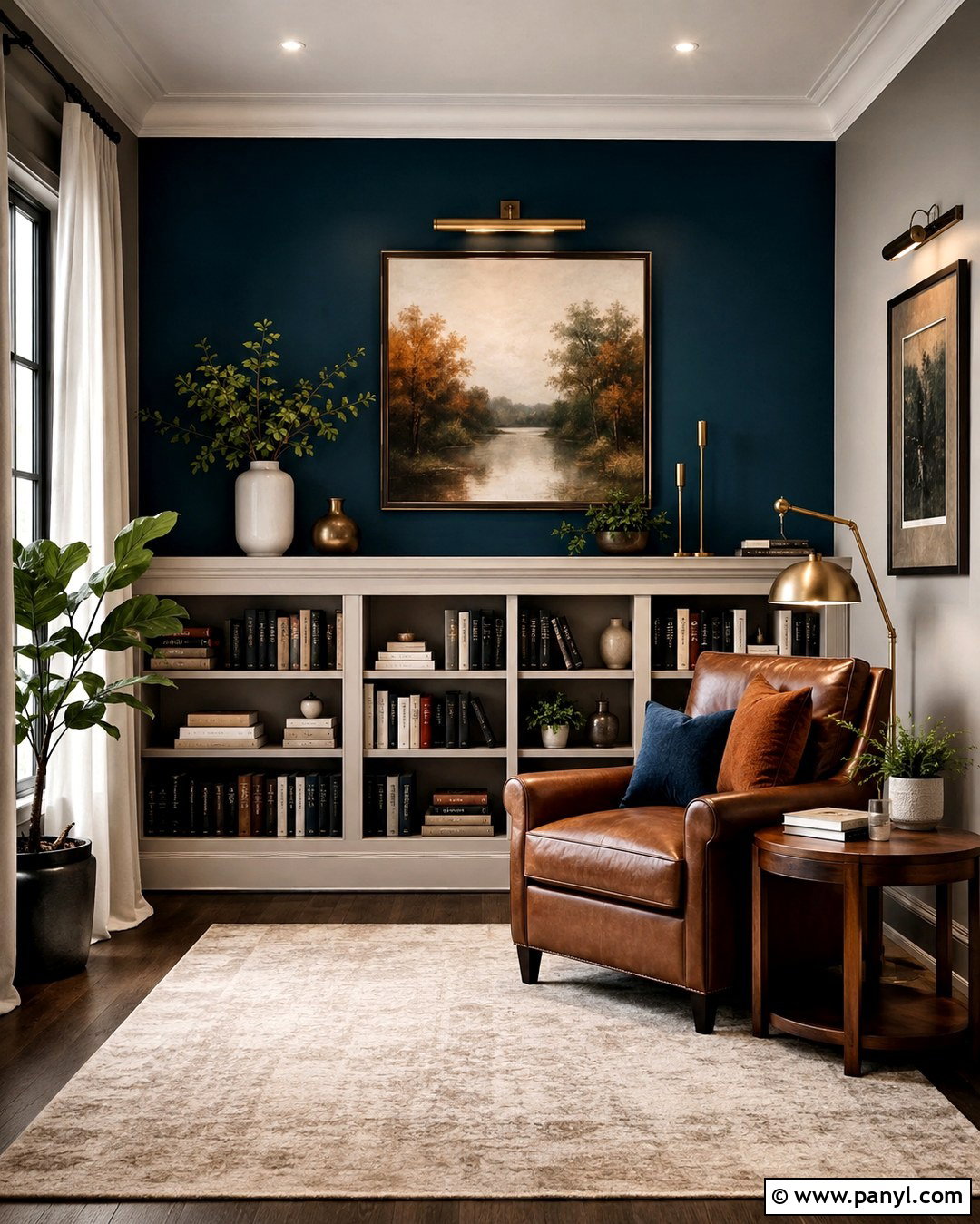
Deep teal can turn a gray reading room or den into a colorful retreat. Position the accent wall behind built-in shelves, a bookcase, or a velvet reading chair so the saturated color frames the room’s main activity. Pair it with warm gray walls, a camel leather chair, and a medium walnut side table. An ivory rug and cream curtains lighten the lower and outer edges of the space. Use brass picture lights or sconces against the teal for a warm metallic highlight. Pillows containing teal, rust, and gray can connect the color scheme without making it feel overly coordinated. With substantial wood furniture and soft textiles, this accent wall creates a balanced room that feels intimate, stylish, and practical.
11. Blush Pink Accent Wall
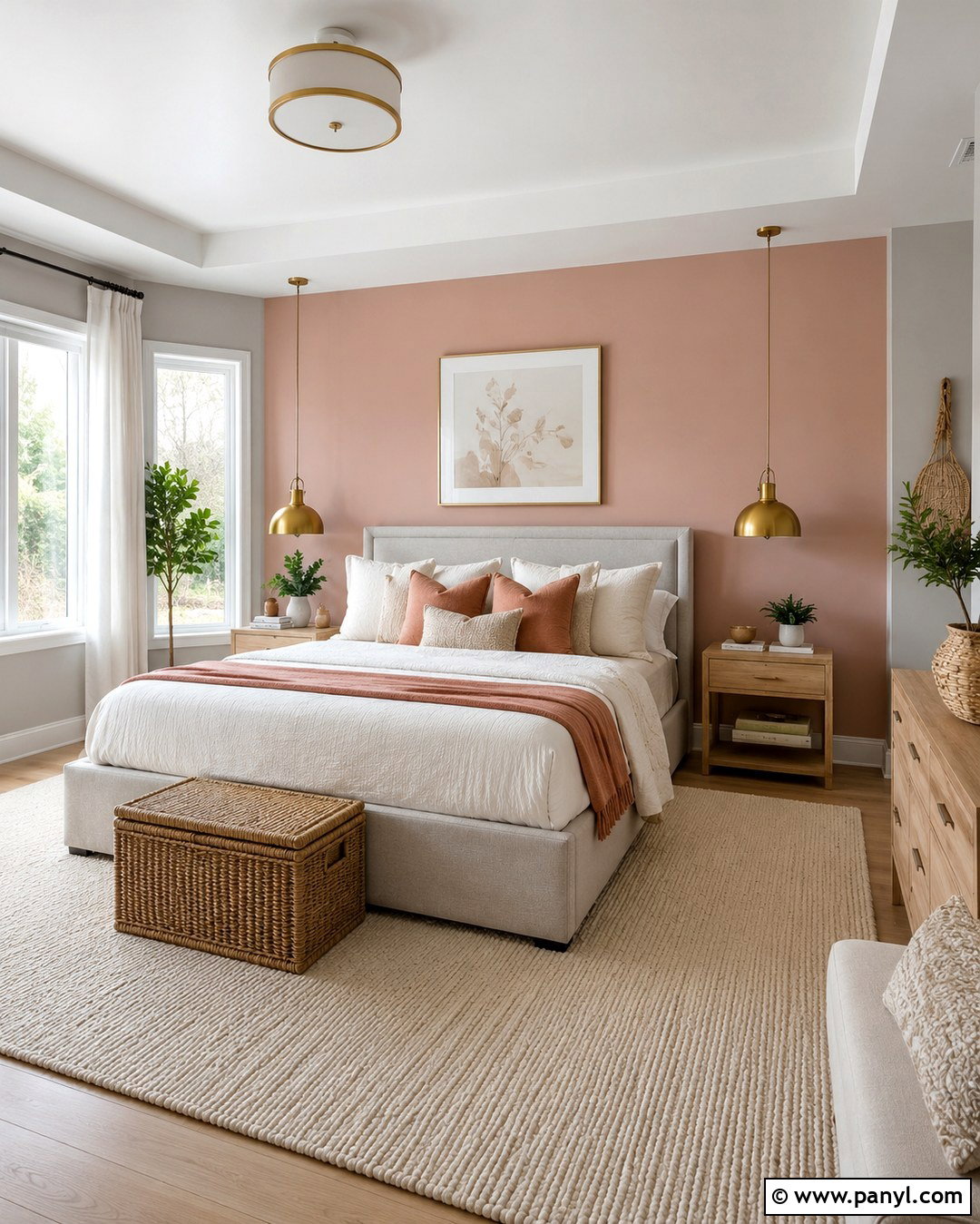
Blush pink softens gray walls and creates a warm, comfortable look without appearing overly sweet. In a bedroom or nursery, choose a muted dusty blush rather than a bright bubblegum shade. Place a light gray upholstered bed or crib against the accent wall, then add natural oak furniture, ivory curtains, and a cream textured rug. Small touches of terracotta and beige make the palette feel earthy, while brushed brass hardware adds a refined finish. Keep decorative pieces simple with woven baskets, neutral artwork, and one leafy plant. White trim provides a clean boundary between the pink and gray surfaces. This complete design feels calm and welcoming, and it can adapt easily as furniture and accessories change over time.
12. Burgundy Accent Wall
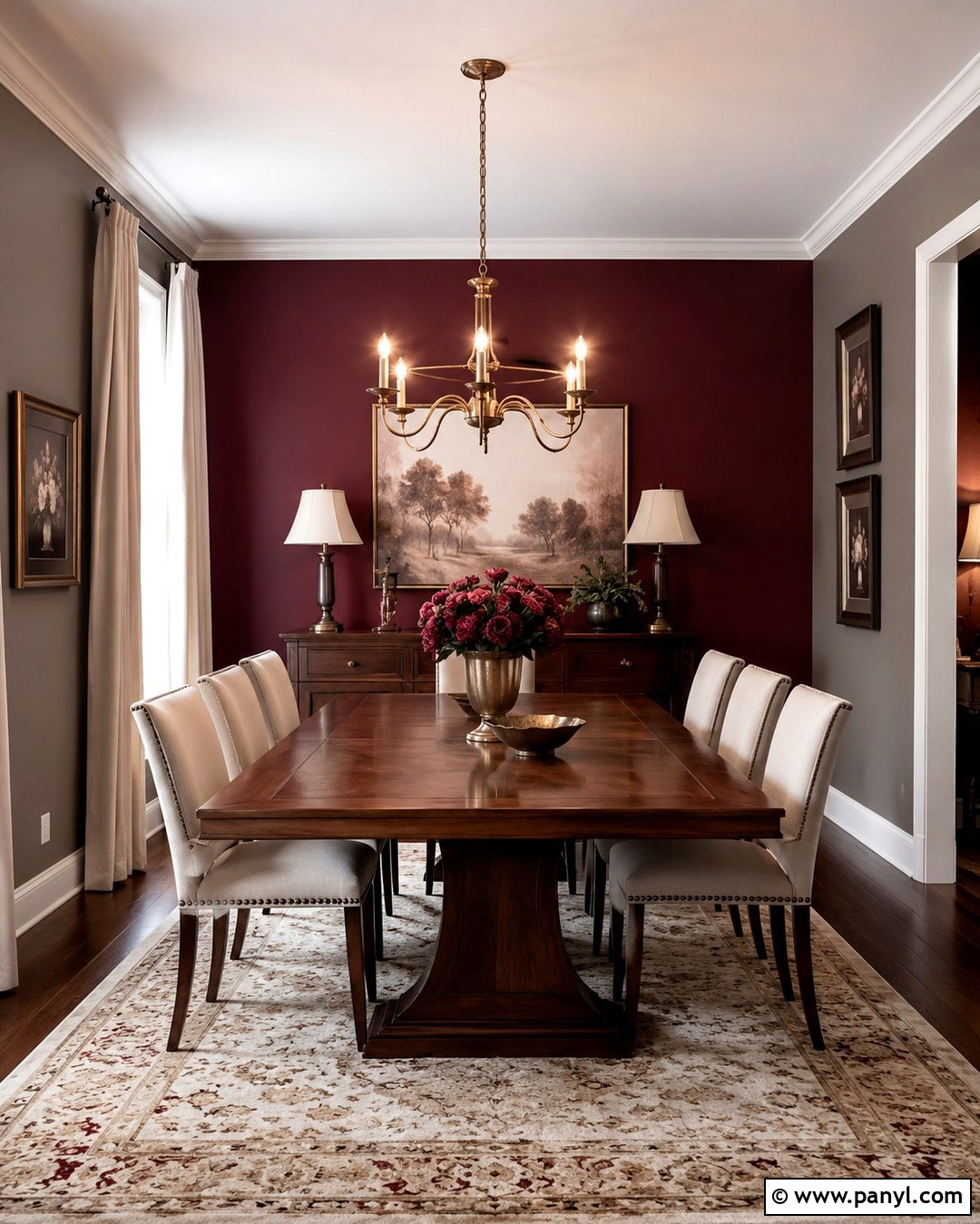
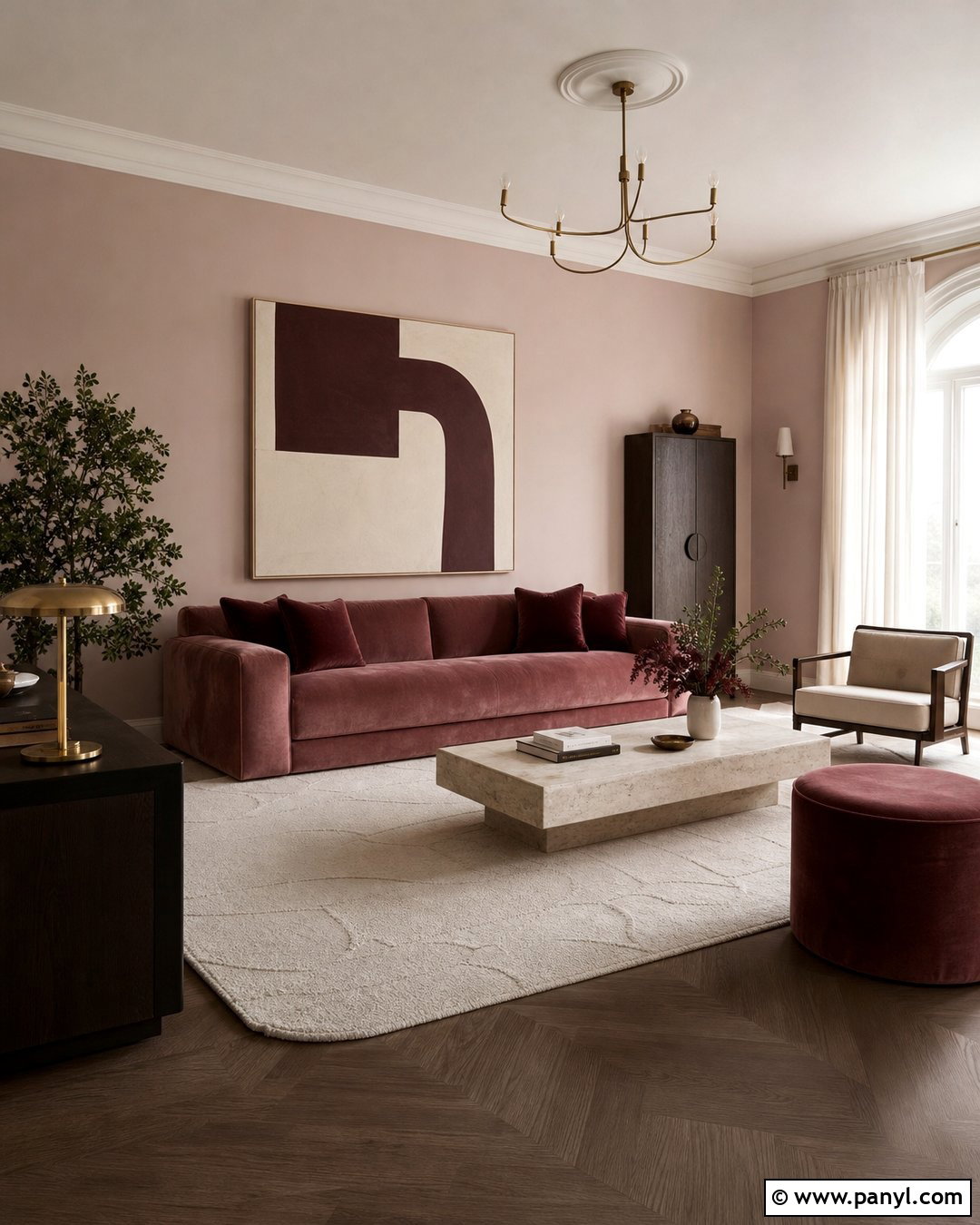
Deep burgundy gives gray walls a dramatic, tailored appearance, especially in a dining room or home library. Use the color on the wall behind a dark wood bookcase, sideboard, or framed art collection. Surround it with warm medium-gray walls to soften the contrast. A walnut table, cream upholstered chairs, and an antique-inspired neutral rug create a balanced foundation. Introduce aged brass lighting and small touches of muted rose to connect the red undertones throughout the room. Avoid filling the space with additional dark furniture; lighter textiles and pale window treatments are essential. The completed palette feels rich rather than flashy. It is particularly effective in traditional, transitional, and vintage-inspired interiors that benefit from a stronger focal point.
13. Chocolate Brown Accent Wall
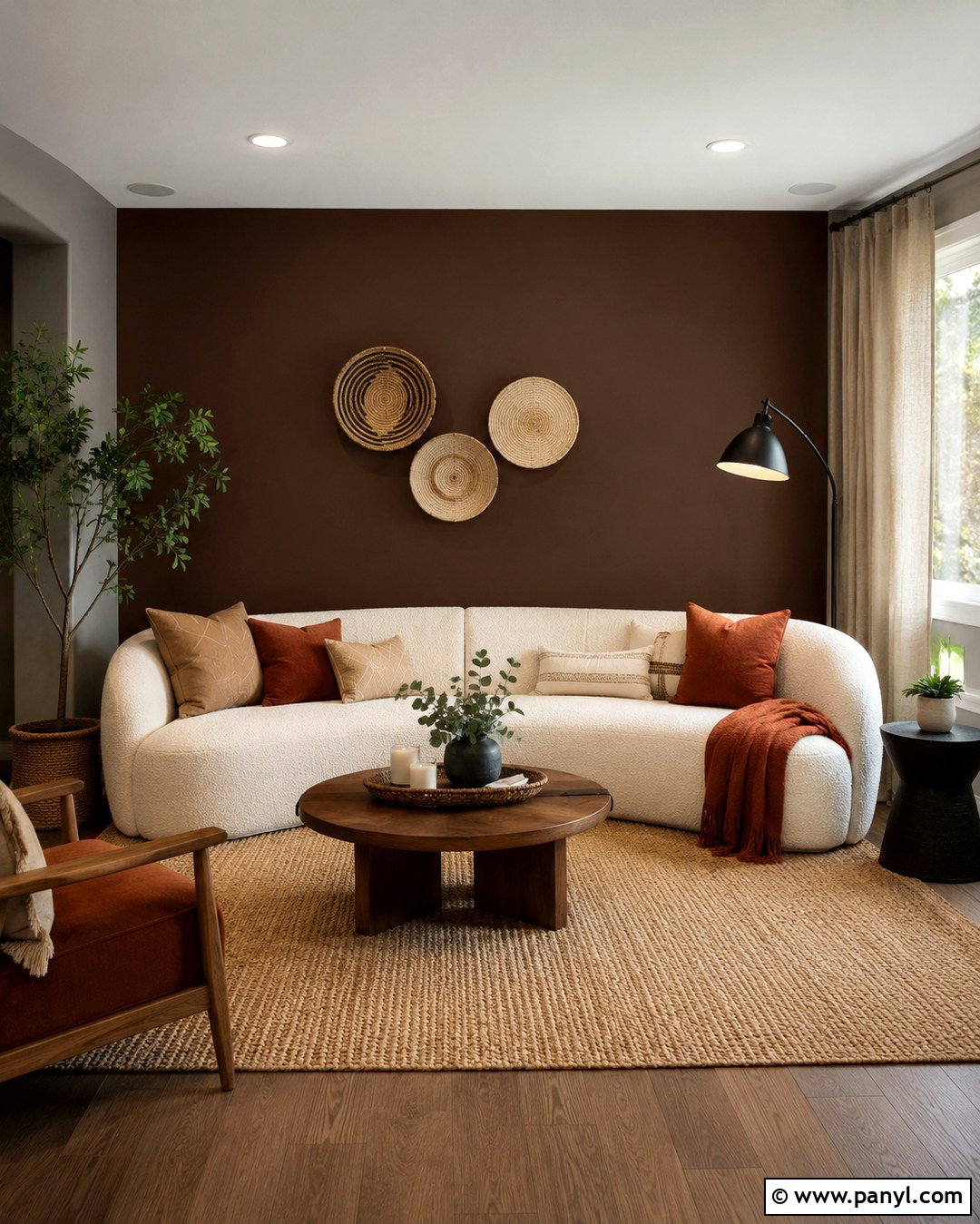
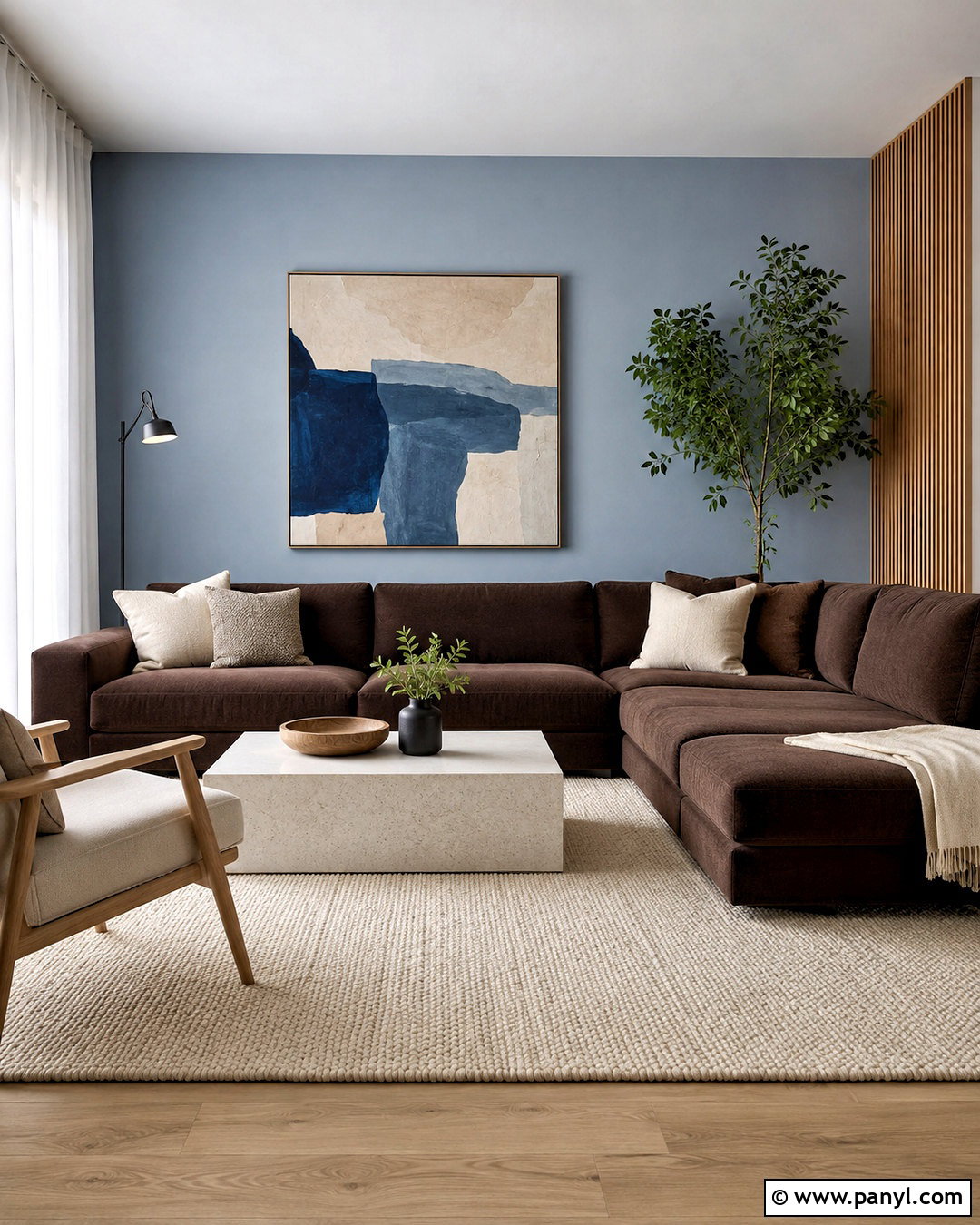
Chocolate brown brings earthy warmth to cool gray walls and works beautifully in a comfortable living room. Paint the wall behind a cream boucle sofa or a pale gray sectional, then add walnut furniture and a warm beige rug. Curtains in natural linen keep the windows light, while rust, camel, and ivory pillows create a gradual transition between gray and brown. Black metal lamps provide definition without introducing another competing color. Consider one oversized cream artwork or a simple woven wall hanging against the brown backdrop. The room should include several soft textures, such as wool, linen, and boucle, to prevent the deep color from feeling flat. This scheme delivers a grounded, modern look with lasting warmth and everyday livability.
14. Warm Beige Accent Wall
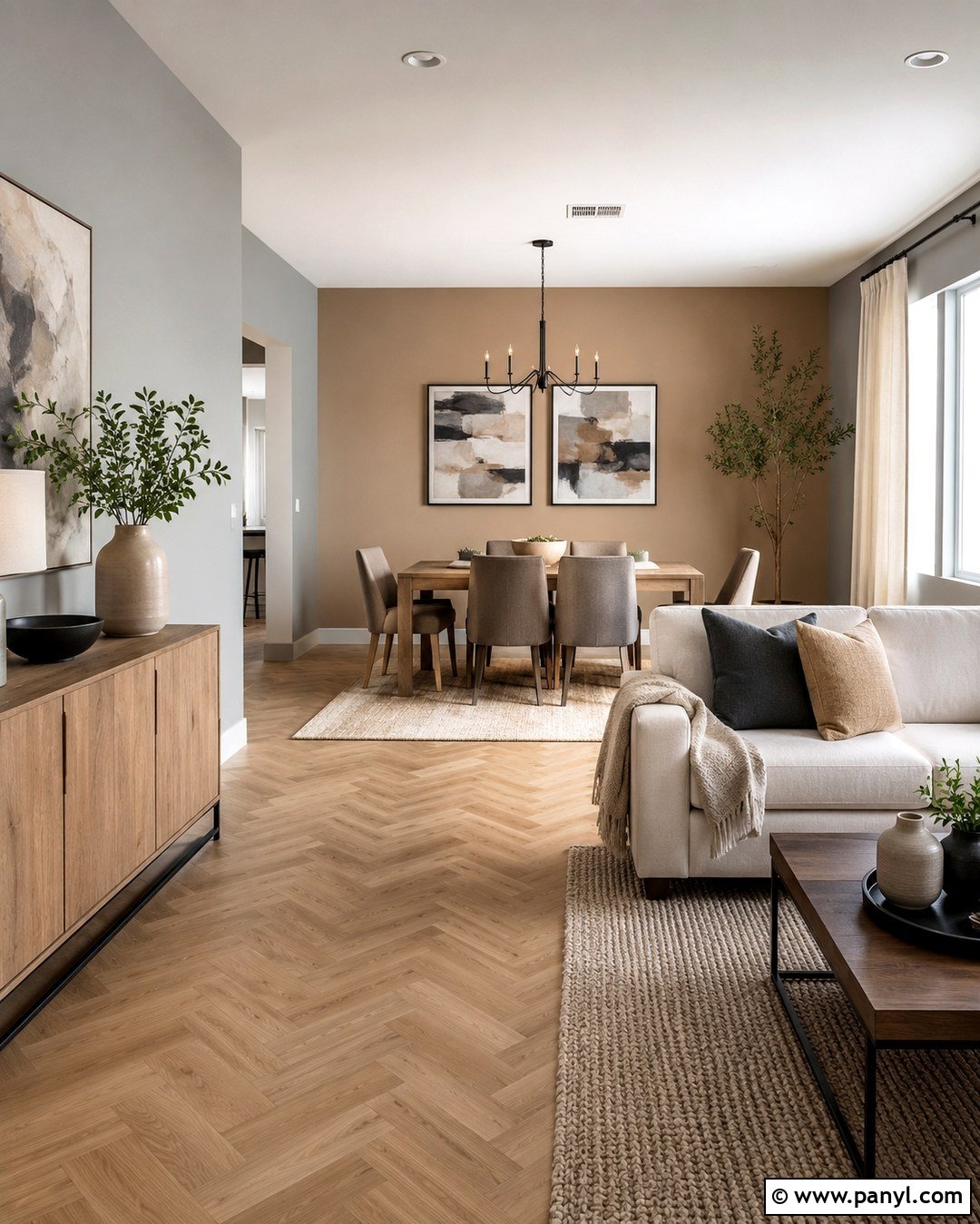
When subtle contrast feels more appealing than bold color, a warm beige accent wall can transform cool gray surroundings. This pairing suits an open living and dining area where a gentle focal point is needed without visually dividing the space. Use beige behind the dining table, then repeat it through a textured rug and upholstered chairs. Choose light oak furniture, cream curtains, and matte black fixtures for clean definition. On the adjacent gray walls, hang artwork that contains both taupe and soft gray to connect the palette. Natural ceramics and woven accessories add depth without clutter. The finished interior feels brighter and less industrial, especially in homes with gray flooring. Beige provides warmth while preserving the quiet flexibility of a neutral room.
15. Natural Wood Slat Accent Wall
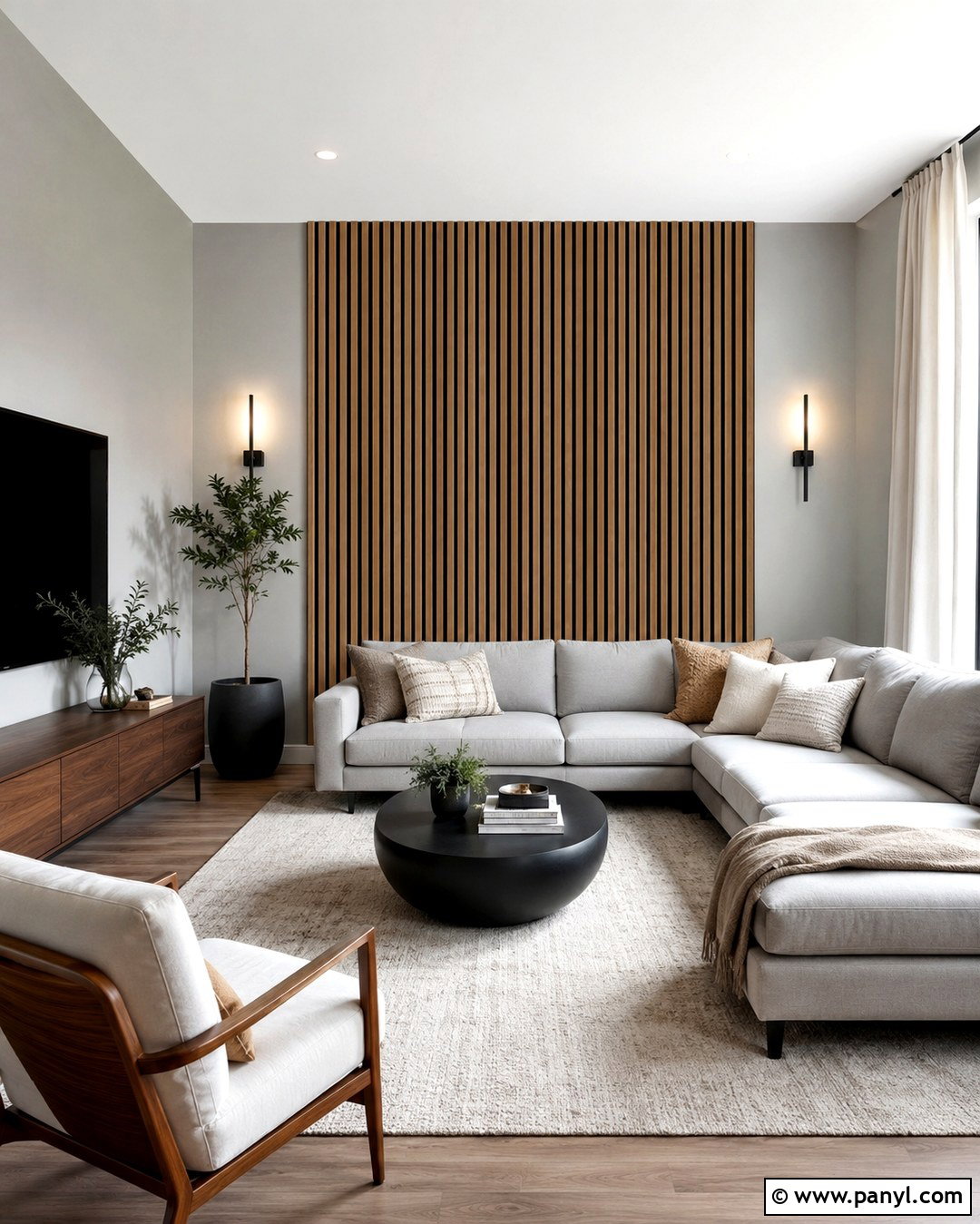
A natural wood slat accent wall introduces warmth, pattern, and architectural texture beside flat gray walls. Install vertical oak slats behind a media console or low-profile bed, using a dark backing between the boards for stronger definition. In a living room, pair the feature with a soft gray sectional, an ivory area rug, and a rounded black coffee table. Add cream curtains, linen pillows, and a few green plants to soften the straight lines. Keep the remaining furniture simple so the wood remains the visual focus. Integrated sconces or ceiling spotlights can highlight the grain evenly. This complete scheme is ideal for modern and midcentury interiors, offering a natural focal point without adding a heavily saturated paint color.
16. Red Brick Accent Wall
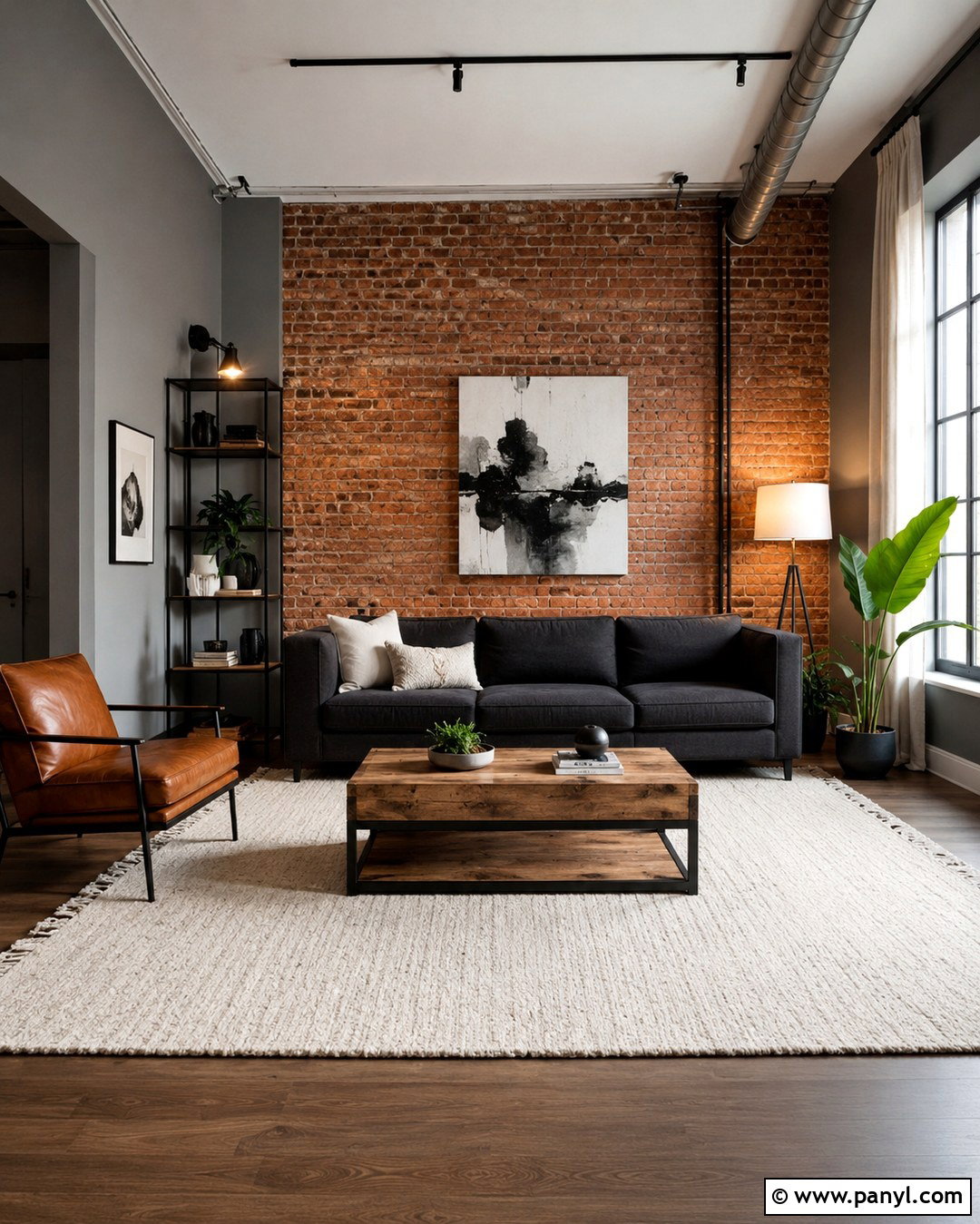
An exposed red brick accent wall gives gray rooms a warmer, more established character. If real brick is unavailable, use a convincing thin brick veneer with varied red, brown, and soft cream tones. In a loft-inspired living room, position a charcoal sofa against the brick and add a cognac leather chair, reclaimed wood coffee table, and large ivory rug. Black metal shelving echoes the industrial influence, while linen curtains keep the room approachable. Add artwork sparingly because the brick already supplies substantial color and texture. Warm white lamps will emphasize its natural variation and soften the surrounding gray paint. The complete look feels relaxed and collected, blending industrial materials with comfortable furniture suitable for a normal family home.
17. Geometric Wallpaper Accent Wall
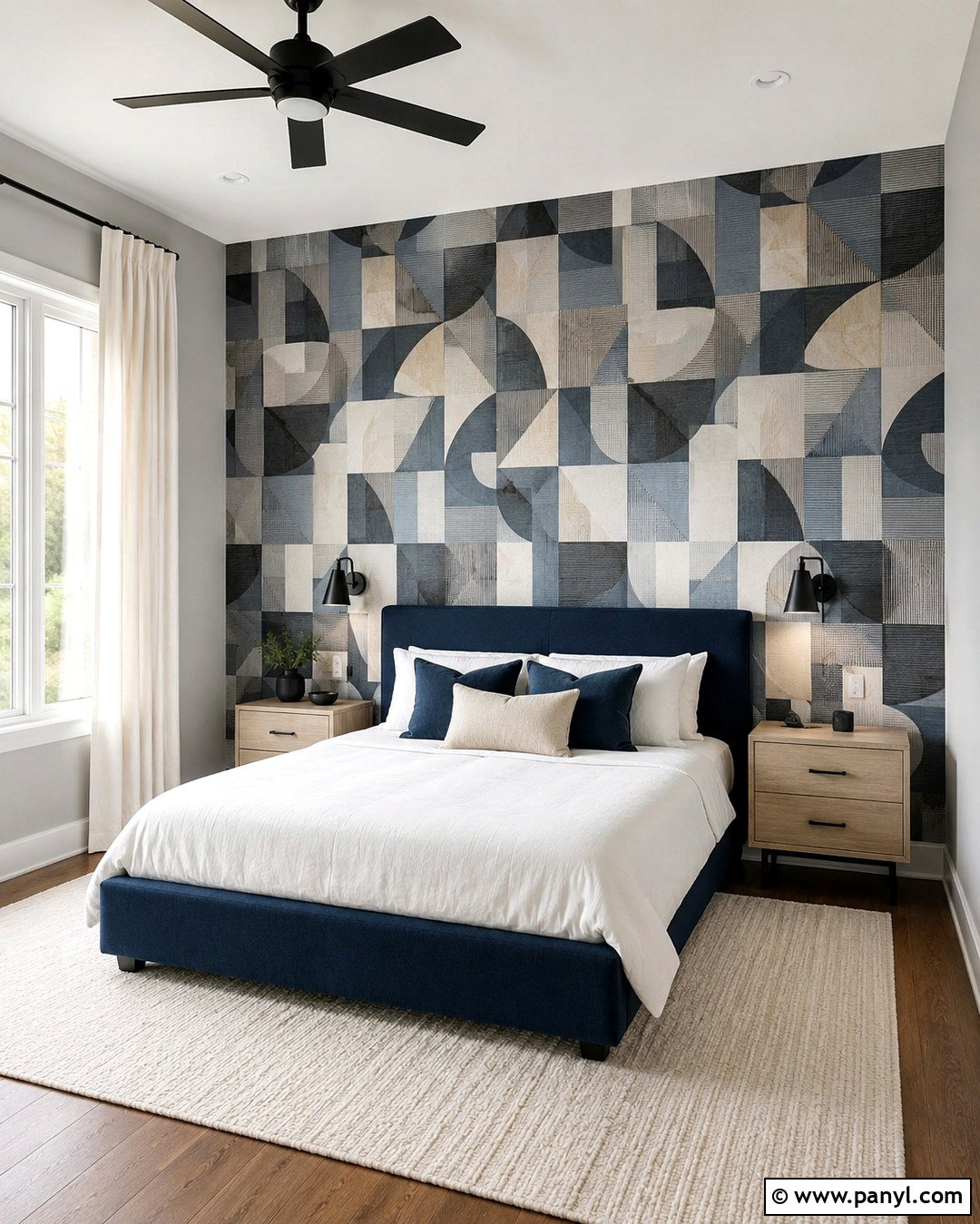
Geometric wallpaper adds pattern to gray walls while giving the entire room a clear visual direction. Choose a medium-scale design containing charcoal, cream, and muted blue so it coordinates naturally with the existing gray. Use it behind a streamlined bed or dining banquette, where furniture helps anchor the repeating pattern. Keep large furnishings solid and simple, such as a navy upholstered bed, light oak nightstands, and an ivory rug. Black lighting and white trim create sharp, modern edges. Avoid adding several competing prints; use plain curtains and mostly solid pillows instead. The result should feel balanced rather than busy. This complete design works especially well in contemporary bedrooms, offices, and dining nooks that need personality without major structural changes.
18. Botanical Wallpaper Accent Wall
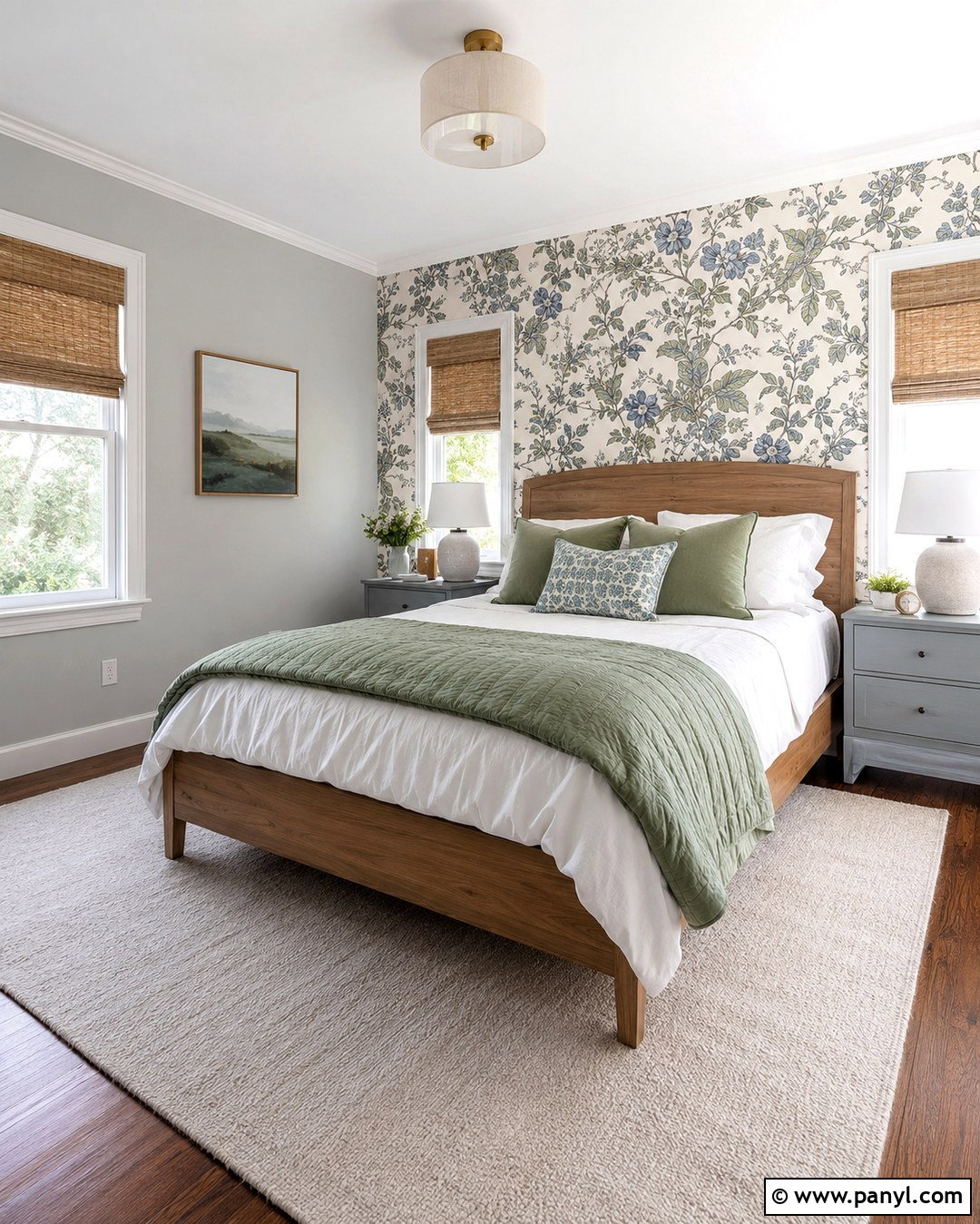
Botanical wallpaper can make gray walls feel fresher by introducing organic shapes and several coordinated colors at once. Select a pattern with a soft cream background, sage leaves, muted blue details, and touches of charcoal. Place it behind the bed in a guest room, then choose a simple oak headboard, white bedding, and a sage quilt. Gray nightstands or lamps connect the wallpaper to the surrounding walls. Use natural woven shades and an ivory rug to maintain a light, relaxed atmosphere. Keep accessories minimal because the pattern serves as the room’s main artwork. This design feels layered and inviting without requiring a bright painted wall. It is a practical choice for traditional, cottage, and nature-inspired interiors.
19. Deep Plum Accent Wall
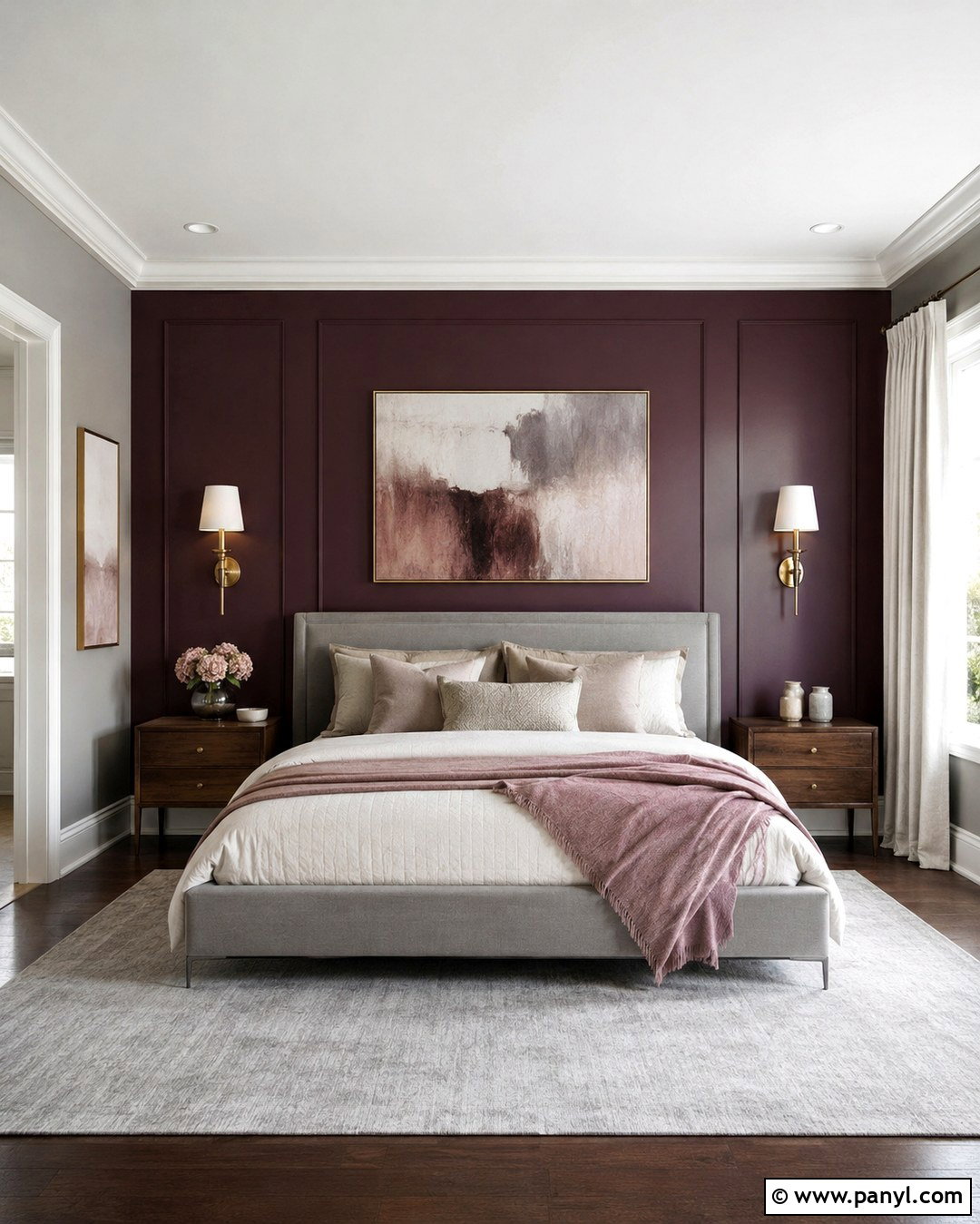
Deep plum brings sophisticated color to gray walls and can make a bedroom feel especially comfortable. Choose a brown-based plum rather than a bright purple so the result remains grounded. Paint the wall behind a warm gray upholstered bed, then layer ivory sheets, taupe pillows, and a muted rose throw. Walnut nightstands and brass sconces complement the warm undertones of the accent color. A pale gray rug ties the bed area to the surrounding walls, while off-white curtains prevent the room from becoming too dark. Use abstract artwork with plum, cream, and subtle gold details to reinforce the palette. The finished design feels luxurious yet approachable, offering more personality than an all-neutral bedroom while maintaining a peaceful atmosphere.
20. Burnt Orange Accent Wall
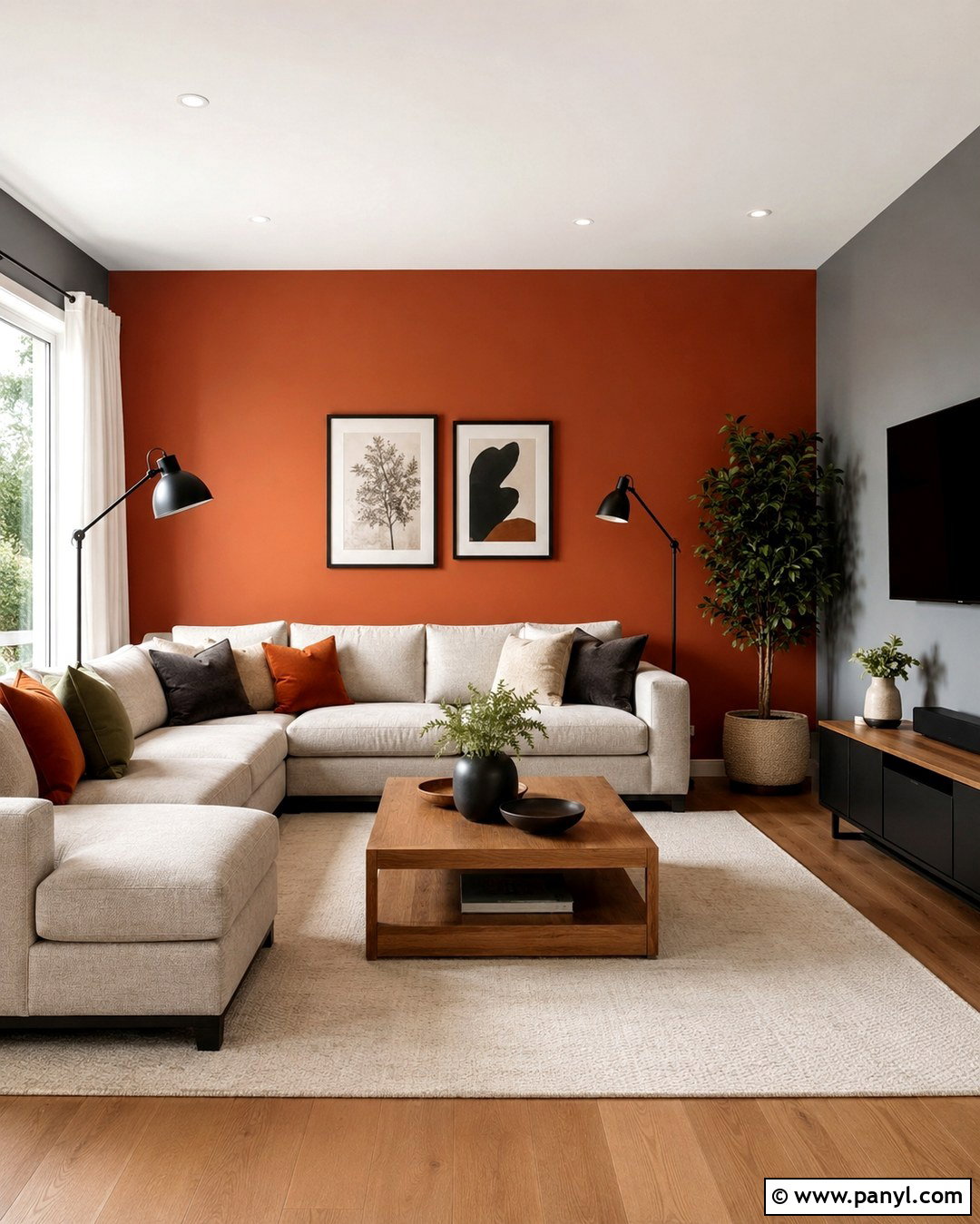
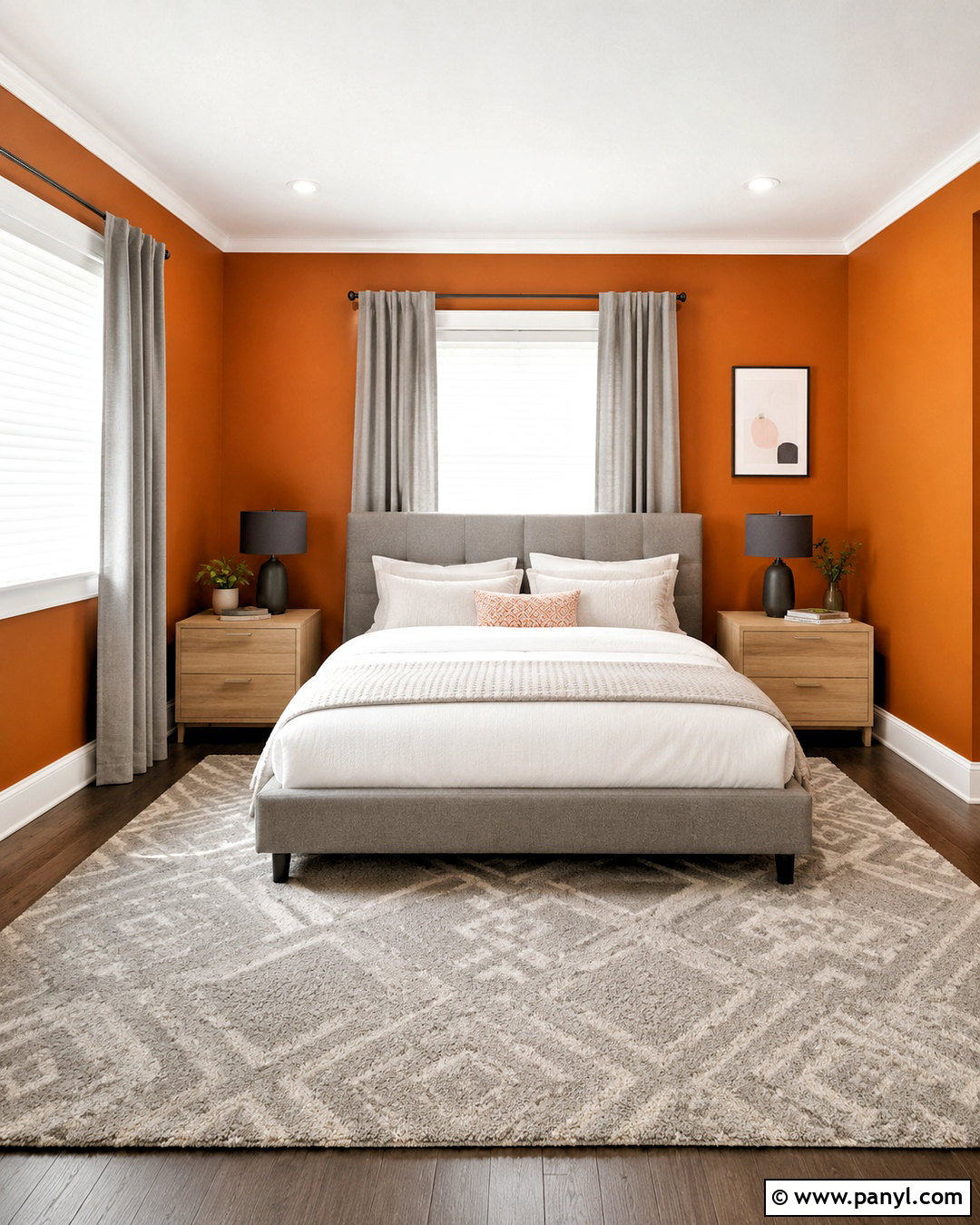
Burnt orange provides lively warmth against medium or cool gray walls, making it ideal for a casual family room. Apply it behind the sectional or entertainment unit, then balance the color with a large oatmeal sofa, a cream rug, and medium-tone oak furniture. Add cushions in rust, olive green, charcoal, and ivory to distribute the palette around the room. Matte black lamps and curtain rods create modern definition, while white curtains reflect natural light. Limit additional orange accessories so the wall remains intentional rather than repetitive. Green plants work especially well in this setting because their leaves create natural contrast. The full room feels upbeat, grounded, and comfortable, with enough neutral space to keep the bold wall easy to live with.
Conclusion:
Choosing the right **Accent Wall To Go With Gray Walls** becomes easier when you consider undertones, lighting, room size, and existing furniture together. Cool gray can feel calm beside navy, dusty blue, teal, or forest green. Warm gray pairs naturally with terracotta, mustard, beige, brown, and burgundy. For a neutral result, consider charcoal, white molding, wood slats, brick, or a coordinated wallpaper. Whatever finish you choose, repeat its color subtly through textiles, artwork, or small accessories. Then balance darker walls with light rugs, curtains, and upholstery. Test paint or wallpaper in the room before committing, since daylight and artificial lighting can noticeably change the final appearance.

Related Ideas and Inspiration:
Leave a Reply