
Blue accent walls can make a room feel calmer, richer, brighter, or more dramatic without requiring a complete renovation. The key is choosing a shade and finish that support the room’s natural light, architecture, furniture, and purpose. Deep navy can frame a fireplace or bed, while powder blue creates an airy background for pale woods and relaxed textiles. Texture also matters. Paneling, wallpaper, tile, limewash, and painted built-ins can give blue more depth than a basic flat wall. A successful accent wall should emphasize a clear focal point and connect with smaller blue details across the room. The following 40 Blue Accent Wall Ideas offer complete, practical looks for living rooms, bedrooms, kitchens, bathrooms, offices, and other spaces.

1. Navy Blue Living Room Accent Wall
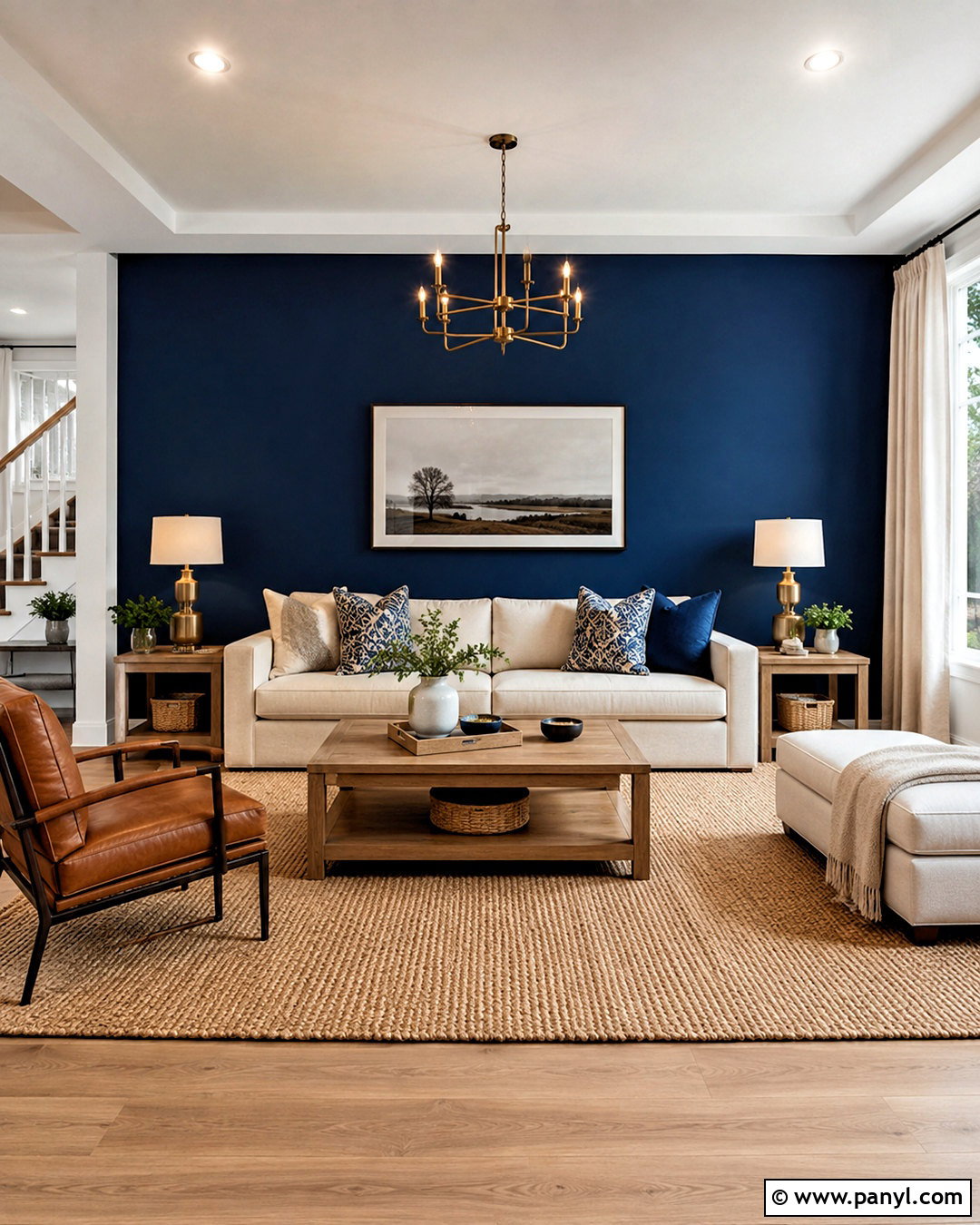
A navy blue accent wall gives a living room a strong focal point without overwhelming the entire space. Place it behind a cream sofa or a streamlined media console so the largest furniture piece feels visually anchored. Keep the surrounding walls warm white rather than cool gray to soften the contrast. A light oak coffee table, woven rug, and cognac leather chair introduce natural warmth. Repeat navy in two or three smaller details, such as patterned pillows, ceramic lamps, or framed artwork. Brushed brass lighting adds a gentle glow against the dark background. For a balanced layout, leave enough open space around the furniture and use full-length ivory curtains to reflect daylight throughout the room.
2. Powder Blue Bedroom Accent Wall
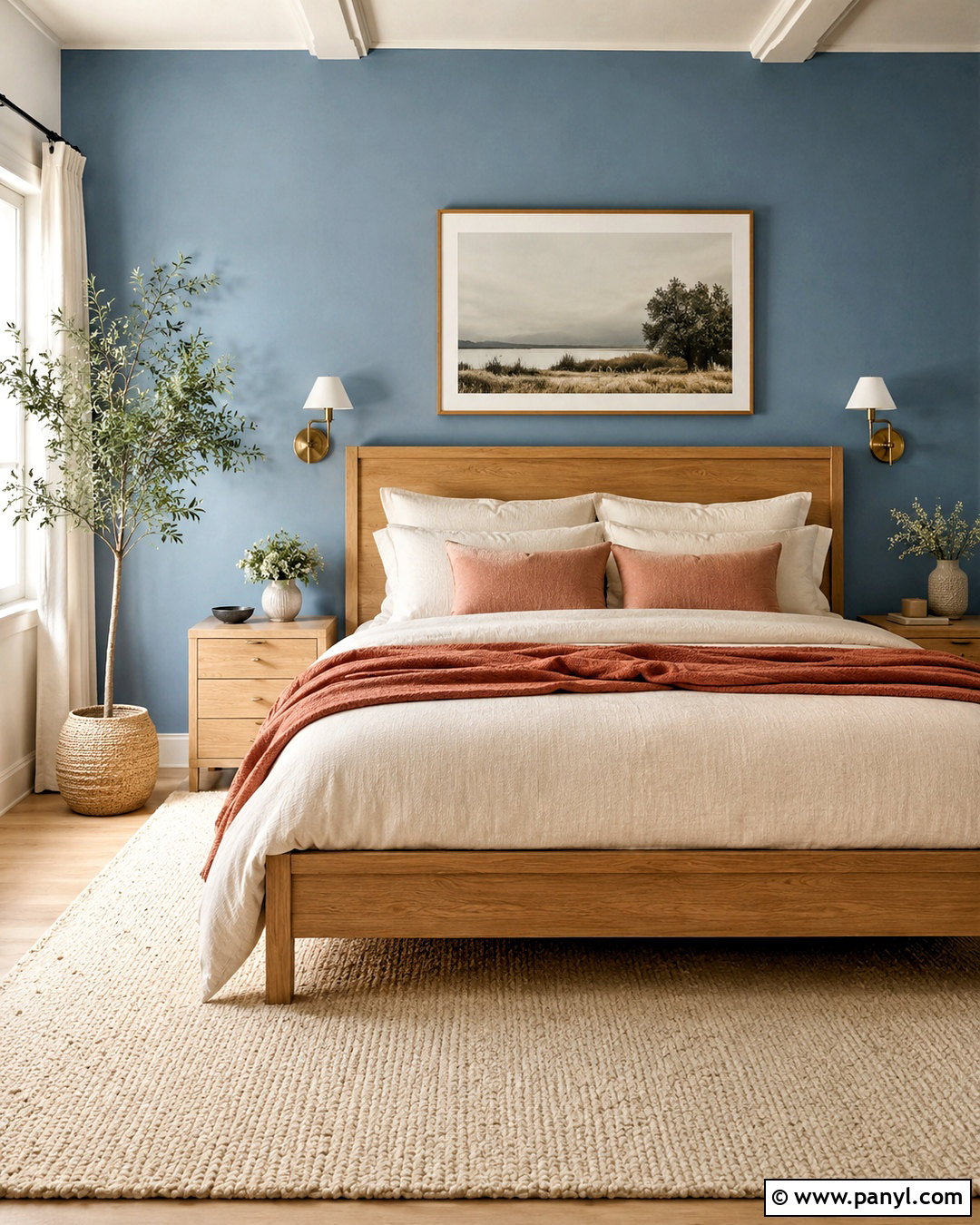
Soft powder blue creates a bedroom that feels bright, quiet, and comfortable. Use the accent wall behind a natural oak or upholstered ivory bed to establish a gentle focal point. Warm white walls, pale wood nightstands, and simple linen bedding prevent the blue from feeling overly sweet. Add a muted coral throw or dusty rose pillows for a small amount of warmth. A cream wool rug softens the floor, while matching brass sconces create symmetry around the bed. Keep artwork minimal so the soothing wall color remains noticeable. This complete look works especially well in bedrooms with limited daylight because the pale blue surface reflects more light than deeper shades and keeps the room feeling open.
3. Slate Blue Dining Room Accent Wall
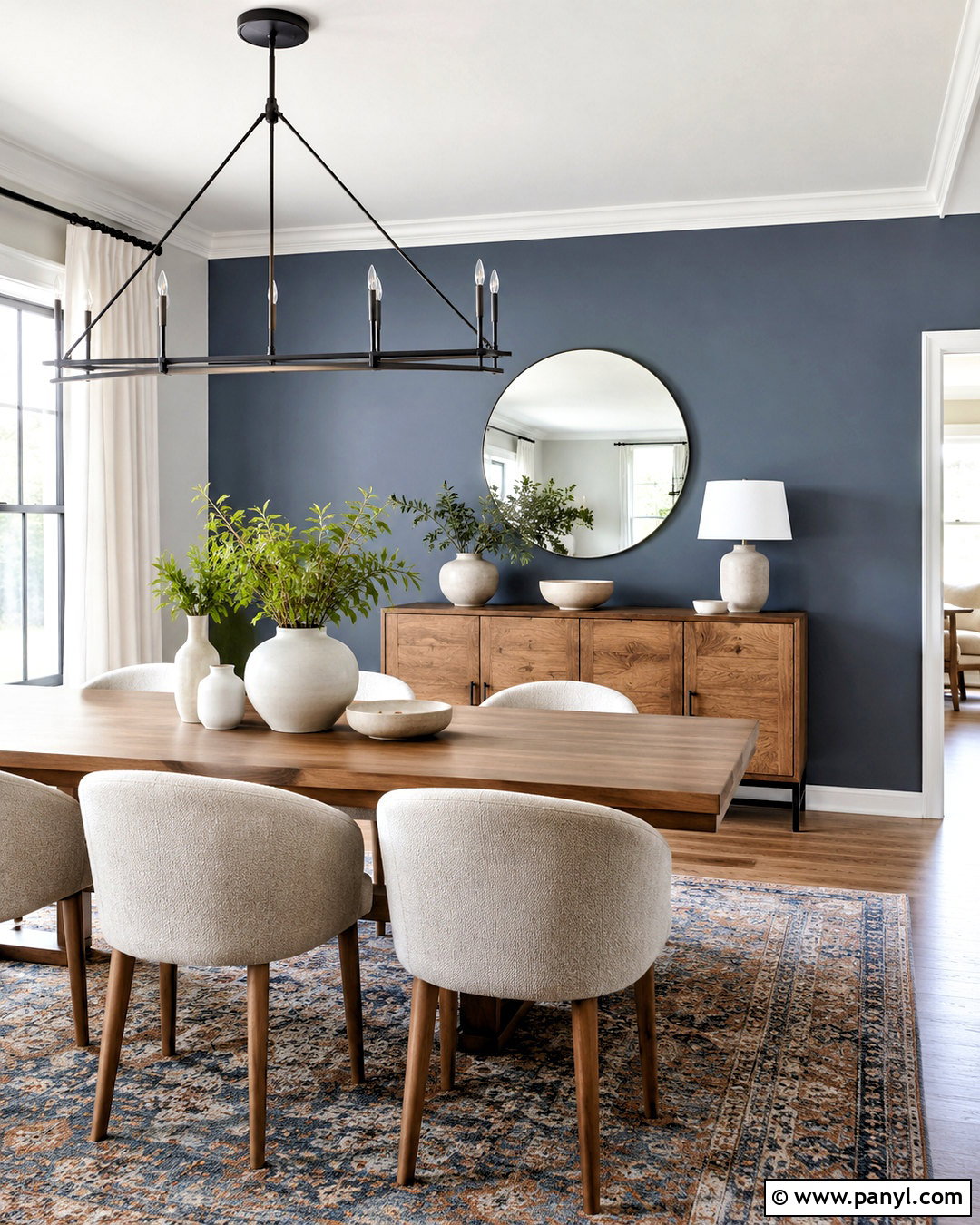
A slate blue accent wall brings understated color to a dining room while maintaining a polished, welcoming atmosphere. Position it behind a medium-tone wood buffet or along the wall facing the dining table. Pair the blue with soft greige walls, an oak dining table, and upholstered oatmeal chairs. A linear black chandelier creates modern definition without making the space feel formal. Decorate the buffet with white ceramics, a wide mirror, and a leafy branch in a glass vase. Add a patterned rug containing slate blue, rust, and cream to connect the entire palette. This slightly gray shade of blue works particularly well with black-framed windows, warm woods, and everyday furniture because it feels colorful yet restrained.
4. Cobalt Blue Home Office Accent Wall
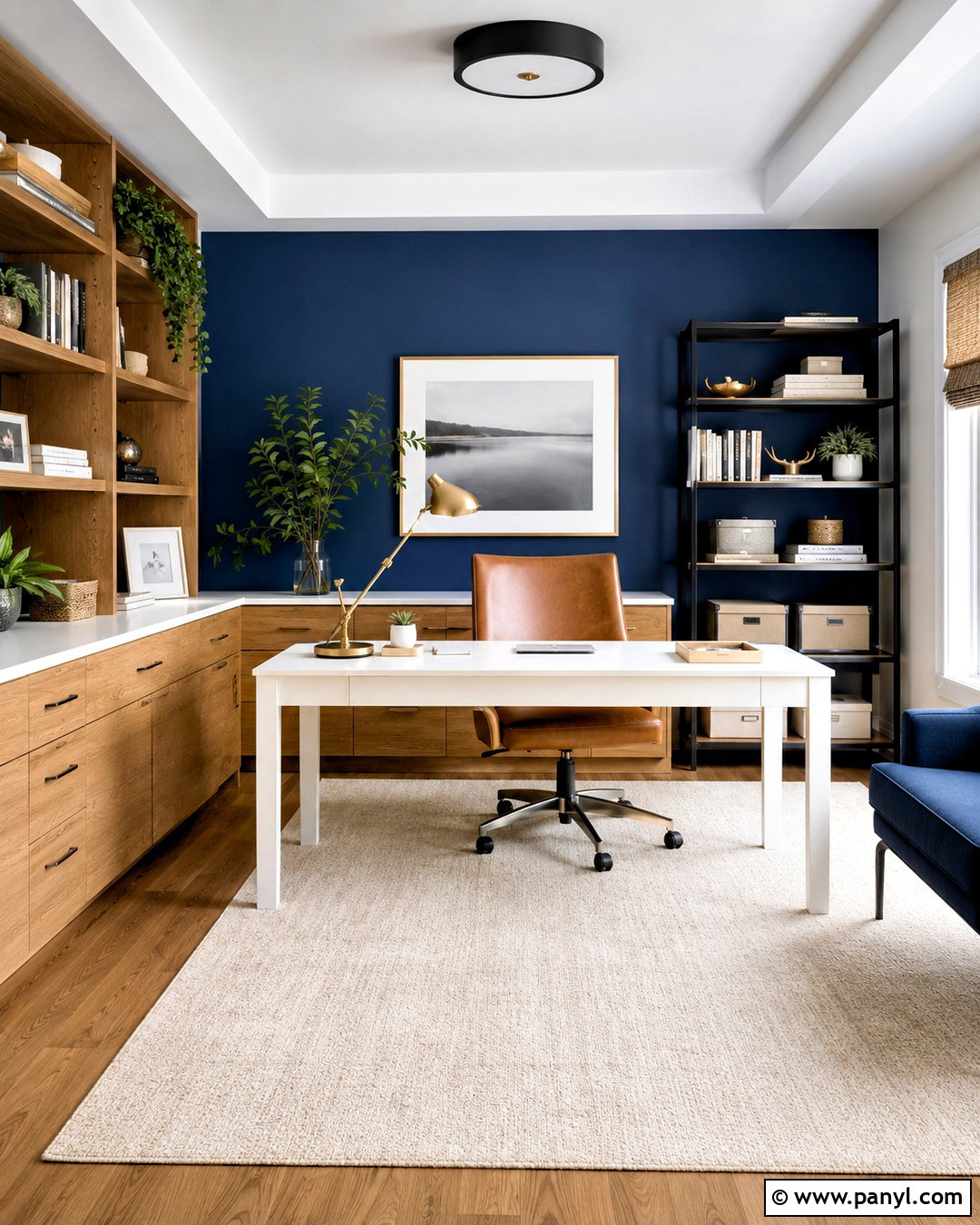
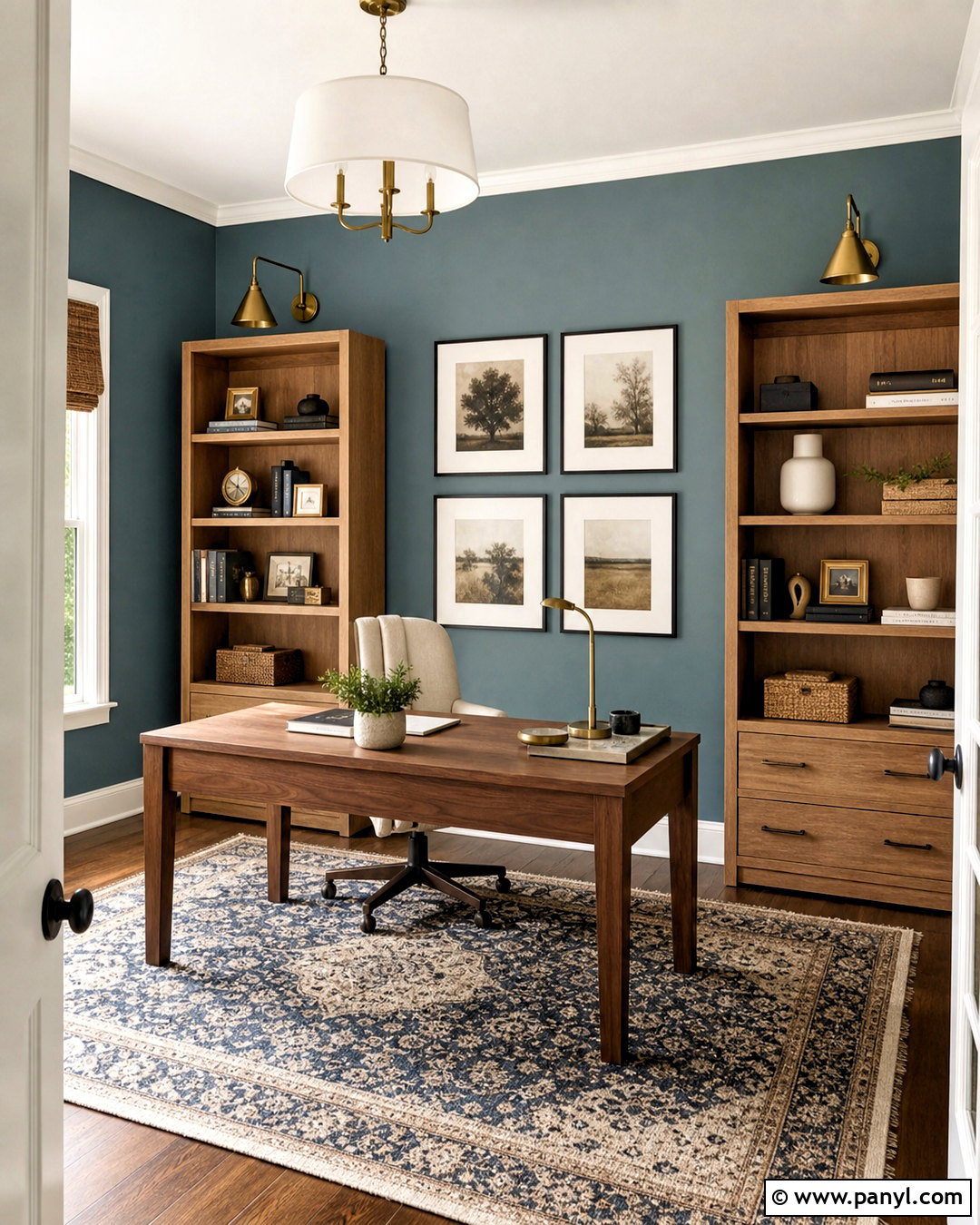
Cobalt blue can energize a home office and create a crisp background for focused work. Paint the wall behind the desk so the color frames the primary work zone without filling your direct sightline throughout the day. Choose a simple white desk, warm oak storage cabinets, and a supportive chair in tan leather or camel-colored fabric. Black metal shelves provide contrast and make books, plants, and neutral storage boxes stand out. Use a large cream rug to balance the saturated wall. A white ceiling and bright task lighting are essential for keeping the room clear and functional. Repeat cobalt in one desk accessory or artwork rather than adding many competing blue pieces.
5. Blue Shiplap Bedroom Accent Wall
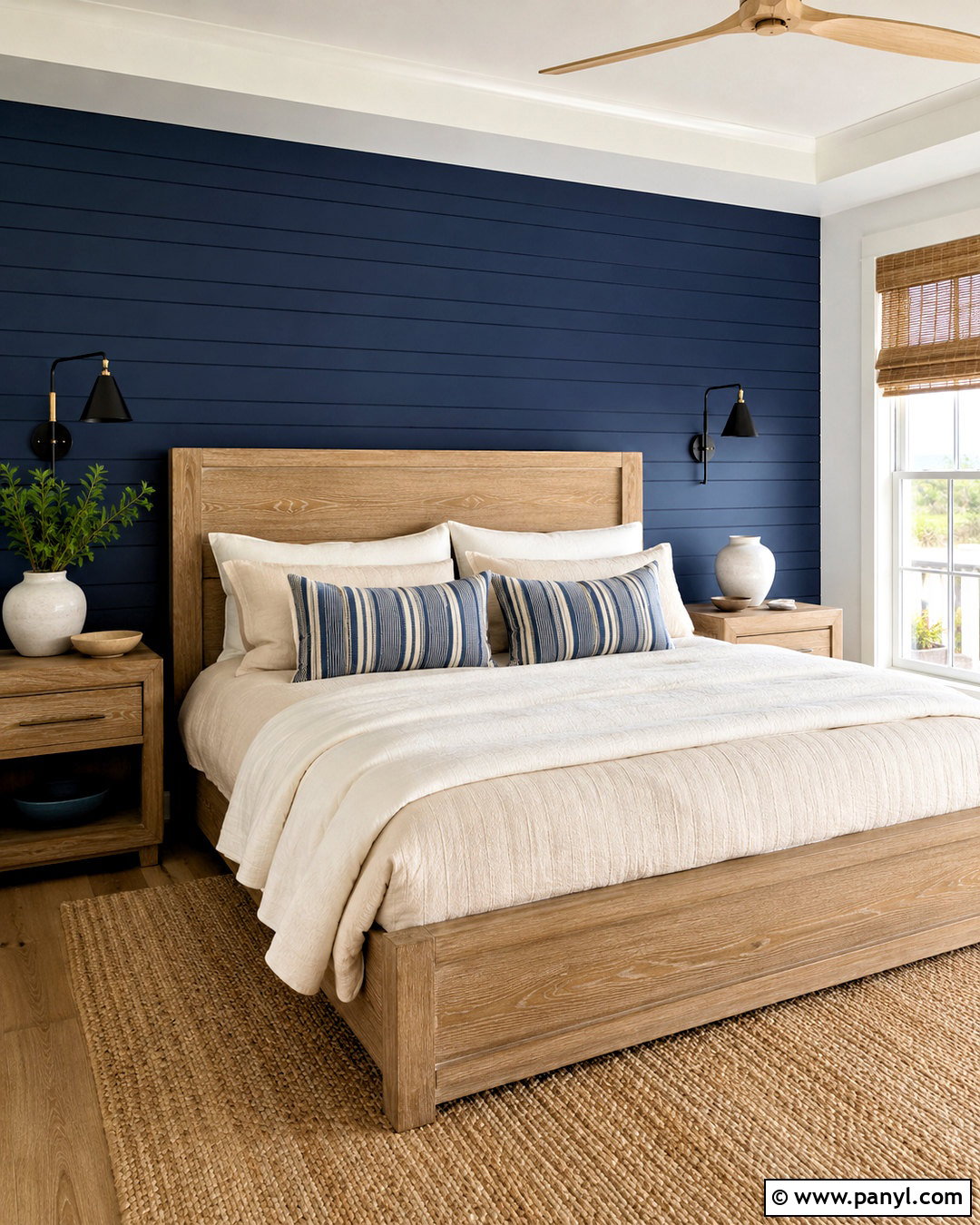
Blue shiplap adds architectural texture and relaxed character behind a bedroom’s main furniture. Install horizontal boards across the wall behind the bed, then paint them a medium denim blue with a smooth satin or low-sheen finish. A white oak bed, crisp ivory bedding, and striped blue-and-cream pillows create a casual but coordinated arrangement. Place matching wood nightstands on both sides and add black reading sconces for definition. Woven shades, a jute-blend rug, and a simple bench bring in natural texture. Avoid excessive nautical decorations, which can make the room feel themed. Instead, use abstract artwork and understated ceramics to create a modern coastal look that remains comfortable throughout the year.
6. Teal Blue Bathroom Accent Wall
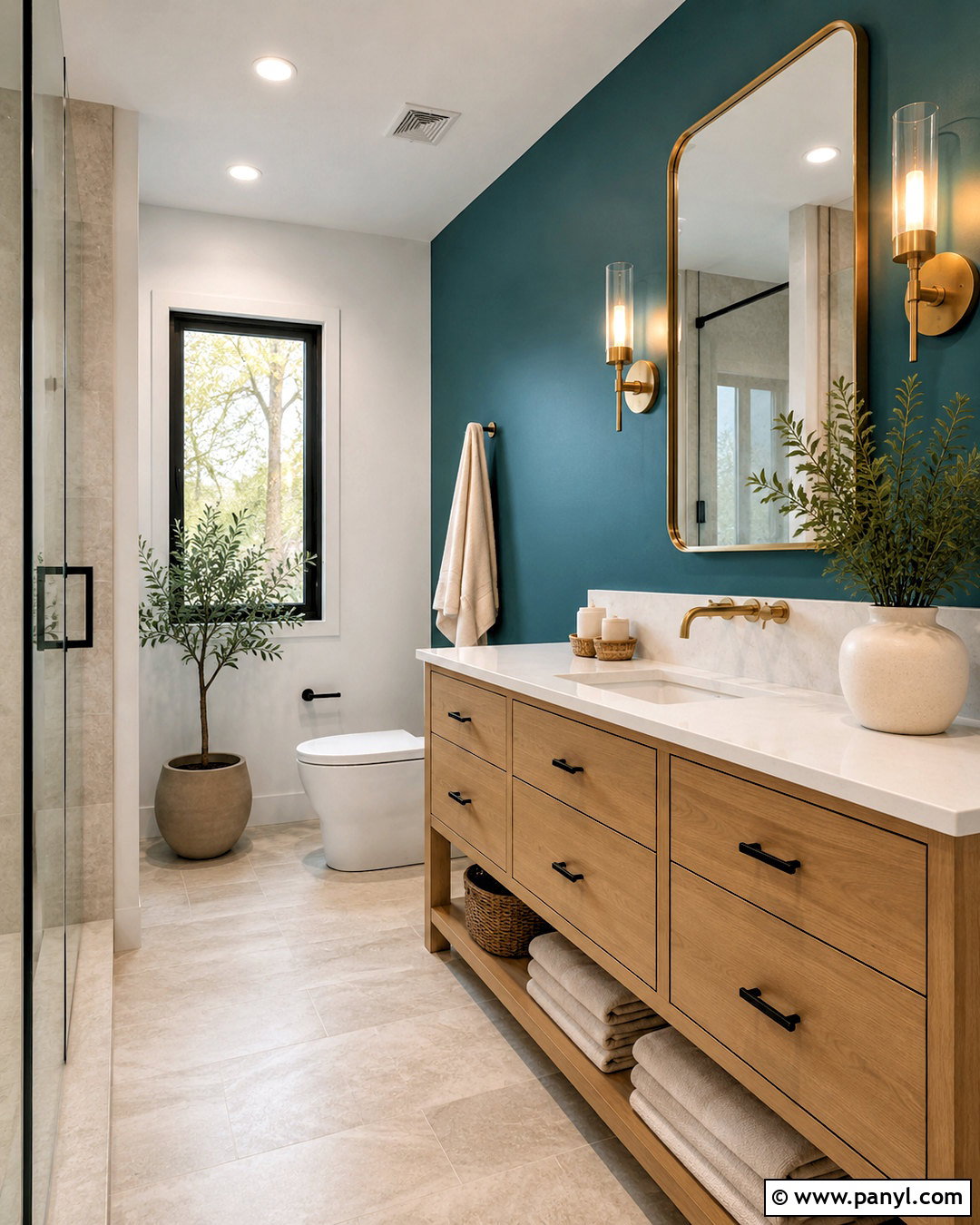
A teal blue accent wall can make a bathroom feel fresh, distinctive, and carefully finished. Use the color behind a white oak vanity where it can highlight the mirror, lighting, and hardware. Keep the remaining walls warm white and choose pale stone floor tile to prevent the space from becoming visually heavy. A wide brass-framed mirror and matching sconces bring warmth to the cool blue-green shade. Select a white quartz countertop and simple undermount sink for a clean foundation. Towels in ivory, sand, and muted teal connect the palette without clutter. If moisture is a concern, use washable bathroom paint with the appropriate finish. Minimal accessories will let the wall, vanity, and fixtures work together naturally.
7. Blue Board And Batten Accent Wall
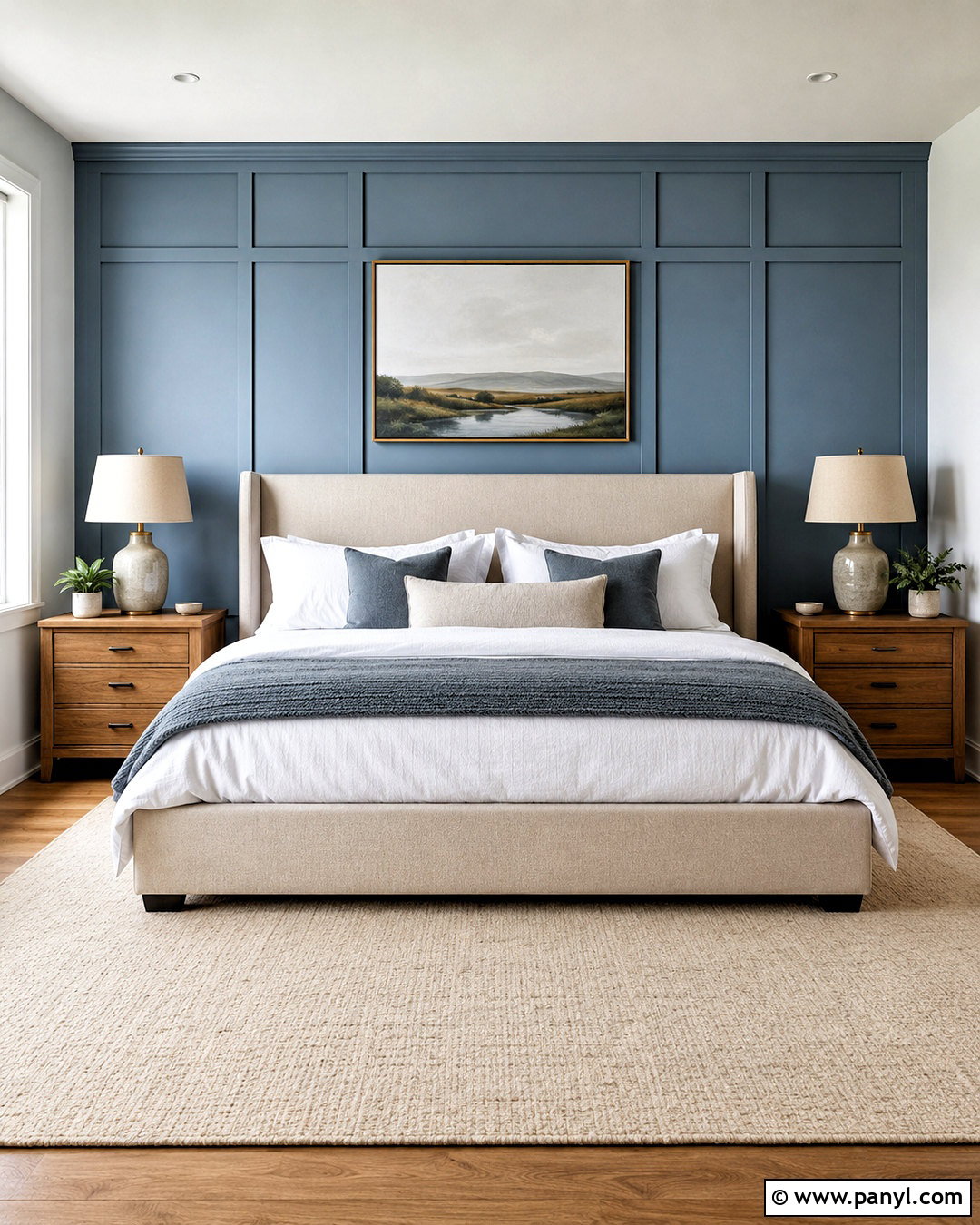
Blue board and batten creates a structured focal point that gives an ordinary bedroom more architectural interest. Cover the wall behind the bed with evenly spaced vertical battens and paint the entire treatment a dusty medium blue. A light beige upholstered bed softens the straight lines, while white bedding and a textured gray-blue blanket keep the scheme relaxed. Use medium oak nightstands and ceramic lamps with warm white shades. The other walls should remain creamy white, allowing the dimensional blue surface to stand out. A neutral rug and simple landscape artwork complete the room. Carefully align the battens with the bed and nightstands so the wall treatment looks intentional rather than like a separate decorative project.
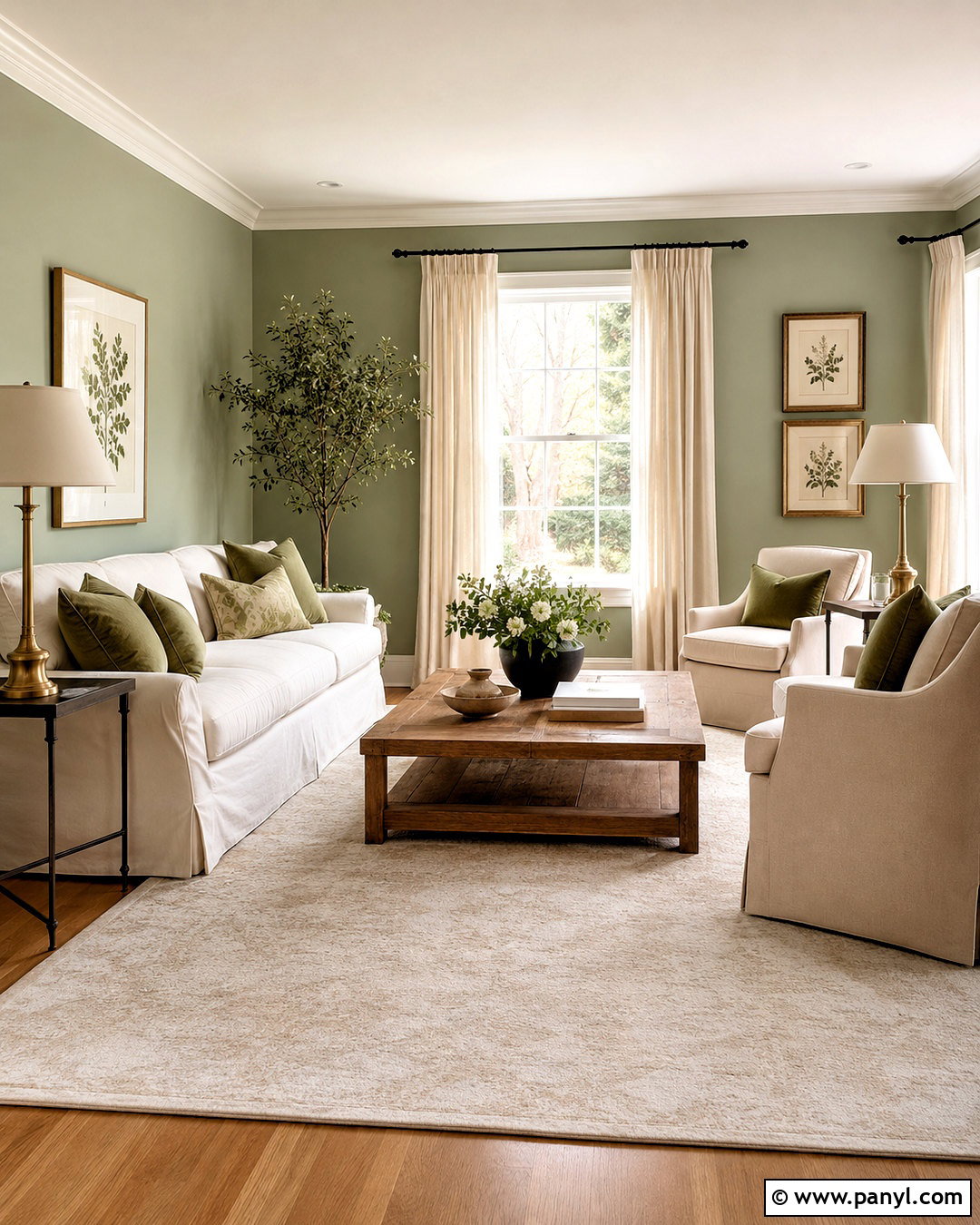
8. Dark Blue Fireplace Accent Wall
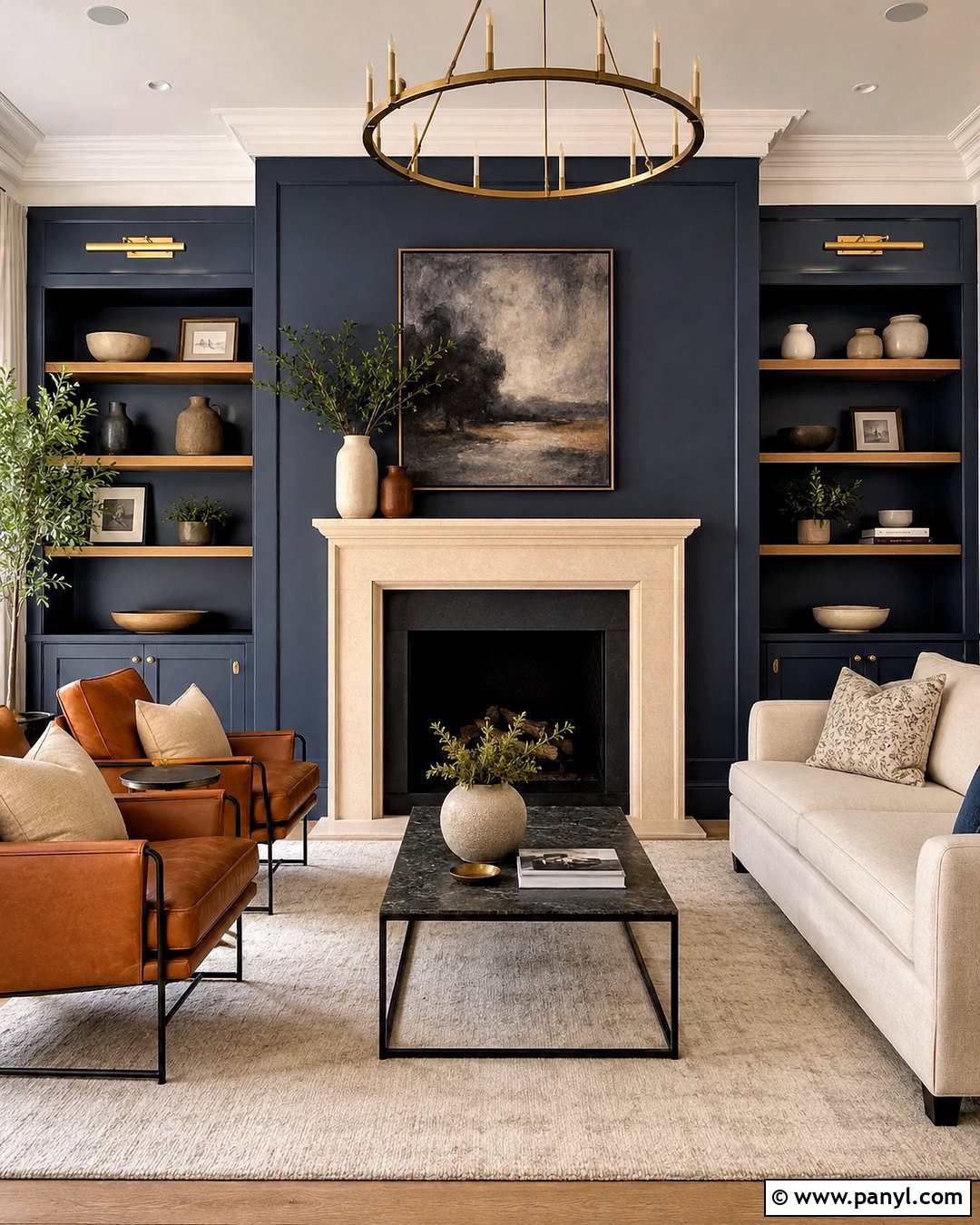
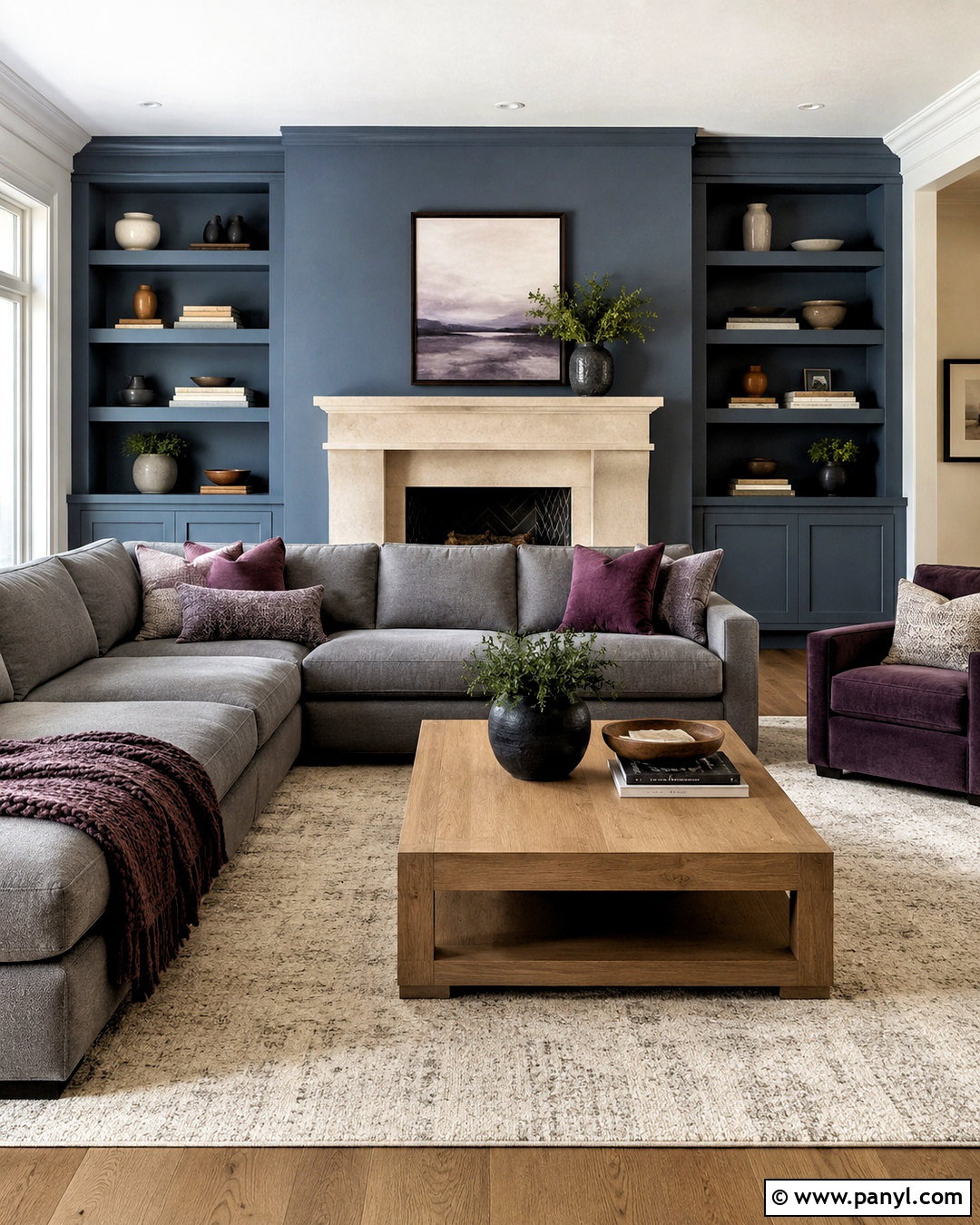
A dark blue fireplace wall creates a natural living room centerpiece and gives the seating area a clear sense of direction. Paint the entire wall, including simple built-ins or surrounding millwork, in a deep inky blue. Keep the fireplace surround light with creamy limestone, white brick, or pale porcelain tile. Arrange a warm beige sofa and two cognac leather chairs toward the fireplace to reinforce its focal role. Oak shelving, brass picture lights, and neutral ceramics add warmth against the dark paint. Use a large ivory rug to brighten the lower half of the room. Repeating the blue in a few patterned cushions helps the fireplace wall feel connected to the seating rather than visually isolated.
9. Blue Wallpaper Bedroom Accent Wall
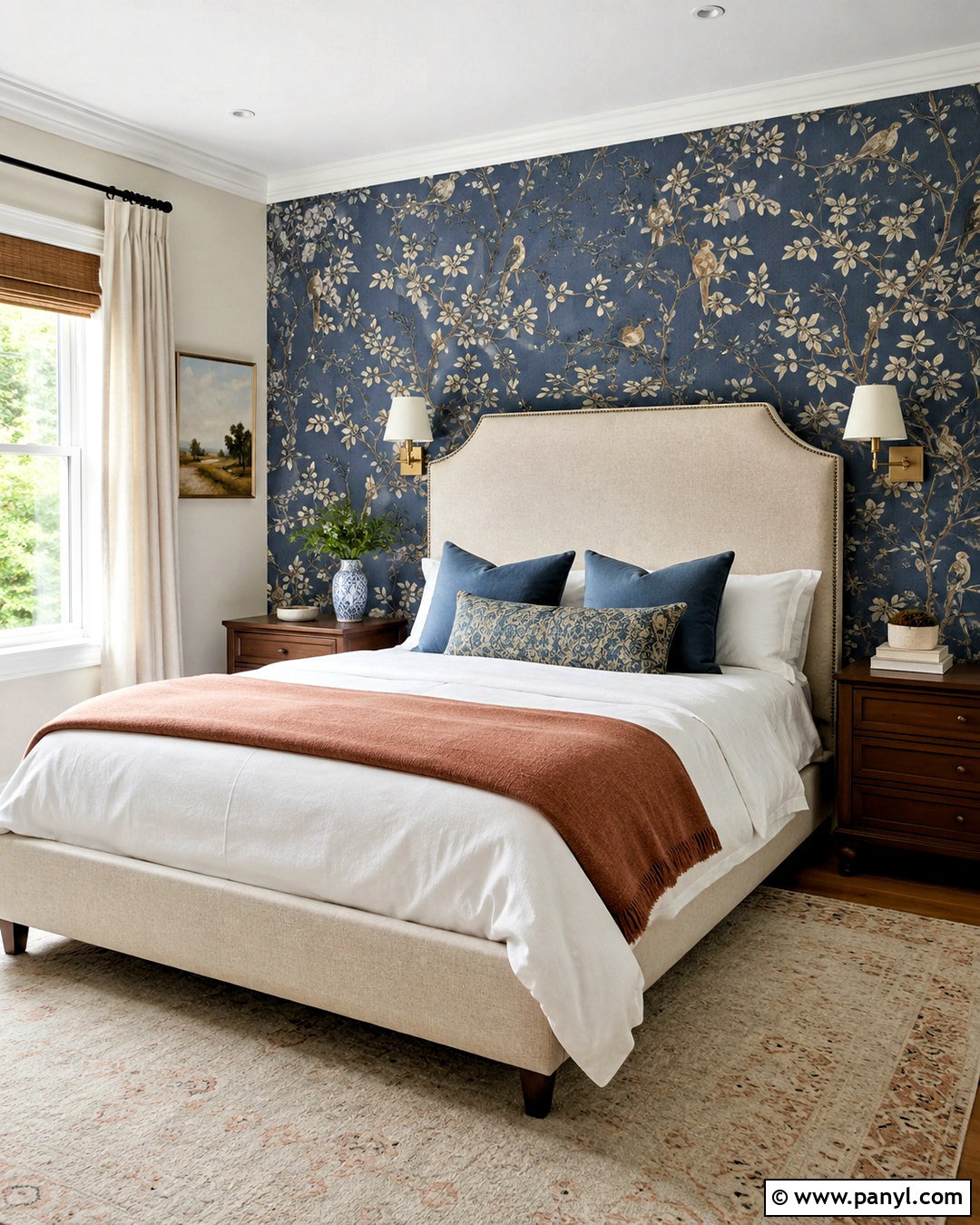
Blue wallpaper can add pattern and movement while still producing a restful bedroom. Choose a design with soft blue leaves, delicate geometric lines, or an understated botanical print on a warm white background. Install it only behind the bed, then paint the other walls a coordinating off-white. An upholstered oatmeal headboard gives the pattern room to breathe. Add walnut nightstands, brass sconces, and simple white bedding layered with blue-gray pillows. A muted terracotta throw introduces warmth and keeps the palette from feeling too cool. Select curtains and rugs with minimal pattern because the wall already provides visual detail. The result should feel layered and finished, not busy or overly matched.
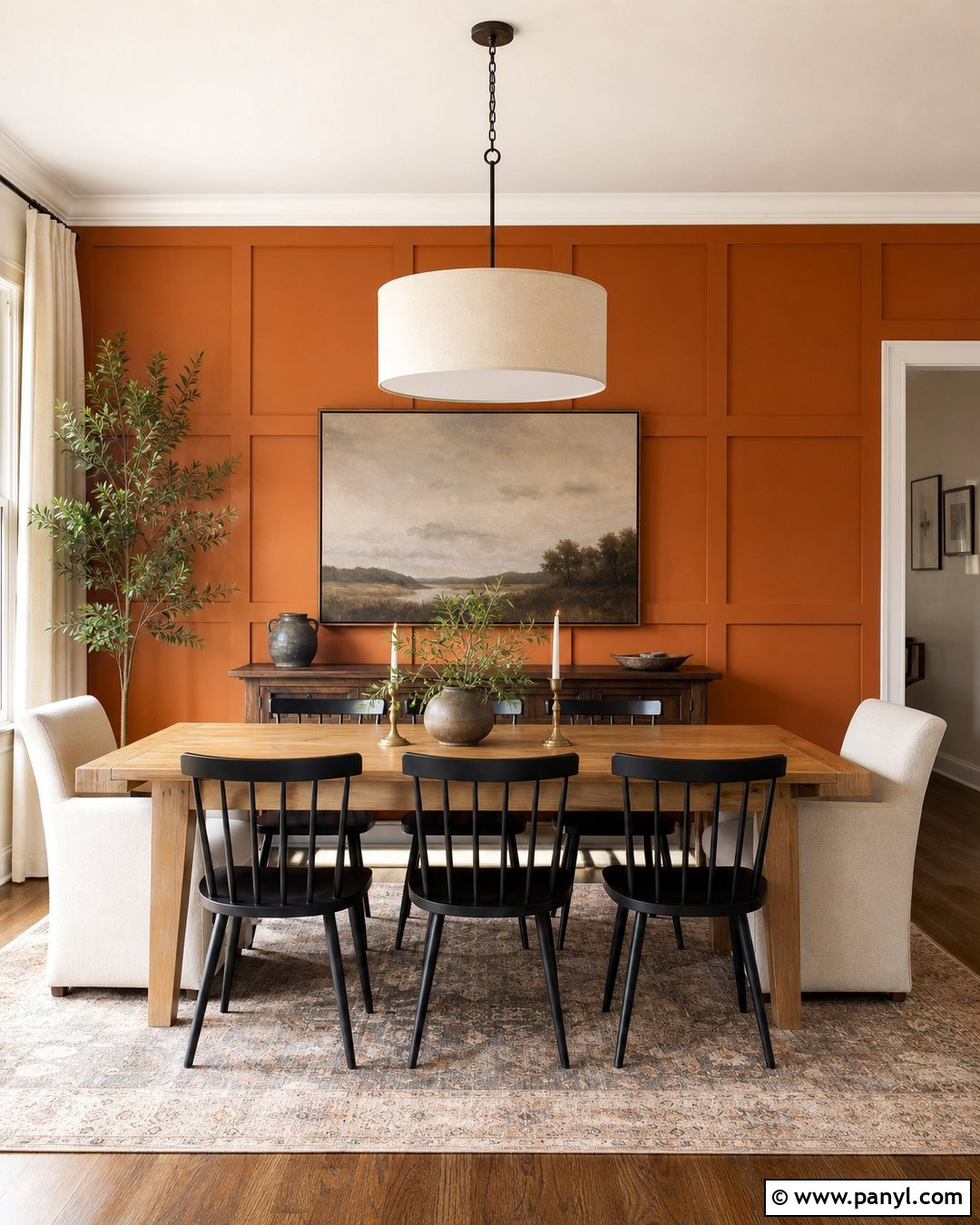
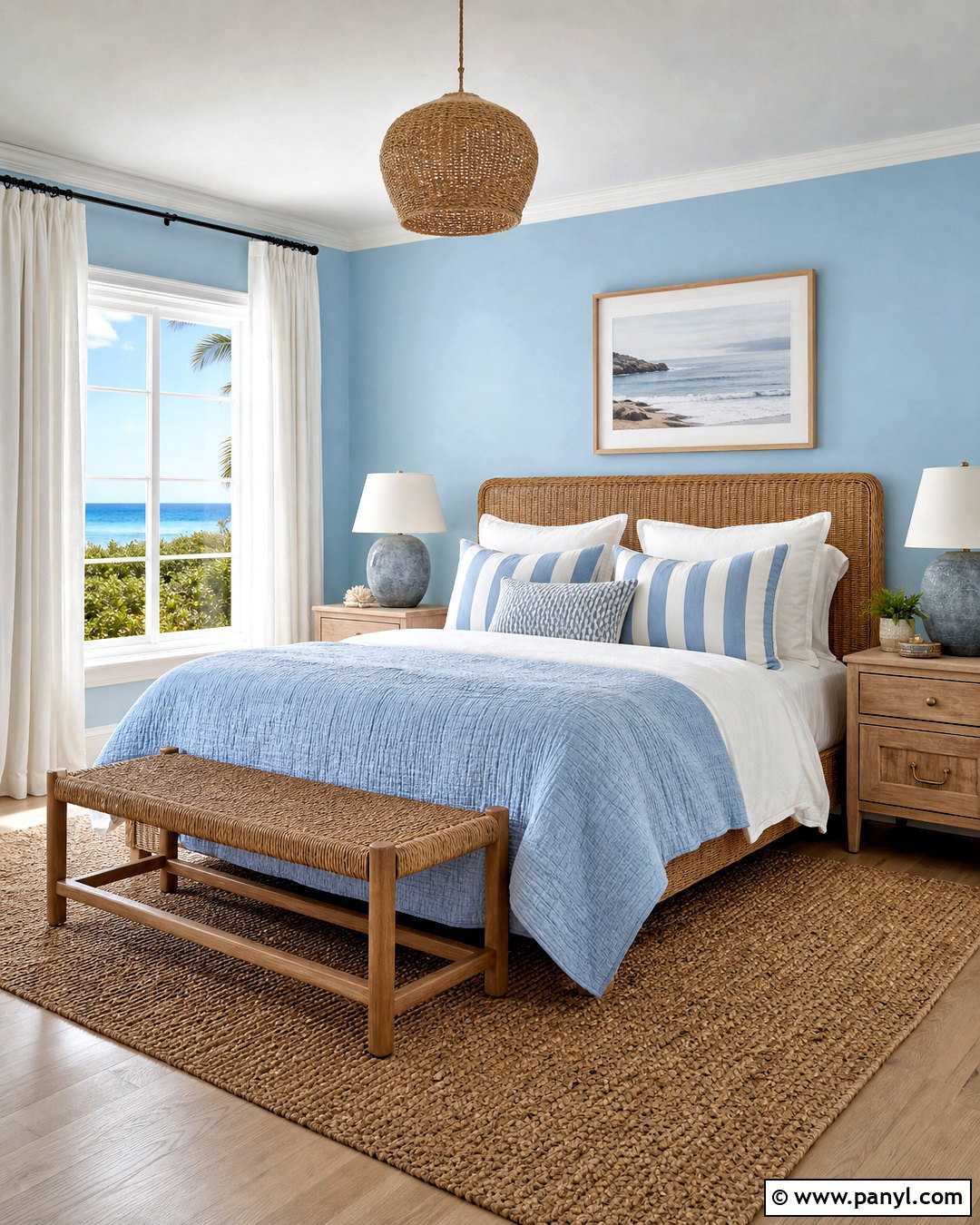
10. Light Blue Nursery Accent Wall
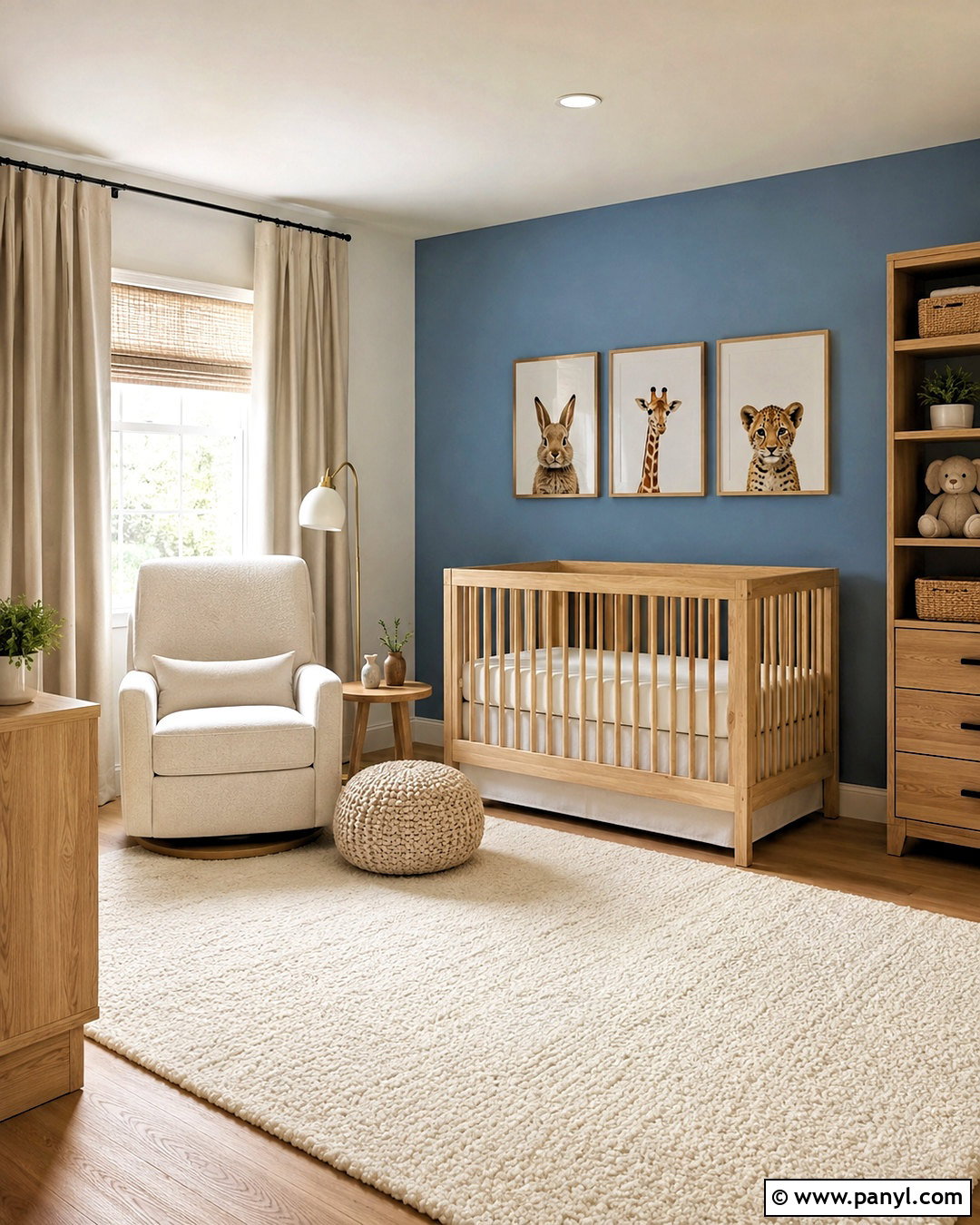
A light blue accent wall offers a calm, flexible foundation for a nursery without depending on a heavily themed design. Place the crib against the colored wall and keep the other surfaces warm white. Choose a natural birch crib, a cream upholstered glider, and a washable ivory rug for a soft, practical arrangement. Add blackout curtains in beige or pale gray-blue and use closed wood storage to reduce visual clutter. Simple cloud, landscape, or animal artwork can introduce personality without dominating the room. Include a dimmable ceiling fixture and a shaded floor lamp for comfortable nighttime lighting. Because the overall palette is neutral and adaptable, the room can transition easily as the child grows and furniture needs change.
11. Blue Geometric Accent Wall
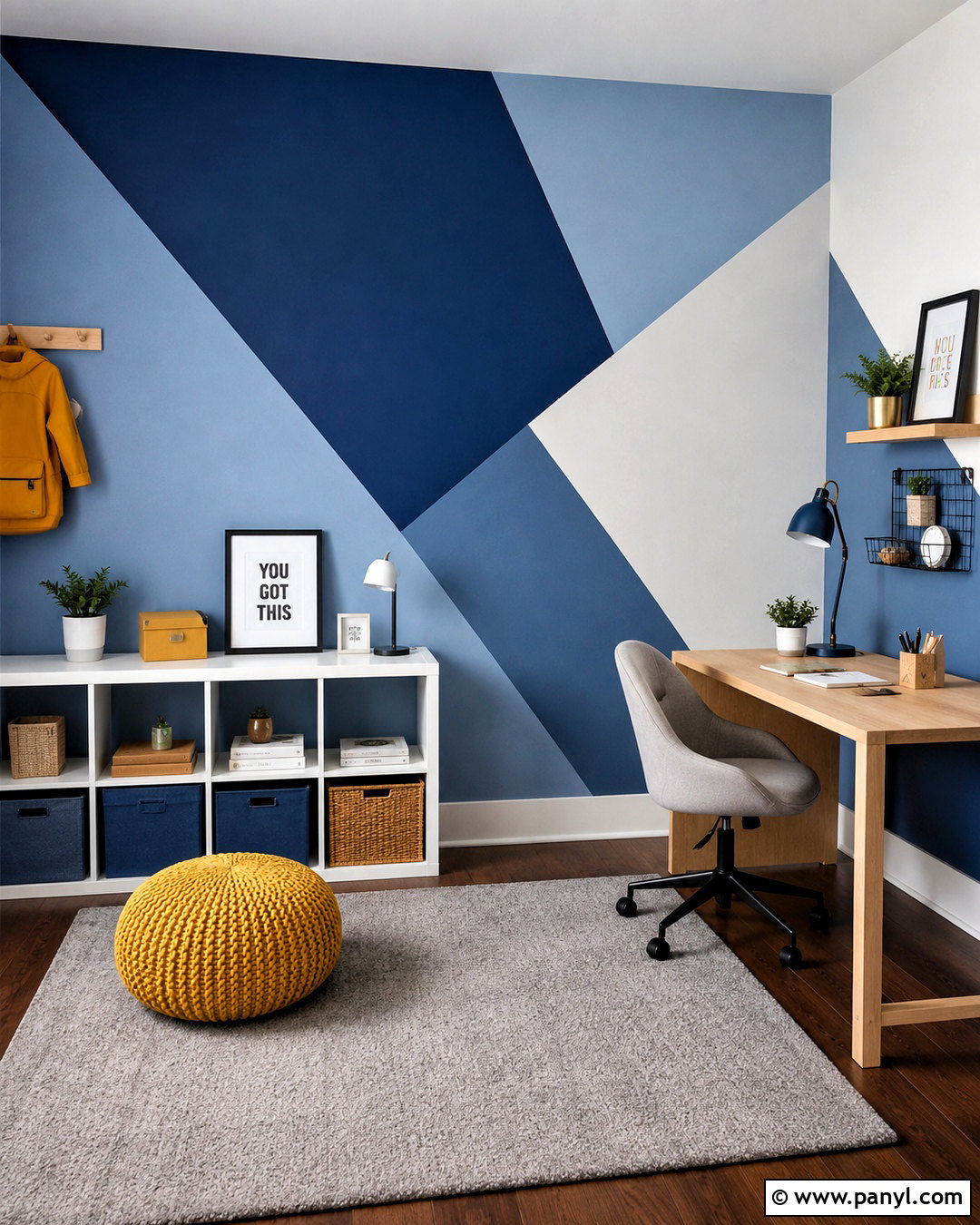
A painted geometric wall brings energy to a playroom, teen bedroom, or creative workspace without requiring wallpaper. Build the pattern from several related shades, such as navy, denim blue, powder blue, and warm white. Keep the shapes large and simple so the finished wall remains readable from across the room. Place a low white storage unit against it, along with a light wood desk or neutral daybed. Solid-colored furniture prevents the design from becoming chaotic. Use a gray rug and a few mustard or coral accessories for warmth. Before painting, map the pattern carefully with low-tack tape and check that major lines do not awkwardly intersect shelves, headboards, or electrical outlets.
12. Blue Limewash Living Room Accent Wall
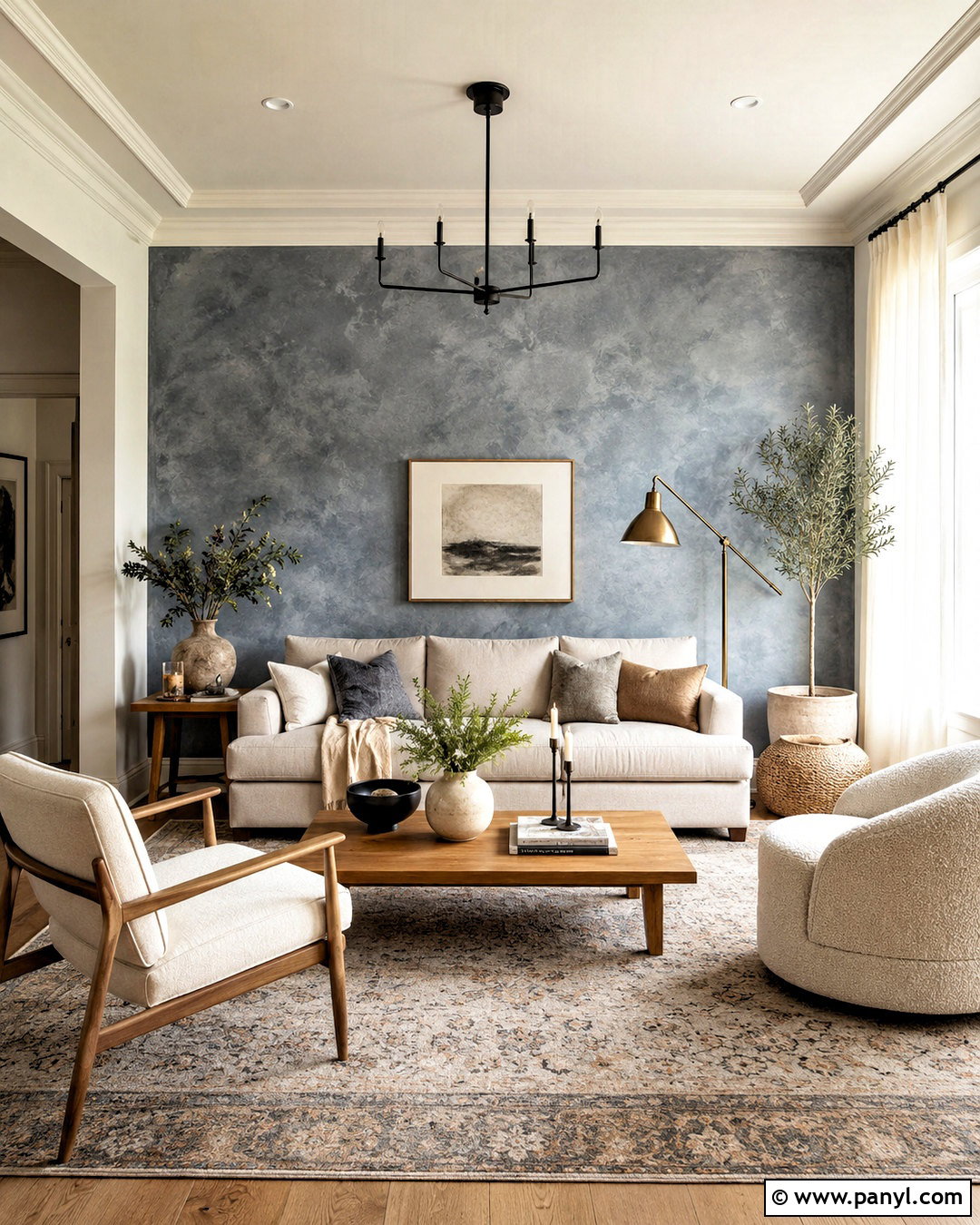
Blue limewash gives a living room a soft, clouded surface that changes subtly as daylight moves across it. Choose a muted blue-gray rather than a vivid primary blue, then apply it behind a low-profile cream sofa. Furnish the room with pale oak, linen upholstery, aged brass, and handmade ceramics to complement the wall’s natural variation. An off-white boucle chair and a gently patterned rug keep the seating area comfortable and modern. Use minimal framed art because the layered finish already creates movement. Soft white curtains allow plenty of light to reach the textured wall. This look works best when the rest of the room feels tactile and restrained, with natural materials rather than glossy, highly polished finishes.
13. Blue Wood Slat Accent Wall
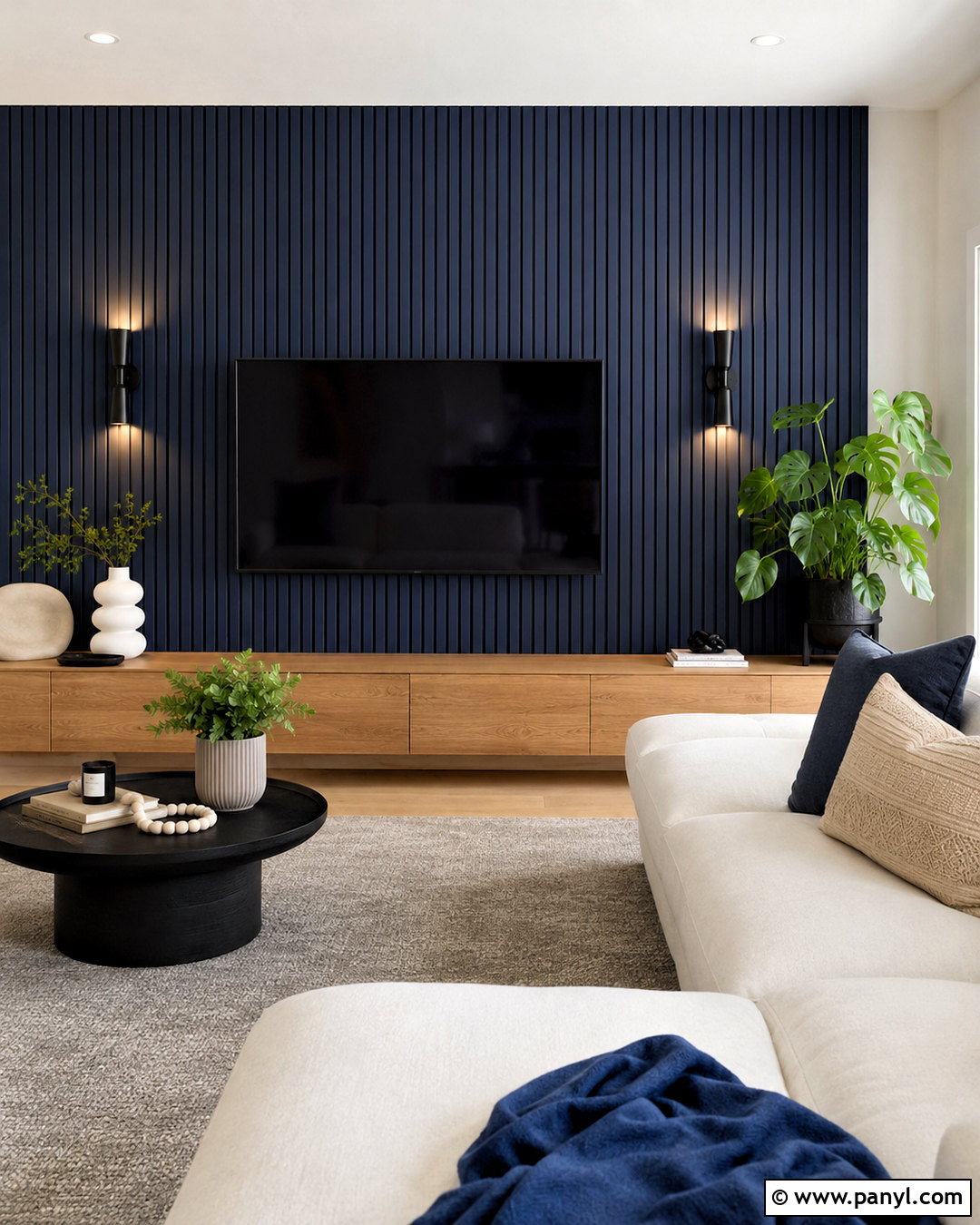
A blue wood slat wall combines color, texture, and clean architectural lines in one living room feature. Install narrow vertical wood strips across the wall behind the television or sofa, then paint them a rich midnight blue. Use a matching blue background between the slats for a seamless appearance. Pair the wall with a low oak media cabinet, cream sectional, and warm gray rug. Concealed cable management is important because visible wires will interrupt the orderly design. Add soft lighting through black wall sconces or a slim floor lamp. Limit surrounding decorations to a few sculptural objects and plants. The vertical lines can also make a standard ceiling appear taller, especially when the slats reach the full wall height.
14. Blue Gallery Wall Accent
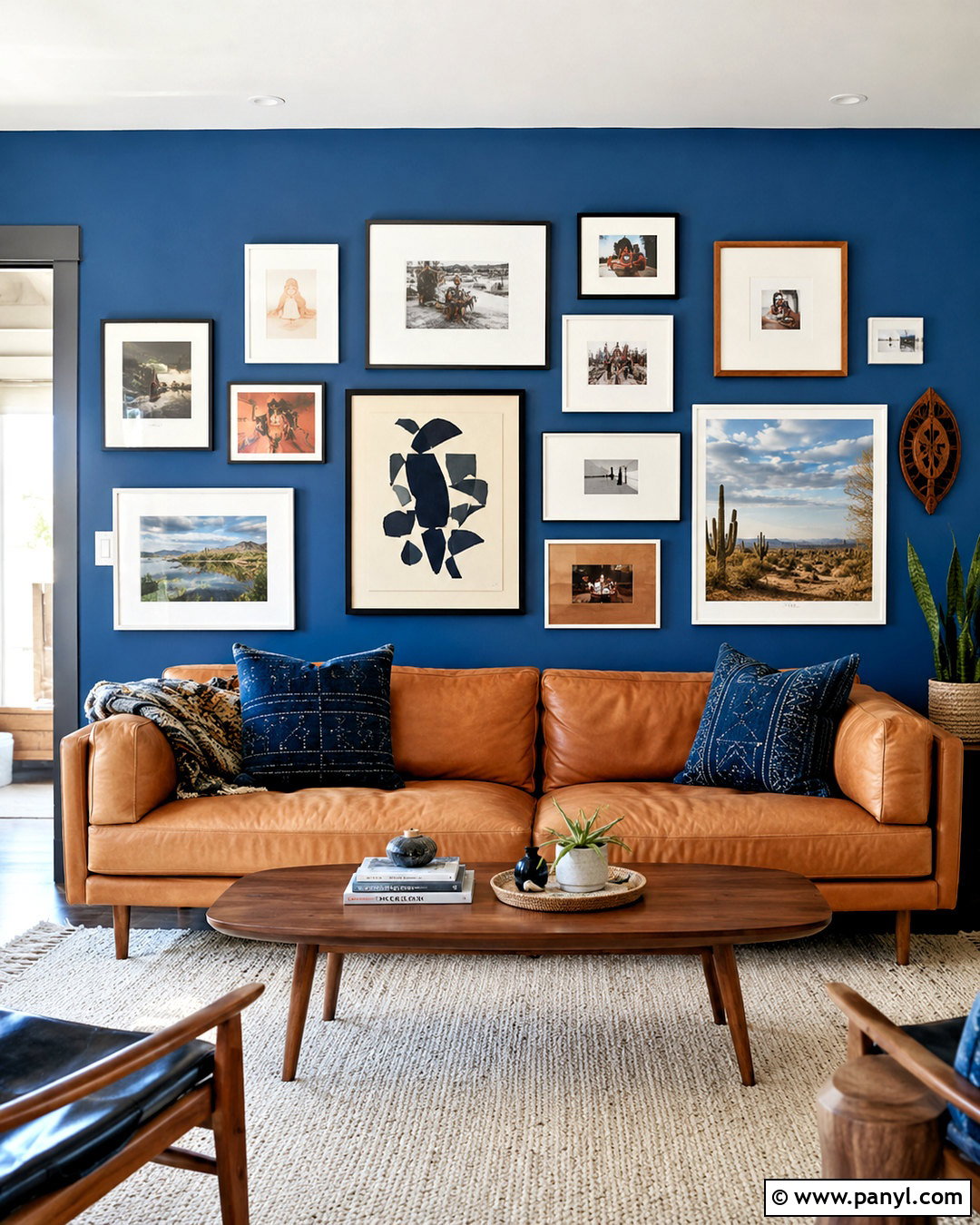
A medium blue accent wall can turn a mixed gallery arrangement into a cohesive living room feature. Select a slightly muted shade that provides enough contrast for white mats, black frames, and warm wood frames. Center the gallery above a camel leather sofa or a simple wood console, keeping consistent spacing between each piece. Include abstract prints, landscapes, and a few personal photographs for variety. The rest of the room can use warm white walls, an ivory rug, and navy patterned pillows. Add a black floor lamp and walnut coffee table to echo the frame colors. Planning the complete arrangement on the floor first will help the artwork feel balanced and keep the blue background visible around the edges.
15. Blue Kitchen Breakfast Nook Accent Wall
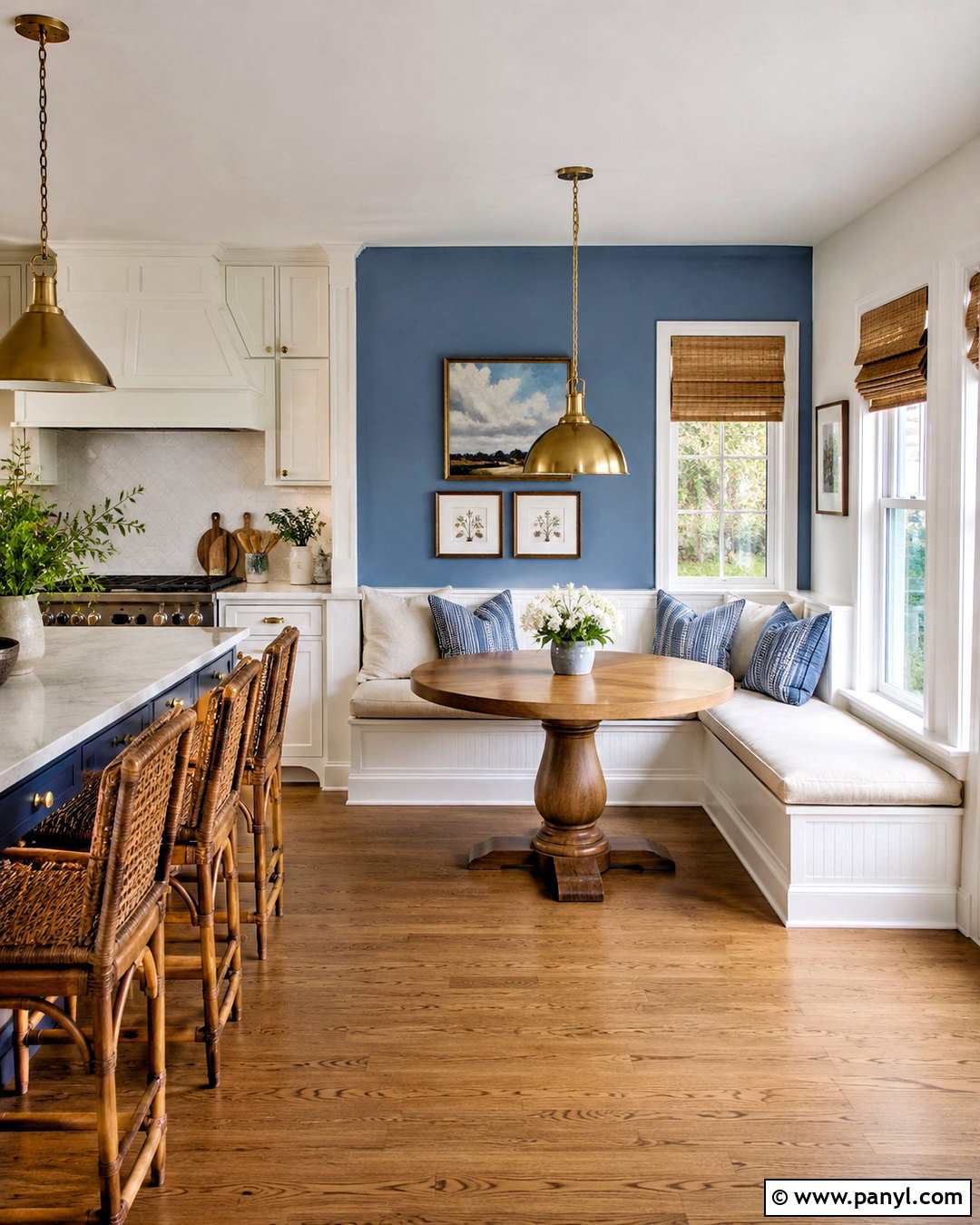
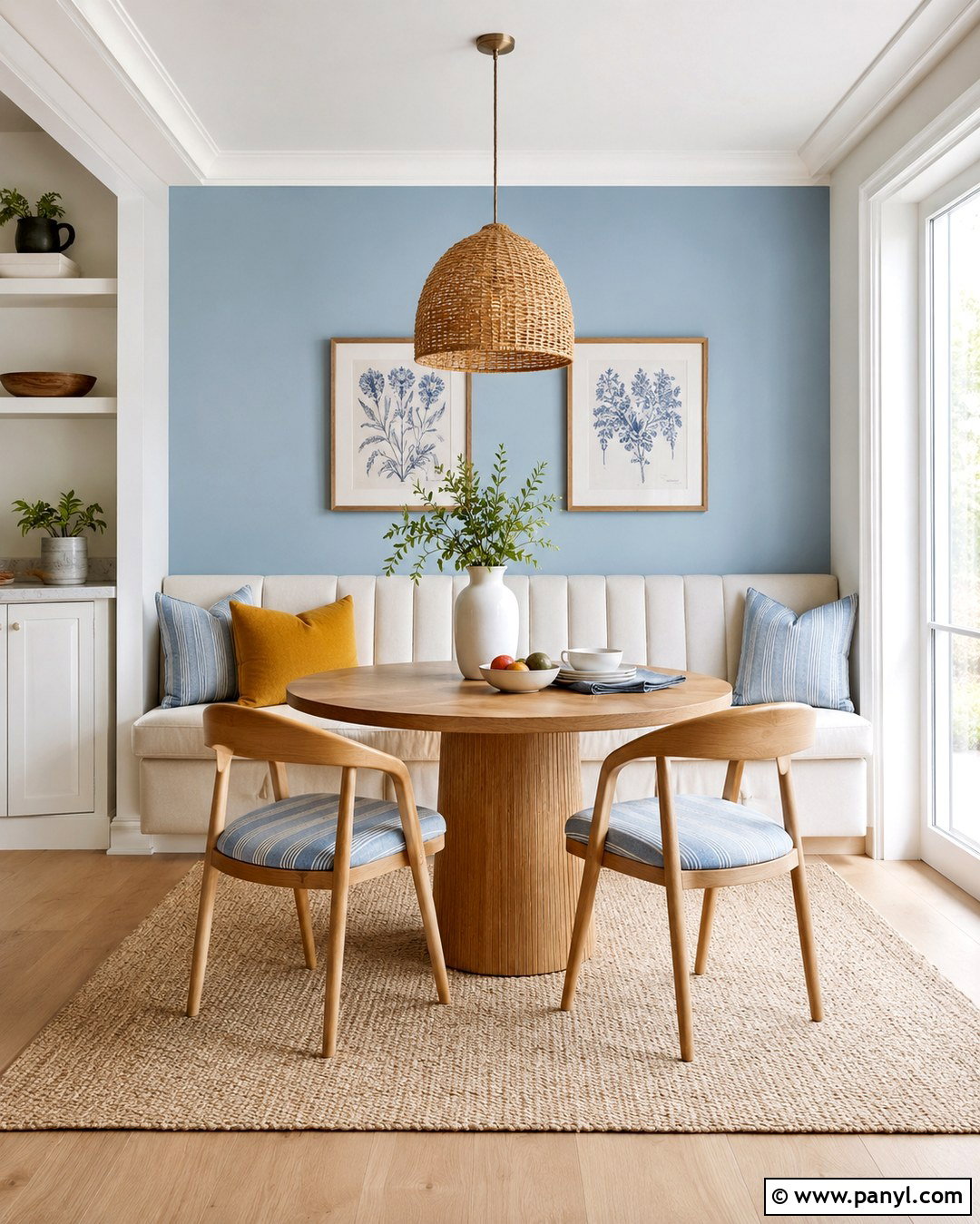
A cheerful blue wall can help a breakfast nook feel like a defined destination within an open kitchen. Paint the wall behind a built-in bench or small dining table in a clear cornflower blue. Pair it with white cabinetry, warm oak flooring, and a round pedestal table in natural wood. A cream bench cushion and blue-striped pillows create comfortable seating without covering too much of the wall. Hang a simple brass pendant above the table and use woven shades to soften nearby windows. Small framed prints can introduce red, yellow, or green accents. This complete arrangement works best when the blue connects to another kitchen detail, such as island paint, dishware, or a patterned runner.
16. Blue Tile Kitchen Accent Wall
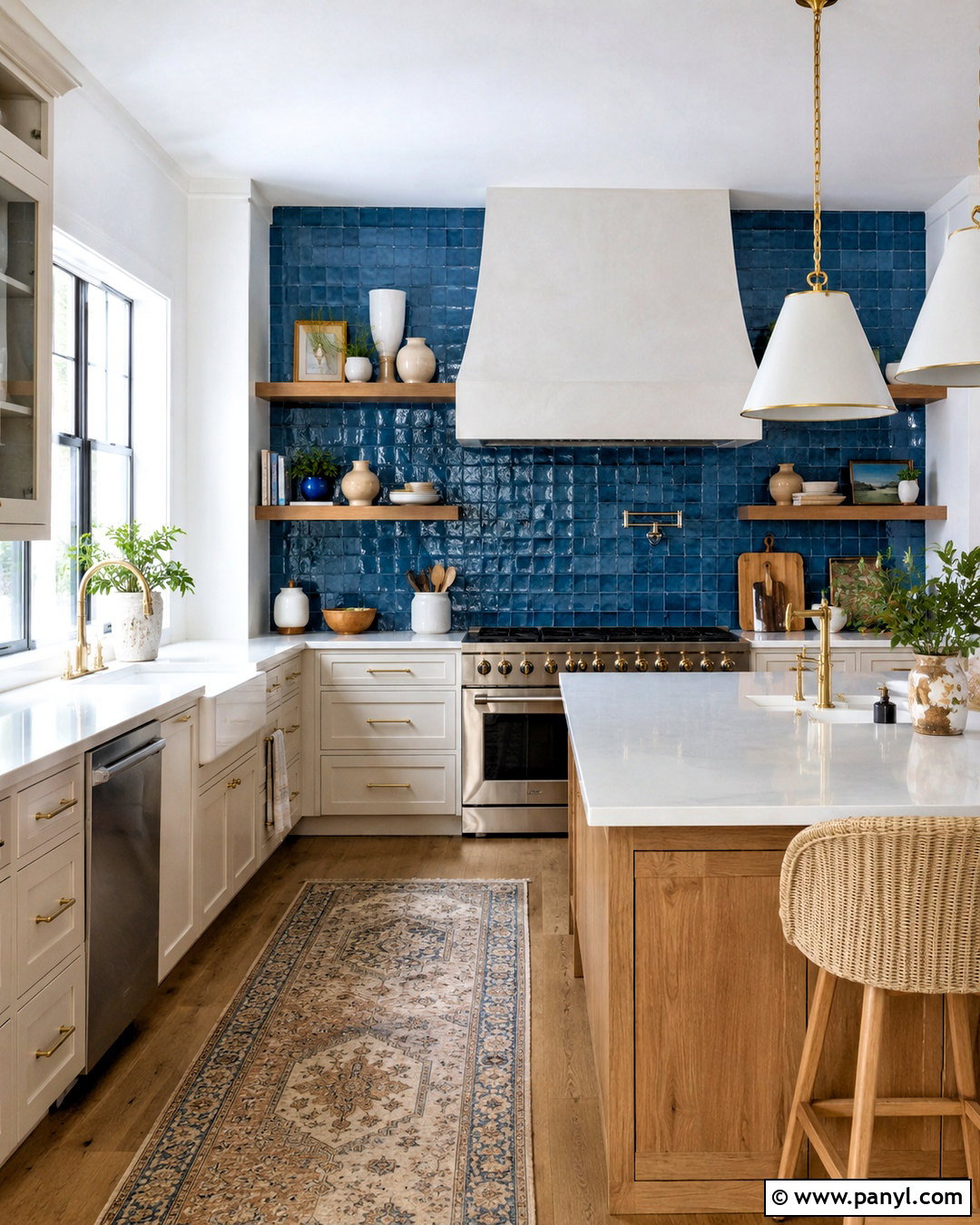
Blue tile creates a durable kitchen accent wall with more reflection and texture than paint. Cover the range wall with glossy blue zellige-style tile or elongated ceramic tile in varying ocean-blue tones. Keep surrounding cabinetry warm white and select natural oak for the island or open shelves. White quartz countertops and brushed brass hardware create a crisp but welcoming finish. A simple plaster or stainless-steel range hood prevents the patterned surface from feeling crowded. Repeat the blue in a runner or countertop pottery, but avoid matching every accessory. Under-cabinet lighting will reveal the tile’s slight variation and glossy edges. The result is a practical focal wall that supports cooking while giving the kitchen strong visual character.
17. Blue Dining Room Paneling
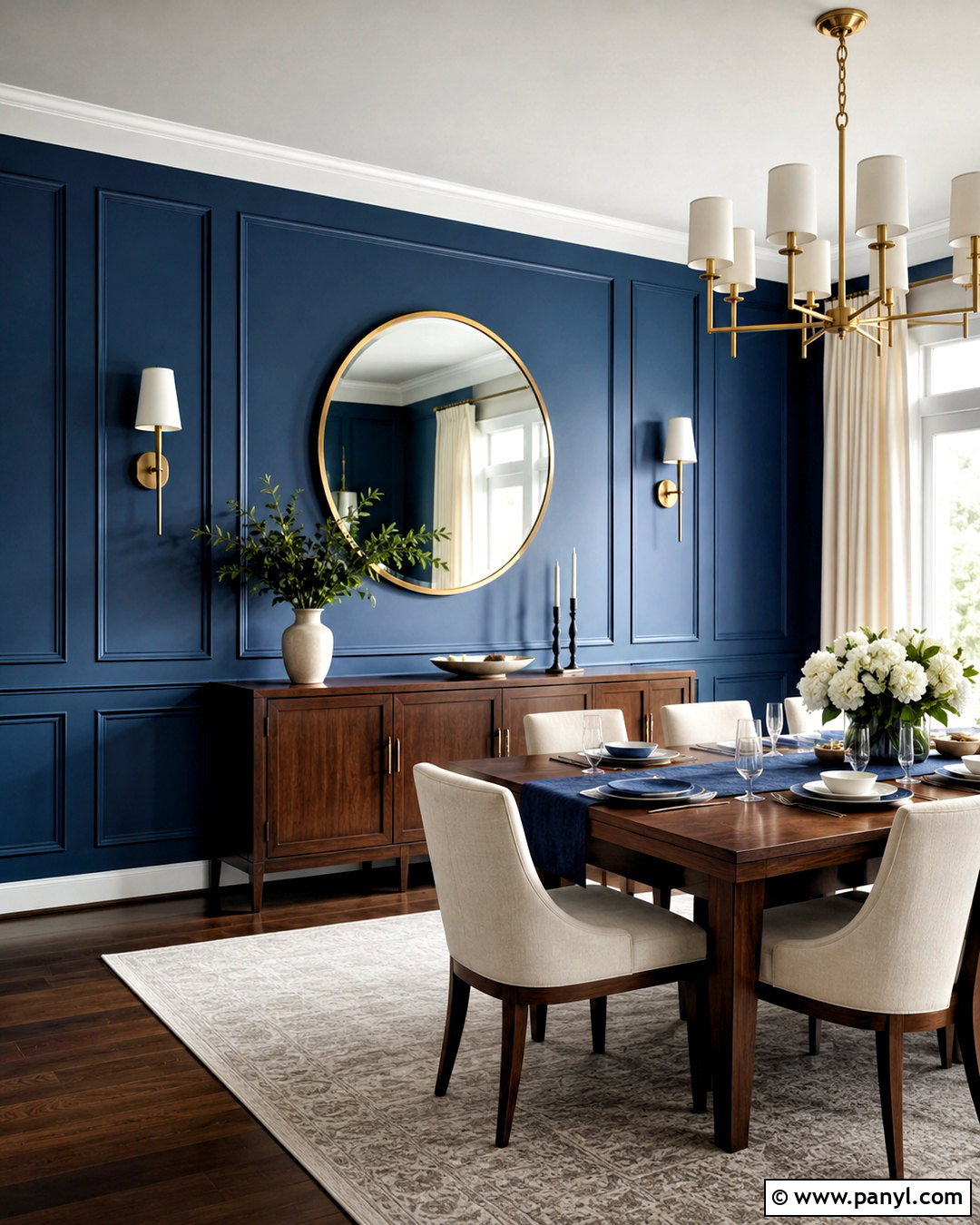
Full-height blue wall paneling can transform a plain dining room into a more polished and architectural space. Add rectangular molding across the focal wall and paint the trim and wall together in a sophisticated steel blue. Position a walnut sideboard against the paneling and center a large round mirror above it. A rectangular wood dining table, cream upholstered chairs, and a soft neutral rug balance the rich color. Choose a sculptural brass chandelier to warm the composition. Pale walls on the remaining sides keep the room comfortable for everyday meals. Rather than filling every panel with artwork, leave several empty so the molding remains visible. A few blue table linens will connect the feature wall to the dining arrangement.
18. Blue Built-In Bookshelf Accent Wall
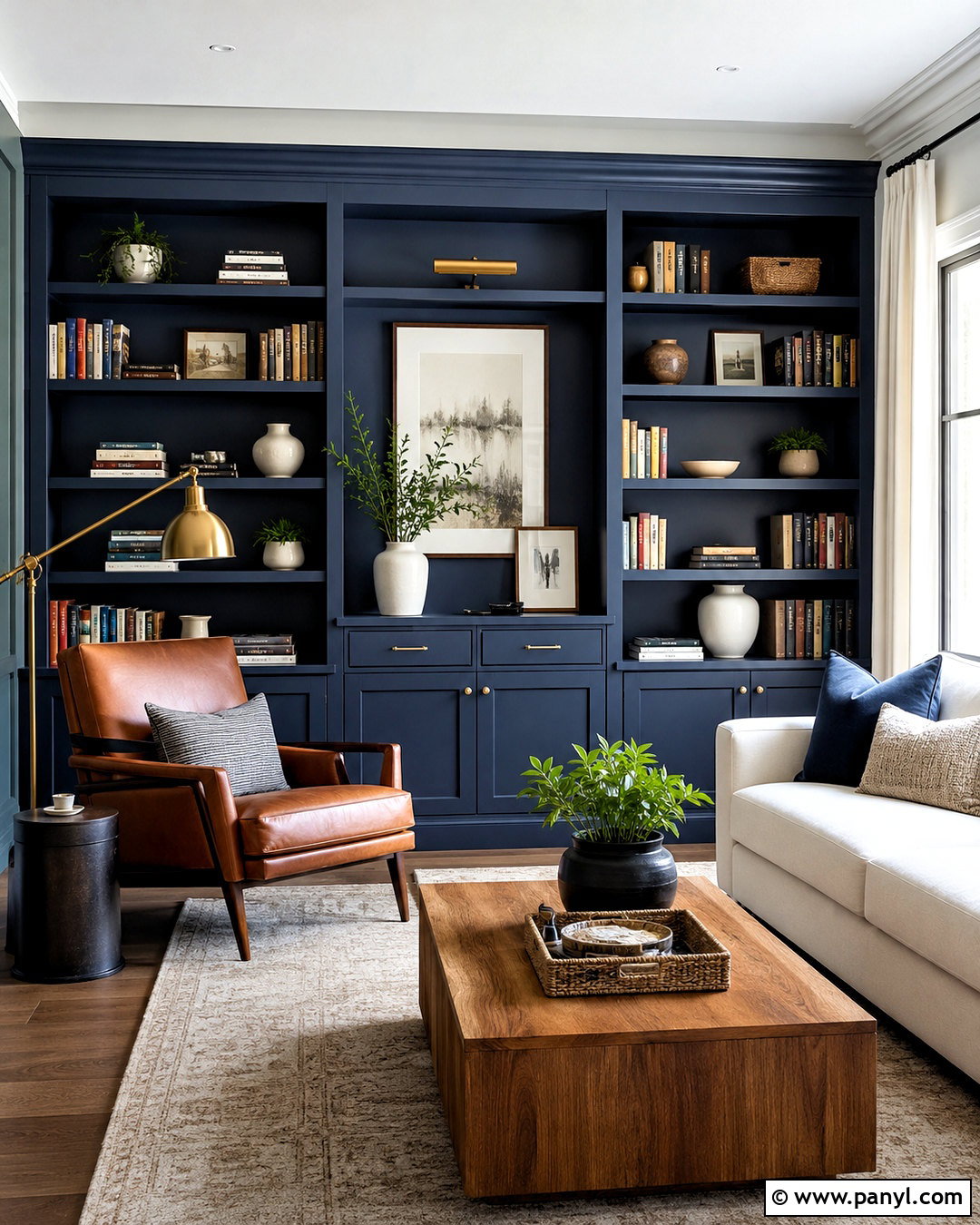
Painting an entire wall of built-in bookshelves blue creates a functional focal point for a living room, den, or office. Use a deep muted blue on the shelves, cabinet doors, trim, and wall behind them for a seamless custom effect. Style the shelves with books, neutral pottery, framed artwork, and small plants, leaving open areas to avoid clutter. Place a camel leather chair and brass floor lamp nearby to create a reading zone. A cream sofa and light rug will balance the darker built-ins. Consider satin paint for cabinetry and matte paint for the wall sections. Matching the built-ins to the blue background makes standard shelving appear more substantial while giving everyday storage a deliberate place in the room.
19. Blue Entryway Accent Wall
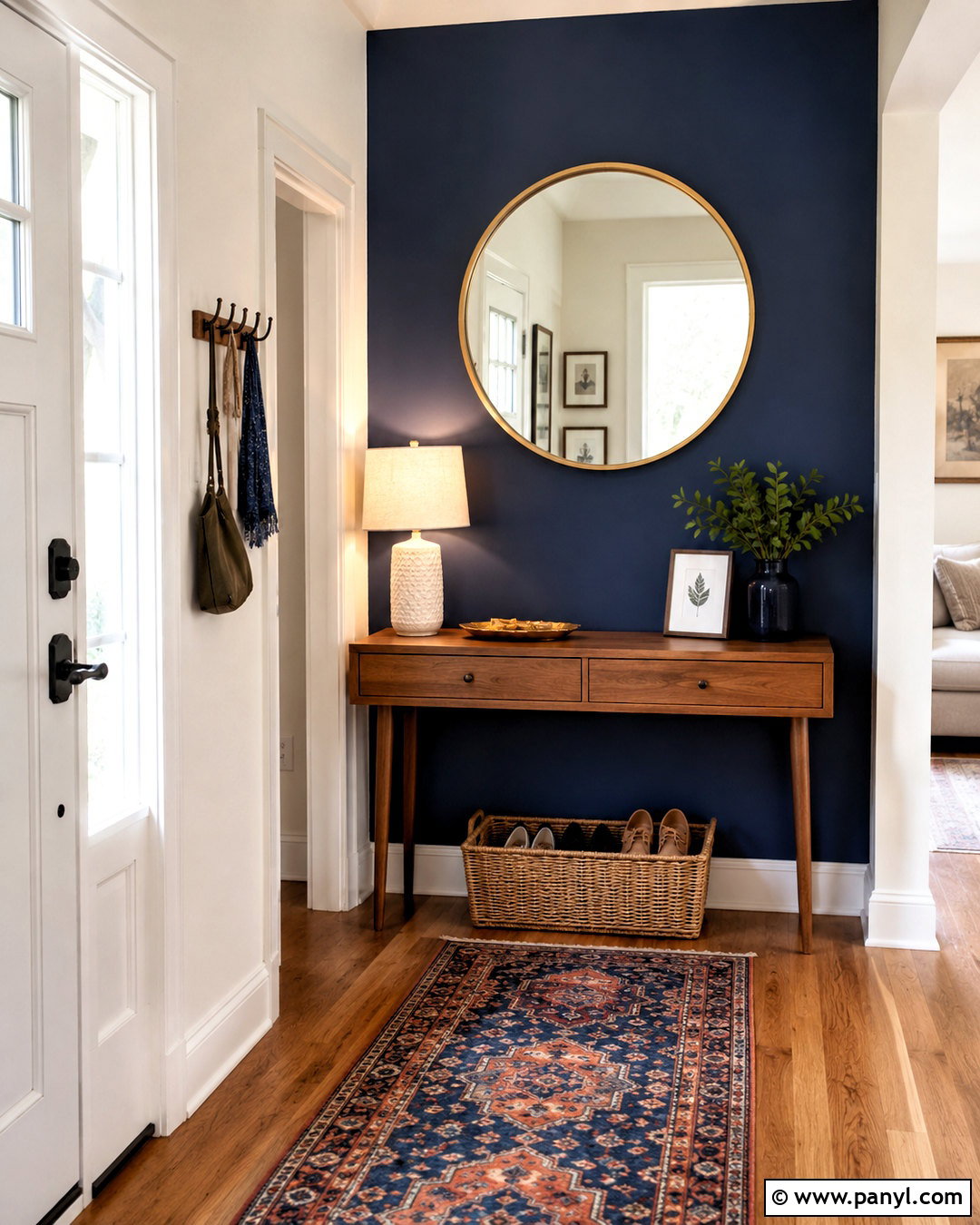
A blue entryway wall creates an immediate sense of character while helping define a small transitional space. Choose a medium indigo or muted royal blue for the wall behind a slim wood console. Add a large round brass or black-framed mirror to reflect light and provide a practical place for last-minute checks. A woven basket underneath can hold shoes, while a shallow tray keeps keys organized. Use warm white on adjoining walls and choose a durable patterned runner containing blue, cream, and rust. A shaded table lamp softens the color during the evening. Keep hooks, switches, and nearby doors coordinated so the accent wall feels integrated with the entry rather than like an unrelated block of paint.
20. Blue Staircase Accent Wall
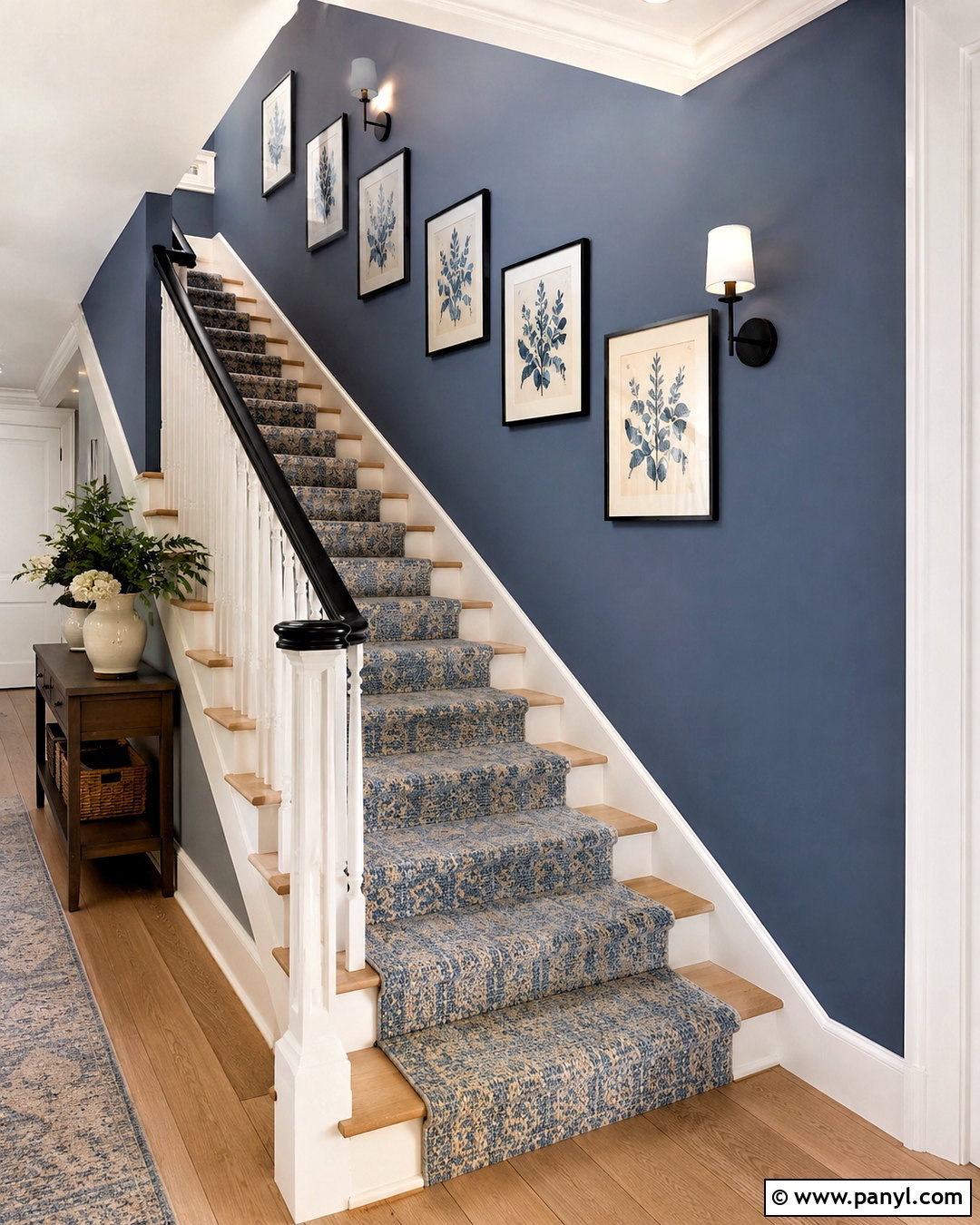
A staircase offers enough vertical space for a blue accent wall to feel dramatic without taking over a main living area. Paint the long wall beside the stairs a medium blue-gray that remains attractive in changing light. Pair it with white trim, natural oak treads, and a simple black handrail. Arrange framed photographs or botanical prints in a gradual line that follows the staircase angle. Use consistent frames and generous spacing to keep the display orderly. A patterned runner with blue and beige tones can strengthen the connection between the wall and steps. Install bright overhead lighting or wall sconces so the color does not appear dull in this often-shadowed area. The finished staircase should feel connected, clean, and purposeful.
21. Blue Mudroom Accent Wall
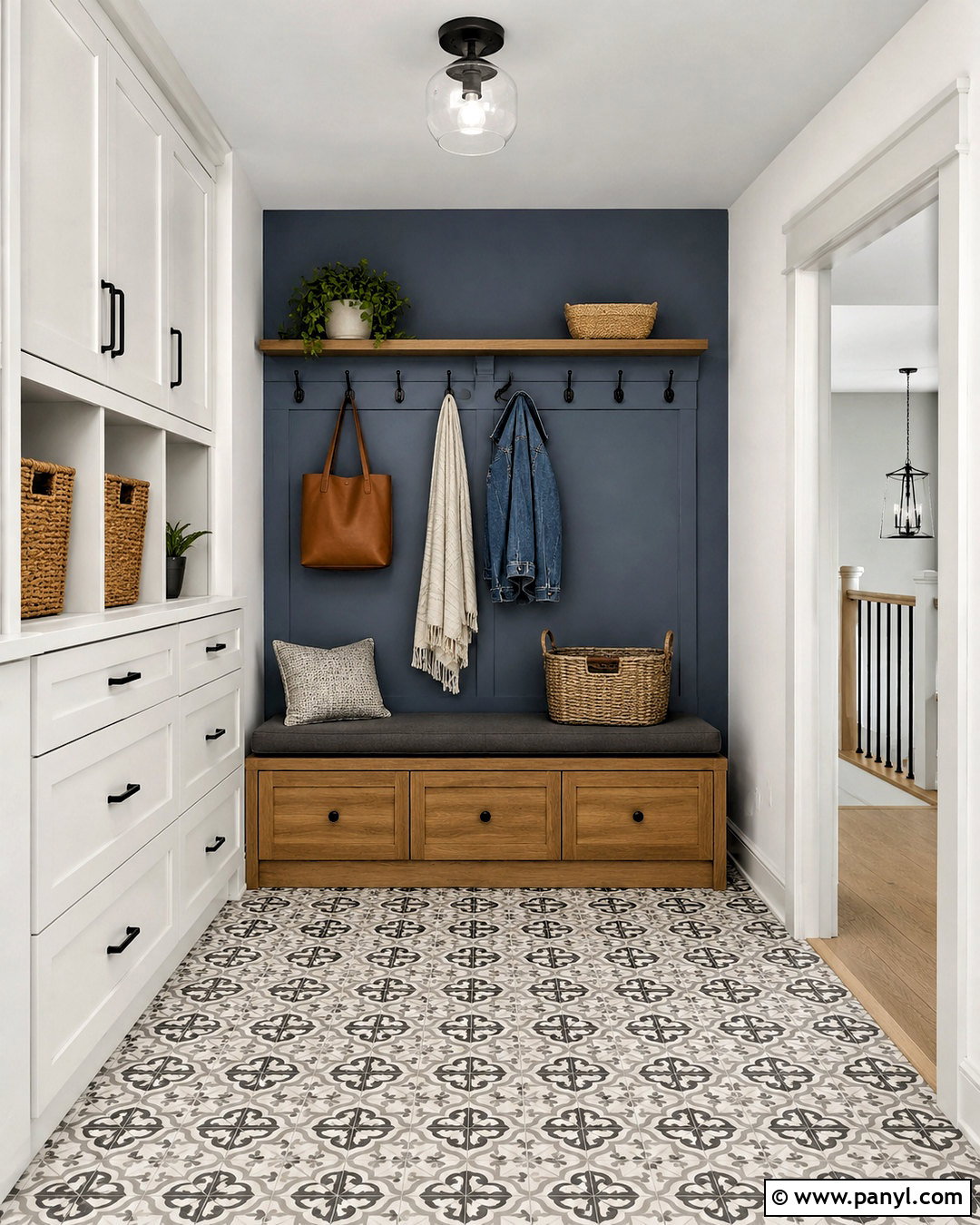
A durable blue accent wall can make a hardworking mudroom feel organized and welcoming. Paint the wall behind a storage bench and coat hooks in a practical denim blue with a washable finish. Use natural oak or white cabinetry for closed storage, then add a built-in bench with a charcoal seat cushion. Woven baskets placed in upper cubbies provide texture and hide smaller items. Choose patterned porcelain flooring or a sturdy washable runner in blue, cream, and gray. Black hooks and cabinet pulls offer clear contrast against the blue background. Maintain an open landing area for shoes and bags instead of filling every surface. This balanced setup combines an attractive focal wall with realistic storage for daily household routines.
22. Blue Laundry Room Accent Wall
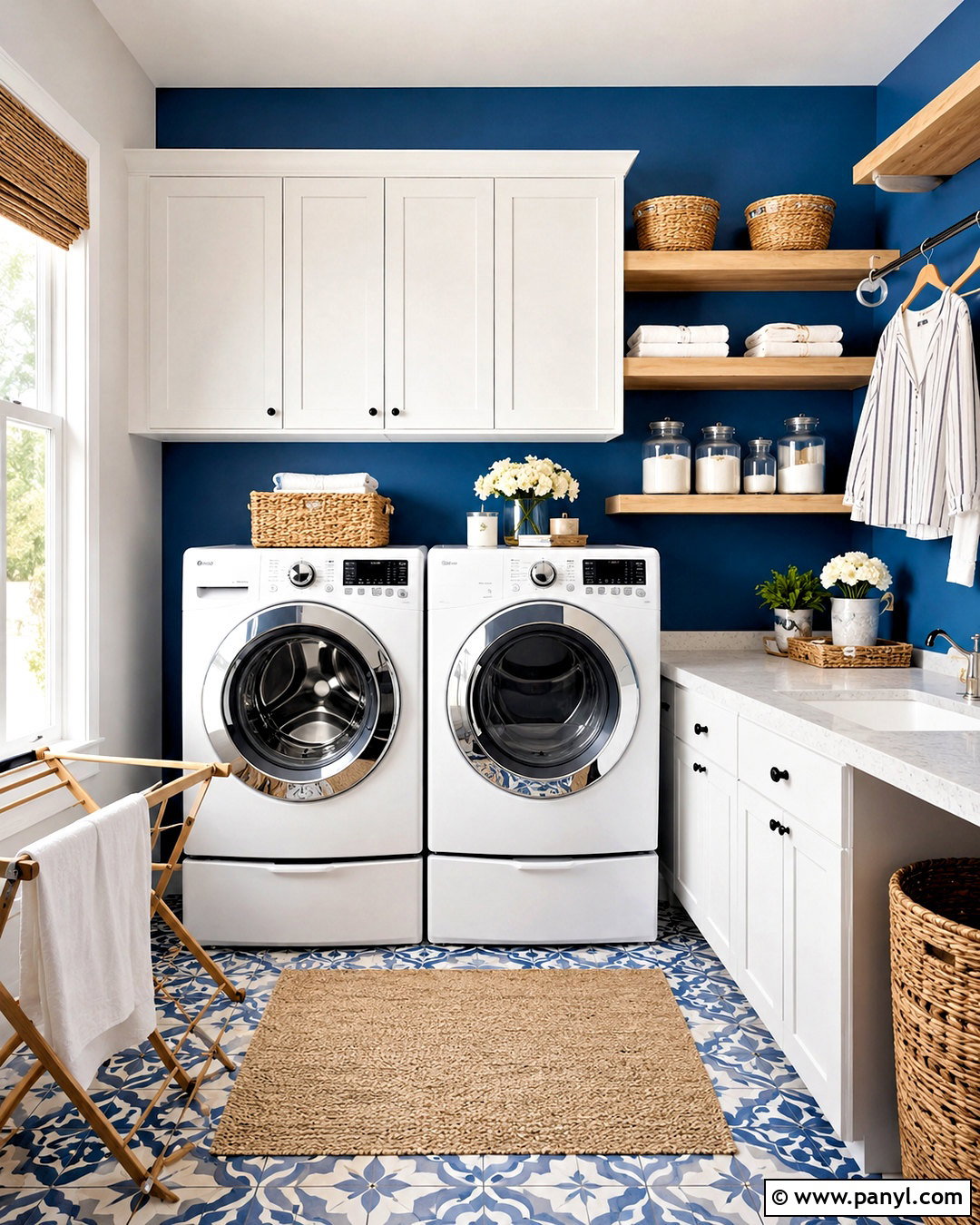
A blue accent wall can bring color and order to a laundry room that otherwise feels purely functional. Paint the wall behind the washer and dryer in a fresh coastal blue, then install white upper cabinets or light oak floating shelves. Use a pale quartz folding counter above front-loading machines when the layout allows. Glass jars, woven baskets, and labeled containers can keep supplies controlled without covering the blue surface. Add a small patterned floor tile in white and blue for another layer of interest. Bright overhead lighting is essential for accurate sorting and stain treatment. A hanging rod, concealed hamper, and wall-mounted drying rack complete the arrangement, creating a laundry space that is practical, coordinated, and pleasant to use.
23. Blue Powder Room Accent Wall
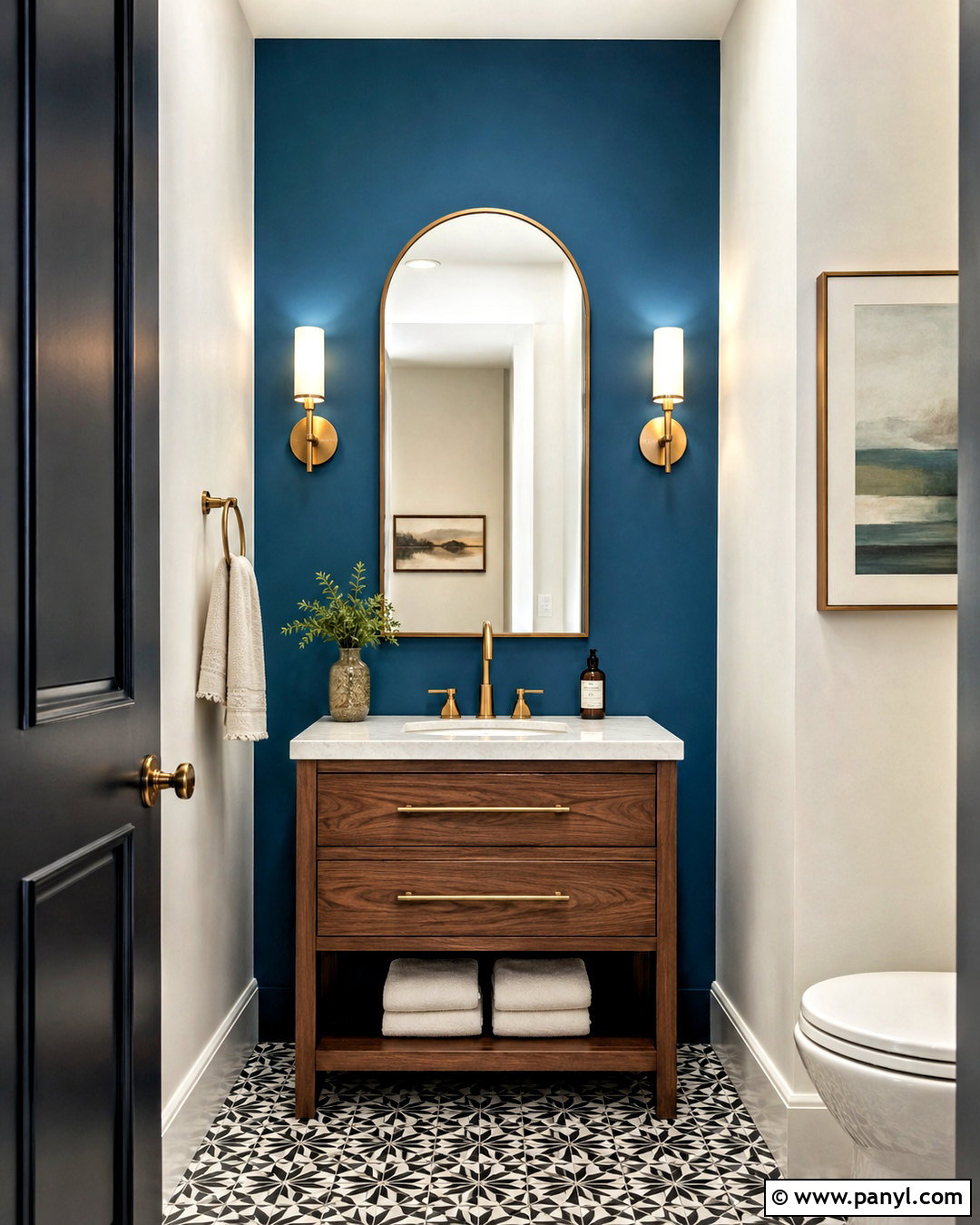
A small powder room is an ideal place to experiment with a saturated blue wall. Paint the vanity wall in a rich peacock blue and keep the remaining walls soft white to maintain brightness. Choose a compact walnut vanity with a white stone top, then install an arched brass mirror and matching sconces. Black-and-white patterned floor tile adds personality while balancing the strong wall color. Use a white sink, simple faucet, and neatly folded hand towels to keep the design clean. One small framed print or a narrow vase is enough decoration. Because guests experience the room briefly, the stronger color feels exciting rather than overwhelming. A moisture-resistant finish will also help the wall remain easy to clean.
24. Blue Bathroom Tile Accent Wall
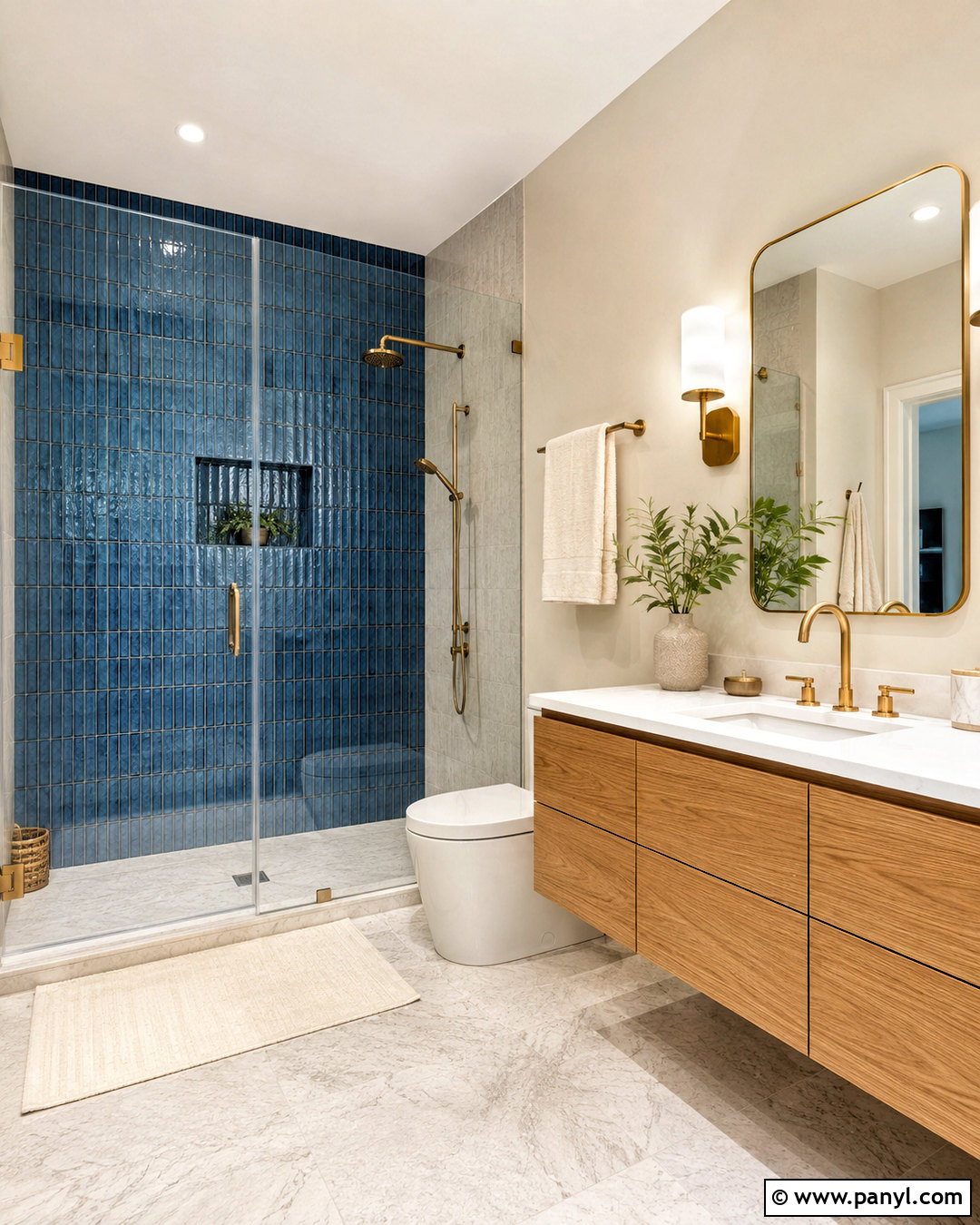
A blue tiled shower wall creates a bathroom focal point that is both attractive and practical. Cover the main wall inside a walk-in shower with vertical blue ceramic tile in a rich marine shade. Use pale gray or white tile on the adjacent walls so the blue remains clearly defined. A frameless glass enclosure keeps the feature visible from the rest of the room. Pair it with a floating oak vanity, white countertop, and brushed nickel or brass fixtures. Continue a light stone-look tile across the floor for visual balance. Outside the shower, repeat blue through one towel or bath mat. Bright lighting and a generous mirror will prevent the saturated tile from making the bathroom feel smaller.
25. Blue Home Gym Accent Wall
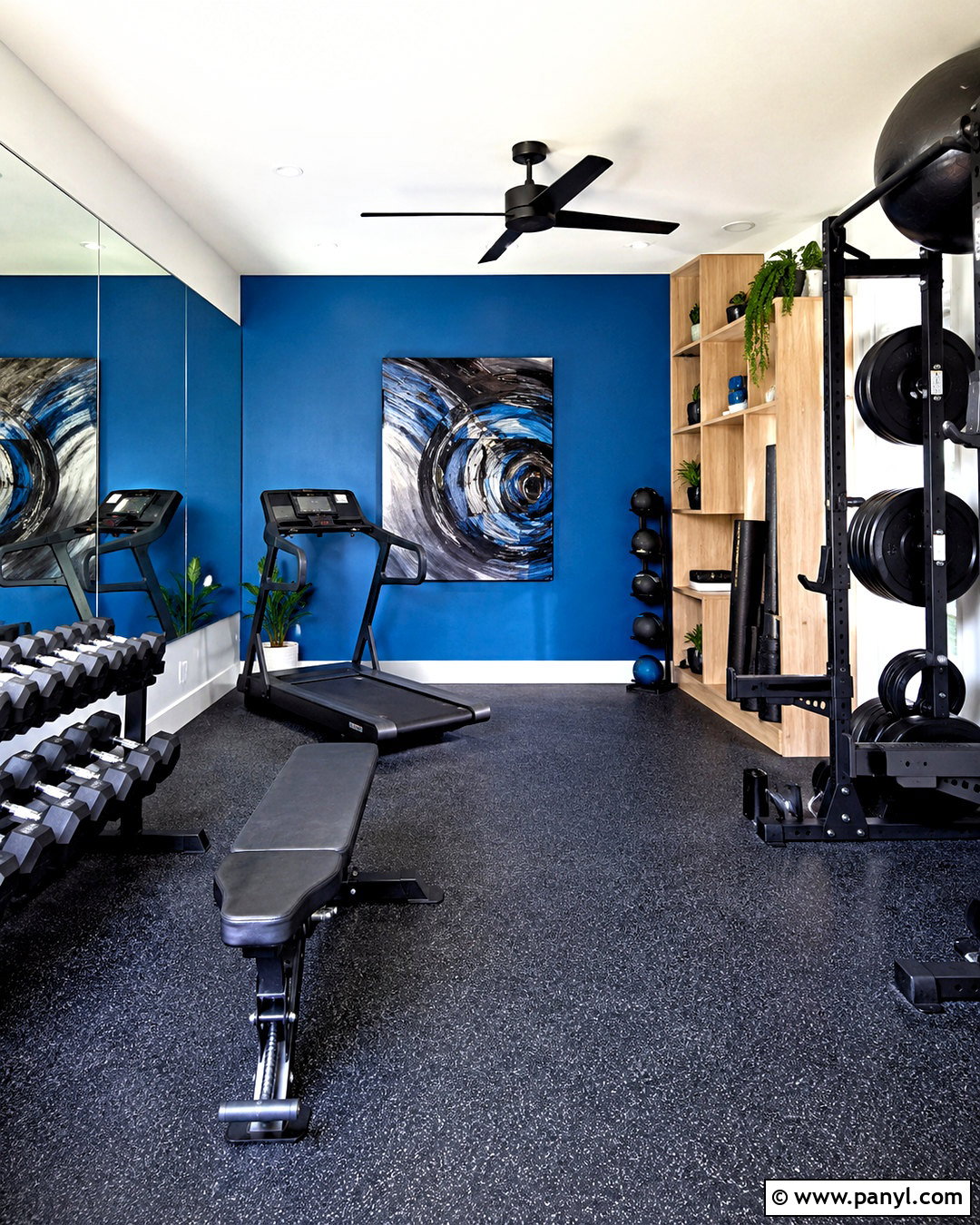
A vivid blue accent wall can give a home gym an energetic identity while preserving a clean, focused environment. Paint the wall facing the main workout area in a saturated azure or athletic blue. Install a large mirror on an adjacent wall rather than covering the color completely. Use black rubber flooring, streamlined equipment, and pale wood storage shelves for a practical modern palette. A white ceiling and bright overhead fixtures will keep the space from feeling enclosed. Add a compact bench, neatly arranged weights, and closed storage for towels and accessories. One graphic artwork piece can introduce additional color without creating distraction. The blue should feel motivating, while the overall layout remains open enough for comfortable movement.
26. Blue Reading Nook Accent Wall
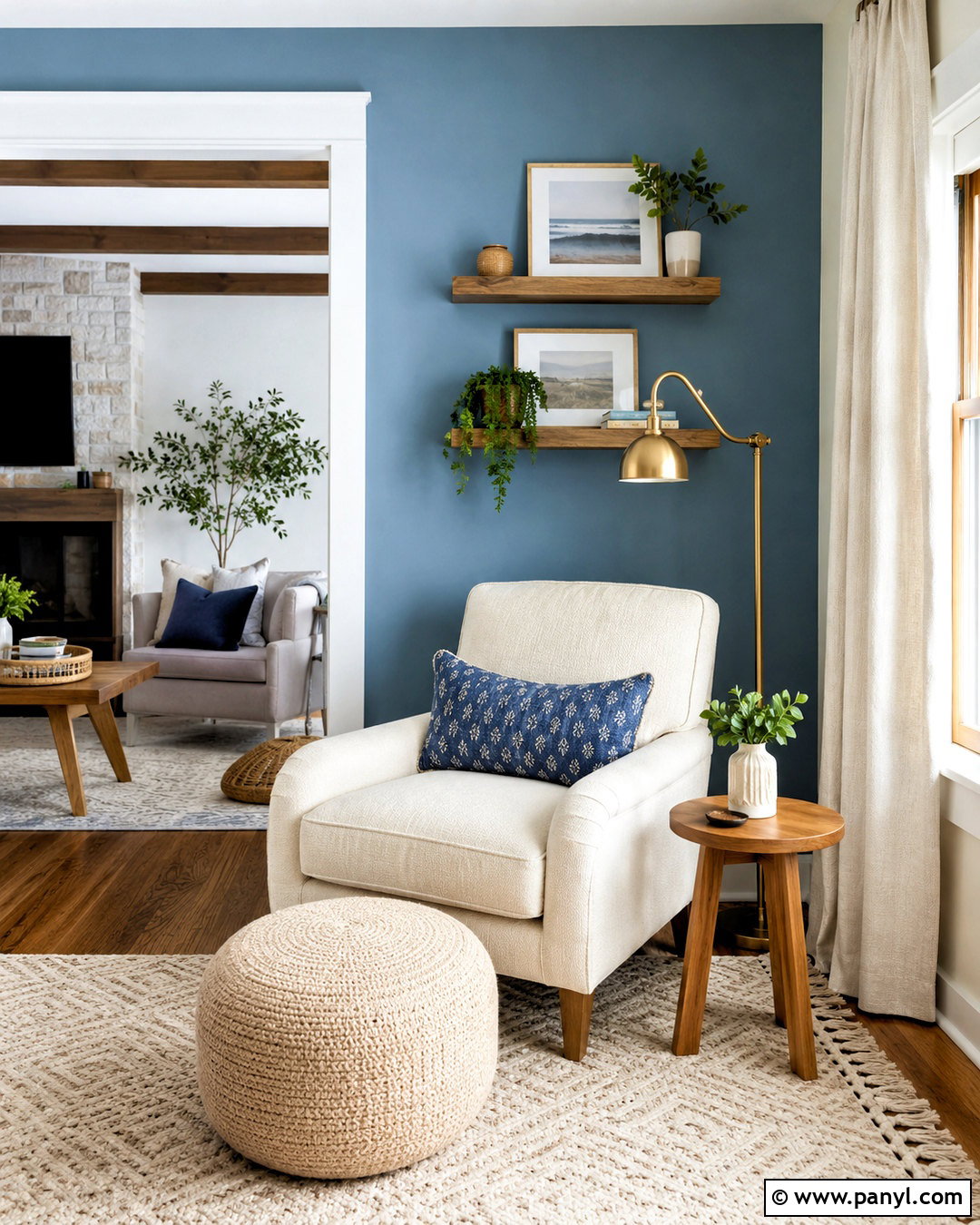
A blue wall can make a small reading nook feel separated from the rest of a bedroom or living room. Choose a muted ocean blue and place a comfortable cream armchair directly in front of it. Add a small oak side table, brass floor lamp, and textured footstool to create a complete reading setup. A narrow book ledge or two floating shelves can hold current books without making the wall appear crowded. Use an ivory rug and blue-patterned lumbar pillow to connect the seating with the background. If the nook is near a window, select light linen curtains that preserve natural brightness. The finished area should feel restful and intentional, with everything needed for reading within easy reach.
27. Blue TV Wall Accent
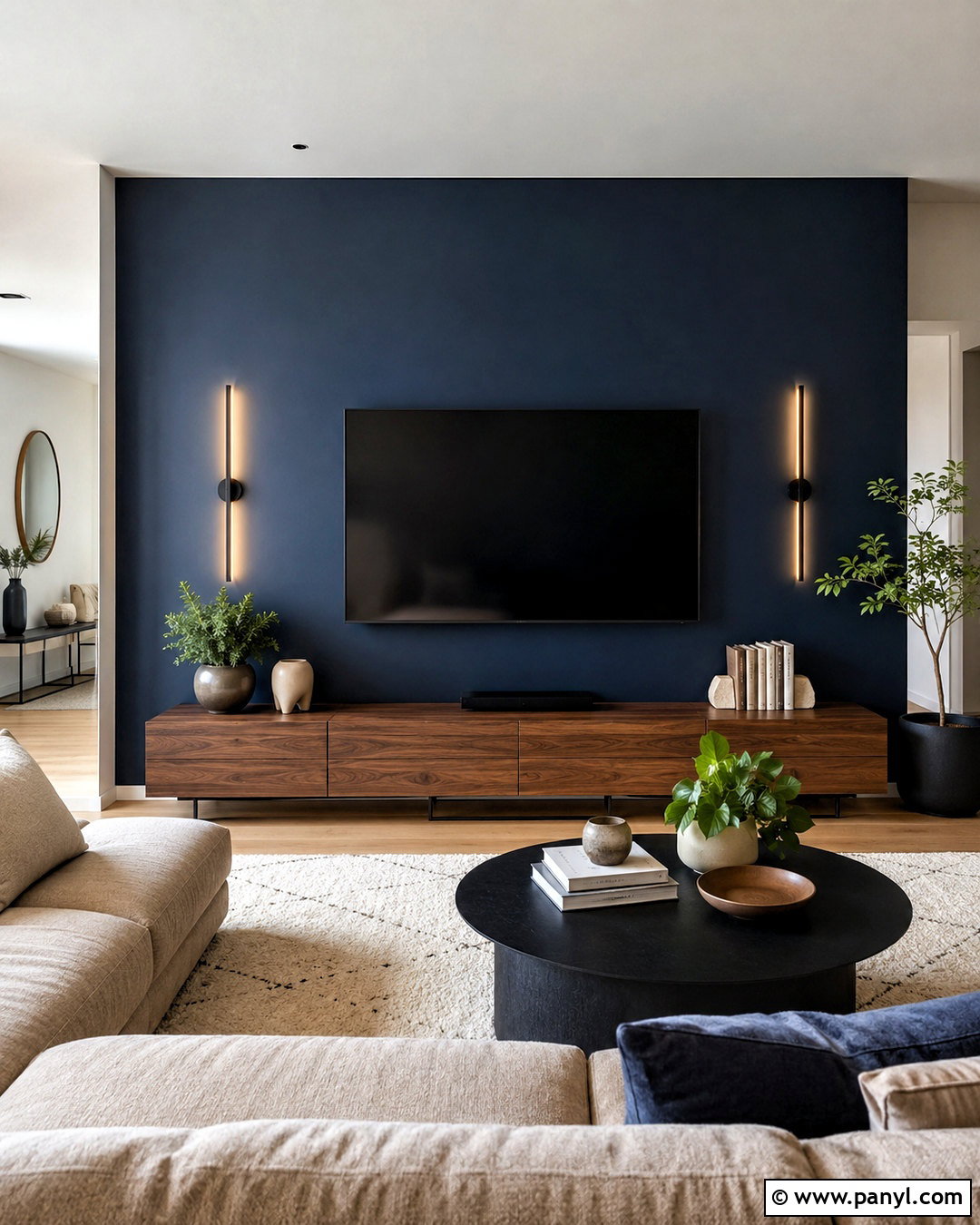
A dark blue TV wall helps a black screen blend more comfortably into a living room. Use a matte midnight blue behind the television to reduce the visual contrast created by a bright white wall. Install a long, low walnut media cabinet and conceal cords inside the wall or through a cable cover painted to match. Warm white walls, a beige sectional, and a large cream rug keep the complete room from feeling too dark. Add slim black sconces or subtle shelf lighting on either side of the television. Avoid surrounding the screen with excessive small decorations. Instead, use a few larger ceramics, books, and plants. The result is a streamlined media area that still feels warm and residential.
28. Blue Fireplace Tile Accent Wall
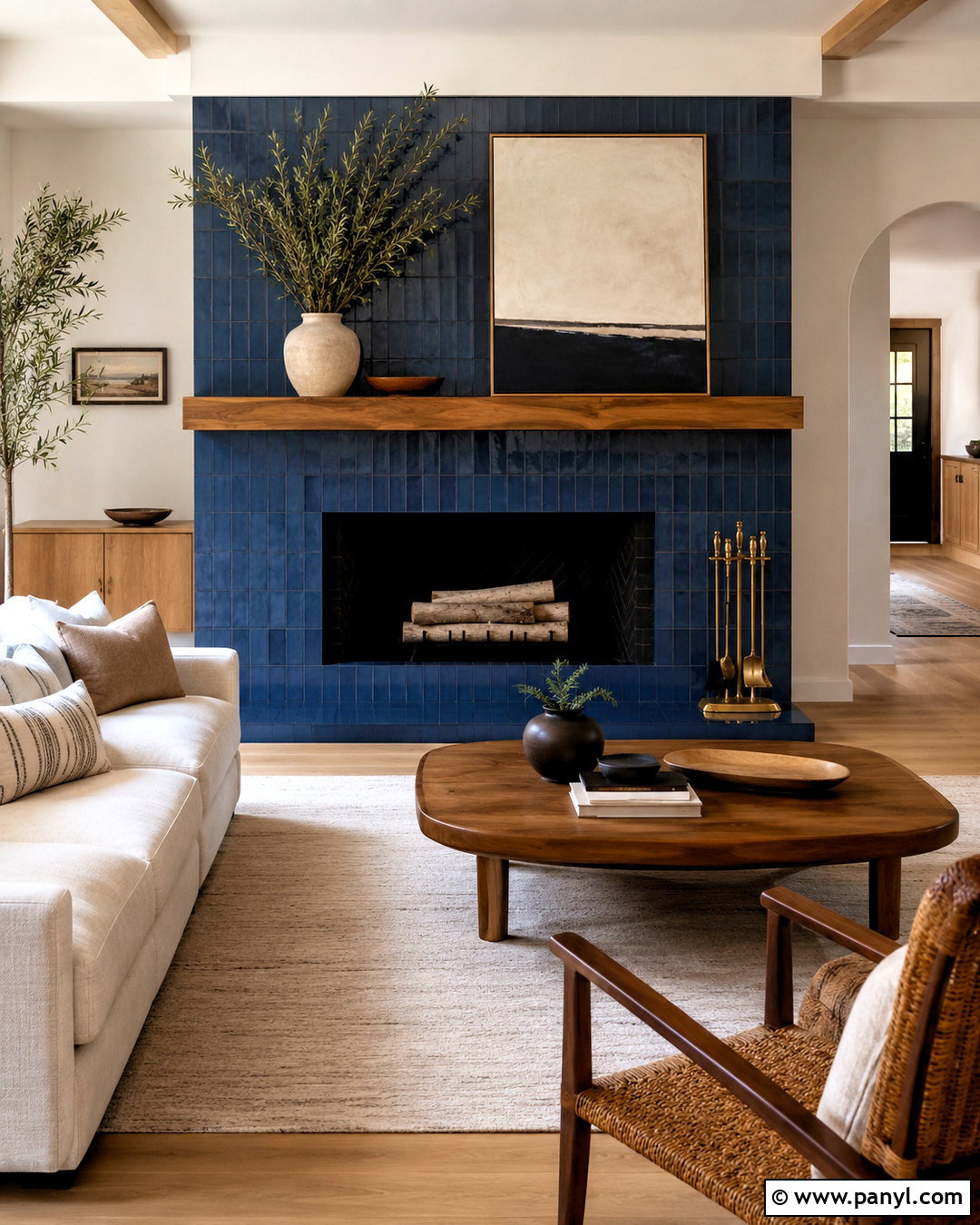
Blue fireplace tile adds durable color and texture to a living room’s most prominent architectural feature. Cover the fireplace surround and the vertical section above it with matte blue rectangular tile, deep blue penny tile, or handcrafted ceramic squares. Balance the strong surface with white walls, light oak flooring, and an uncomplicated wood mantel. Arrange a neutral sofa and two woven chairs toward the fireplace, using an ivory rug to define the seating group. Brass fireplace tools and a warm wood coffee table soften the cool tile. Keep mantel decor restrained with one artwork piece and a few simple objects. The finished wall should emphasize the fireplace’s height and shape while remaining connected to the entire room.
29. Blue Arch Accent Wall
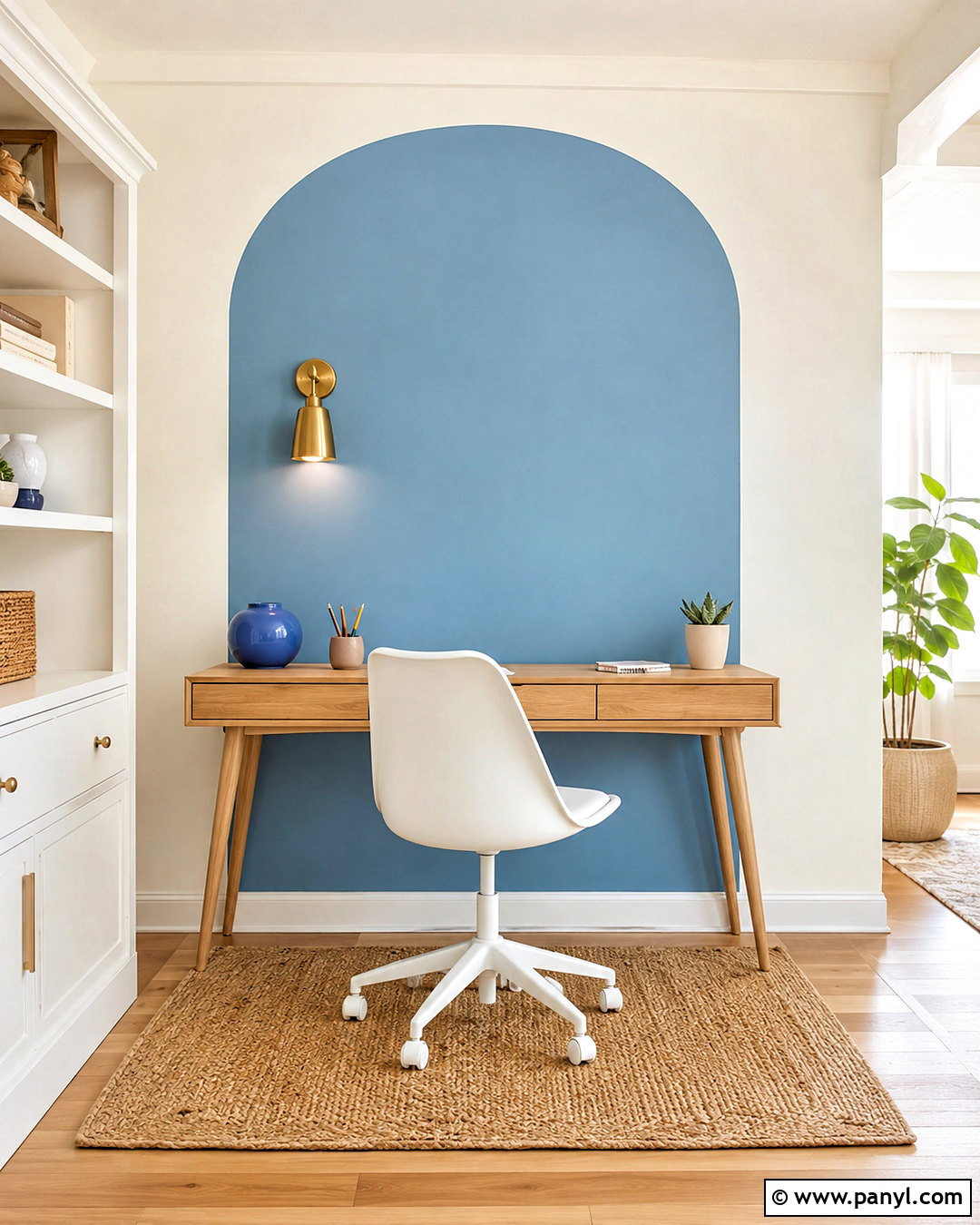
A painted blue arch can create a focal point without coloring the entire wall. Use a clean semicircular shape behind a console, desk, bed, or reading chair, choosing a medium sky blue that contrasts gently with warm white walls. Center the furniture precisely inside the painted shape so the arch visually frames the arrangement. A slim oak desk, white chair, and small brass sconce make a practical workspace, while a woven rug brings warmth underfoot. Keep nearby decorations simple and repeat the blue in one small accessory. Measure the curve carefully with a string-and-pencil method or stencil before painting. This treatment is especially useful in compact rooms where a full saturated accent wall might feel too visually heavy.
30. Blue Color Block Accent Wall
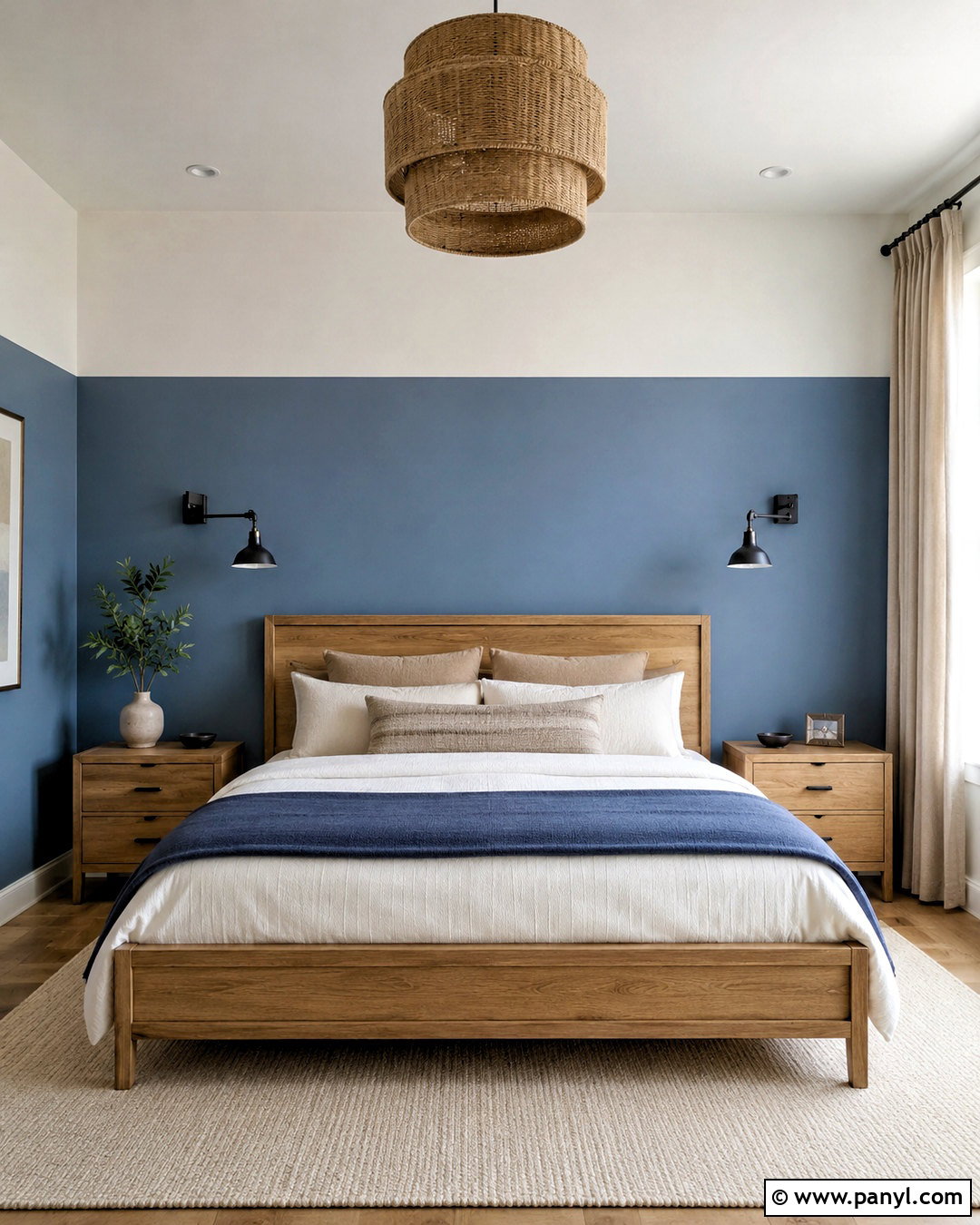
Blue color blocking gives a wall a modern graphic quality while allowing lighter space around the main feature. Paint the lower two-thirds of the wall in a muted French blue and leave the upper section warm white. Use a crisp horizontal line that aligns with a shelf, headboard, or nearby architectural feature. In a bedroom, place a natural wood bed against the wall and layer it with white, tan, and blue bedding. Add black swing-arm sconces for contrast and matching oak nightstands for symmetry. A soft cream rug and linen curtains keep the room relaxed. The partially painted treatment works well with lower ceilings because the white upper area maintains a sense of height and brightness.
31. Blue Ombre Accent Wall
An ombre blue wall introduces gradual color and an artistic atmosphere without relying on a repeating pattern. Begin with deep ocean blue near the floor, blend through soft denim, and finish with pale sky blue toward the ceiling. This arrangement feels grounded while allowing the upper room to remain bright. Position a low ivory bed or cream sofa against the wall so the gradient stays visible. Use white linens, blond wood furniture, and a simple neutral rug to avoid competing with the painted effect. Keep artwork minimal or skip it entirely. Smooth blending requires working in sections while the paint remains wet. The finished room should feel soft and atmospheric rather than striped, patchy, or overly dramatic.
32. Blue Grasscloth Accent Wall
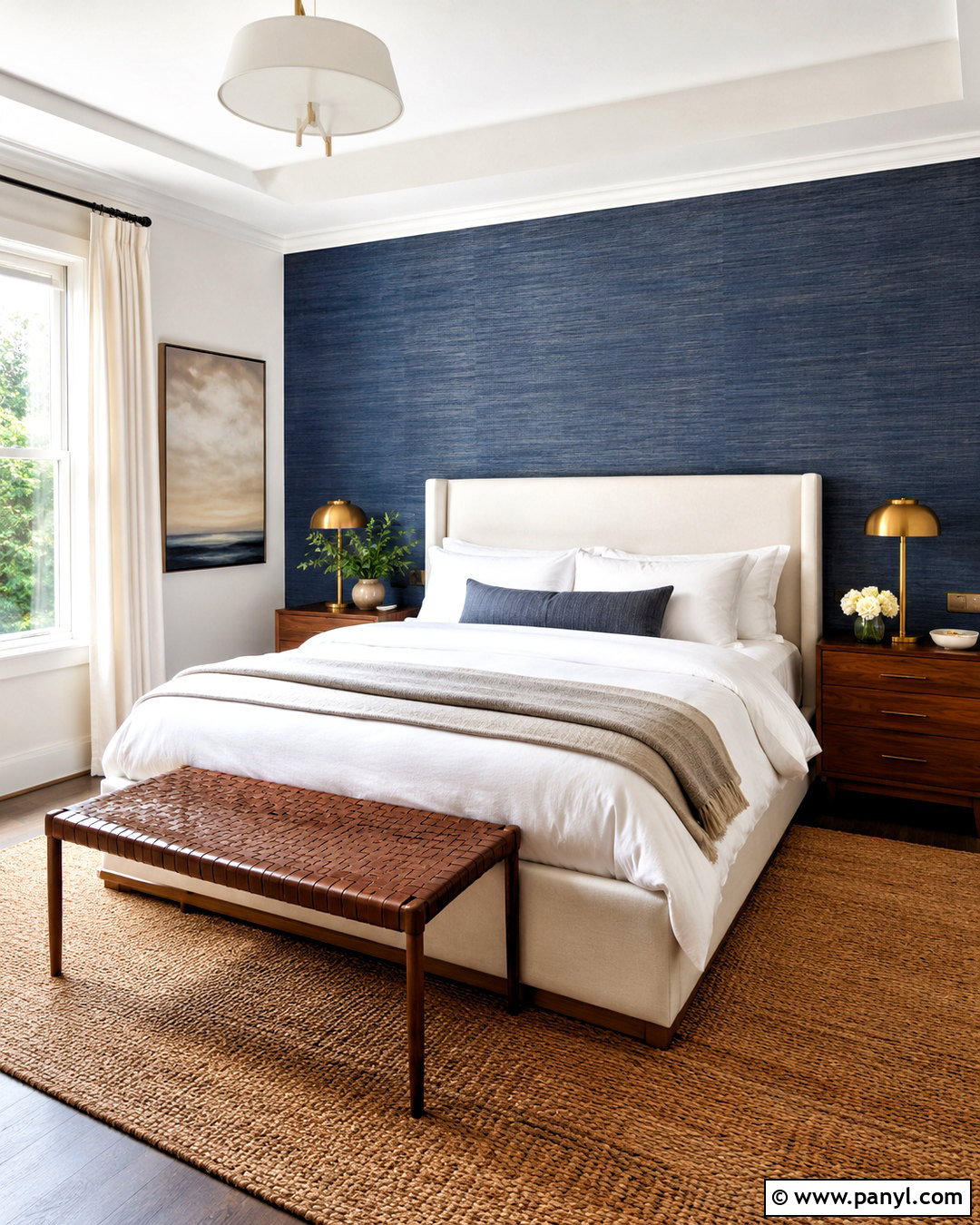
Blue grasscloth wallpaper gives a bedroom, office, or dining room subtle texture and a tailored appearance. Choose a medium indigo or blue-gray covering with visible natural fibers and install it behind the room’s primary focal point. In a bedroom, pair it with a cream upholstered headboard, walnut nightstands, and warm brass lamps. Crisp white bedding and a tan wool rug balance the textured surface. Because grasscloth seams are usually visible, treat them as part of the handcrafted look rather than trying to hide them. Keep the remaining walls warm white and limit artwork to one large piece. Natural wood, linen, and ceramic accessories support the organic finish and prevent the room from feeling overly formal or glossy.
33. Blue Coastal Living Room Accent Wall
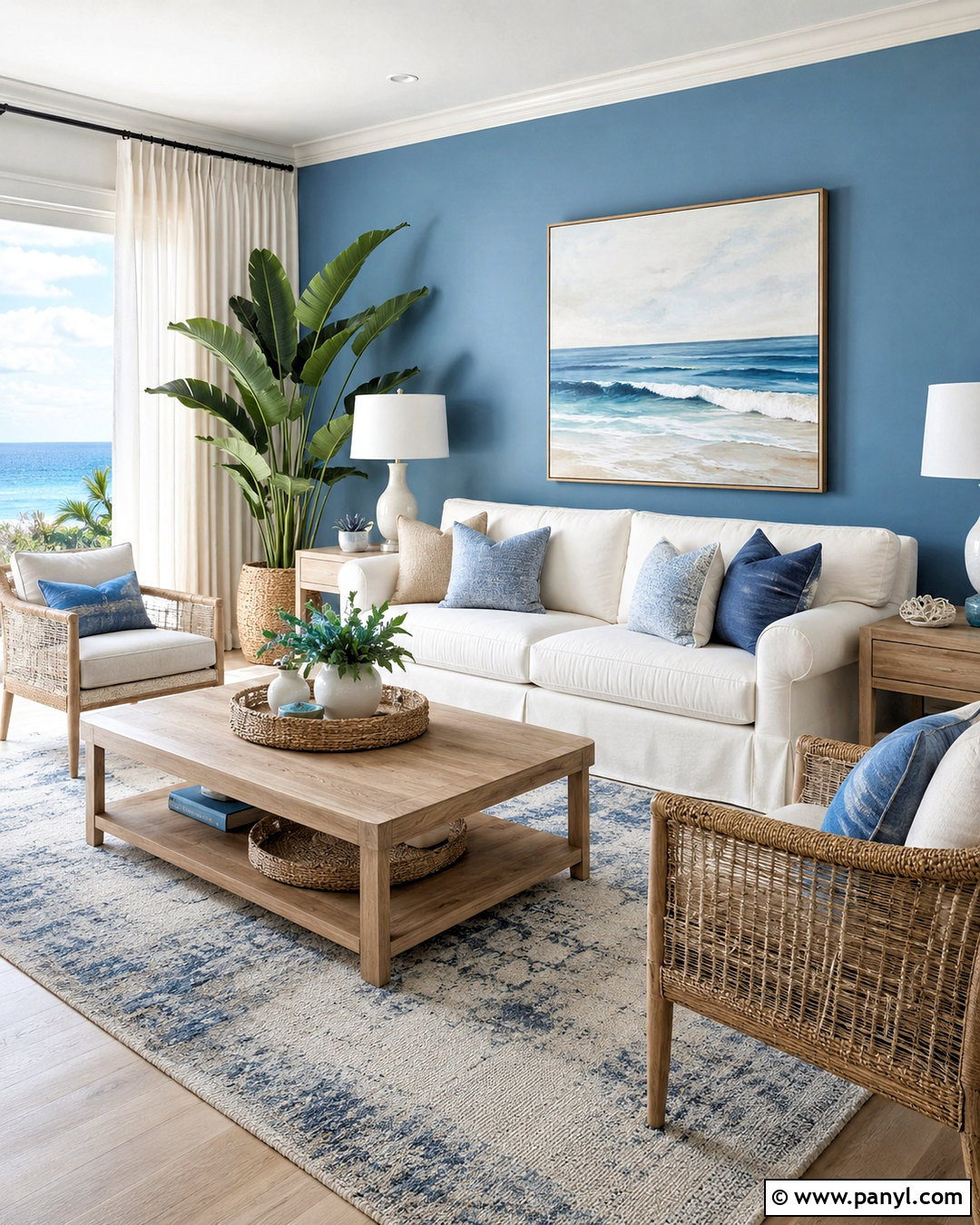
A soft coastal blue wall can create a breezy living room without depending on obvious seaside decorations. Paint the focal wall a muted sea-glass blue and place a slipcovered ivory sofa against it. Add light oak tables, woven chairs, and a textured cream-and-blue rug to build a relaxed foundation. Linen curtains should hang from ceiling height and remain light enough to filter sunshine. Use striped pillows sparingly, mixing them with solid sand, white, and denim fabrics. Abstract ocean-inspired artwork feels more current than literal anchors or shells. A large plant provides fresh green contrast. By combining soft blue with natural fibers and pale woods, the room feels open, comfortable, and connected rather than heavily themed.
34. Blue Farmhouse Bedroom Accent Wall
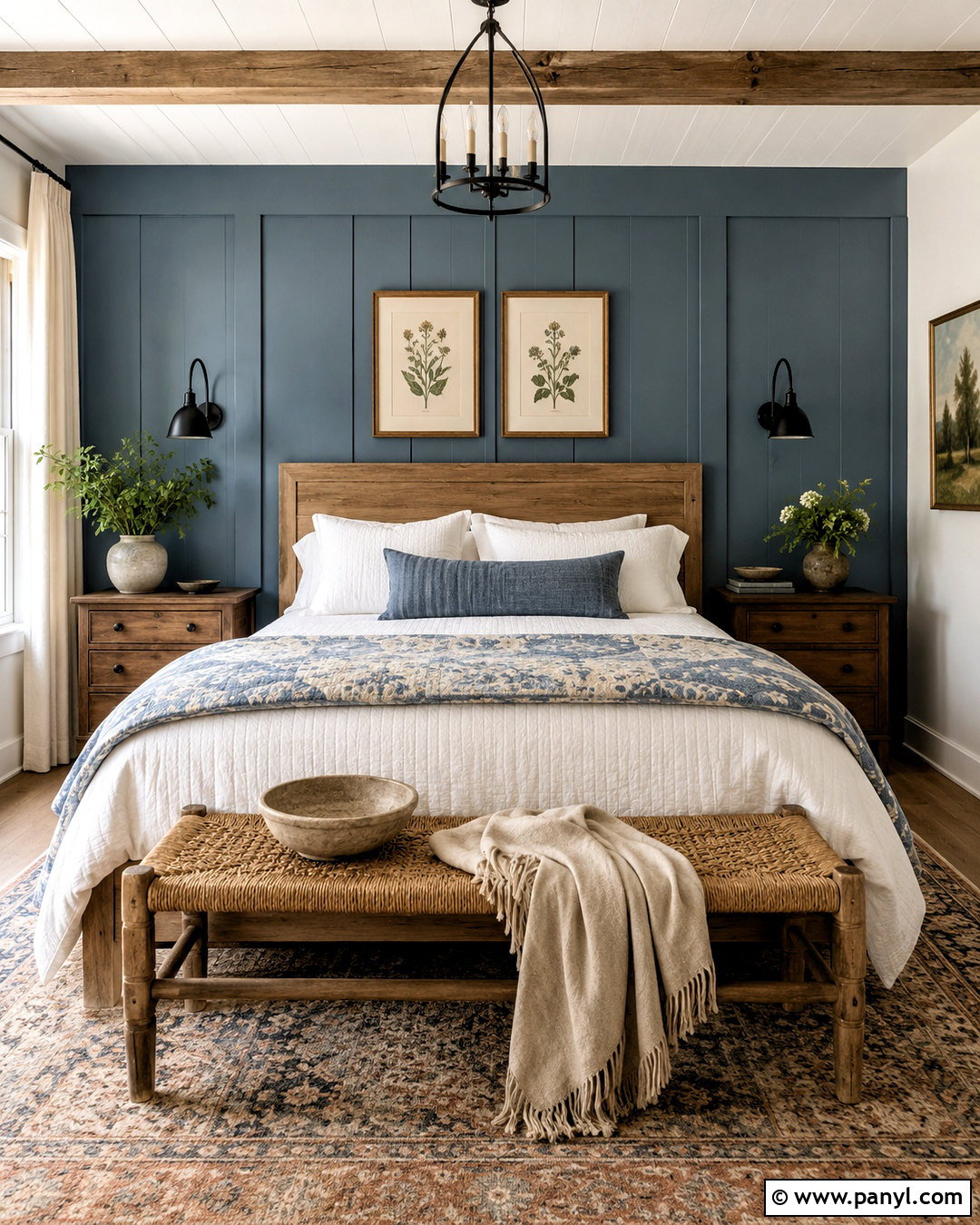
A muted blue accent wall can update a farmhouse bedroom while retaining its warm, familiar character. Choose a dusty blue with gray undertones and position a simple wood bed against it. Layer white cotton bedding with a quilt in cream, faded blue, and soft tan. Use vintage-inspired oak nightstands, black metal sconces, and a woven bench at the foot of the bed. The remaining walls should be warm white, while natural wood flooring and a faded patterned rug provide an aged, comfortable foundation. Instead of adding many rustic signs, decorate with framed botanical prints, pottery, and a single leafy branch. The restrained mix of color and texture keeps the farmhouse influence inviting rather than overly decorative.
35. Blue Midcentury Modern Accent Wall
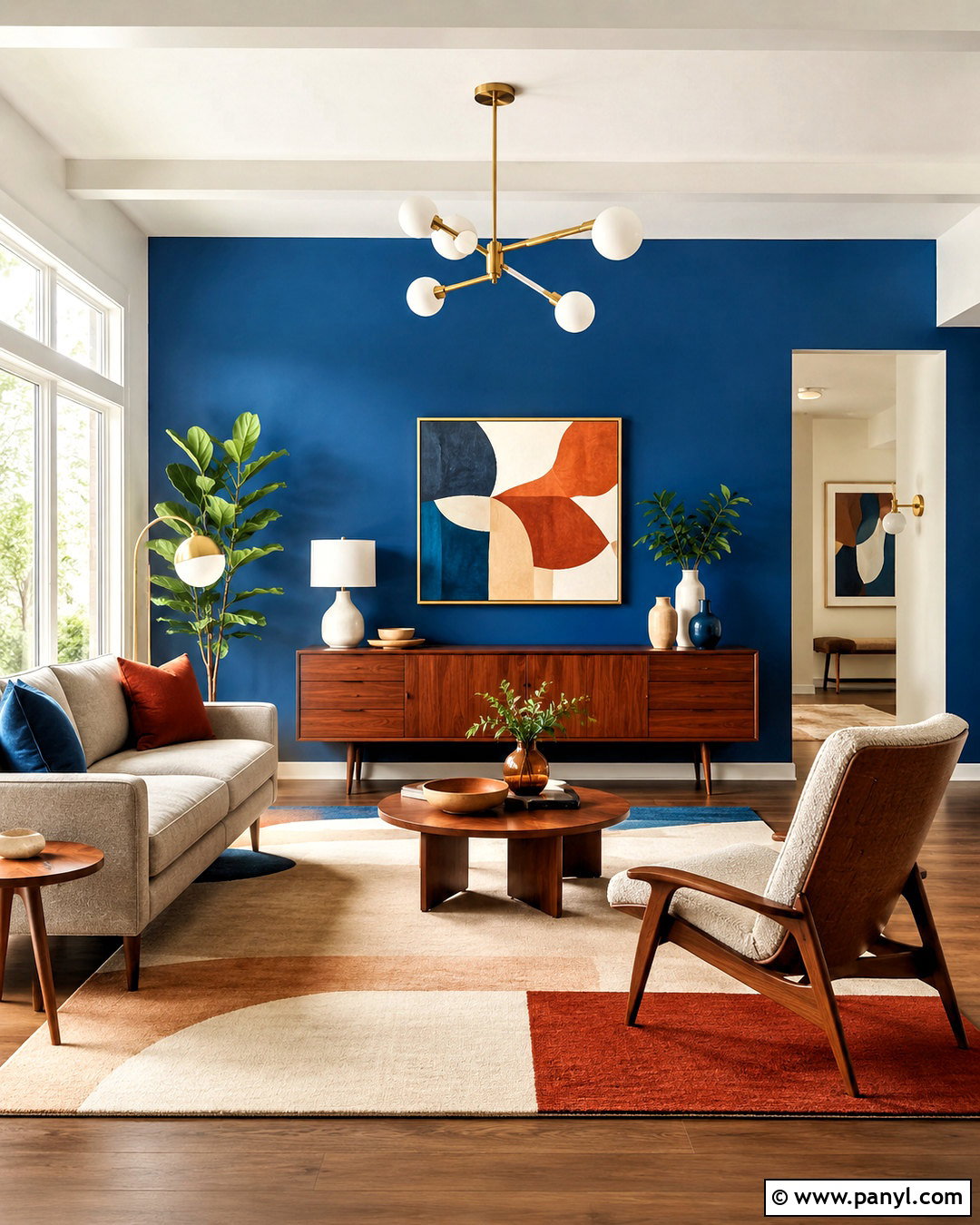
A strong blue wall works beautifully with the clean forms and warm woods found in a midcentury modern room. Choose a saturated cerulean or deep teal-blue for the wall behind a low walnut credenza. Add a streamlined sofa in oatmeal fabric, a sculptural lounge chair, and a geometric rug containing cream, rust, and blue. Globe lighting in brass or matte black provides an era-inspired accent without making the room look like a set. Decorate the credenza with a large abstract print and a few ceramic pieces. Keep window treatments simple and allow plenty of floor space around the furniture. The blue background should emphasize the walnut grain and curved furniture while supporting a comfortable, functional layout.
36. Blue Boho Bedroom Accent Wall
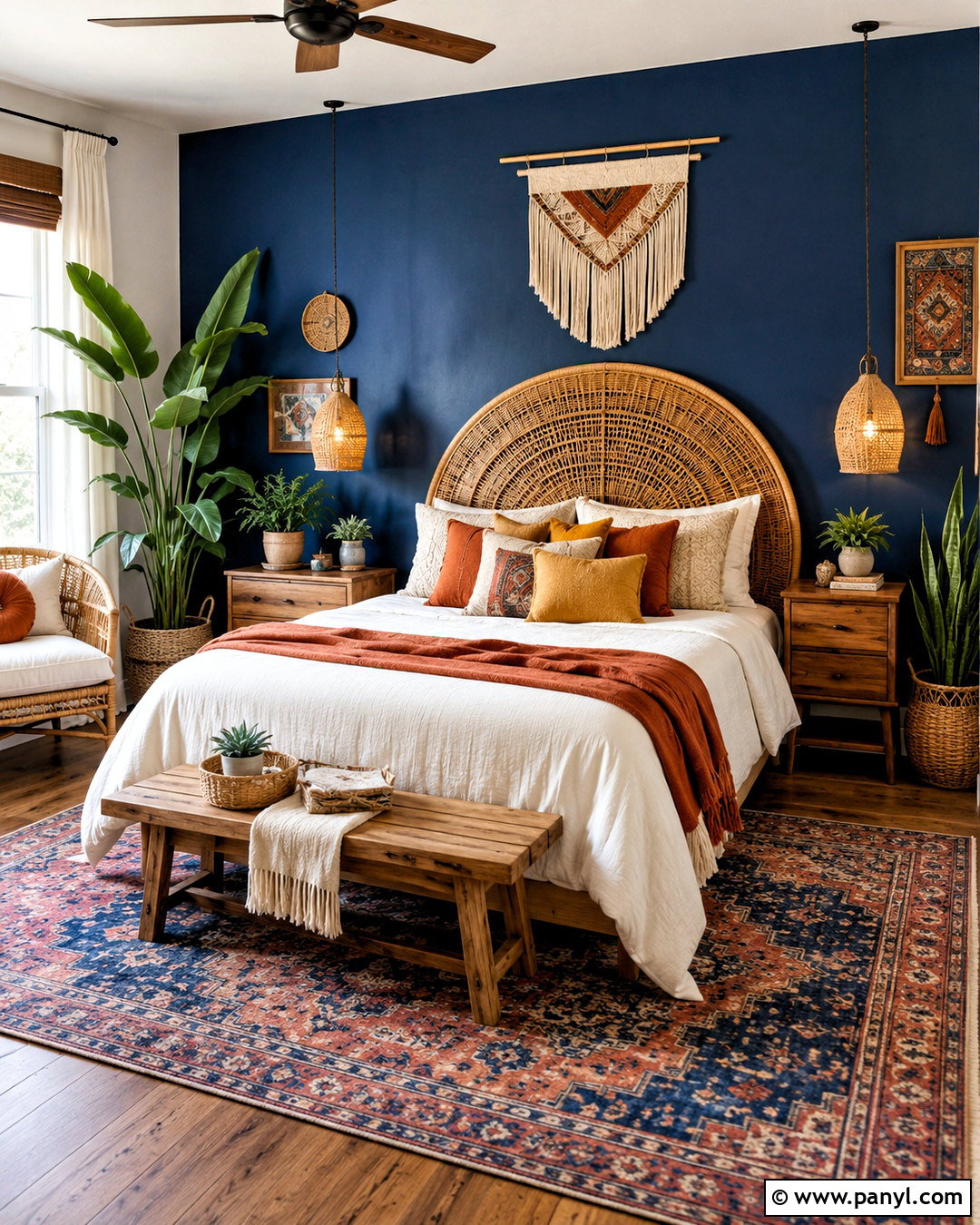
A rich blue wall can ground the layered colors and natural textures of a boho bedroom. Paint the wall behind the bed in a deep ocean or indigo shade, then choose a carved or woven rattan headboard. Layer ivory bedding with rust, mustard, and patterned blue pillows. Use mismatched wood nightstands that share a similar warm tone, and add woven pendant lights for balanced illumination. A vintage-style rug can combine faded blue, terracotta, and cream beneath the bed. Plants provide lively green contrast, but keep them grouped rather than scattered across every surface. Handmade ceramics, framed textile art, and baskets complete the look. Leaving some open wall space prevents the arrangement from becoming cluttered or visually restless.
37. Blue Minimalist Bedroom Accent Wall
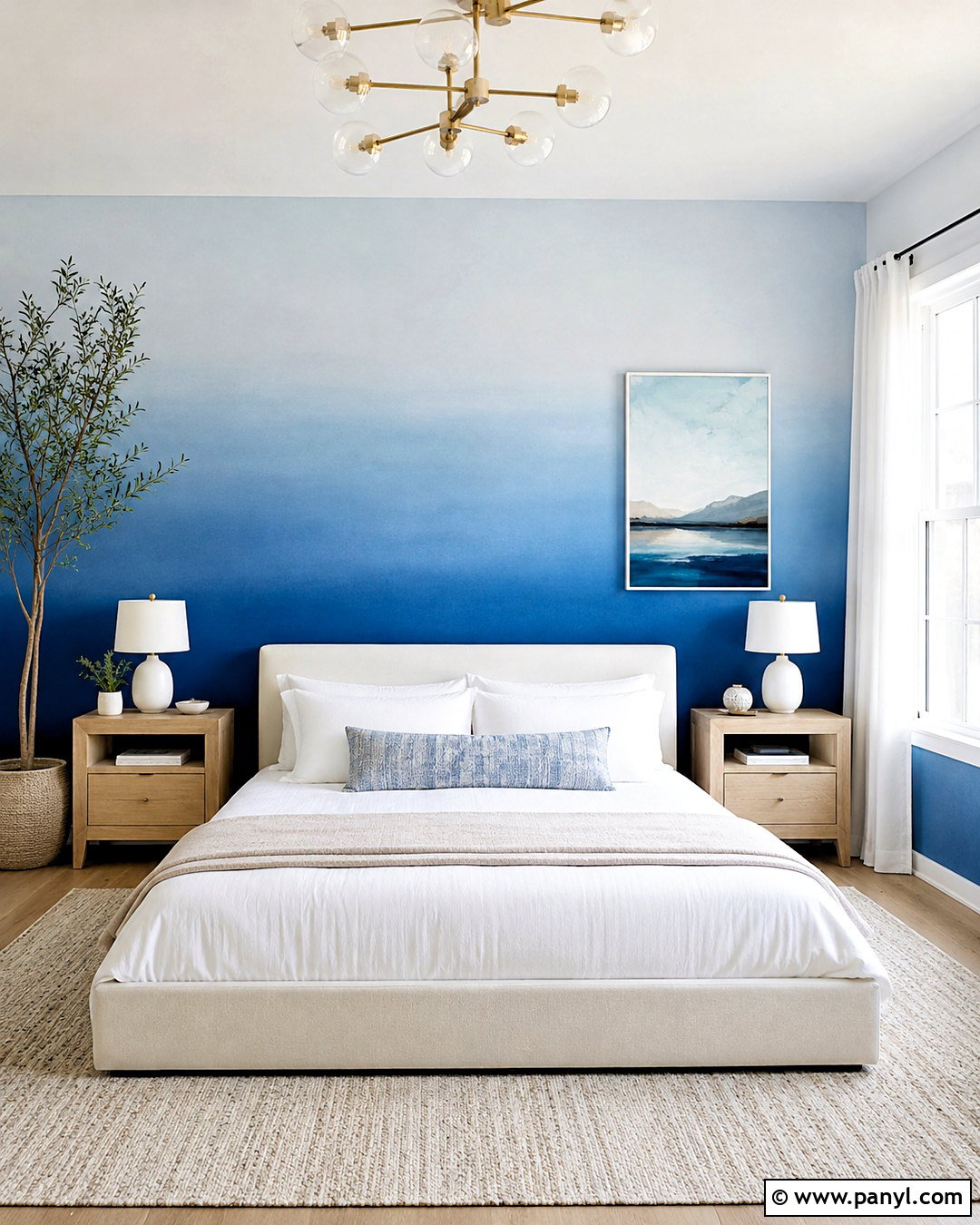
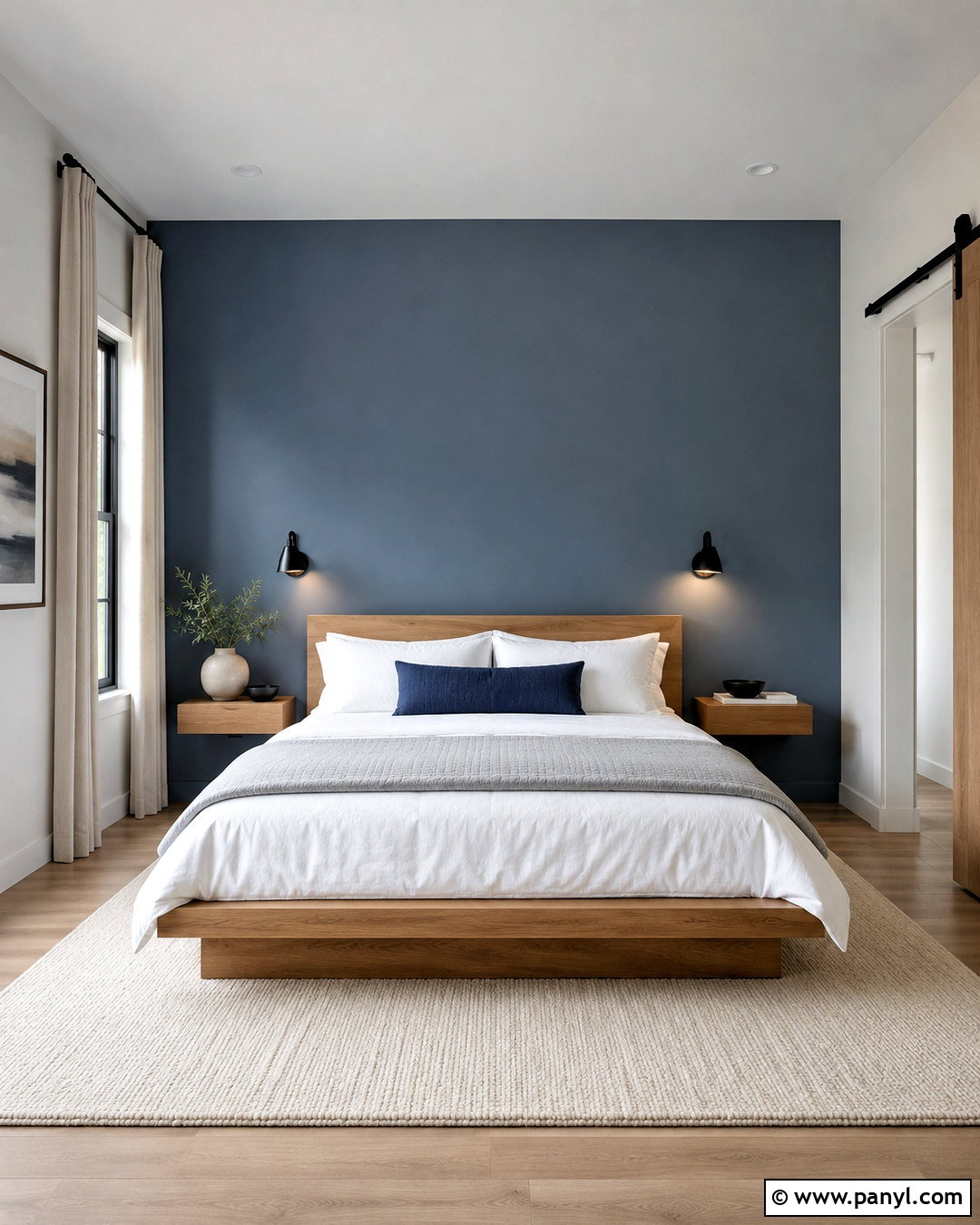
A minimalist blue accent wall should create quiet definition rather than become a busy decorative statement. Choose a muted blue-gray and apply it behind a low platform bed with a simple oak frame. Dress the bed in white linen, a light gray coverlet, and one deep blue lumbar pillow. Floating wood nightstands preserve open floor space, while small black sconces offer focused lighting. Keep the other walls soft white and use a plain ivory rug to warm the room. One understated artwork piece or no artwork at all allows the color to provide enough visual interest. Concealed storage, limited accessories, and clean window treatments complete a bedroom that feels calm, practical, and thoughtfully arranged rather than empty.
38. Blue Kids Room Accent Wall
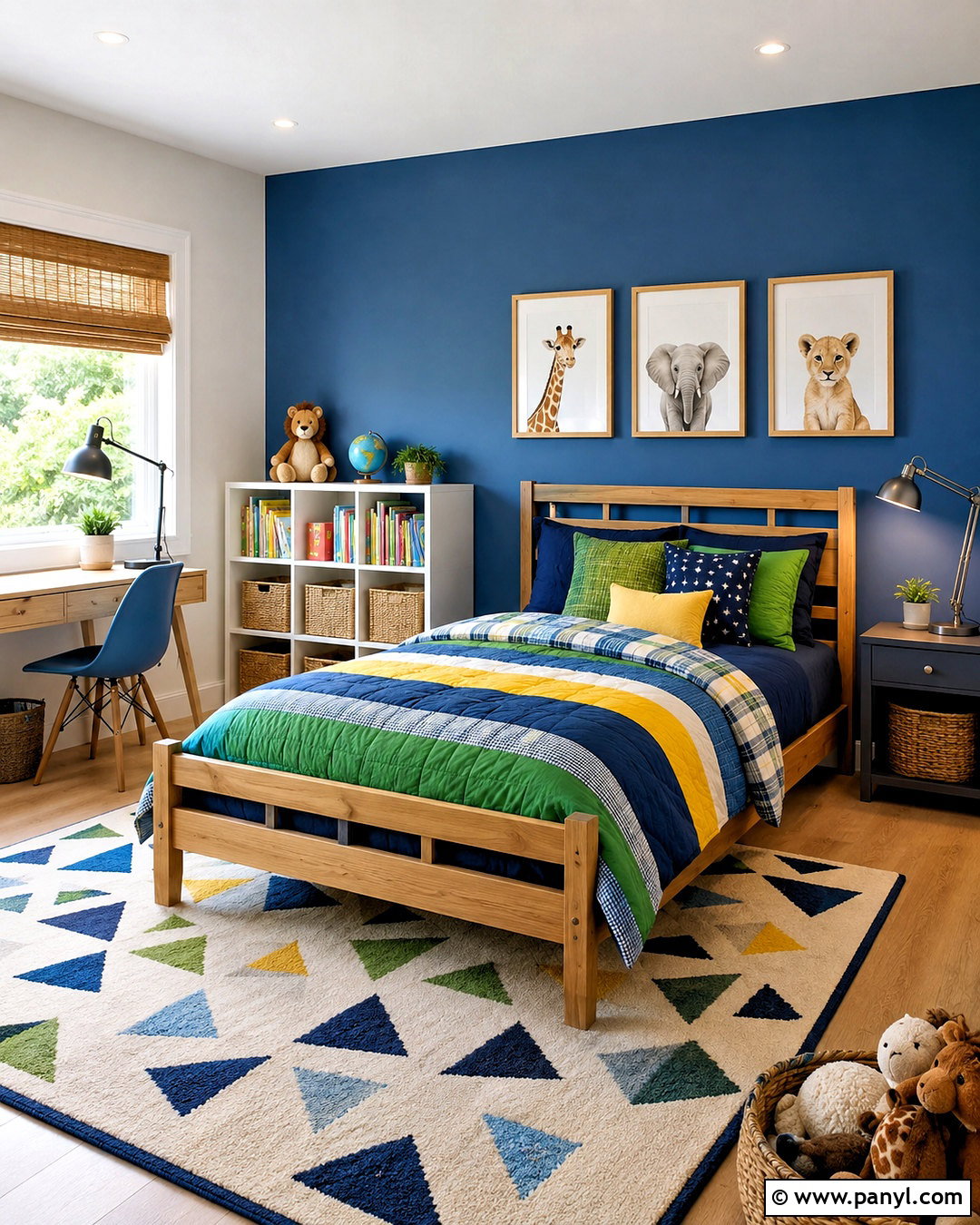
A medium blue accent wall creates a flexible children’s room that can adapt to changing interests. Use a clear denim or sky blue behind a natural wood bed, keeping the remaining walls warm white. Add a washable rug with blue, green, yellow, and cream details, then choose bedding that repeats only a few of those colors. A low white bookcase and labeled woven baskets provide accessible storage. Include a small desk near the window and use adjustable task lighting for homework and crafts. Framed maps, animal prints, or removable wall decals can add personality without requiring another repaint. The layout should preserve open floor space for play while giving sleeping, reading, storage, and creative activities their own organized zones.
39. Blue Guest Room Accent Wall
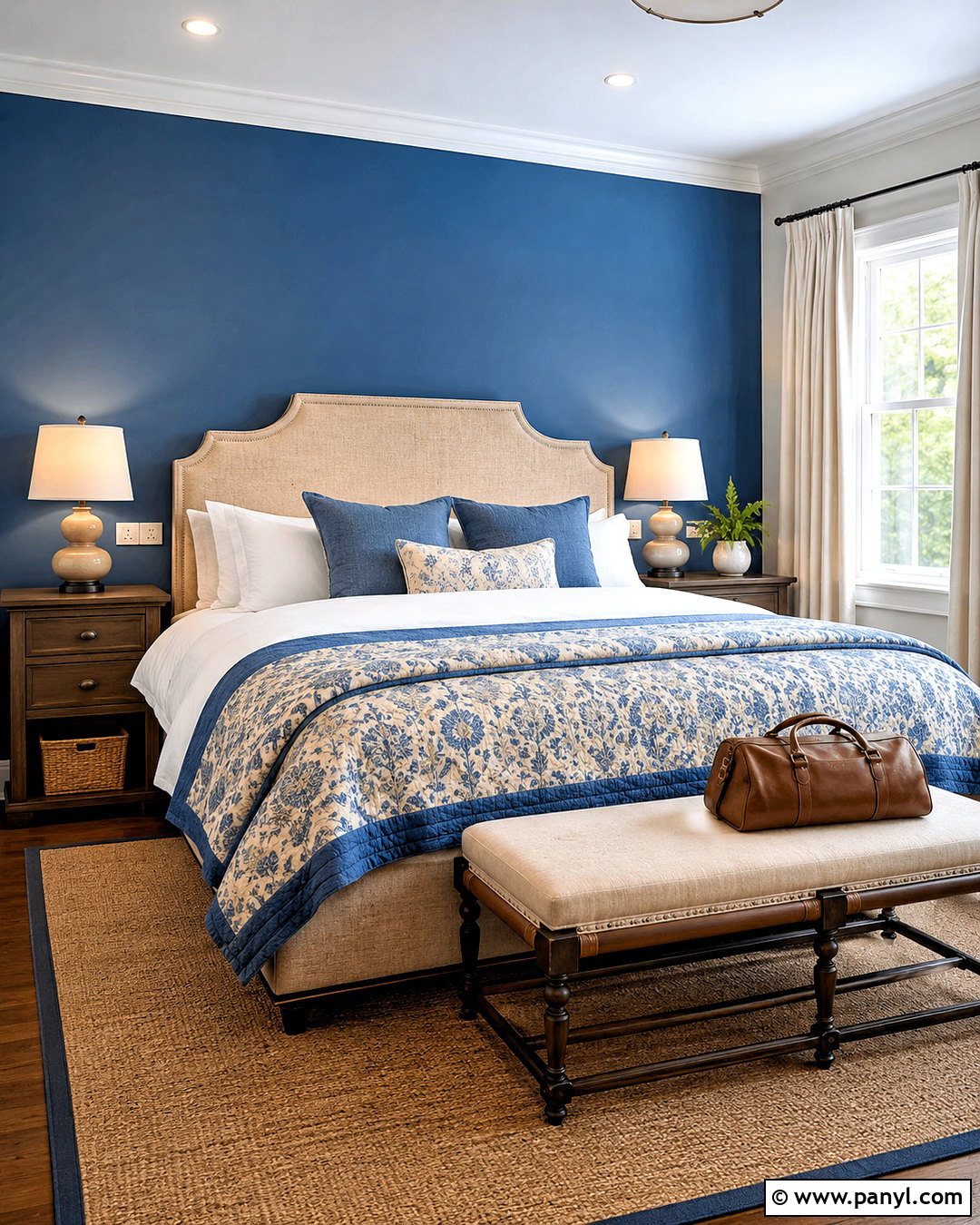
A blue guest room wall can make visitors feel welcomed while giving a simple space a polished identity. Paint the wall behind the bed in a restful medium blue with slightly gray undertones. Choose a beige upholstered headboard, crisp white sheets, and a washable quilt in blue and cream. Matching wood nightstands, shaded lamps, and accessible charging points make the room practical. Add a luggage bench at the foot of the bed and leave part of the dresser empty for personal items. Warm white walls and light curtains preserve brightness, while a neutral rug softens the floor. Minimal artwork and one small plant complete a comfortable room that feels prepared, uncluttered, and easy for different guests to enjoy.
40. Blue Sunroom Accent Wall
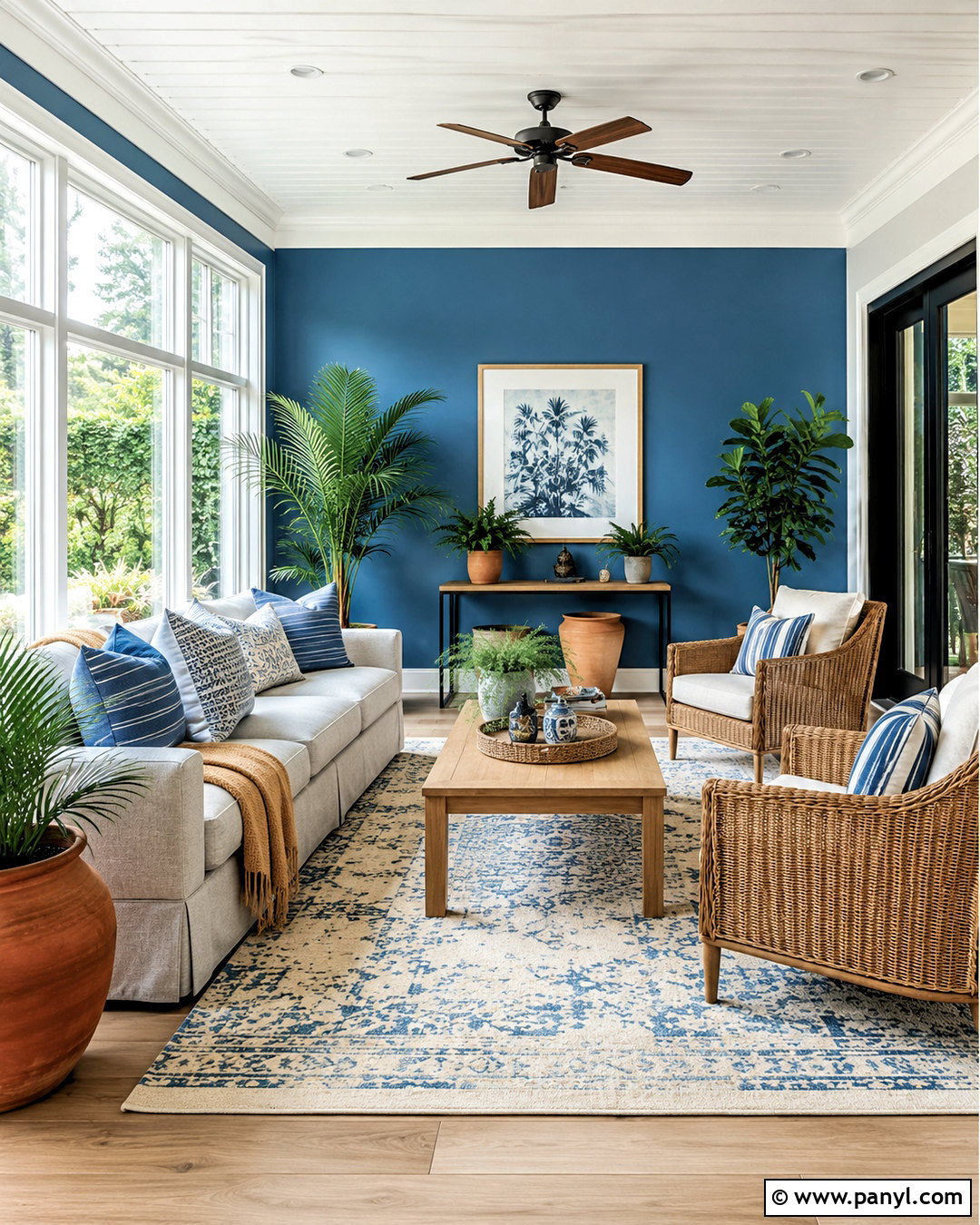
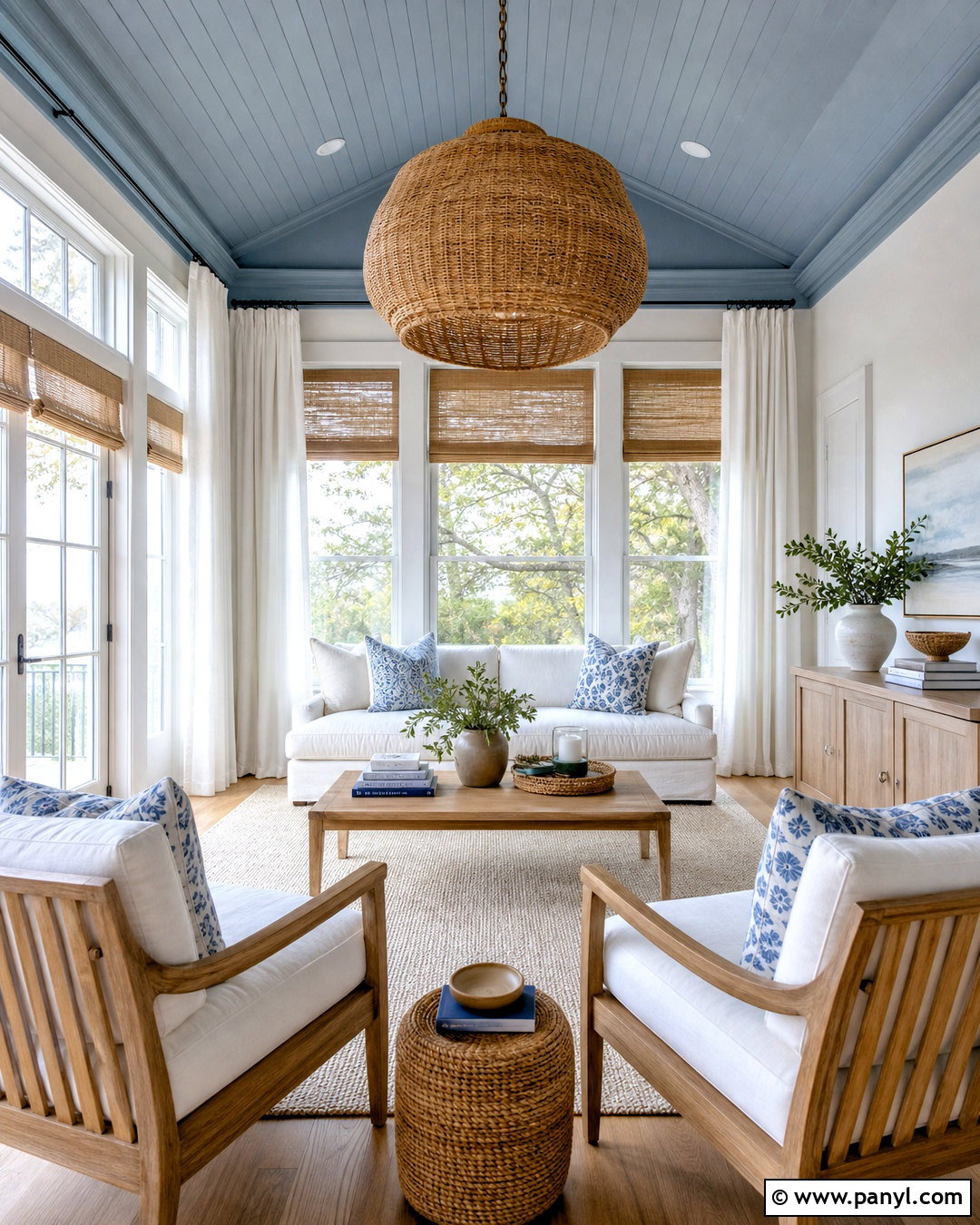
A blue accent wall can connect a sunroom’s interior palette with the sky and surrounding landscape. Choose a fresh medium blue for the solid wall opposite the largest windows. Arrange a white or pale gray sofa nearby, along with woven lounge chairs and a light oak coffee table. An indoor-outdoor rug in cream and blue will handle frequent use while defining the seating zone. Add leafy plants in terracotta and white planters to strengthen the connection with the outdoors. Keep window treatments minimal so natural light reaches the colored wall. Striped cushions and a soft tan throw add comfort without creating a themed coastal room. The completed sunroom should feel bright, relaxed, and suitable for everyday gatherings.
Conclusion:
The most successful blue feature walls do more than introduce color. They frame an important area, support the room’s function, and connect with furniture, flooring, lighting, and decor. Pale blues can expand small or dim spaces, while deeper shades provide contrast and architectural weight. Paint offers the simplest update, but wallpaper, paneling, tile, shiplap, and built-ins add valuable texture. Before committing, test the chosen shade in morning, afternoon, and evening light. Then repeat it through a few controlled accents rather than matching everything. Whether your home is modern, coastal, traditional, or relaxed, these 40 Blue Accent Wall Ideas can help you create a room that feels complete and intentional.

Related Ideas and Inspiration:
Leave a Reply