
Sage green brings a calm, grounded feeling to the busiest room in the home. It is softer than forest green, more colorful than gray, and flexible enough to complement modern, farmhouse, coastal, or traditional interiors. A well-planned accent wall can also establish a clear focal point without making the entire room feel overly green. Current design inspiration frequently pairs sage with cream upholstery, natural wood, gray furniture, botanical details, and warm metallic finishes. () The key is choosing furniture, lighting, flooring, and accessories that support the wall rather than compete with it. The following 20 sage green accent wall living room ideas offer complete, practical looks for rooms of different sizes, layouts, and decorating preferences.

1. Sage Green Accent Wall With Cream Sofa
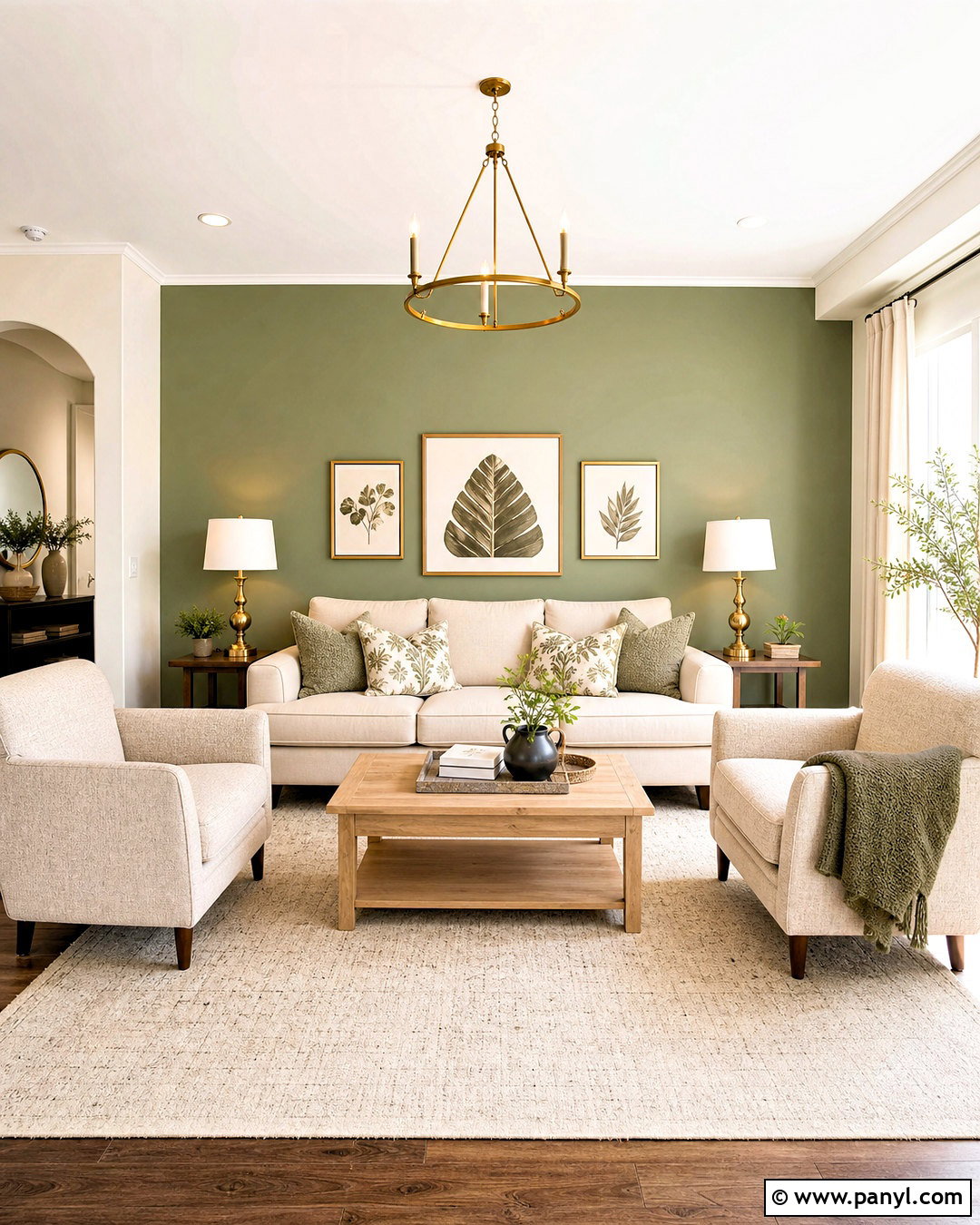
A cream sofa creates a soft, welcoming contrast against a muted sage green wall. Position the sofa directly in front of the painted surface so the color frames the main seating area. Add two oatmeal-colored chairs and a light oak coffee table to keep the palette warm and relaxed. A textured ivory rug can define the arrangement while preventing the room from looking flat. Choose pillows in sage, cream, and subtle botanical patterns to connect the furniture with the wall. Brass lamps and simple framed artwork bring gentle polish without becoming too formal. Finish the room with off-white surrounding walls, woven window shades, and medium-tone wood flooring. The completed space feels bright and balanced, making this combination especially useful in a casual family living room.
2. Sage Green Accent Wall With Natural Wood Furniture
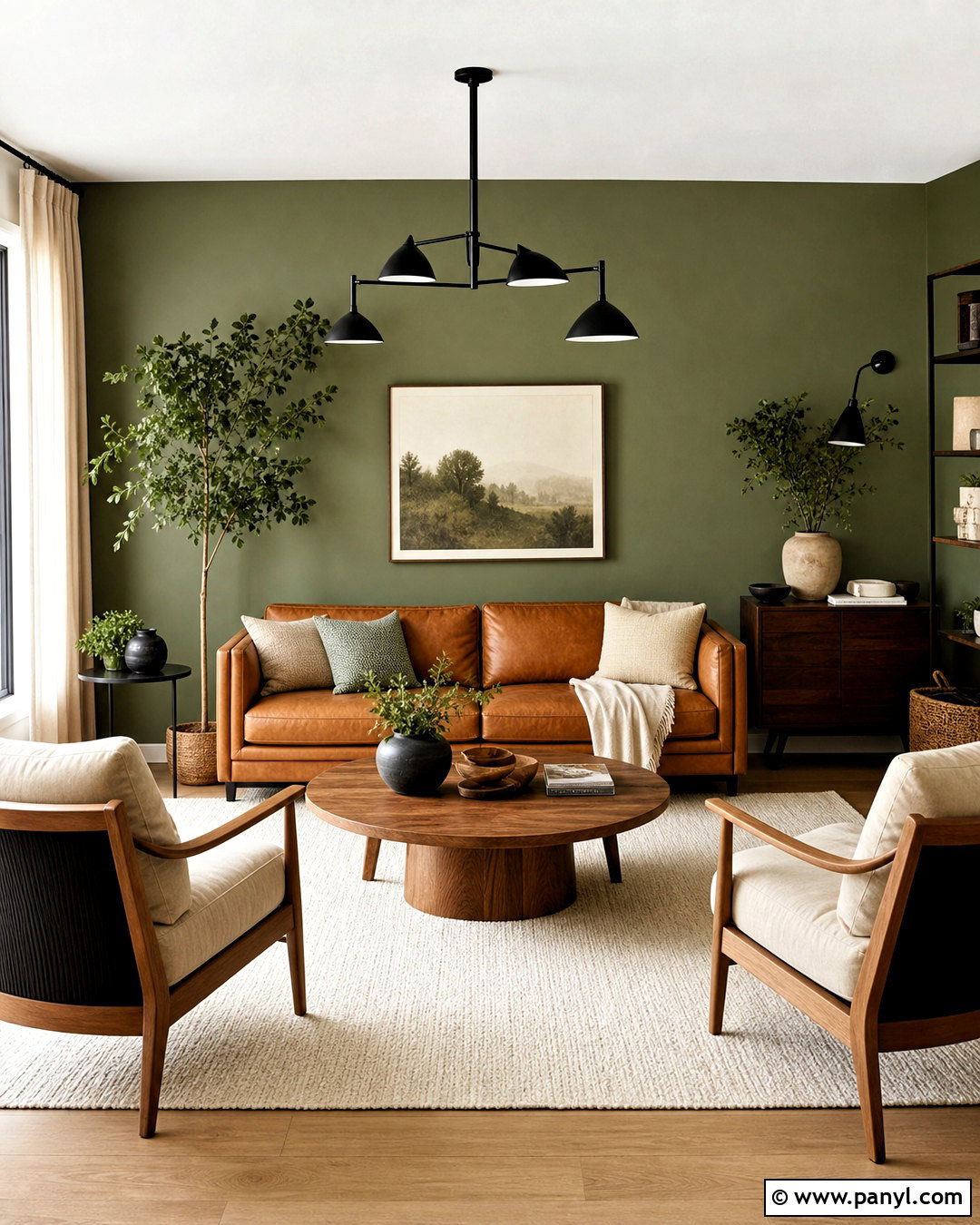
Natural wood gives a sage green accent wall an organic, earthy character. Start with a medium sage paint that has warm gray undertones, then arrange a caramel leather sofa and two oak-framed chairs in front of it. A walnut media console or low bookcase adds depth without making the room feel heavy. Layer the seating area with a cream wool rug, linen curtains, and cushions in tan, moss, and off-white. Black metal lighting provides a small amount of contrast and keeps the palette from appearing too rustic. Select minimal landscape artwork in light wood frames for the feature wall. A few leafy plants can repeat the green naturally, but leave enough open space around them. This complete scheme feels comfortable, timeless, and connected to nature.
3. Sage Green Accent Wall With Gray Sectional
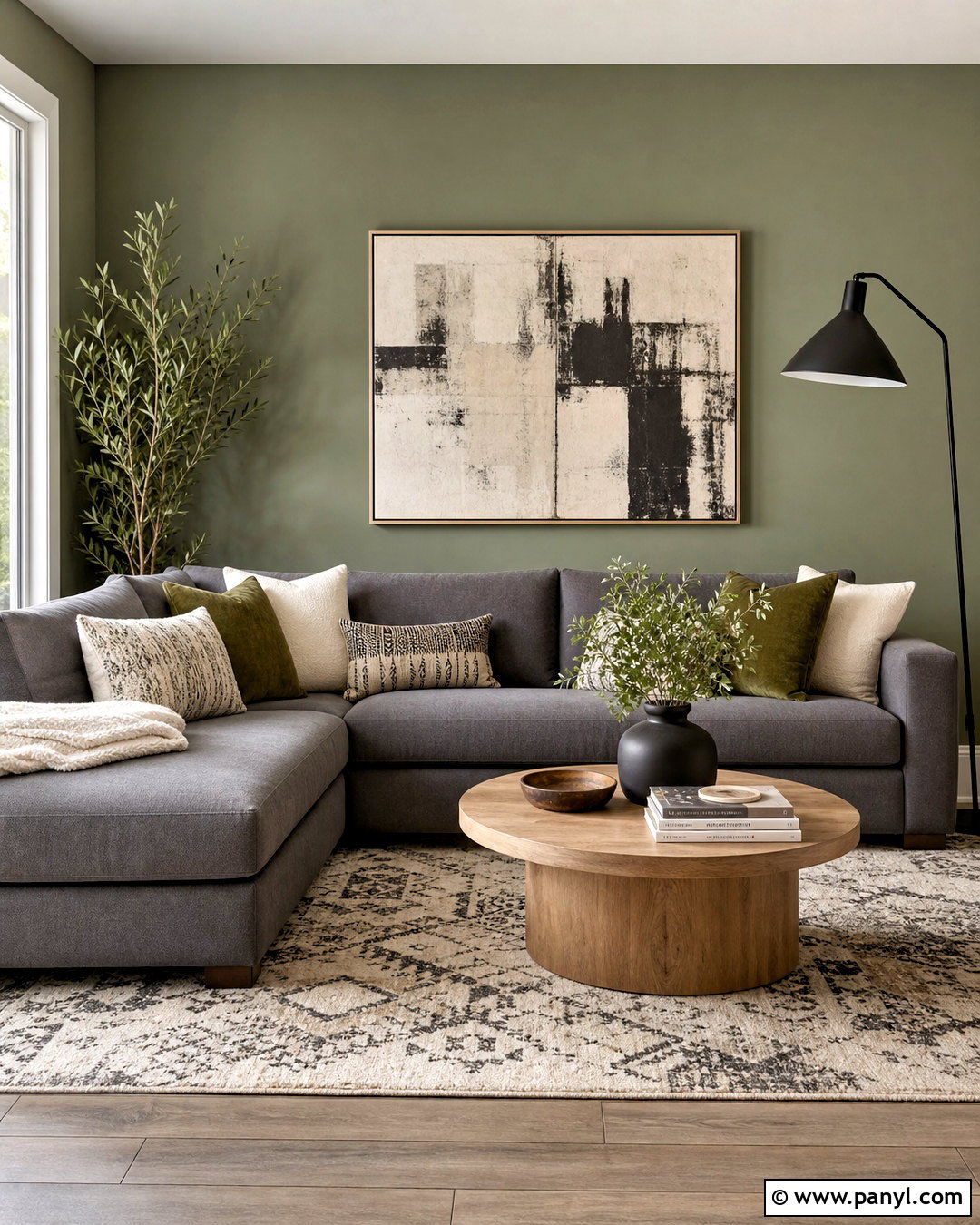
Do you already have a large gray sectional that needs a warmer backdrop? A dusty sage green accent wall can soften the cool upholstery and make the seating look more intentional. Place the sectional along the painted wall, then add a round oak coffee table to break up its straight lines. Use an ivory and charcoal patterned rug to connect the wall, sofa, and flooring. Pillows in cream, olive, black, and muted yellow add measured color without cluttering the design. Hang one oversized abstract print above the sectional rather than several small pieces. A matte black floor lamp can balance the artwork and define a reading corner. Keep the remaining walls warm white and use light-filtering curtains so the room stays fresh rather than shadowy.
4. Sage Green Fireplace Accent Wall
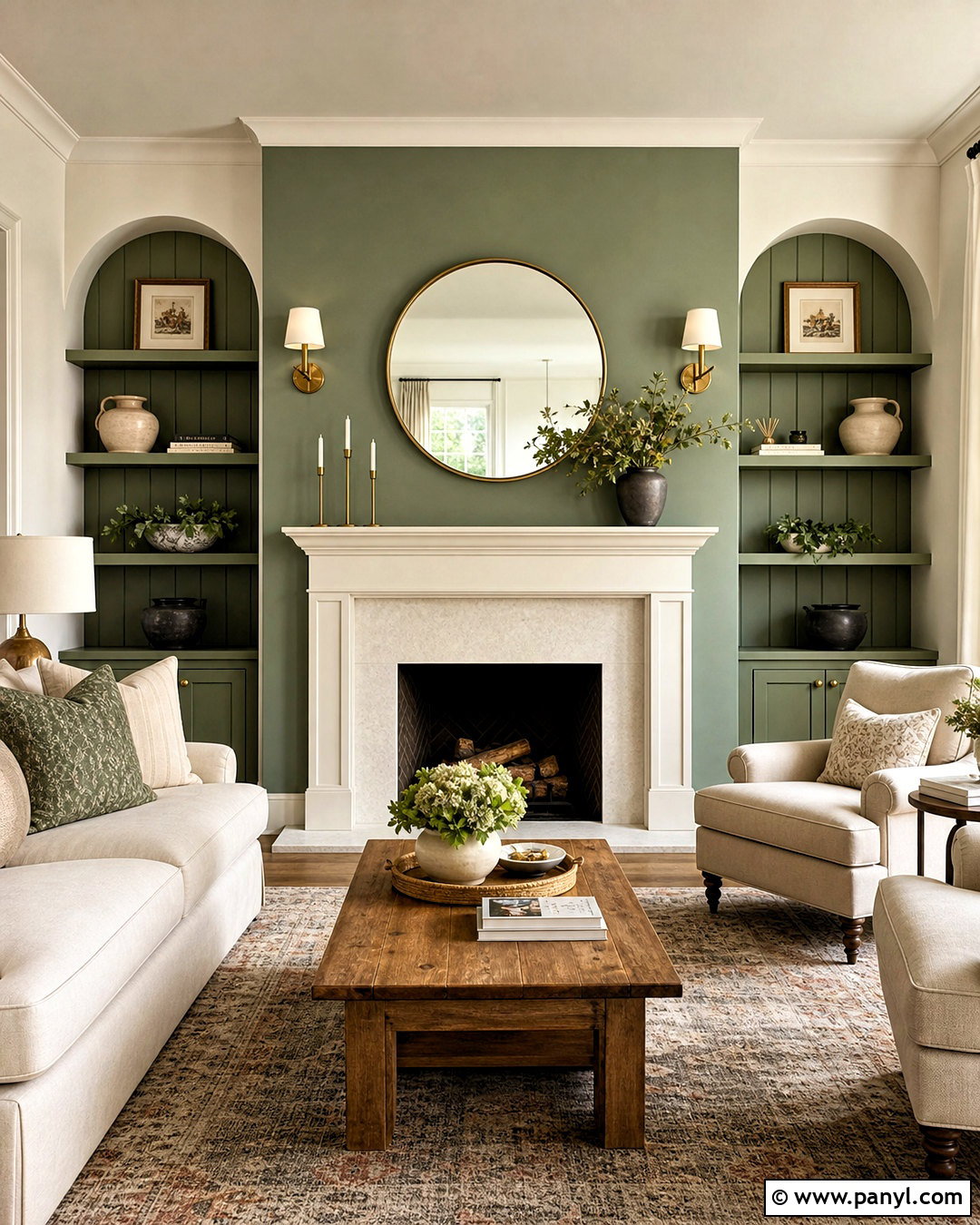
Turn the fireplace into the natural centerpiece by painting the entire chimney breast and surrounding wall sage green. A creamy white mantel and light stone hearth will stand out clearly against the muted color. Arrange a neutral sofa facing the fireplace, with two linen armchairs angled inward to create a comfortable conversation area. An oak coffee table and vintage-style patterned rug can introduce warmth at floor level. Style the mantel sparingly with a rounded mirror, a ceramic vase, and a short stack of books. Built-in firewood storage or matching cabinets can make the composition feel more architectural. Use bronze sconces on both sides for symmetry. This arrangement works particularly well when the fireplace wall is visible immediately upon entering the living room.
5. Sage Green Board And Batten Accent Wall
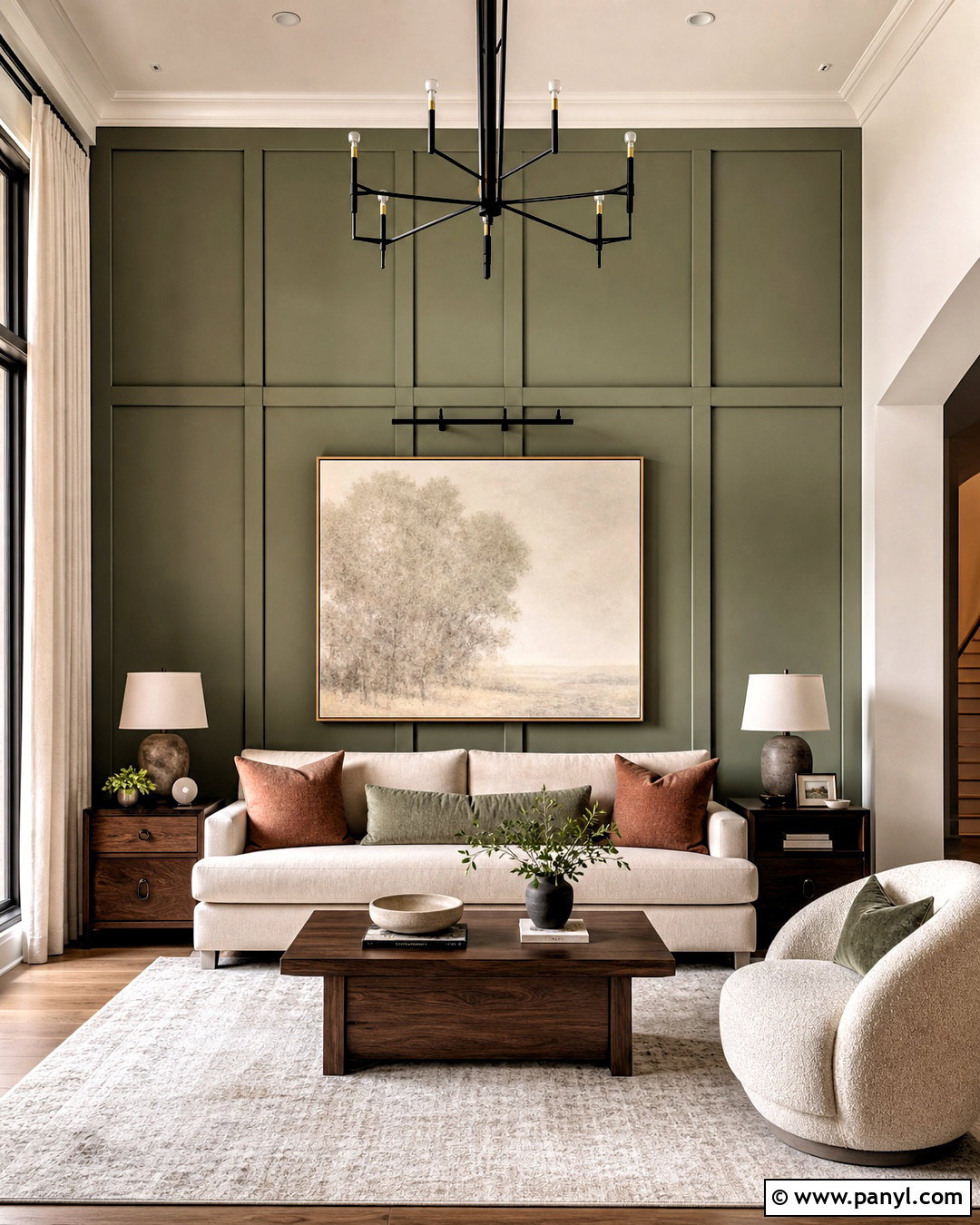
Board and batten gives a plain sage green wall extra dimension without requiring decorative wallpaper. Install evenly spaced vertical battens from the baseboard to the ceiling, then paint the trim and wall in the same matte sage finish. Center a beige sofa against the paneling and add compact walnut side tables for contrast. A low boucle chair can introduce softness, while a simple cream rug keeps the floor visually quiet. Choose one large piece of neutral artwork so the wall treatment remains visible. Black picture lights or swing-arm sconces will sharpen the traditional paneling with a modern detail. Complete the room with ivory curtains, warm wood flooring, and cushions in rust, cream, and subtle green. The finished look feels structured, cozy, and carefully designed.
6. Sage Green Limewash Accent Wall
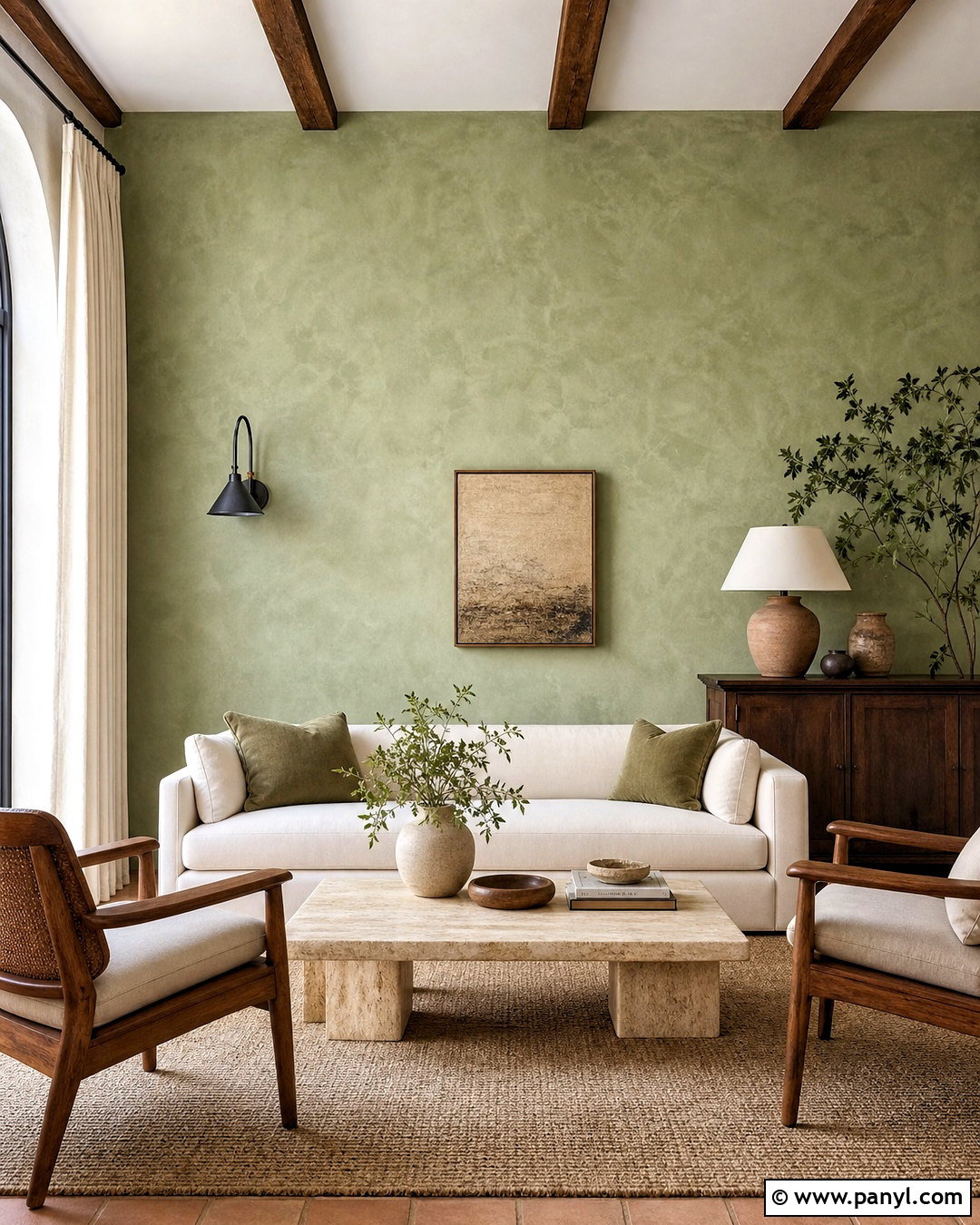
A limewash-style finish brings gentle movement and old-world texture to a sage green accent wall. Choose a pale, mineral-looking sage and apply it with broad, overlapping brushstrokes for natural tonal variation. Pair the wall with a low-profile cream sofa, a travertine coffee table, and sculptural wood chairs. Linen curtains and a nubby wool rug will support the relaxed, tactile quality of the finish. Keep artwork minimal so the softly mottled surface remains an important part of the room. A plaster floor lamp and handmade ceramic accessories can reinforce the organic character. Introduce darker contrast through a walnut console or aged bronze hardware. This full living room scheme works best with uncluttered furniture placement and plenty of daylight, allowing the wall texture to remain subtle rather than overpowering.
7. Sage Green Botanical Accent Wall
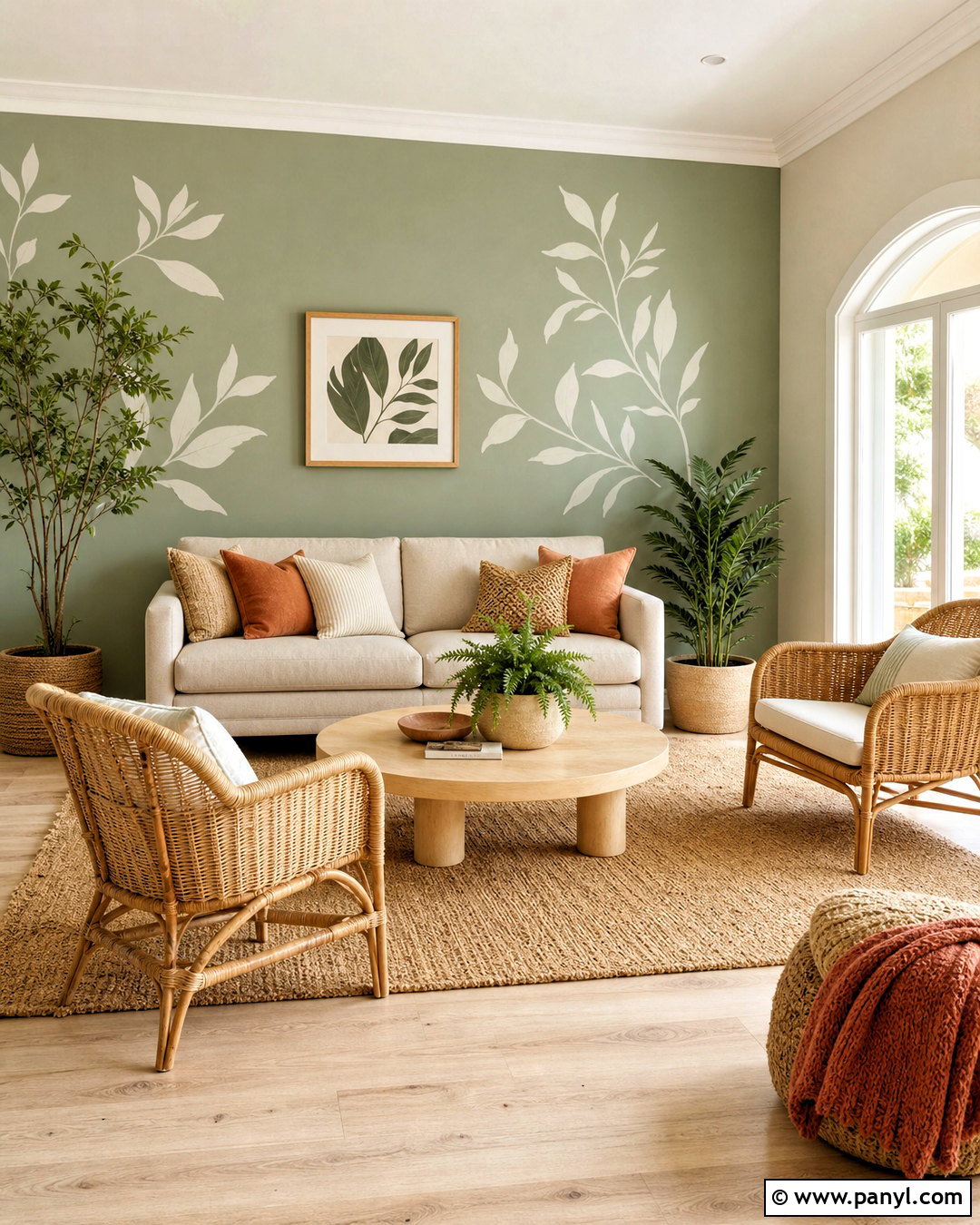
A botanical treatment can turn a sage wall into a decorative feature while maintaining a restful atmosphere. Begin with a soft sage green base, then add cream leaf stencils or removable botanical decals across the surface. Keep the pattern loose and spacious so it does not resemble busy wallpaper. Place a solid oatmeal sofa in front of the wall and add rattan accent chairs for natural texture. A jute-blend rug, pale oak coffee table, and woven baskets create an easy indoor-outdoor connection. Repeat small amounts of sage through pillows and ceramics, but introduce muted terracotta for warmth. Choose linen curtains and a simple black floor lamp to finish the composition. This look suits sunlit living rooms where greenery and natural materials already play an important role.
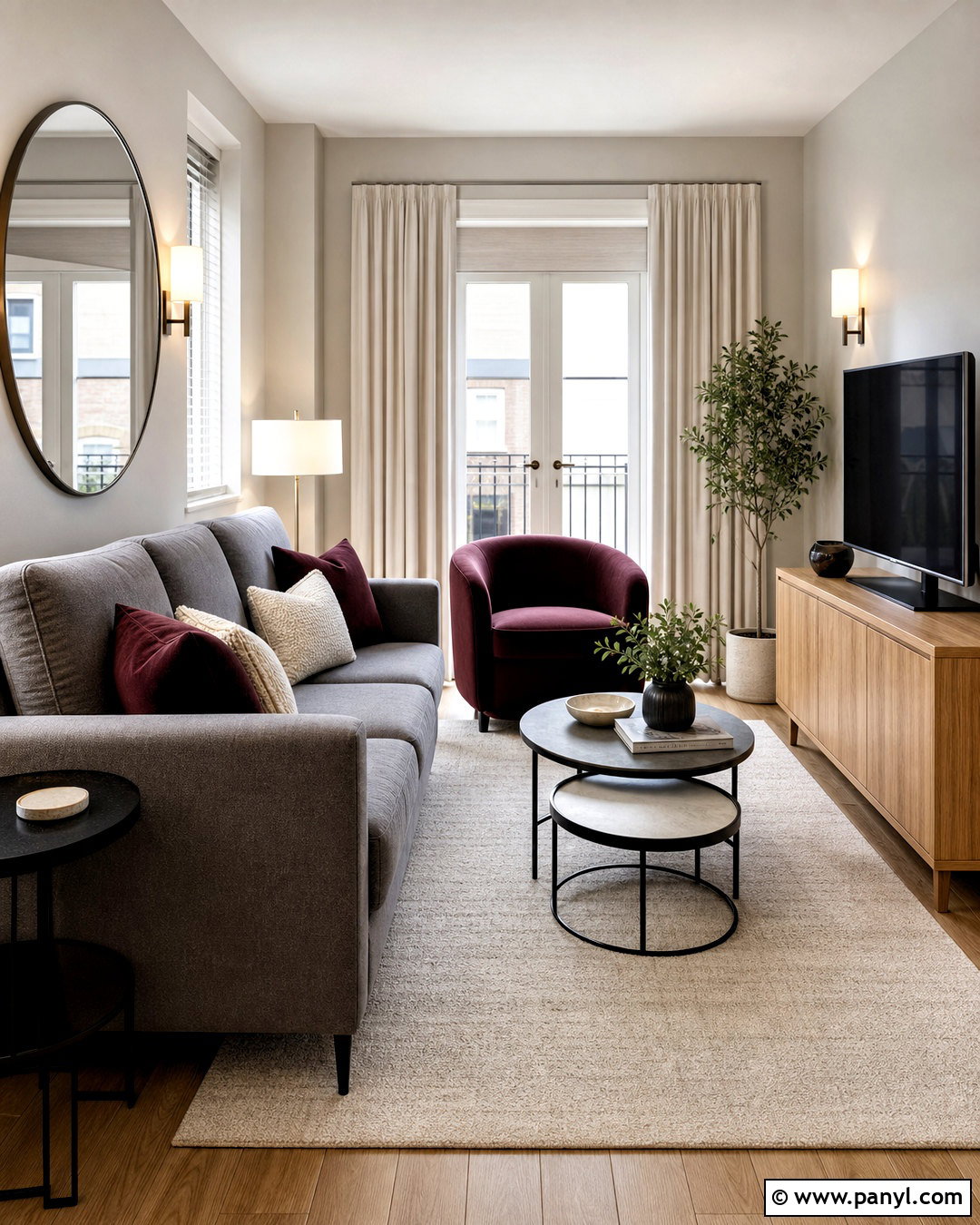
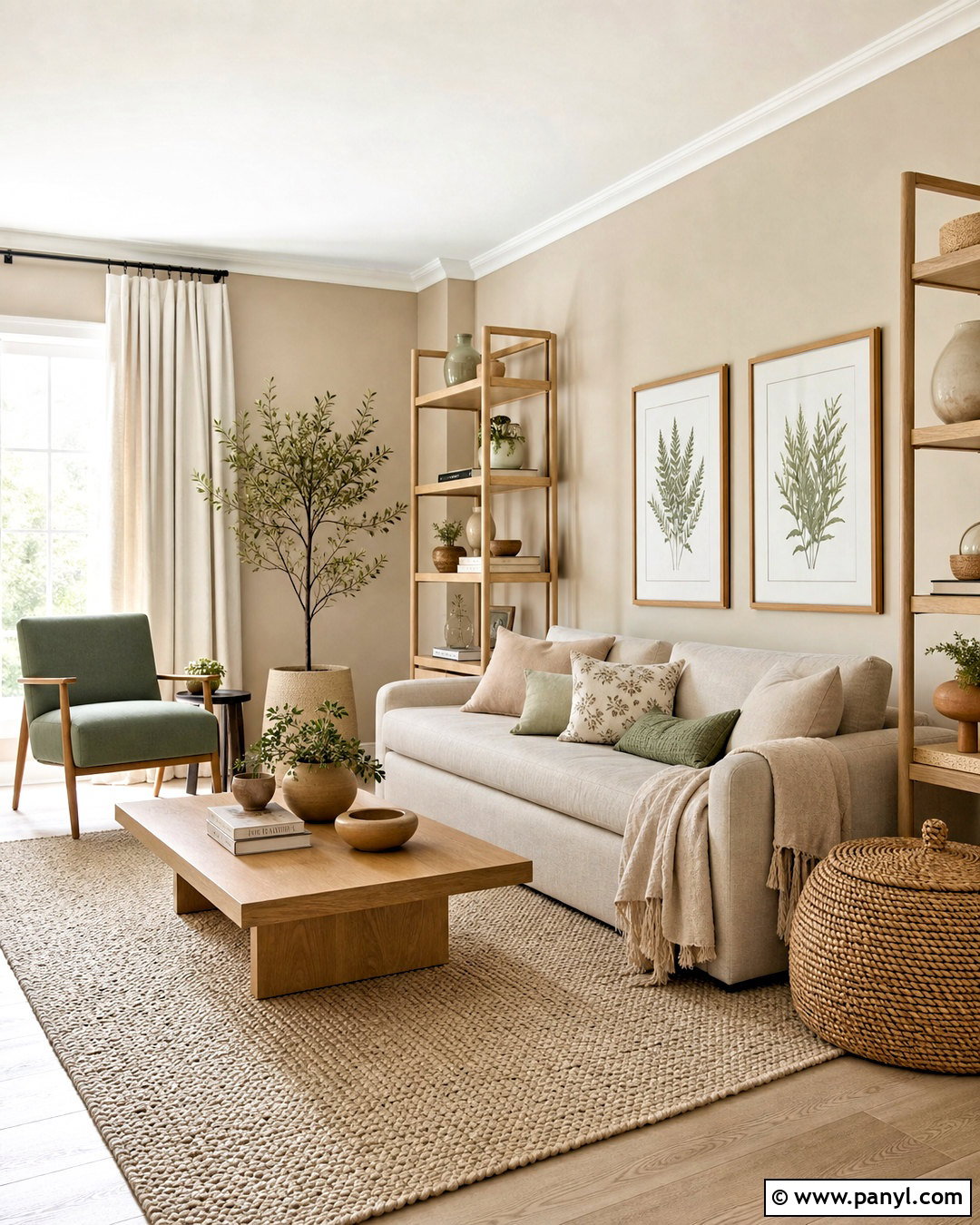
8. Sage Green Accent Wall With Built-In Shelves
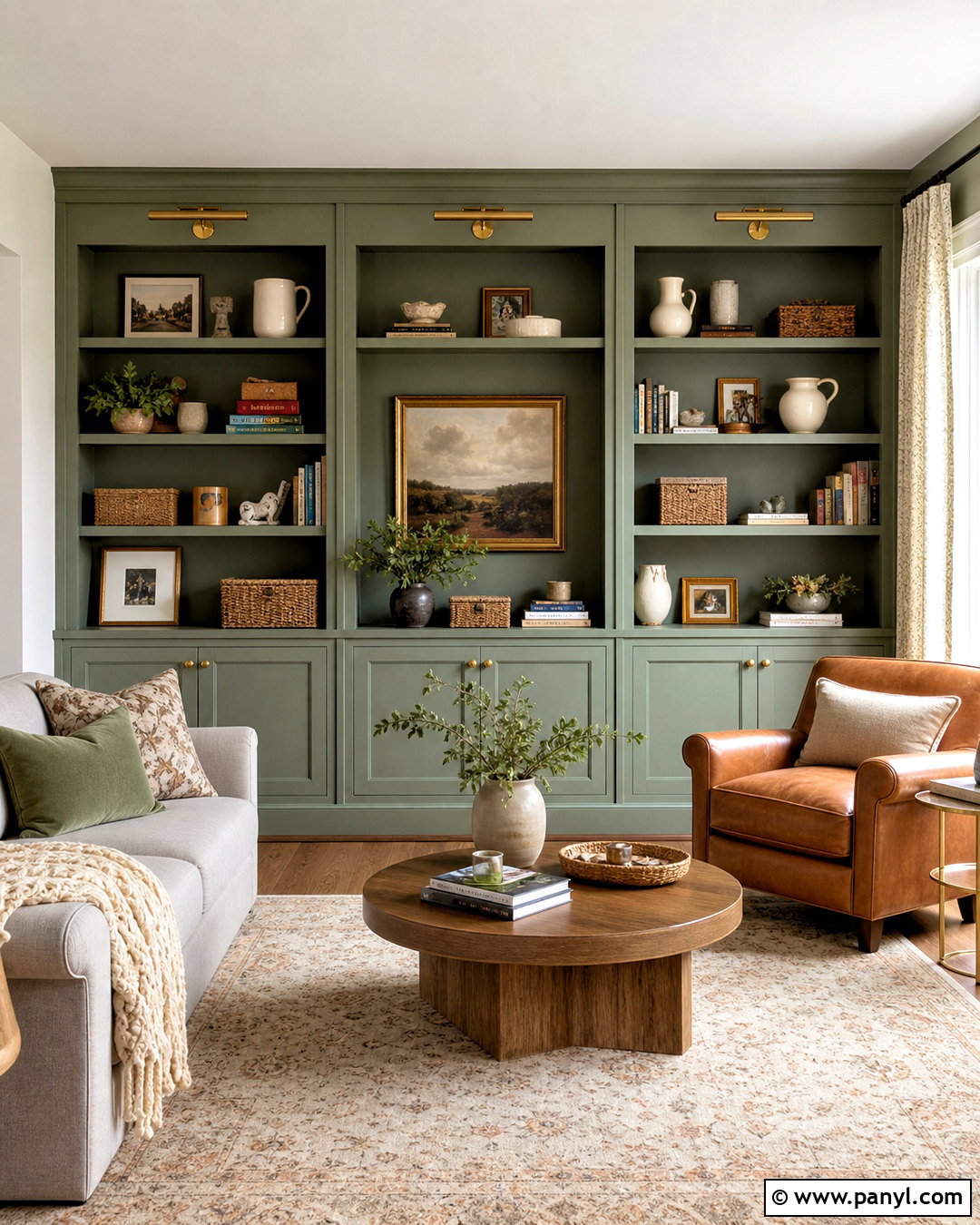
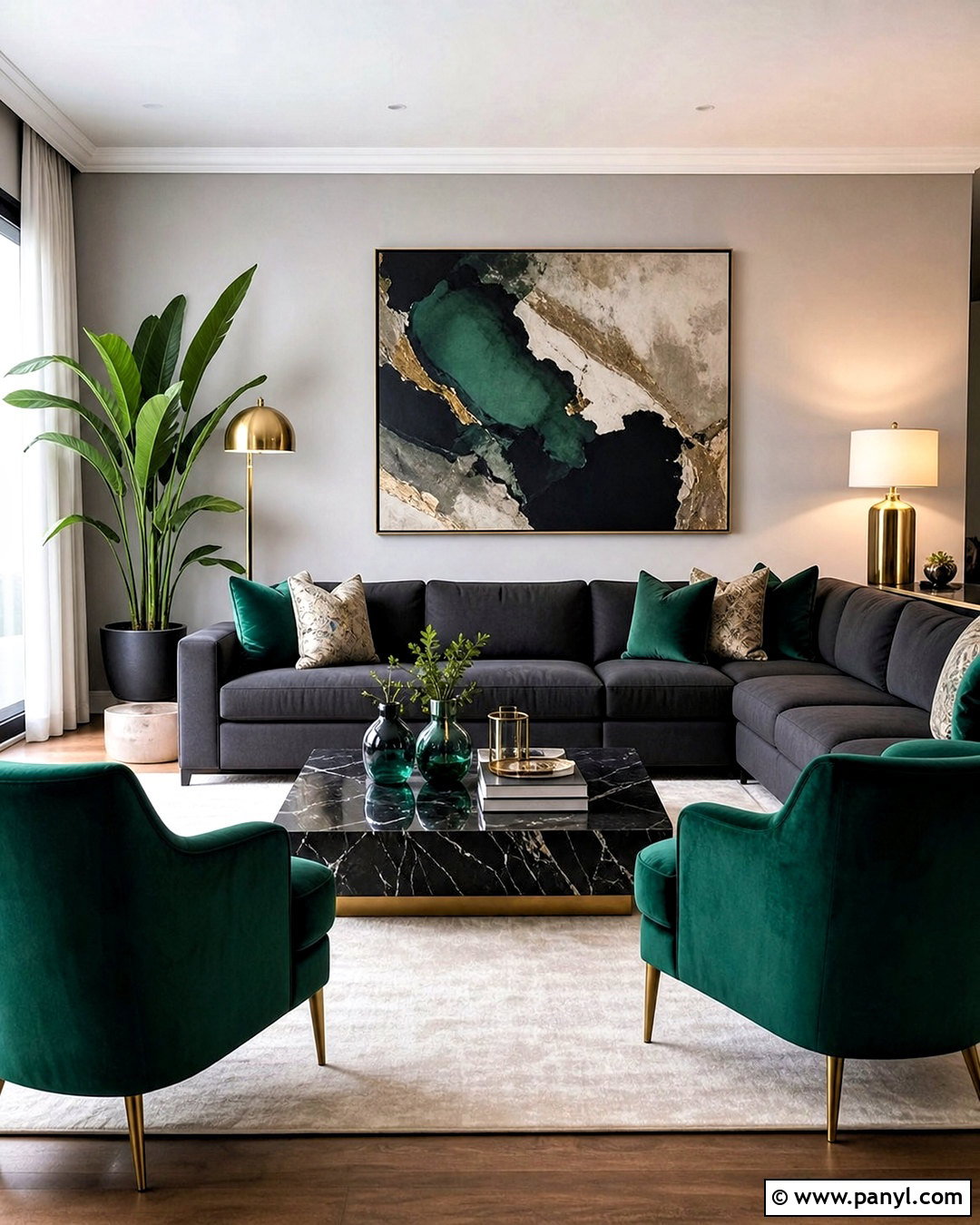
Built-in shelving becomes more noticeable when the entire wall receives a unified sage green finish. Paint the shelves, cabinet fronts, backing, and surrounding wall in the same satin or eggshell shade. This approach creates a seamless feature rather than a collection of disconnected storage pieces. Position a light gray sofa opposite the built-ins and use a round wood coffee table to soften the cabinetry’s straight lines. Style the shelves with books, cream pottery, woven boxes, framed photographs, and a few plants. Leave some sections empty to avoid a crowded result. A warm neutral rug and cognac leather chair can balance the green cabinetry. Add picture lights in aged brass above the shelves. The finished wall combines practical storage, architectural character, and a strong living room focal point.
9. Sage Green TV Accent Wall
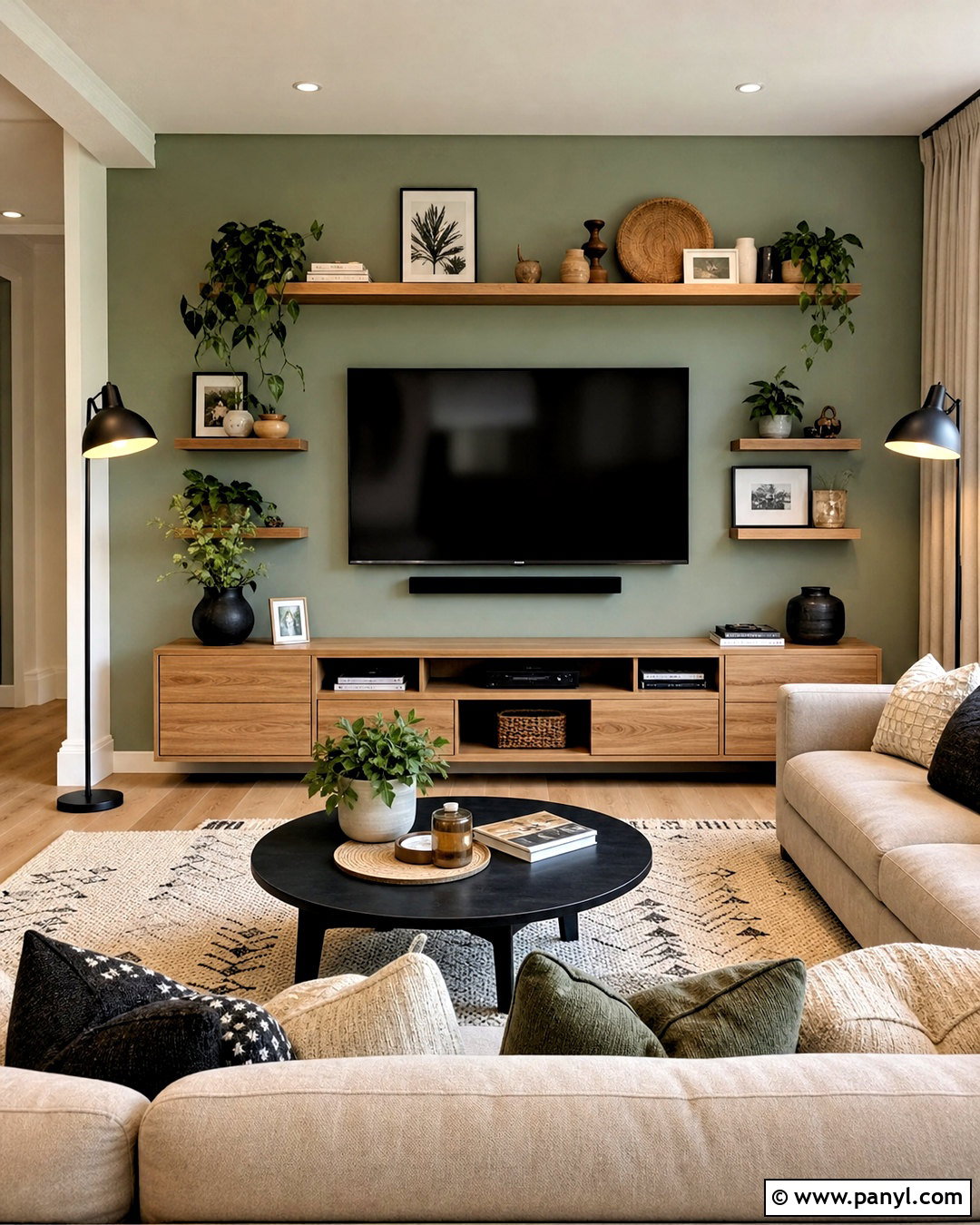
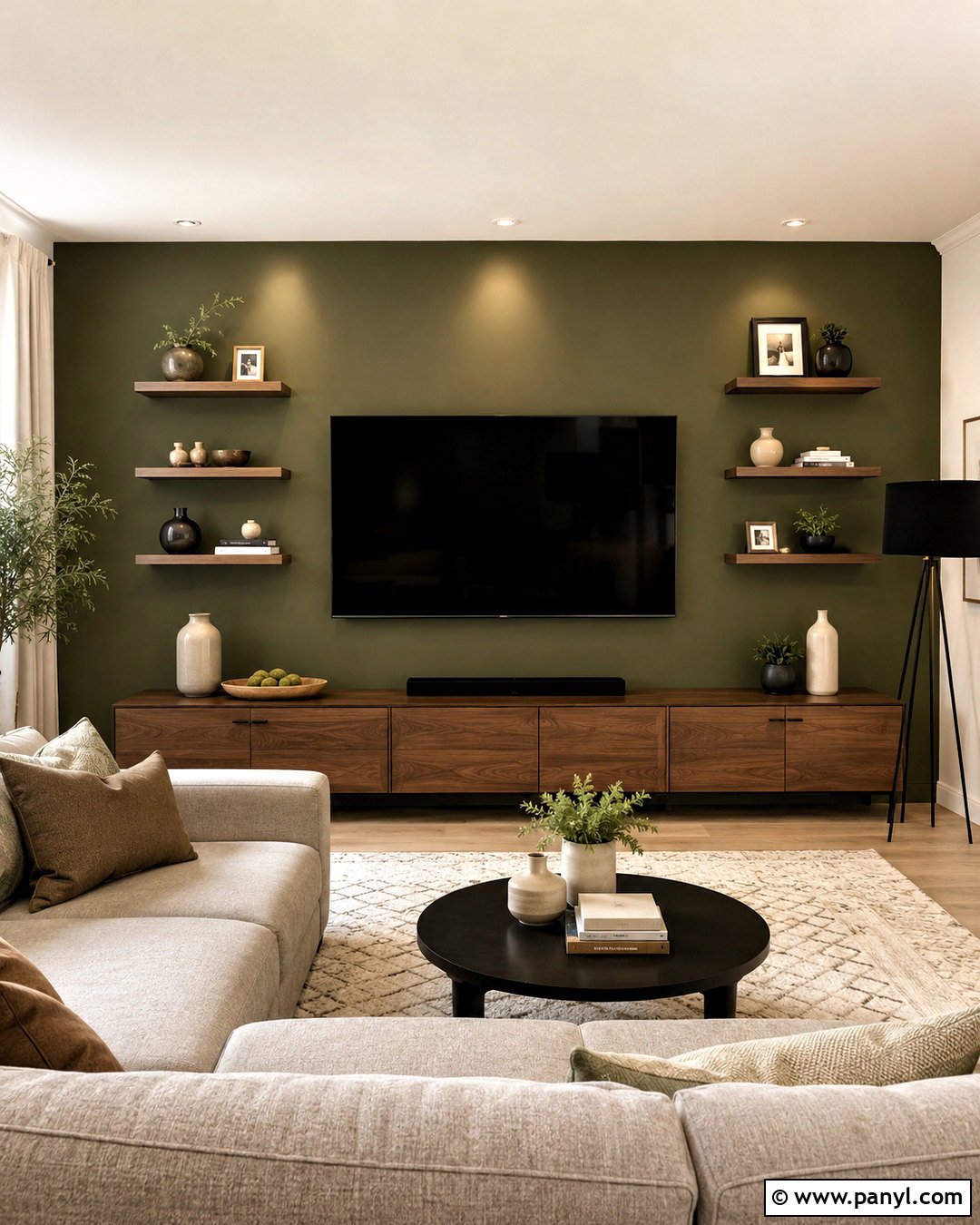
A sage green TV wall can help a large black screen blend more gracefully into the living room. Choose a medium, slightly gray sage that is deep enough to reduce the visual contrast around the television. Mount the screen centrally and place a long oak media console below it. Conceal cables inside the wall or a paintable cover for a clean finish. Arrange a beige sectional opposite the TV and add a soft patterned rug in cream, sage, and charcoal. Floating wood shelves can hold a few ceramics and trailing plants without crowding the screen. Use black metal floor lamps to repeat the television’s dark finish elsewhere. Keep the remaining walls light and the window treatments simple. This layout feels comfortable for everyday viewing while still looking thoughtfully decorated.
10. Sage Green Accent Wall In A Small Living Room
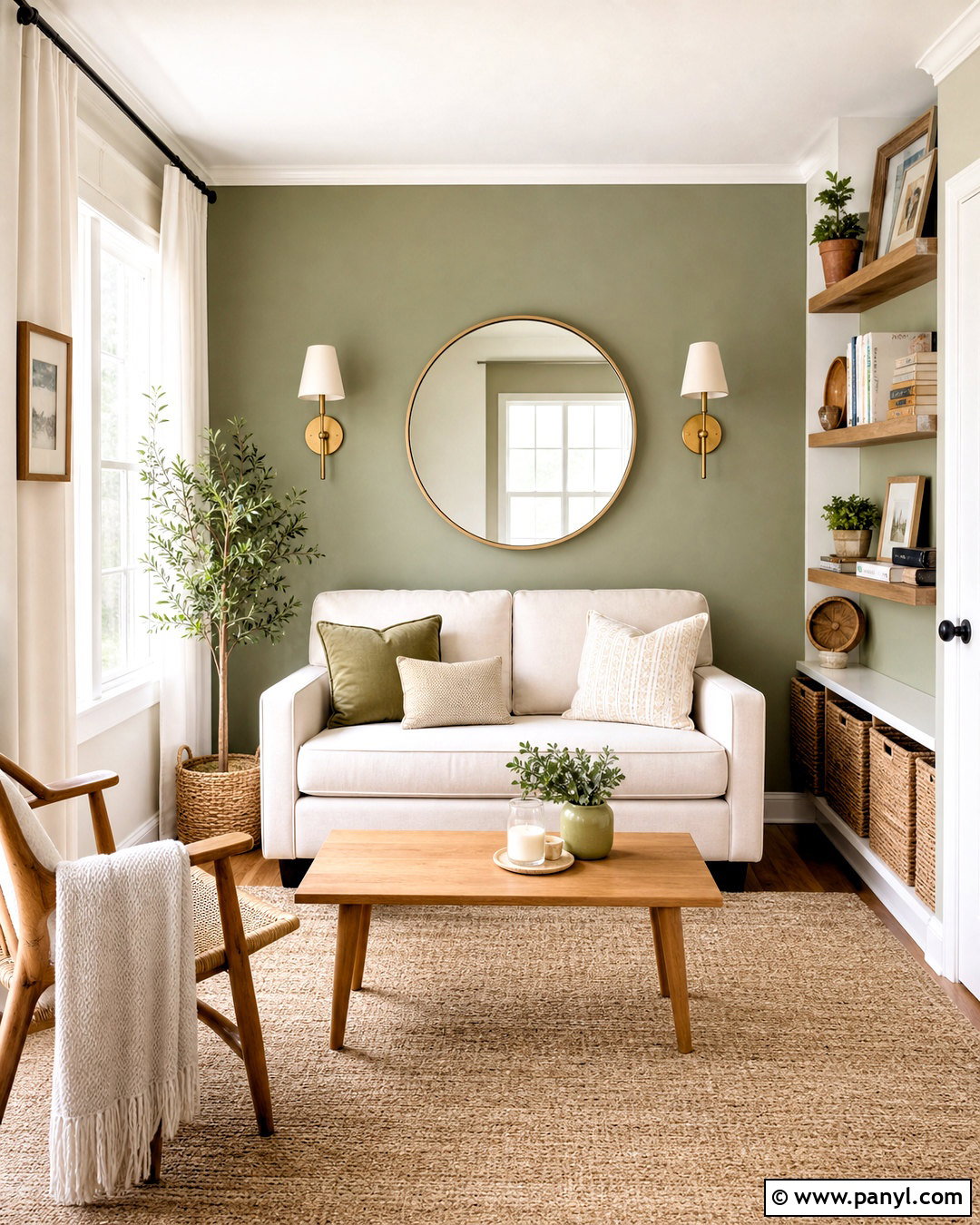
A pale sage green accent wall can give a small living room personality without visually closing it in. Select the wall behind the sofa, preferably one that receives natural or indirect daylight. Use a compact cream loveseat with exposed legs so more flooring remains visible. Add a narrow oak coffee table, a small woven chair, and a light-colored rug sized to fit beneath the front furniture legs. Hang one medium mirror on the sage wall to reflect light and create a sense of depth. Wall-mounted sconces can replace bulky table lamps and save valuable surface space. Keep curtains close to the surrounding wall color for continuity. A few slim shelves, hidden storage baskets, and restrained decor complete a room that feels organized, comfortable, and noticeably more spacious.
11. Sage Green Accent Wall With Black Accents
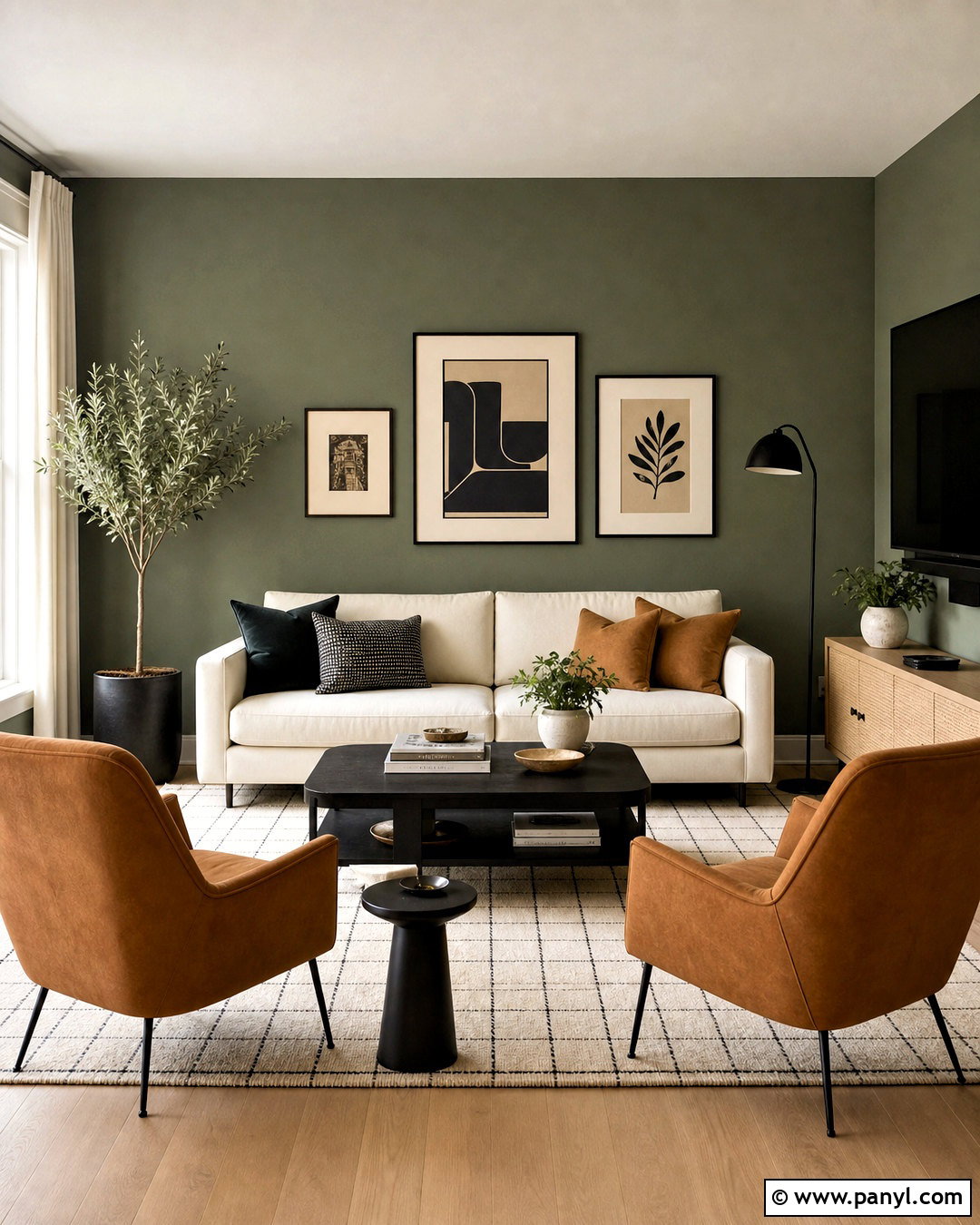
Black details give a sage green accent wall a crisp, contemporary edge. Paint the main focal wall in a clear mid-tone sage, then introduce matte black through window frames, a floor lamp, picture frames, and a slim coffee table. A warm white sofa prevents the contrast from becoming severe, while camel-colored chairs add richness. Ground the seating with a cream rug featuring a subtle black grid or border. Hang oversized graphic artwork on the green wall and keep the surrounding decor simple. Light oak flooring and a matching media console will bring warmth to the modern palette. Use pillows in sage, ivory, and charcoal rather than adding several unrelated colors. The resulting living room feels clean and current, yet the muted green keeps it relaxed and livable.
12. Midcentury Sage Green Accent Wall
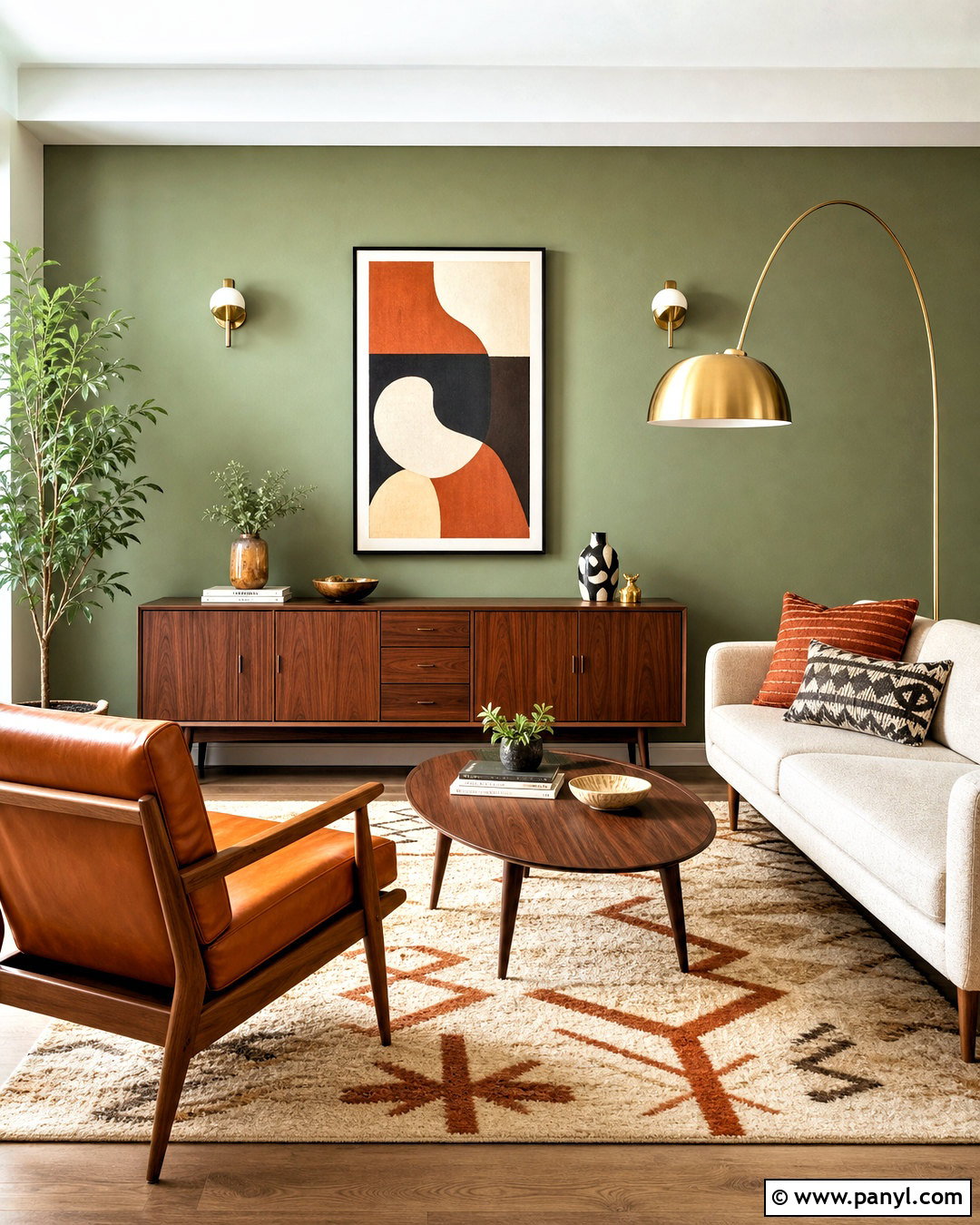
Sage green fits naturally into a midcentury living room filled with warm timber and streamlined furniture. Use a medium sage accent wall behind a low walnut credenza or tapered-leg sofa. Choose seating in oatmeal fabric and cognac leather, then arrange it around an oval wood coffee table. A geometric rug in cream, rust, mustard, and muted green can establish the period-inspired palette. Add a brass arc lamp and globe sconces for recognizable midcentury shapes without turning the room into a theme. Above the credenza, display one abstract print in a walnut frame. Keep window treatments simple and allow furniture legs to remain visible, preserving an open layout. The complete room combines vintage references with modern comfort, making the green wall feel purposeful rather than merely decorative.
13. Farmhouse Sage Green Accent Wall
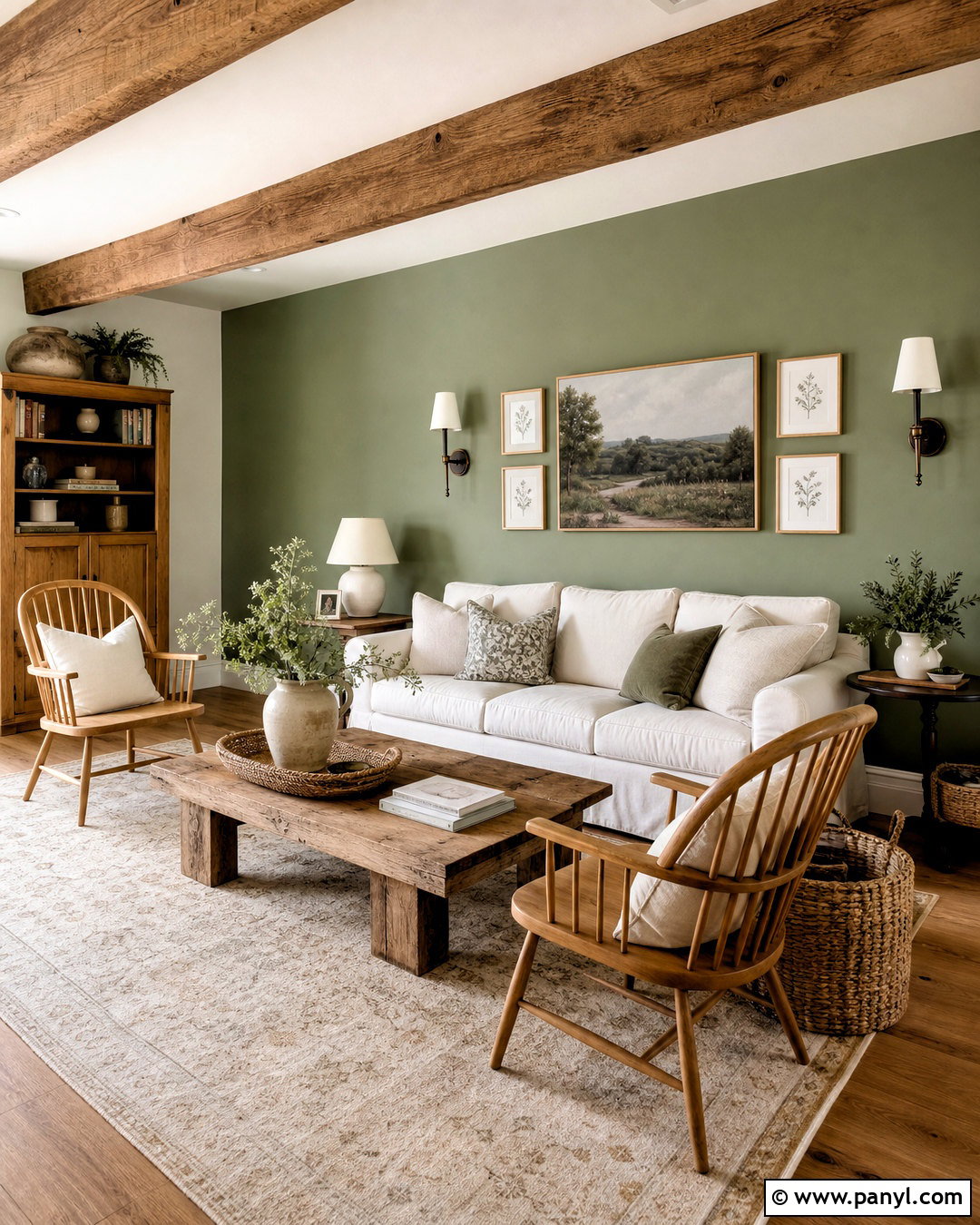
For a relaxed farmhouse living room, pair a warm sage green feature wall with comfortable upholstery and weathered natural materials. Place a slipcovered cream sofa against the painted wall, then add spindle-back chairs in light oak or soft black. A reclaimed wood coffee table brings rustic texture to the center of the arrangement. Use an ivory rug with a faded traditional pattern to keep the floor cozy but practical. Simple landscape prints, antique-style sconces, and a wooden blanket ladder can decorate the accent wall without overwhelming it. Linen curtains and woven baskets reinforce the casual mood. Instead of overly distressed accessories, choose a few substantial pieces with authentic texture. The final design feels fresh, welcoming, and farmhouse-inspired without relying on decorative signs or unnecessary clutter.
14. Boho Sage Green Accent Wall
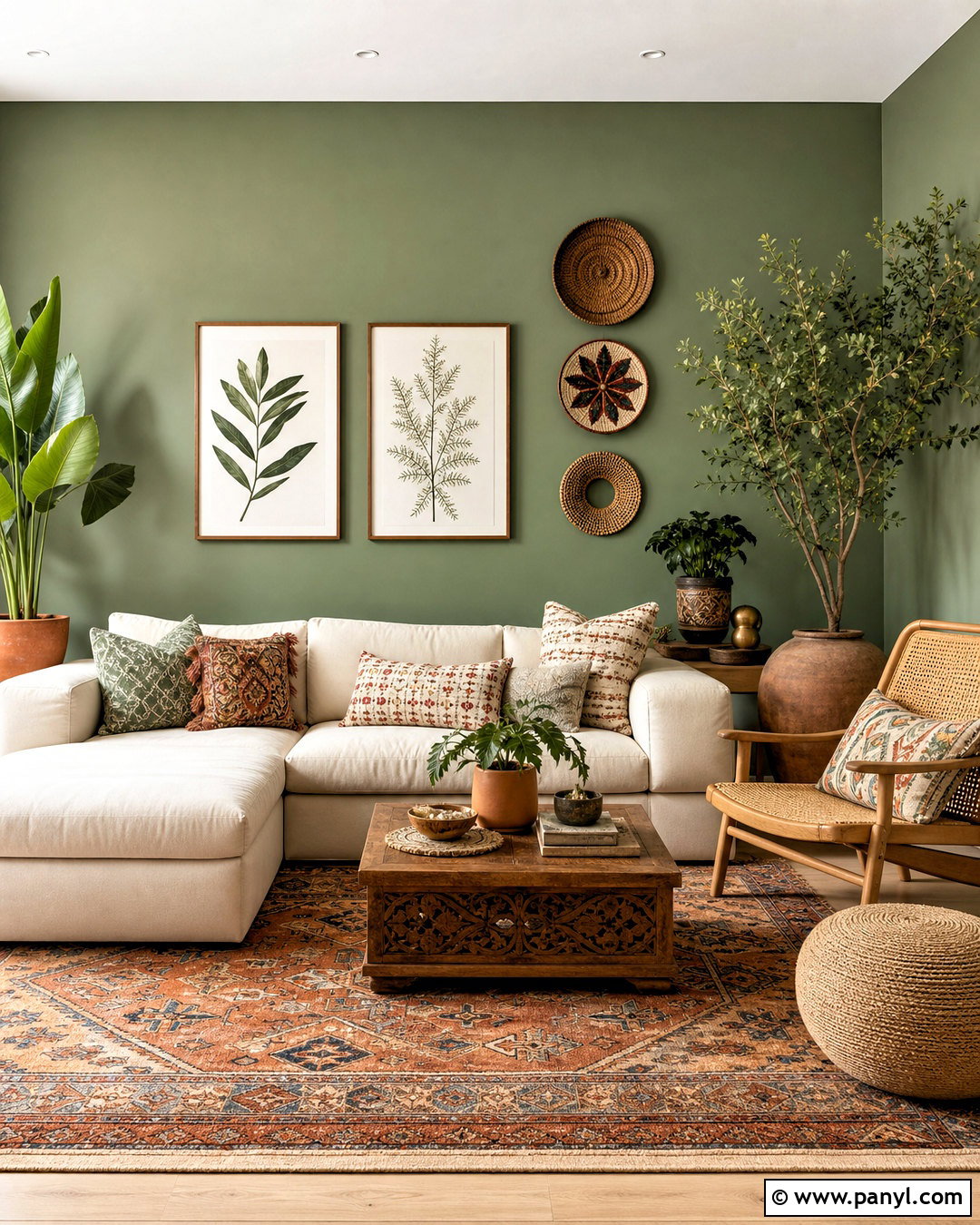
A boho living room can feel layered and expressive while still remaining calm. Paint the focal wall a warm, earthy sage and place a cream modular sofa in front of it. Add a carved wood coffee table, a cane lounge chair, and a large patterned rug in terracotta, tan, ivory, and faded green. Hang a balanced collection of woven wall pieces, small botanical prints, and one central mirror. Keep consistent spacing so the display looks collected rather than chaotic. Floor cushions, textured throws, and embroidered pillows can add comfort at different heights. Include plants in clay and woven planters, but group them together instead of scattering them around the room. Soft white curtains and warm wood flooring complete a colorful, natural space with an inviting, lived-in quality.
15. Scandinavian Sage Green Accent Wall
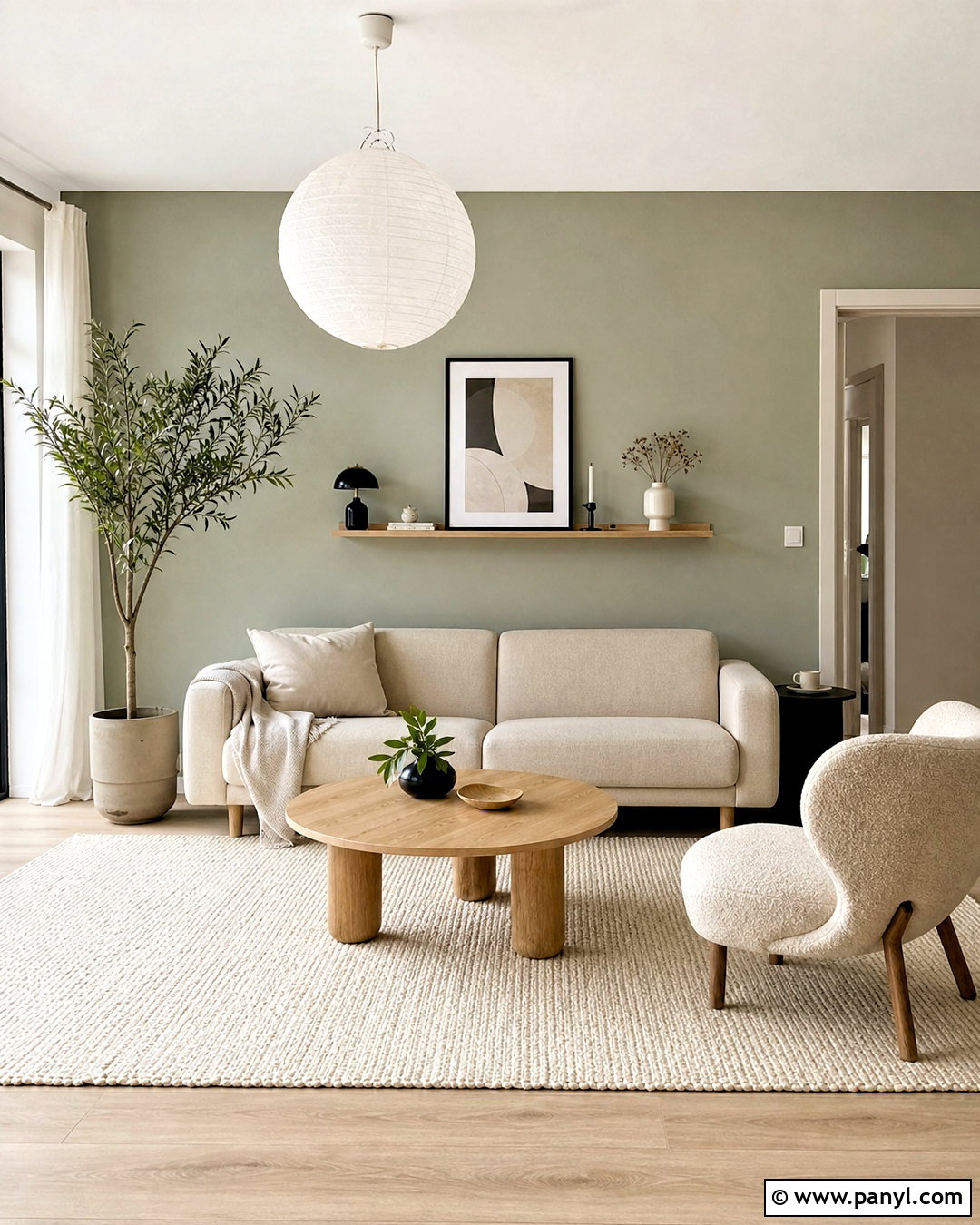
Clean lines and pale materials allow a sage green accent wall to stand out in a Scandinavian living room. Select a light, gray-based sage and pair it with warm white surrounding walls. Position a simple beige sofa against the feature wall, then add a pale oak coffee table and one sculptural lounge chair. A cream wool rug will soften the floor while maintaining the restrained palette. Choose a single black-framed print and a narrow floating shelf rather than filling the wall with accessories. Add interest through bouclé, linen, and knitted textiles in ivory and muted gray. A paper lantern pendant and slim black floor lamp provide balanced lighting. Finish with one tall plant in a plain ceramic pot. The room feels bright, functional, comfortable, and intentionally free from visual clutter.
16. Coastal Sage Green Accent Wall
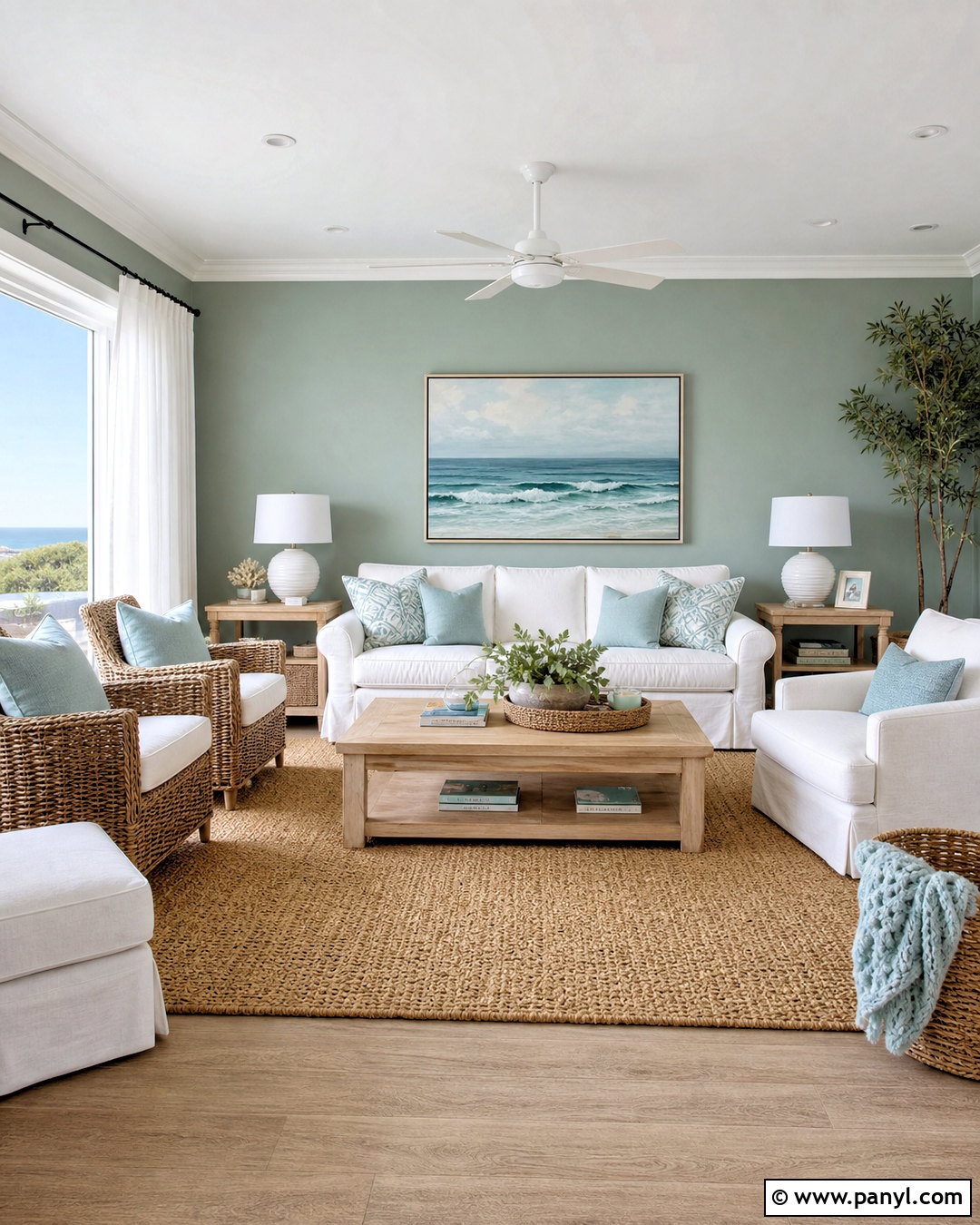
Sage green offers a softer alternative to blue in a bright coastal living room. Choose a pale, slightly silvery sage for the accent wall and combine it with white slipcovered seating. Add woven armchairs, a light oak coffee table, and a natural fiber rug to create a breezy foundation. Pillows in seafoam, cream, soft blue, and narrow stripes can introduce restrained coastal color. Decorate the wall with a large abstract seascape or a collection of light wood frames. Sheer white curtains should allow plenty of daylight to reach the seating area. Avoid literal themed decorations and focus instead on airy textures, weathered finishes, and an uncluttered arrangement. The result feels relaxed and connected to the coast while remaining suitable for an everyday home far from the water.
17. Sage Green Accent Wall With Blush Pink
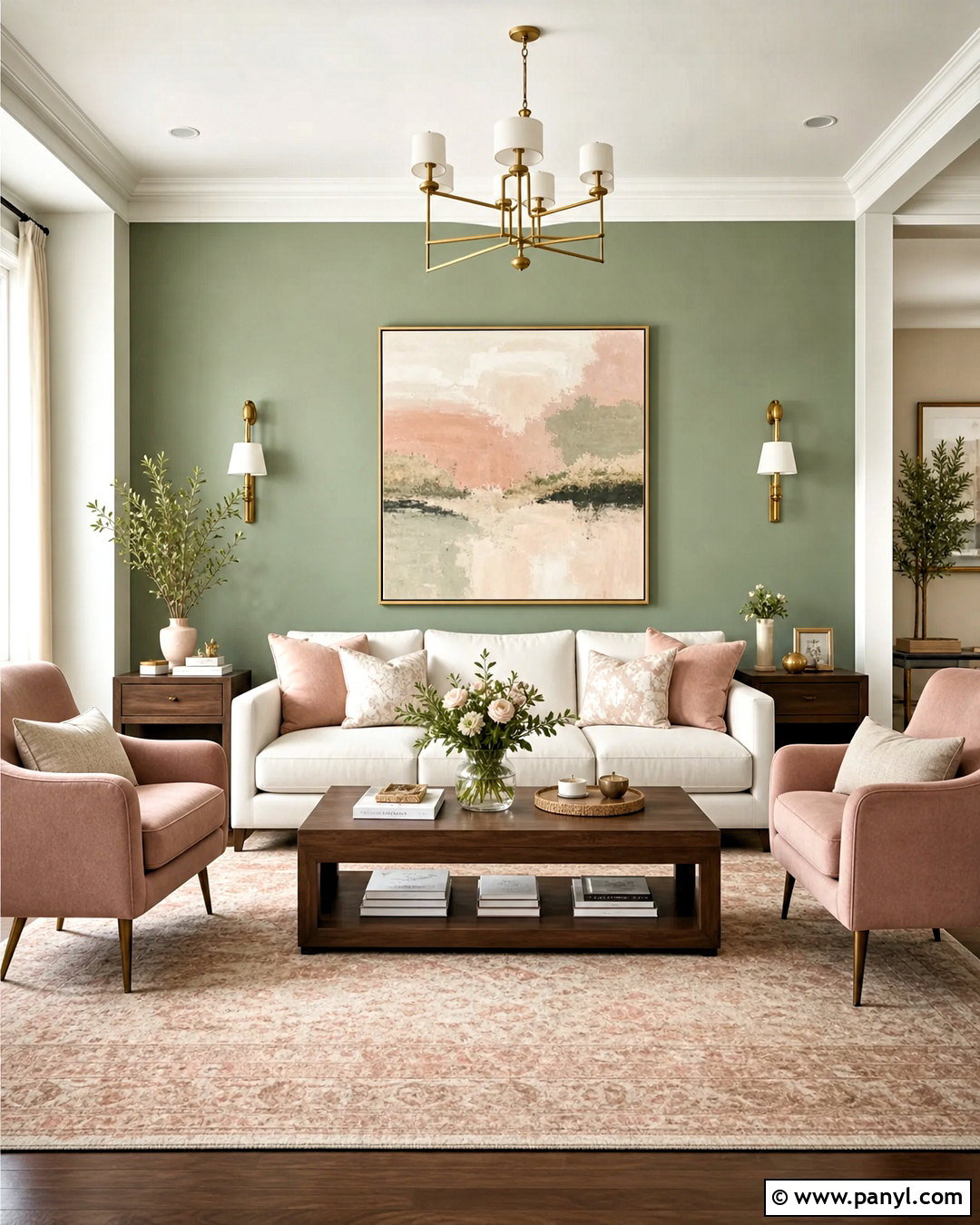
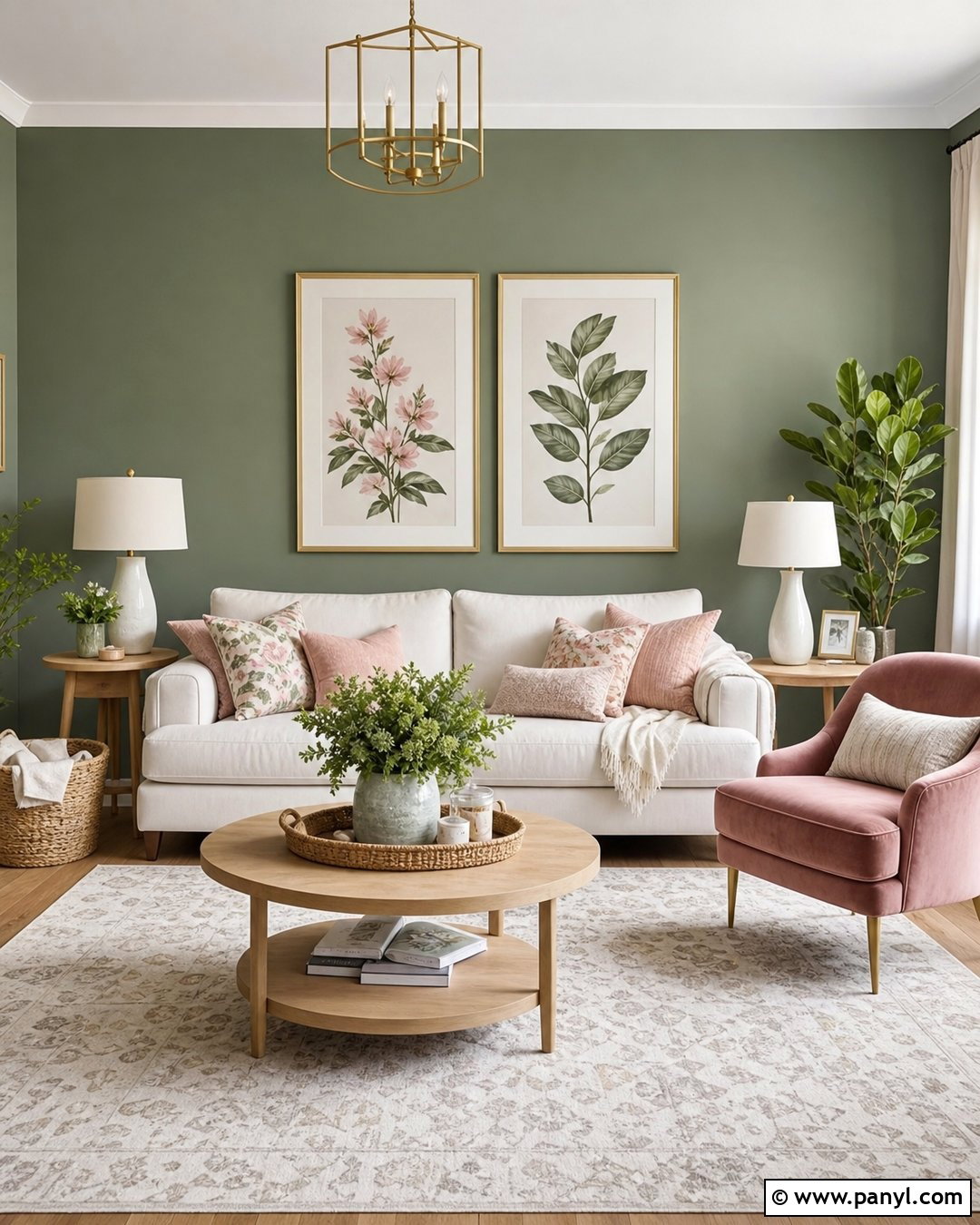
Blush pink adds subtle warmth to a sage green living room without overpowering its calm character. Use sage on the wall behind a cream sofa, then introduce blush through two upholstered chairs, velvet pillows, or a faded area rug. Keep the pink dusty and muted rather than bright. A walnut coffee table and brass lighting will deepen the palette and prevent it from feeling overly delicate. Hang artwork that combines green, cream, blush, and small touches of burgundy for visual continuity. Ivory curtains and warm white surrounding walls maintain an open atmosphere. Include one charcoal or dark wood element, such as a side table, to anchor the lighter shades. This complete scheme feels welcoming and sophisticated, working equally well in contemporary, transitional, or vintage-inspired living rooms.
18. Sage Green Accent Wall With Terracotta Decor
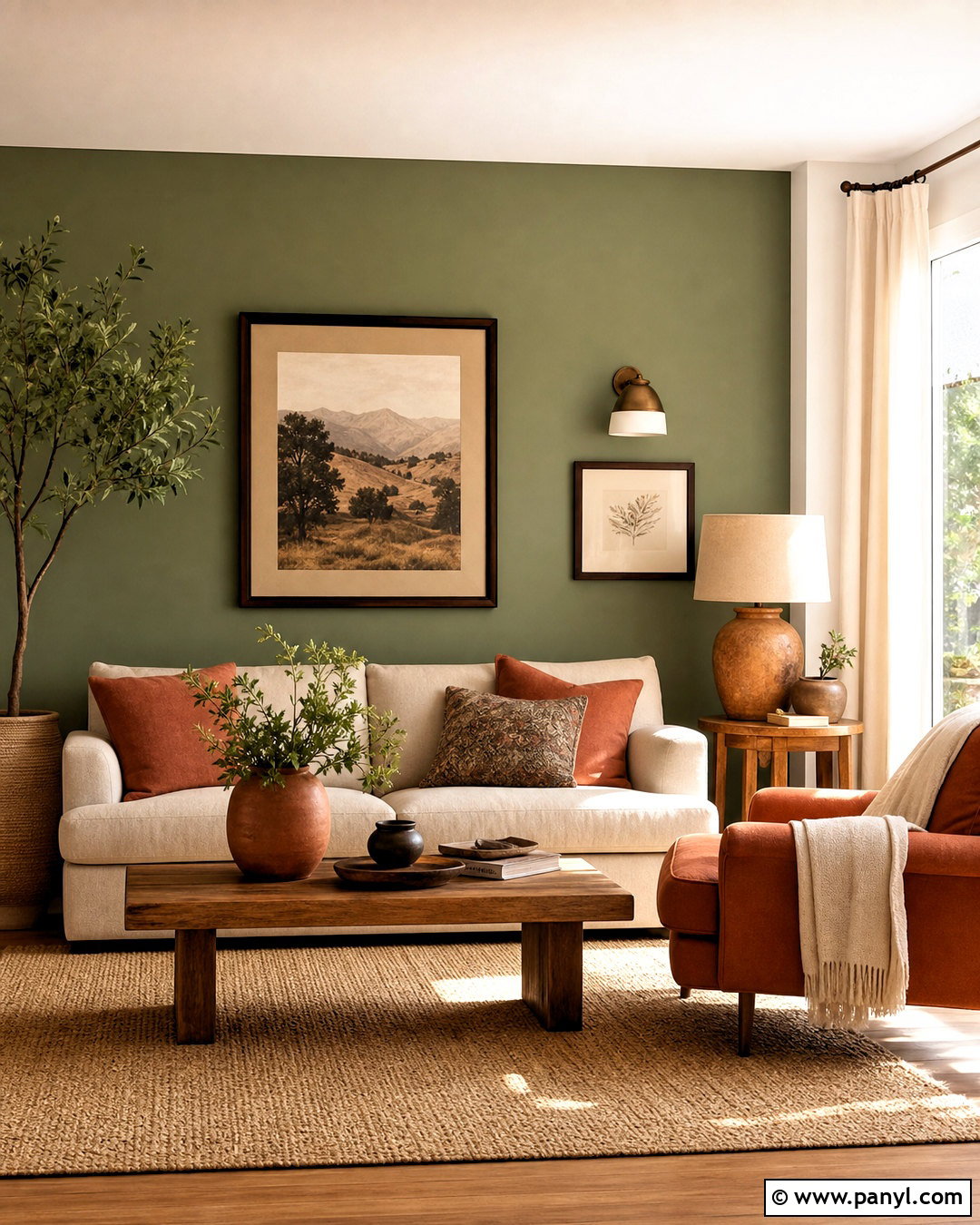
Earthy terracotta makes sage green feel warmer, richer, and especially inviting. Begin with a muted sage accent wall behind a beige linen sofa. Add rust-colored pillows, a terracotta lounge chair, and clay pottery in several simple shapes. A medium oak coffee table and woven jute rug will continue the natural color story. Choose abstract artwork with cream, rust, brown, and green, then frame it in dark wood for definition. Use off-white curtains and warm metal lighting to brighten the room without introducing sharp contrast. A few olive branches or leafy plants can repeat the green in a natural way. Limit terracotta to several well-placed areas instead of spreading it across every surface. The finished living room feels grounded, sun-warmed, and cohesive throughout the seasons.
19. Sage Green Accent Wall With Navy Blue
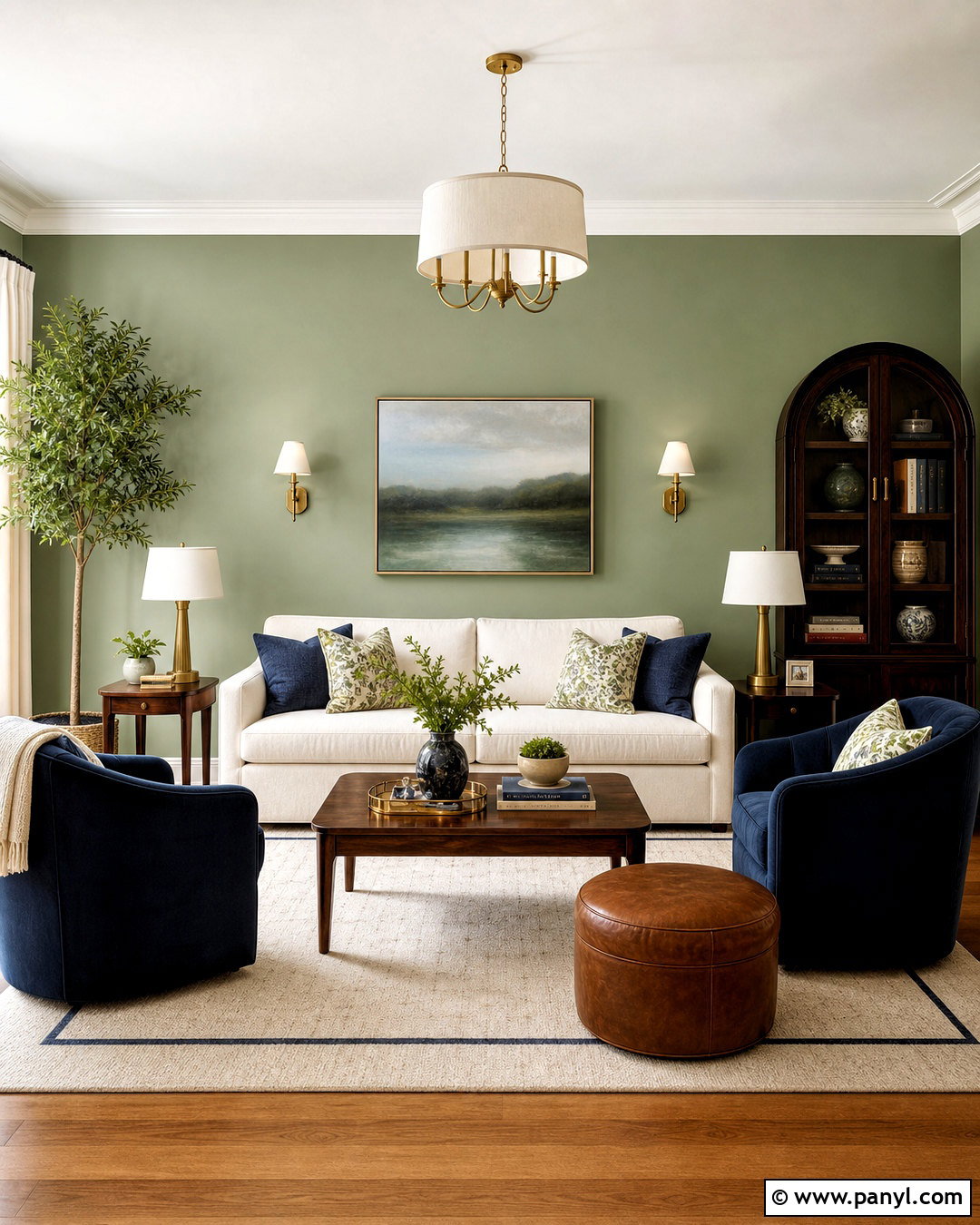
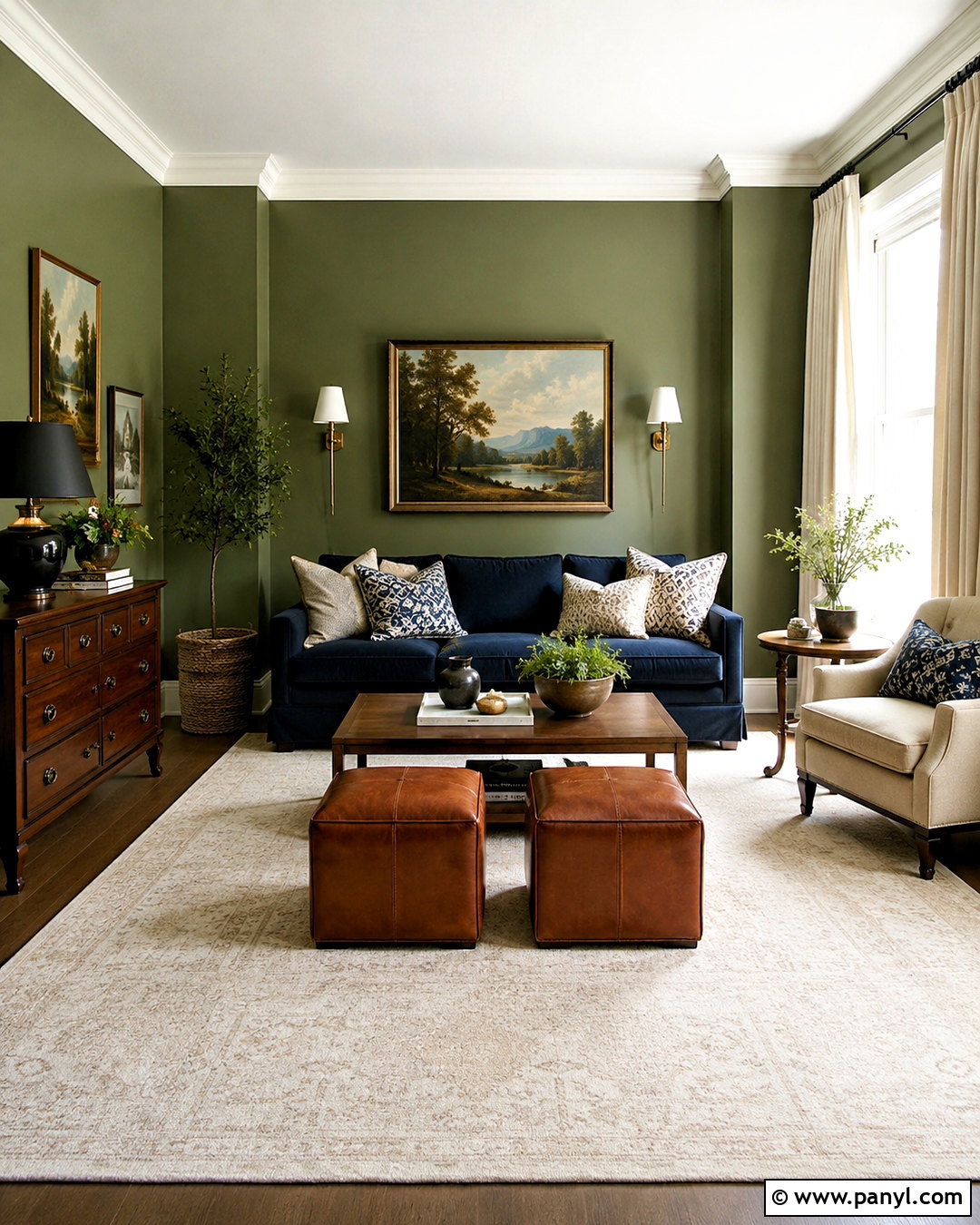
Navy blue brings depth and tailored contrast to a soft sage green wall. Paint the focal wall in a light or medium sage, then place a warm white sofa against it. Introduce navy through a pair of club chairs, patterned pillows, and the border of a cream area rug. A walnut coffee table and cognac leather ottoman will prevent the palette from feeling too cool. Add brass table lamps and picture frames for a polished finish. Artwork should include both green and blue, supported by generous areas of white or beige. Keep the curtains light and uncomplicated so the darker furniture does not reduce the room’s brightness. This balanced arrangement works well in traditional and transitional homes, creating a comfortable living room that feels structured without becoming formal.
20. Monochromatic Sage Green Accent Wall
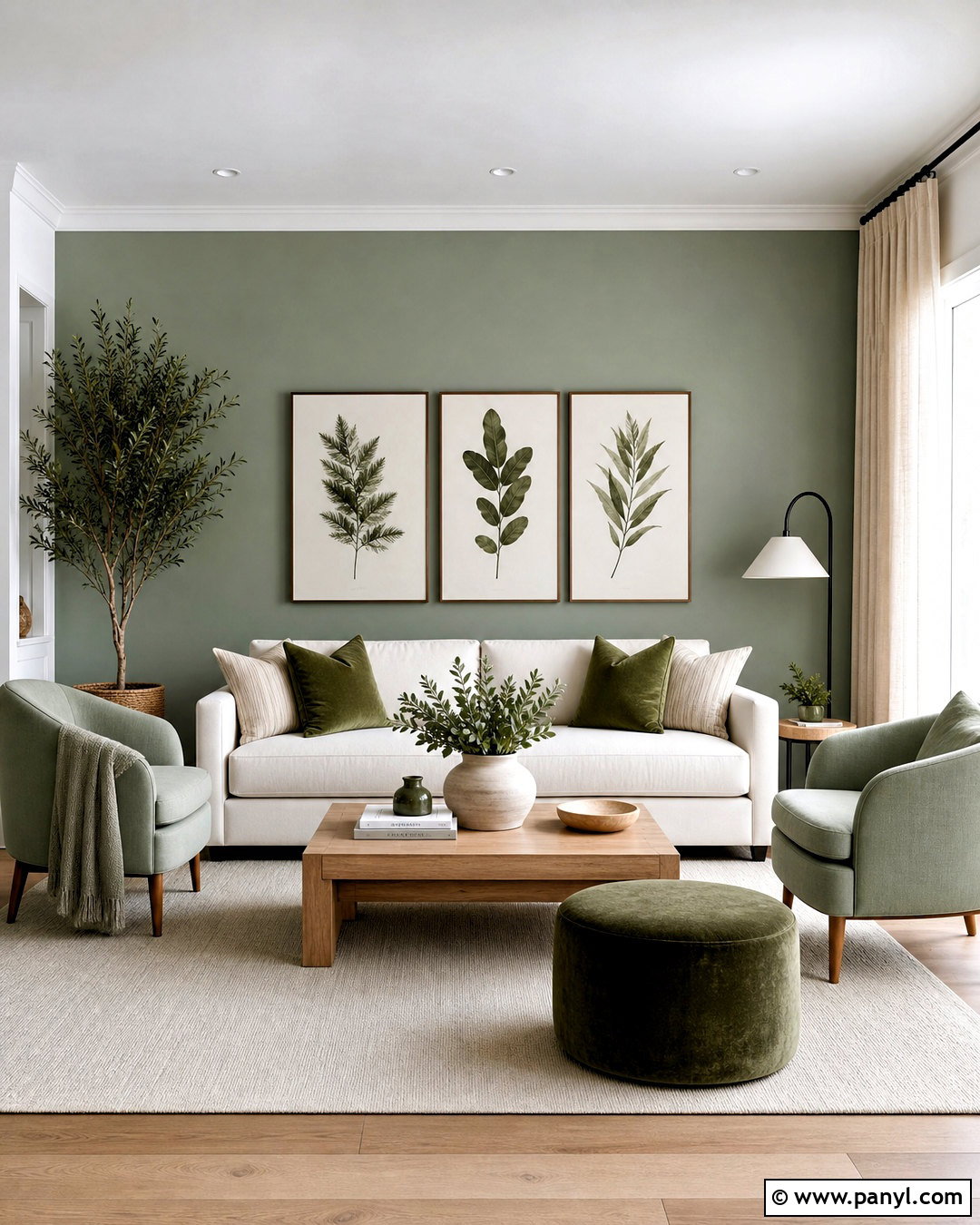
Layering several green tones creates a sophisticated room while keeping the sage accent wall clearly defined. Choose a mid-tone sage for the feature wall, then use lighter celadon chairs, moss-colored pillows, and a deep olive ottoman throughout the seating area. A cream sofa gives the eye a neutral resting point. Add a pale wood coffee table and an ivory textured rug to prevent the greens from blending into one large block of color. Select botanical artwork with dark green details and slim bronze frames. Natural linen curtains and warm white surrounding walls should brighten the arrangement. Include varied fabrics such as velvet, linen, and wool for depth. This monochromatic living room feels collected and immersive, but careful tonal contrast keeps every furniture piece and decorative element easy to distinguish.
Conclusion:
The best sage green accent wall living room ideas consider more than paint color alone. Furniture placement, lighting, flooring, textiles, and artwork all influence whether the finished room feels coordinated. Cream and gray create a quiet neutral base, while terracotta, navy, blush, and black provide stronger contrast. Natural wood is especially useful because it adds warmth without competing with the wall. Before painting, test several sage samples throughout the day and view them beside your existing sofa, rug, and flooring. Once the right shade is selected, repeat it through only a few accessories. This measured approach allows the accent wall to remain the focal point while the entire living room feels comfortable, balanced, and complete.

Related Ideas and Inspiration:
Leave a Reply